
VA Medical Center Roofing in Johnson City, TN
Water that gets through a hospital roof does not stay a roof problem. It runs along the top of the deck until it finds the nearest penetration, follows a pipe or duct chase down through the ceiling, and surfaces in a corridor or a ward, where infection control turns every opened ceiling tile into a containment project. By then the insulation above may have been wet for a full season, and the cost has moved from a seam repair to a clinical disruption. That chain is why roof condition at a VA medical center is worth measuring before it is worth arguing about. Johnson City, TN has the James H. Quillen VA Medical Center at Mountain Home, a campus where many original buildings are still in service, and a service area that reaches into Virginia and Kentucky. The roofs across that system share a freeze-thaw winter and a calendar that never leaves the building empty while the work happens, so the order of operations matters as much as the membrane.
Why does the Mountain Home campus ask more of a roof than a typical hospital?
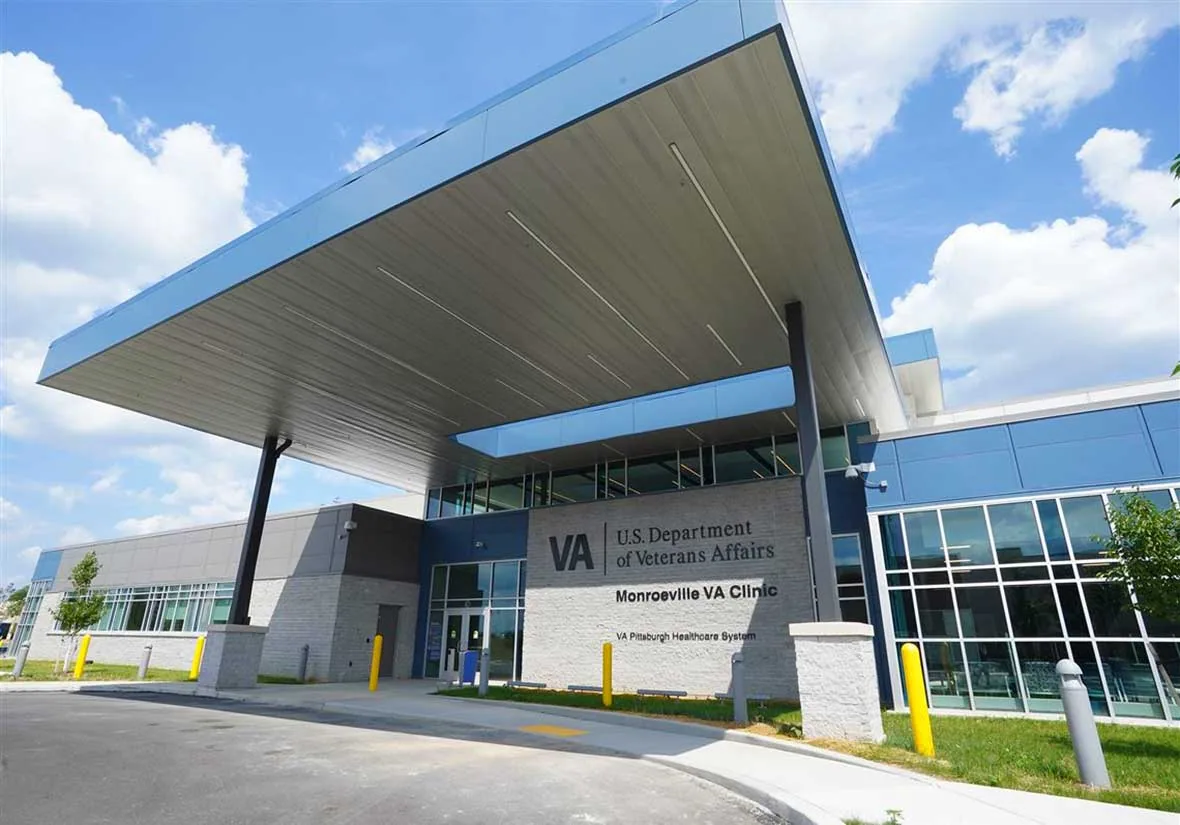
Because the campus is a National Historic Landmark District, designated in June 2011, laid out in the Beaux Arts style, opened in 1904, and still using many of its original buildings. Any roof work on the Mountain Home VA campus has to satisfy two clients at once: the patients and staff who need a dry, quiet building, and the preservation reviewers who care how a roof edge, cornice or visible slope looks from the ground. The medical center operates 114 hospital beds, a 120-bed community living center and a domiciliary, so the occupied space under the roofs includes residents who cannot be moved on a contractor's schedule, much as in senior living buildings. Mountain Home National Cemetery, established in 1903 on the VA grounds and covering 99.7 acres, has French Renaissance style buildings of its own, so the grounds hold more than one group of buildings to protect.
Measure the roof before the next ceiling does it for you
Call Commercial Roofing Johnson City to walk a VA campus or clinic roof. You will receive moisture findings, photographs and a ranked scope that the facility team can weigh before any construction money is committed.
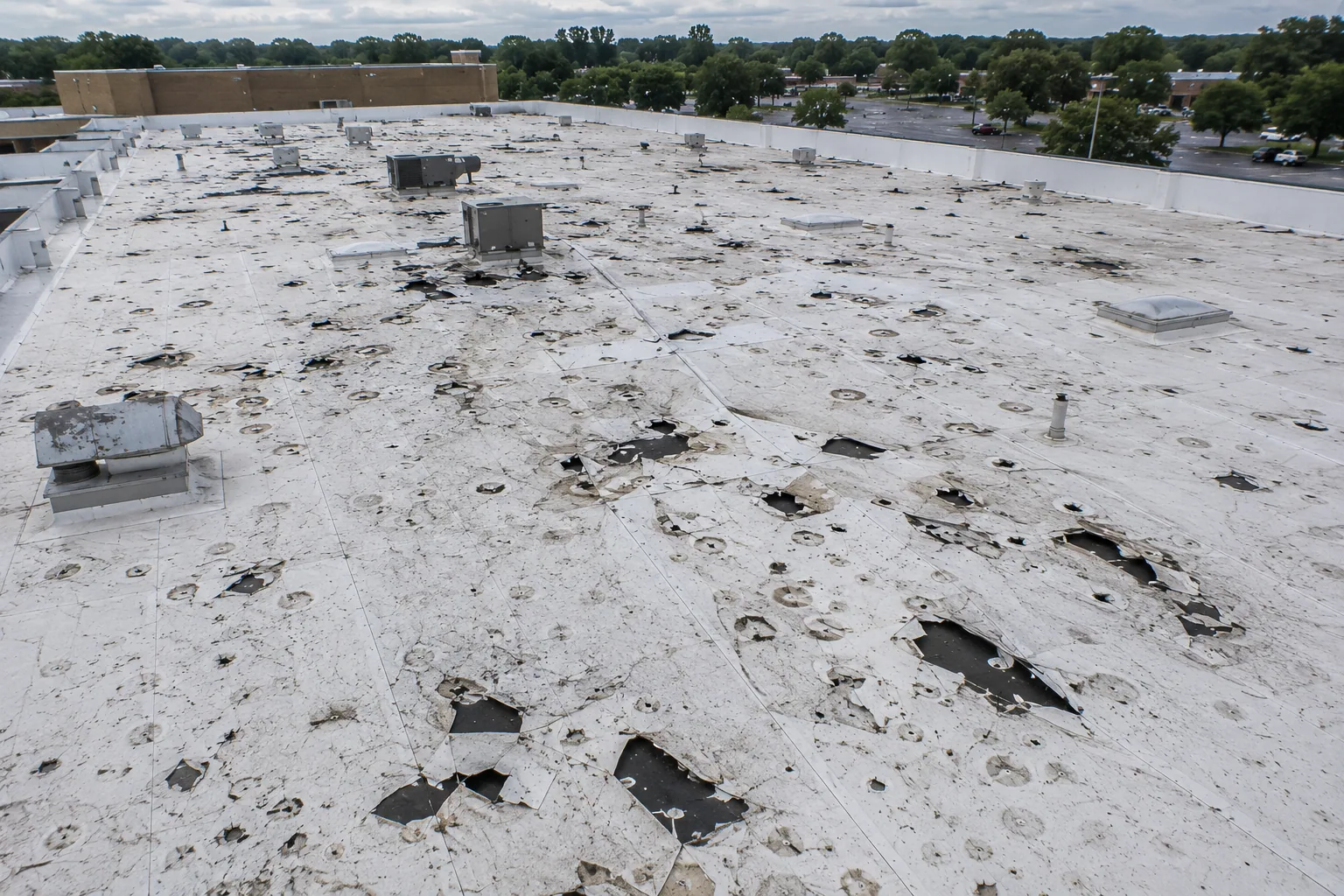
How does water travel from a failed seam to a patient room?
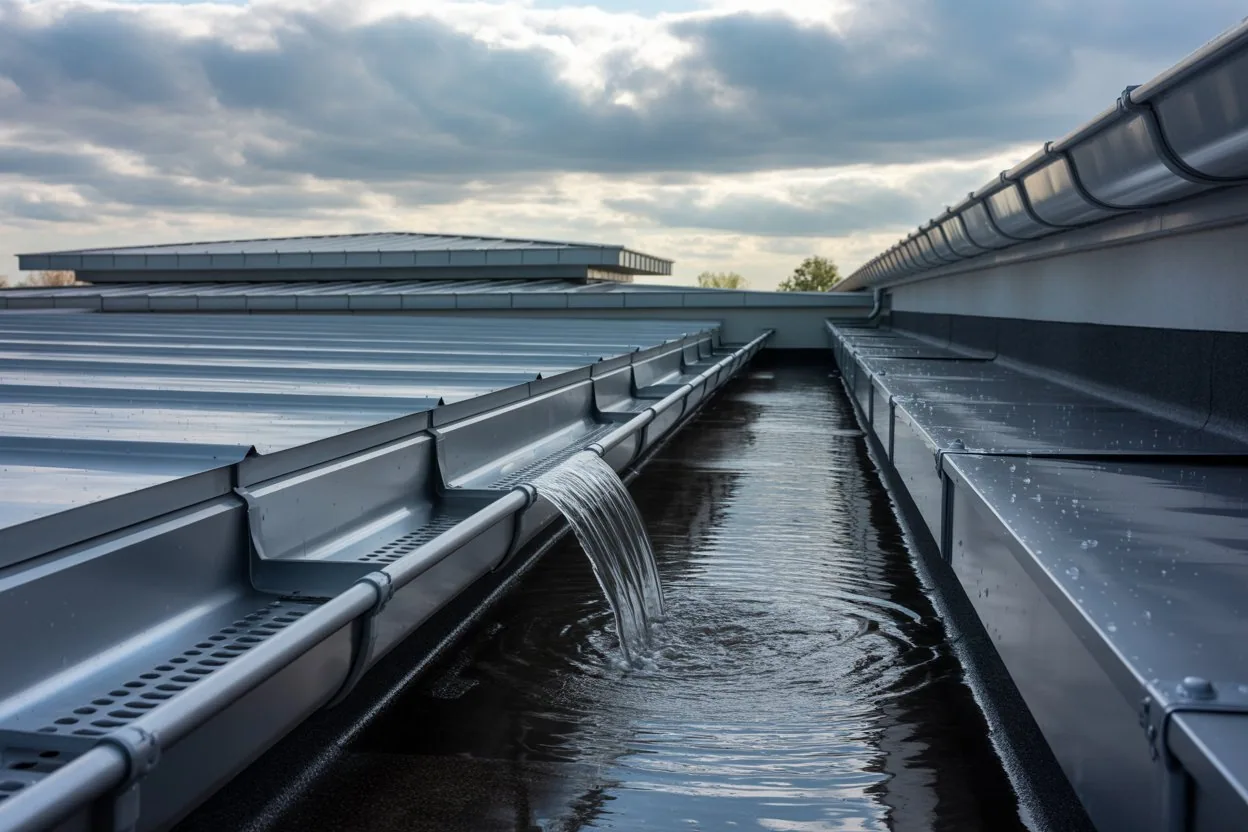
Along the path of least resistance, which is rarely straight down. On a low-slope roof, water entering at a seam or flashing joint spreads laterally through the insulation, riding the top of the deck, and the leak that finally appears may be many feet from the opening. Rooftop air handlers, exhaust fans, plumbing vents and curb flashings give it somewhere to go, and in a building with dense mechanical systems the water can follow a chase to a floor below. Annual precipitation in Johnson City runs near 45 inches, with roughly 15.6 inches of snow, so the assembly receives wet and cold in alternation, and the dew point inside a conditioned ward sits close to the underside of the roof deck on a winter night.
What does a survey of a hospital roof actually measure?
It measures where the water is, not just where it entered. A hands-on walk finds the visible defects: lifted seams, cracked sealant at curbs, drains holding silt, fasteners backing out at the edge. An infrared moisture survey then maps the insulation beneath the membrane, because a roof can look sound from the surface while a good part of its insulation holds water. Core samples confirm the readings and show the layers of the existing assembly, which is especially useful on older buildings whose roof history is not recorded. The deliverable is a written report with photographs, locations and a ranked list of work, and for a campus it becomes the shared condition record the facility team uses to compare one hospital roof against the next.
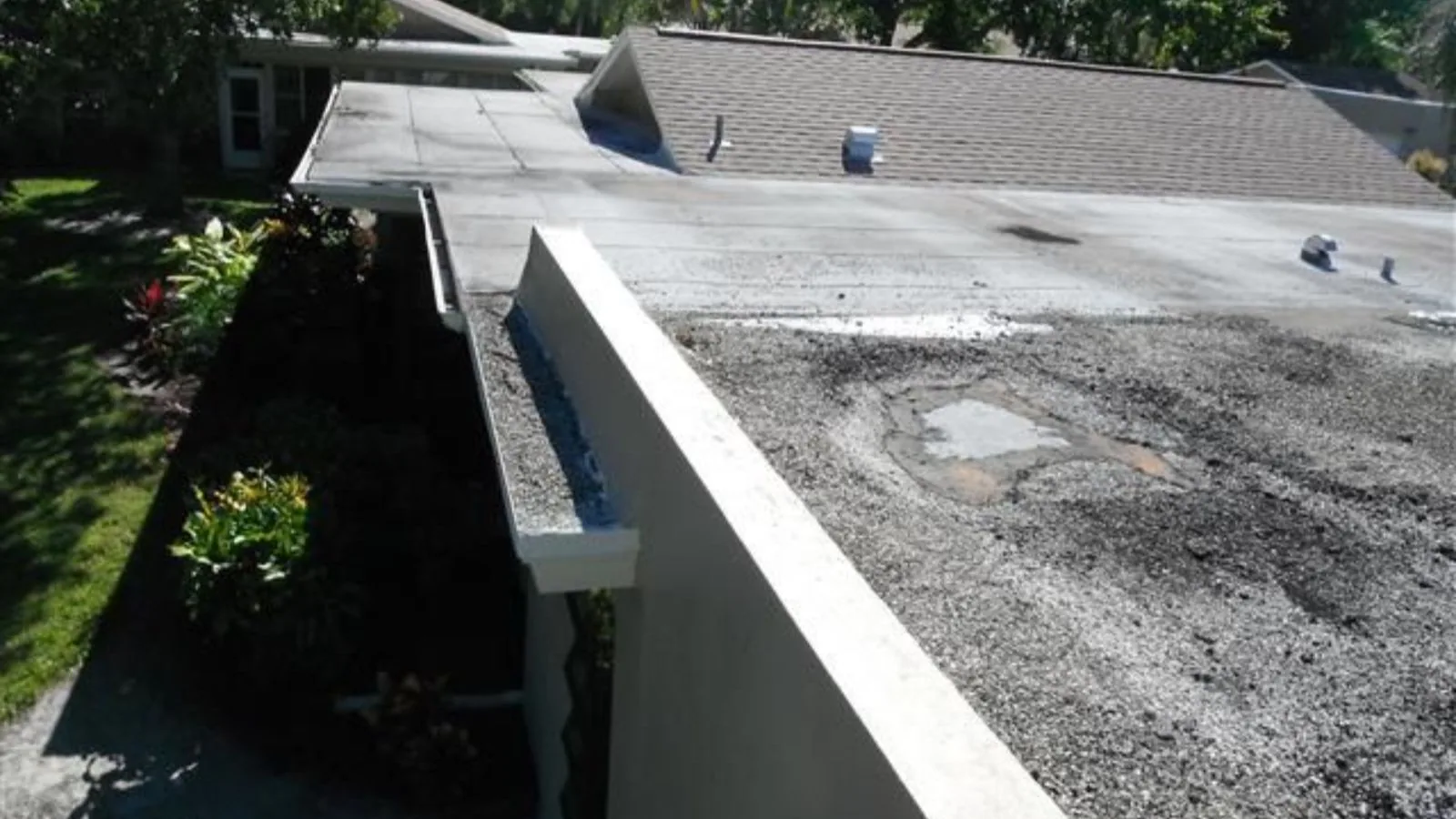
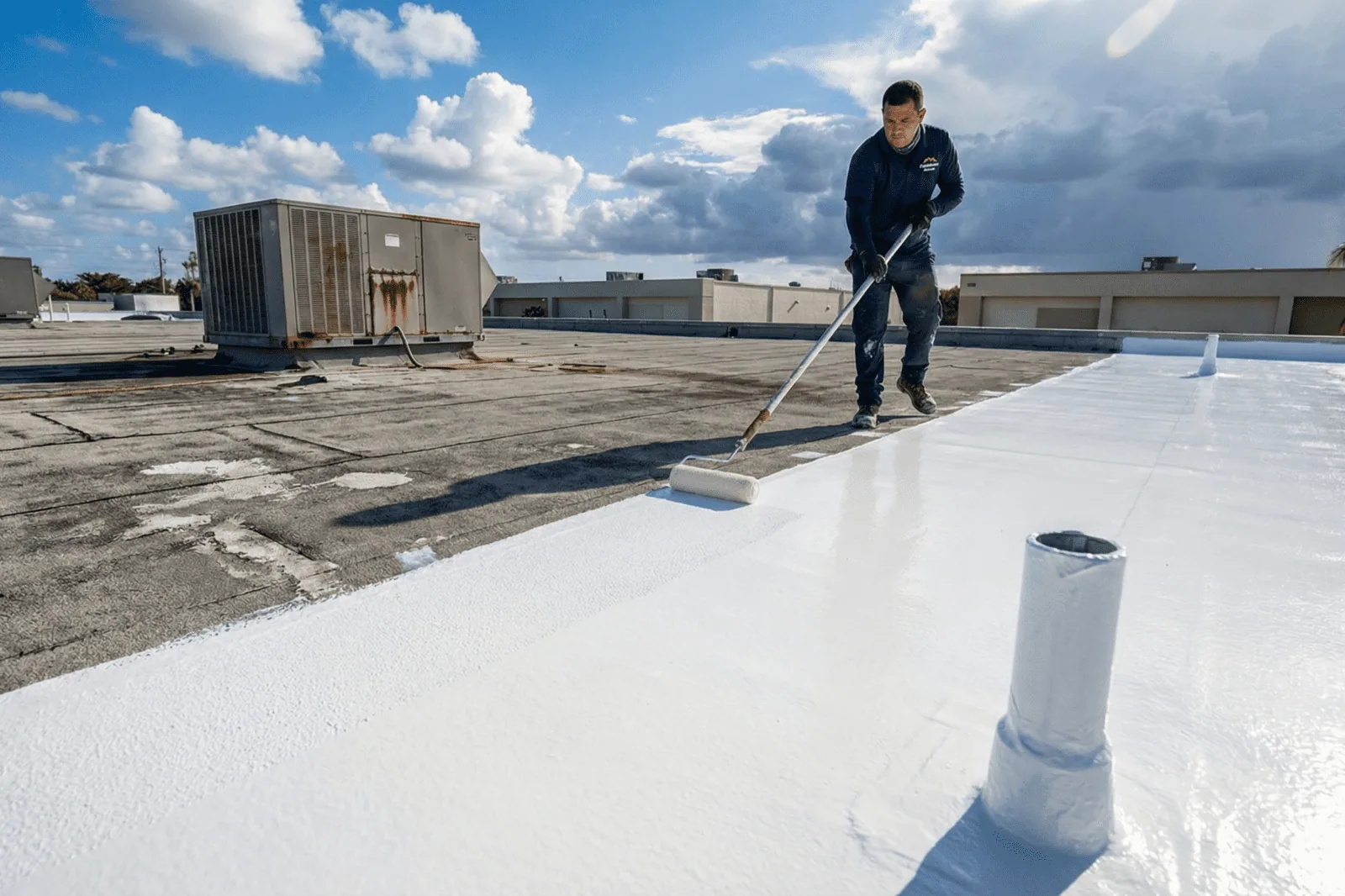
What does a leak cost in a building that cannot close a floor?
More than the roofing line shows. A wet ceiling in a care area may mean relocating patients or residents, running containment, testing for mold, and sending maintenance staff off other work, all before the roof is touched. Saturated insulation also loses much of its thermal value, so the building spends more on heating and cooling to stay comfortable while the deck corrodes above it. A capital plan for roofs built from moisture data lets the facility replace the oldest assemblies on its own schedule rather than a storm's, and spend repair money on the roofs that still have life. Emergency response runs around the clock, holidays included, for the day a ceiling does fail, but a planned replacement remains the cheaper outcome.
Replacement, recover or restoration on a landmark building?
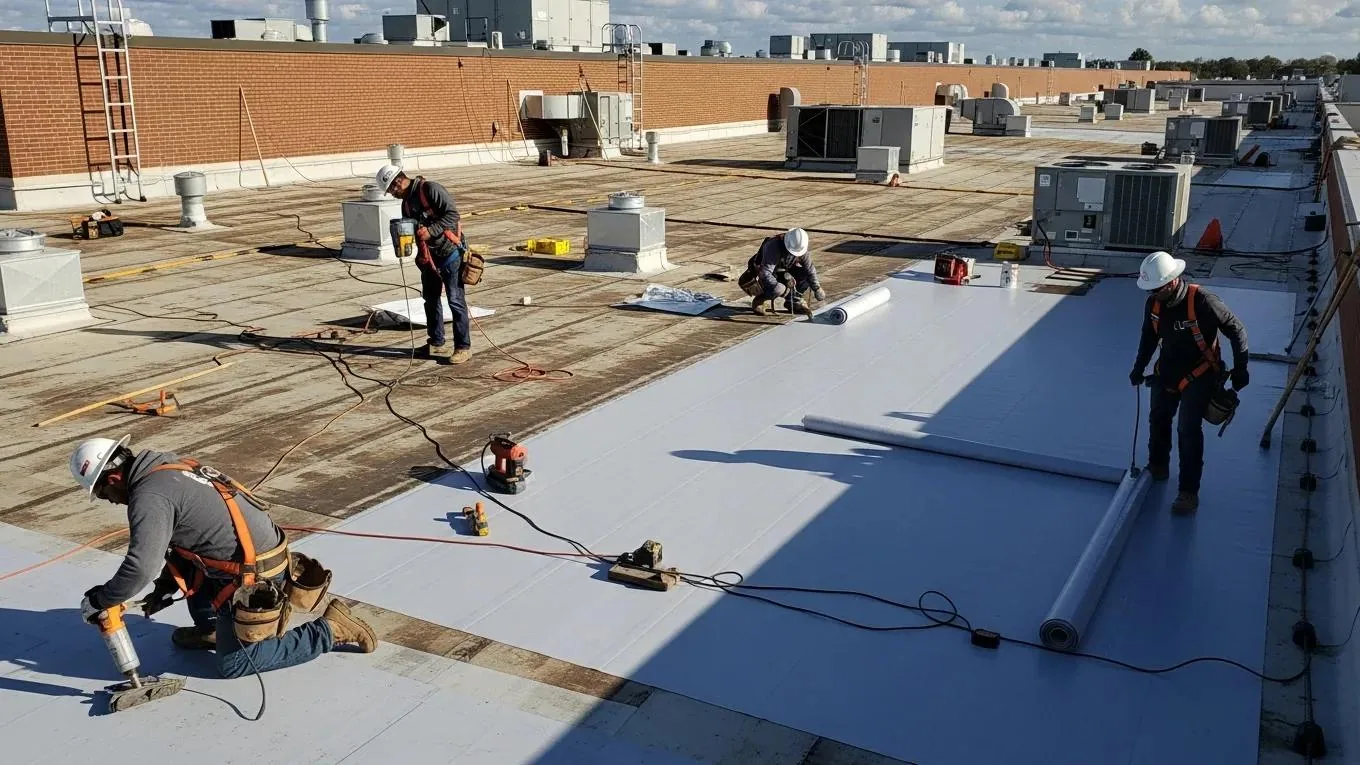
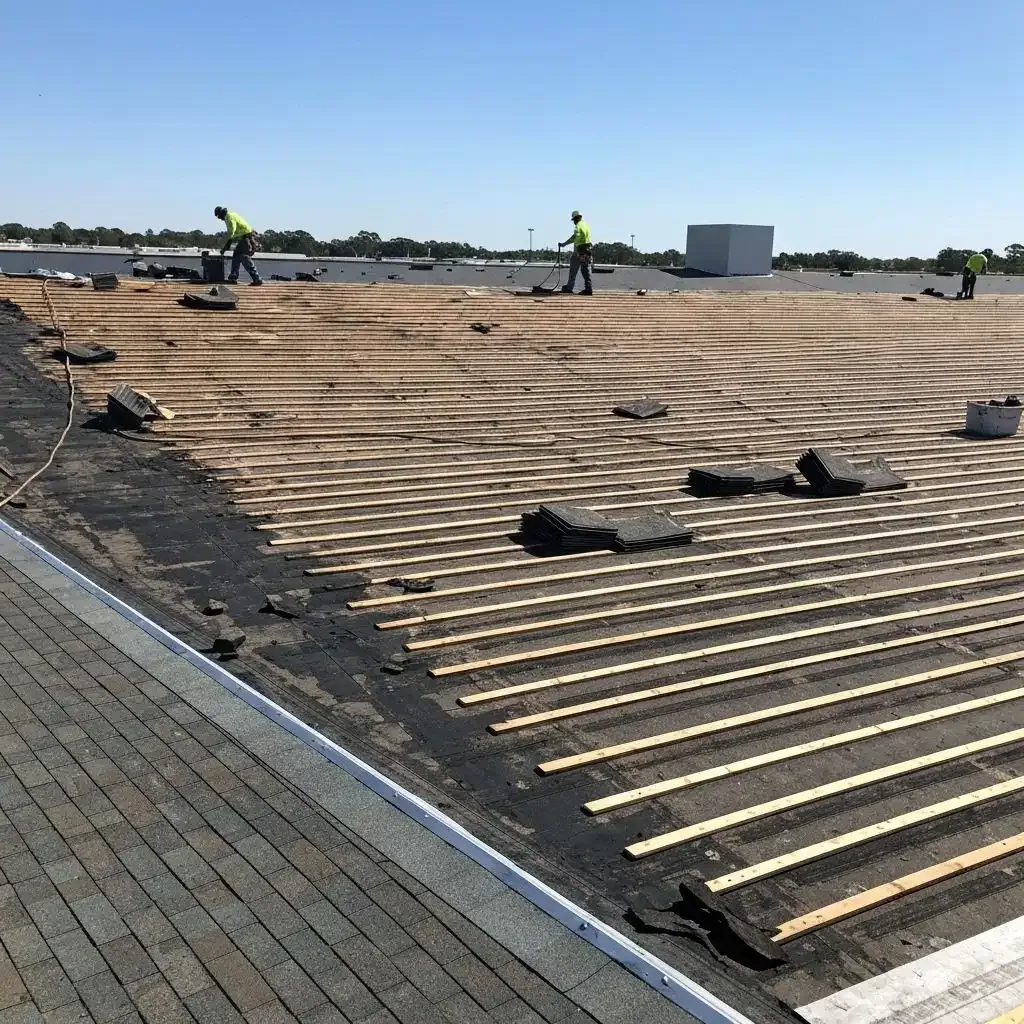
The answer begins with what the old roof is made of and how wet it is. On a historic building, a full replacement may be the cleaner choice because it lets the team correct slope, flashing and insulation together while matching visible details to what reviewers will accept. A recover adds weight and hides problems, and it needs dry insulation and a sound deck. A restoration coating can extend the life of a dry, attached membrane that is still sound. On a newer building or an outlying clinic, PVC and TPO are common choices because of their welded seams and their record in healthcare settings, and work inside the city limits answers to the 2018 International Building Code that Johnson City has adopted. Federal projects add the VA's own design requirements.
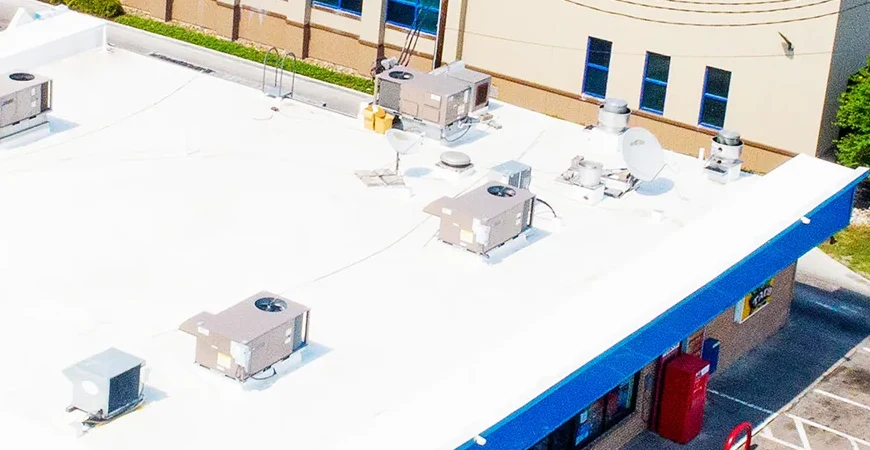
How are noise, fumes and access managed above occupied wards?
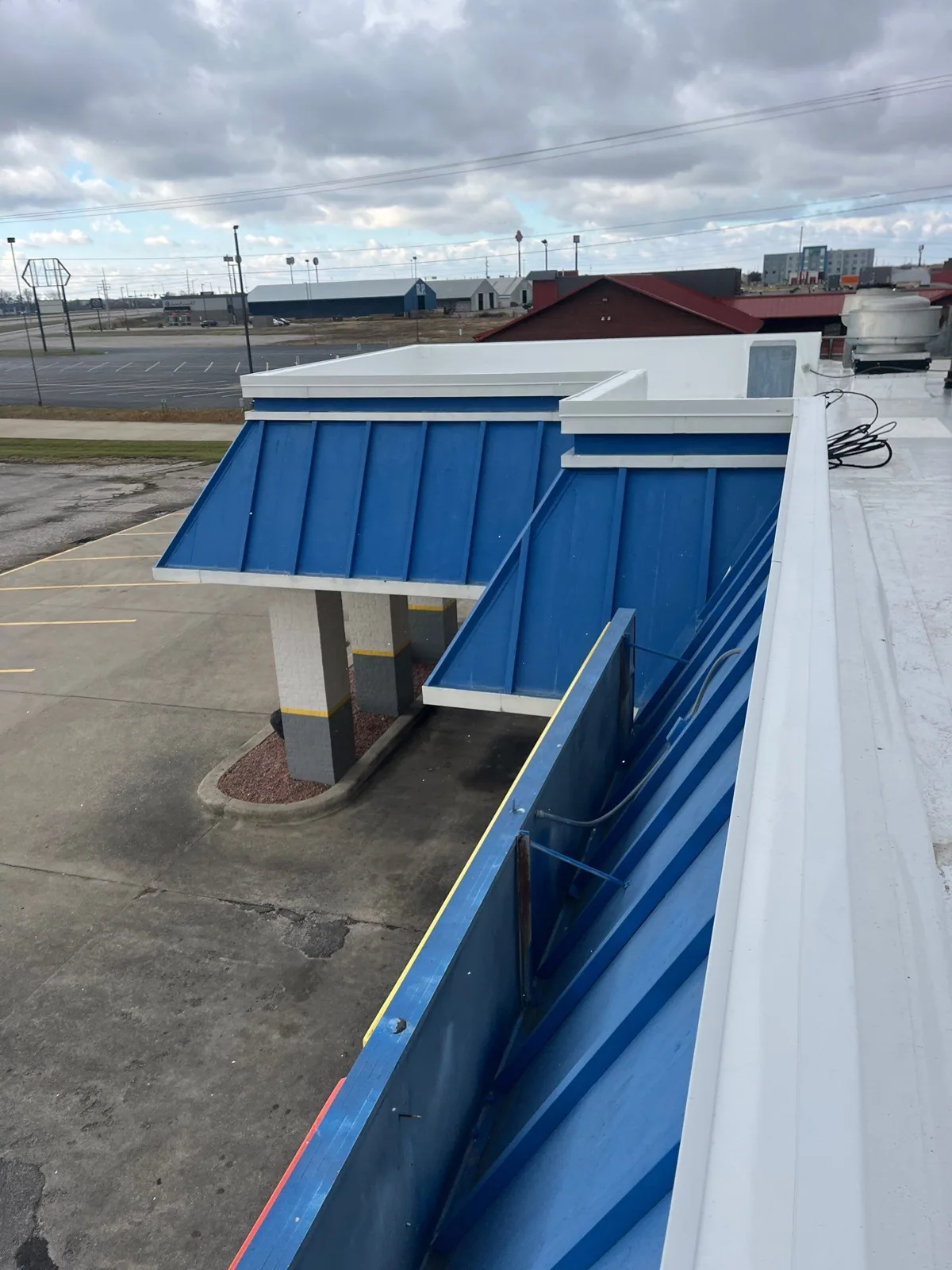
By planning the interface between the roof and the building before the first day. Fresh air intakes are located and protected so no adhesive, solvent or exhaust enters the ventilation; noisy work like deck fastening is scheduled around procedures and rest hours; and the interior gets containment where the old roof is opened. Crews work in sections, closing each section before the crew leaves, since a hospital cannot tolerate a roof left open overnight. The occupied building reroofing sequence adds access routing for patients, staff and deliveries, and winter weather narrows the productive season to spring through early autumn.
For a campus with multiple buildings, one roof list is not enough. Track each structure by function, system, inspection date, open defects and next action, while keeping sensitive room names out of public bid documents. Facilities teams can then prioritize a leak over an occupied clinical space without losing sight of roof-wide deterioration. A consistent record also gives maintenance staff a way to confirm that temporary protection was removed and the permanent detail closed.
Commercial Roofing Questions
How does infection control change the way a hospital roof is torn off?
Containment starts below the deck, not above it. Negative-pressure barriers, sealed ceiling penetrations and dust control are set up before the old membrane comes off, and intake locations are checked each morning against the day's work.
Does landmark status rule out a modern membrane?
Not by itself. Preservation review looks at what is visible from the ground, such as edge profiles, flashings at cornices and any pitched sections, while a membrane on a low-slope field may be acceptable. Where the existing materials are visible, the review can govern which ones are used.
Which rooftop items leak most often over patient floors?
Air handler curbs, exhaust fans and pipe penetrations lead, because they carry vibration and heat that open sealants over time. Their flashing details deserve the first hour of any walk, and drains right behind them.
Why survey the outlying clinics along with the main campus?
Each clinic has its own roof, the medical center reaches a 41-county area across 15 sites, and a single leak at a medical office can close exam rooms. Surveying them together sets a consistent condition scale and allows a single capital plan.
What should a facility engineer keep from each roof project?
The core cut log, the moisture map, the as-built details of every penetration and the product data for each layer. Those records turn the next repair from a guess into a lookup, and they matter even more on a campus where original buildings and recent additions sit side by side.
Related Roofing Pages
Interstate 26 Corridor
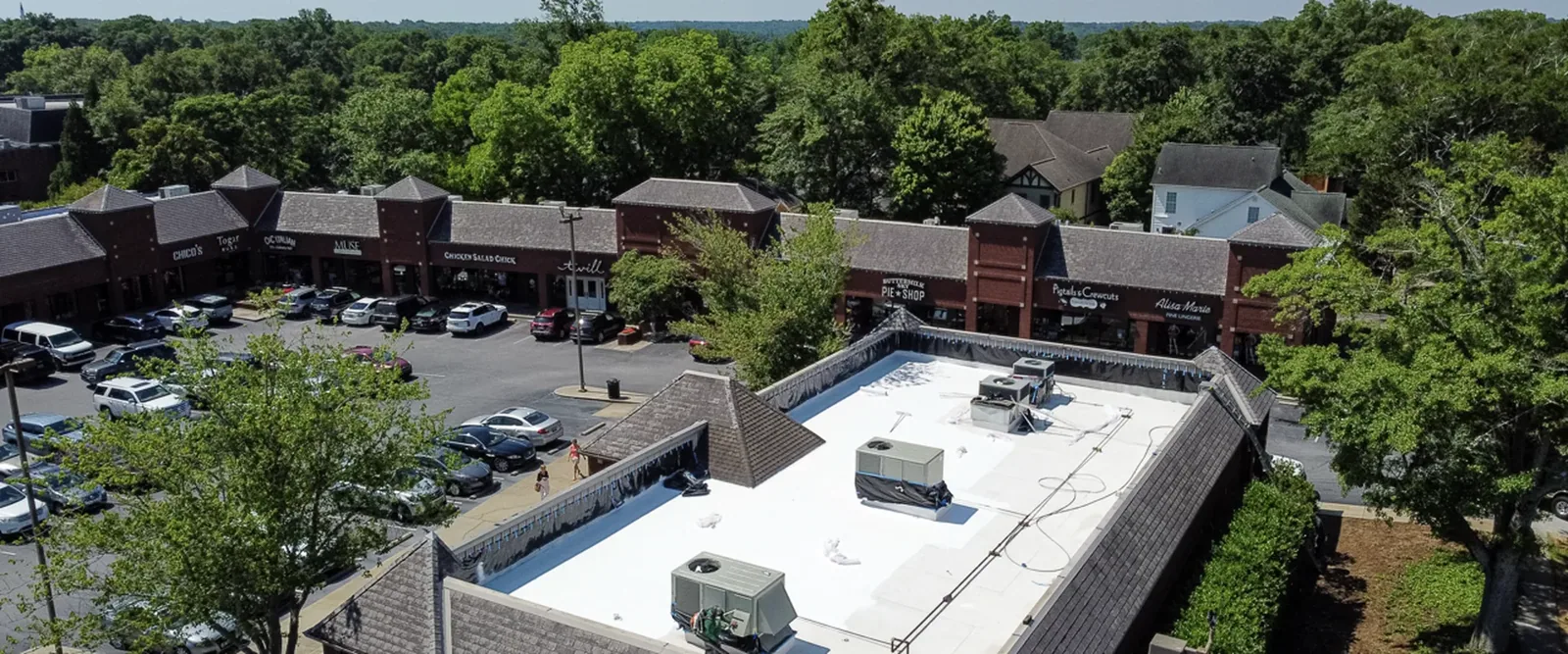
How the work is scoped, phased and documented on Tri-Cities roofs.
Senior Living Roofing
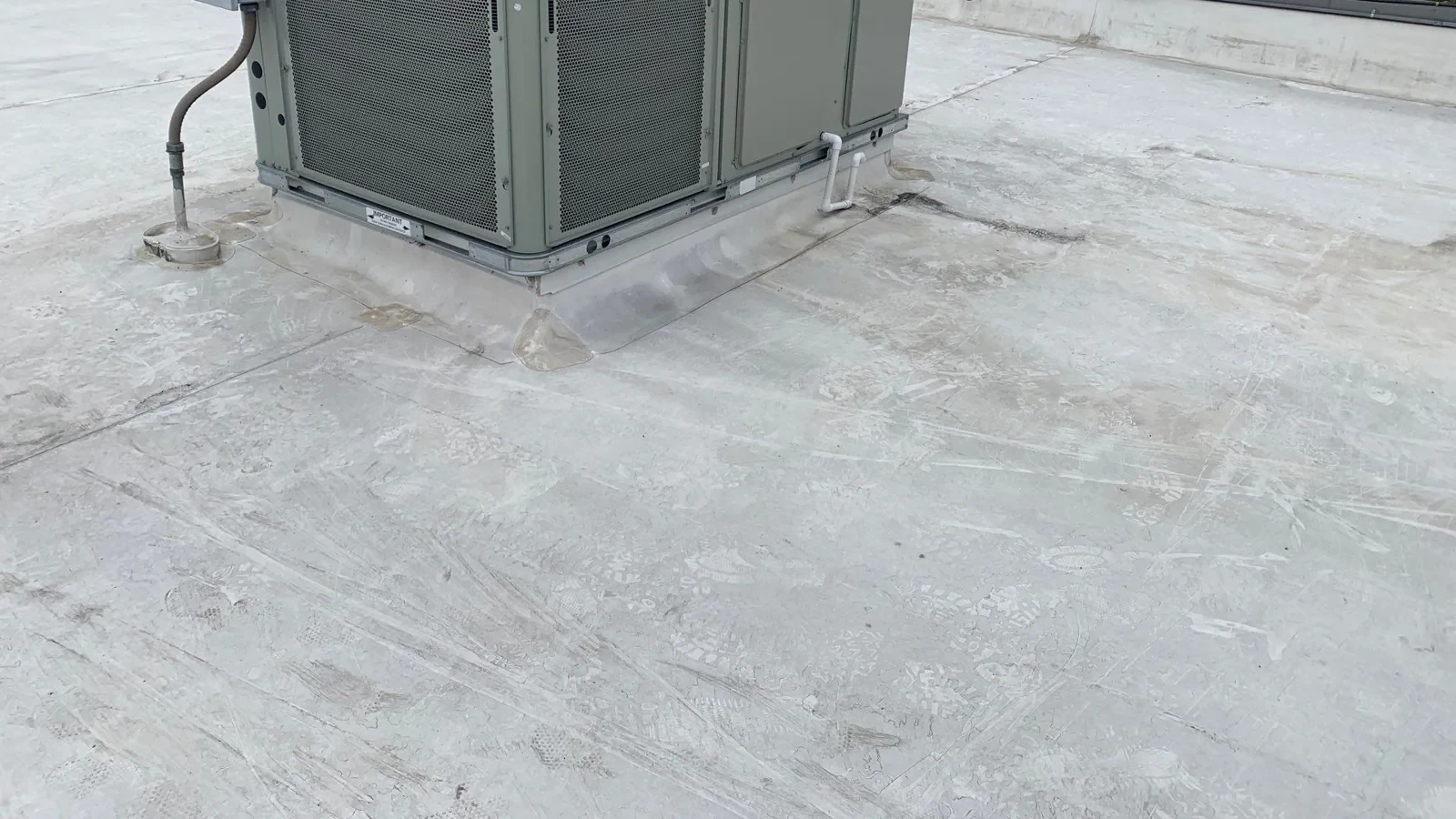
What we check, what we recommend and how the crew keeps the building running.
Infrared and Core-Cut Moisture Surveys
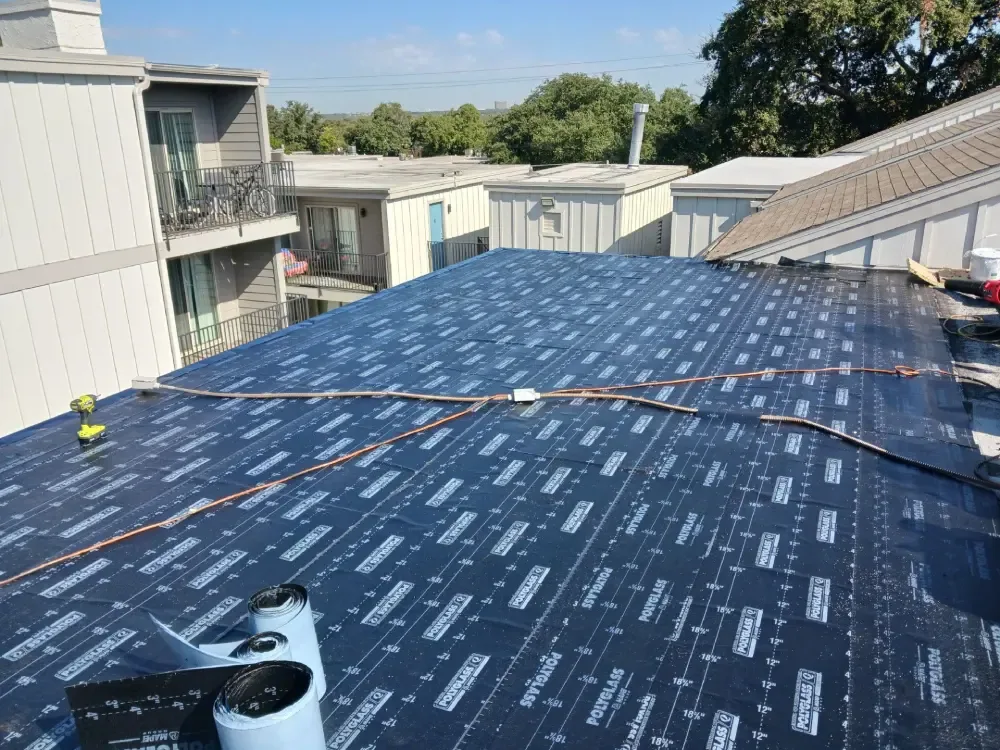
Conditions, options and next steps for commercial buildings in East Tennessee.