
Manufacturing Plant Roofing in Johnson City, TN
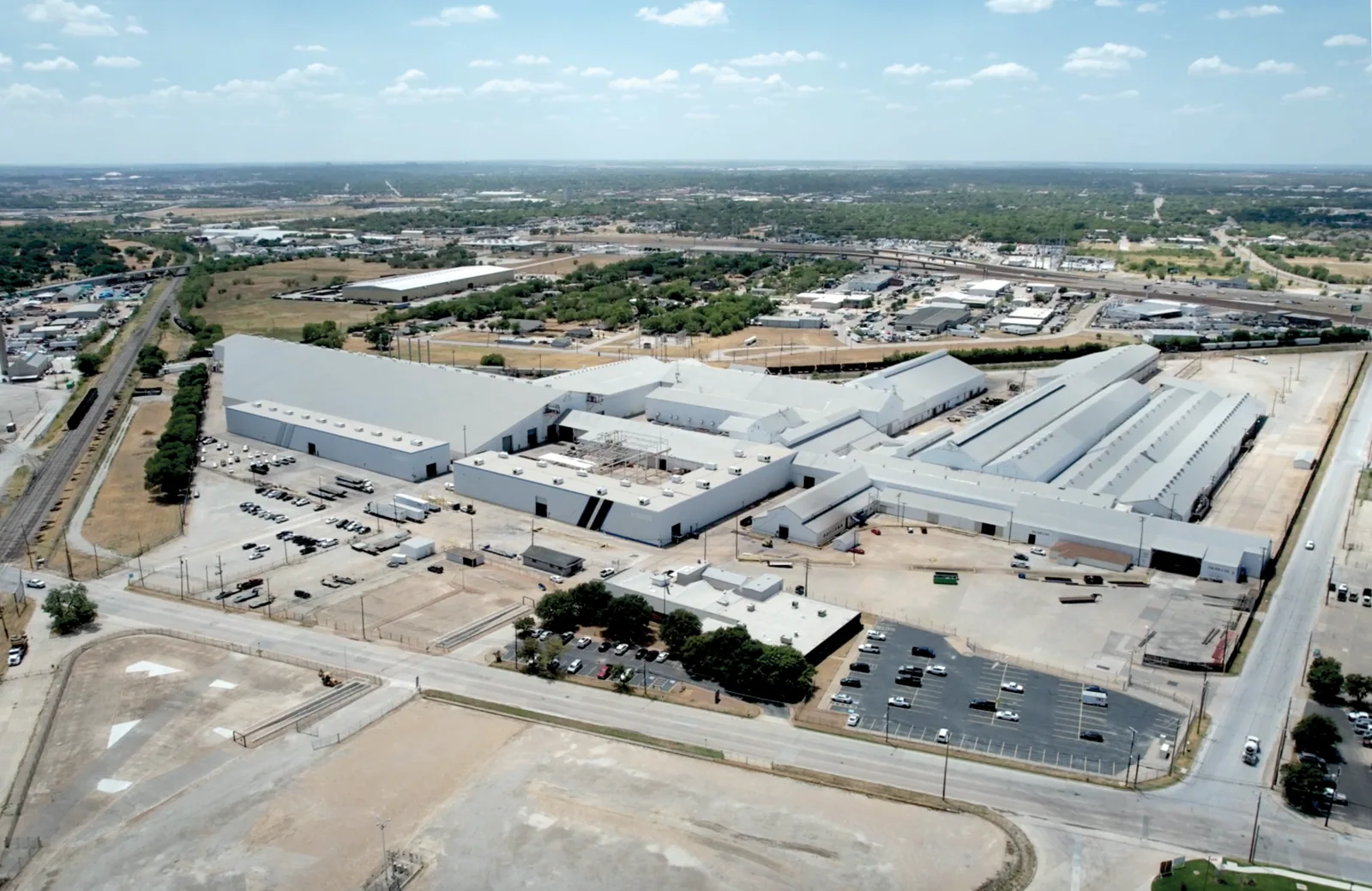
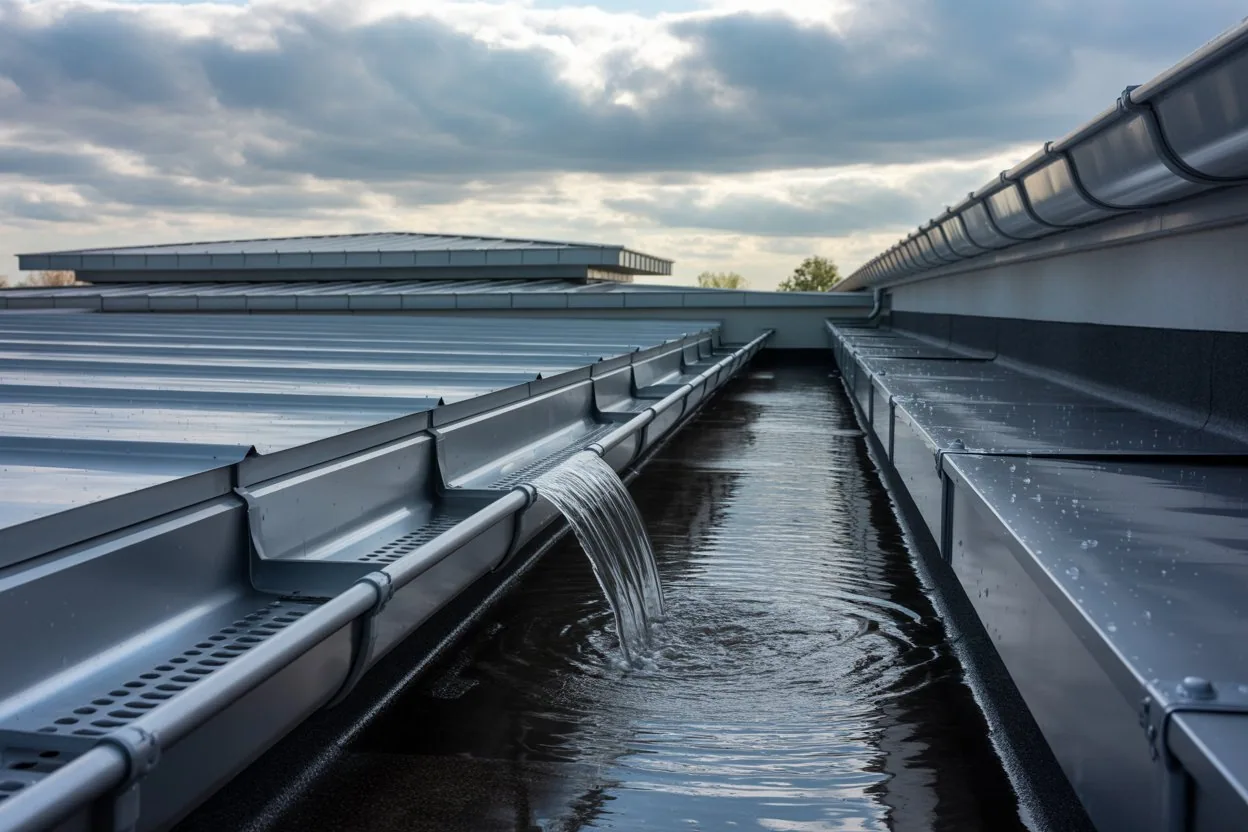
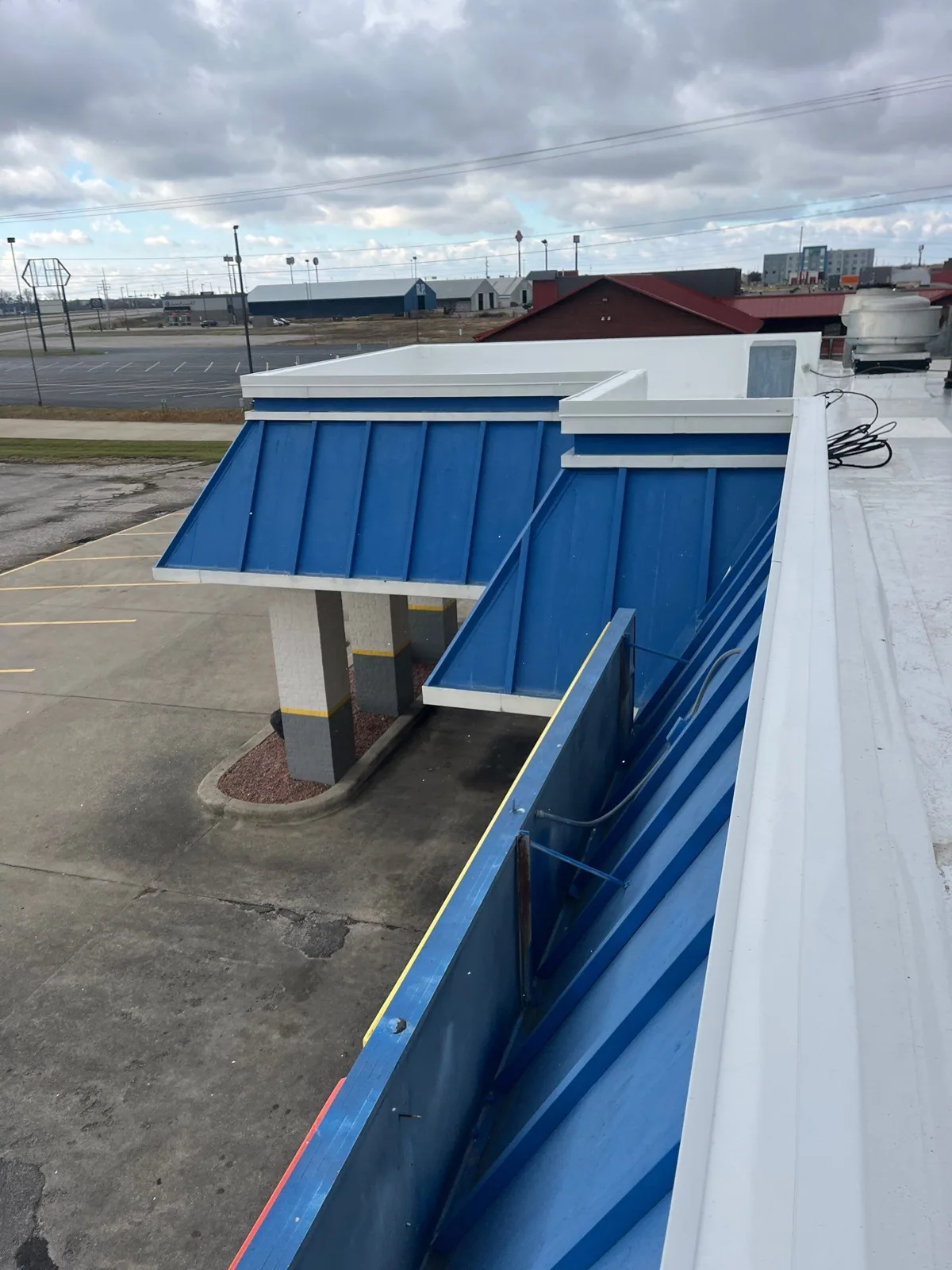
Snow that lands on a plant roof does not always stay frozen, because the floor beneath it may run presses, ovens or furnaces that send heat upward all winter. The warm deck melts the snow from underneath, the meltwater slides downslope across a membrane that is still cold at its edges, and it refreezes where the roof ends: in the scupper, at the gutter, along the base of a parapet. Ice in the outlet turns a drainage path into a dam, and water backs up across a roof that was designed to shed it. In Johnson City, TN, where about 15.6 inches of snow fall in an average year, that cycle can repeat many times between December and March. The owner sees none of it until the pooling area leaks, by which time the damage has been building for several seasons.
What do process heat and exhaust do to the roofing above them?
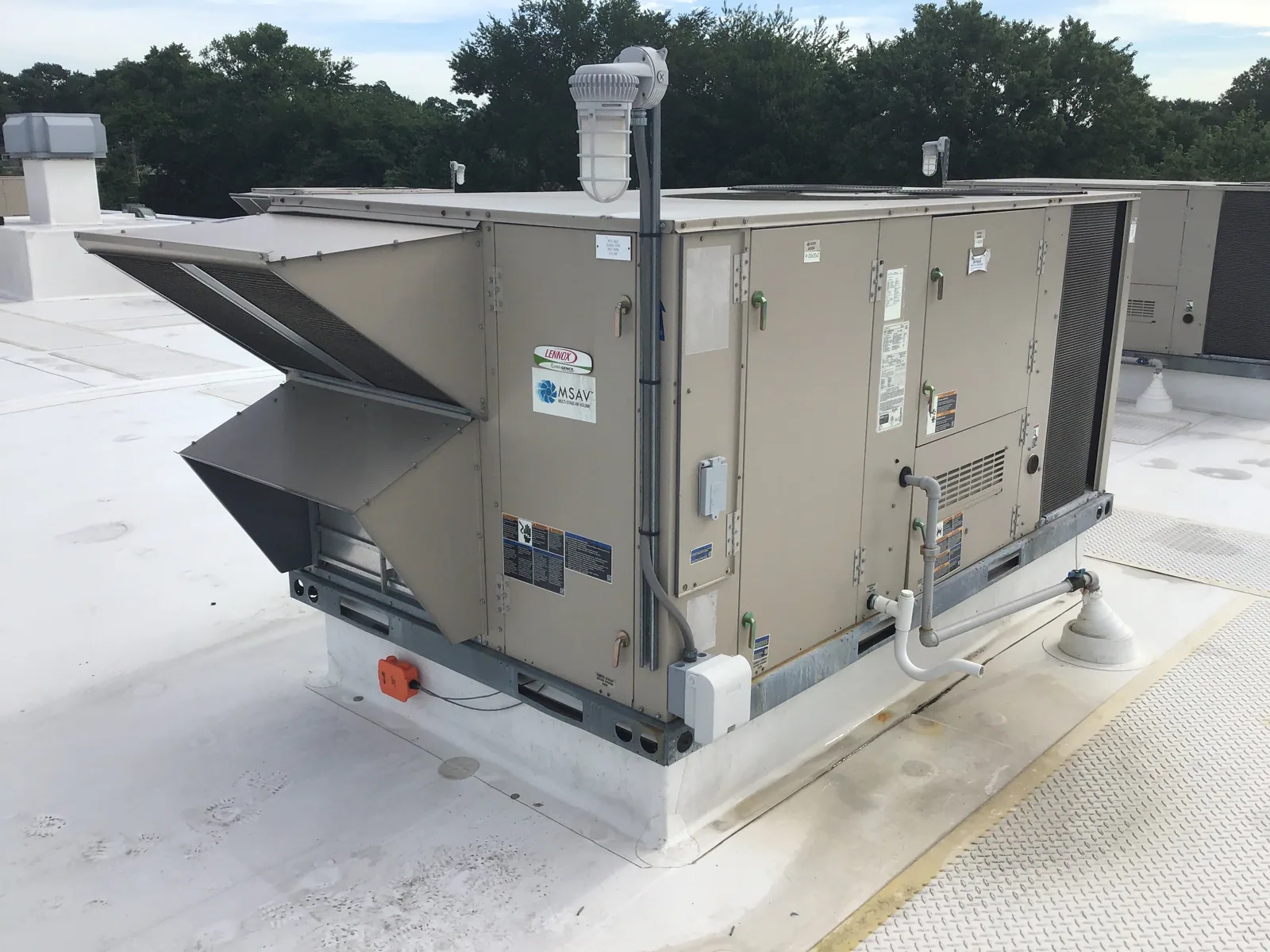
Heat from below makes a membrane's life uneven. The sheet over a hot press line sits several degrees warmer than the sheet over a dock or a warehouse bay, so the two expand and contract on different schedules, and the seam that joins them takes the difference. Exhaust adds chemistry to the physics: oils, solvents, steam and acid vapors settle on the surface near vents and stacks, and certain membranes swell, stiffen or lose plasticizer where those residues collect. Vibration from large fans and compressors then loosens fasteners at equipment curbs and pipe supports. A plant roof therefore ages in patches, with the worst wear around the machinery. That is why a single roof age on a drawing says little about how much life is left in each area.
Put your plant roof on the capital calendar
Call Commercial Roofing Johnson City to schedule a survey of your plant roof. You will receive moisture findings, exposure notes by area and a phased plan that works with your production schedule.
What belongs in a roof survey before a plant adds a line?
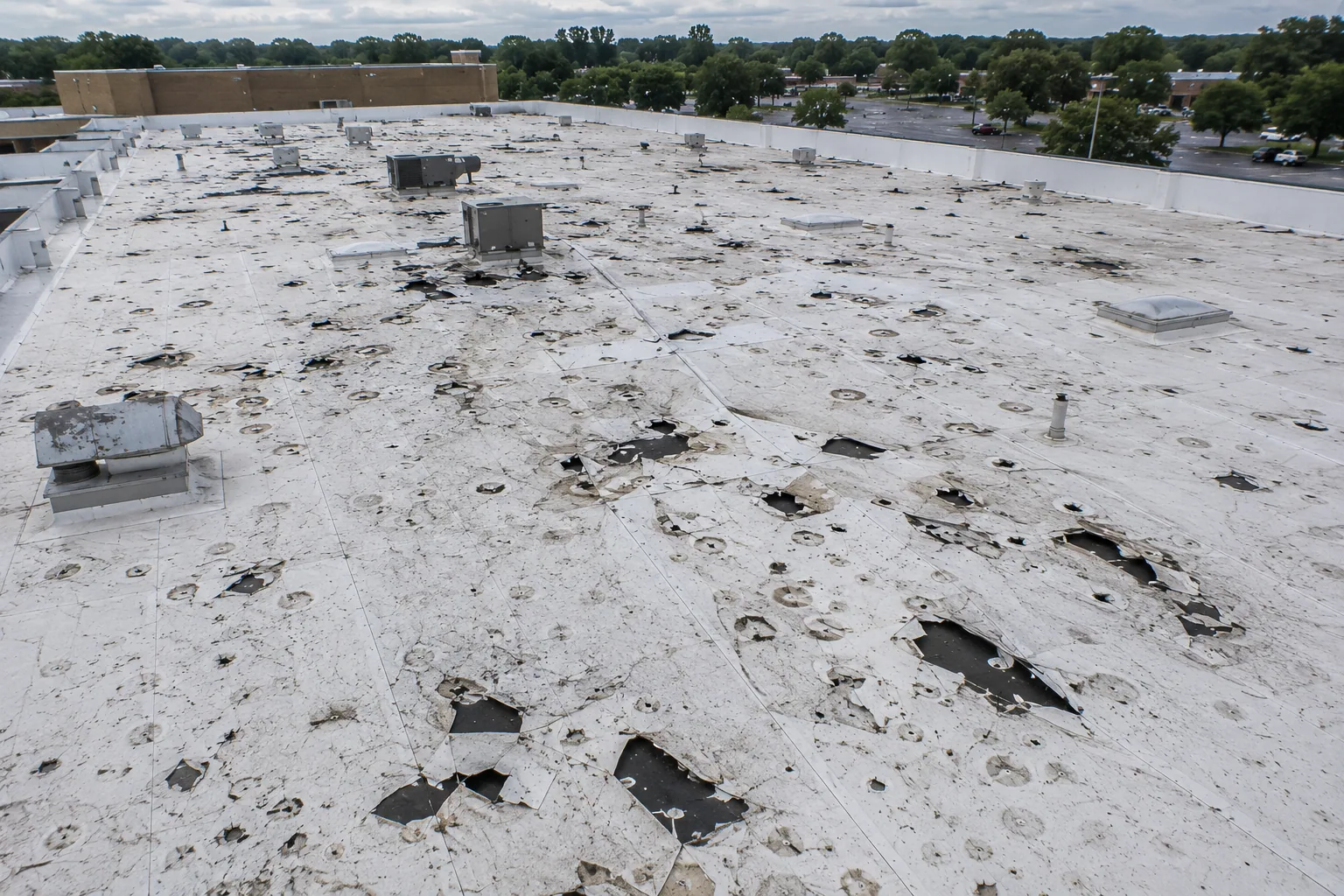
Weight, penetrations and drainage come first, in that order. We check what the deck and framing already carry, how many openings the new equipment will add to the membrane, and whether the existing drains can handle redirected water. We read the surface near every exhaust point for chemical staining or softened membrane, and we look at the base of each equipment curb and support for movement. Where a plant is already running, an infrared scan after dark shows wet insulation without opening the roof. The final report separates what can wait from what must be done before the new line is commissioned, so the roof does not become the reason a planned startup slips.
Which assembly outlasts heat, vibration and chemical exposure?
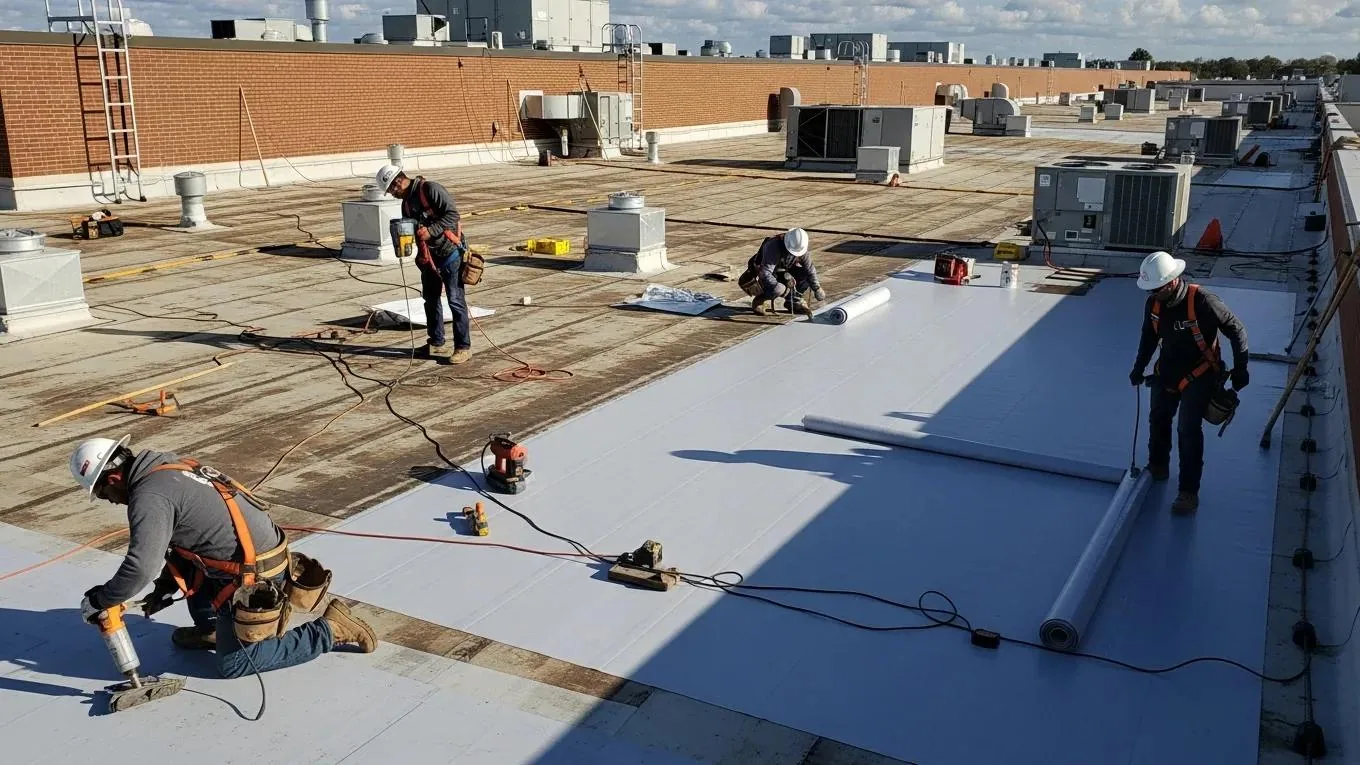
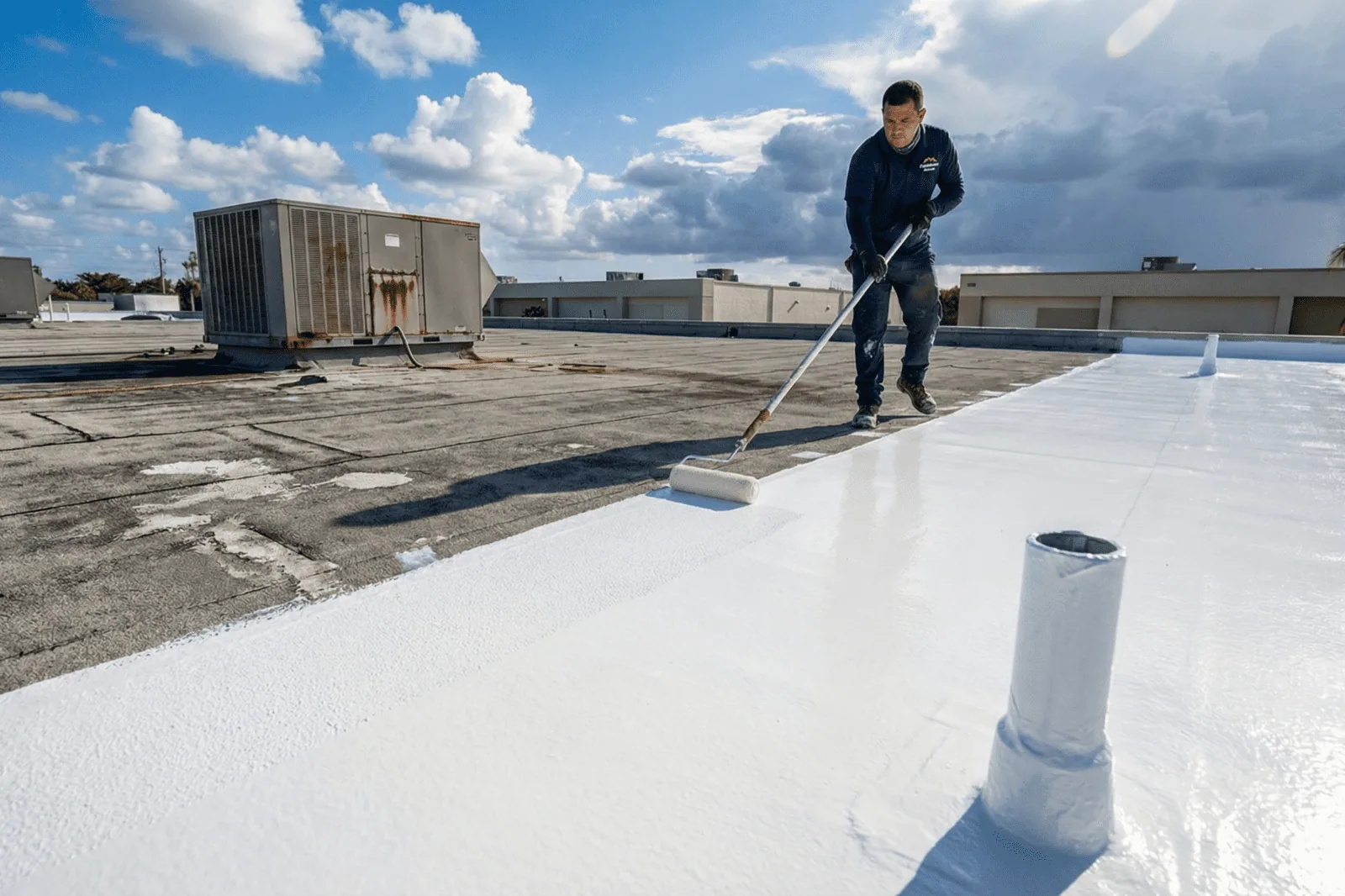
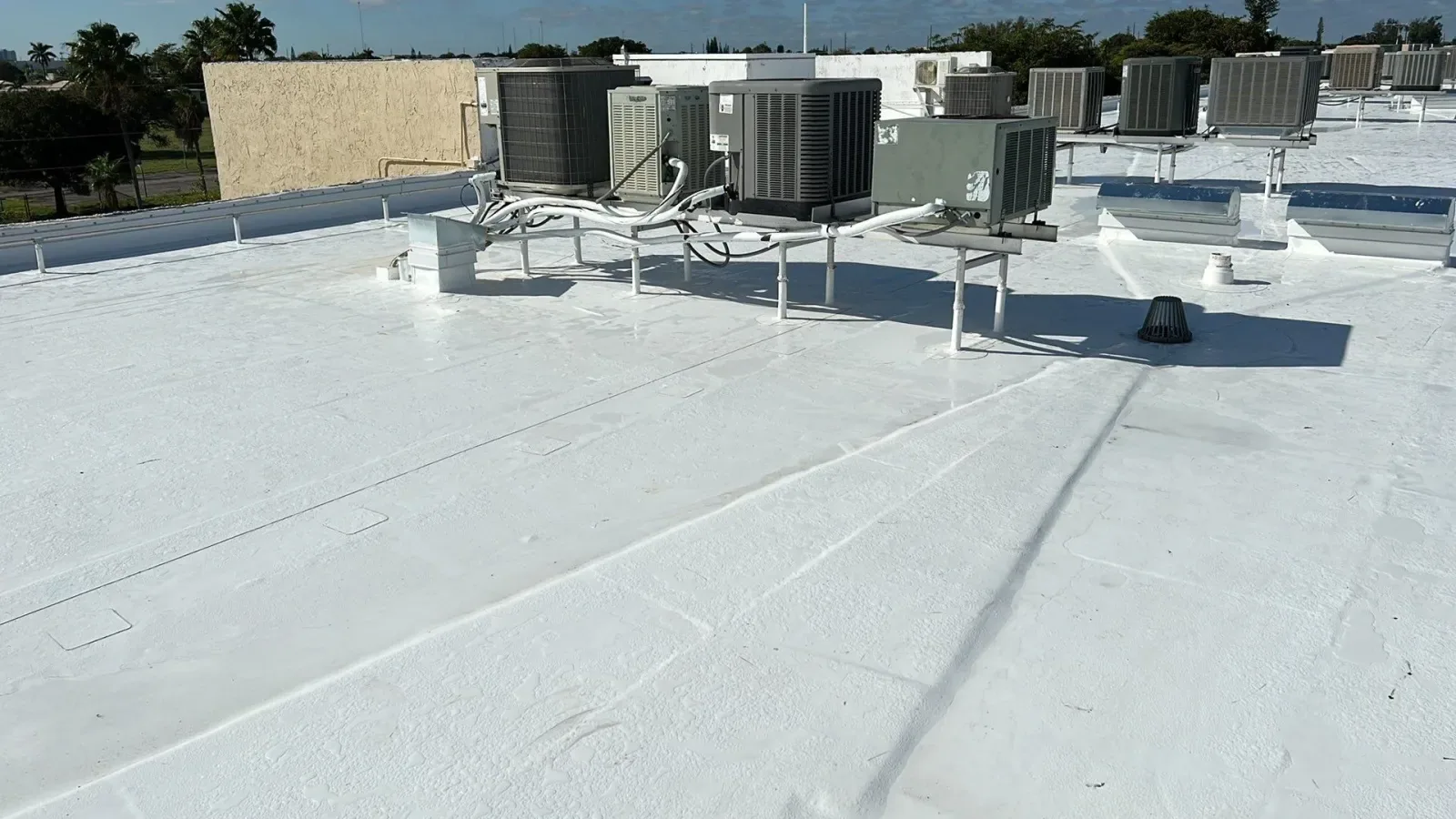
The answer follows the exhaust. Where the roof sees oils and fats or aggressive vapors, a KEE membrane holds its flexibility and resists the chemicals that attack other single-plies. Where exposure is mild, a reinforced TPO or a mechanically fastened system gives a clean, reflective surface that can be walked and repaired. Standing seam metal suits a plant with a long service horizon and a roof that carries few penetrations. Whatever the sheet, a cover board over the insulation protects against the point loads that technicians and rolling carts create. We lay out the options side by side with the exposure data and the service life each choice offers, because the cheapest membrane per square foot is rarely the cheapest over the life of the plant.
What does a roof leak cost a plant that cannot stop its process?
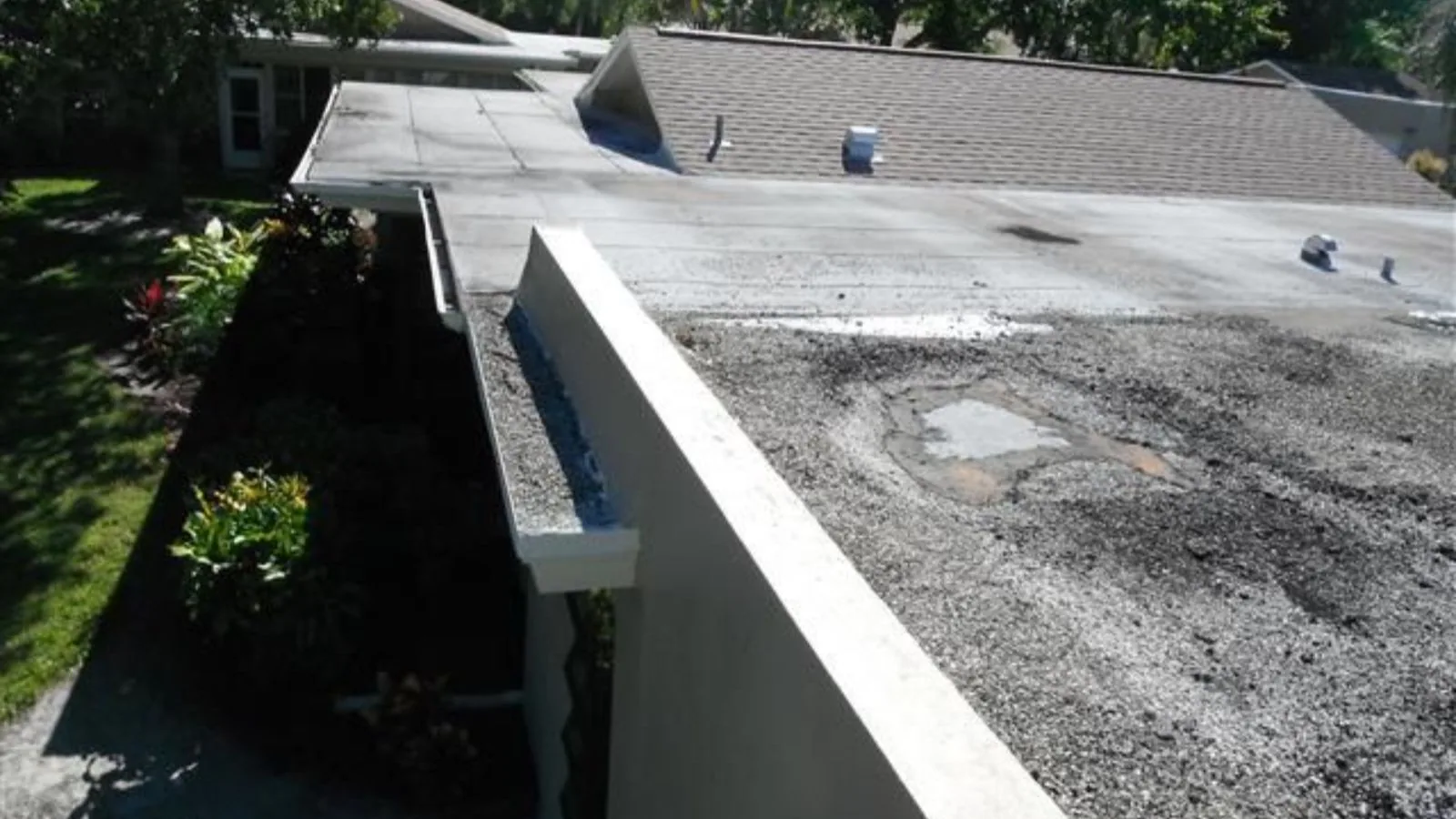
The expense reaches well past the repair. Water near electrical gear, controls or a clean assembly area can scrap product, trip equipment or force a line to idle while the area is dried and inspected. Insulation that has absorbed moisture then keeps leaking value long after the opening is sealed, because it no longer resists the heat flow the plant is paying to generate. When a roof reaches that stage, the choice narrows to emergency repair or unscheduled replacement, both of which cost more than the same work done on the owner's calendar. Spending on a survey and a planned program converts that risk into a line in the capital budget.
When does a plant give a roofing crew room to work?
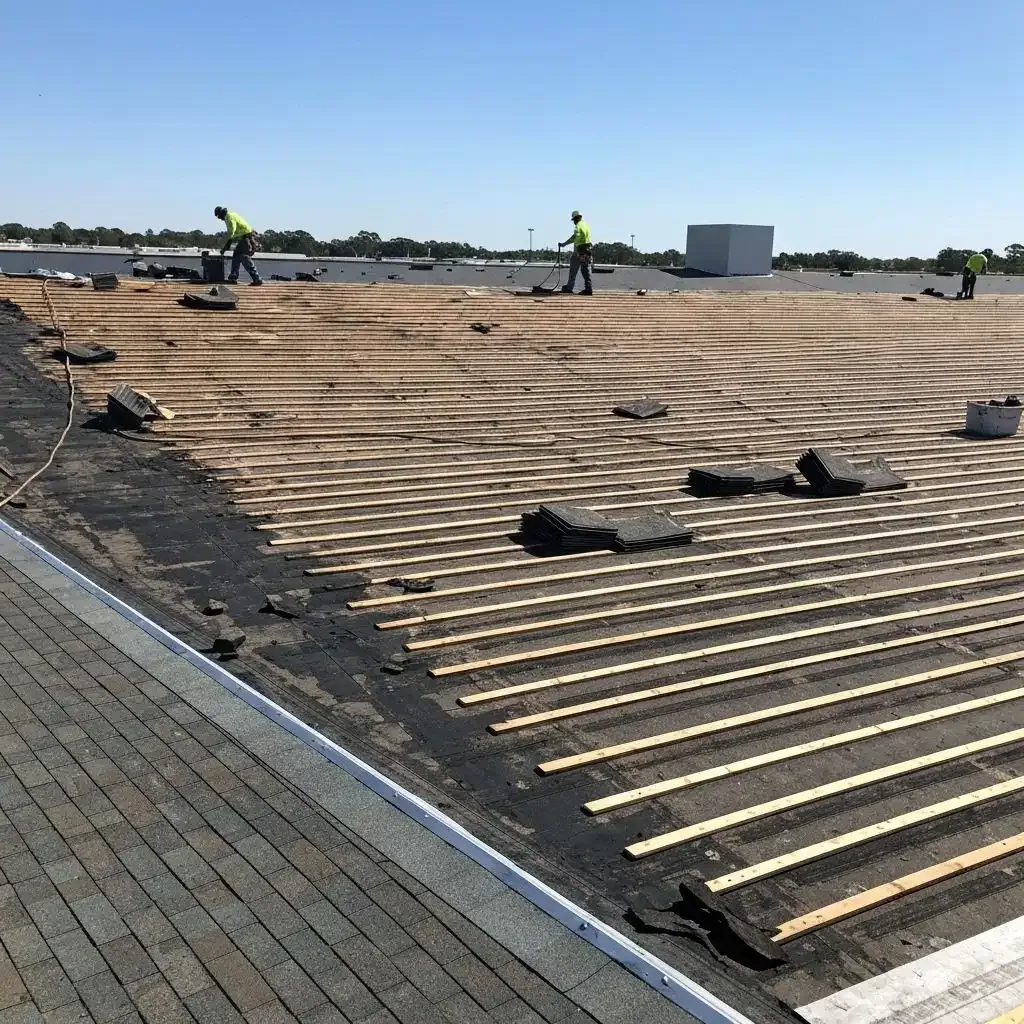
Most plants offer a few windows: a planned shutdown, a holiday week, or a slow production quarter. Roofing is a poor fit for a week-long gap on a large roof, but it fits well when we divide the building into zones and work through them in sequence, finishing and sealing one before opening the next. We coordinate crane picks with shipping and receiving, keep fasteners and debris away from conveyors, and set up fire watch and hot-work permits where the process requires them. For plants that cannot tolerate overhead noise in a quality-sensitive area, we reschedule that zone for a shift when the line is down. The goal is a roof that does not become the reason production stopped.
What do plants in Washington County ask of their roofs?
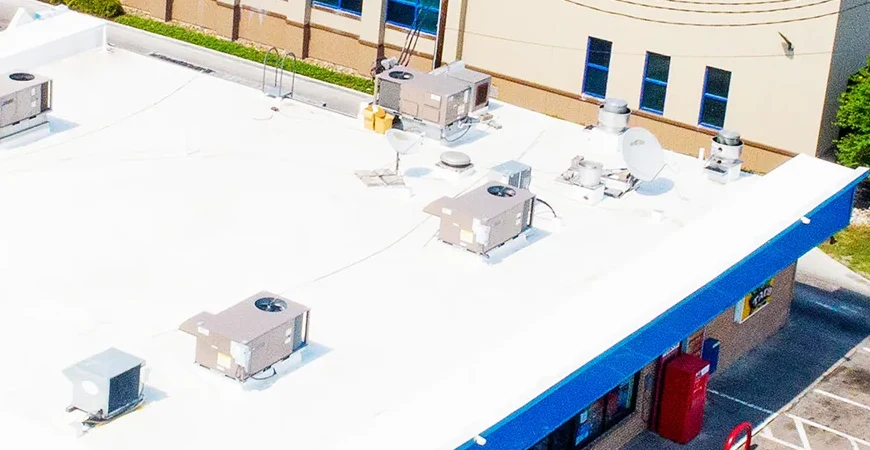
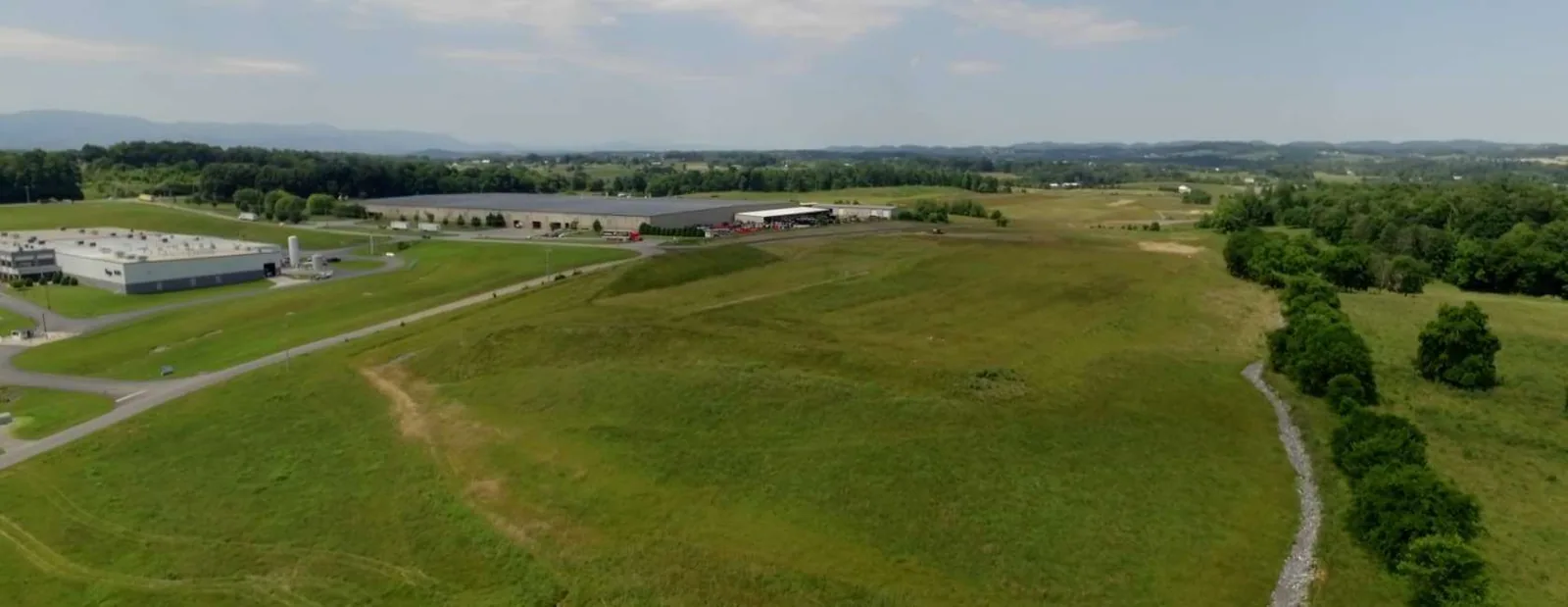
Near Telford, the Washington County Industrial Park is home to ebm-papst, whose fan plant sits on 30 acres, and to Sungwoo Hitech, which renovated the former Alo Tennessee building for automotive parts. Koyo Corporation USA added 61,000 square feet of manufacturing space in Washington County. A renovation, an expansion or a change of process alters what a roof carries, which is when a roof survey earns its cost. American Water Heater Company ranks among Johnson City's largest employers, and Kingsport adds Eastman Chemical's headquarters and primary plant and the BAE Systems operation at Holston Army Ammunition Plant. Every one of these roofs meets the same freeze-thaw cycle, and owners who run several plants often manage them as a group, the way manufacturers with multiple sites tend to.
Where a plant has adjacent storage, align roof access with the dock plan used for warehouse roofing.
If finished goods move directly from production to shipping, the staging and phasing questions in distribution-center roofing also apply.
Commercial Roofing Questions
What decides whether a plant roof needs a chemical-resistant membrane?
The exhaust stream settles it. Oils, fats, solvents and acidic vapors attack some single-ply sheets, and the damage shows first as stiffening and shrinkage around vents and stacks. We ask what each unit discharges and how far it reaches across the roof, then match the membrane to that exposure instead of to the building average.
How can a plant add a new line without damaging the roof above it?
Weight and openings need to be settled before anything arrives on a truck. The framing has to carry new loads, each penetration needs proper flashing, and any new exhaust should be located away from existing drains and seams. Bringing the roofer into the layout meeting early costs little, while a late discovery can force a relocation or an expensive structural fix.
Can roofing really fit inside a shutdown week?
A shutdown week is useful but short, so it rarely covers a whole roof. We use it for work that is hard to do beside a running line: curb replacements, penetrations near sensitive equipment, loud demolition, and crane lifts. The remaining area proceeds in zones during normal operations. Planning with the maintenance manager beforehand protects the dates.
Why do the drains on a plant roof ice up when the building is warm?
Heat rising through the deck melts snow from beneath, and the water refreezes at the cold perimeter where the outlets are. Heated drain bodies, properly sized scuppers and a regular fall check keep the path open. Left alone, the ice damages edge metal and forces water back across the membrane, so keeping the path open is part of any roof drain and scupper correction.
What should a buyer of an industrial building learn about the roof before closing?
Start with moisture in the insulation, then the age of each area, then the equipment layout. A due diligence roof survey gives the buyer condition data, a replacement window and a number to negotiate with. A roof that looks fine from a lift can carry a deferred cost that surfaces within the first two winters.
Related Roofing Pages
Rooftop Equipment Curbs and Supports
How the work is scoped, phased and documented on Tri-Cities roofs.
KEE Roofing
What we check, what we recommend and how the crew keeps the building running.
Washington County Industrial Park
Conditions, options and next steps for commercial buildings in East Tennessee.