
Warehouse Roofing in Johnson City, TN
A steel joist spanning a warehouse bay does not stay perfectly level once a wet snow settles on it. It deflects a fraction of an inch, enough to turn a flat plane into a very shallow bowl, and the next thaw sends meltwater toward the low point instead of the drain. Standing water adds weight, the added weight deepens the dish, and the membrane at the bottom of it spends weeks submerged while sun and frost work on its seams. Johnson City, TN averages about 15.6 inches of snow a year, and a storage building often has less interior heat to soften the problem than an occupied office does. An owner who reads the signs early can correct drainage with tapered insulation and a few new drains. An owner who waits usually ends up pricing a deck repair next to the membrane.
Why does a roof with so few penetrations still wear out?
Exposure and distance explain it. A warehouse roof is mostly open field, one long sheet broken only by a handful of curbs, vents and fan housings, so there is no shade, no taller neighbor to block the winter sky, and nowhere for thermal movement to go except into the seams and the perimeter. Overnight the membrane contracts toward its edges, and by afternoon it grows back. Across a winter where lows average about 25F, that cycle repeats daily and concentrates stress where the sheet turns up a wall, laps over another sheet or meets a hatch curb. The field of the roof often looks fine long after those details have begun to open, which is why a look from the parking lot tells an owner so little about service life.
Get the condition of your warehouse roof on paper
Call Commercial Roofing Johnson City to arrange a walk of the roof and a moisture reading where the survey calls for one. You will have photographs, locations and a ranked scope to weigh before any capital is committed.
What do we look at when we walk a warehouse roof?
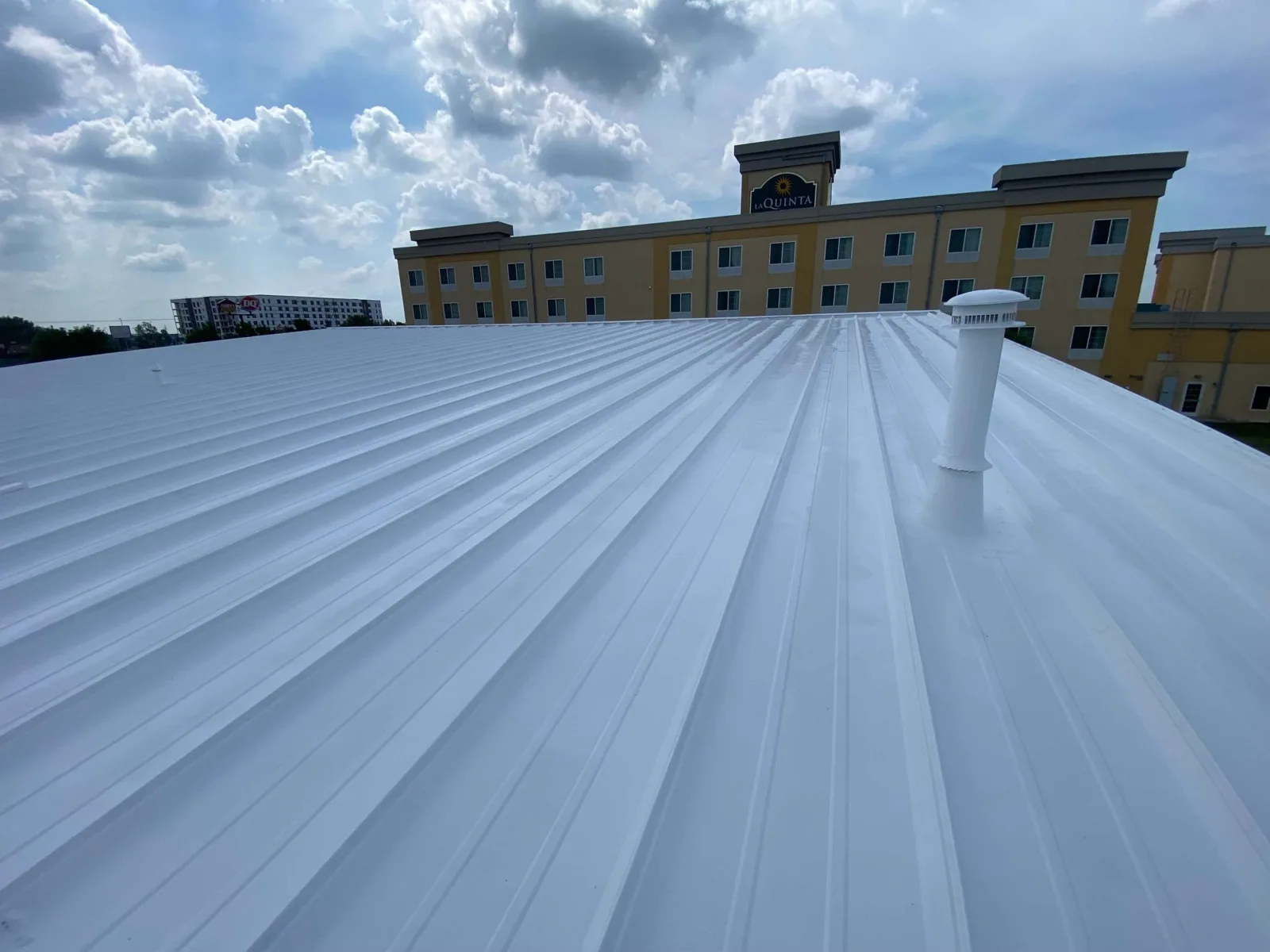
We start with the low points, because they carry the most information. Rings of silt and algae on the membrane mark where water has stood, a straightedge laid along the joist line shows where the deck has settled, and a drain basin full of debris shows where the slope to the outlet has been lost. After that we work the walls, the hatch and fan curbs, and the edge metal, then press on the surface to find soft spots that suggest saturated insulation. When we feel one, we recommend an infrared moisture survey to outline the wet area before anyone commits money. The result is a plan with every defect tied to a location, so work can be priced by area instead of by guess.
What does one wet bay cost compared with a drainage correction?
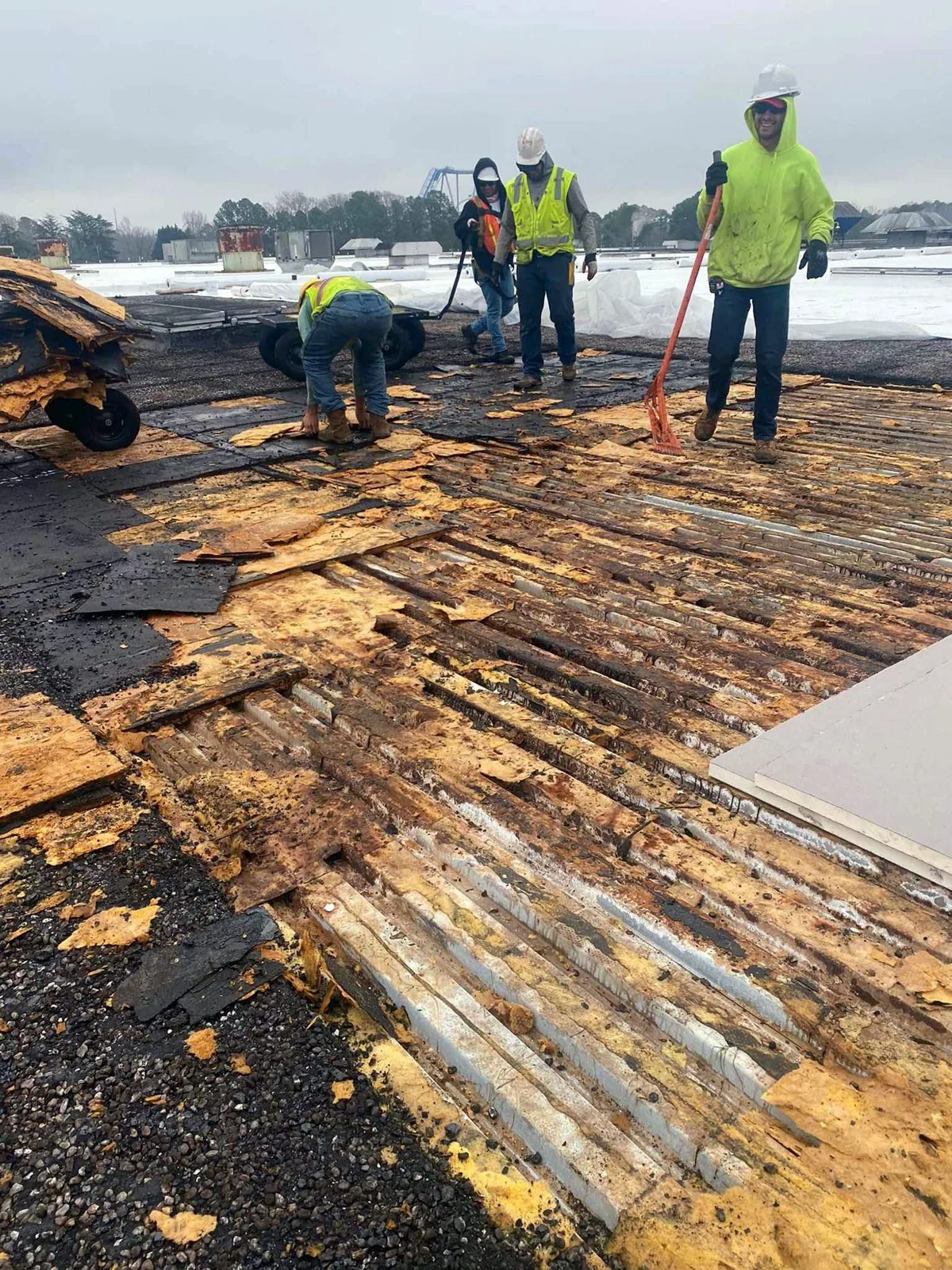
Water that enters a seam reaches the insulation first, and the insulation holds it. By the time a drip lands on a pallet, the wet area above may already be many times larger than the opening that started it. A drainage correction is a few days of work. A wet bay is damaged stock, rusting racks, a call to an insurer, and in a leased building a disagreement about who owes what. Deferral also compounds in the deck itself: steel that sits under saturated insulation corrodes from the top, and a deck repair has to be done before any new membrane can be fastened to it. The cheapest year to fix ponding water is the one before the first leak.
When does a warehouse roof earn a recover instead of a tear-off?
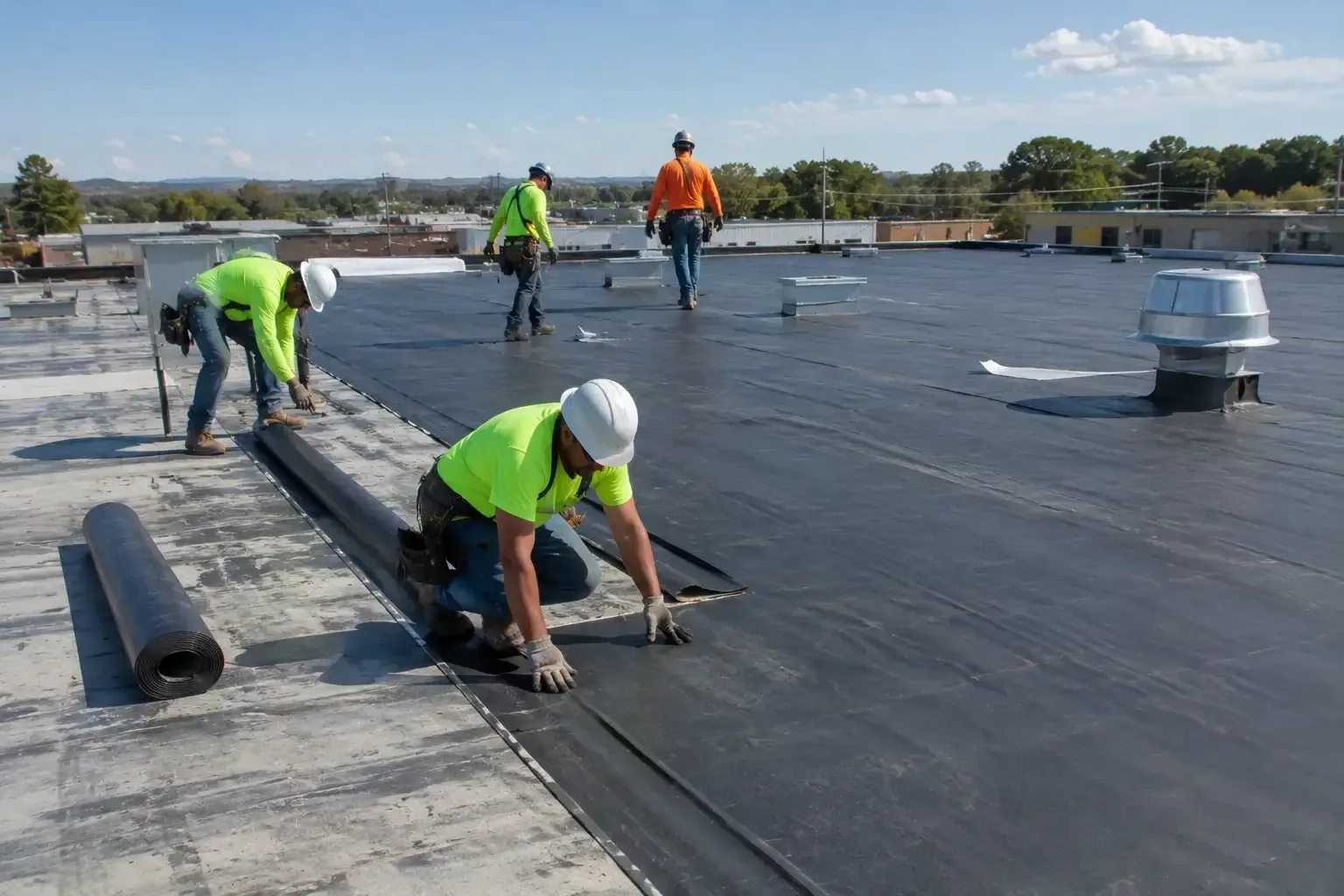
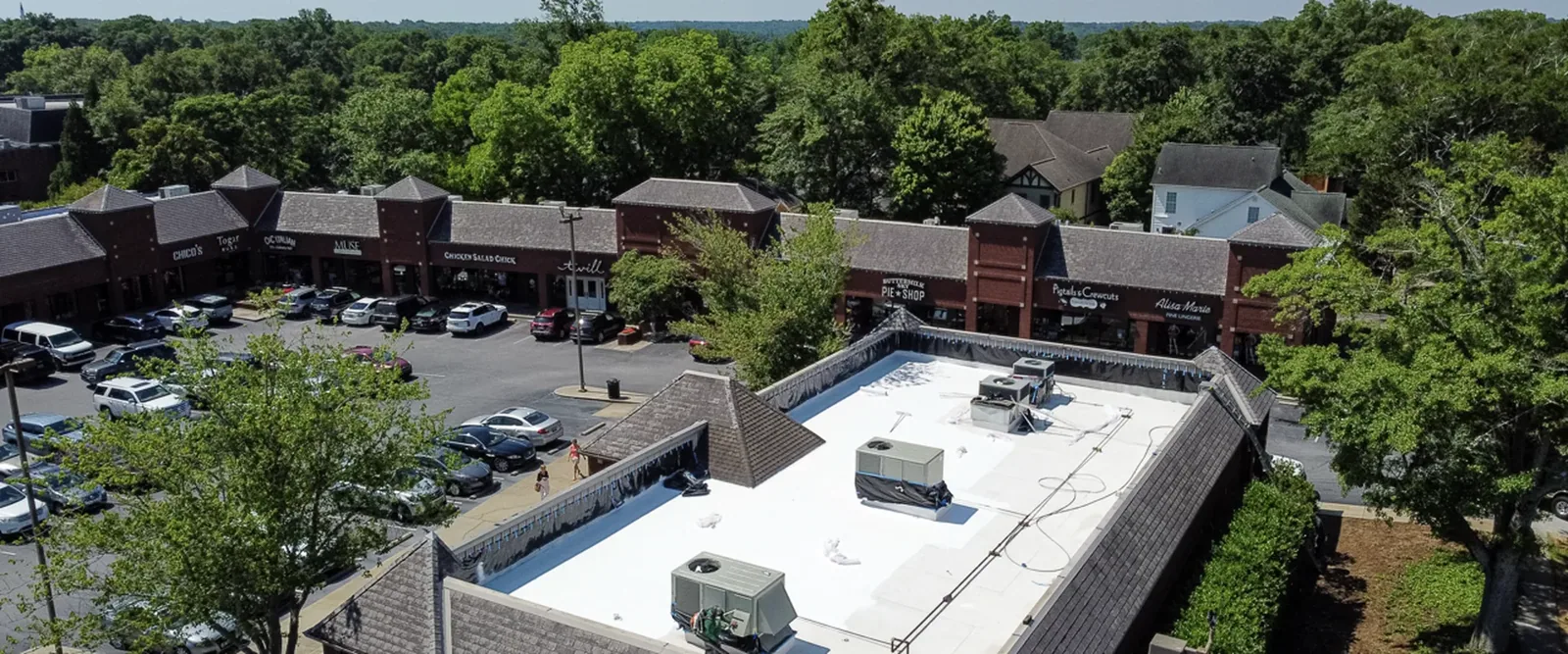
When the insulation under the old membrane is dry, the deck is sound, and the existing roof carries only one layer. In that case a roof recover with a cover board and a new TPO sheet keeps the building operating, avoids hauling out tons of old material, and moves the replacement window out by a full roof life. The 2018 codes Johnson City has adopted restrict a recover over roofs that are wet or already layered, so the survey comes first and settles the question with evidence. If the cores come back wet, the sound course is a tear-off of the affected area, with the dry sections recovered and the two tied together at a clean seam.
Owners holding several storage buildings usually fold this decision into roof capital planning, so that the buildings with wet insulation move first and the dry ones wait.
How is roof work sequenced above racking, dock doors and a shipping schedule?
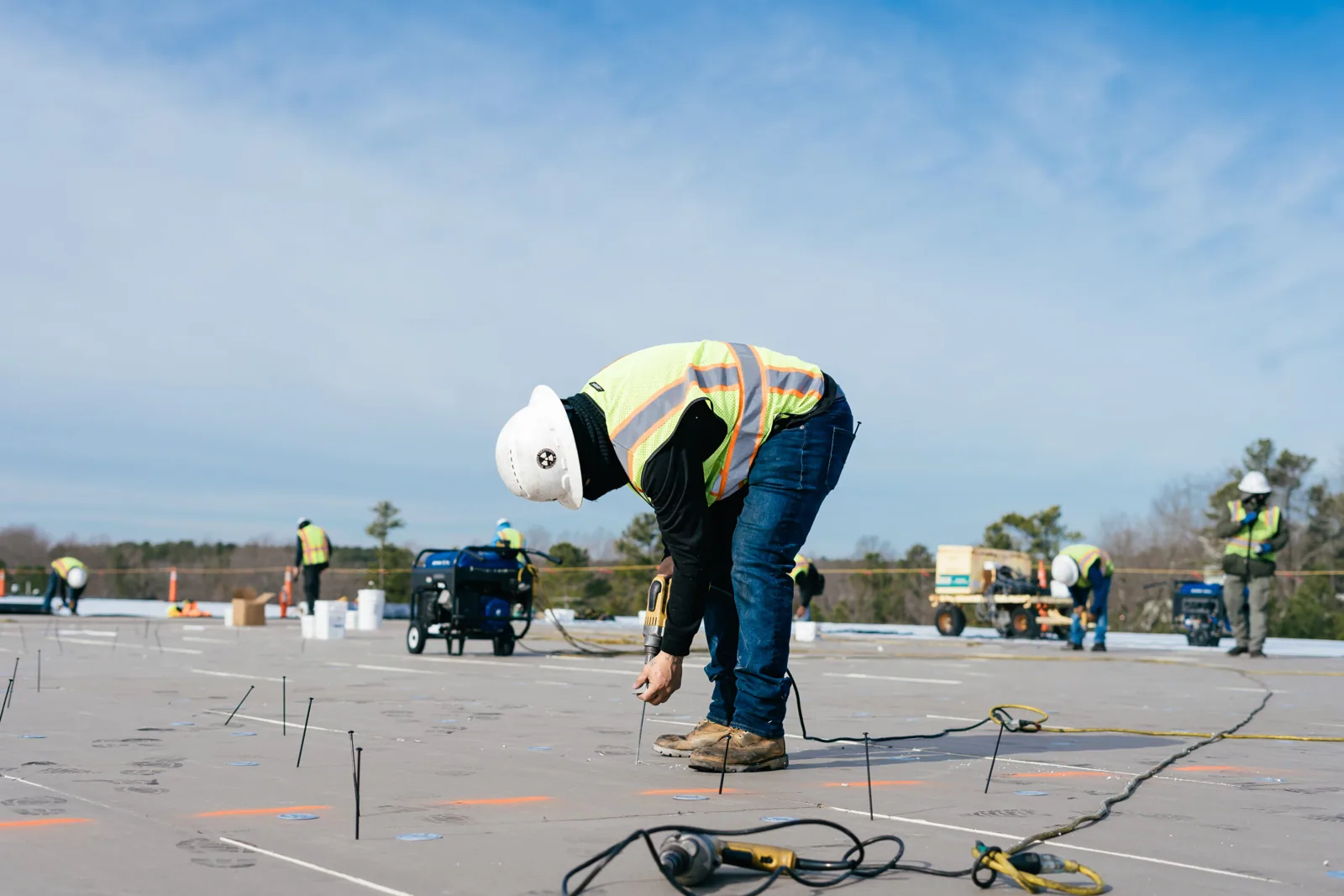
One bay at a time, with the interior protected before the old roof is opened. We stage material at the building perimeter so forklifts and trailers keep their lanes, close each day's tie-in before the crew leaves, and watch the forecast closely, because single-ply adhesives and welds want a dry surface and a workable temperature. In the Tri-Cities that makes late spring through early autumn the easy calendar, with winter work possible on mechanically attached systems when the days cooperate. We plan hot work and loud demolition around the receiving hours the tenant gives us, and we keep a temporary seal ready for any area left open overnight.
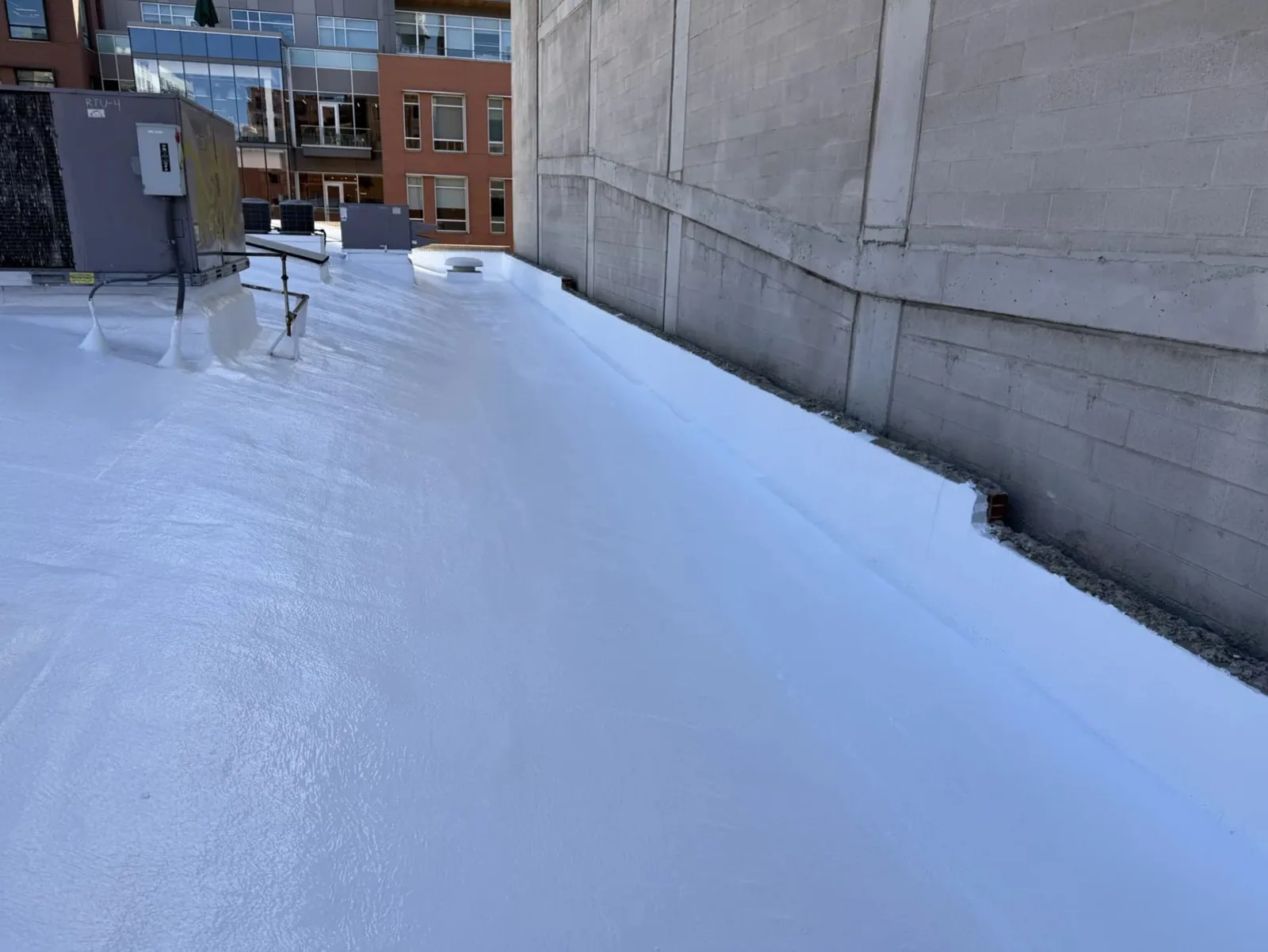
What do storage buildings in Washington County see from the weather?
A warehouse near the I-26 and I-81 junction just outside Gray faces the same valley weather as the plants of the Washington County Industrial Park near Telford: Johnson City records roughly 45 inches of precipitation a year, and winter alternates between freezing nights and mild afternoons. Hurricane Helene's flooding in September 2024 pushed the Nolichucky River to catastrophic levels in Northeast Tennessee, and a drain that is marginal in an ordinary year will be the first to fail in a storm like that. Owners whose sites sit higher, toward Mountain City at 2,418 feet or Roan Mountain at about 2,550 feet, should assume heavier winter loading than the valley floor sees.
An owner who may later repurpose a storage building as flex industrial space will find a roof that carries snow and equipment well easier to lease.
A warehouse with regular outbound freight needs a roof sequence that preserves dock access, the same planning concern as distribution-center roofing.
Commercial Roofing Questions
What decides whether a warehouse roof can carry new equipment or solar later?
The framing decides before the membrane does. Joist capacity, deck gauge and existing dead load set what a roof can hold, and a structural engineer should confirm it before panels or heavy units are ordered. If the roof is within a few years of replacement, put the new membrane down first so the equipment is not lifted off a roof that is only a few seasons from tear-off.
How soon after a heavy snow should someone check the roof?
Within a few days of the thaw, not the snowfall. The snow itself is rarely the problem; the meltwater is, because it shows which drains are clear, which bays have settled and which seams open when the water refreezes. A short walk after the first big melt of the season catches most problems while a patch is still the right remedy.
Why does reroofing a warehouse cost more or less than the square footage suggests?
Condition under the membrane moves the number more than area does. Wet insulation, deck repair, the count of existing layers, the attachment method and the amount of edge metal and curb flashing all change the scope. Two roofs of the same size can differ widely once core cuts show what is underneath, which is why a survey comes before a bid.
Do skylights, smoke vents and roof hatches change the plan?
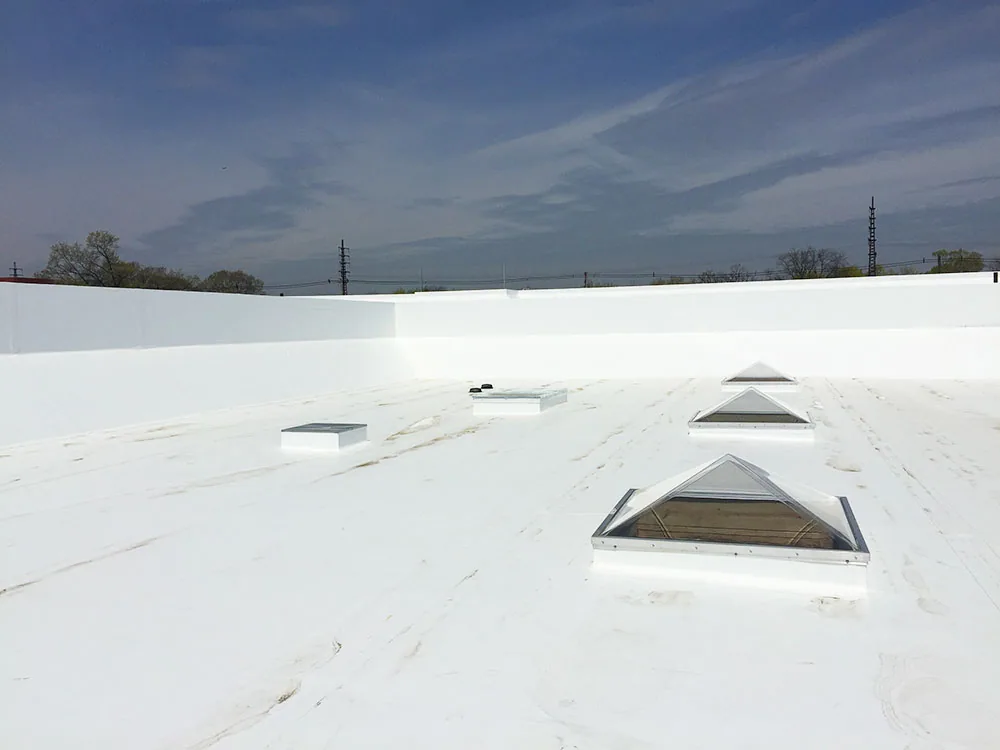
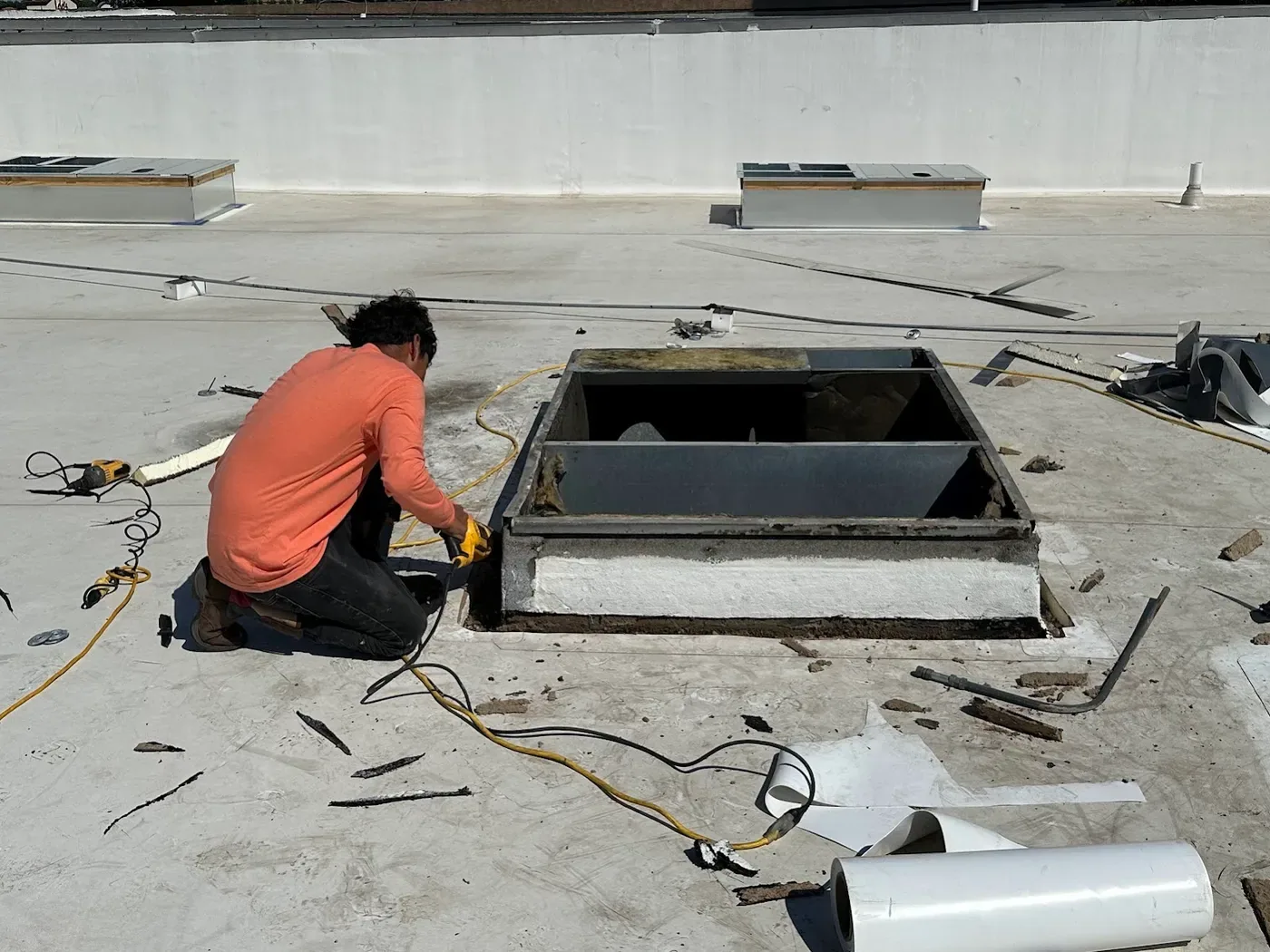
They add flashing work, and flashing is where a roof usually fails first. Older acrylic domes and aluminum curbs often outlive their seals, so we price curb flashing and, where the unit has aged out, replacement of the skylight or vent as part of the scope. Reflashing during a reroof costs much less than returning later to chase a leak at a single curb.
Is a coating a realistic choice for an aging warehouse roof?
Only if the roof is dry and the membrane is still attached and sound. A restoration coating adds reflectivity and seals minor defects, but it cannot dry out wet insulation or flatten a ponding area. Moisture findings and the condition of the seams tell us whether coating buys a few more years or simply hides a problem that will resurface.
Related Roofing Pages
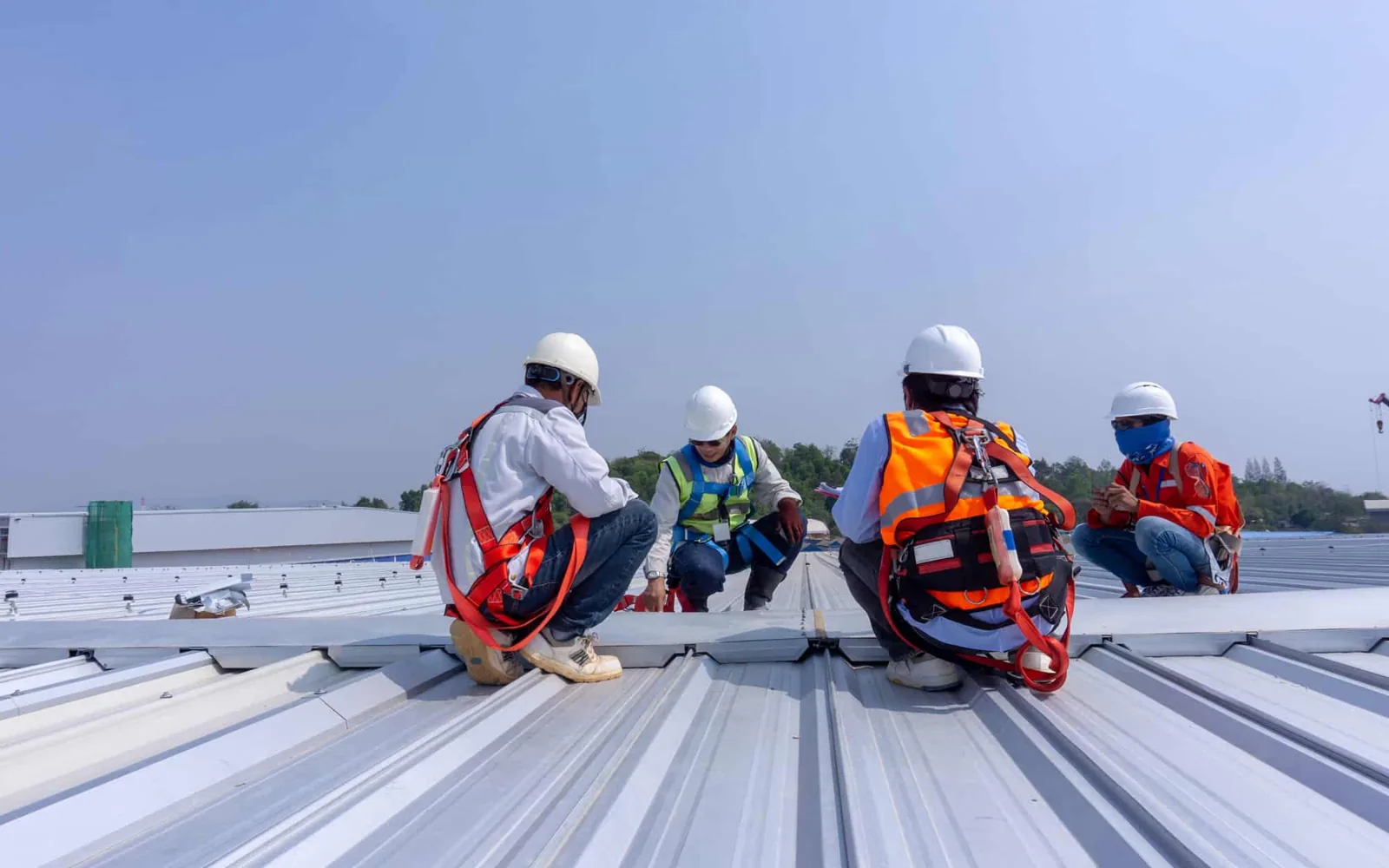
Infrared and Core-Cut Moisture Surveys
How the work is scoped, phased and documented on Tri-Cities roofs.
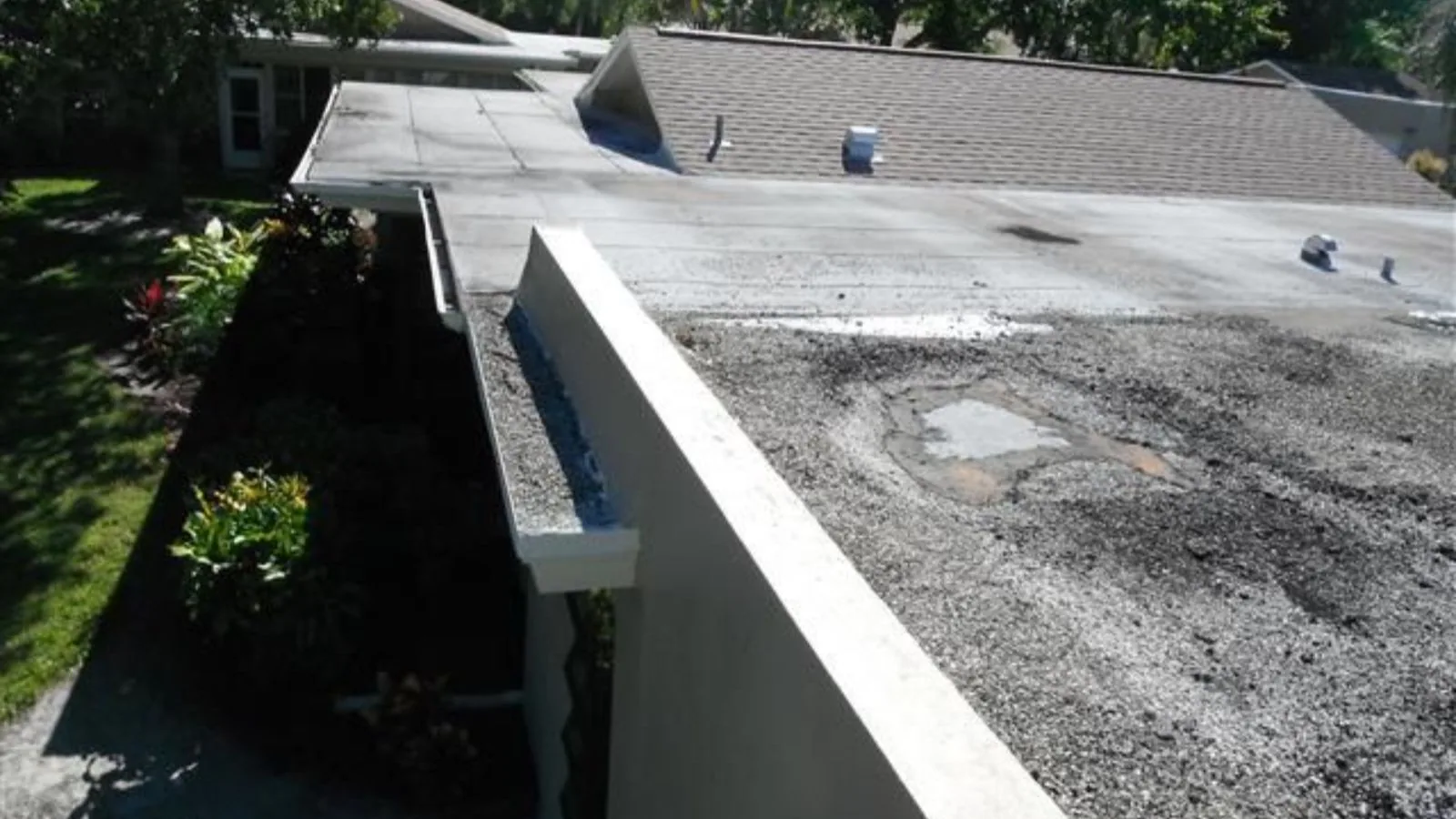
Ponding Water Roof Repair
What we check, what we recommend and how the crew keeps the building running.
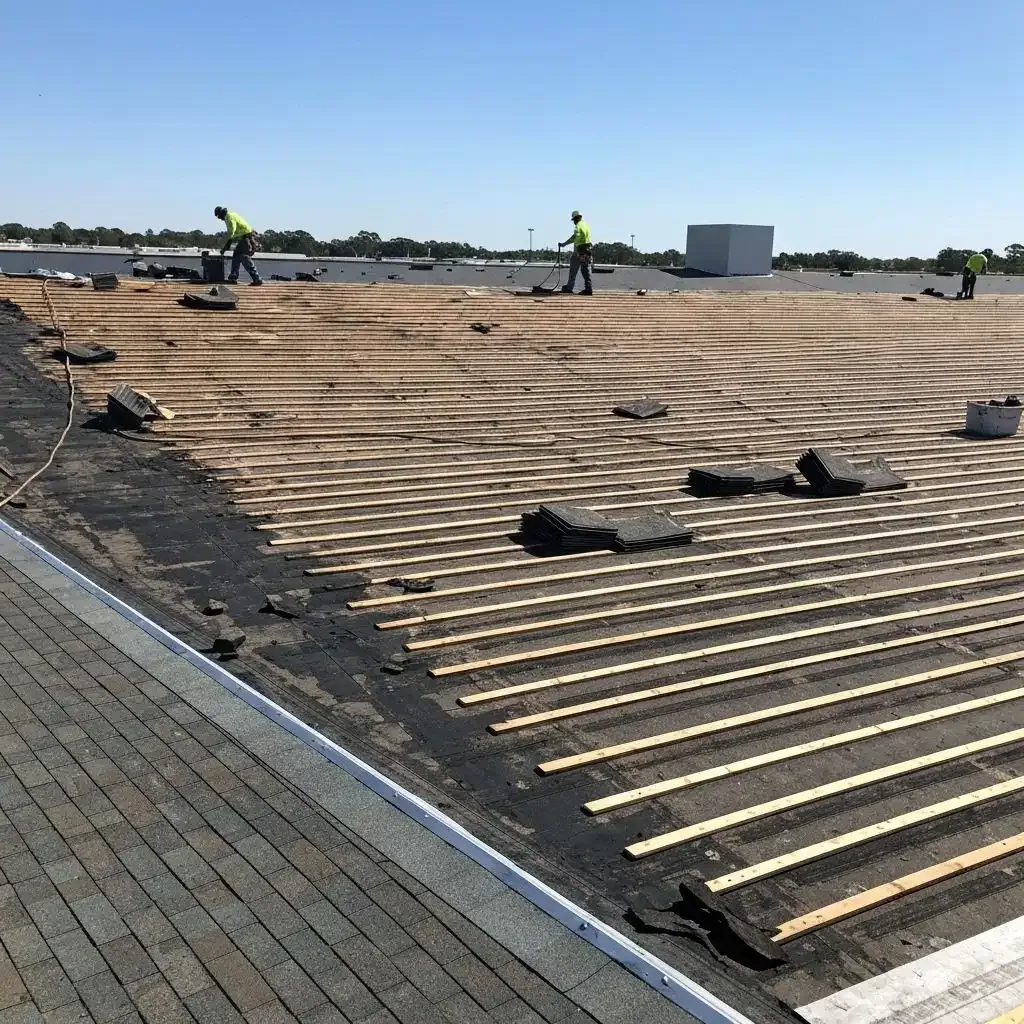
Roof Recover and Overlay Systems
Conditions, options and next steps for commercial buildings in East Tennessee.