
Flex and Light-Industrial Roofing in Johnson City, TN
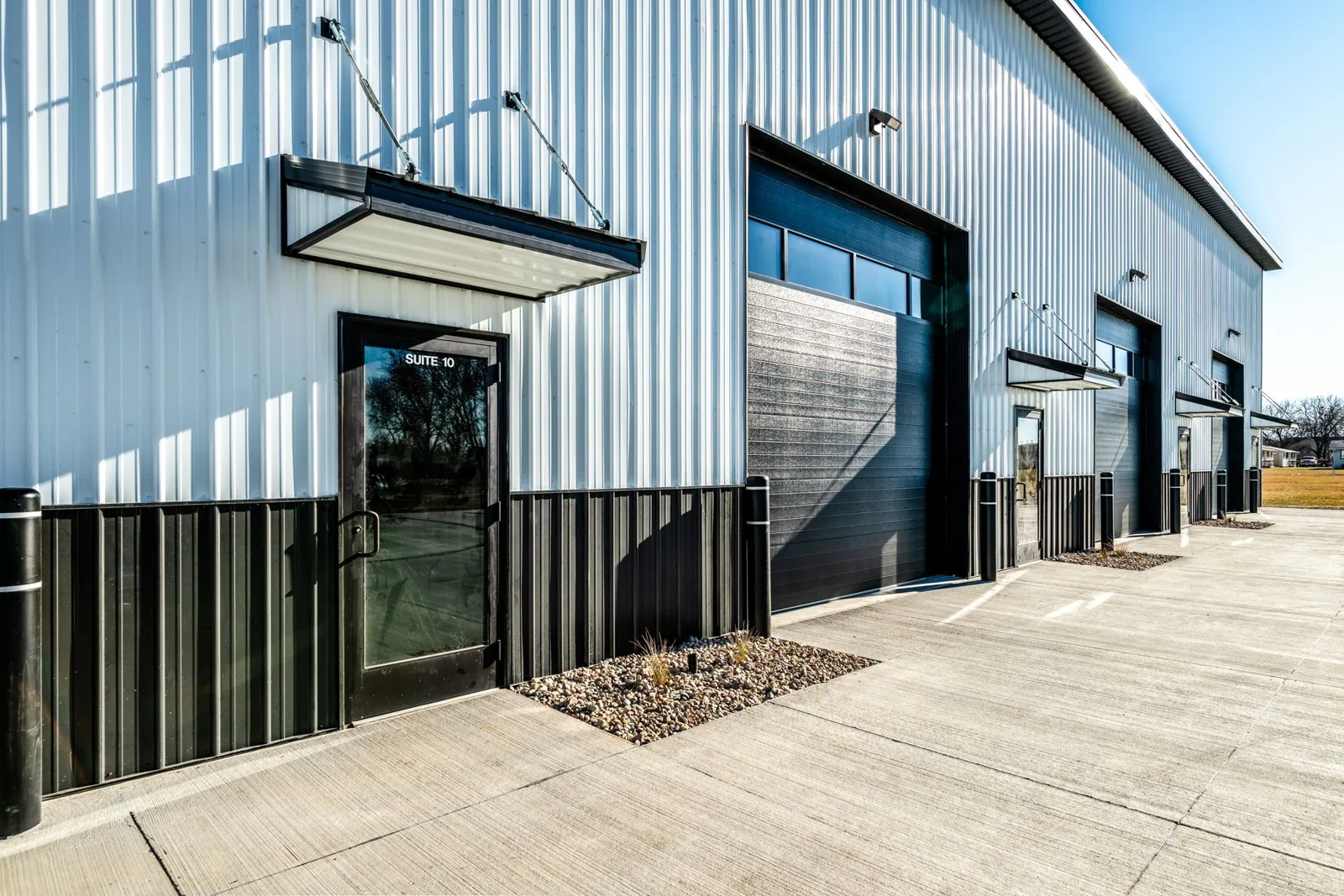
A grain of grit caught in the tread of a technician's boot acts like sandpaper under a hundred pounds of weight, and on a flex building where each tenant has its own rooftop unit and its own service company, the same footpath crosses the same strip of membrane every month of the year. The scratches thin the surface, the dirt that collects in them holds water against the sheet, and a track that began as a worn line gradually becomes a seam of weakness running from the roof hatch to the equipment. That thinned membrane meets the hardest weeks of freeze and thaw in a Johnson City, TN winter, when nights fall to about 25F, and a pinhole that would be harmless in July lets in meltwater in January. A flex building combines office frontage and warehouse space, and its roof carries the wear of several businesses and several contractors. The owner's task is to find out where the roof is thin, which tenants have added to it, and what it will take to carry the building through the next several lease cycles.
How does a roof wear when five tenants each change it a little?
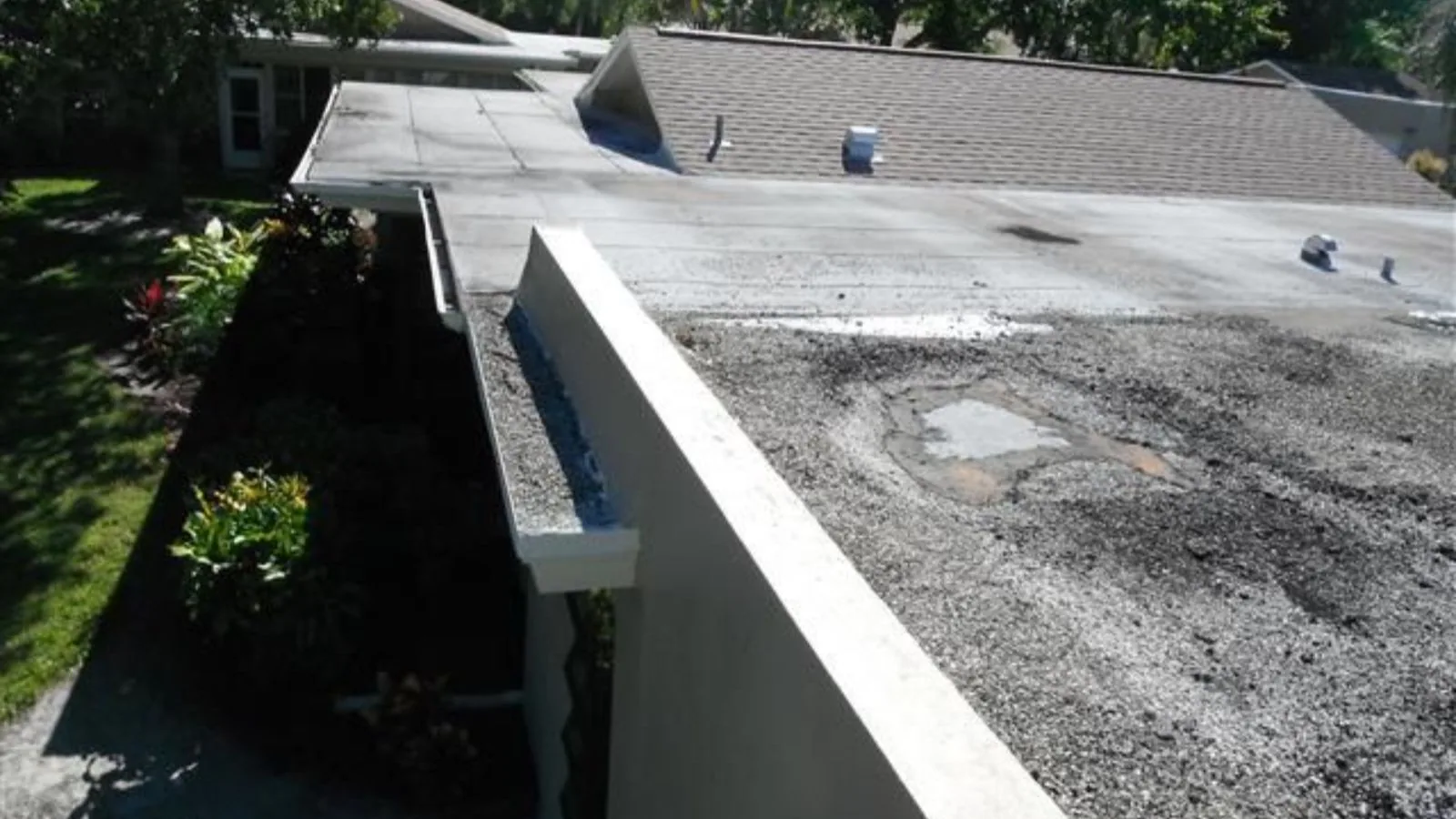
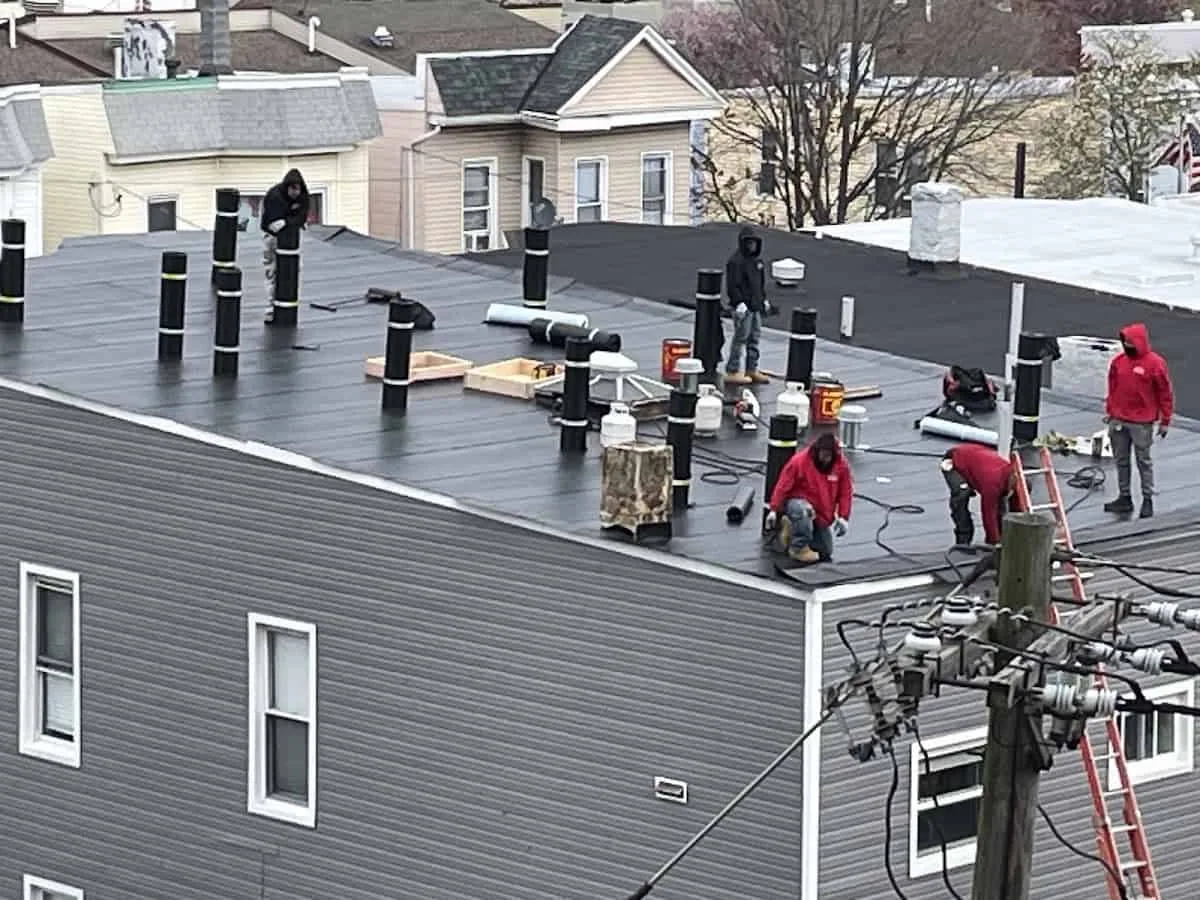
Every tenant improvement leaves something on the roof. A new rooftop unit needs a curb, a gas line or a condensate drain, a kitchen exhaust or a lab vent needs a pipe boot, and each installer flashes it in their own way and on their own schedule. Over several lease cycles the roof gathers penetrations from contractors who never saw each other's work, and the inventory exists nowhere except on the roof itself.
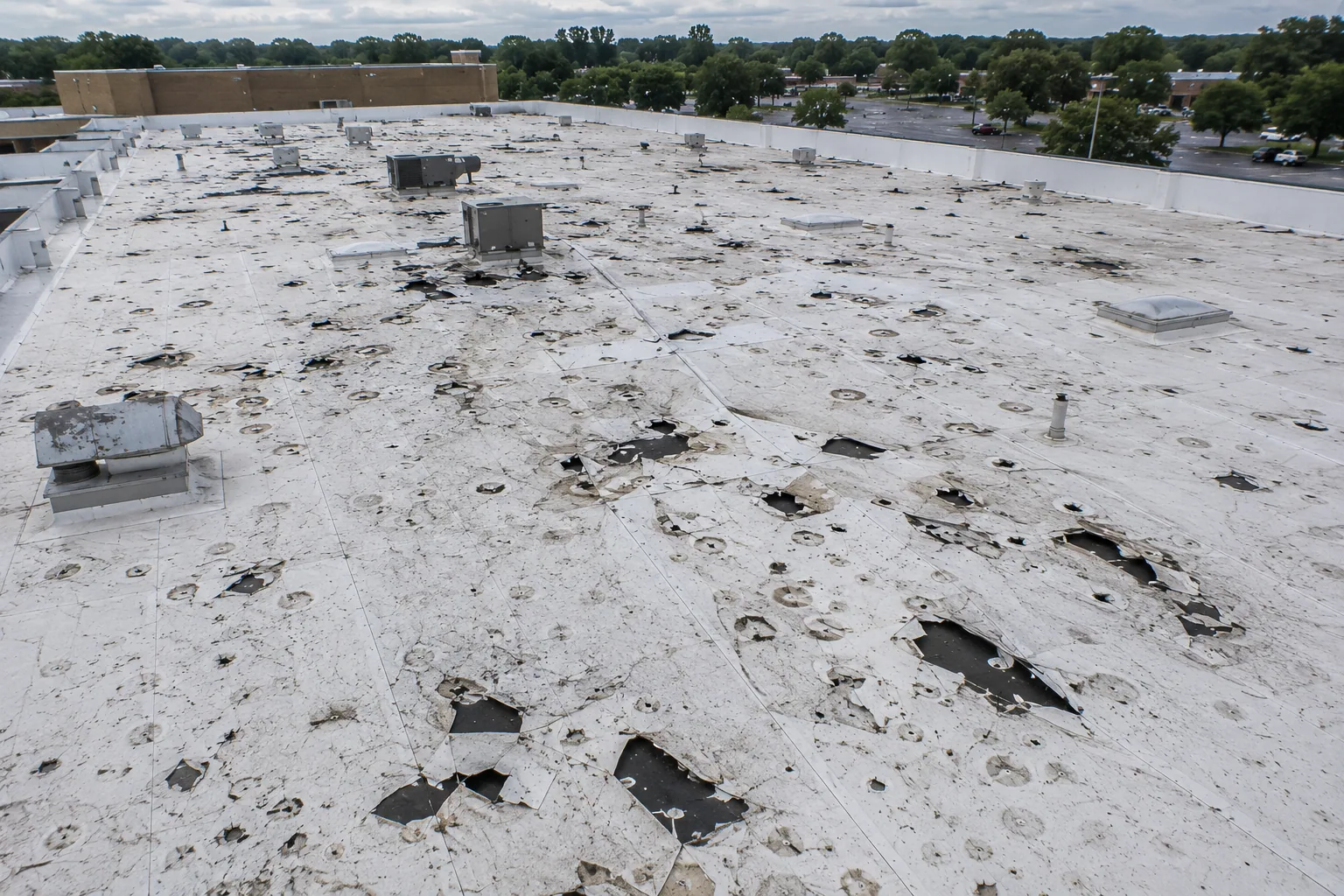
Foot traffic adds to it. Technicians carry tools, filters and compressors across the membrane, and where there are no walkway pads they find their own path. Condensate lines that drain onto the surface leave stains and algae and, in winter, freeze into a patch of ice at the foot of a unit. We map every penetration, trace each leak to a specific detail, and note which equipment belongs to which tenant, so repairs can be priced and assigned correctly.
Put every penetration and every tenant on the roof plan
Call Commercial Roofing Johnson City and we will map your roof bay by bay, find the wet insulation and give you a written plan you can share with every tenant and with the lenders who ask about the building.
What goes into a roof map that every tenant's contractor can follow?
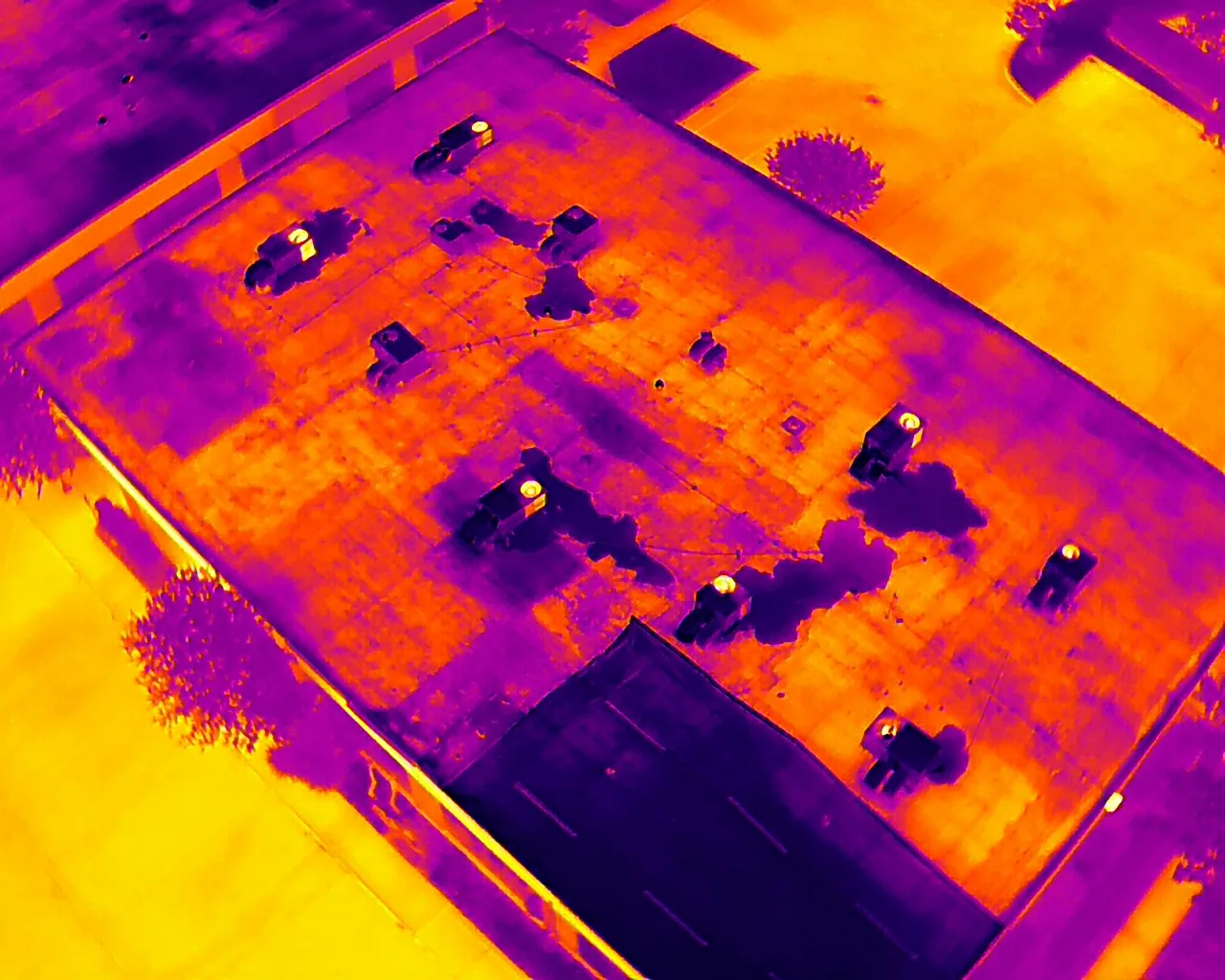
A roof plan marked by bay, with every curb, vent, hatch and drain numbered and photographed, is the most useful document a flex owner can hold. Our condition report builds one, adds core samples and a moisture scan where the history suggests wet insulation, and ranks the repairs by urgency. The result lets a property manager tell a tenant exactly where their equipment sits, what its flashing looks like and whether the repair is the tenant's or the landlord's.
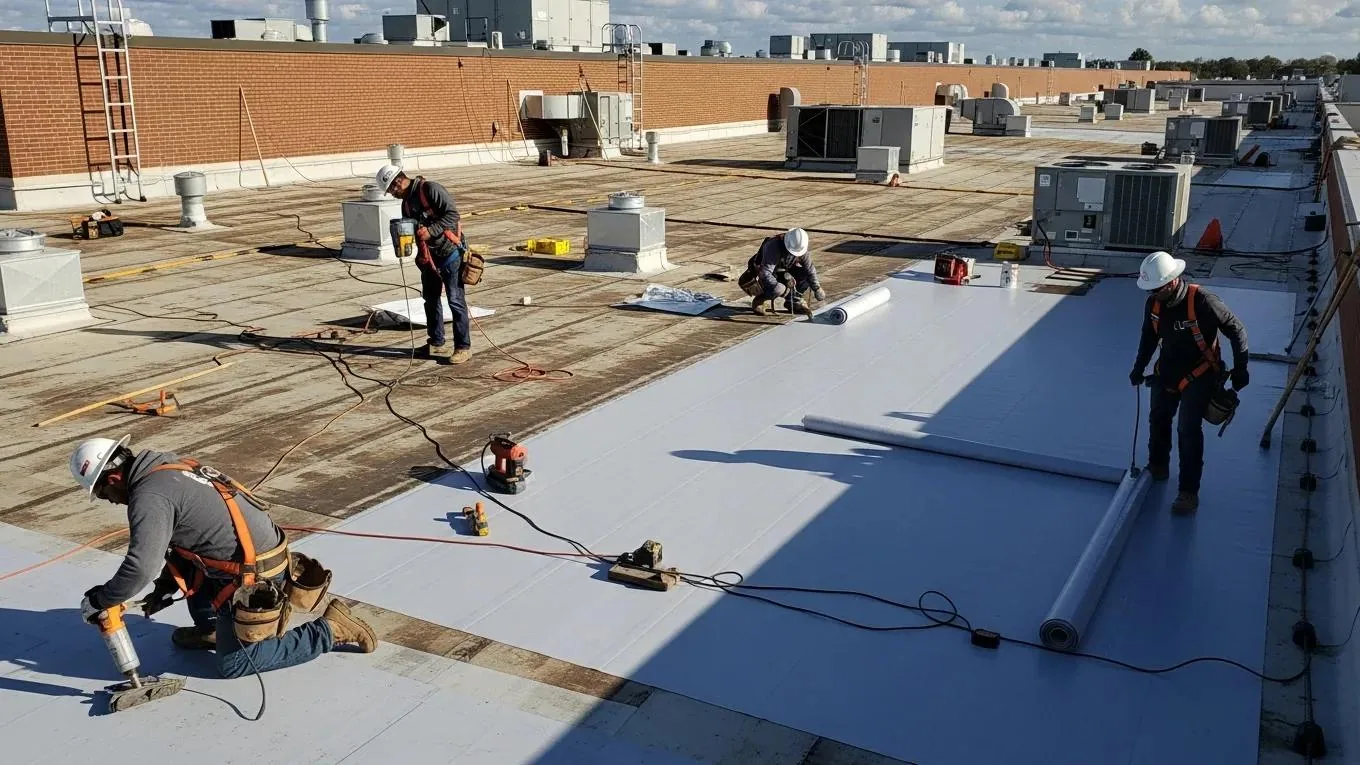
It also gives the owner a baseline. Roof access can then be controlled with a log: who went up, when, and for which unit, with a requirement to report any damage before leaving. A preventive maintenance visit twice a year compares the roof against that baseline and catches the new scratch or the loose boot before winter does.
Who pays when a leak crosses a demising wall?
Water does not respect a lease line. A leak above one bay can run along a purlin or through insulation into the next, so a repair that looked like one tenant's problem becomes three, and the conversation moves from the roof to the lease. Tenants whose inventory, equipment or office finishes are damaged expect the owner to respond, and the cost of those conversations is rarely small. Where operating expense recovery covers roof repairs, a pattern of repeated patching shows up in the charges tenants see, and it invites questions about why the roof was not replaced.
A planned repair or replacement, backed by moisture data, makes a better case. It puts a clear number in front of the owner and can be explained to tenants as a single scheduled project instead of a series of emergencies.
Walkway pads, new curbs, a coating or a recover: what fits a roof with traffic?
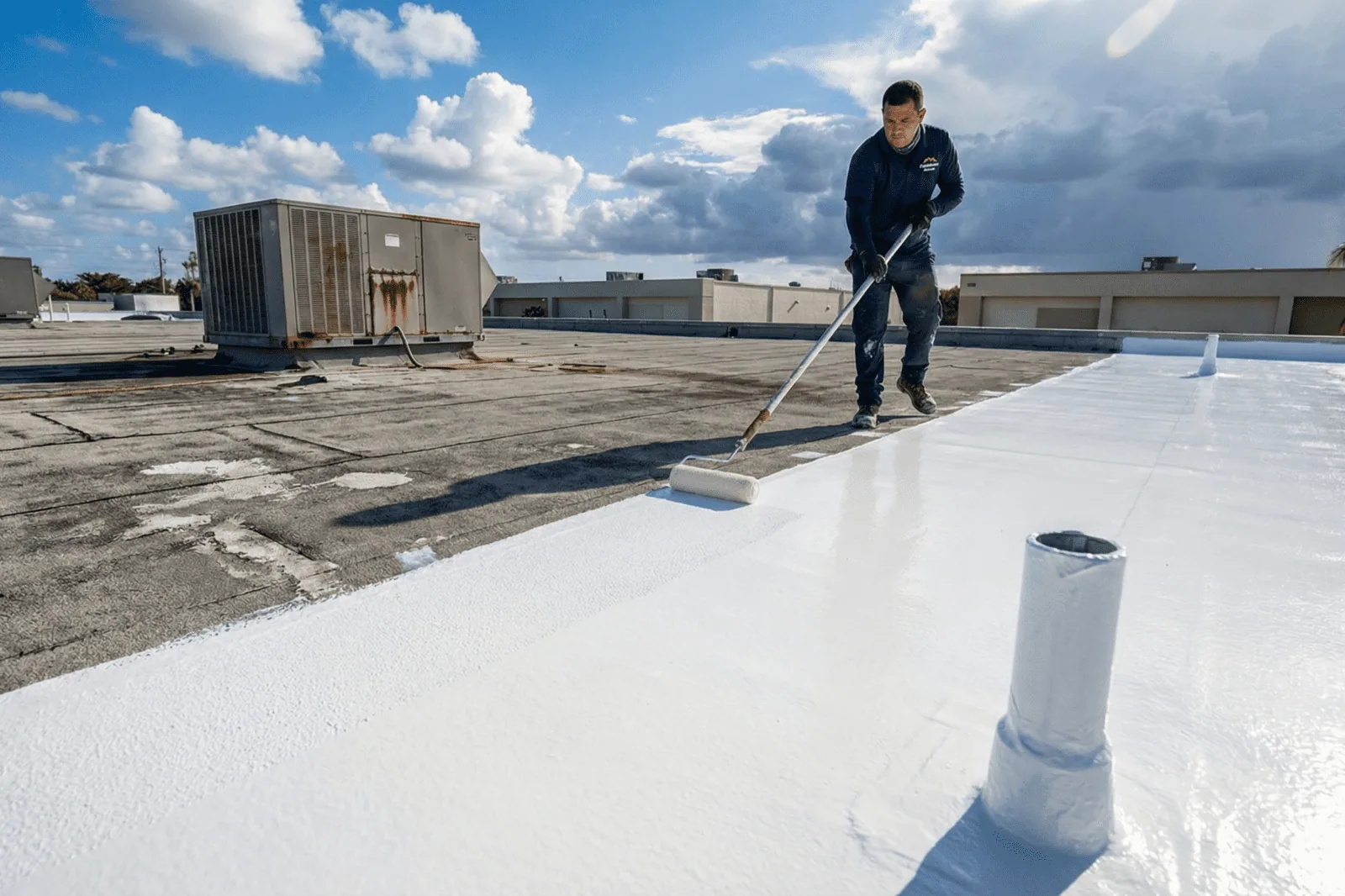
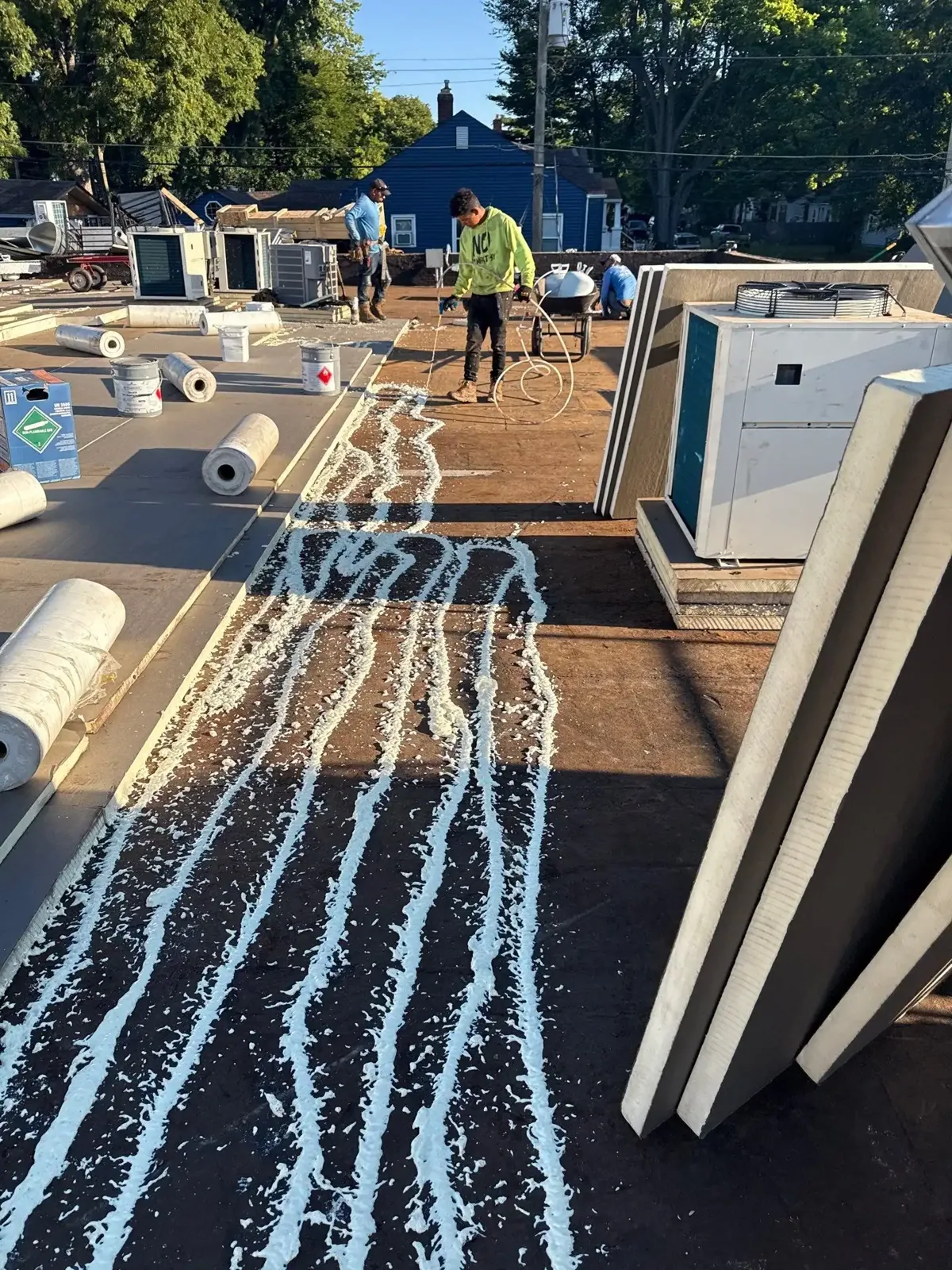
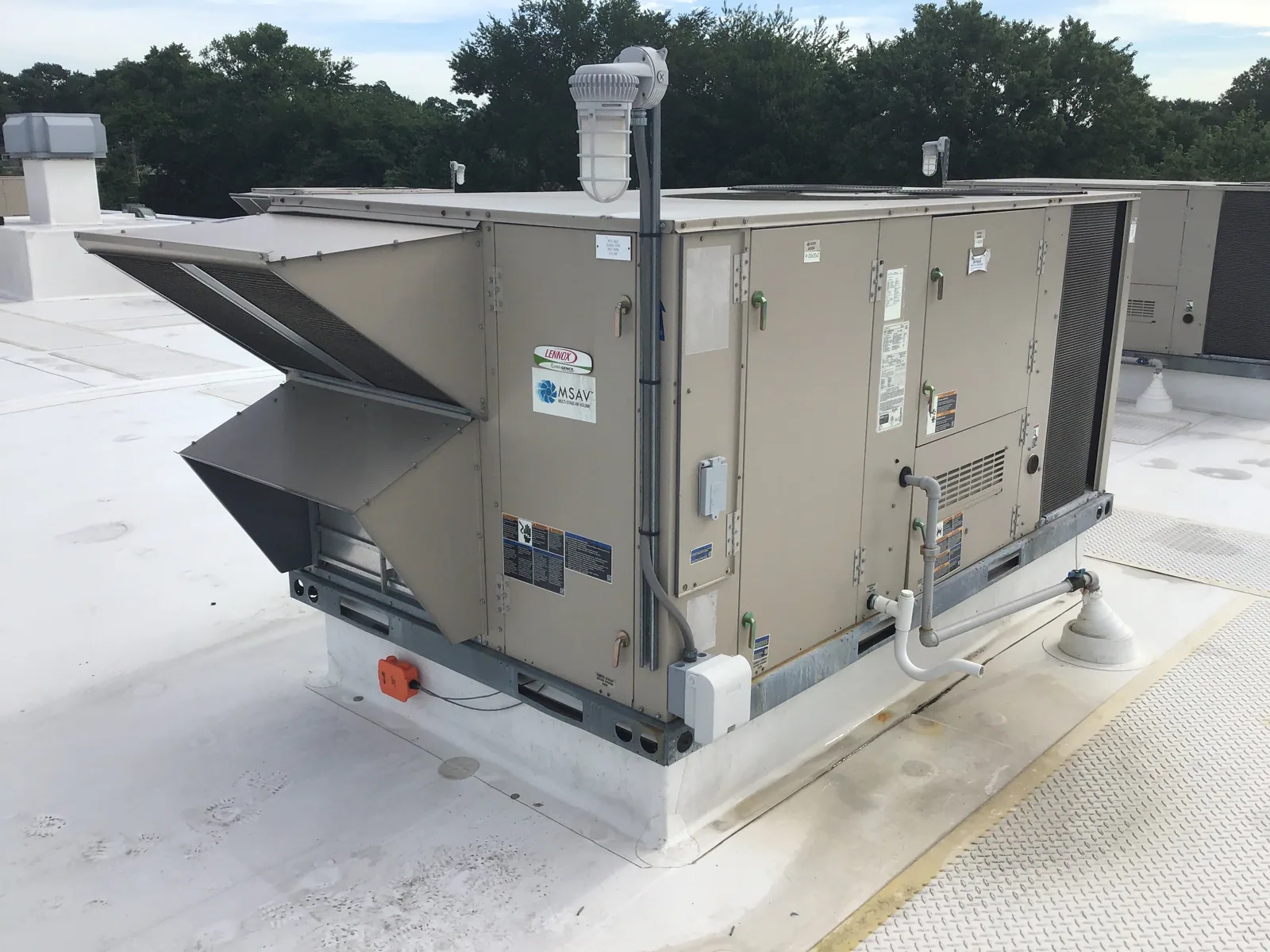
The cheapest improvement is often walkway protection. Pads along the route from the hatch to each unit take the grit and the weight, and they cost little beside the repairs they prevent. Where curbs are low or poorly flashed, rooftop equipment curbs can be raised and reflashed to give water a clear path. If the membrane is dry and sound, a coating can renew the surface for a modest cost, while a thin membrane that is wet underneath is a candidate for a recover or a full replacement.
A fully adhered or mechanically attached TPO sheet suits many flex buildings because its welded seams repair easily, and thicker membranes tolerate repeated service visits. The choice depends on how many tenants the building holds, how much equipment sits on the roof and how often the roof is visited, since a quiet roof can use a lighter system than a busy one.
How is a flex building reroofed without shutting a tenant's door?
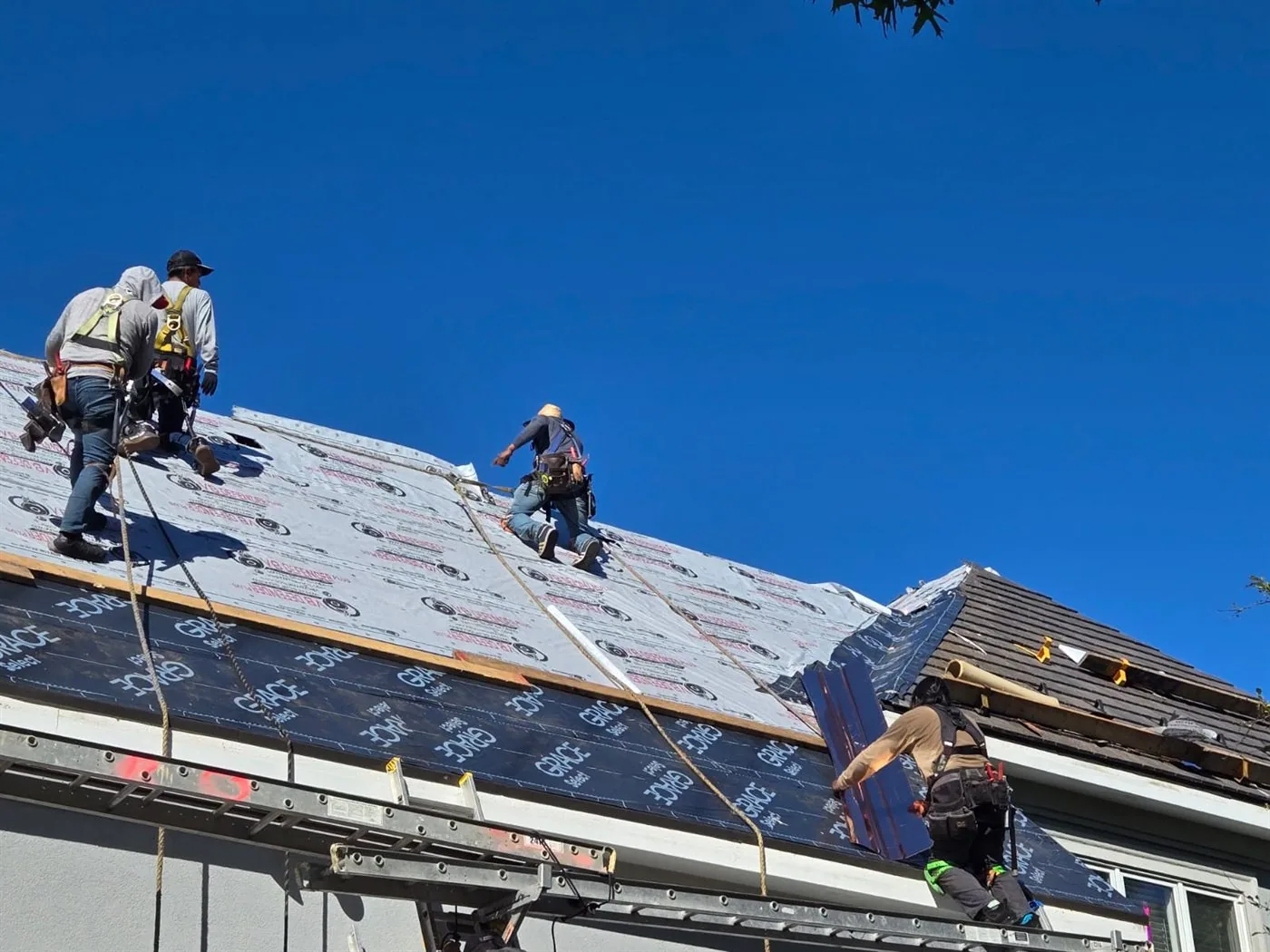
The approach is bay by bay. Front offices, rear warehouse space and loading areas have different sensitivities, so we meet with the property manager and ask each tenant what matters most: noise for the office suite, dust for a clean-room user, truck access for a distributor. Sections are closed in at the end of every day, rooftop units are protected from fumes, and a notice goes to each tenant before the crew arrives above their space. These are the same habits that make any occupied building reroofing go smoothly.
The calendar follows the leases. A tenant whose busiest weeks come late in the year may want the work finished by fall, while an office user may care about quiet during certain hours.
What does industrial Washington County show about light-industrial space?
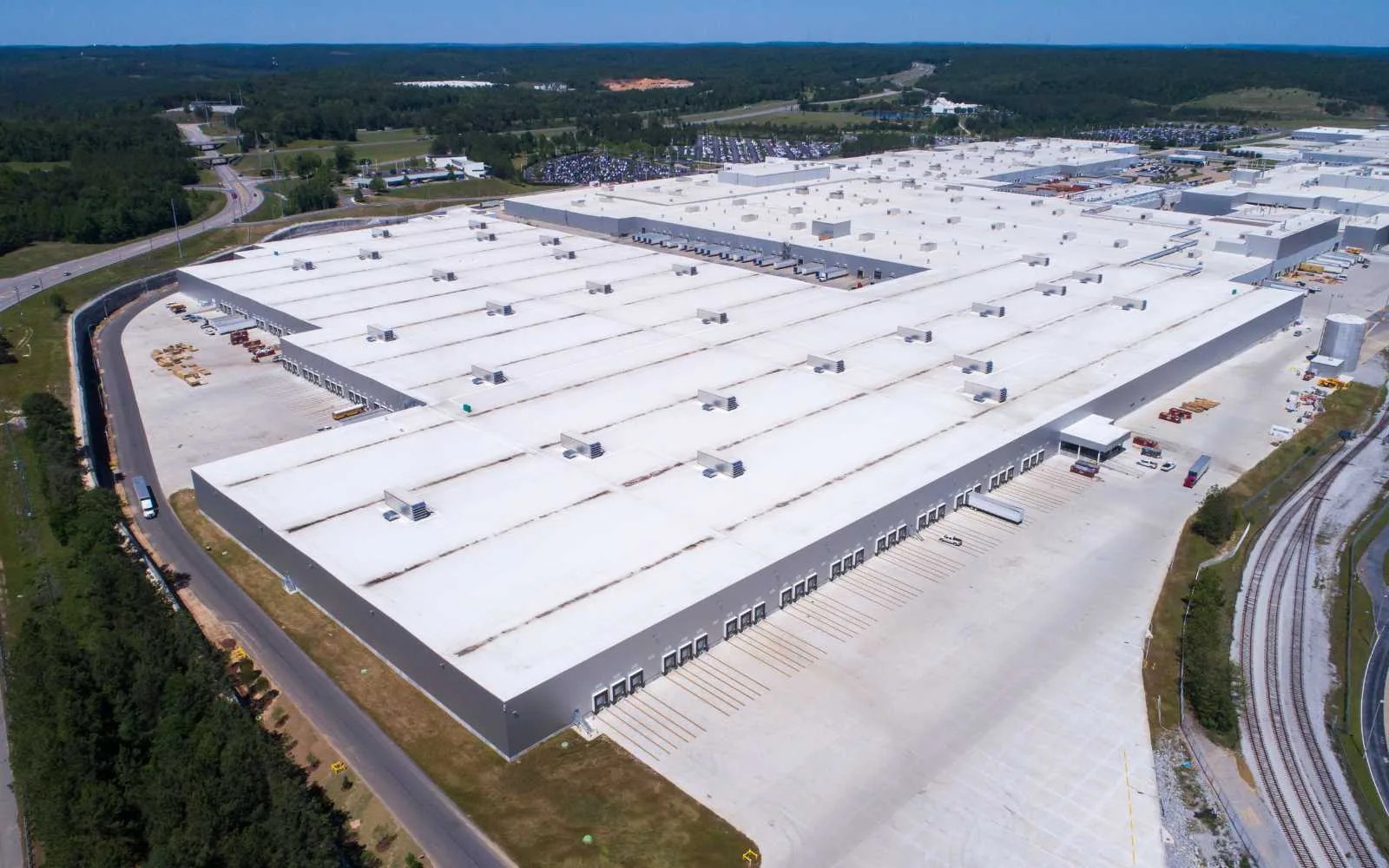
The Washington County Industrial Park near Telford holds a 300,000 square foot ebm-papst fan plant and a 380,000 square foot building that Sungwoo Hitech renovated for automotive stamping, and Koyo Corporation USA, a JTEKT subsidiary, has added 61,000 square feet of manufacturing space in Washington County. Those are plants, not flex buildings, but they show the manufacturing activity around any light-industrial building nearby, and a flex owner shares the same concerns about truck traffic, exhaust and tenants who cannot lose a day to a leak. Phipps Bend Industrial Park, near Surgoinsville, puts more than 2,000 workers across several manufacturers.
Up in Greene County, Mosheim lists a Walmart distribution center and Brenntag Mid-South as major employers. An owner who also holds manufacturing plant roofs or warehouse roofs will recognize the same drainage and penetration problems, with a flex building adding the tenant mix.
Commercial Roofing Questions
Who should hold the key to the roof hatch?
One person, with a log. A property manager who releases access tracks who went up and for which unit, and requires a report of any damage before the technician leaves. That small habit prevents the scratches and punctures that lead to repairs.
What should a tenant do before adding a rooftop unit?
Tell the owner first, so the curb, the flashing and the route to the unit can be planned. We review the location against existing drains and penetrations, specify the flashing and add walkway protection, which prevents a new unit from becoming a new leak.
How is a reroof explained to tenants whose leases pass costs through?
With the report. A survey, a moisture map and a ranked list of work show why the project is needed and why now. Tenants take a scheduled project better than a series of patches that each seem small.
Is there a low-cost way to extend a flex roof that is a few years from replacement?
Protect it from further damage. Walkway pads, cleared drains, resealed penetrations and a coating on dry areas can carry a roof for several more seasons. The moisture scan tells which sections qualify and which should be budgeted for replacement.
Should the office front and the warehouse rear share one roof system?
They can, though the office front often has more equipment and more details, which favors a membrane that is easy to repair. The warehouse rear may suit a lighter system. We treat each area on its own terms and join them cleanly at the transition.
Related Roofing Pages

Roof Condition Reports
How the work is scoped, phased and documented on Tri-Cities roofs.
Preventive Roof Maintenance
What we check, what we recommend and how the crew keeps the building running.
Rooftop Equipment Curbs and Supports
Conditions, options and next steps for commercial buildings in East Tennessee.