
KEE Roofing in Johnson City, TN
A film of cooking oil or machine lubricant on a roof membrane is slow chemistry, not just a stain. The oil works into the polymer, swells it, softens the surface and holds dirt that bakes in the afternoon sun, and a sheet that has soaked up enough of it begins to lose its grip on its own seams and flashings. The change is gradual enough that a quarterly walk may see only a dark patch near an exhaust fan. In Johnson City, TN, where winter lows average about 25F, the weakened areas tend to open first at a corner or a pipe boot, because a cold, stiff sheet cannot follow the building's movement. KEE membranes were developed for exactly this exposure. For an owner whose roof sits under heavy exhaust, the useful question is whether the extra cost of a chemically resistant sheet is smaller than the cost of replacing an ordinary one early.
What is KEE, and why does it hold its flexibility when other sheets lose it?
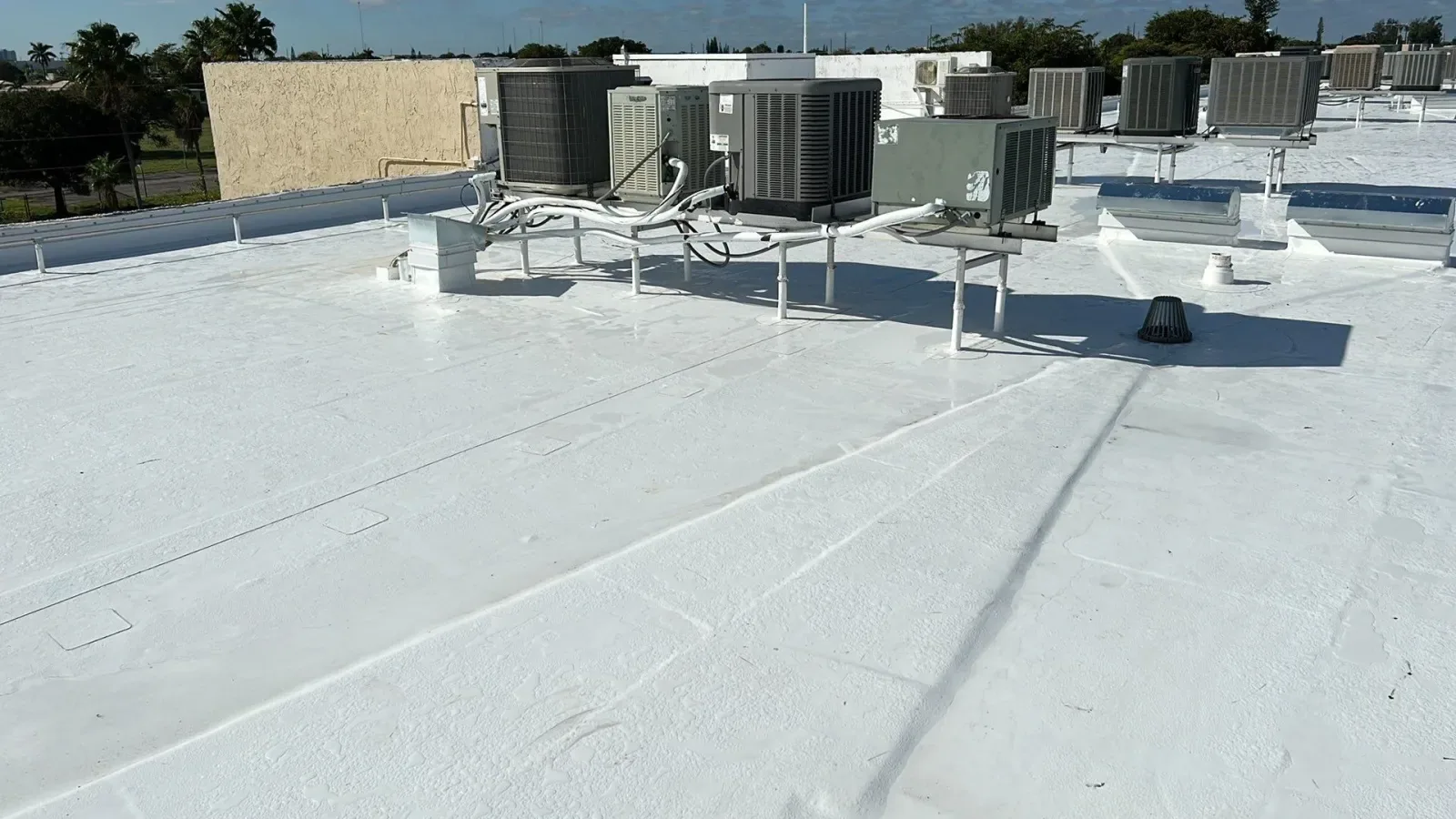
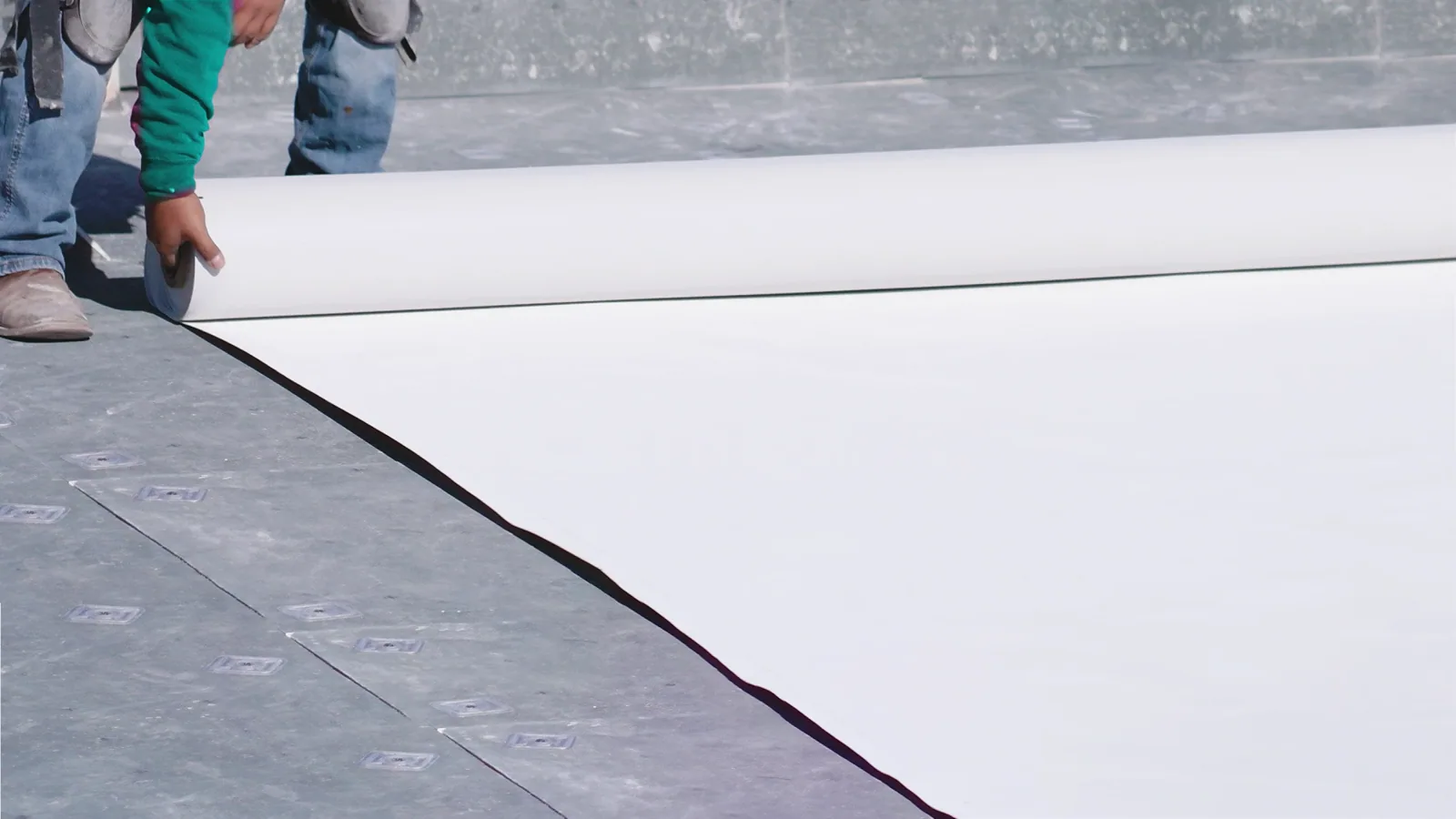
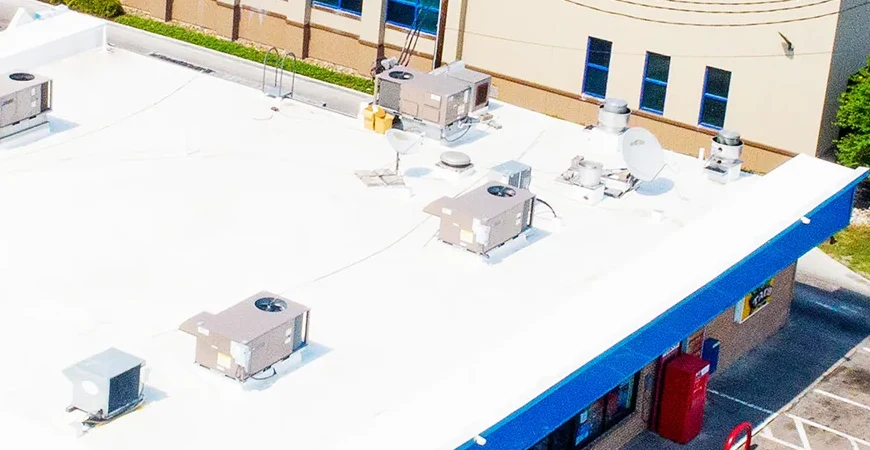
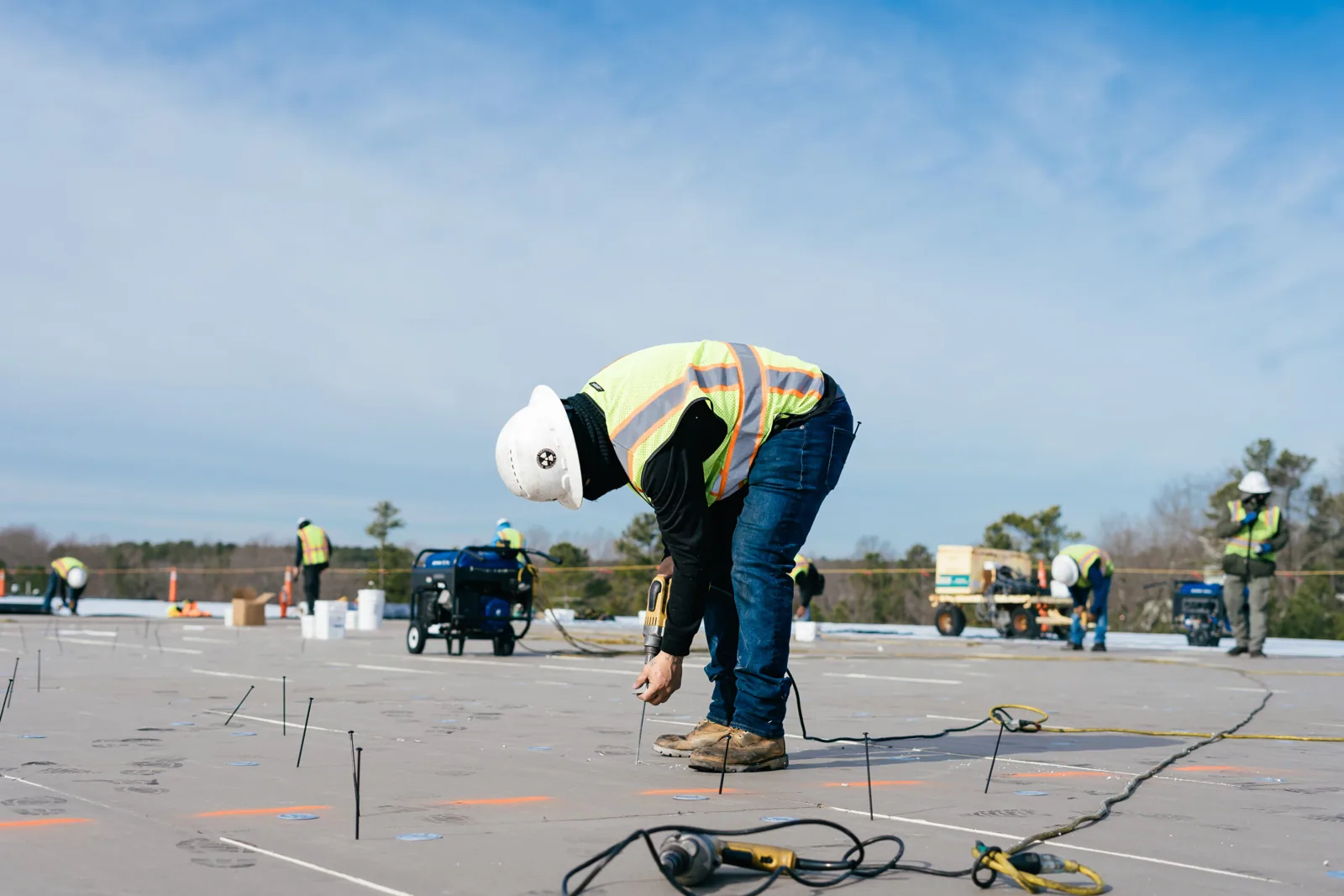
KEE stands for ketone ethylene ester, a high-molecular-weight polymer blended into a PVC sheet so that the membrane stays flexible without depending on a small plasticizer molecule that can migrate out. Because that modifier is large and bonded into the polymer, it resists being leached out by heat, by sun or by oils that would draw plasticizer from an ordinary PVC roof. The sheet is typically reinforced with a polyester fabric, welded at the seams with hot air, and thick enough to tolerate foot traffic around equipment. What it does not do is ignore maintenance. Fabric-reinforced sheets need their cut edges sealed so water cannot wick along the scrim, and a roof coated in grease still deserves cleaning, because trapped dirt raises surface temperature and speeds aging of any membrane. KEE slows the damage, and good housekeeping keeps it slow.
Map your roof's exhaust exposure before choosing a membrane
Call Commercial Roofing Johnson City and we will inventory what reaches the roof, scan the insulation and tell you whether a KEE system is the right capital decision for your building.
When is KEE worth its price compared with PVC or a recover?
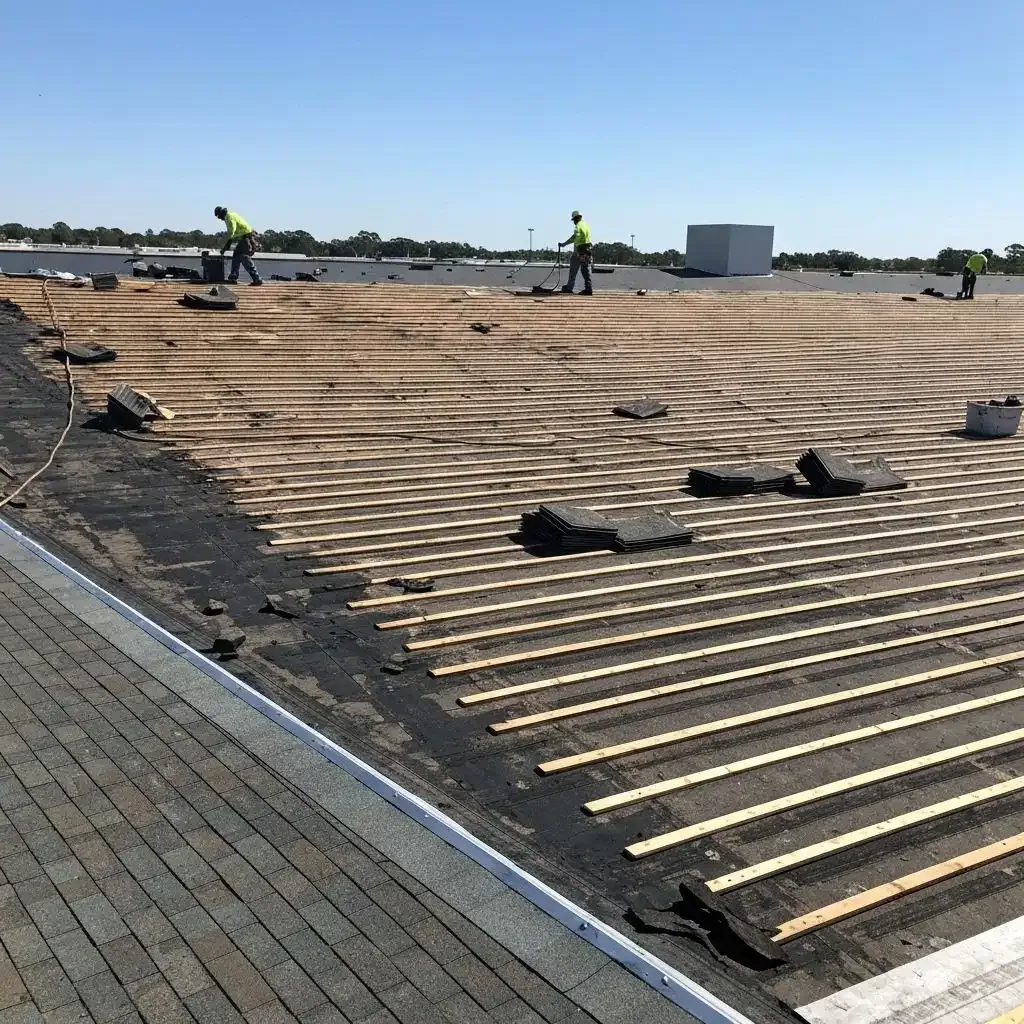
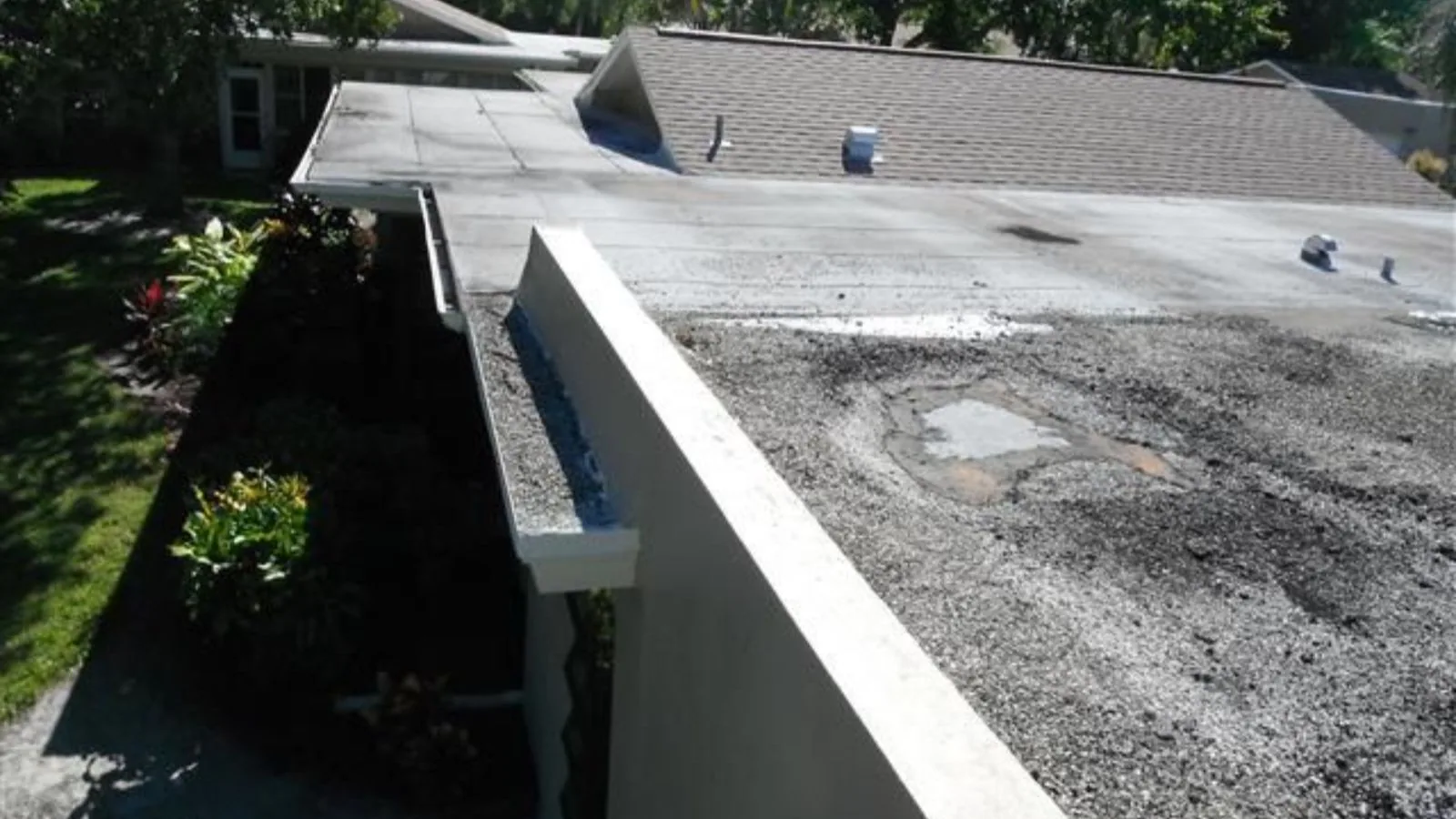
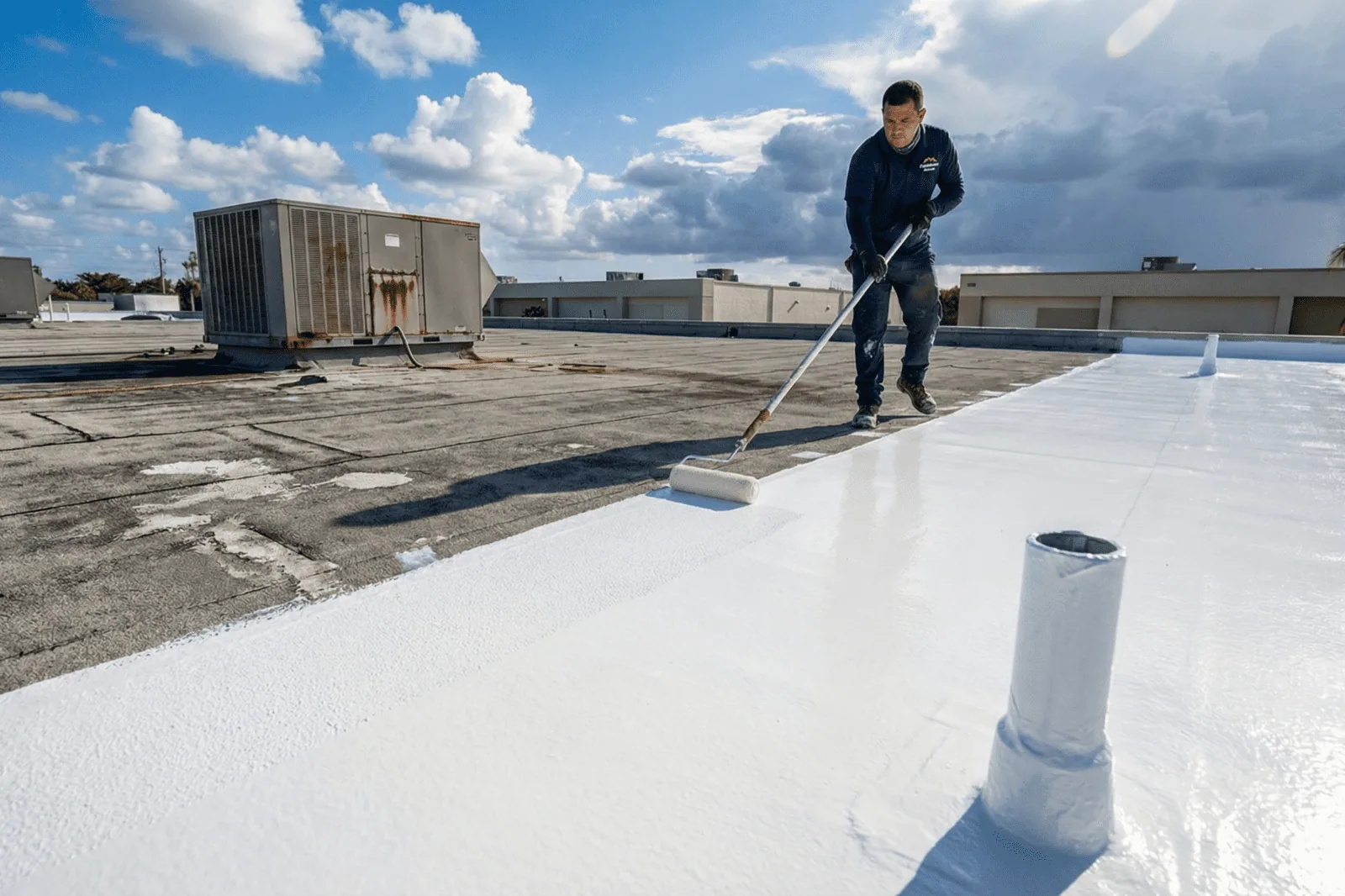
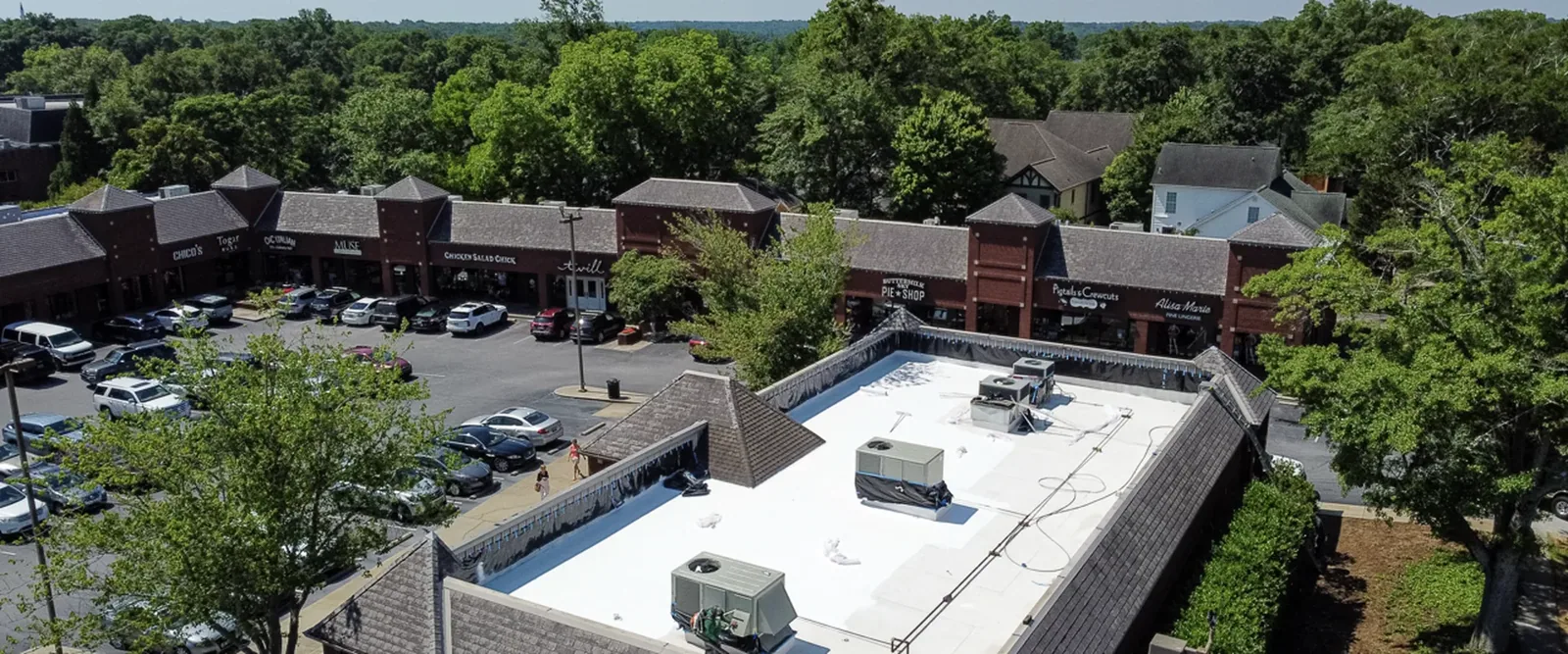
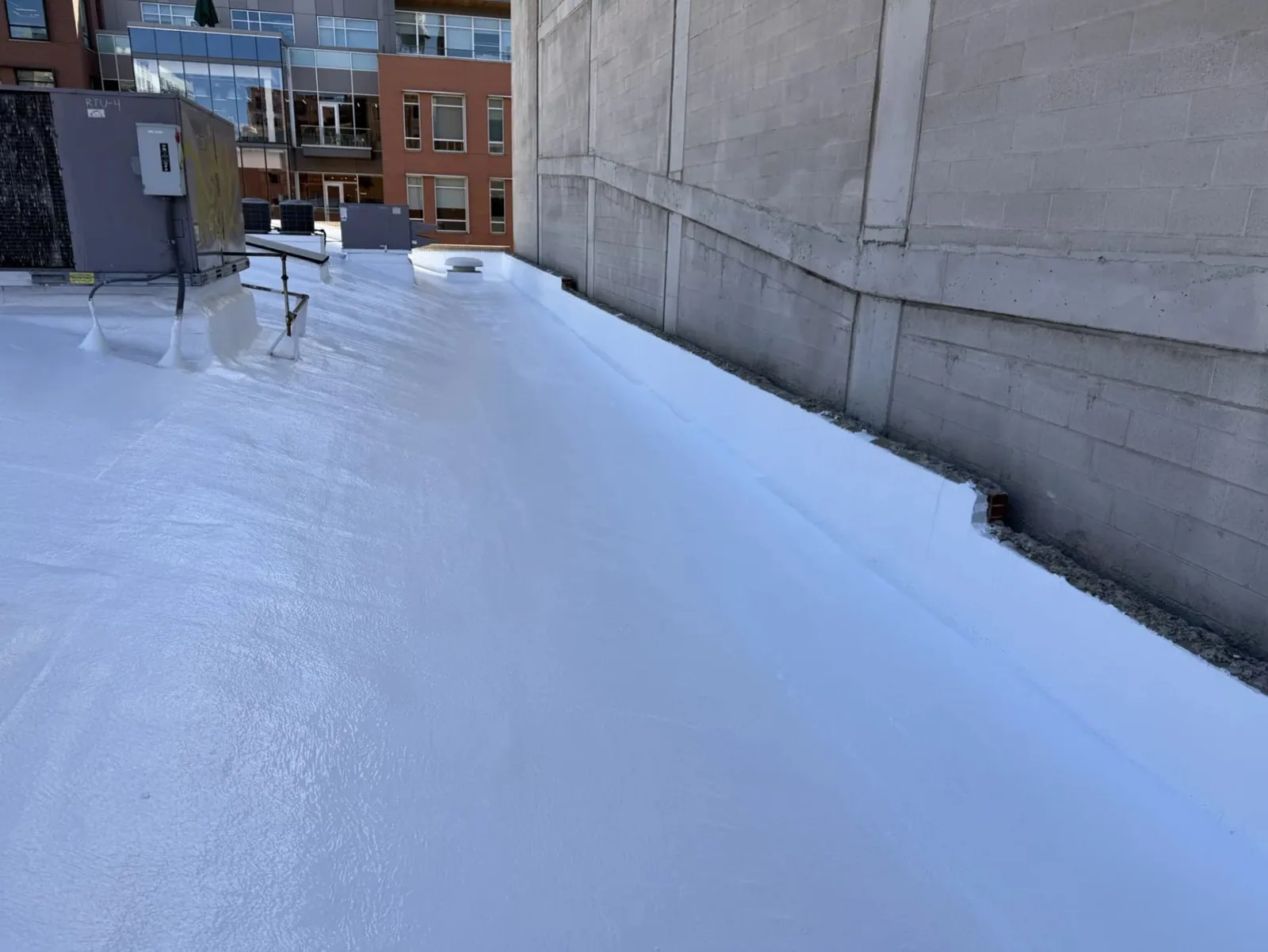
The price premium over standard PVC roofing only pays back where the exposure is real and the owner intends to hold the building. Kitchens, fryers, rendering, food processing, refrigeration oil, hydraulic leaks and metalworking mist all qualify. Many KEE formulations also tolerate contact with aged asphalt, which makes them a candidate for a recover over an existing built-up roof when the insulation below is dry, though we confirm the maker's requirement for each assembly and separate incompatible layers where the instructions call for it. That is the logic of a roof recover: the new sheet goes over a stable base, a cover board spreads load and bridges the old seams, and the owner avoids the cost of removing an assembly that is still sound. If the old roof is wet or the layer count is at its limit, KEE goes onto a tear-off instead, and the lifecycle comparison changes.
How do we confirm that KEE is a fit before we propose it?
We begin with an inventory of what the roof actually receives: fryer and grill exhaust, process vents, mist from machining or stamping, compressor and refrigeration oil, and the cleaning chemicals sent through drains. Each exposure points to a membrane requirement. Then we look at the building itself, using an infrared moisture survey and core cuts to learn whether the insulation can be reused, and we examine the deck for corrosion, the flashings for height and the drains for capacity. The resulting file lets a facility manager decide between a full KEE system and a targeted solution, for example KEE around the exhaust zone with a cheaper sheet elsewhere, which is sometimes more sensible than treating the whole roof alike. We do not recommend the premium sheet until the roof beneath it is fit to carry it.
What does an oil-soaked membrane cost an industrial owner over time?
Contaminated membrane is hard to repair. A weld or patch over an oily surface will not bond until the surface is cleaned, and once oil has penetrated the polymer, no cleaning fully restores the sheet. Owners then pay for a series of repairs that do not hold, each one opening a path for water into the insulation. By the time the leaks reach production space, the membrane is often beyond repair and the board below is wet, so the project becomes a tear-off with disposal of saturated material. The alternative is to treat chemical exposure as a lifecycle input from the start: price the premium sheet against an ordinary one replaced earlier, include the cost of interrupted operations, and compare the totals. For a plant expecting to run for many years, the arithmetic often favors the resistant sheet, and a manufacturing facility that cannot tolerate a shutdown tends to value that certainty even more.
How is a KEE roof scheduled around a plant that keeps running?
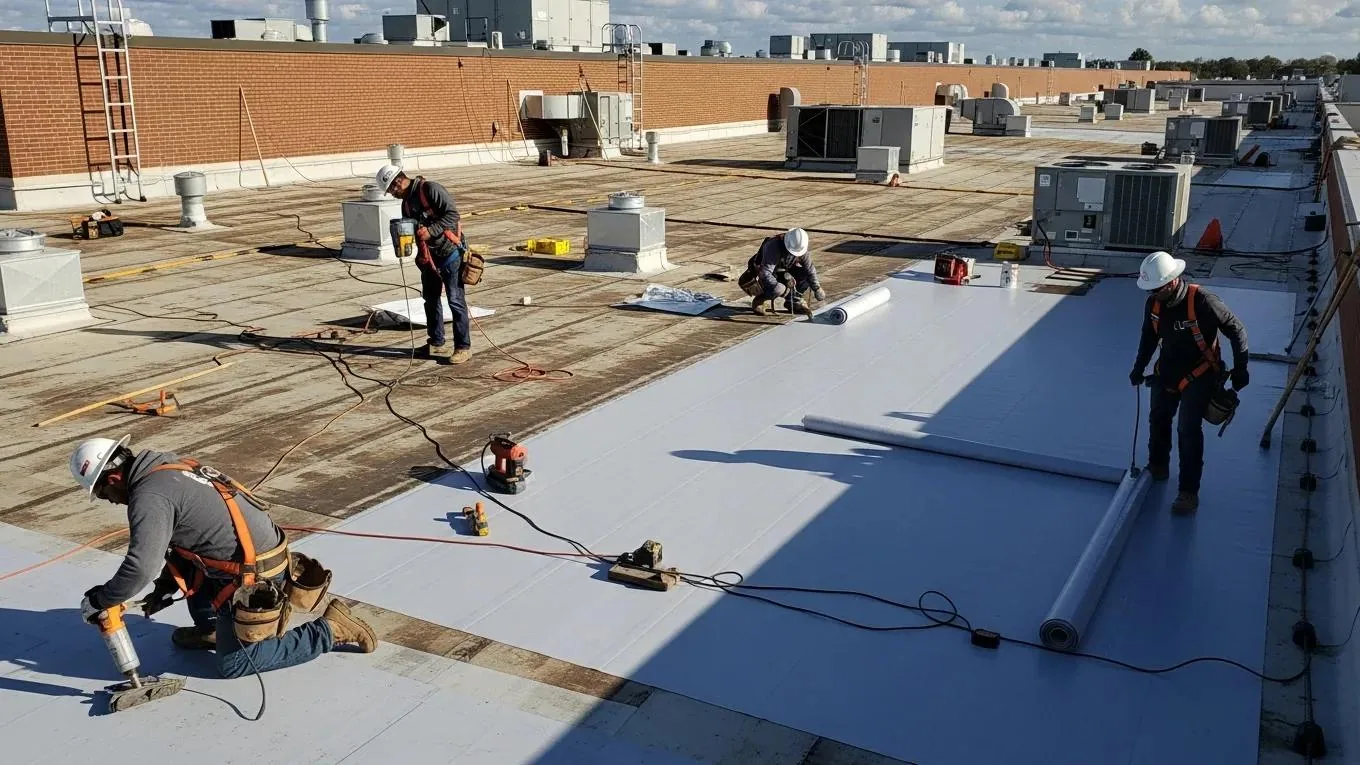
Production does not pause for a reroof, so the plan is built from the plant's own calendar. Fresh-air intakes are located before anything is opened, and crews keep fumes from welding and adhesives clear of them by staging the work in zones. Shifts that run heavy exhaust are mapped so crews are not working directly beside discharge points. Where possible, the work is sequenced in sections that can be dried in each evening, and tie-ins at the edge of the day's work are sealed against overnight rain. Our approach to occupied building reroofing includes a call plan with the facility manager for the days when a weather window narrows. Spring and early autumn give the most predictable conditions, and a project approved before the first hard freeze can usually be finished without winter exposure.
Where do Tri-Cities exhaust loads and weather meet?
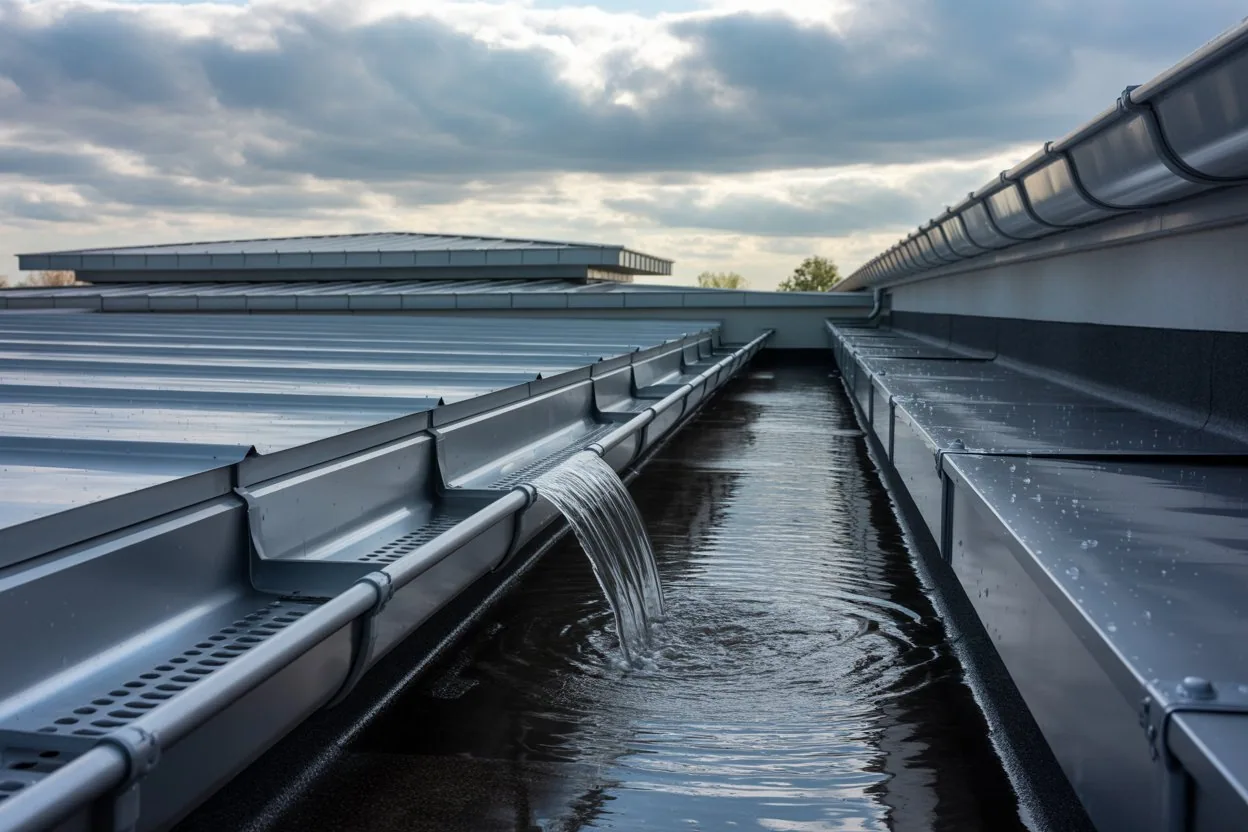
Manufacturing is the reason this question matters here. The Washington County Industrial Park near Telford holds the ebm-papst fan plant, a 300,000 square foot building making fans for refrigeration and air conditioning, and the 380,000 square foot building Sungwoo Hitech renovated for automotive stamping. Nearby, Phipps Bend Industrial Park near Surgoinsville employs over 2,000 people across multiple manufacturers. Any roof beneath process exhaust at plants like these raises the contamination question, and every such roof also faces the region's freeze-thaw winters. Hurricane Helene's flooding in September 2024, which closed I-26, was a reminder that the region's water arrives in large amounts. A membrane that stays flexible in the cold and an assembly with clear drainage paths each answer part.
Commercial Roofing Questions
Will KEE shrug off the oily film my plant exhaust leaves on the roof?
It resists absorbing oils far better than an ordinary plasticized sheet, but it is not immune to dirt. Grease that bakes onto the surface still raises sheet temperature and traps debris at drains. Plan on periodic cleaning of the exhaust zones and on containment trays beneath fan discharges.
Does the extra cost of KEE pay back for an owner who may sell the building?
A buyer's engineer will see the membrane type, the exposure history and the moisture data, so a resistant sheet over dry insulation supports the roof's remaining service life in a sale. If the exposure is light and a sale is near, a conventional sheet and a documented condition report may serve better. Hold period and exposure together give the answer.
Can KEE go directly over an old built-up or modified bitumen roof?
Frequently, once the old roof passes a moisture scan and a layer count, and when the maker's instructions allow contact with aged asphalt. We usually still add a cover board to bridge old seams and spread load. Johnson City's adopted 2018 International Existing Building Code limits how many layers may stack up, so counting comes first.
Why do the cut edges of a fabric-reinforced sheet need sealing?
Polyester scrim can act like a wick. If a cut edge is left exposed at a seam or termination, water can creep along the fabric inside the sheet and weaken the bond over time. Sealant along those edges stops the path, and it is a detail we inspect on any older reinforced membrane.
Which details fail first on an industrial roof with many pipes and conduits?
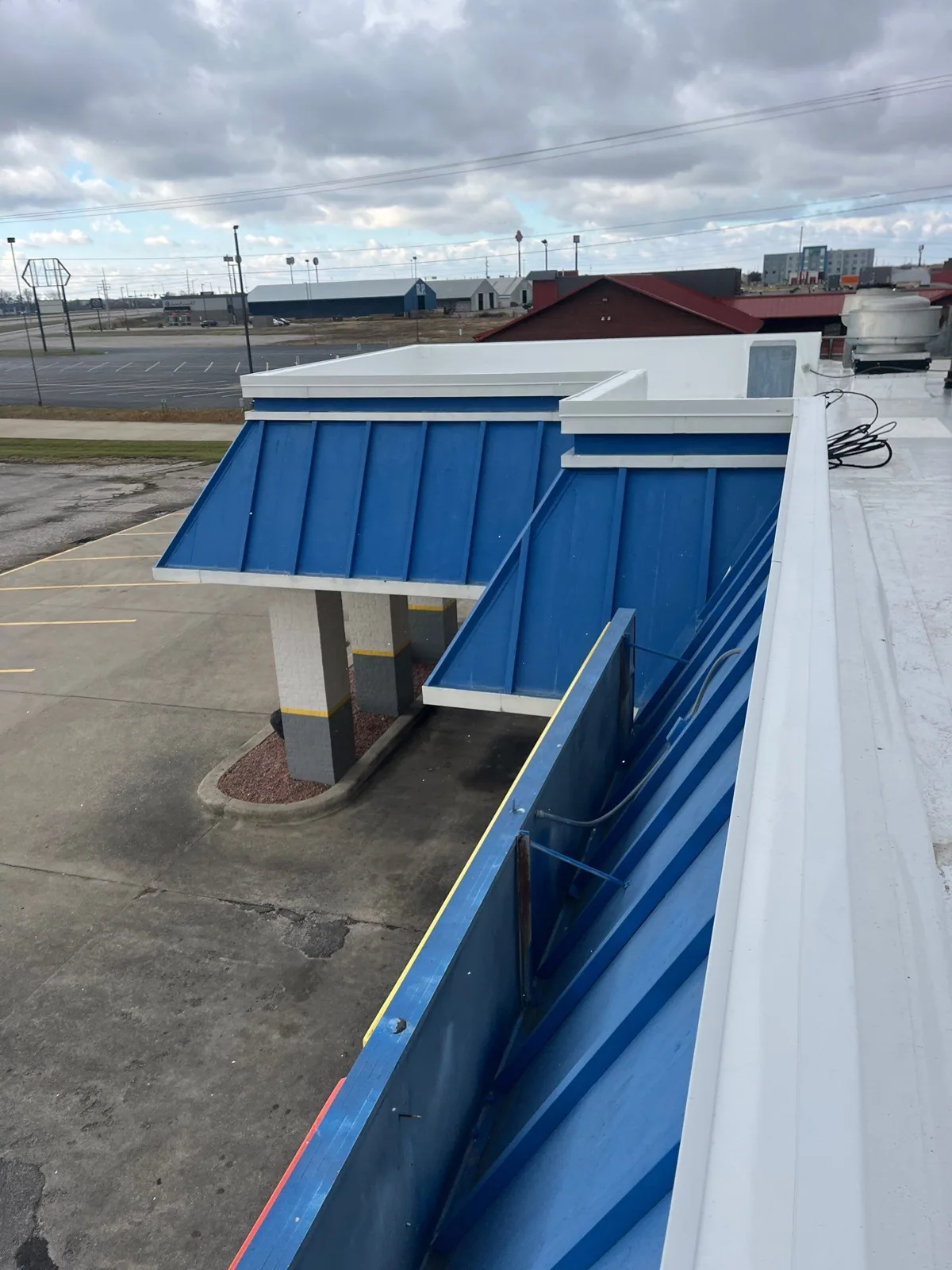
Penetration flashings and pipe boots usually go before the field of the sheet does, since they carry movement from the equipment and take the most weathering. Pre-molded boots, properly welded, outlast field-wrapped patches. A walk with a flashing inventory shows which penetrations deserve replacement while the surrounding insulation is still dry.
Related Roofing Pages
PVC Roofing
How the work is scoped, phased and documented on Tri-Cities roofs.
Built-Up Roofing (BUR)
What we check, what we recommend and how the crew keeps the building running.
Roof Recover and Overlay Systems
Conditions, options and next steps for commercial buildings in East Tennessee.