
Occupied Building Reroofing in Johnson City, TN
Fumes from adhesives, primers and hot work do not stay on the roof. They drift to the nearest fresh-air intake, and by the time a tenant on the top floor notices a smell the vapor is already moving through the ductwork. Noise travels down the deck in the same way, and dust finds every gap in a ceiling grid. That is what a reroof looks like from inside an open building, and it is why the plan begins in the mechanical room and the lease file instead of on the roof. In Johnson City, TN, the buildings that cannot close include hospitals, university halls, school buildings, retail centers and offices, and for each of them the cost of a reroof lives less in the membrane than in the sequence, the protection and the communication around it.
What do people inside actually notice when a roof is opened overhead?
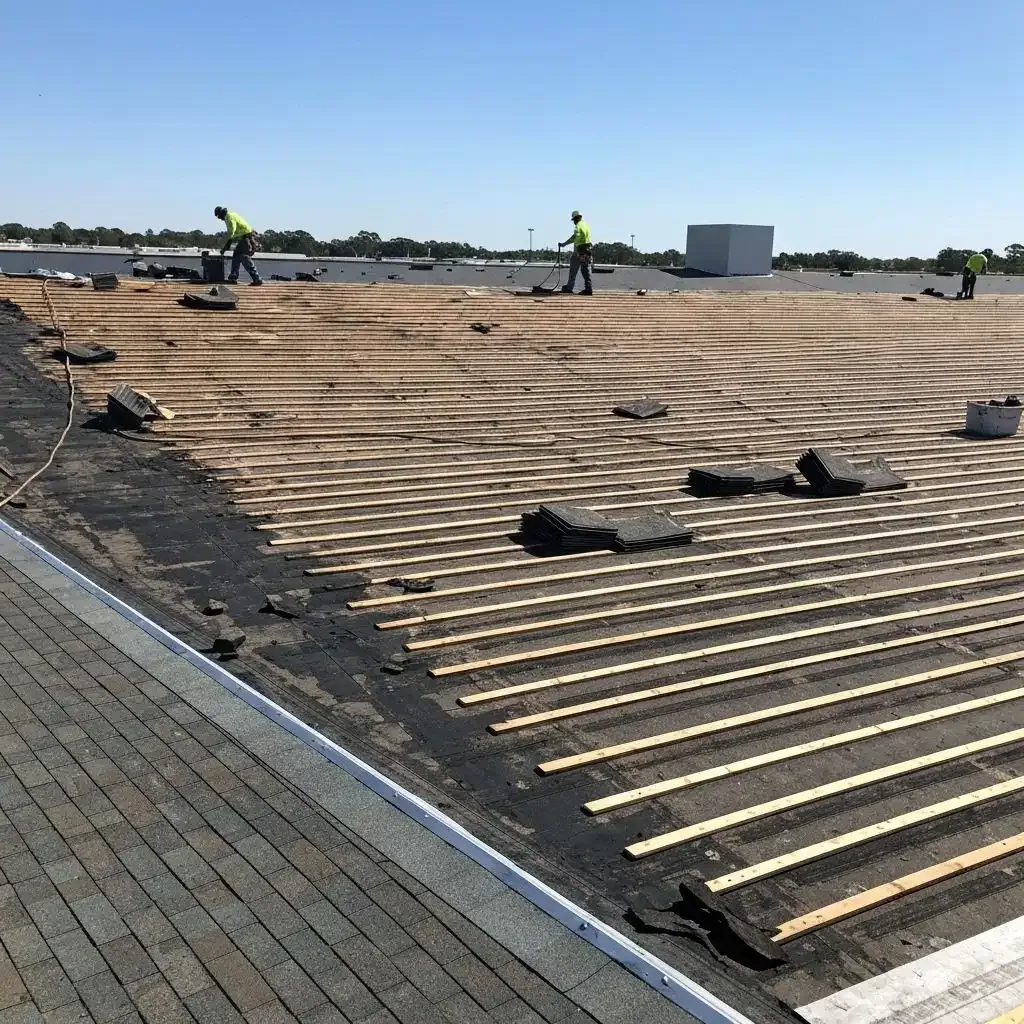
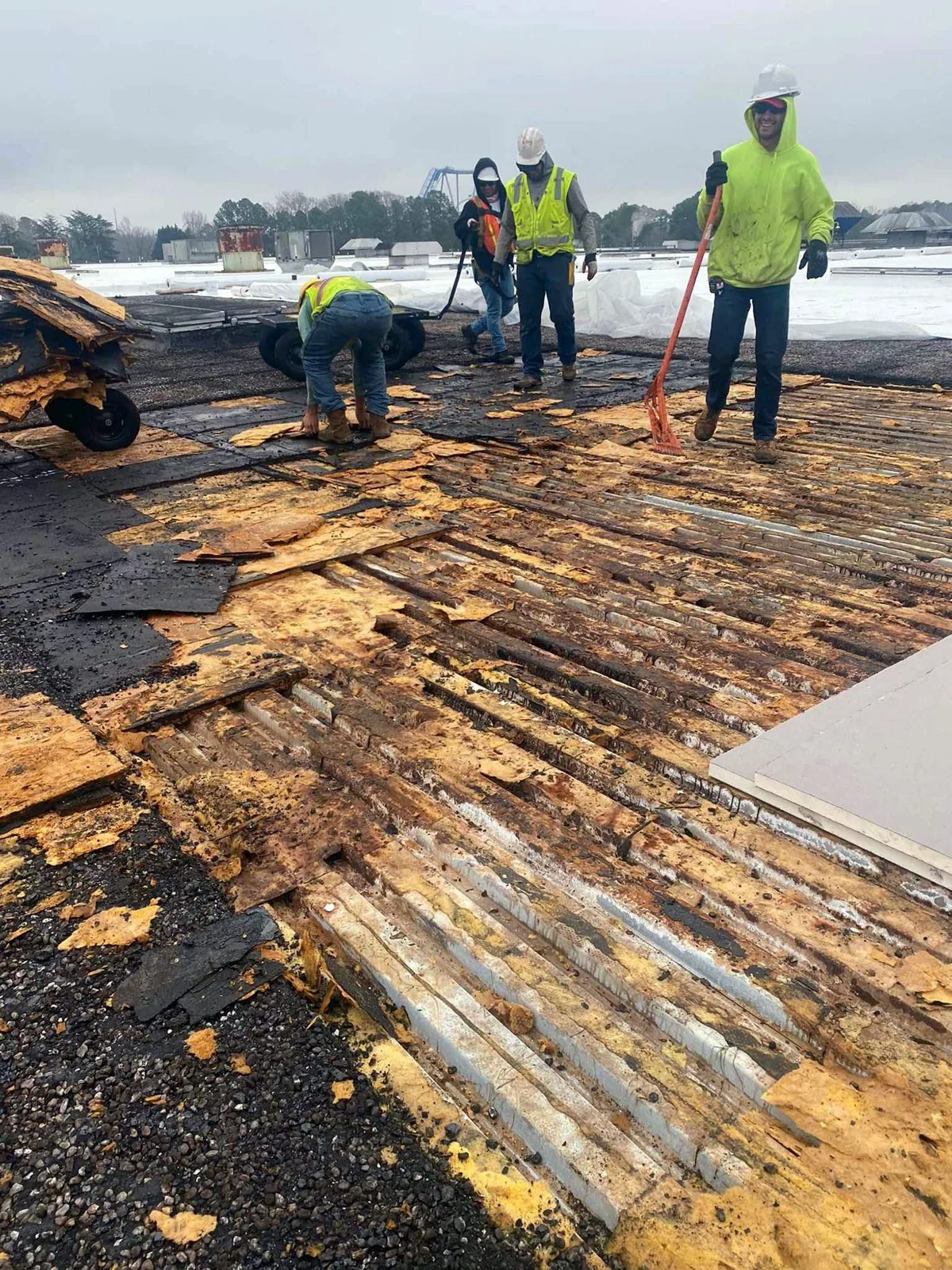
Five things reach the interior. Odor comes first, from solvent-based adhesives, hot-applied asphalt and some sealants, and it moves wherever air is drawn into the building. Noise and vibration arrive through the deck from tear-off tools, cart traffic and hoisting. Dust and small debris sift down from open flutes and deck joints. Water becomes a risk whenever any part of the roof is exposed, even for an hour. And access changes below, because material staging and fall protection can occupy the entrances, loading docks and parking spaces the occupants rely on.
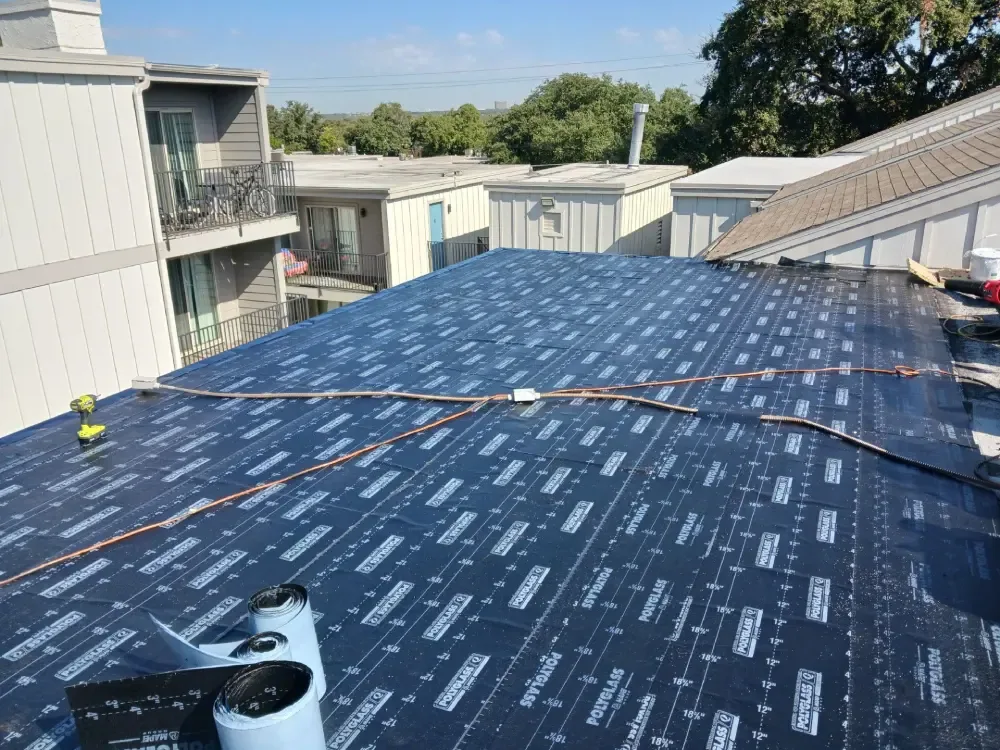
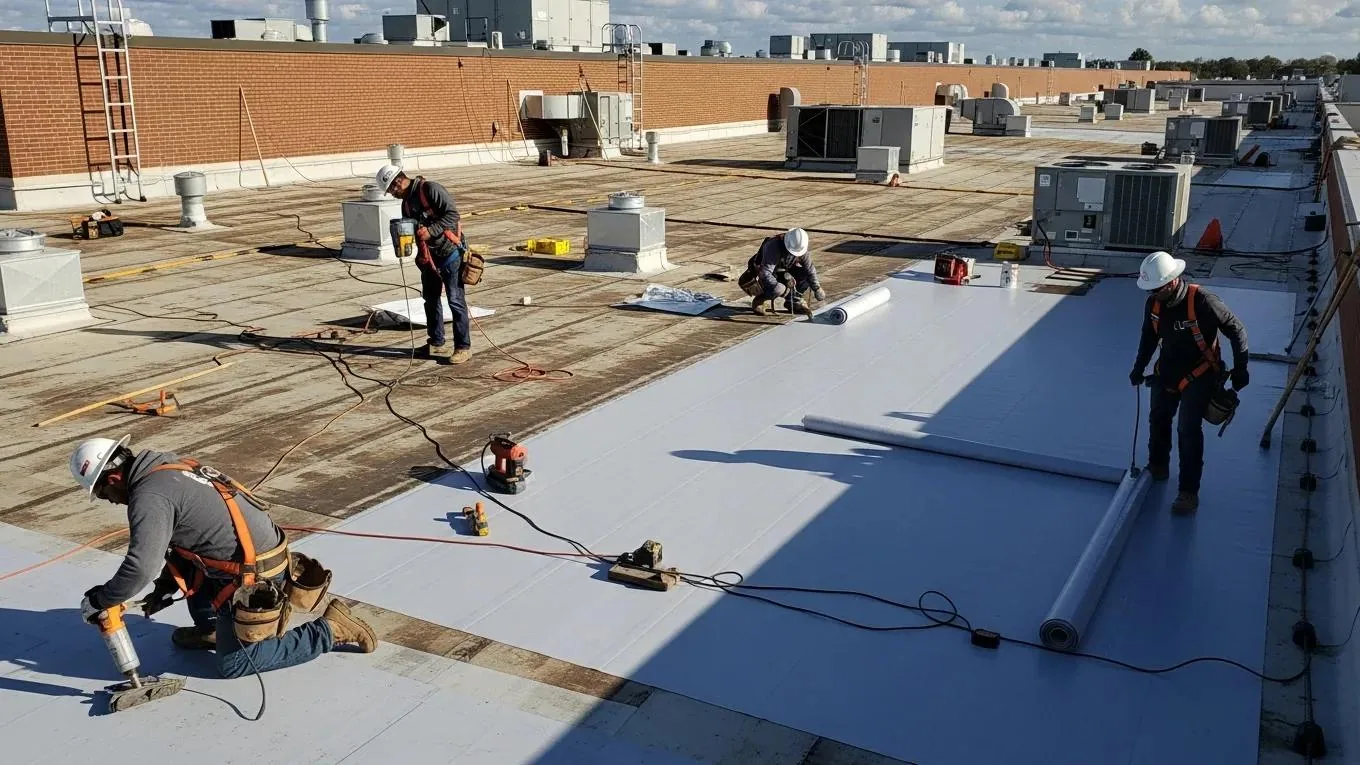
Each of these has a physical remedy, and none of them costs as much as a tenant complaint or a damaged ceiling. Intakes can be temporarily sealed or relocated for the day, low-odor adhesives and mechanical fastening can be specified, and tear-off can be scheduled for the hours when a space is least used. The point is to decide those measures in advance, with the building engineer, rather than react to the first phone call from the fourth floor.
Start the plan with the people under the roof
Call Commercial Roofing Johnson City to walk the roof and the interior together. You will have a written exposure map and a schedule that treats your tenants' hours as a constraint, not an afterthought.

Which parts of the building are exposed first?
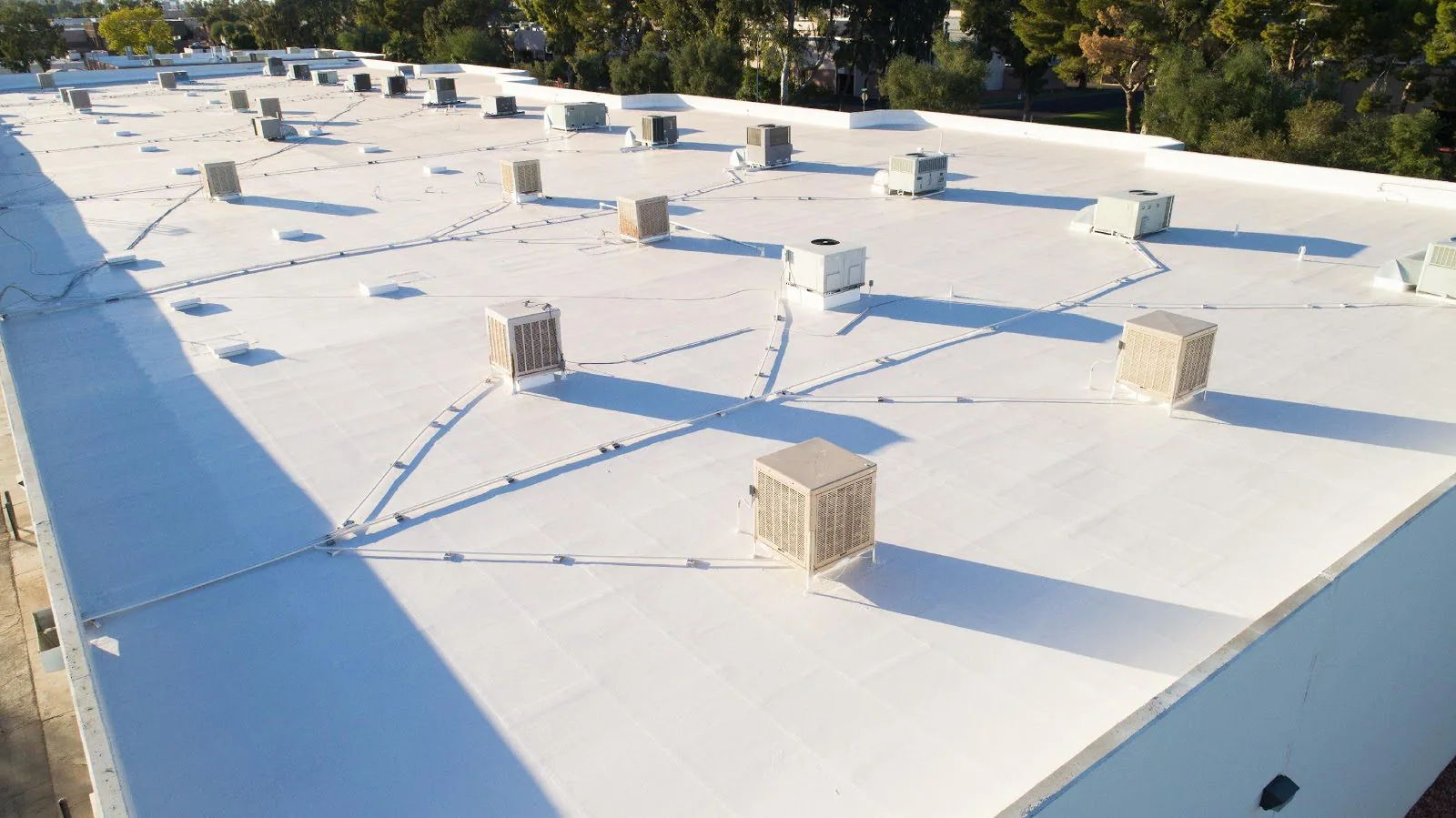
We walk the roof and the building together. The roof walk locates every fresh-air intake, exhaust and relief vent within reach of the work, the skylights and hatches that can admit water or fumes, and the spots where a crane or hoist would have to cross a public route. Inside, the questions concern the ceilings beneath: an open steel deck passes dust and odor freely, a hard lid ceiling does not, and a top floor with server rooms, laboratories or treatment areas needs more protection than a storage corridor.
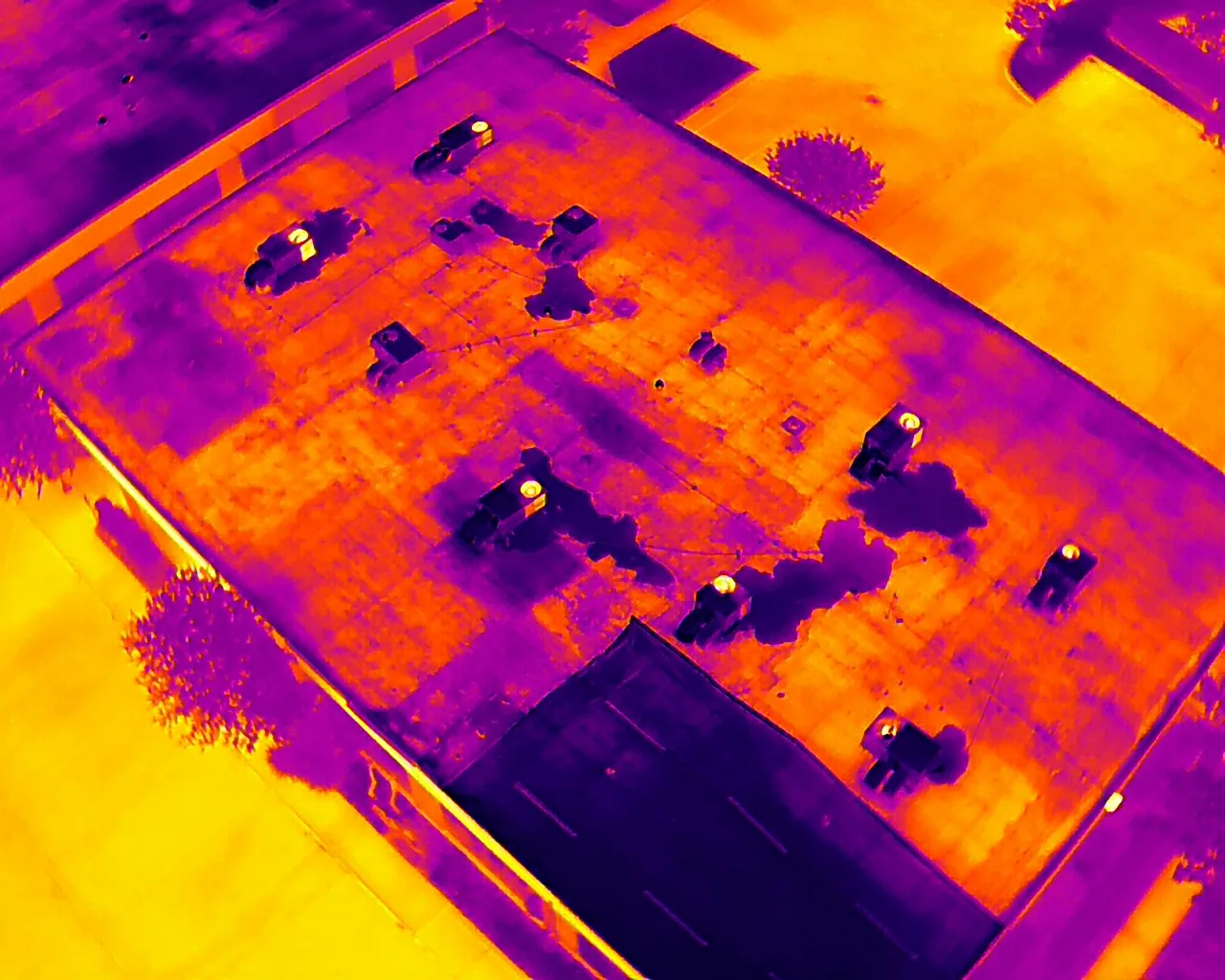
On healthcare roofs the work is shaped by an infection control risk assessment, and the roofer follows the hospital's own barrier and air-handling rules. On a school or office roof the conversation is mostly about the hours people occupy a space. The result is a map of exposure that names which areas get taped protection, which intakes get covers, which entrances get canopies, and which tenants need personal notice. A condition report from a prior commercial roof inspection supplies the roof side of that map.
Tear-off, recover or coating: which one disturbs the building least?
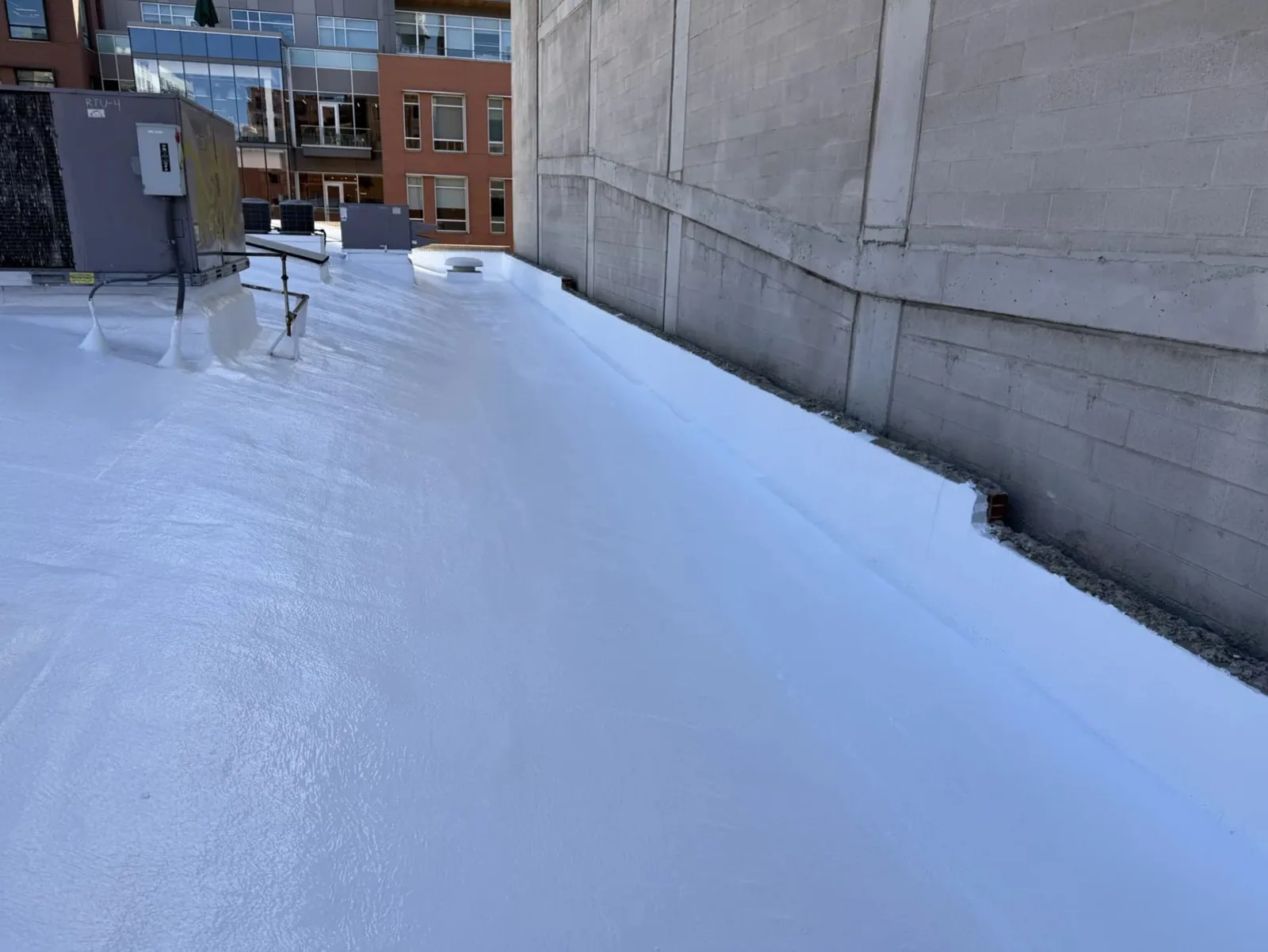
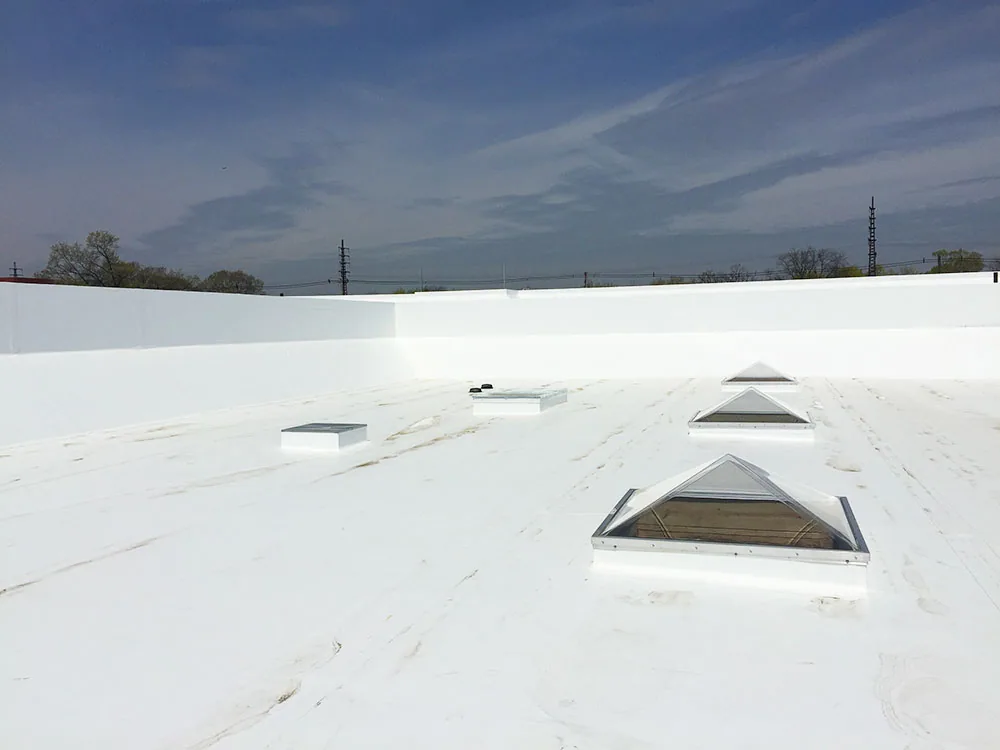
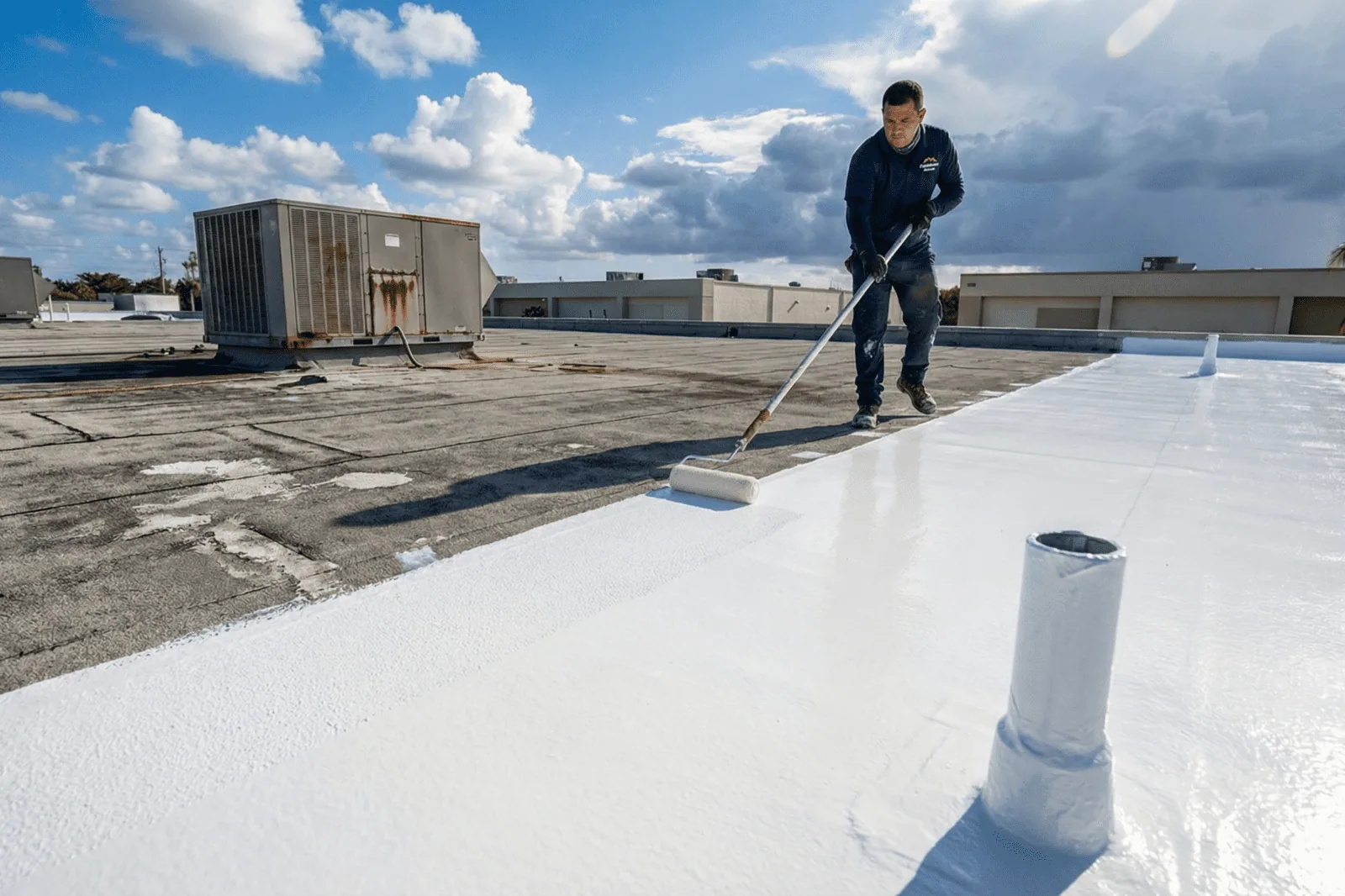
A roof recover leaves the old assembly in place, so there is no debris stream from the roof and the noise is lower, which is why it is attractive for a building with sensitive occupants. It is available only when the insulation underneath tests dry and the code permits another layer. A roof coating restoration is lighter still, with no tear-off at all, but it is limited to roofs that are sound and dry. A full commercial roof replacement is the heaviest on tenants and the only option when saturated insulation has to come out.
The quietest method is therefore not always the correct one, and a recover over wet insulation only moves the disturbance to a later year with a bigger bill. We compare the options on moisture data first and disturbance second, then reduce the disturbance of whichever scope remains through phasing, fastening choice and protection. Owners who see the tradeoffs in writing can choose a scope that serves both the roof and the tenant roster.
Whose calendar sets the schedule, and where does weather fit?
Every occupant type keeps its own calendar. A school or the academic buildings on East Tennessee State University's 366-acre main campus can be worked hardest when students are away, a retail center, the Mall at Johnson City among them, avoids the weeks of heaviest trading, and a hospital never has a quiet season, so its roofs are phased wing by wing with each section dried in before the next opens. Offices usually want the noisiest tasks outside business hours, and the premium for evening or weekend labor is a cost the owner can weigh against lost tenant goodwill.
Weather sits on top of every calendar. Johnson City receives roughly 45 inches of precipitation a year and cold nights through winter, and an open section at the end of a shift needs a tested temporary seal. Northeast Tennessee has its own record in Hurricane Helene of September 2024, when the Nolichucky River reached catastrophic flood levels, so the contingency plan names who closes the roof, who calls the building engineer, and who tells tenants. That chain matters more than any single day's progress.
What should tenants and facility staff hear, and when?
Notice works best when it is specific. Tenants need the start date, the daily work hours, the areas that will be noisy, the entrances that will be closed or covered, and a single person to call. Facility staff need more: intake plans, equipment shutdown windows, and the hours during which a hoist or crane will operate. A weekly update during the job keeps the schedule honest, and a quick note when a day moves prevents rumors from filling the gap.
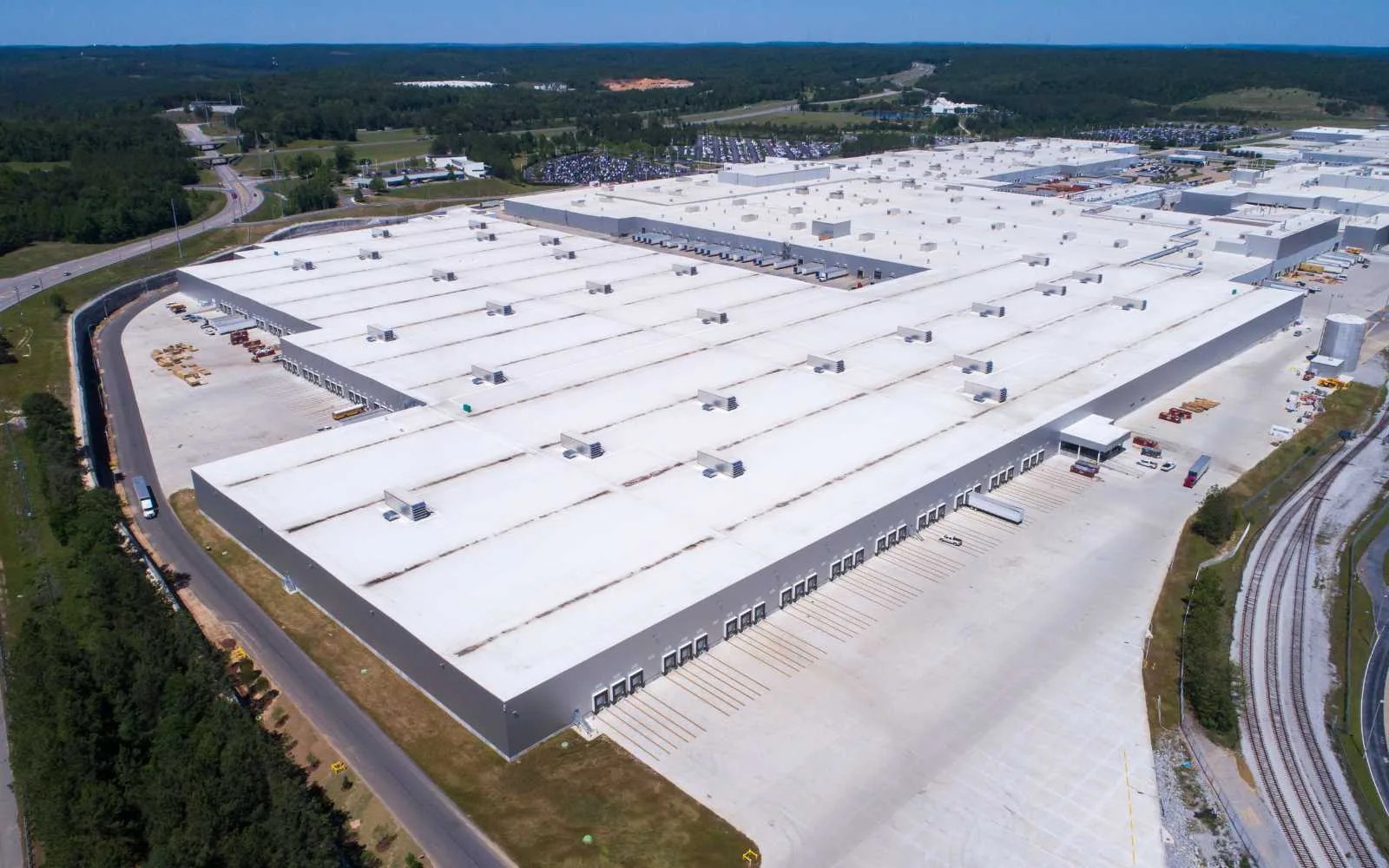
For owners with several buildings or a portfolio of leased space, the same approach can run across a schedule of hospital roofs, a summer program of school roofs or a calendar of shopping center roofs, with a standing template for notice and protection. Routes matter too: on State of Franklin Road the Med-Tech corridor is where Johnson City Medical Center, a Level I trauma center, and ETSU medical institutions sit, so a crane day there is planned around patient, staff and visitor routes, and a hoist day on the ETSU campus asks the same.
Commercial Roofing Questions
Will roofing fumes get into the building through the air handlers?
They can, if the intakes are left open near the work. Temporary covers, relocated intakes or shutdown windows keep vapor out of the ductwork, and low-odor products reduce what there is to keep out. We locate every intake during the walk and agree the plan with the building engineer before any adhesive is opened.
Is evening or weekend work worth the added labor cost?
For buildings with sensitive occupants, usually. Noisy tear-off and hoisting during off hours protects tenants and avoids interruptions to the work itself. For an owner with a flexible tenant mix, the premium may not pay back, and a daytime schedule with good protection and notice is enough. The comparison to make sets the premium against what a lost tenant or a disrupted clinic would cost.
What if rain arrives while part of the roof is open?
The section is sealed before the crew leaves each day, so an overnight storm meets a tested temporary seal and not exposed insulation. During the day, a forecast watcher and a crew with materials staged can close a section quickly. Interior protection beneath the open area gives a second line of defense if something goes wrong.
How do you keep entrances safe when material is moving overhead?
With barricaded lanes, covered walkways at the doors people use and hoisting zones that avoid public routes. Material is lifted in planned loads at set times, and spotters control the ground. If an entrance cannot be protected adequately, it is closed and signed, with a clear alternate route for visitors and deliveries.
Do leases or tenant agreements affect how the reroof is planned?
They often do. Leases may set quiet hours, require notice, or place conditions on interruptions to a tenant's operations or parking. Reviewing those terms alongside the schedule avoids surprises, and our scope can be arranged around the strictest commitment on the property so that every occupant's rights are respected.
Related Roofing Pages
Commercial Roof Inspections
How the work is scoped, phased and documented on Tri-Cities roofs.
Roof Recover and Overlay Systems
What we check, what we recommend and how the crew keeps the building running.
Roof Coating and Restoration
Conditions, options and next steps for commercial buildings in East Tennessee.