Commercial Roofing in the Med-Tech Corridor, Johnson City, TN
A building conditioned around the clock never gives its roof a night off. Warm, humidified air leans upward against the underside of the deck every hour of a Tri-Cities winter, and any gap in the vapor path lets that moisture reach insulation that is already cold, where it condenses and stays. The roof can look dry from above for years while its insulation loses thermal value and its deck begins to corrode. For the buildings along State of Franklin Road in Johnson City, TN, where Johnson City Medical Center and the Med-Tech corridor concentrate healthcare and teaching institutions, that hidden wetting is the roofing problem worth measuring first. Waiting for a stain means the repair has already grown into an interior project, and in a hospital an interior project means containment, relocation and a conversation with infection control. Condition data gathered earlier turns that sequence around.
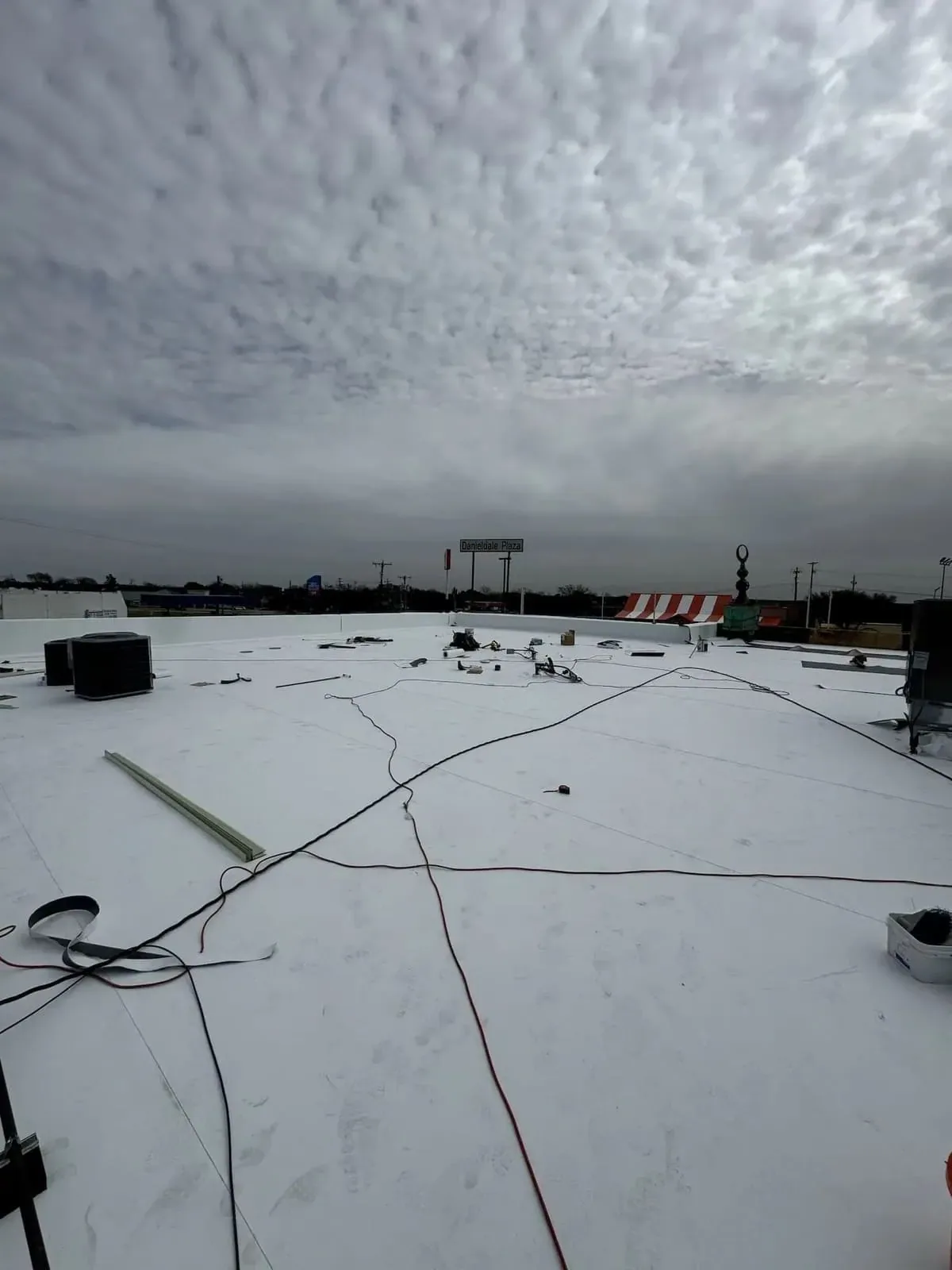
What does a corridor of hospital and teaching buildings ask of a roofing contractor?
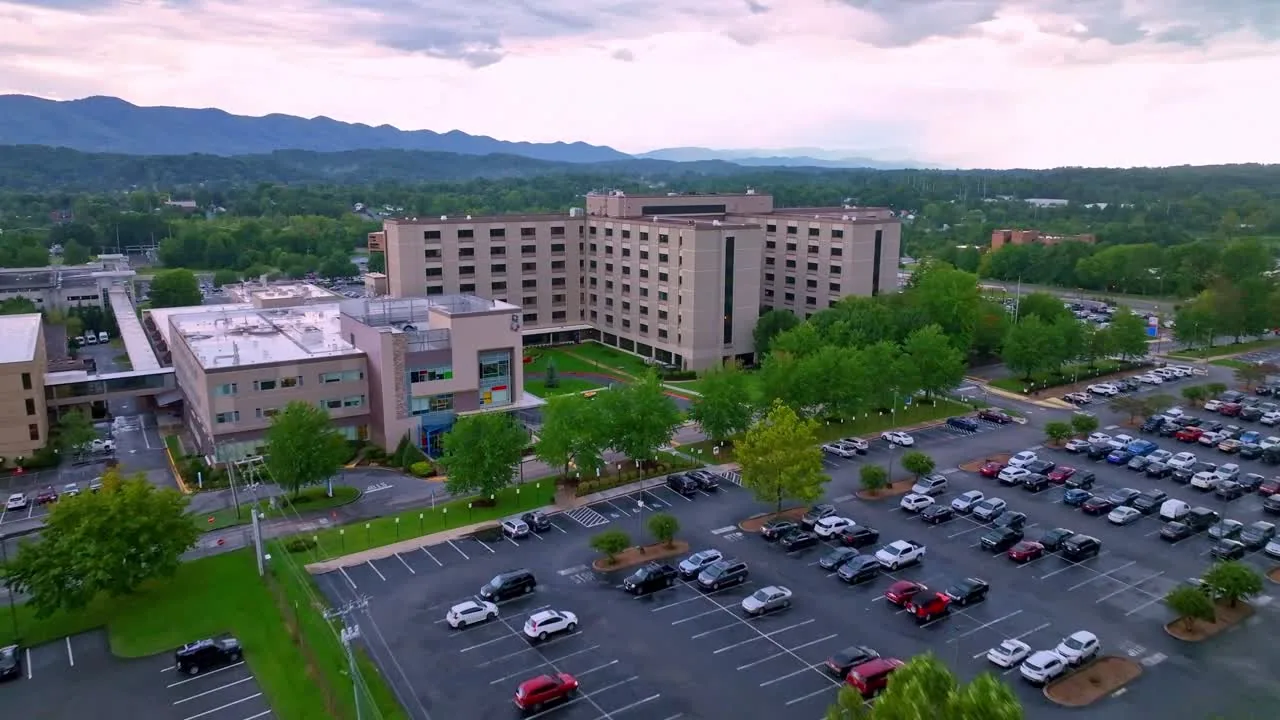
It asks for a plan that starts inside the building. Johnson City Medical Center counts 445 beds plus 86 more in Niswonger Children's Hospital, and as a Level I trauma center it cannot pause for a reroof. It is also a teaching hospital affiliated with ETSU's Quillen College of Medicine, and the Med-Tech corridor ties together healthcare and educational institutions, so owners and facility teams answer to clinicians, students and visitors at once. Ballad Health, headquartered in Johnson City and the operator of the medical center since 2018, runs a large regional system, which makes consistent roof records worth having. Wherever a roof sits above patient care, we coordinate fresh air intakes, noise windows and access routes with the facility team before any material arrives, much as we would for any hospital roof.
Put your roof's condition on file before the next storm tests it
Call Commercial Roofing Johnson City to schedule a drone and infrared survey of a hospital or healthcare roof. You will receive a written report with photographs, moisture findings and a phased scope your facility team can weigh.
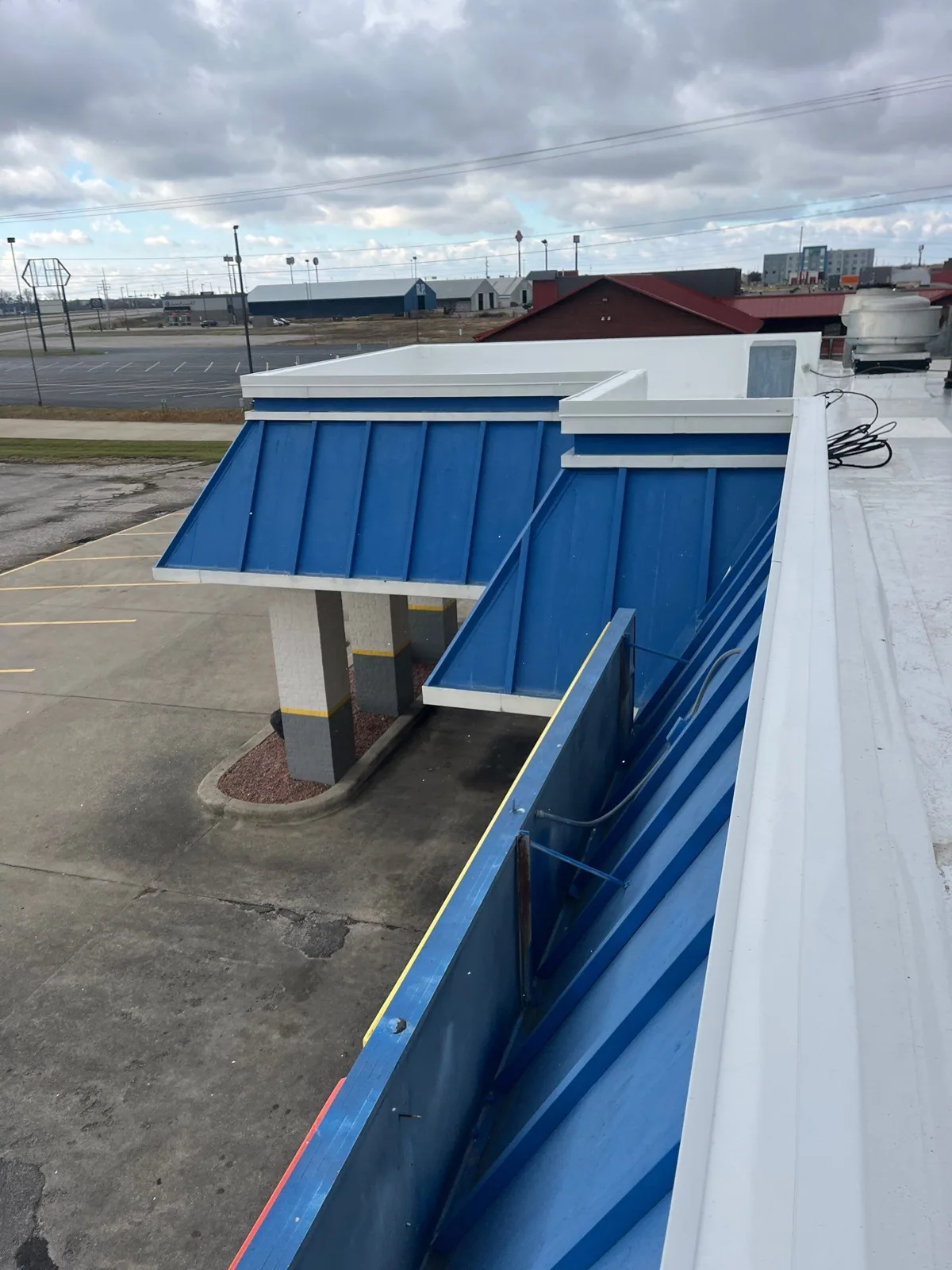
How does a heavy rain event test a low-slope roof's drainage path?
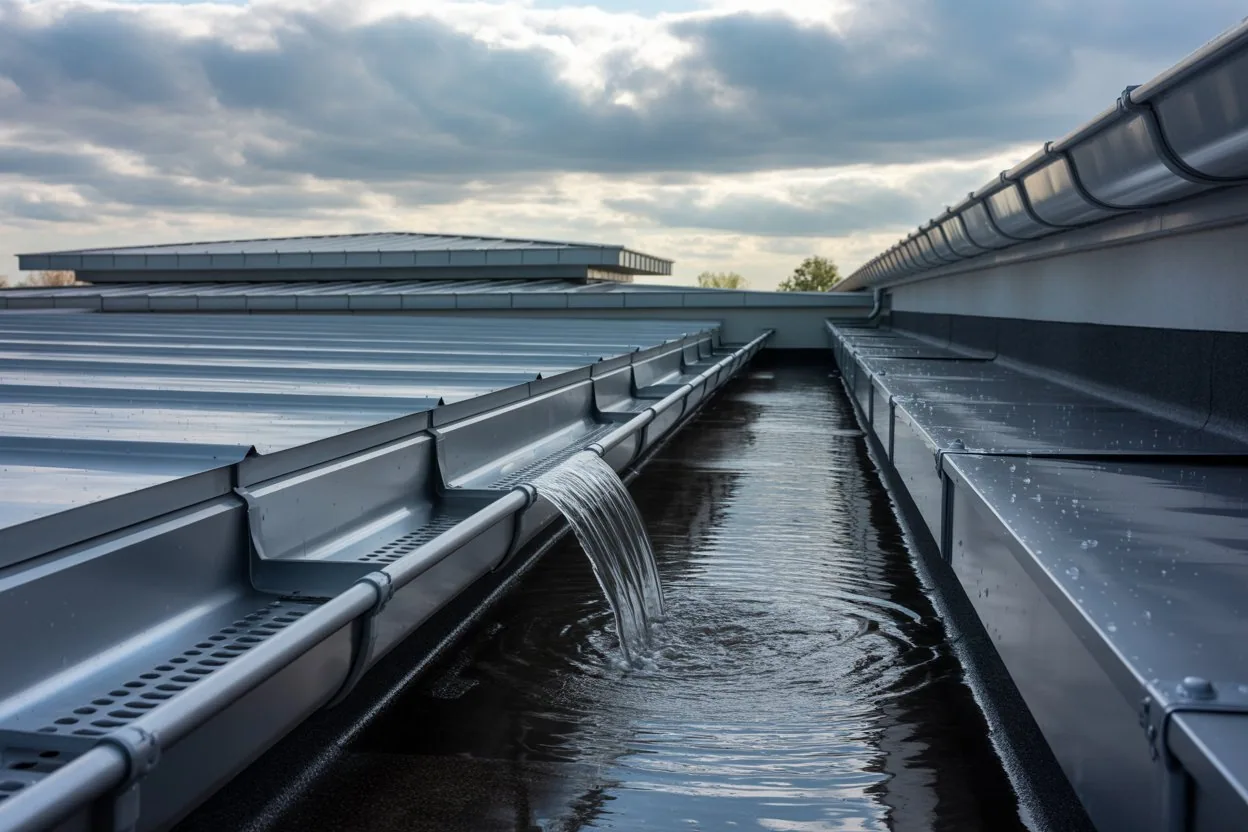
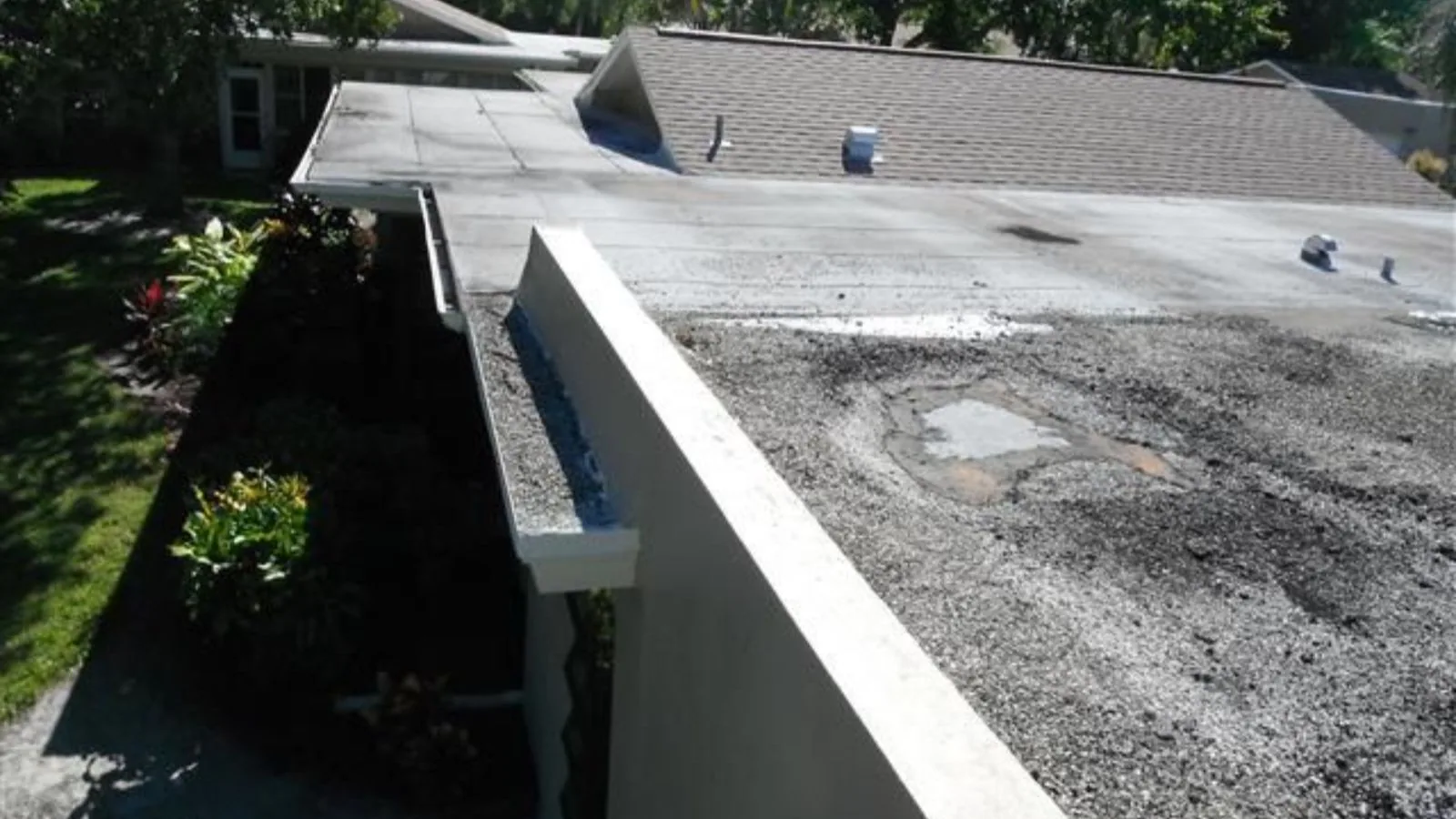
It tests every outlet at once. Precipitation in Johnson City runs to roughly 45 inches a year, and Helene's flooding in September 2024 closed I-26 and put the Nolichucky River at catastrophic levels, which shows how much water one storm can put on the region. A drain with a clogged strainer, a scupper set a little too high or a membrane that has sagged into a shallow basin will hold water that a sound roof would have shed. Standing water adds load, softens seams over repeated wetting and freezes overnight into ice that lifts laps. We trace the drainage path from the farthest ridge to the outlet, and where water lingers we look at ponding water repair options such as tapered insulation or added drains.
How can roofs over occupied care areas be surveyed without disturbing them?
Most of the evidence can be gathered without opening anything. A drone roof inspection photographs edges, equipment and high sections from the air, so crews spend less time on the roof and no time near windows or intakes. An infrared scan, run when the roof releases the day's stored heat, shows wet insulation as warm patches, and a small number of core cuts, patched the same day, confirm the layers and the moisture. We also log penetrations, curbs and drain locations so the owner has a map that the next survey can be compared against, and we photograph each one at the same angle so that change between visits shows. Surveys of that kind are best timed for a cold, clear evening, when the temperature difference between dry and wet insulation is widest. The written roof condition report ranks every defect, lists the likely remaining life of each section and gives facility teams something firm to take to a budget meeting.
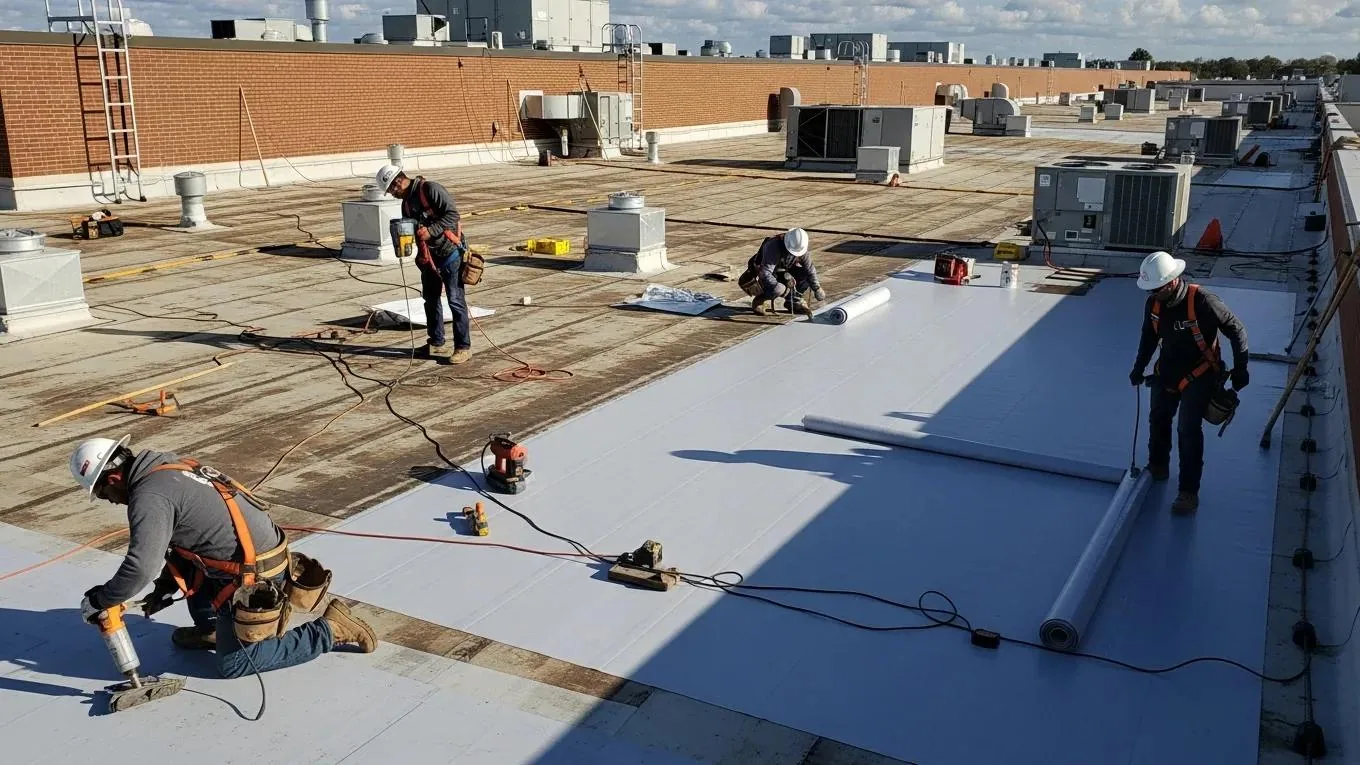
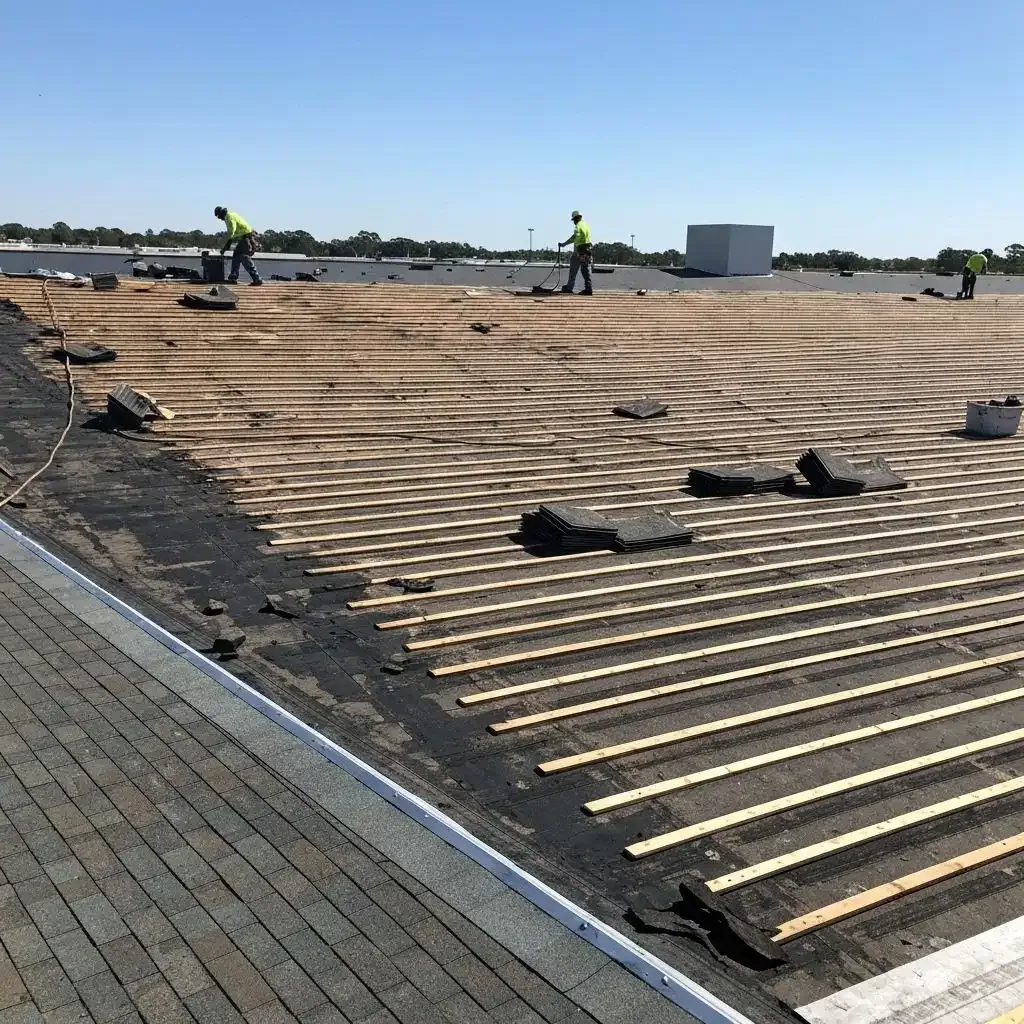
Phased replacement or a standing program: how do owners weigh a corridor of buildings?
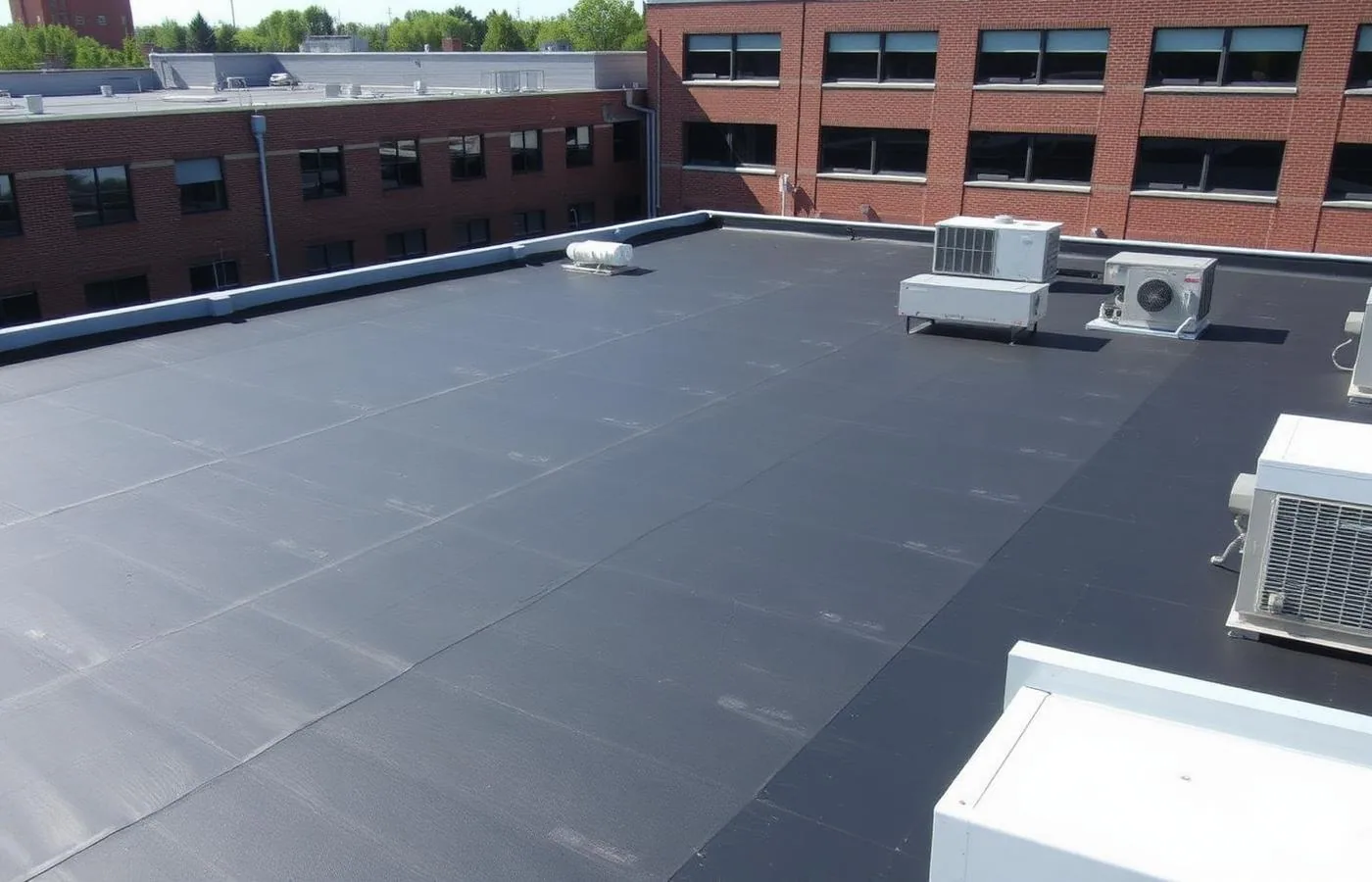
The answer begins with the oldest, wettest roofs and works toward the sound ones. Where a moisture survey finds saturated insulation, replacement of that section is the clean choice, and phasing it lets a building stay in service while each area is dried in and closed. Where membranes are intact and dry, preventive roof maintenance and an occasional restoration extend service life at a fraction of replacement cost, which frees capital for the roofs that cannot wait. The building and energy codes the city adopted in 2018 frame new insulation and assembly choices. Weld-seamed membranes such as PVC and TPO are frequent choices for healthcare roofs, and we explain the reasoning building by building instead of applying one specification everywhere.
What does a roof failure cost a building that cannot divert its patients?
More than the roofing line captures. A wet ceiling over a clinical area can mean closing rooms, testing for mold, staffing a containment crew and shifting maintenance hours away from the work they were scheduled to do. Saturated insulation raises energy use while the deck rusts above it, and a membrane failing at the edge of a winter storm is the worst moment to be choosing a contractor. A planned replacement fixes the schedule, the staging and the budget; an emergency repair fixes only the leak. Our emergency response runs around the clock, holidays included, but the strongest protection a facility can buy is a roof whose condition is already on file. The ETSU medical institutions that the corridor also holds, and the wider ETSU campus, gain from the same discipline.
For a second building under the same owner, retain a separate roof plan and photo set; the downtown Johnson City checklist follows that record format.
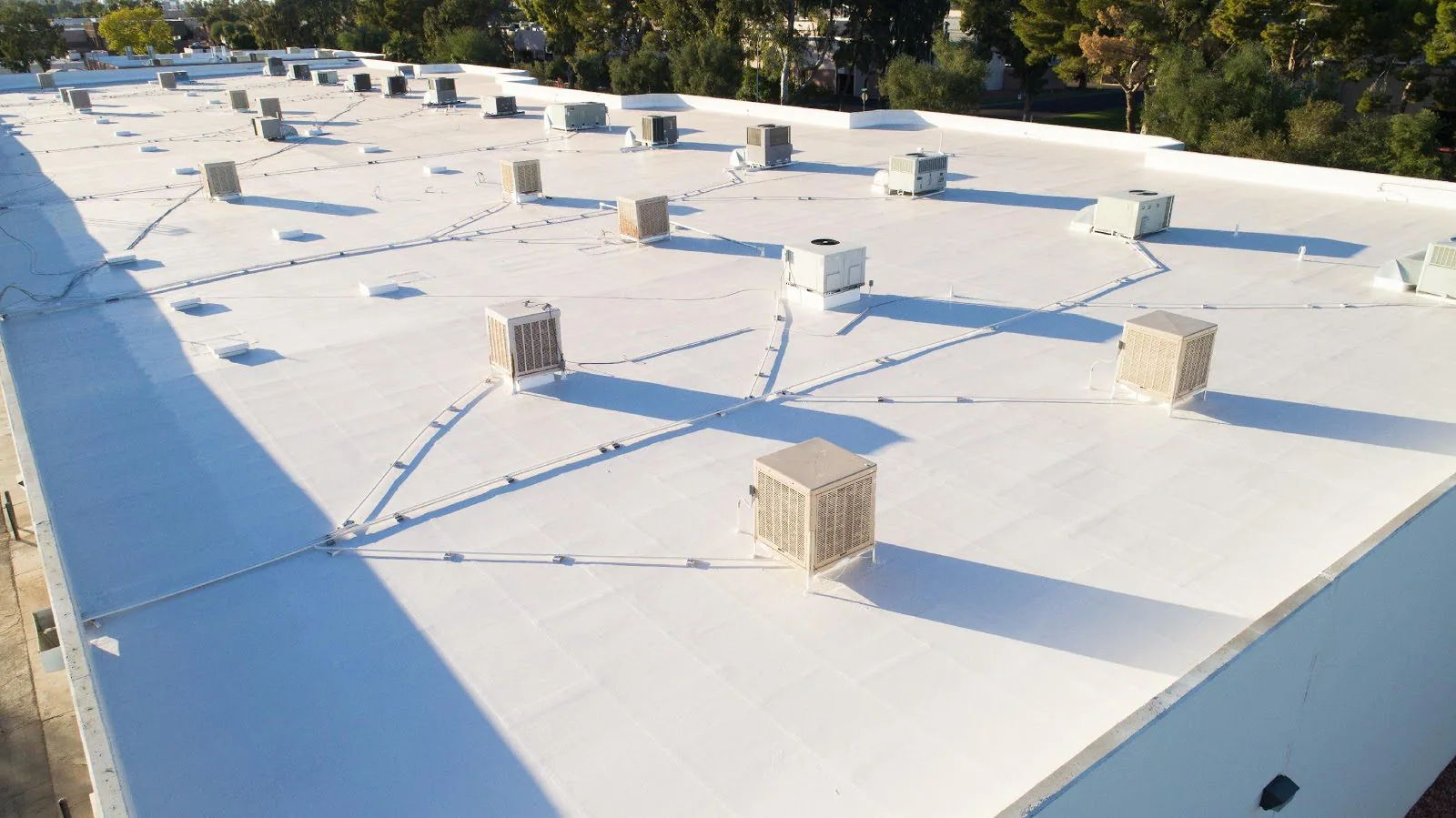
A corridor-wide roof program should not assume every building shares the same operating calendar. Healthcare, teaching and research uses bring different access rules, rooftop equipment and tolerance for interior disruption. At the first meeting, group buildings by roof system and operating constraint, then inspect one representative roof from each group before preparing a portfolio scope. The result is a city-area plan that can scale across the Med-Tech corridor without treating one campus as the whole market.
Commercial Roofing Questions
Which part of a hospital roof tends to leak first?
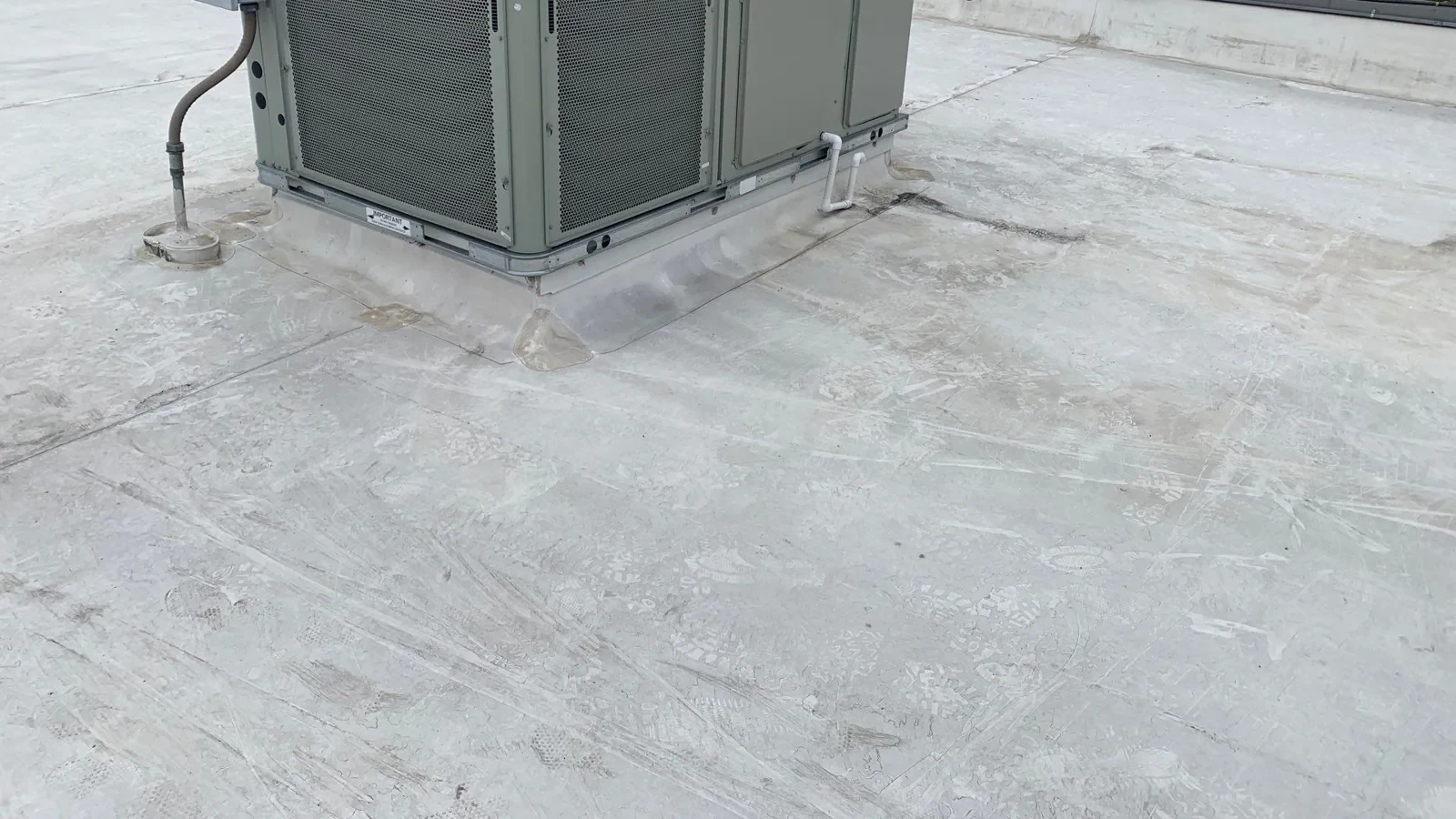
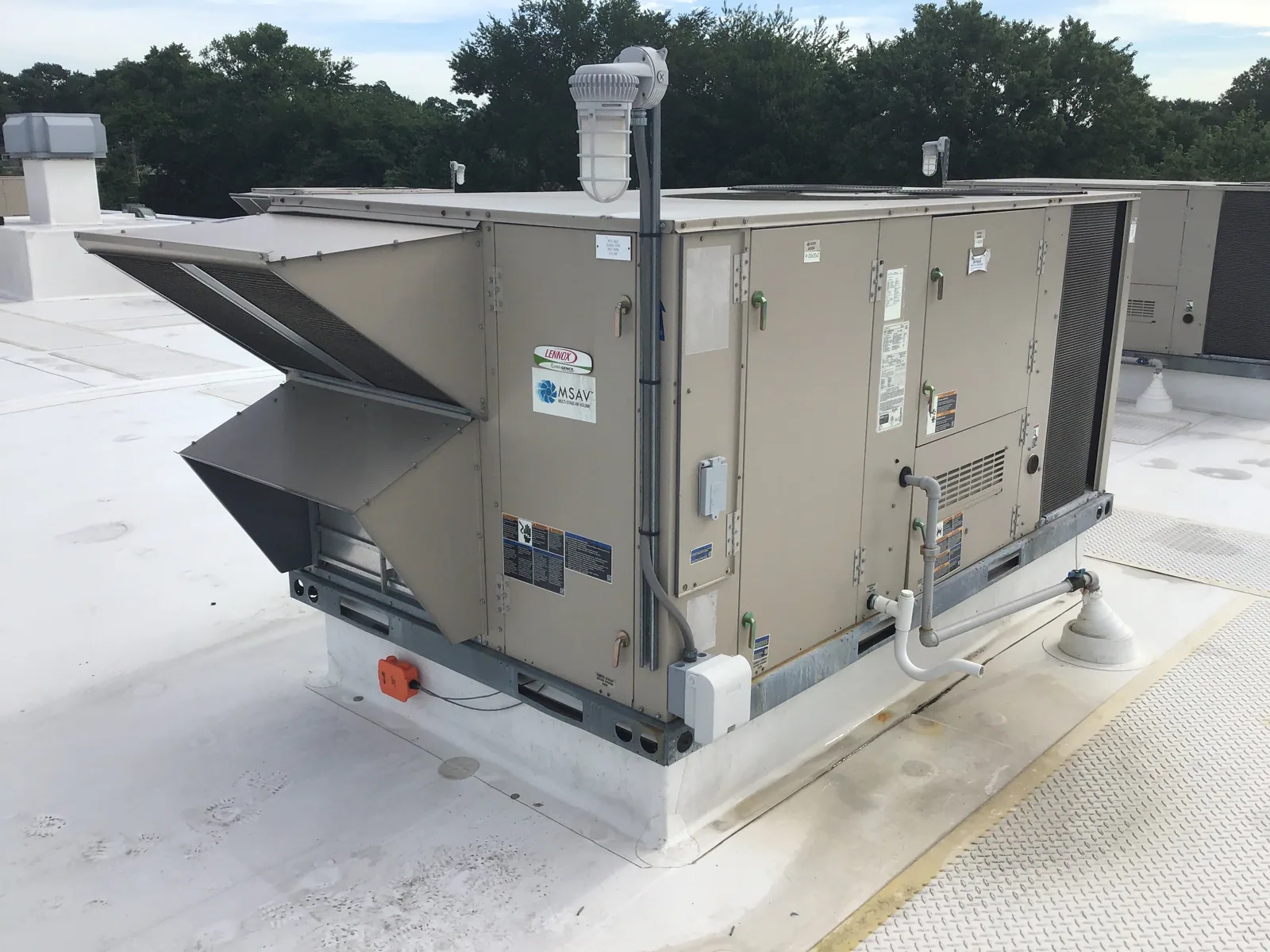
Penetrations lead, and the curbs under rooftop air handlers and exhaust fans most of all. Vibration and heat work sealants loose over the years, and flashing at pipe stacks cracks with the same cycling. We spend the first hour of a walk on those details, then move to drains and the edge.
How is infection control handled when an old roof comes off above a ward?
Planning begins below the deck. Barriers, sealed ceiling penetrations and dust control go up before the membrane is cut, and intake locations are checked each morning against that day's work. The roof is closed section by section so nothing is left open overnight.
Why would a medical office near the hospital need a different approach than the hospital itself?
Smaller medical buildings have less mechanical equipment and fewer interior zones that cannot move, so their roofs usually allow simpler staging and faster sections. A leak can still close exam rooms for a day, so the survey and the report apply equally to a medical office roof.
Is it better to dry out wet insulation or replace it?
Replacement is the usual answer once readings show the board has soaked, since trapped water rarely leaves through a sealed membrane. Isolated wet spots near a flashing can sometimes be cut out and patched, but only when the surrounding insulation measures dry.
What records should a facility team keep after a roof project?
Hold on to the core log, the moisture map, the dated photographs and the data sheets for whatever was installed. With those on file the next repair starts from known layers, and the owner can compare one building's roof against another's using the same evidence.
Related Roofing Pages
Hospital Roofing
How the work is scoped, phased and documented on Tri-Cities roofs.
Ponding Water Roof Repair
What we check, what we recommend and how the crew keeps the building running.
Drone Roof Inspections
Conditions, options and next steps for commercial buildings in East Tennessee.