
Roof Damage Repair
Cold makes roof damage worse in a way that heat does not. A puncture that holds a thimble of water at dusk holds a plug of ice by morning, and ice expands into the very opening it came through, prying at the membrane edge and wetting the insulation beneath when the sun returns. Winters in Johnson City, TN, with lows averaging near 25F and about 15.6 inches of snow in a typical year, give every unrepaired defect a steady schedule of wetting, freezing and thawing to work on. A small break left through January is seldom small by March, and the difference between a patch and a section replacement is often the number of freeze cycles that passed in between.
Which damage cannot wait for dry weather?
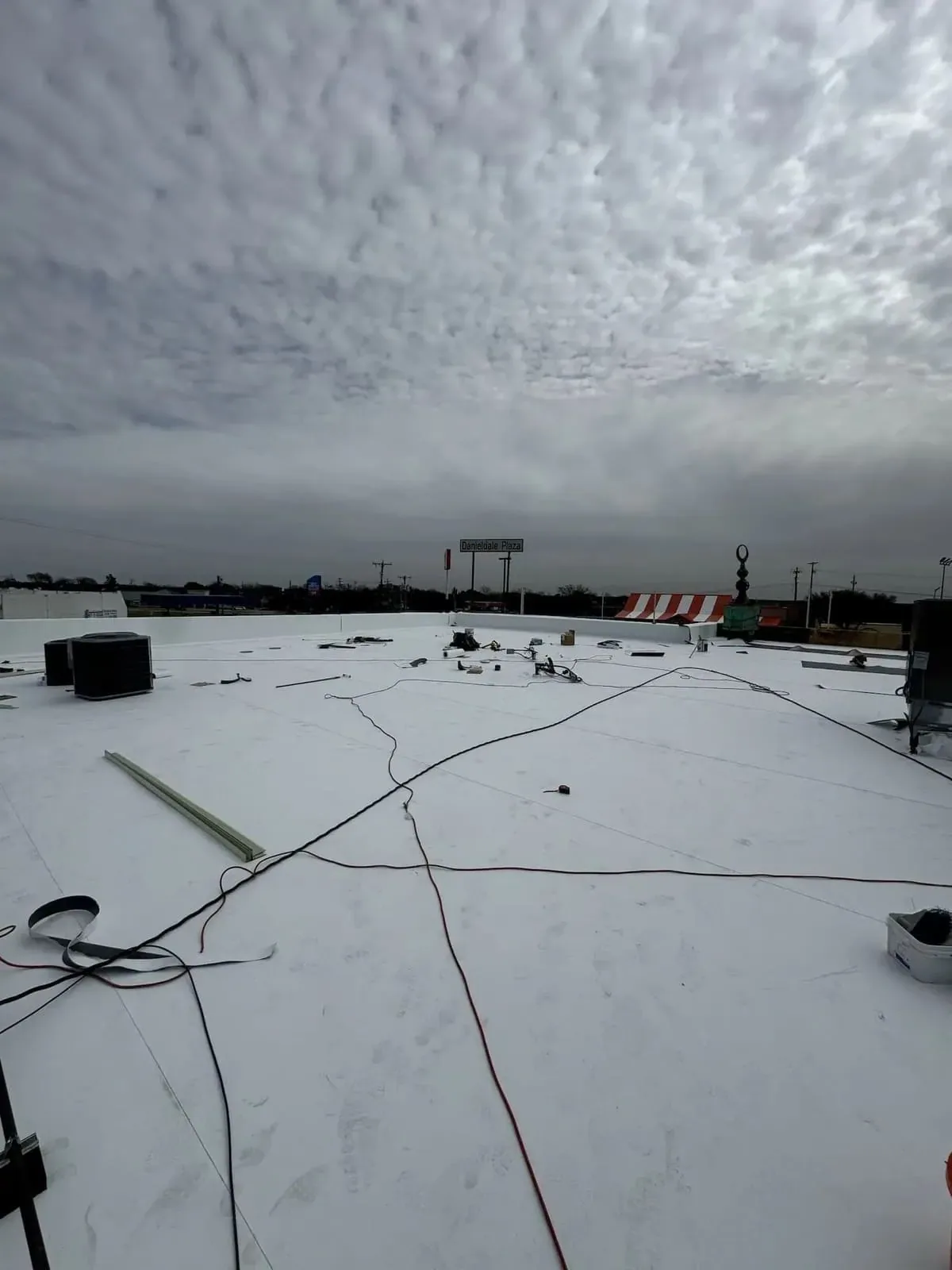
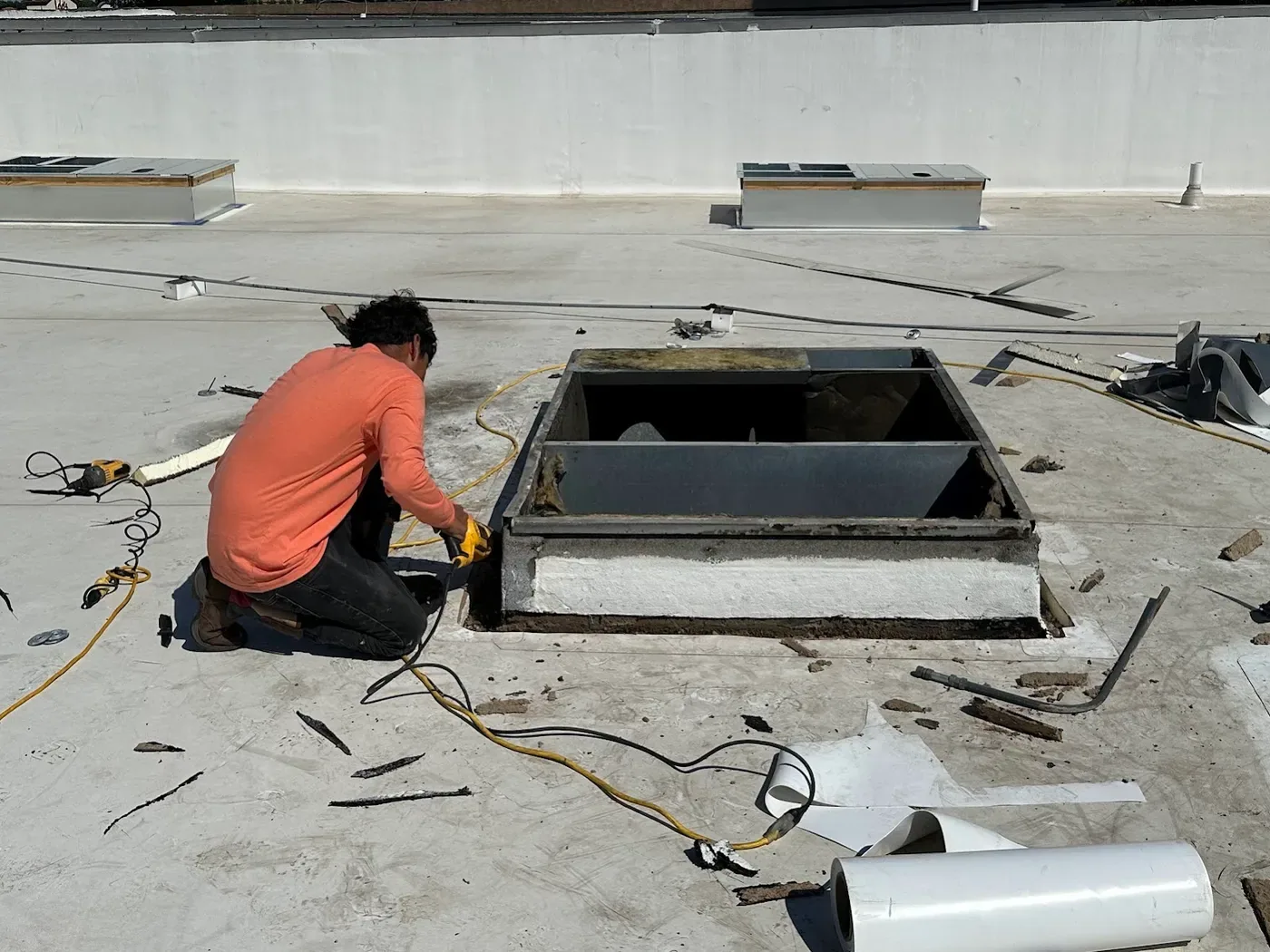
Some damage changes the condition of the building faster than any calendar. Wind damage that has lifted a section of sheet or peeled back edge metal leaves the field of the roof open, and each gust enlarges the lifted area. Fire and smoke damage can leave a deck that looks intact but has been heated beyond what it was designed to take, so a structural check comes before any new membrane. A membrane puncture from a dropped tool or a fallen limb looks minor, yet the repair has to follow a moisture check of the insulation underneath. For any of these, emergency roof repair stabilizes the building at any hour, holidays included, and permanent work follows once the weather and the findings allow.
Where does water actually get in?
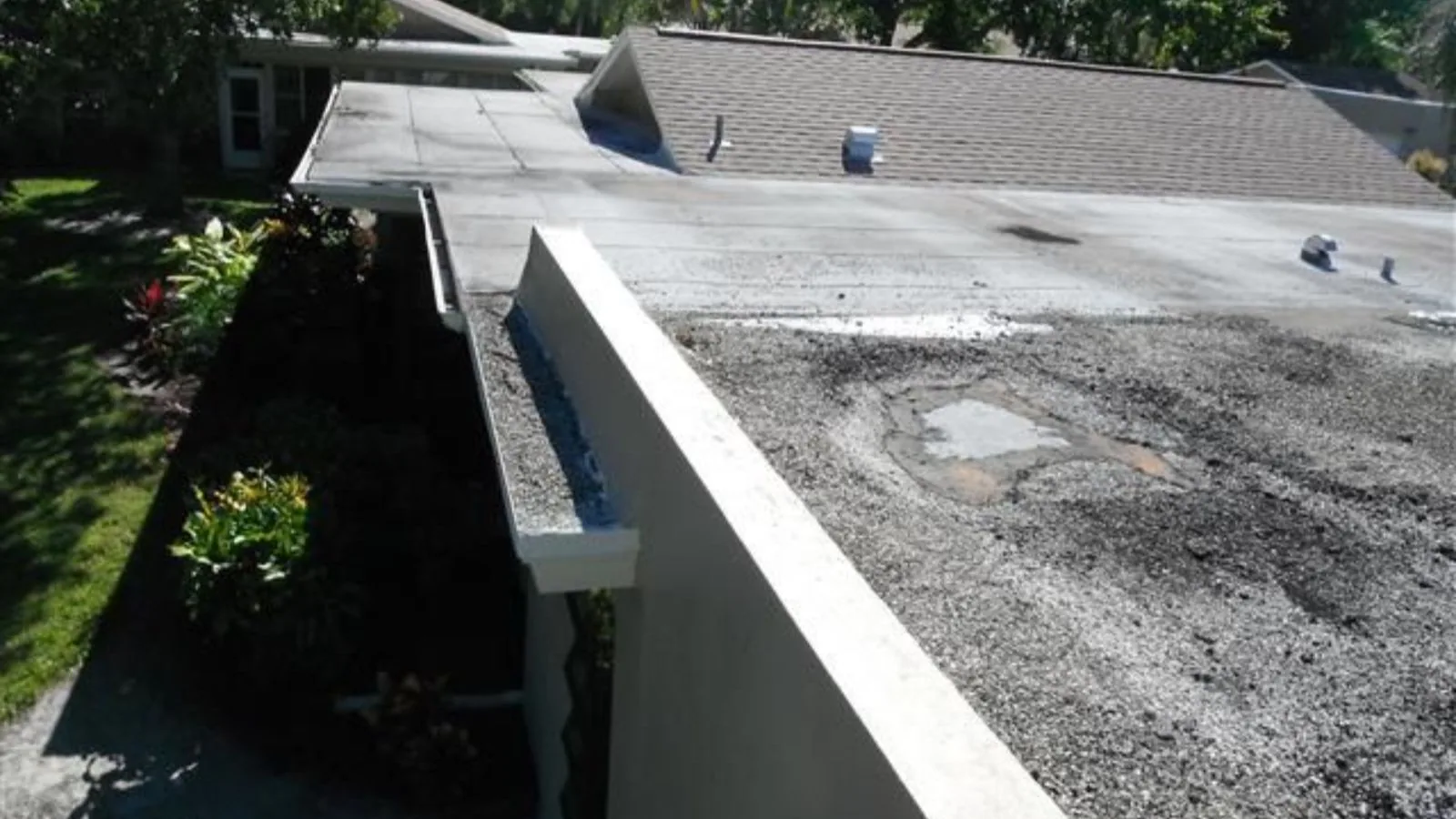
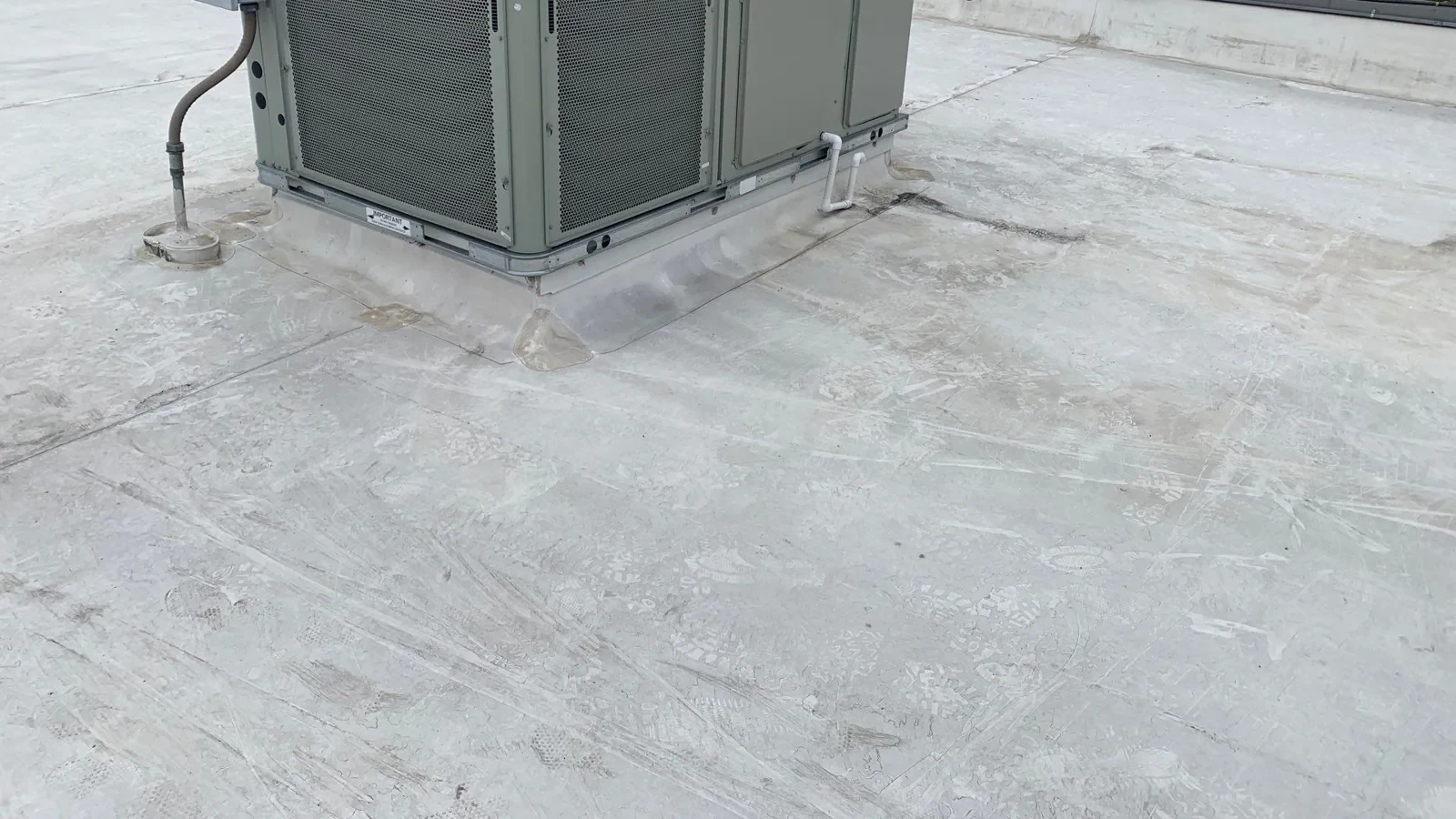
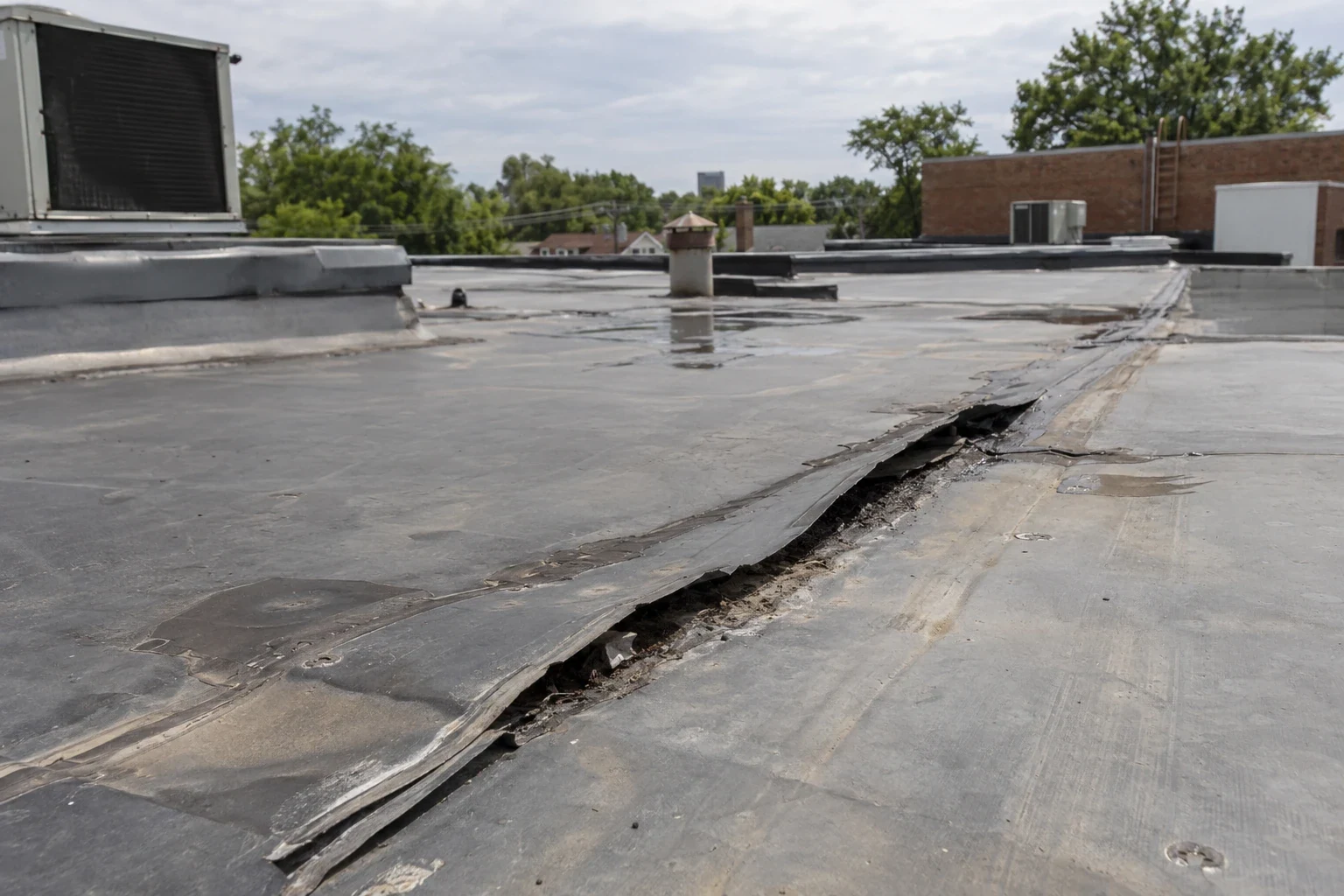
Leaks tend to begin at a transition rather than in the middle of a sheet. Flashing failure at a parapet, curb or pipe boot lets water behind the membrane as sealant dries out and the metal and the wall move at different rates. Seam failure opens at the T-joints and corners where a weld or an adhesive bond was weakest, often after repeated thermal cycling has worked a lap loose. The entry point may sit many feet from the stain, so finding it means tracing water along the deck and through the insulation, and a repair made at the wrong spot only sends the water somewhere else.
What do standing water and snow do to a roof?
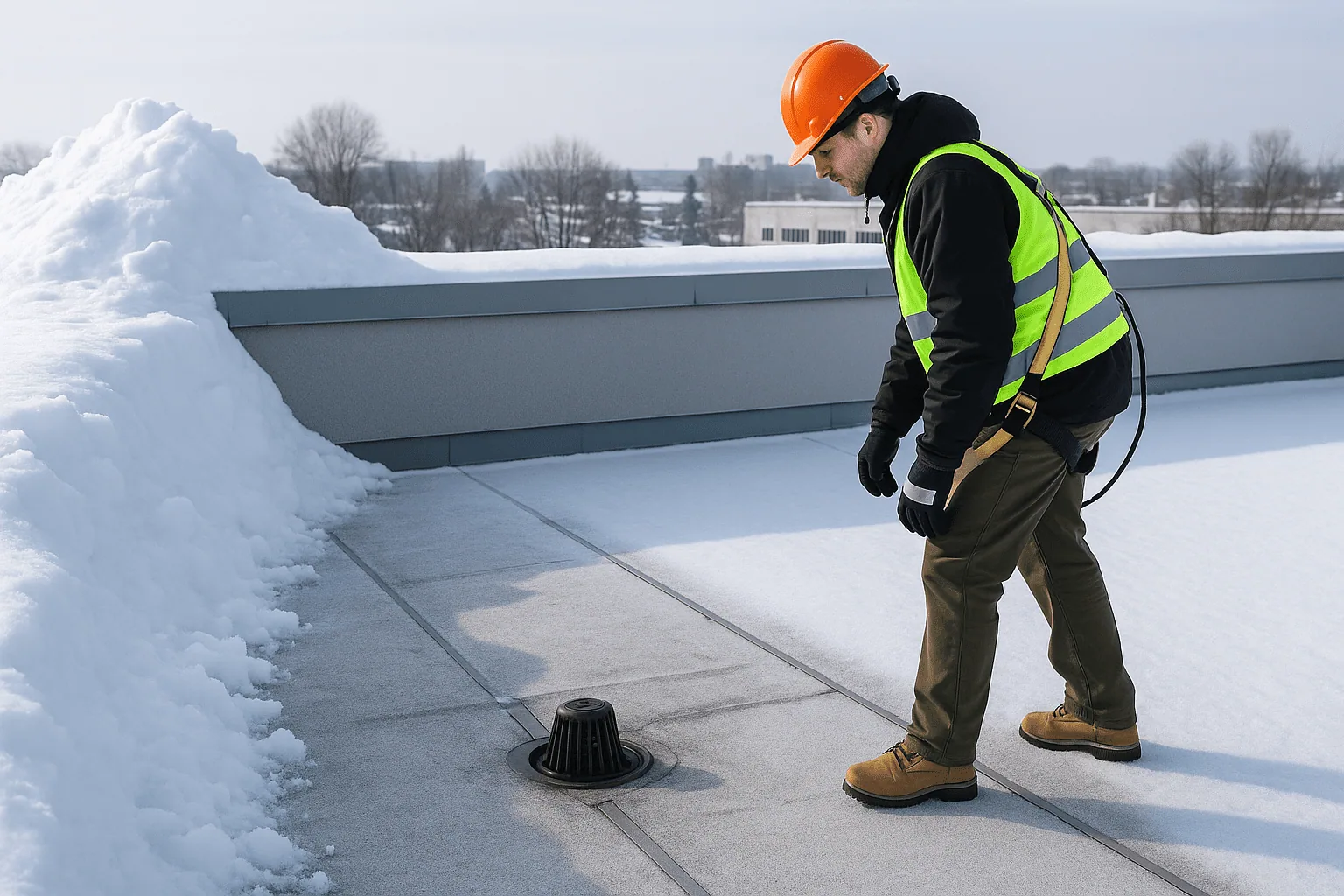
Weight and pooling are the slow forms of damage. Ponding water that remains a day or two after rain ages the membrane faster, collects debris and points to a drain or deck problem worth correcting. Snow and ice damage arrives when drifts load a lower roof beside a taller wall, when ice dams form behind a parapet, or when a thaw sends meltwater toward a drain that is still frozen. Mountain communities such as Roan Mountain, at about 2,550 feet, see considerably more winter precipitation than the valley floor, so a defect left open there meets more of it.
How is storm damage documented for a claim?
Hurricane Helene's rain in September 2024 and the tornadoes Washington County has recorded, three of them on April 27, 2011, are reminders that weather can arrive with little notice. After storm damage, we photograph the roof before temporary repairs begin, map the moisture, and write down what the storm caused and what was already worn, which gives an adjuster the evidence behind a claim. Roof insurance claim assistance works from that record.
Commercial Roofing Questions
Is a tarp enough after a roof opens up?
A tarp buys days, not seasons. It keeps rain out while the insulation is mapped and the permanent repair is scheduled, but it does nothing for water already sitting in the assembly.
What makes a patch fail within a year?
Moisture left in the insulation, a surface that was not cleaned and dried, or a patch that stops short of sound membrane. Each lets water return beneath the repair, usually at its edge.
Can a repair wait until the weather clears?
Permanent work needs a suitable surface, but an active opening can be dried in first. We record the condition before covering it.
What makes freeze-thaw damage spread?
Water enters a small opening, freezes, and widens the gap. We trace the path and remove wet insulation rather than sealing moisture inside.
Stop the damage before the next freeze
Call Commercial Roofing Johnson City at any hour when a roof has opened up. We stabilize the building first, then gather the moisture data that shows what the permanent repair has to include.
Call 555-555-5555