
Split and Open Seam Repair in Johnson City, TN
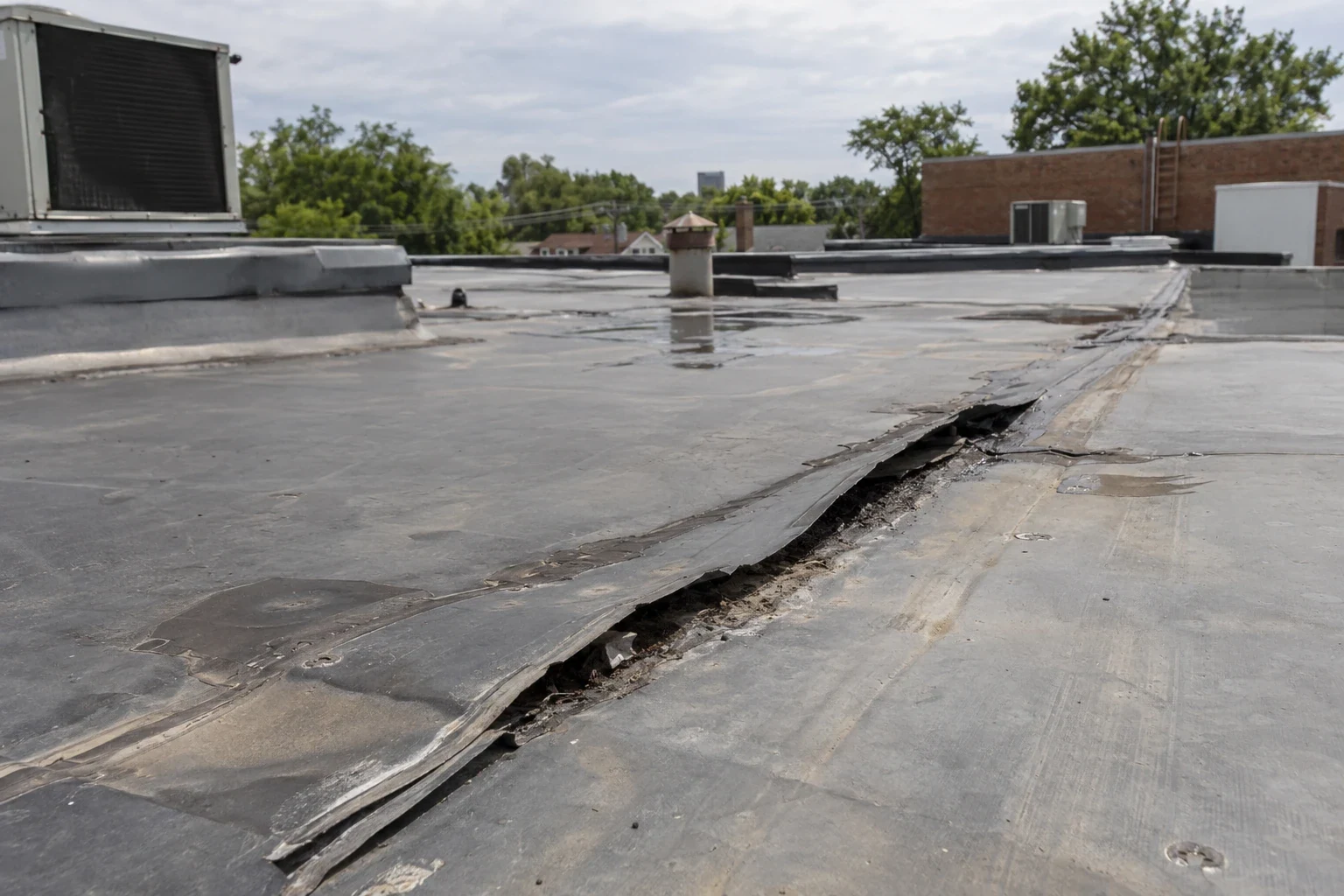
The weakest spot in a welded roof seam is rarely the long straight run. It is the T-joint, where a side seam meets the end of a sheet and three layers of membrane have to fuse across a step that was never perfectly flat. A channel can stay open at that step, invisible from above, and in a Tri-Cities winter it fills with meltwater that freezes at night and pries the joint wider by morning. Within a season the channel becomes a path that carries water beneath the membrane to the insulation, and the owner sees a ceiling stain nowhere near the seam that caused it. In Johnson City, TN, seam repair is mostly about finding those hidden steps early, before one open inch becomes a wet section the size of a loading dock.
What does a seam probe find that the eye cannot?
A seam looks closed when its edge is flush, but flush does not mean fused. We run a blunt probe along every seam, applying light pressure, and the probe finds the places where the two layers touch without bonding: a skipped weld, a contaminated surface, a lap with a fish-mouth where the top sheet curls away. The width of the welded band is measured against the manufacturer's expected minimum for that system, and the edge of the band is checked for a clean bead rather than a scorched or starved one. Welds that pass the probe get their lap edges inspected for exposed scrim or fabric, which wicks water. Every defect is marked on the roof, photographed against a plan and counted, because the number of open seams per hundred feet tells us whether we are repairing a roof or documenting a membrane that is finished. A full roof inspection includes the probe pass over each seam in the field.
Count the open seams before the winter does
A probe pass over the seams, with photographs and a moisture reading beneath any open run, gives you a number to plan around. Call us to arrange the survey and we will report whether this roof needs a repair visit, a recover, or a spot in next year's capital plan.
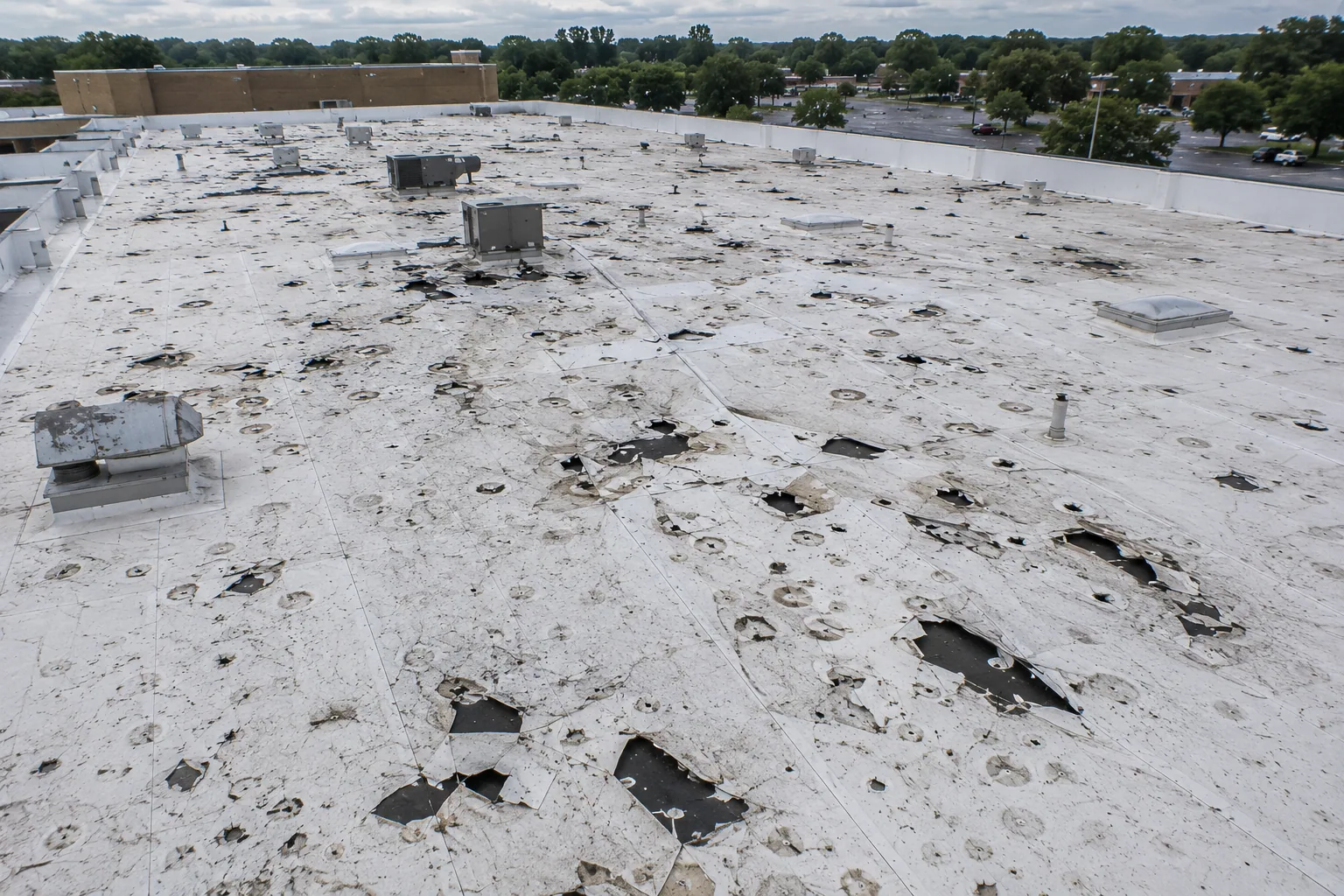
Why do seams open while the rest of the sheet stays sound?
A seam is where a roof's stresses are concentrated. A membrane shrinks as it loses plasticizer or ages, and the pull lands on the joints, because the joints are the only places where load passes from one sheet to the next. A single-ply roof that moves with temperature moves most at the seam, and a hot-air weld made in cold or damp conditions, or over a dusty or oily surface, may have bonded only at the surface. Such a weld holds for a few seasons and then peels, usually along a line of foot traffic or at a change in the substrate.
The mechanism differs by system. Thermoplastic sheets such as TPO and PVC depend on a fused weld. EPDM relies on tape or splice adhesive, which loses grip if the surface was not cleaned and primed. Modified bitumen laps depend on bleed-out at the edge of a torched or adhered lap, and a standing seam metal roof depends on a mechanical crimp and the sealant within it. Each system opens in its own way, and repairing the wrong way, such as caulking a failed weld, only postpones the leak.
Re-weld, cover strip or replace the sheet?
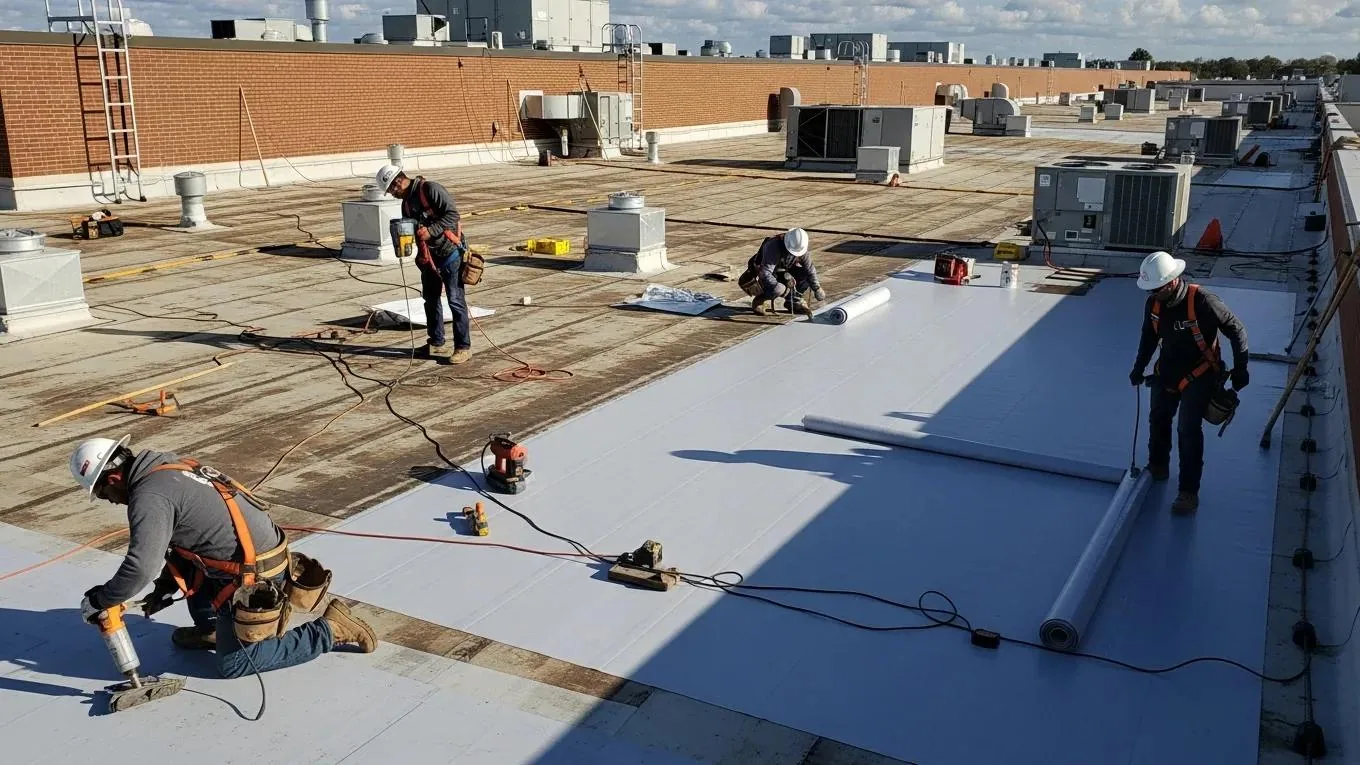
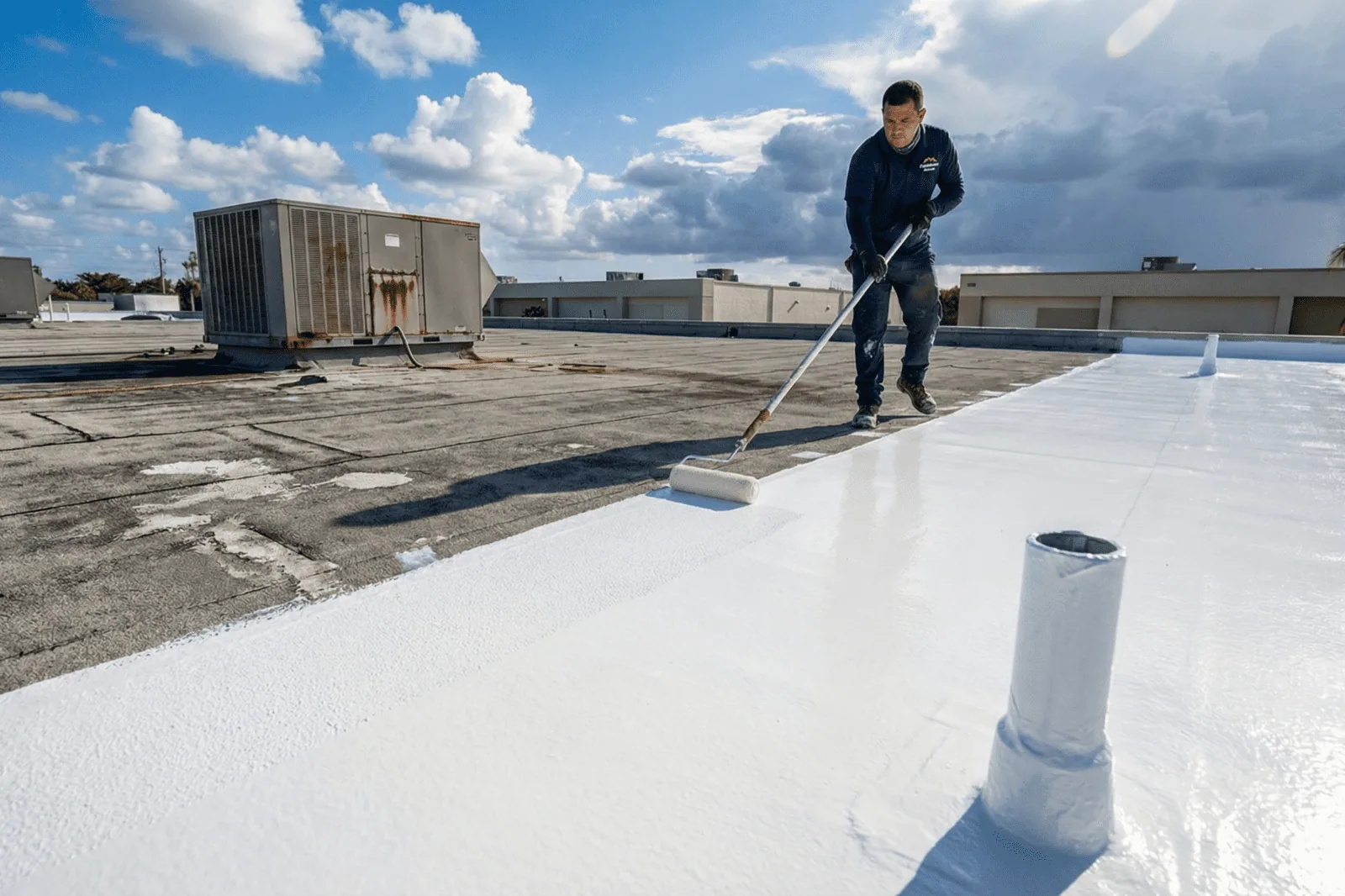
A short open run in an otherwise healthy thermoplastic sheet can often be re-welded after the surfaces are cleaned, prepared and welded with hot air, provided the membrane is still weldable. Older sheets that have aged beyond that point do not accept a weld, so the repair becomes a cover strip bonded over the joint with a compatible adhesive or a clamp ring and sealant at the edge. T-joints are covered with a patch rather than re-welded. Where seams are failing across the field, in many places and at several lap types, the better decision is to stop repairing and consider a recover system over dry insulation or a full replacement, because the cost of continuing to repair a membrane that is shrinking exceeds the cost of a planned replacement. We price each option against the probe count and the moisture map, so the choice is made on lifecycle cost. A standing seam roof follows the same logic, with a field crimp or sealant redo for isolated failures and panel replacement for widespread ones.
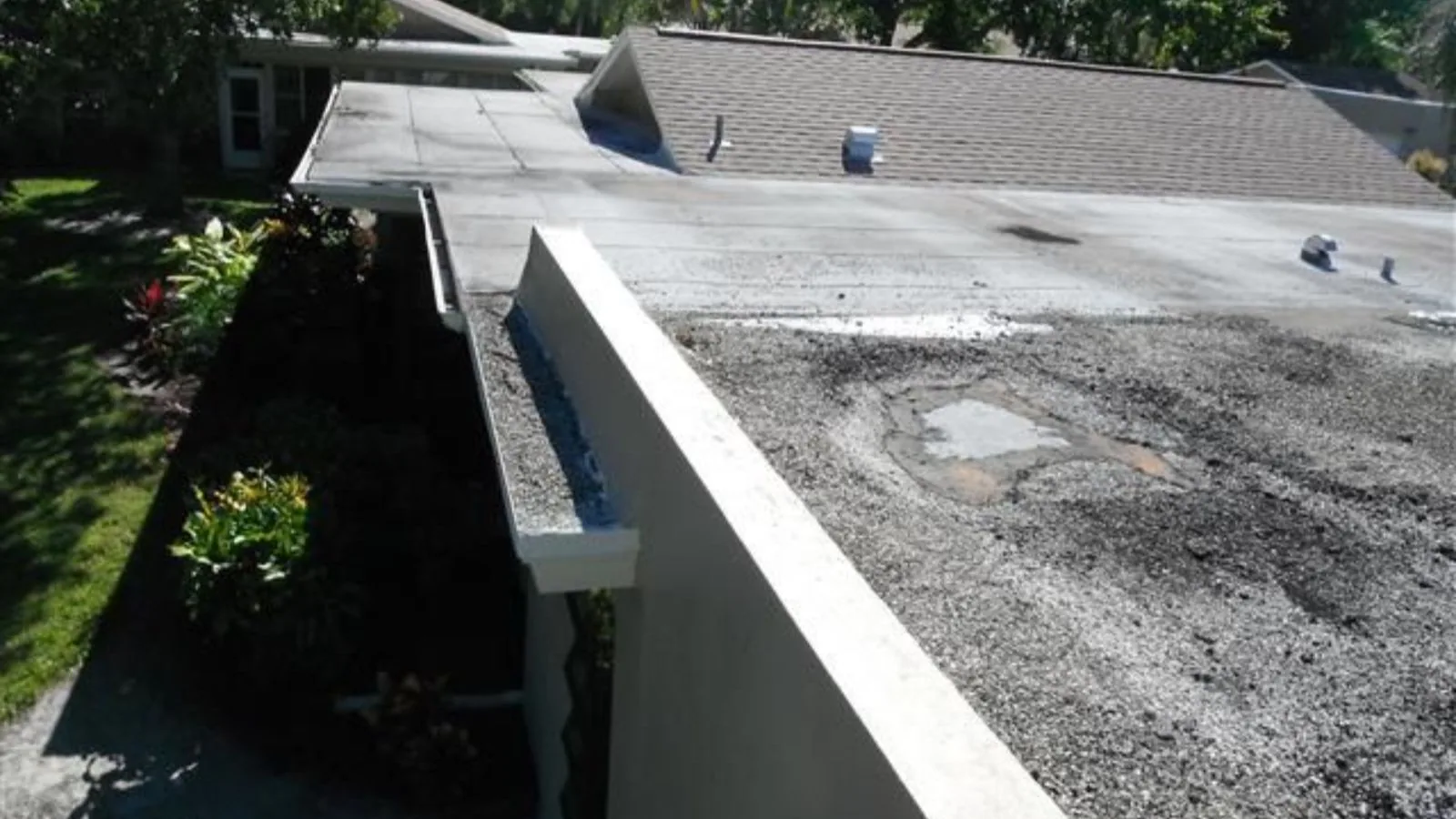
What do Telford plants, cold mornings and Helene-style rain ask of a seam?
The Washington County Industrial Park near Telford holds the former 380,000 square foot Alo Tennessee building that Sungwoo Hitech renovated for automotive stamping, along with the 300,000 square foot ebm-papst fan plant. If a single-ply membrane covers either plant, its seams are where a leak over the production floor would start, and a seam inventory taken before any trouble is the cheapest information an owner can buy.
Weather supplies the stress. The Christmas low record at Tri-Cities Regional Airport is minus 6 degrees Fahrenheit, set in 1983, and a membrane that cold is stiff and contracting; summer highs around 86 degrees push the opposite way. That swing works on every seam, every year. Hurricane Helene's flooding across Northeast Tennessee in September 2024 added the third factor: a wet event that finds any open channel. For manufacturer-backed roofs, seam repairs should also be recorded in the way a roof warranty program expects.
How far does water travel from a seam open by a pencil line?
Often by many feet. Once water passes the seam it follows the underside of the membrane until it meets a fastener, a deck flute or a joint in the insulation, and then it moves with gravity. The distance between the seam and the ceiling stain can be many feet. In the meantime the insulation wets, the board loses most of its thermal value, and the deck takes on rust. A single winter with an open seam can move a roof from a repair candidate to a replacement candidate, because the wet area has outgrown what patching can recover. Reaching it early costs a probe pass and a few hours of welding. Reaching it late costs the insulation, and often a significant part of the membrane itself. If the building has already shown a stain, our commercial roof repair starts by tracing the water back to the seam and then probing every similar joint nearby.
Where the lap meets a curb or wall, the transition needs its own repair detail; flashing failure repair explains that boundary.
Uplift can start a seam opening at an edge or corner, so the repair should include the perimeter checks used for wind damage roof repair.
Commercial Roofing Questions
How can a seam leak when the welded edge looks smooth and closed?
Appearance and fusion are different things. A weld may sit flush while the layers underneath touch without bonding, particularly where dust, oil or moisture interfered. The probe pass finds those places by pressing on the edge and feeling for the lift the eye misses.
Do cold-weather seam repairs hold as well as summer ones?
They can, if the surfaces are dry, warm enough to weld and clean at the time of the repair. Frost, damp insulation and cold stiff sheets produce weak bonds, so winter repair is usually a temporary dry-in with the permanent weld scheduled when conditions allow.
What number of open seams means the roof should be replaced instead?
There is no universal count. A handful of isolated defects on a young sheet is a repair, while open seams across the field on an older, shrinking membrane is a signal that repair money is chasing a roof near the end of its life. The probe tally and the moisture map are the evidence.
Why is a T-joint patch handled differently from a straight seam repair?
At a T-joint three layers meet over a stepped surface, so a hot-air weld cannot fuse them evenly. A patch that covers the junction and extends past it on every side bridges the step and gives the repair a clean weld on flat membrane.
Will a seam repair affect a manufacturer's warranty?
Coverage usually survives a repair that follows the manufacturer's welding or splicing instructions with matching materials, and it is the caulked or taped shortcut that invites a dispute. We identify the system before anything is cut, then write down each repair's position and date for the owner's file.
Related Roofing Pages
Commercial Roof Inspections
How the work is scoped, phased and documented on Tri-Cities roofs.
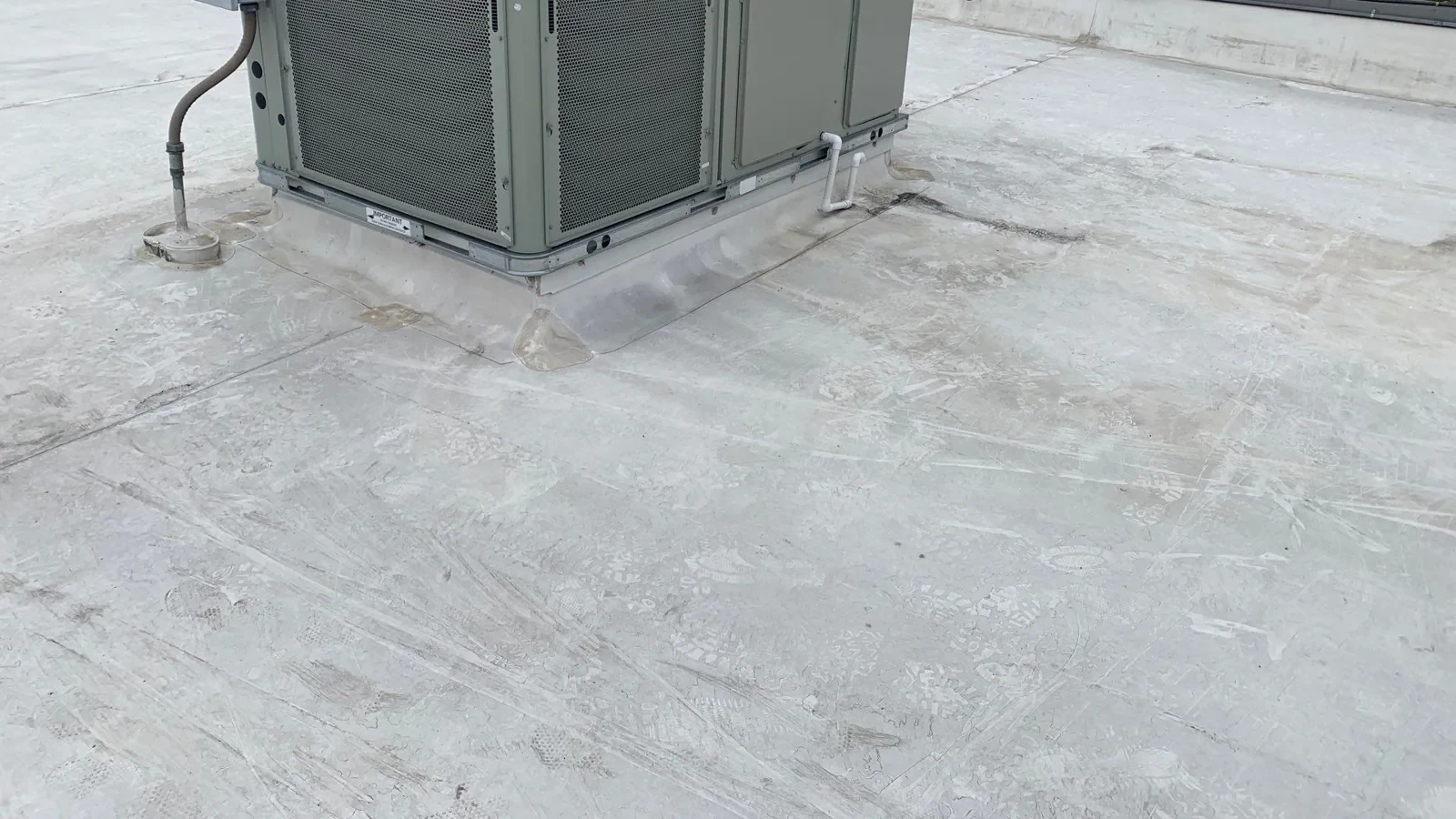
TPO Roofing
What we check, what we recommend and how the crew keeps the building running.
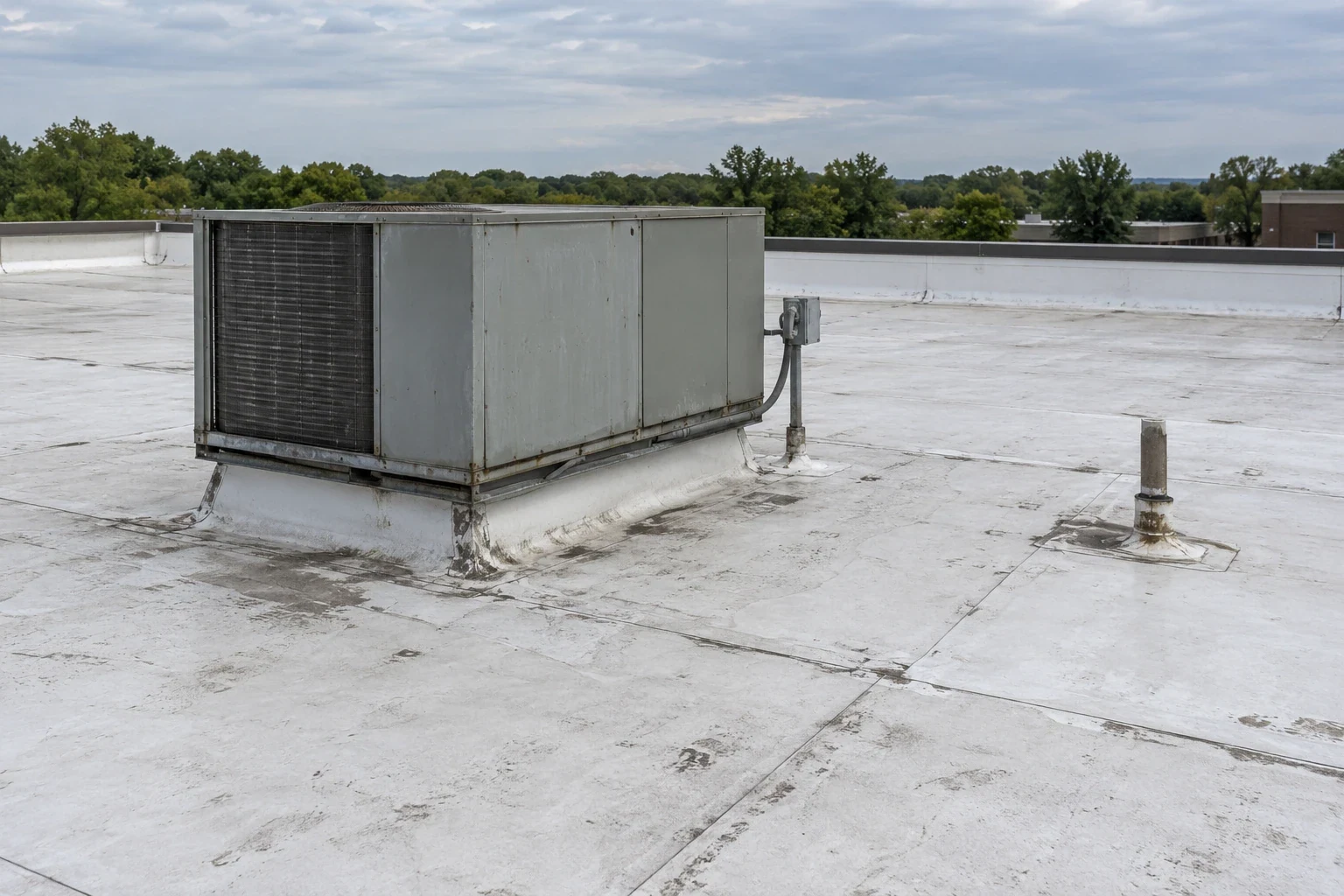
PVC Roofing
Conditions, options and next steps for commercial buildings in East Tennessee.