
Distribution Center Roofing in Johnson City, TN
Between a heated fulfillment floor and a January night there is a plane inside the roof where the temperature falls to the dew point, and wherever that plane lands, water appears. If it lands in the middle of rigid insulation, the water stays there, because nothing in the assembly is built to carry it out. In Johnson City, TN, where winter lows average about 25F, a building that keeps its interior at working temperature drives vapor upward all season through laps, penetrations and unsealed deck edges, and the insulation takes on moisture without a single opening in the membrane. Nothing leaks, so nothing prompts a call. The owner finds out when a survey shows the insulation has lost much of its thermal value, or when a roof that should have had years left needs a replacement window sooner than the capital plan allowed.
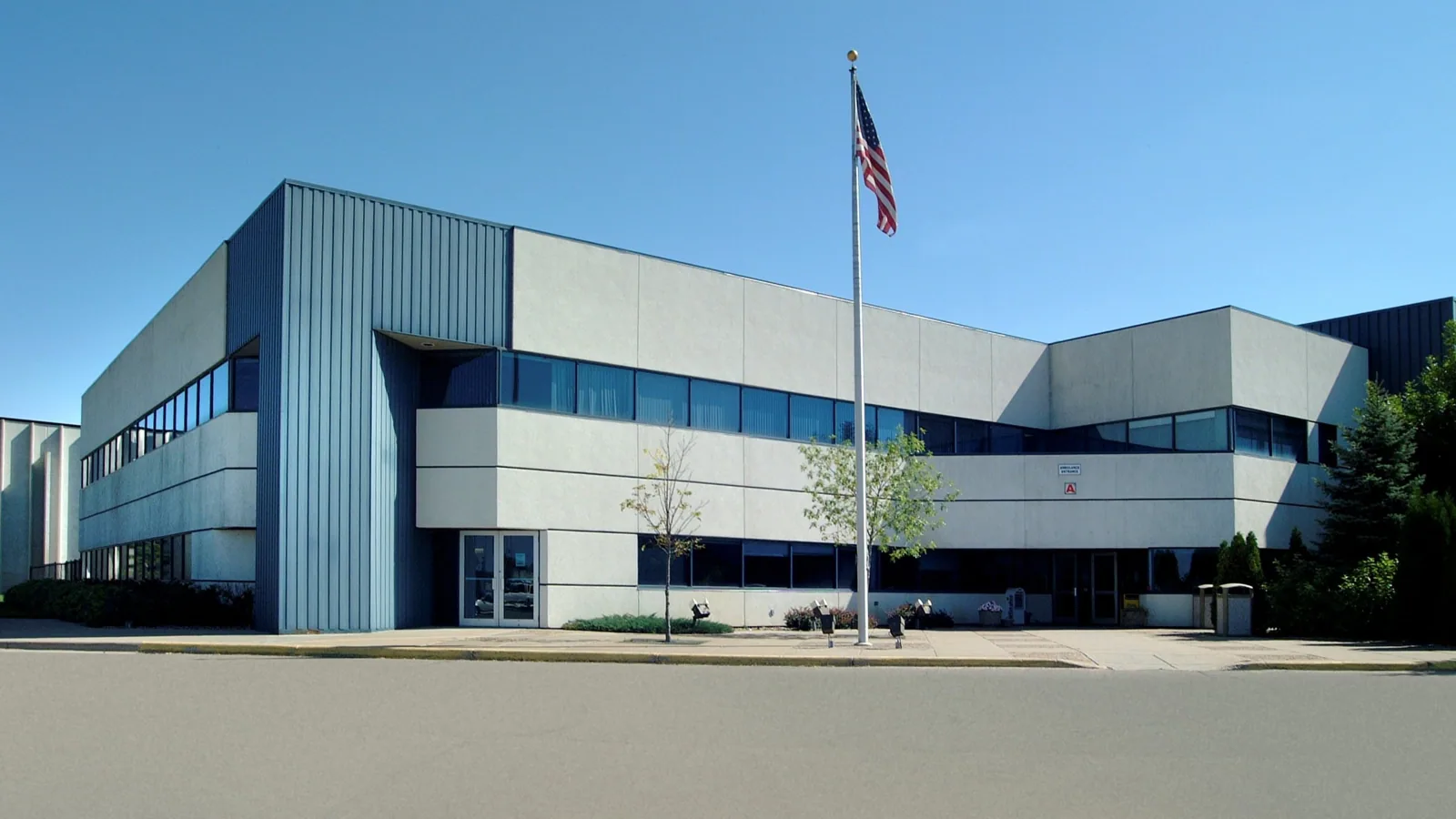
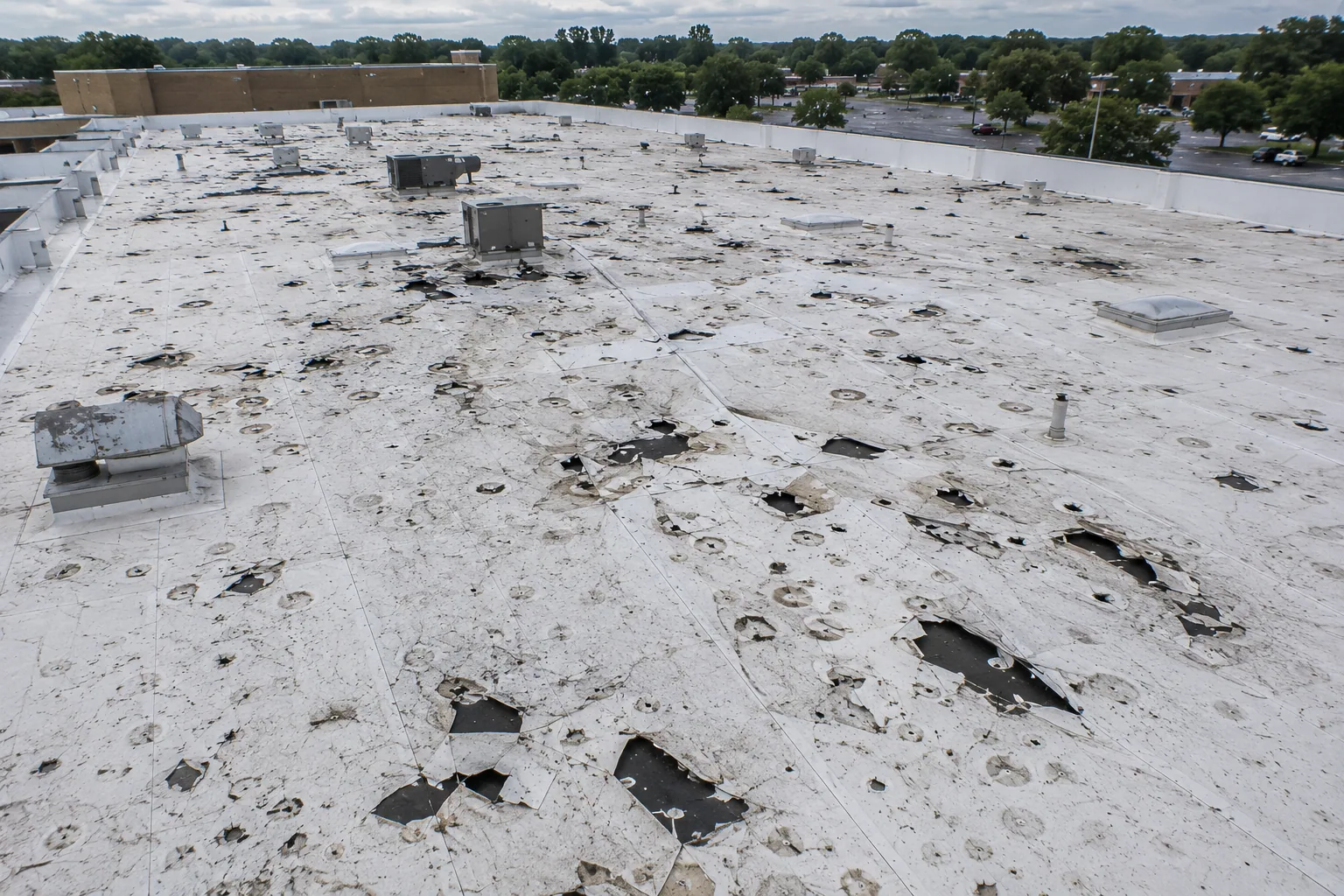
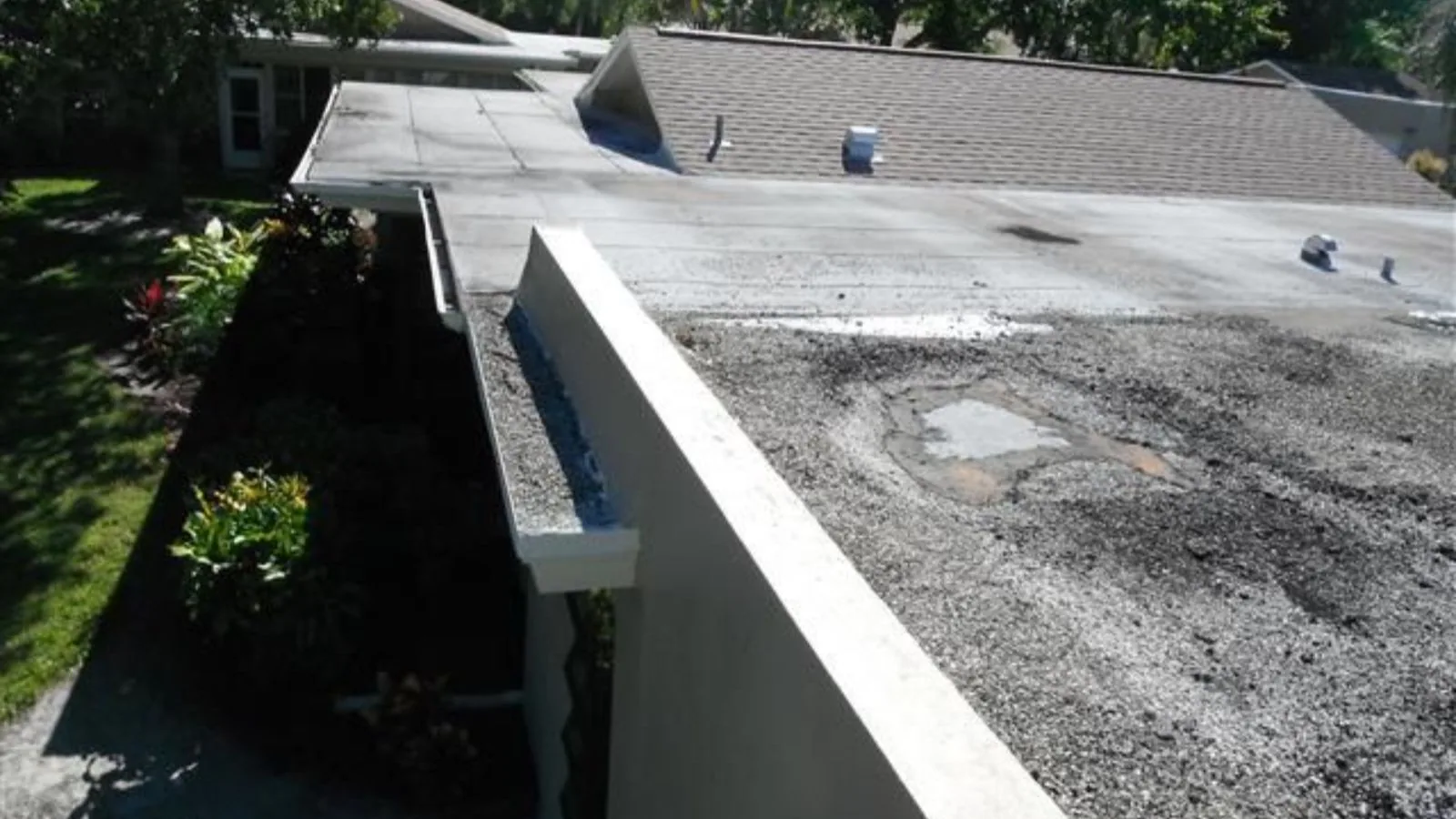
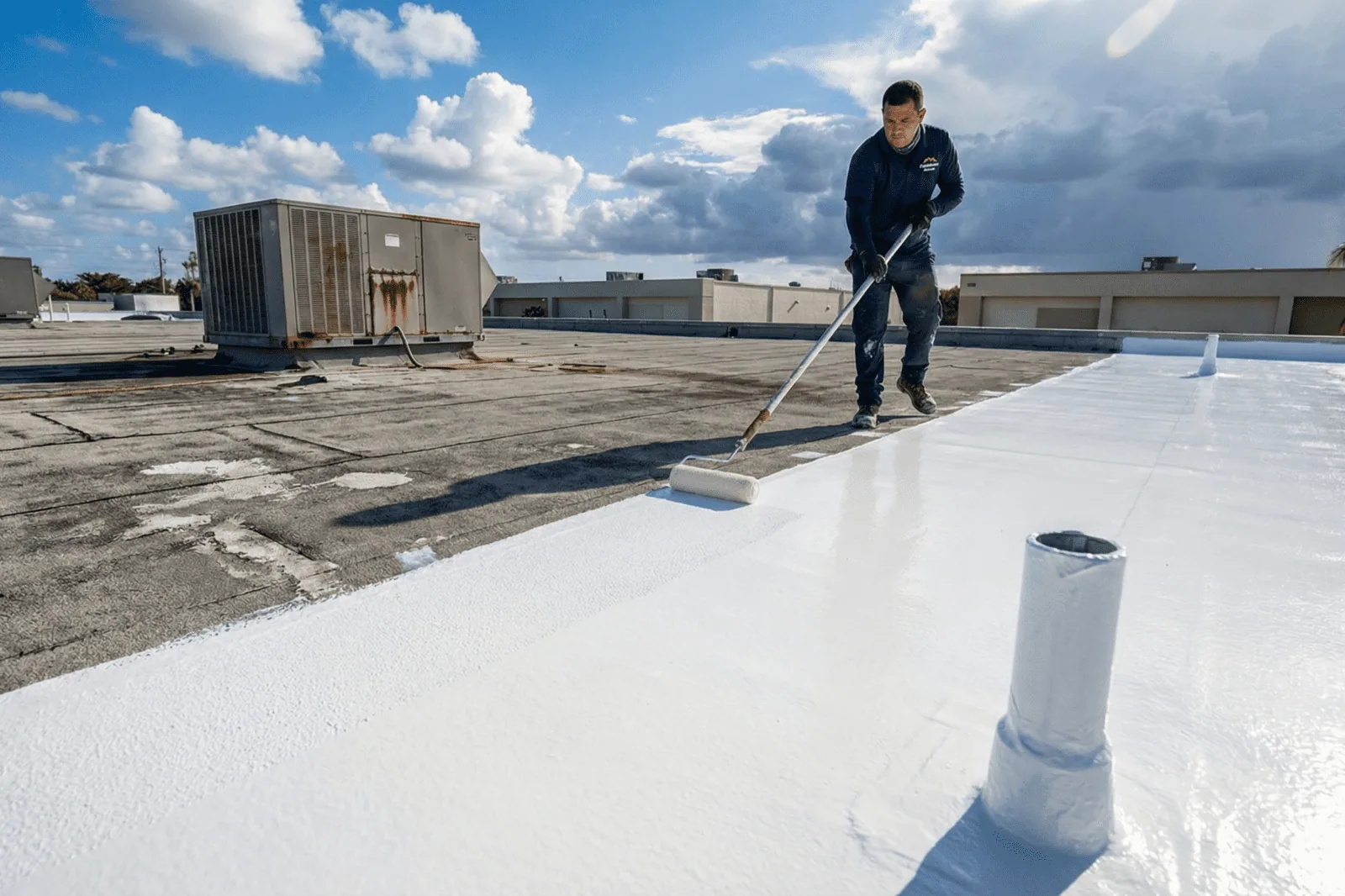
What does a conditioned floor push into the roof each winter?
Warm air carries moisture, and it moves toward cold surfaces whenever it finds a path. Over a distribution floor the paths are everywhere: gaps where the steel deck laps, penetrations for conduit and sprinkler piping, and the edges where the deck meets a wall. Each opening lets a small, steady flow of humid air into the insulation layer. When that air reaches a cold enough layer it condenses, and the water collects at the underside of the membrane or in the board itself. Spring brings relief from the cold but not from the water, since the membrane above is a vapor barrier from the outside and the moisture dries toward the interior only slowly. Over several winters the insulation becomes heavy, weak and ineffective, and the heating bill quietly records it.
Plan the roof before the next peak season sets the date
Call Commercial Roofing Johnson City to arrange a condition review of your distribution or fulfillment roof. You will receive moisture findings, photographs and a phased scope that fits around your shipping calendar.
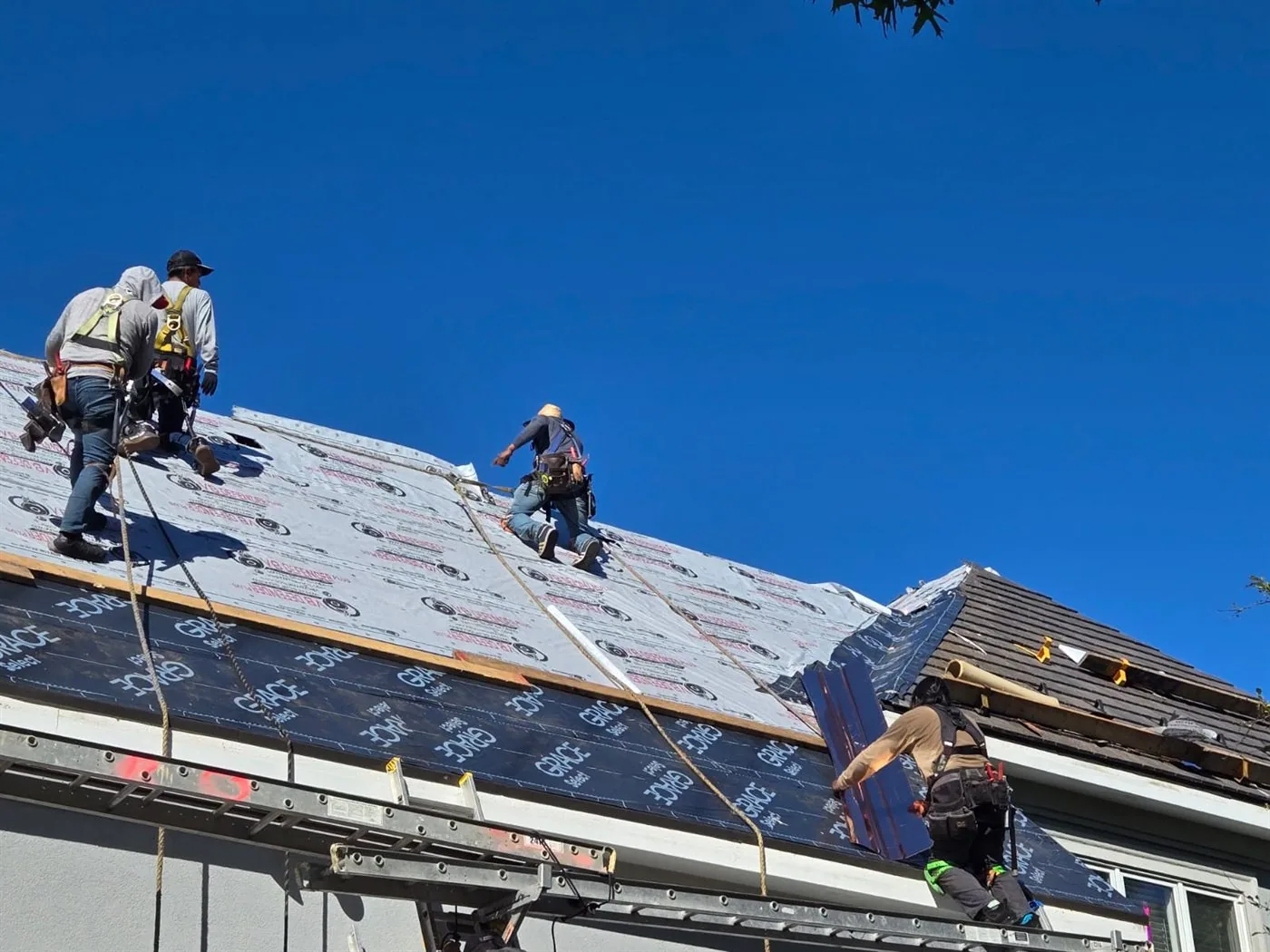
What do we measure before anyone prices a fulfillment-center roof?
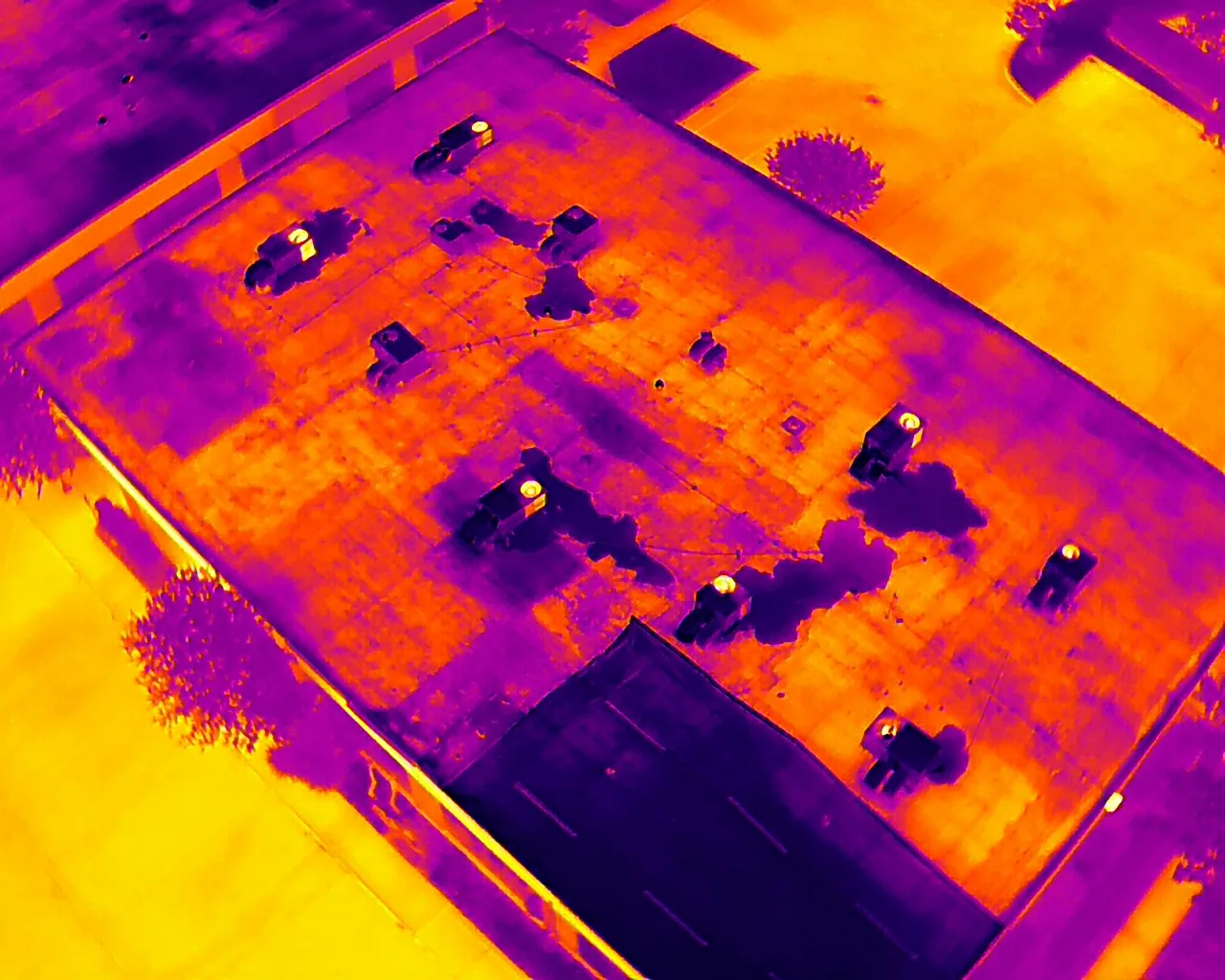
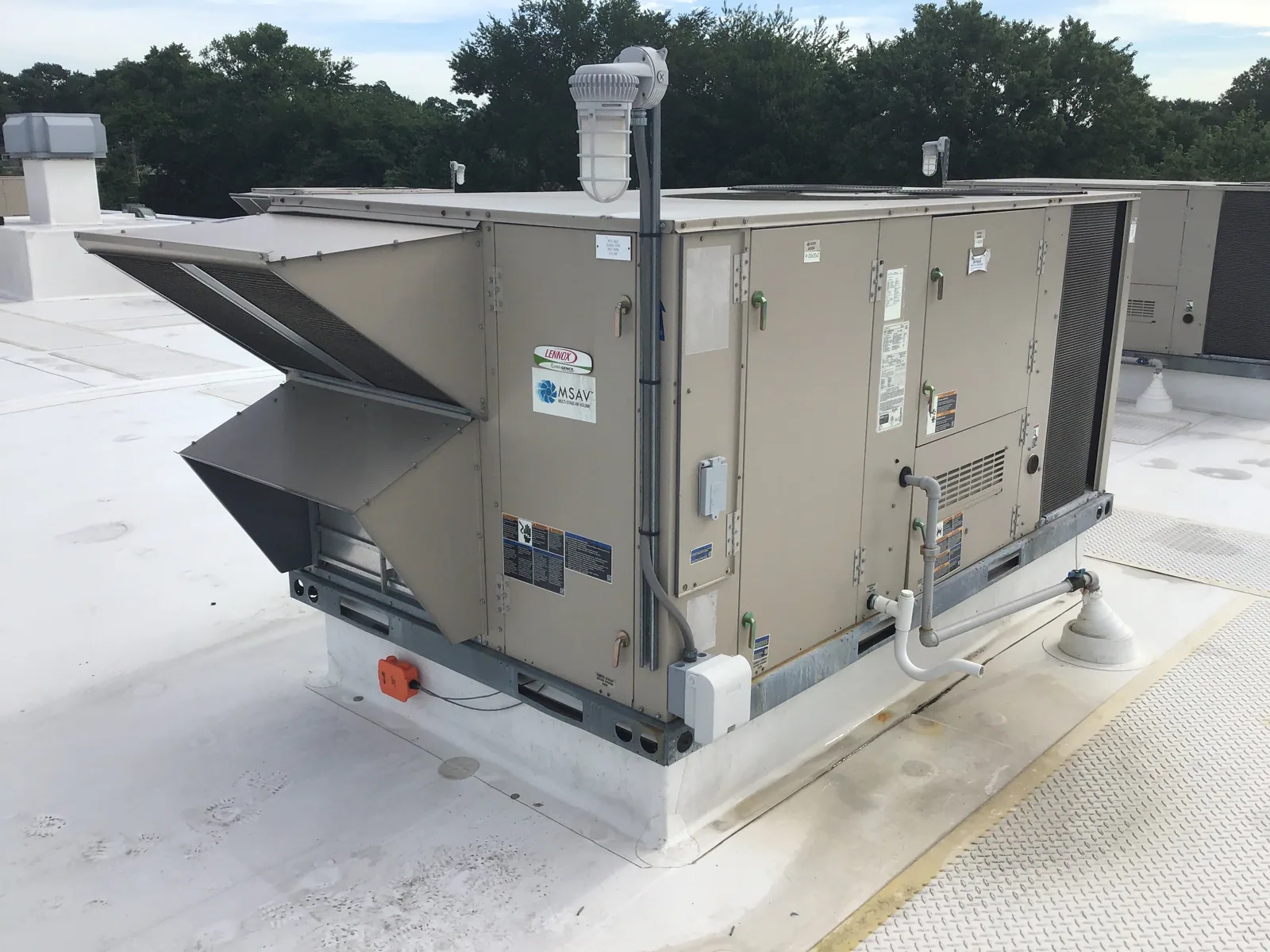
We begin with the equipment, because a distribution roof is crowded: air handlers, exhaust fans, dock-area ventilation and the curbs beneath them. Each one is a penetration with its own flashing, and each service path across the membrane is worn by foot traffic from technicians. We walk those paths, inspect the seams alongside them, and check how water leaves the roof between the units. Then we look for the signs of wet insulation, a spongy feel underfoot and surface blisters, and confirm with an infrared moisture survey and core cuts. The condition data gives an owner a map of what can stay, what needs repair, and what has to be replaced before the rest of the building can be trusted.
What does a leak above a sortation line cost in hours rather than dollars?
A drip over a conveyor, a sorter or a charging area stops work, and the work that stops is measured in missed trailers rather than in ceiling tiles. A wet roof also invites decisions made under pressure: an emergency tarp, an unplanned tear-off in the one season the building can least spare, a contractor chosen because the crew was available. The slower cost is thermal. Insulation that has absorbed moisture stops resisting heat flow, so a heated building burns more fuel each winter while the roof deteriorates above it. Doing the survey, repairing the identified areas and scheduling the replacement for a quiet part of the year costs less in every column than reacting to the first interruption.
Replace it all at once or phase it by dock zone?
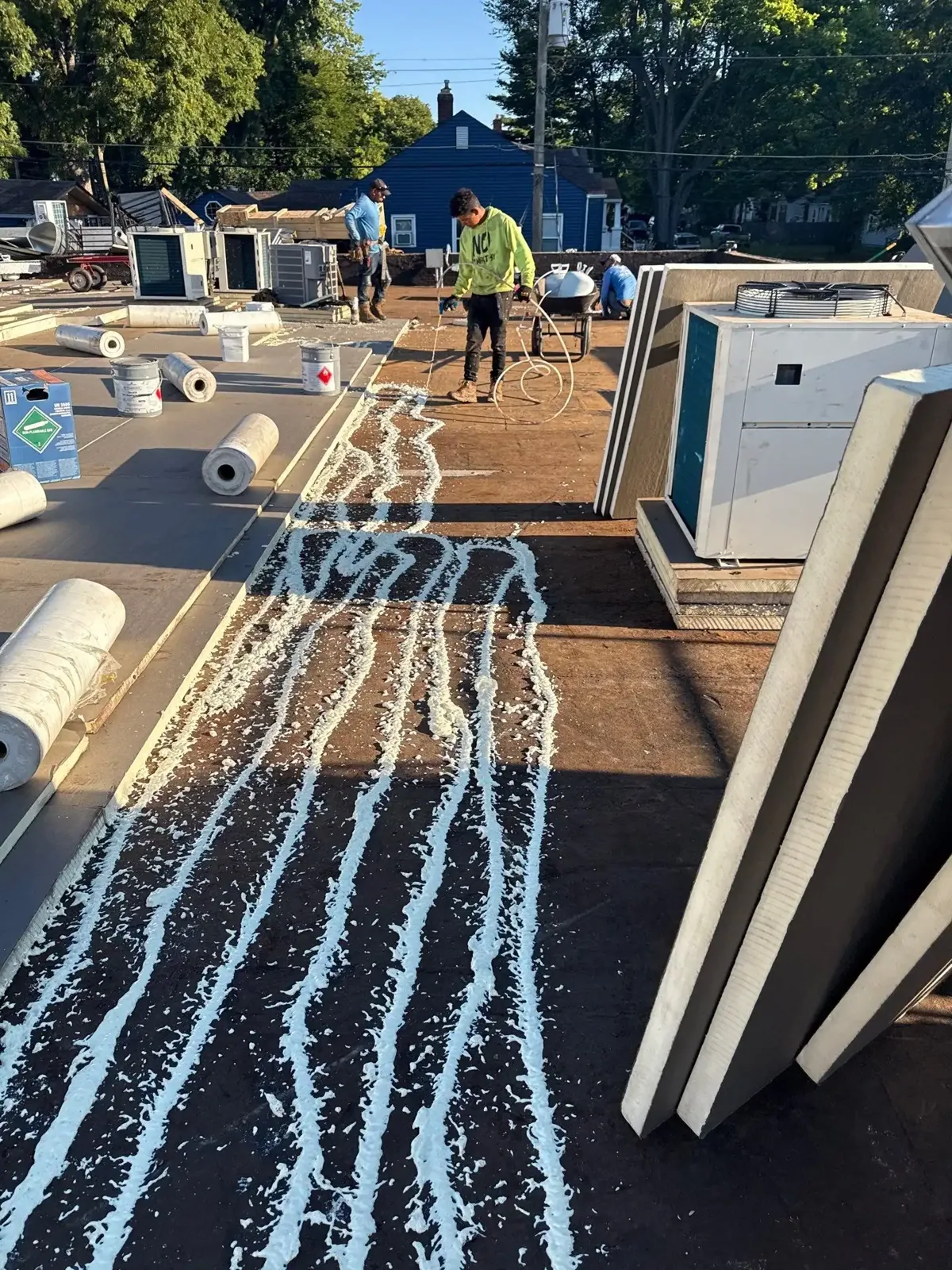
Phasing usually wins on a building that never fully closes. A zone-by-zone program lets the crew open one section, set insulation and membrane the same day, and hand the area back before the next shift, while the rest of the roof remains intact above live operations. Full replacement in a single mobilization is faster in calendar terms and makes sense when most of the roof has failed or when the building is between tenants. Where the existing system is dry and sound, a recover over the existing membrane avoids tear-off debris above the sortation floor entirely. Either way, a thicker, more reflective PVC or TPO sheet is worth weighing around the equipment pads, where traffic and exhaust do the most damage.
Which weeks of the year can a roofing crew actually use?
Fulfillment buildings run hardest in the fall, and roofing wants the same dry months, so the real window is the stretch from late spring through summer. We agree early on the dates when the facility team can accept noise, staged material and a perimeter of cones, and we set the tie-in schedule so each day ends with the roof watertight. Crane lifts, hot work and deliveries of insulation are coordinated against truck traffic at the docks. Winter work on a mechanically attached single-ply is possible when temperatures allow, but adhesives and welds do not forgive a cold, damp deck, and we will not trade quality for a date. Early planning keeps the project out of the weeks that matter most to the tenant.
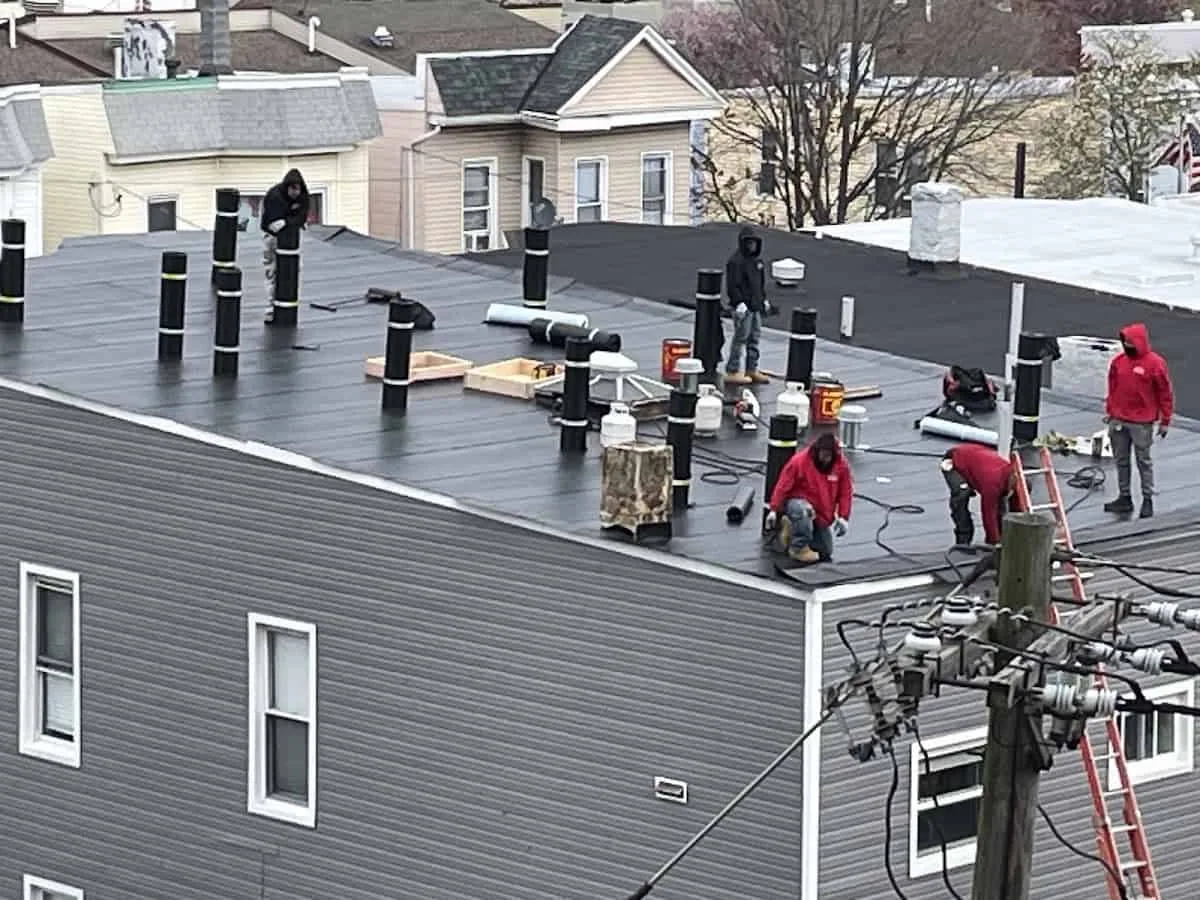
How do freight corridors shape the roofs around Johnson City?
The region moves goods along I-26, which runs through Johnson City toward Kingsport, and along I-81 and US 11E, which carry traffic through Greene County. A Walmart distribution center and Brenntag Mid-South are listed among the major employers in Mosheim. Roofs along these routes face the same moisture load as any other in the Tri-Cities, and the Christmas low record of -6F set in 1983 at Tri-Cities Regional Airport in Blountville shows how far a cold snap can drop. When Hurricane Helene's flooding closed I-26 in September 2024, trucks bound for a distribution building had to find another way around, and a roof that failed in the same weeks would have added a second interruption to the first.
An owner who houses logistics operators in buildings across several towns can put every roof on one rating scale and one calendar through a multi-site roof program, so that each building is repaired or replaced ahead of its own peak weeks.
A distribution building shares the open field and dock scheduling concerns found on warehouse roofing.
If goods are kept cold, compare the vapor and insulation details used for cold-storage roofing before setting the assembly.
Commercial Roofing Questions
What sets the schedule when a distribution roof cannot go quiet in November and December?
The shipping calendar draws the first line, and the roof follows it. We build the work plan backward from the weeks the facility team protects, then fit tear-off, insulation and membrane into the open months. Large reroofs are often split into two spring-to-summer phases so that no part of the building is exposed when volume peaks.
Which roof system suits a building with heavy rooftop equipment and constant service traffic?
Traffic points toward a thicker membrane, walkway pads along the service paths and a cover board that protects the insulation from point loads. Reinforced single-ply sheets and heavier-gauge membranes both work, and the choice follows what the equipment exhausts, how much foot traffic the roof sees and what the existing deck can accept.
Is it worth adding insulation during a reroof, or should it stay as it was?
Johnson City's adopted 2018 energy code sets the floor, and a tear-off is the moment that code usually asks the assembly to meet it. Beyond the floor, the answer depends on how much heating the building does in winter, how long the owner plans to hold it and what the existing board has already lost to moisture. A bit more thickness at tear-off is far cheaper than retrofitting it later.
How can the interior be protected while the old roof is being removed?
Protection starts in the plan, before the first fastener is pulled. We open limited areas, use temporary vapor and debris barriers where required, and keep removal areas smaller than the amount of new roof we can finish and seal the same day. Facility staff get a map of the day's work area so racking, conveyors and sprinkler lines can be covered or avoided in advance.
Who is responsible when other trades add penetrations to the roof later?
The owner holds the roof, so each new penetration should be flashed by someone who understands the membrane. We flash and test curbs, pipe supports and cable penetrations that other trades install, so a new unit is not a new leak. Keeping a record of who cut what, and when, also helps when a claim or a warranty review comes up.
Related Roofing Pages
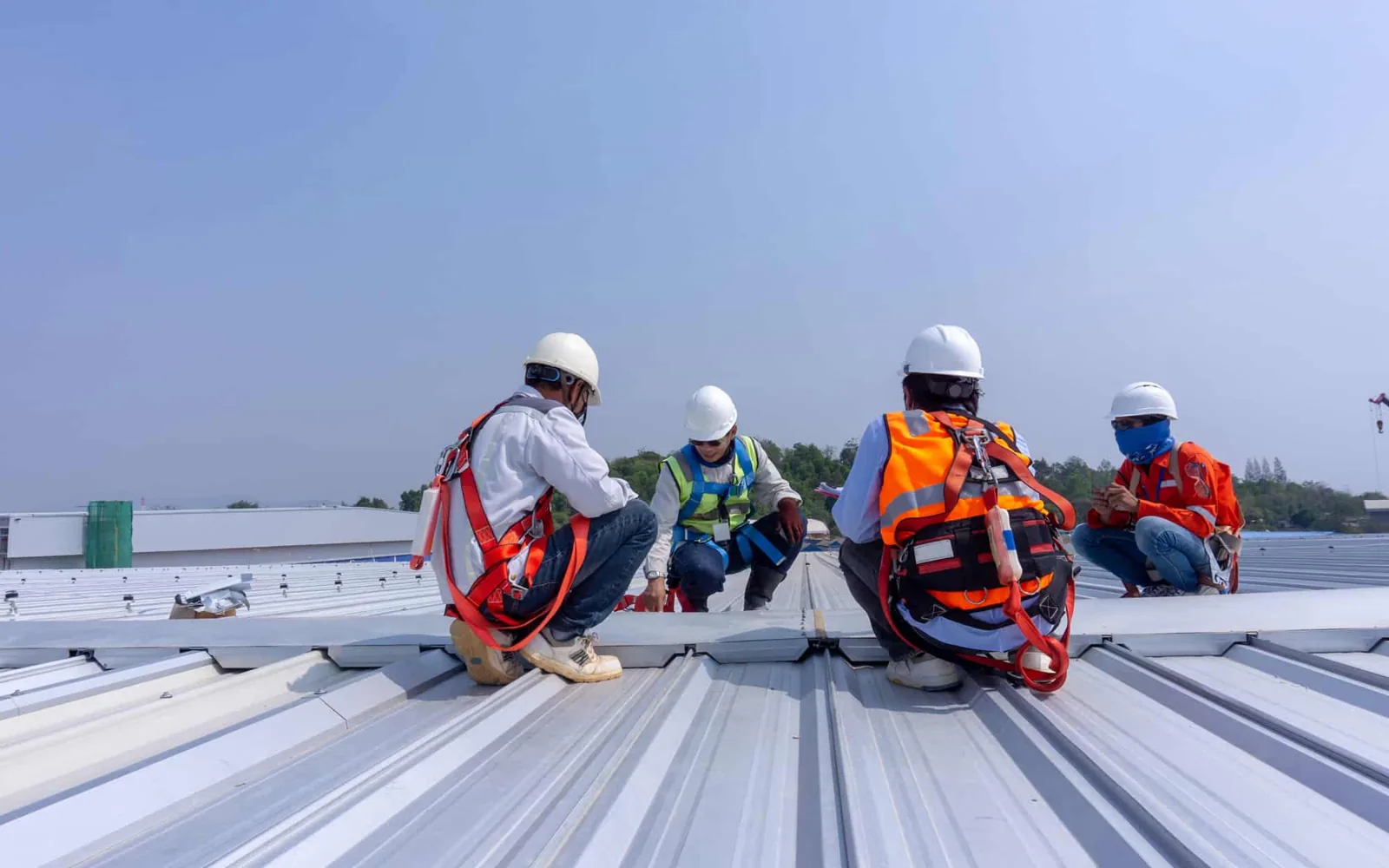
Infrared and Core-Cut Moisture Surveys
How the work is scoped, phased and documented on Tri-Cities roofs.
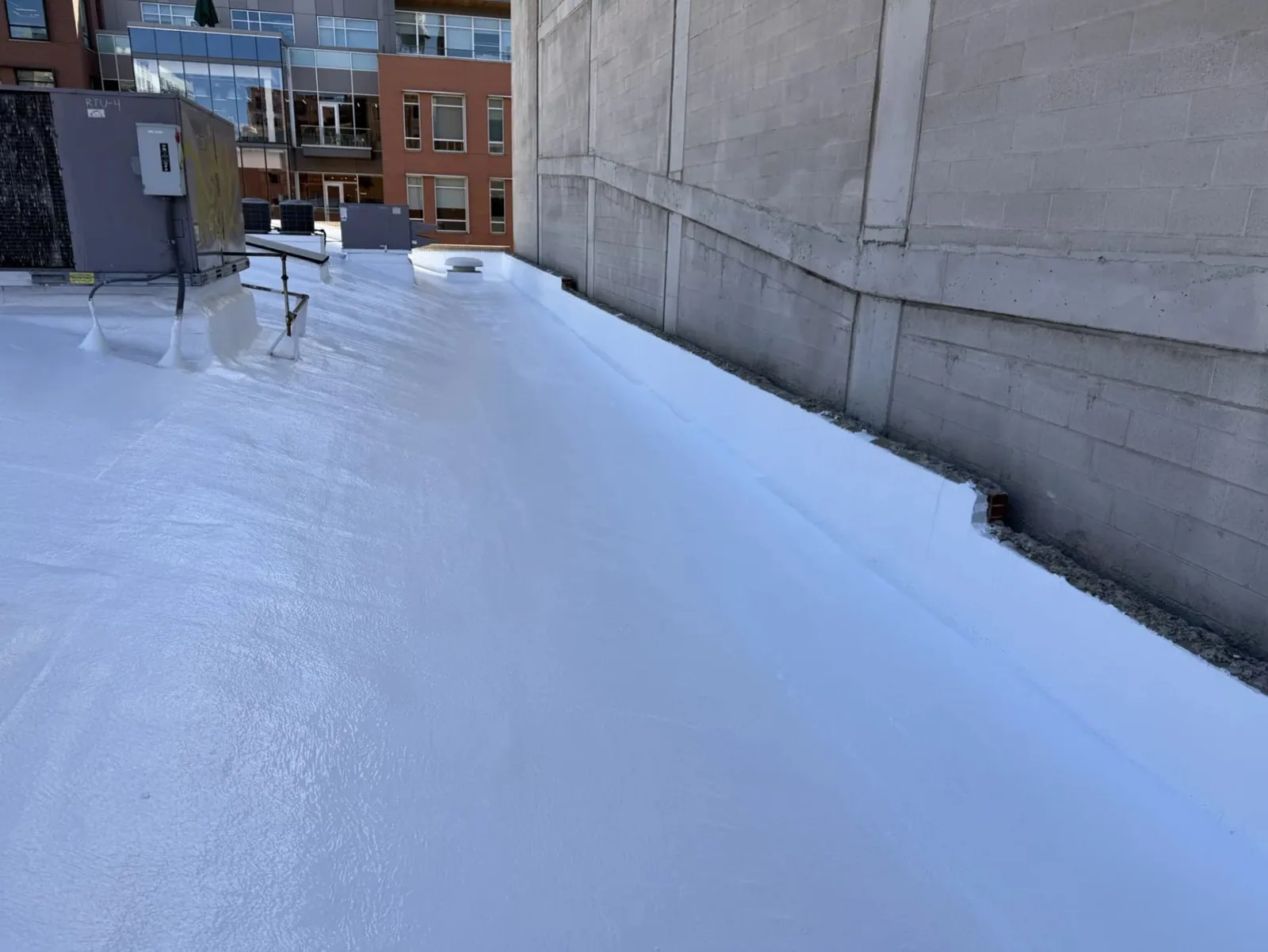
Roof Recover and Overlay Systems
What we check, what we recommend and how the crew keeps the building running.
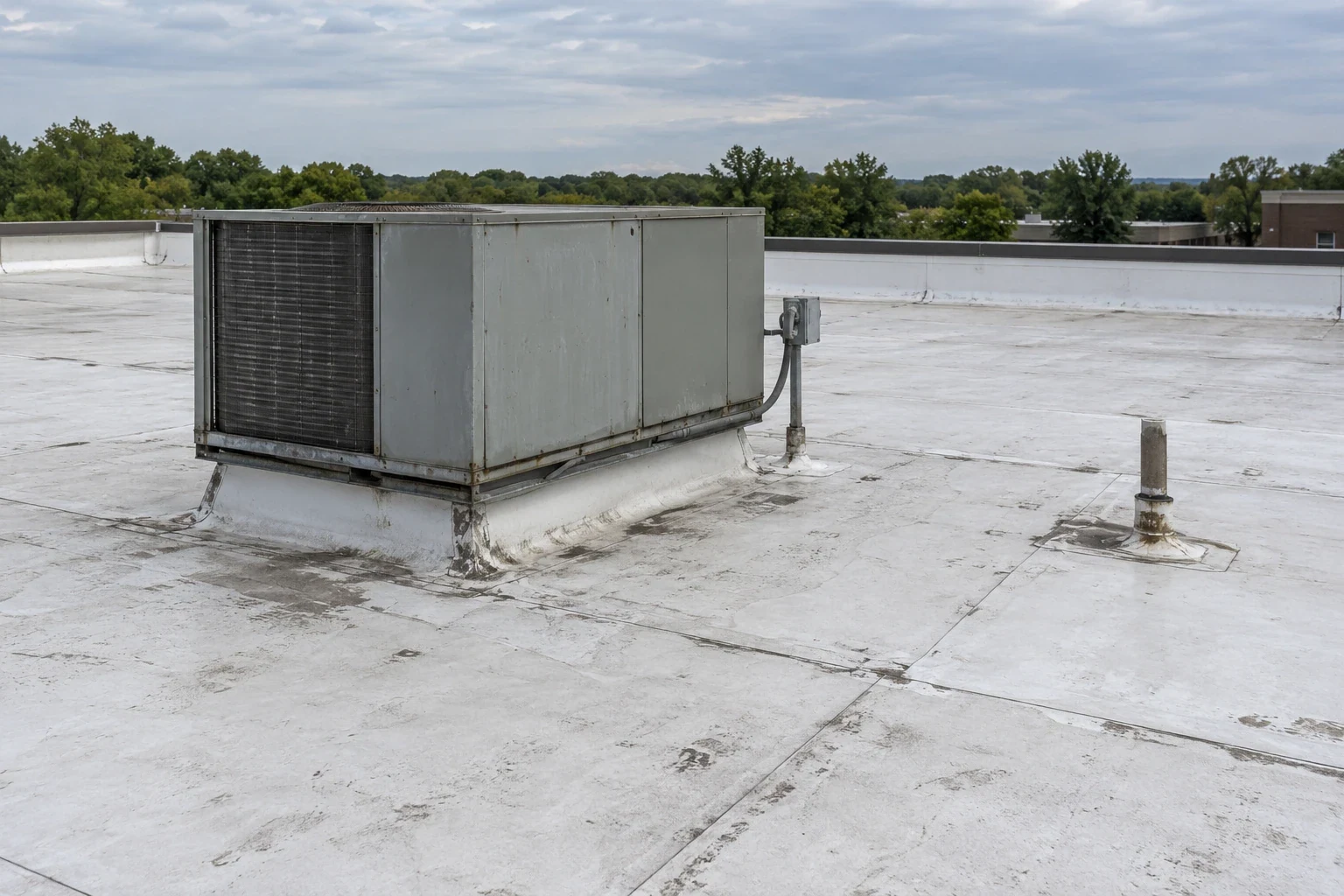
PVC Roofing
Conditions, options and next steps for commercial buildings in East Tennessee.