Commercial Roofing in Mosheim, TN
On a warehouse roof with a mechanically attached membrane, every fastener is a small joint between three materials that do not move together: a steel deck, a screw and a plate holding the sheet. When a cold night drops the temperature by thirty degrees, the deck contracts, the screws shift a fraction, and the membrane flexes against the plates. After a few hundred cycles the fasteners can back out slightly and the sheet begins to flutter, which wears the underside of the membrane long before anything shows on top. That is the daily question for distribution and industrial buildings in Mosheim, TN, where a Walmart distribution center and Brenntag Mid-South are among the major employers in town. We check the attachment and the deck first, then match a repair, a recover or a replacement to the cost the owner can expect over the roof's remaining life.
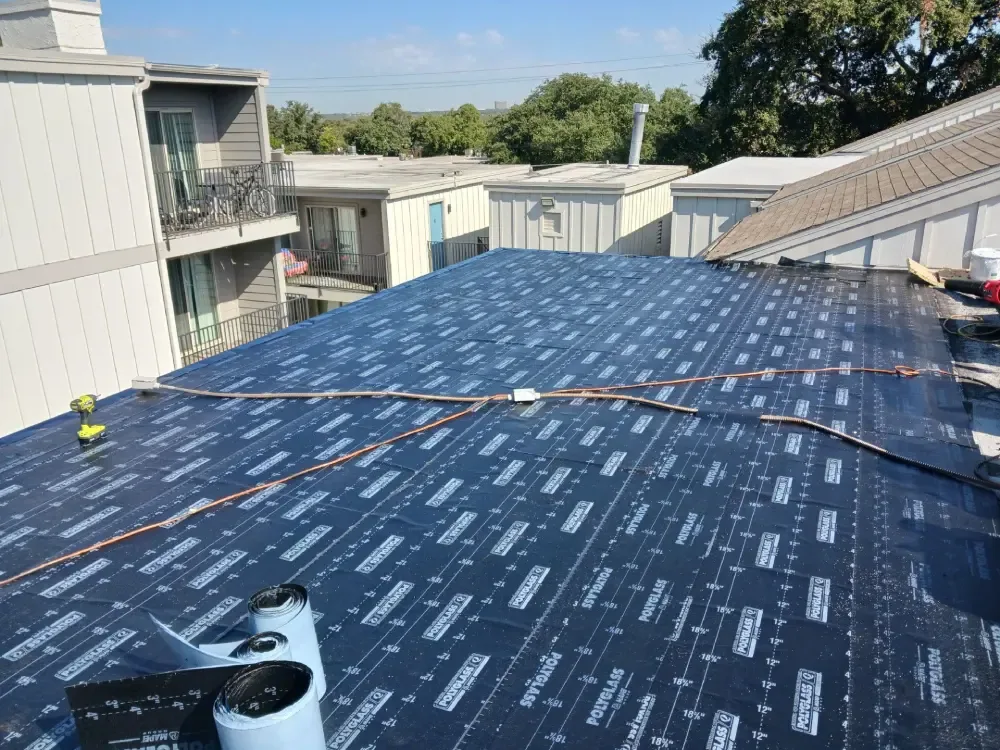
How does thermal cycling loosen a roof that looks sound from above?
Steel and a polymer membrane expand and contract at different rates, so a daily swing in temperature moves them against each other. In winter the sheet is stiff and the deck is shortest, which puts tension on every fastener and seam. In summer the surface heats well above air temperature, the sheet softens, and wrinkles can form between rows of plates.
None of this announces itself. The surface can look flat and clean while the underside is abraded where the sheet rubs against plates, and a seam that has been pulled repeatedly can open at a pinhole long before it leaks into the building. Seeing that damage takes a careful walk and, where needed, a drone pass to capture the whole plan quickly. Fixing it early means tightening or replacing fasteners and resealing seams, a far smaller job than replacing the sheet.
Check the attachment and the moisture before the next shipping season
Call Commercial Roofing Johnson City to arrange a walk of your Mosheim roof. You will receive photographs, fastener and moisture findings and a ranked scope to weigh against your capital plan, and emergency calls are answered at any hour.
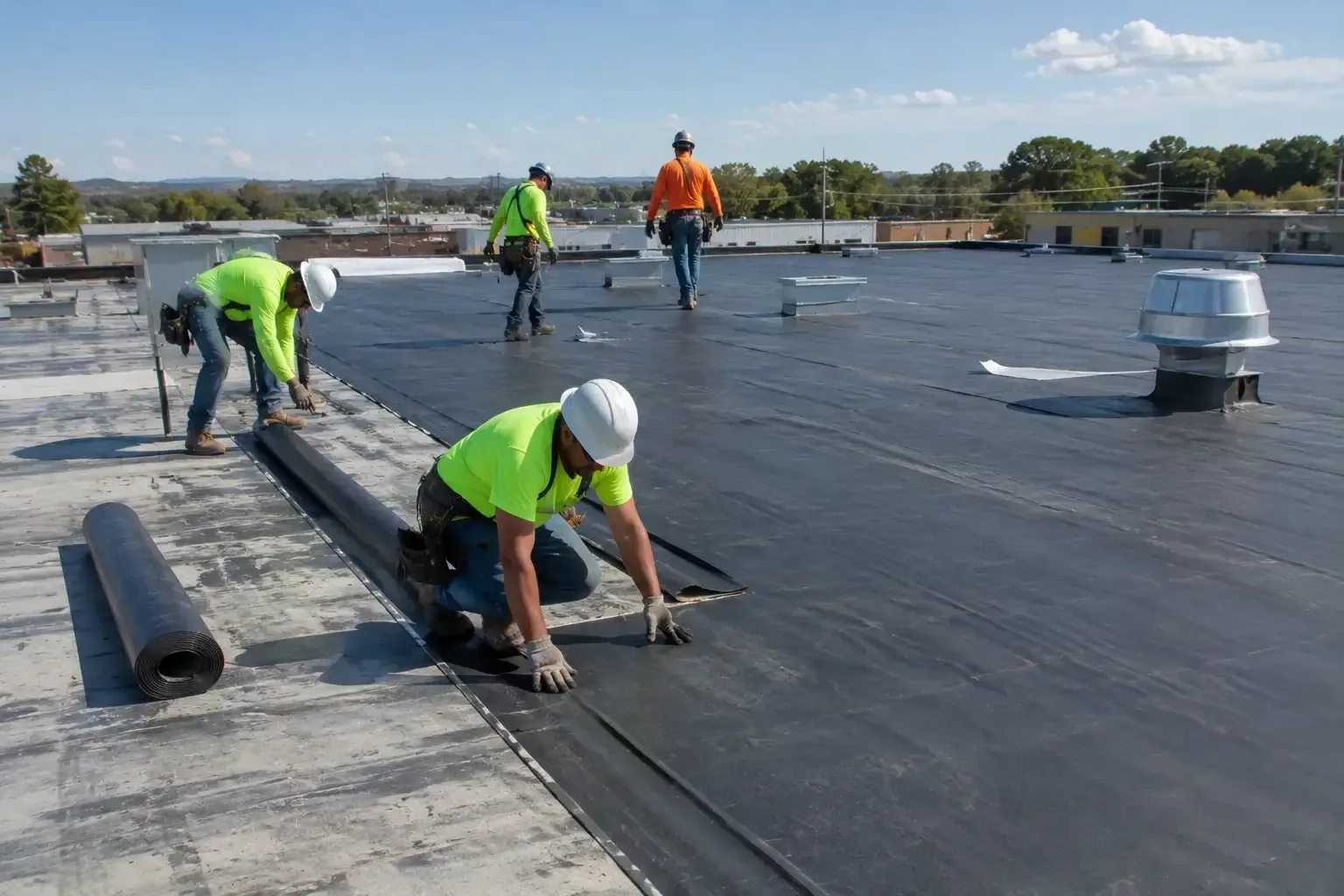
What weather and traffic do buildings along US 11E contend with?
Mosheim lies along US 11E, the Andrew Johnson Highway, in Greene County. Fastener rows see repeated movement as the roof cools and warms, so we check the plates before snow and ice complicate access. Hurricane Helene's September 2024 flooding shows how much water can arrive in Northeast Tennessee during one event.
The employers here point to a particular kind of roof. A distribution center or industrial building typically has wide bays, dock doors and rooftop equipment, so water that gets in can spread a long way through insulation before it appears at a ceiling. A 3M facility operates in nearby Midway, in the former Minco Fused Silica plant that 3M acquired in 2015, and any plant that cannot stop production for a leak needs its roof checked on a schedule.
How do you reroof a distribution building without stopping the docks?
Dock operations set the route. We divide the roof into sections that can be opened and closed within a working window, and we stage material and equipment on the side of the building away from truck traffic. Loading doors, trailer parking and fire lanes stay clear, and the crew works in areas that keep falling debris away from forklift and pedestrian paths.
Inventory protection comes first. Before a section is opened we protect the interior below, confirm the forecast, and arrange the day so nothing is exposed overnight. For peak shipping seasons we can plan around the calendar, with logistics operators usually preferring work in a quieter window of the year. Industrial owners in Greeneville and elsewhere in Greene County meet the same scheduling questions.
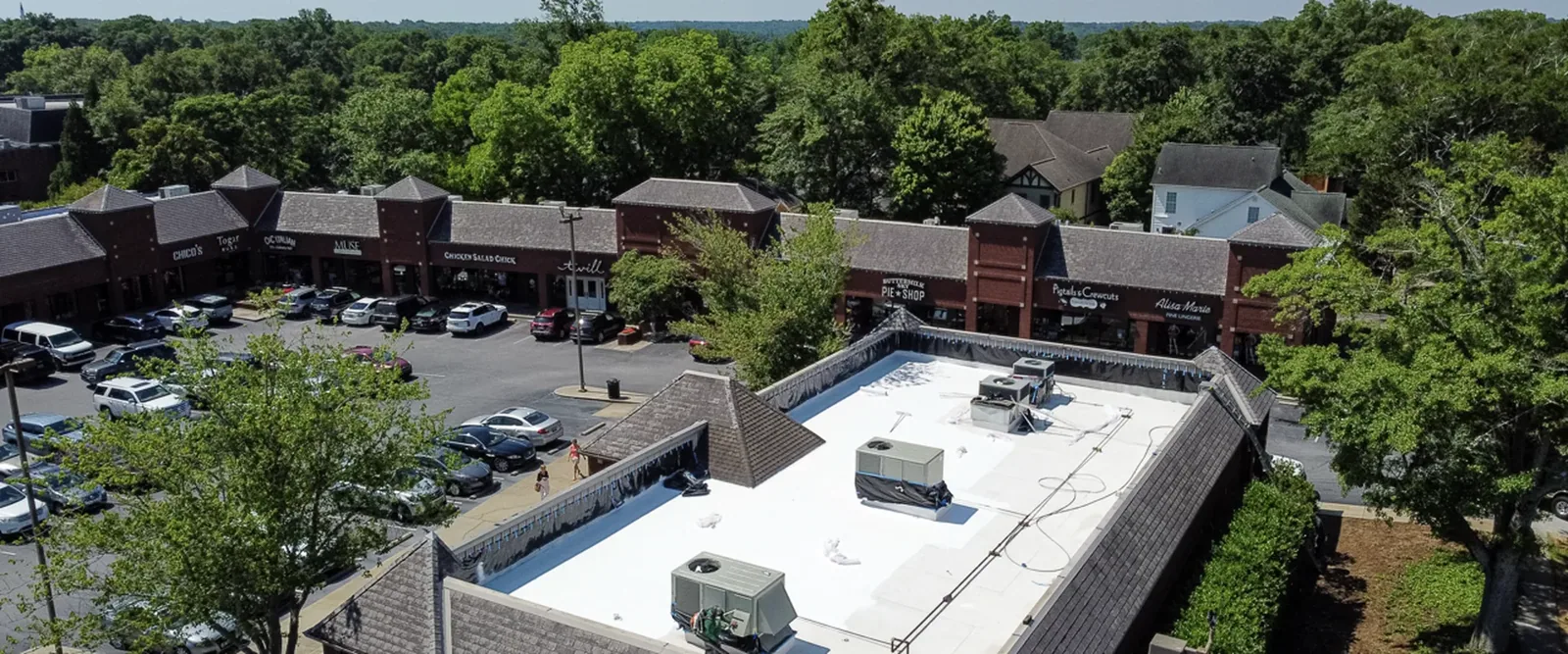
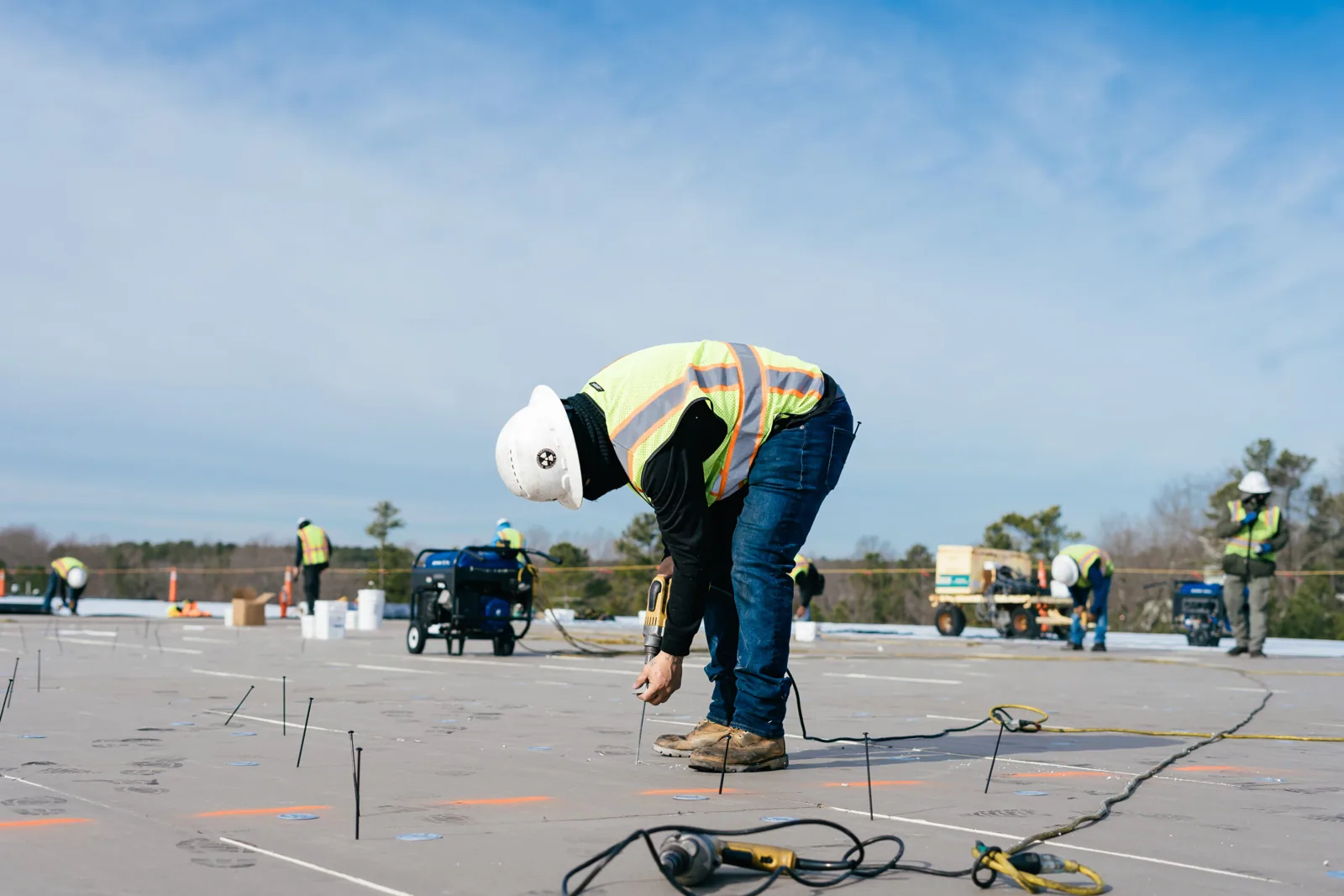
What do we measure on a first walk of a distribution roof?
We start with how the membrane is held down. Mechanically attached systems get a fastener check: sampled plates are probed for back-out, and the sheet is checked for flutter along the rows. Then we walk each seam, each flashing at a dock-side parapet, and each rooftop unit curb, and we note whether water is standing at the drains or along low lines in the deck.
A distribution center roof often has long drainage runs, so we look at how far water travels before it reaches an outlet. If a moisture scan is warranted, it is arranged before the estimate. What the owner receives is a report built from photographs, locations and a ranked list of items, which gives a property manager the data to hold against a maintenance budget or a capital request.
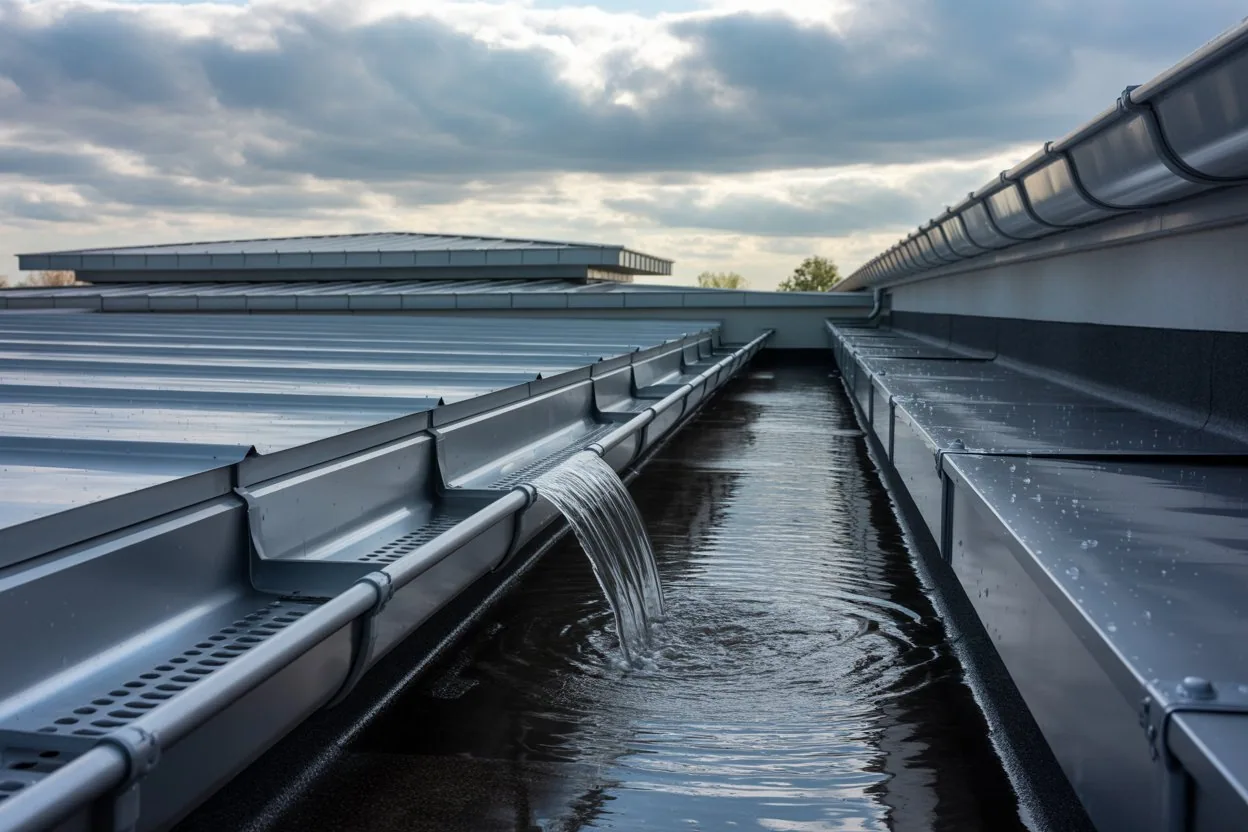
On a distribution roof in Mosheim, drains are easier to maintain when numbered and tied to interior columns or dock bays. During a walk, record debris, standing water and any signs that a drain bowl has shifted. A crew can revisit the same outlets after leaf fall or a major storm and determine whether the issue recurs. That evidence supports a focused drainage correction before water reaches insulation or interrupts work below.
Repair, recover or replace: how do warehouse owners decide?
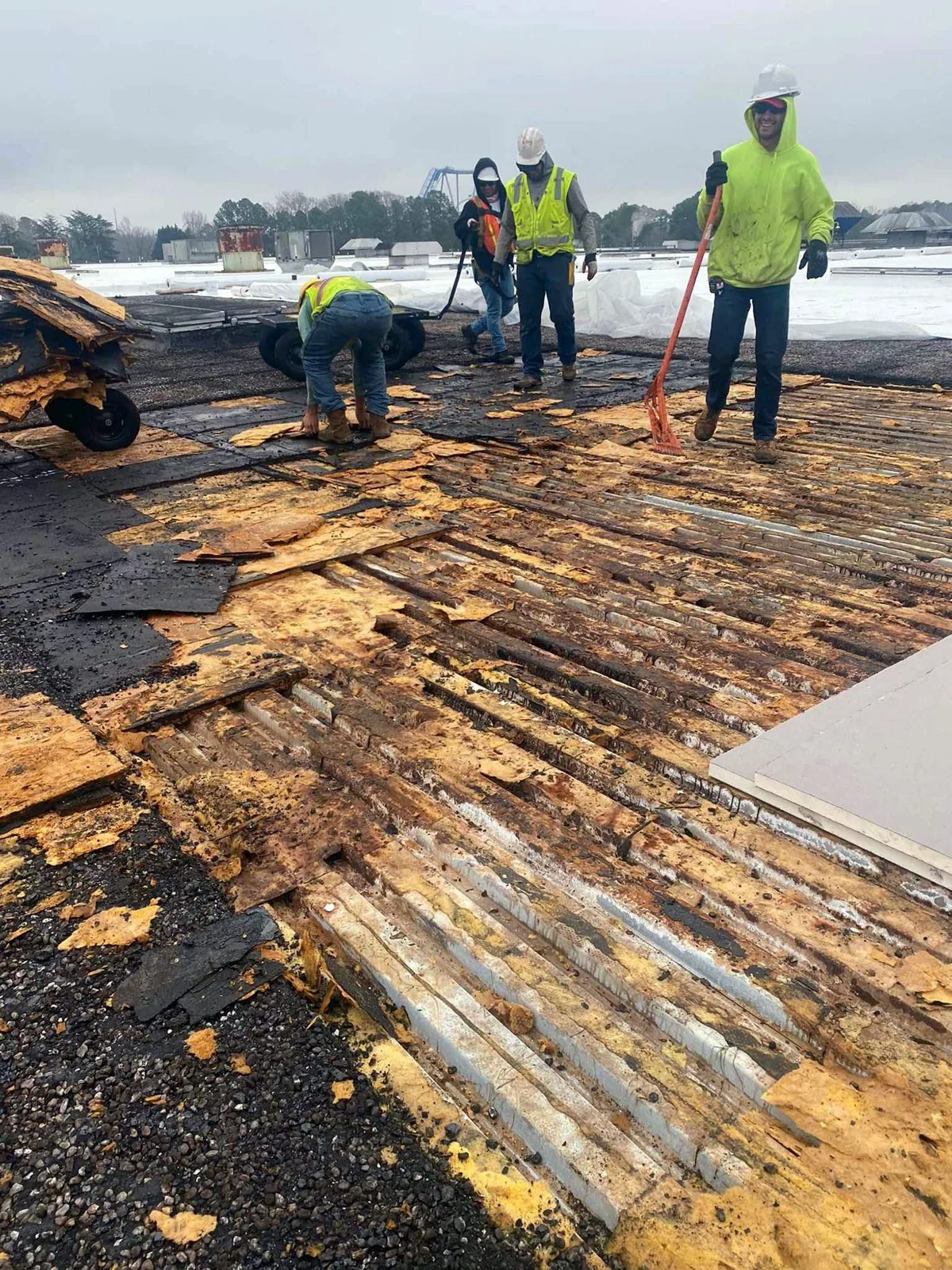
The insulation and the deck decide it, as with any roof. A warehouse roof with dry insulation and an intact deck can often take new fasteners, reinforced seams and targeted membrane patches, which stretches service life at modest cost. When the membrane is worn but the insulation is dry, a recover with a new TPO membrane avoids tear-off and keeps the operation running.
If wetness is widespread, replacement is the better value, because the saturated board has to be removed regardless. Choosing between a mechanically attached system and an adhered or ballasted one then turns on wind exposure, deck type and budget. Whichever path fits, a regular visit schedule through preventive roof maintenance keeps small fastener and seam problems from becoming the reason for the next capital request.
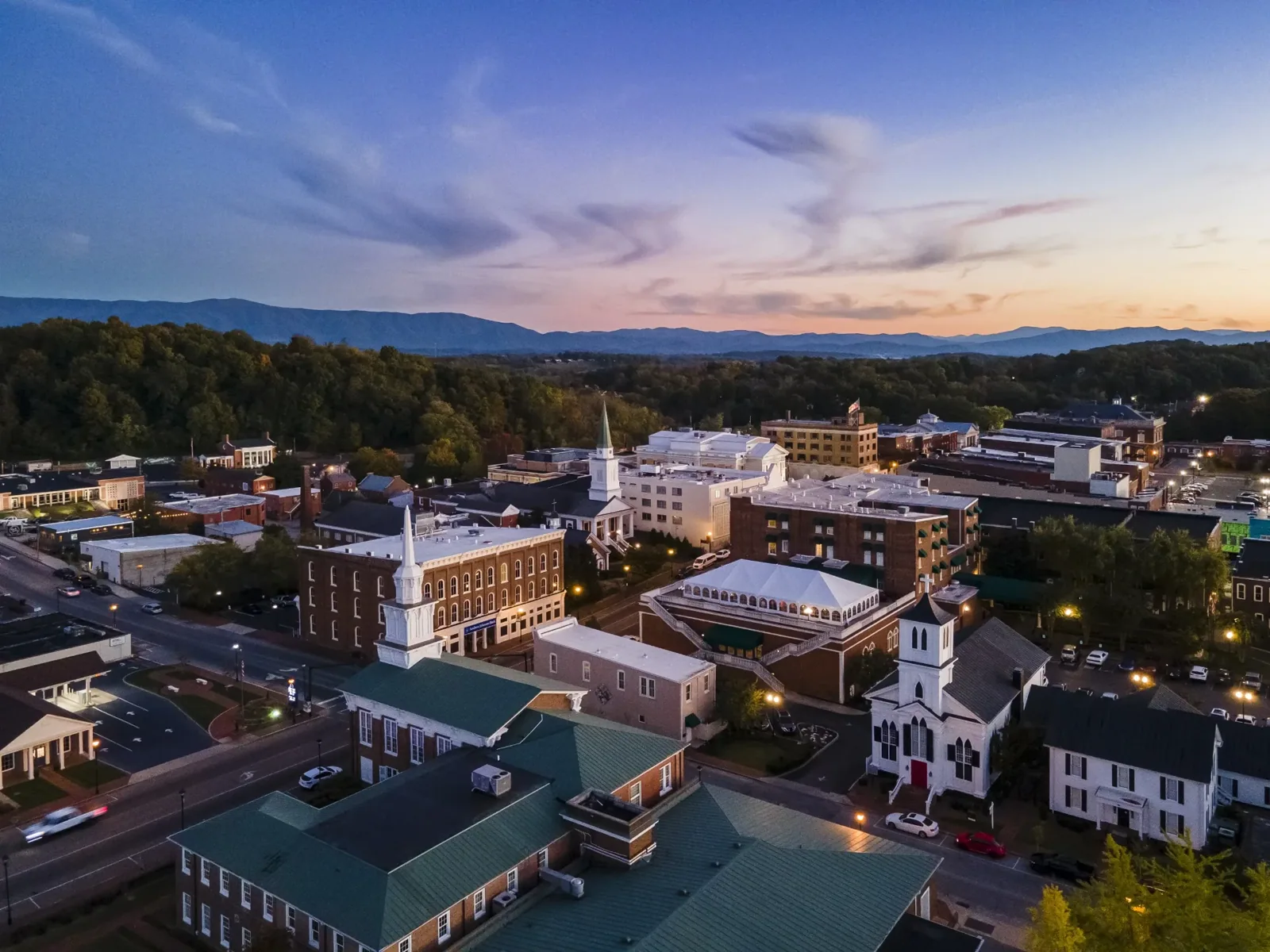
An owner managing a roof in nearby Tusculum can compare the condition records while keeping leak and access histories separate.
Commercial Roofing Questions
How can fasteners be a problem if the membrane looks fine?
Backed-out fasteners push up under the sheet and abrade it from beneath, so the damage is on the side the owner cannot see. A probe test on sampled plates and a look for flutter along each row will find them. Re-seating or replacing fasteners is routine work and is much cheaper than waiting until the membrane tears.
What makes a distribution roof harder to plan than an office roof?
Dock traffic and inventory. Trucks, forklifts and stored goods set where staging can go and which sections can be opened on a given day, so the sequence is built backward from the shipping schedule. The roof itself may be simpler than an office roof, but the logistics around it are not.
Should an owner near US 11E worry about rare storms like tornadoes?
Documentation matters more than worry. Washington County, which meets Greene County at Limestone, counts ten tornadoes on record, three of them on one day, April 27, 2011, so a dated baseline report and photographs let an owner prove what a roof looked like before any wind event. The yearly freeze and thaw is the more constant threat.
Why do dock-side parapets and rooftop units leak first?
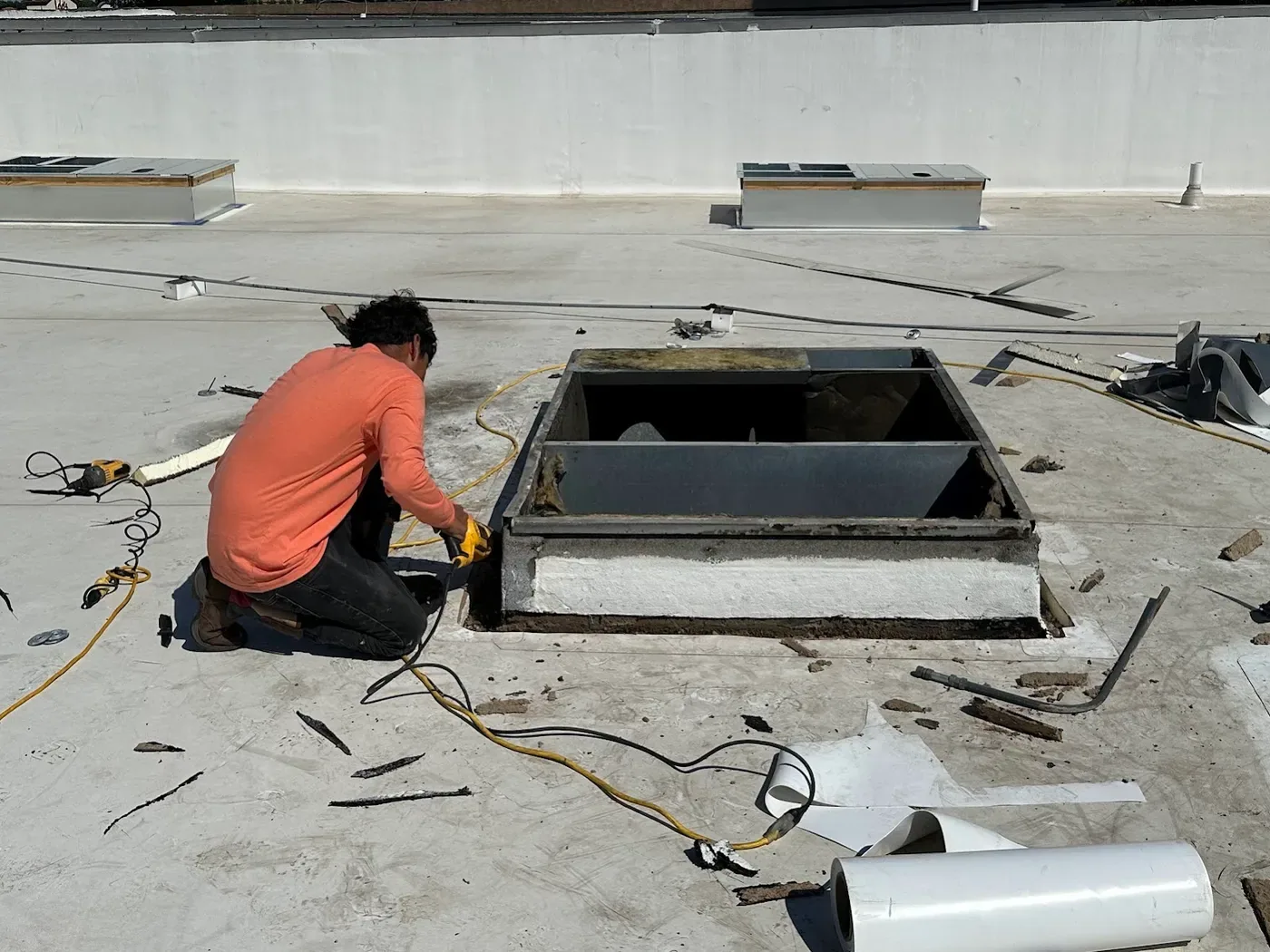
Those details carry the movement of the building. Walls shift, equipment vibrates, and traffic loads the edge, so the flashing and its sealant take more strain than the open field does. Rebuilding a termination with fresh sealant and a properly fastened bar often restores a detail that would otherwise let water into the insulation.
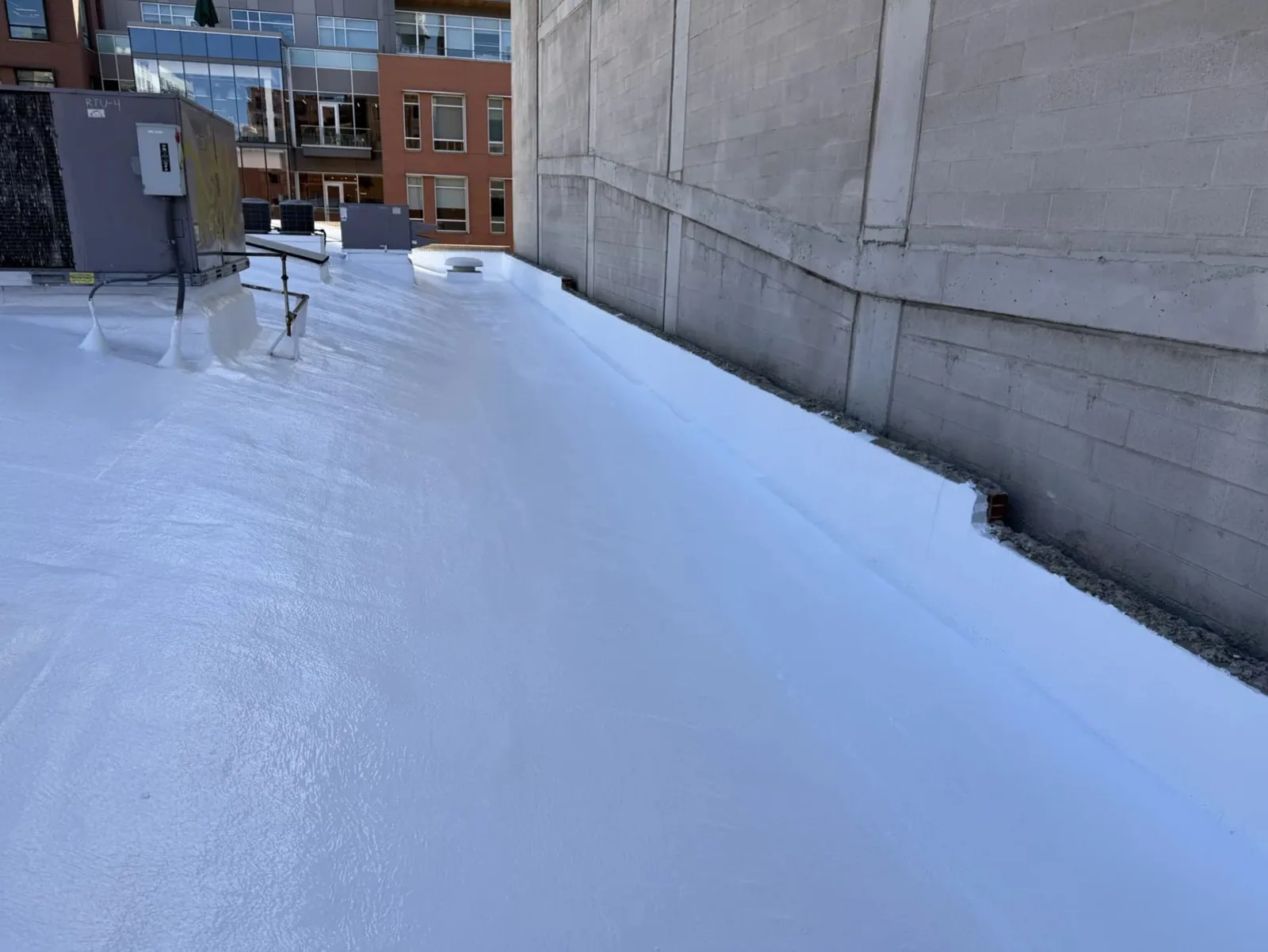
When is a coating a better fit than a new sheet?
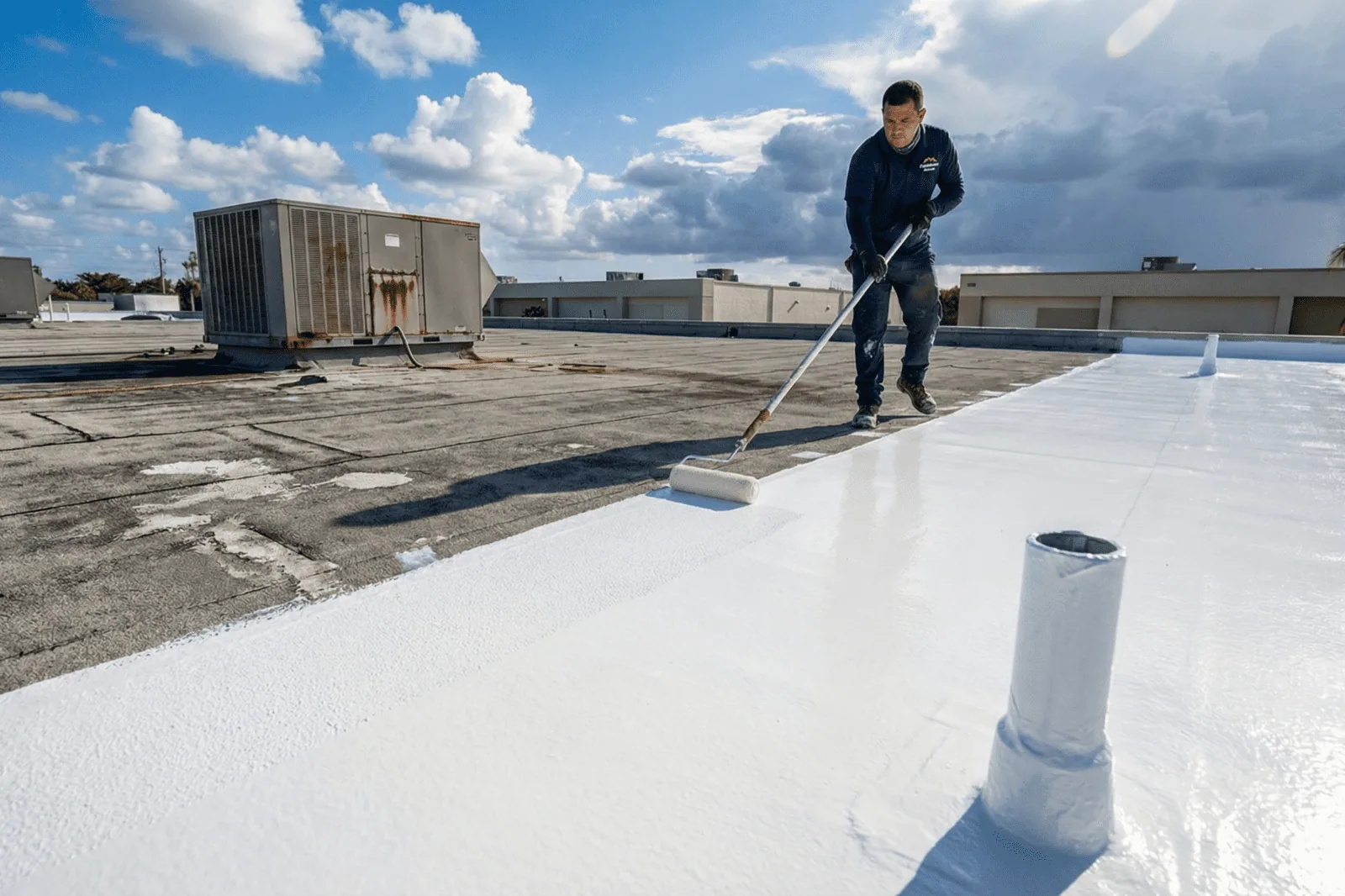
When the membrane is sound enough to bond to and the insulation is dry. A coating adds a new wearing surface and can extend service life, but it cannot fix saturated board or an unsound deck, so the moisture scan comes before any coating decision.
Related Roofing Pages
Drone Roof Inspections
How the work is scoped, phased and documented on Tri-Cities roofs.
Logistics and 3PL Operators
What we check, what we recommend and how the crew keeps the building running.
Greeneville
Conditions, options and next steps for commercial buildings in East Tennessee.