
Modified Bitumen Roofing in Johnson City, TN
The granules on a modified bitumen cap sheet work like sunscreen for asphalt. Beneath them sits a layer of polymer-modified asphalt that is flexible when fresh and slowly oxidizes once the sun reaches it, and every thaw that washes granules toward a drain removes a little more of the shield. Freeze-thaw cycling adds a second stress, because water that gets under a lap freezes, expands and lifts the edge a fraction further each time. By the time bare asphalt shows as dark streaks in the drainage path of a Johnson City, TN roof, the cap sheet has lost much of its sacrificial depth and the reinforcing mat beneath it is next in line. The base ply may still be sound, and that is the opportunity. A cap sheet repaired or coated at that point costs a fraction of a tear-off, while one left through several more winters lets water reach the insulation and takes the options away.
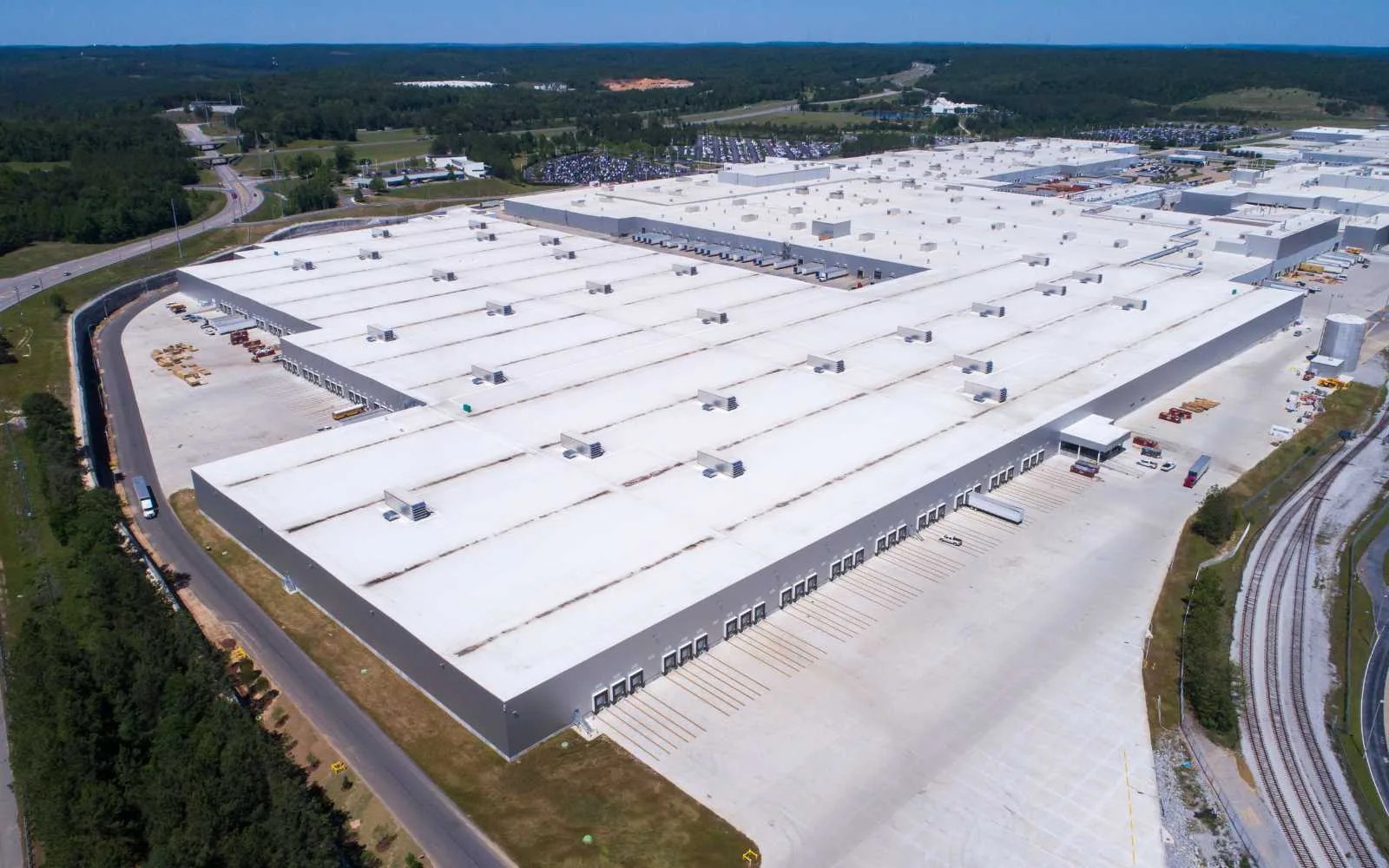
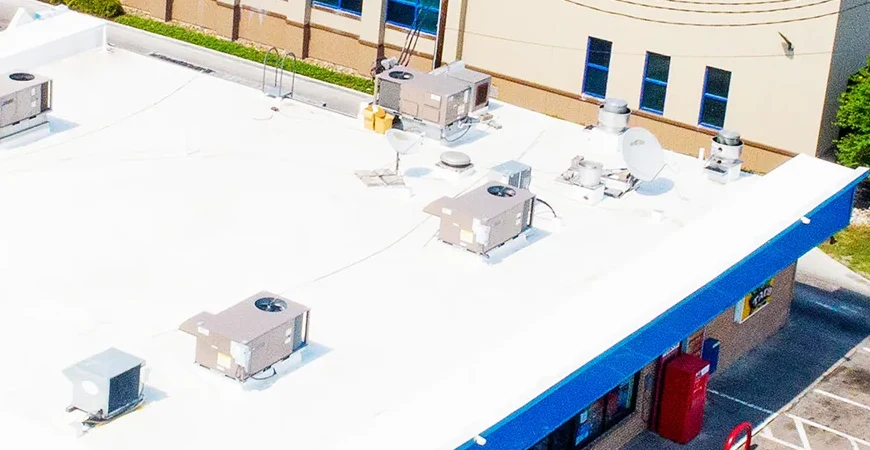
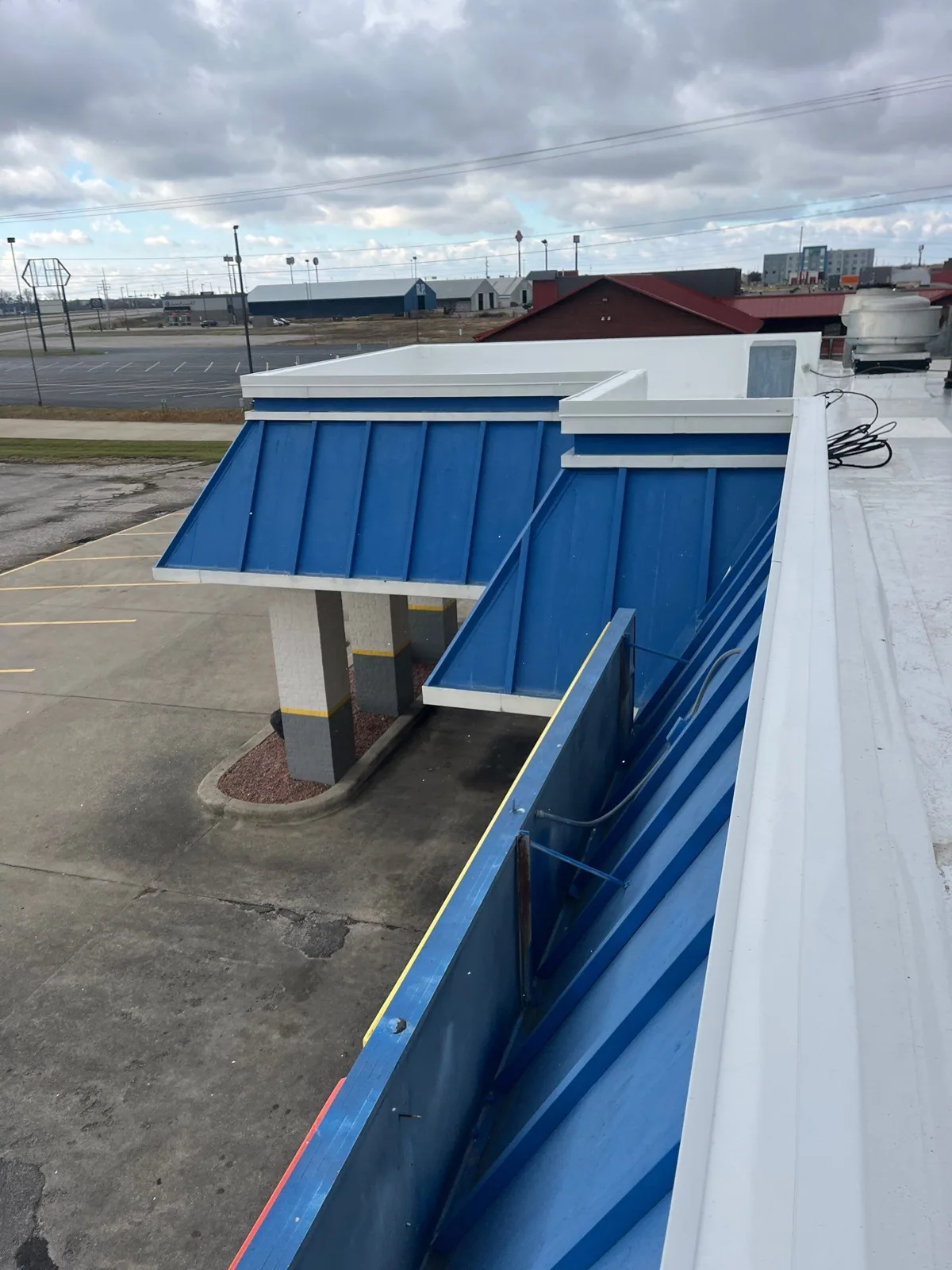
What do the SBS and APP modifiers actually change in the asphalt?
Plain asphalt is brittle in the cold and soft in the heat. SBS, a rubber-like polymer, gives the asphalt elasticity, so the membrane stretches and recovers as the building moves and stays supple on a January morning. APP, a plastic polymer, raises the softening point and tends to stand up better to prolonged sun, though it is less elastic in cold weather. Neither modifier replaces the reinforcing mat of polyester or fiberglass that carries the tensile load. Most commercial installations use two or more plies, a base sheet and a granule-surfaced cap, so the roof has a redundancy that single-ply sheets lack, and a lap that opens in the cap does not necessarily open the base. That layering is why a mod-bit roof can age gracefully, and also why a careless repair can seal moisture between plies, where it forms the blisters that eventually split.
Read the cap sheet before it exposes the base
Call Commercial Roofing Johnson City to have the granule wear mapped, the laps probed and the plies counted at a core cut. You will see how much protection the roof has left and what the next move should cost.
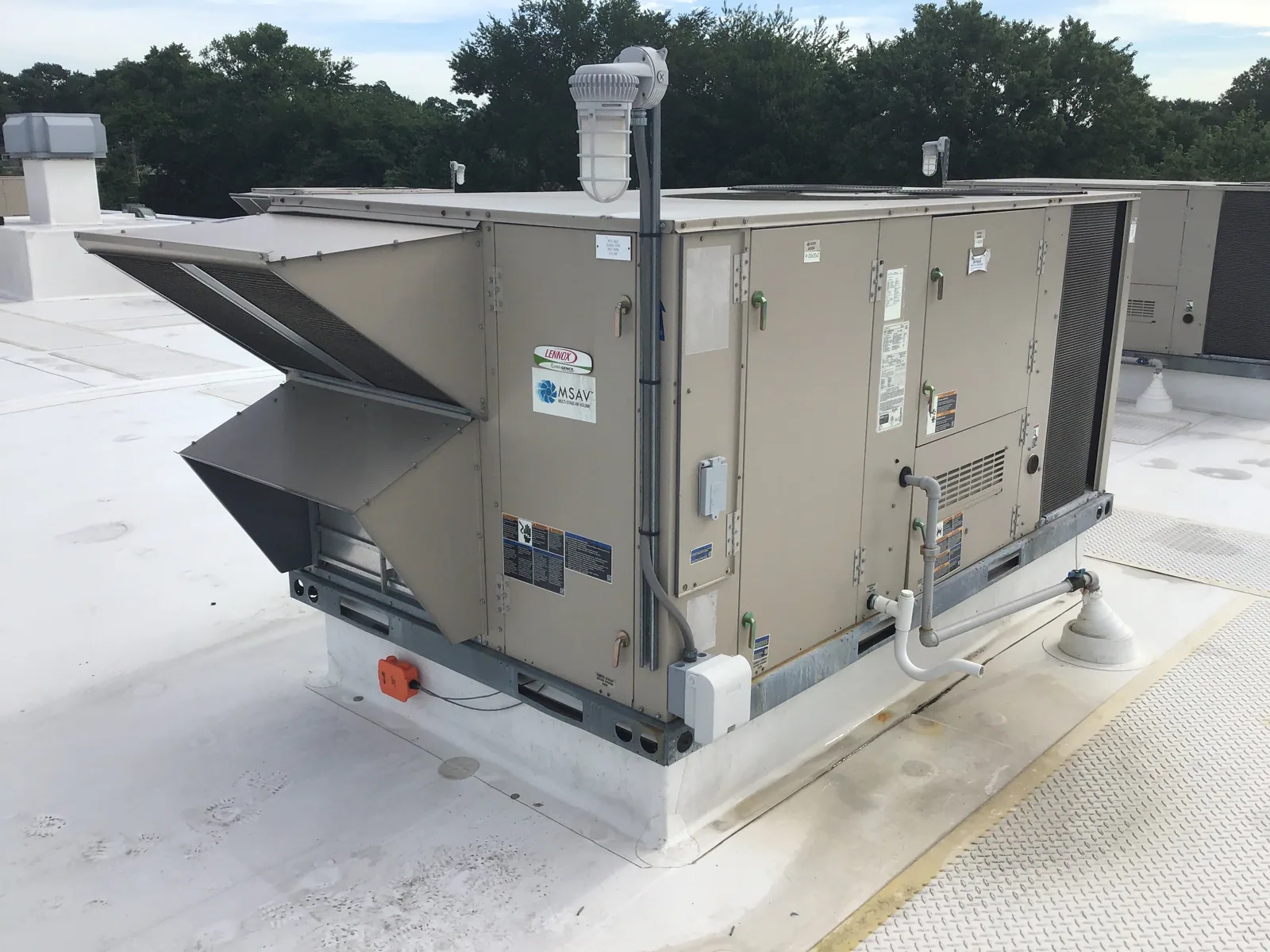
Torch-applied, hot-mopped, cold-applied or self-adhered: how should the plies go down?
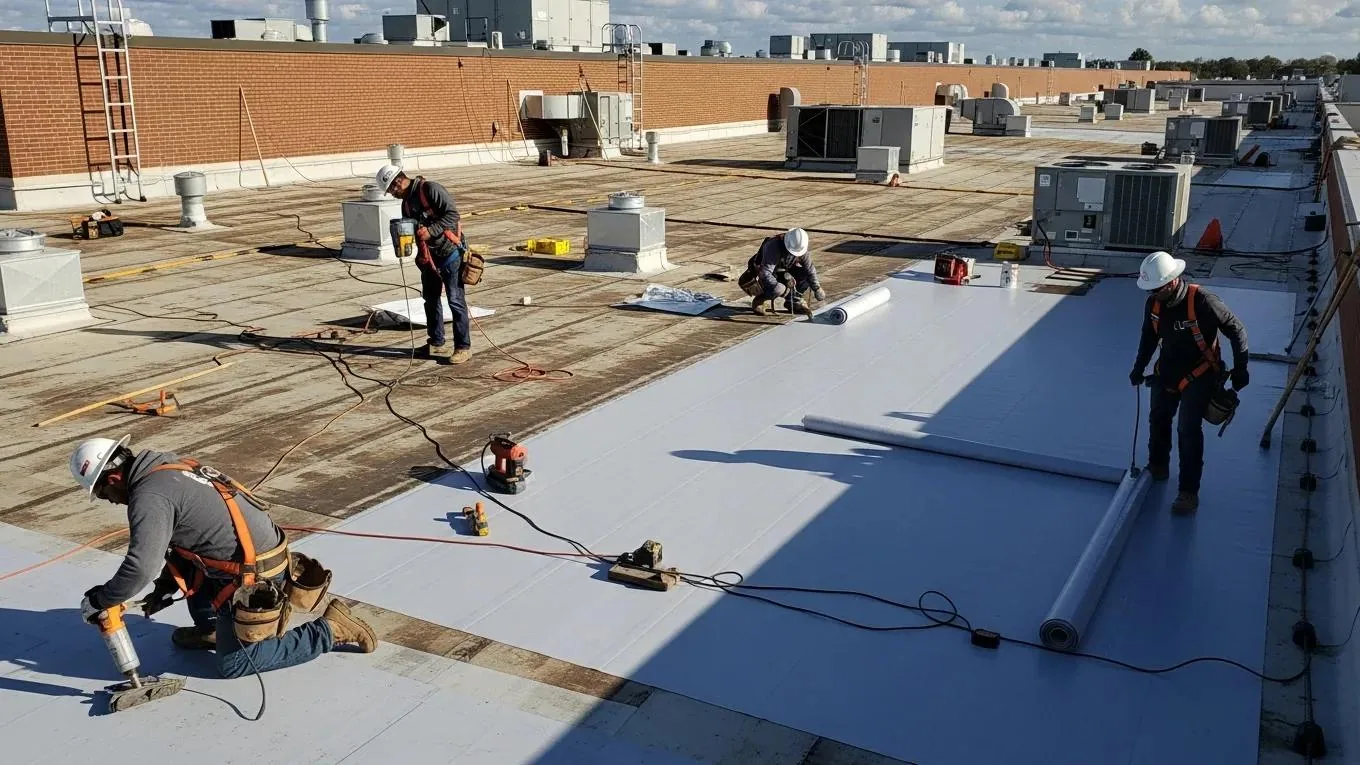
Each method trades speed, odor, fire exposure and bond strength. Torch-applied sheets melt their underside with an open flame and bond quickly, but they bring hot work to a roof where combustible materials may sit at a wall base. Hot-mopped plies use heated asphalt as the adhesive and have a long record, though the kettle produces fumes that need careful control near air intakes. Cold-applied adhesive and self-adhered sheets avoid the flame and the kettle, which makes them sensible for occupied institutions, but they depend on temperature windows and a clean, primed substrate. Owners comparing the whole family of asphalt systems should price a traditional built-up roof, which offers multiple plies with a long track record, and silicone roof coatings, which can restore a sound cap sheet without adding layers. Makers such as Soprema publish the approved methods for their sheets, and we install within them.
What does a worn cap sheet tell us about the layers underneath?
We read the surface in a pattern. Granule loss concentrated along drainage paths suggests a roof that sheds water faster than it can protect itself. Alligatoring or cracking in exposed asphalt shows that weathering has reached the binder. Blisters, ridges over insulation joints and open laps point to trapped moisture or movement beneath the cap. A drone roof inspection shows those patterns across the whole surface without anyone stepping on a fragile area, and where ponded water is leaving dirt rings, the cause is treated through ponding water roof repair instead of being patched around. Core cuts then tell us how many plies are actually present, whether the base is intact and whether the insulation is dry. Those three answers, not the look of the surface, set the repair or replacement window.
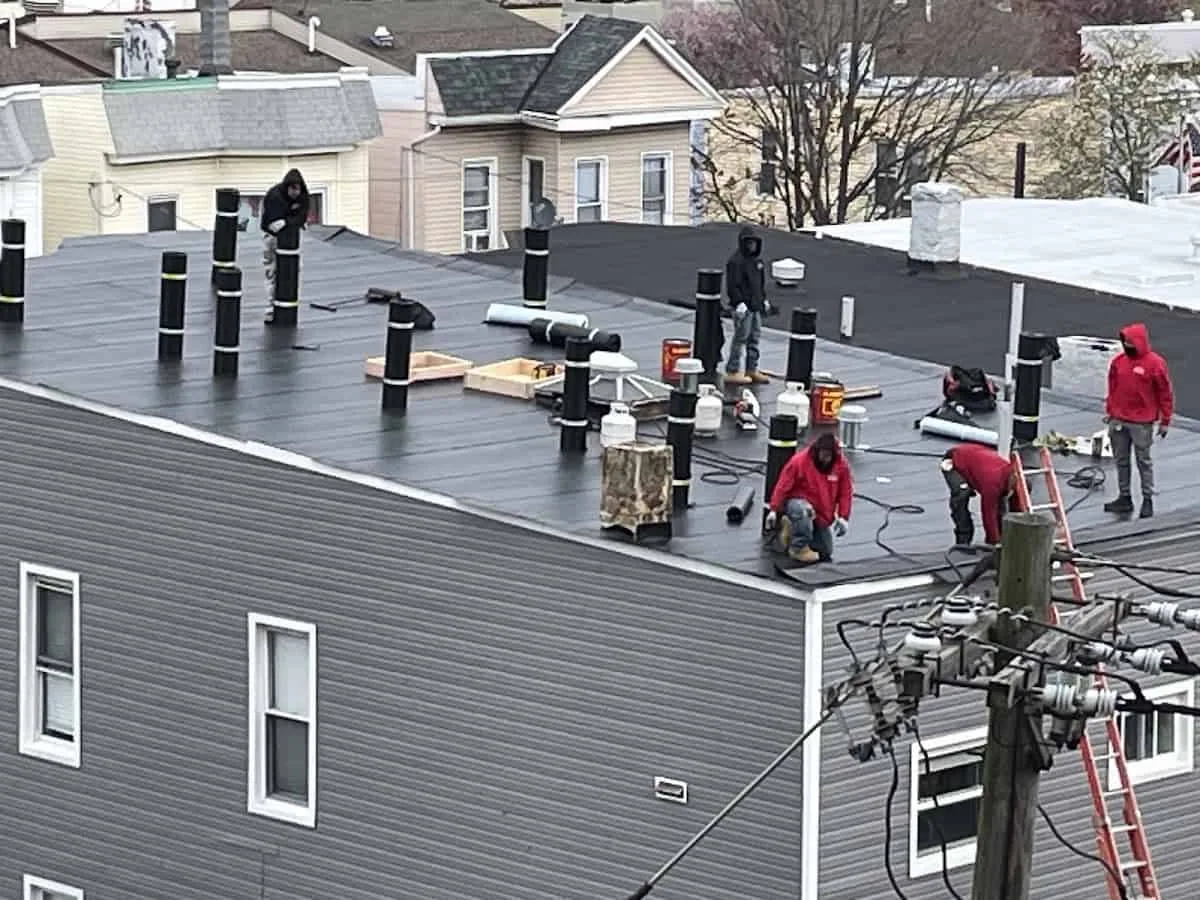
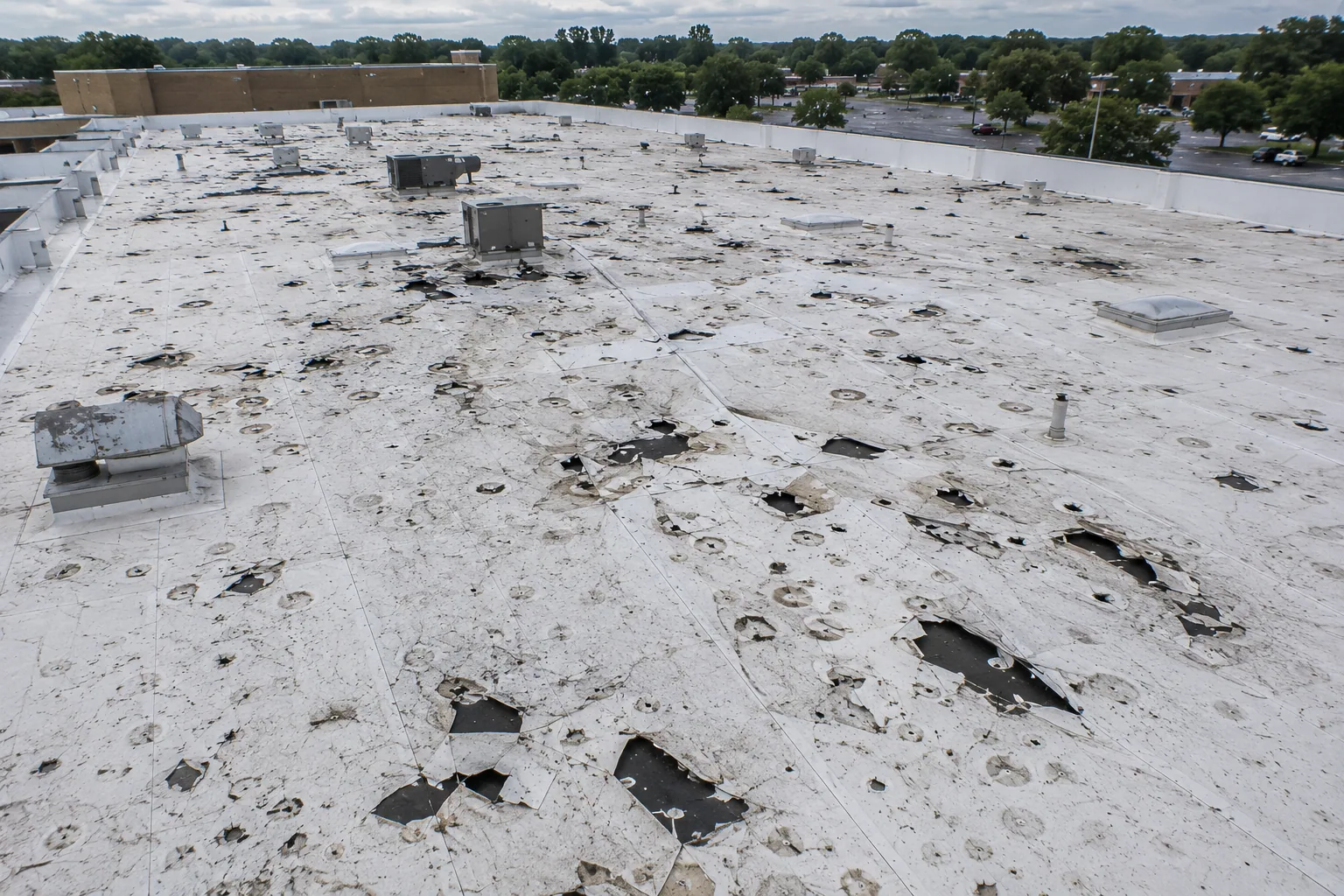
What does another winter cost on a cap sheet that has lost its granules?
The cap sheet is sacrificial by design, and the arithmetic of waiting depends on how far the sacrifice has gone. While the base ply is intact, a coating or a new cap can restore the roof at a fraction of the cost of replacement. Once the reinforcing mat is exposed, water can wick into the plies, and a thaw cycle drives it further. At that point the options narrow from restoration to partial replacement to full tear-off, and wet insulation turns a capital-timing question into a repair-and-disruption problem. A roof that reaches that stage may have been ready for roof coating restoration two winters earlier. Owners who track granule loss as a trend rather than an event can place the work in the year it costs the least, and they enter budget discussions with a measured service life instead of a guess.
How do hot-work rules and the winter calendar shape a mod-bit job?
Johnson City has adopted the 2018 International Fire Code, and that family of rules includes provisions for hot work such as open-flame torching, so the fire official decides what permit, extinguishing equipment and fire watch apply. Even with those controls, we favor cold-applied or self-adhered methods near air intakes and on occupied buildings. Asphalt rolls stiffen in the cold and crack when unrolled, so material is stored warm and unrolled in short runs, while primers and adhesives need minimum temperatures to tack. The sensible season is the milder months, with winter reserved for temporary repairs and drying-in. Setting that calendar early lets the owner approve the budget in time for materials to arrive before the first sustained freeze.
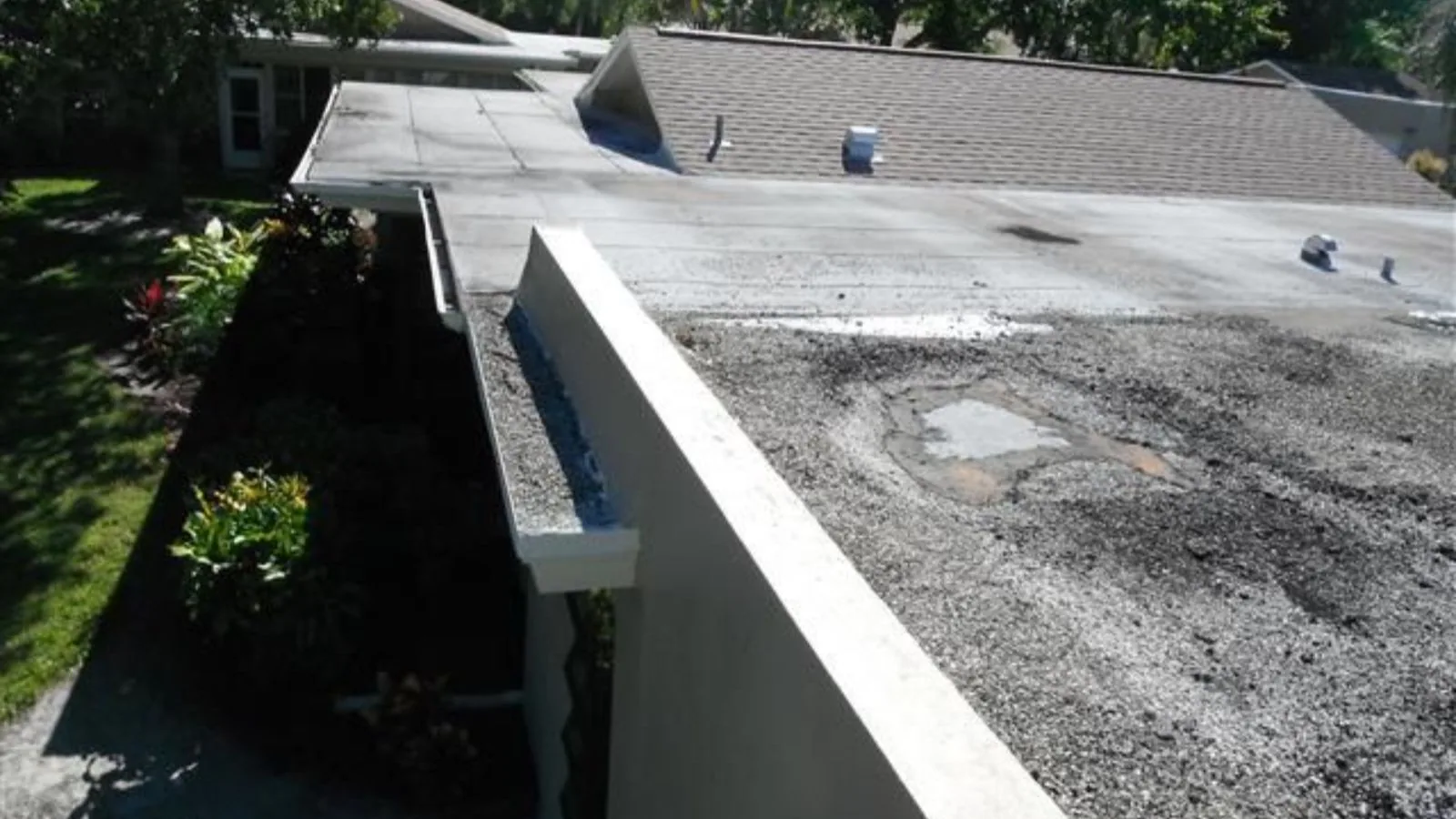
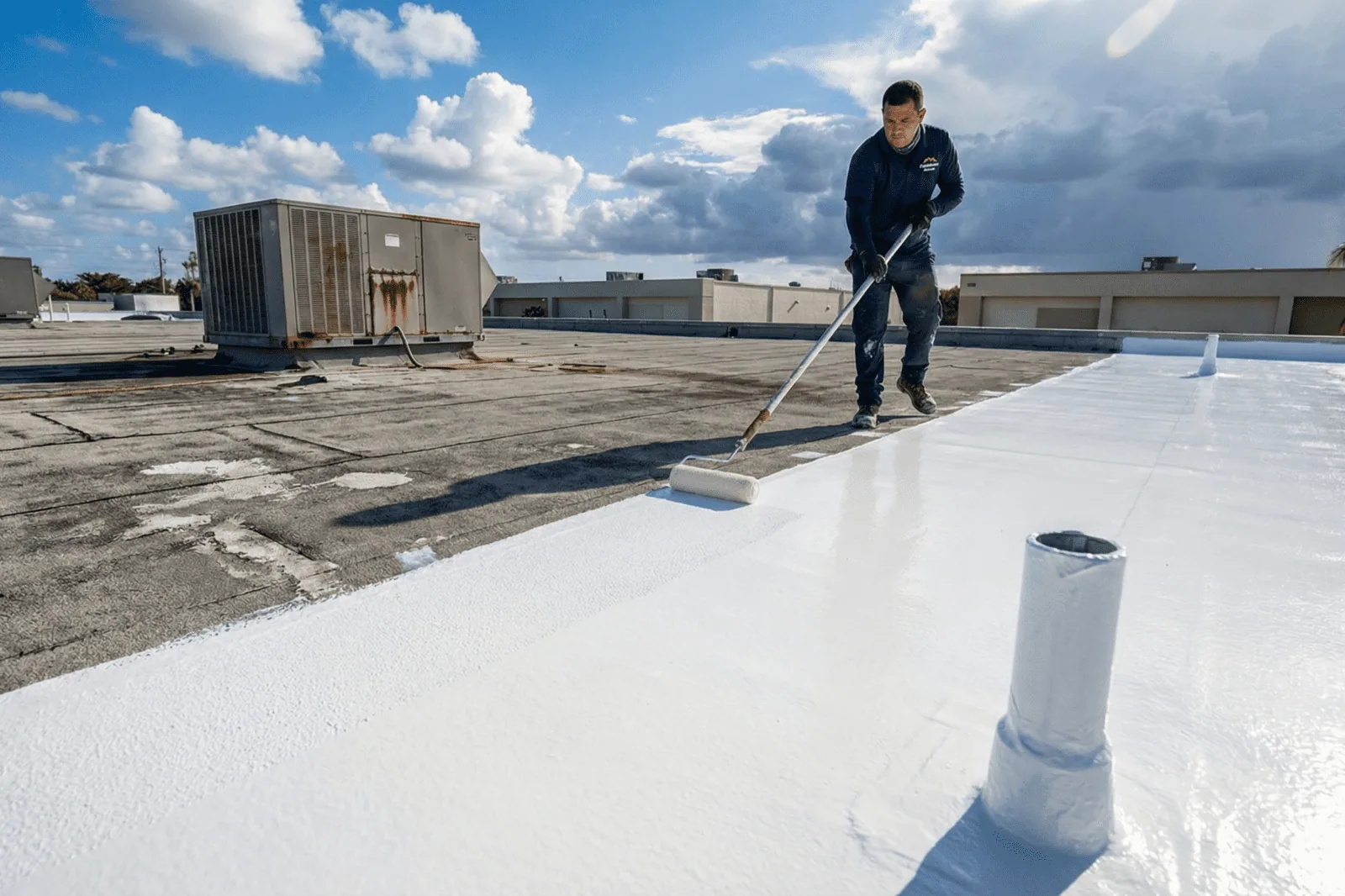
How do older institutional campuses change the choice of asphalt system?
Mountain Home opened in 1904 in the Beaux Arts style, was named a National Historic Landmark District in 2011, and still puts many of its original buildings to daily use. Buildings like those are occupied, sensitive to noise and fumes and not easily replaced, so the attachment method matters as much as the membrane, and any asphalt work at the Mountain Home VA campus would favor cold-applied or self-adhered methods over open flame. At Johnson City Medical Center, a Level I trauma center, air intakes and patient areas set the same limits. Weather adds a regional layer. Johnson City gets close to 45 inches of precipitation in a typical year, and Hurricane Helene in September 2024 was a reminder of what heavy rain asks of the drains and laps on any asphalt roof.
Commercial Roofing Questions
Why do some modified bitumen roofs blister while others stay flat?
Blisters form where moisture or air is trapped between plies or under the sheet and expands in the afternoon sun. A roof laid over damp insulation, or one with a poor bond between plies, blisters more readily. Small intact blisters may be left alone, but ones that have split or sit over wet insulation need cutting, drying and patching, and the moisture source must be found first.
Does the fire code here treat open-flame roofing differently from other methods?
Johnson City has adopted the 2018 International Fire Code, which contains hot-work provisions, and the local fire official sets the permit and fire watch requirements. Cold-applied or self-adhered sheets keep the question from arising on an occupied building. We discuss the method and the local requirement before a scope is signed.
SBS or APP for a roof that bakes in afternoon sun and freezes in winter?
Both can work, and the swing between summer sun and winter cold in the Tri-Cities argues for weighing them together. SBS handles winter flexing well and is common on roofs with plenty of building movement, while APP withstands sustained heat a little better. Reinforcement, thickness, surfacing and lap quality influence results at least as much as the modifier, so we compare complete assemblies, not polymers alone.
Is a two-ply system meaningfully safer than a single sheet?
The second ply gives the roof a layer to fall back on, since a puncture or an open lap in the cap does not always reach the base. That redundancy costs more in labor and material and adds weight, so it earns its place where foot traffic, equipment service or a long deferral is expected. A single ply may be enough for a protected area that is rarely visited.
Can a worn cap sheet be coated instead of re-covered?
Often, as long as the base is intact, the laps are tight and the insulation is dry. A coating adds a new weathering surface and slows further granule loss, but it cannot fix wet insulation or a split flashing. We make the call from core cuts and a moisture scan, then price the coating beside a new cap so the owner can compare lifecycle cost.
Related Roofing Pages
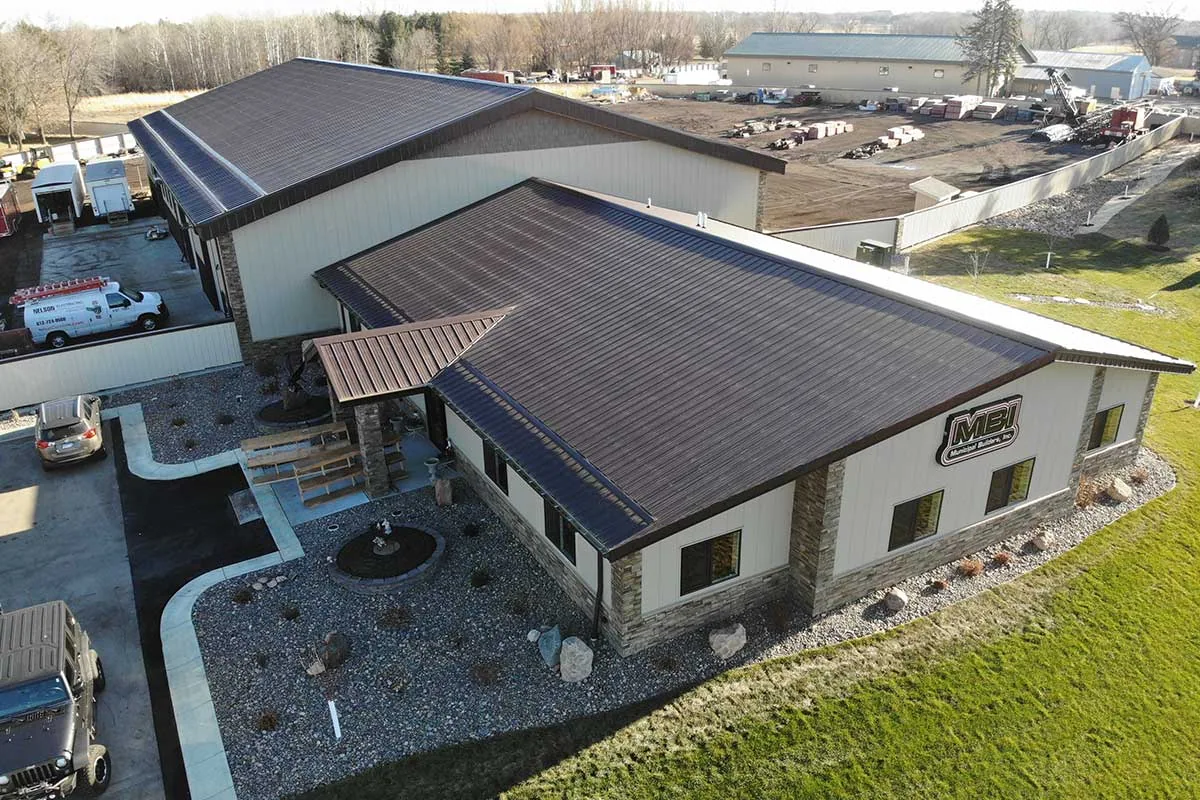
Built-Up Roofing (BUR)
How the work is scoped, phased and documented on Tri-Cities roofs.
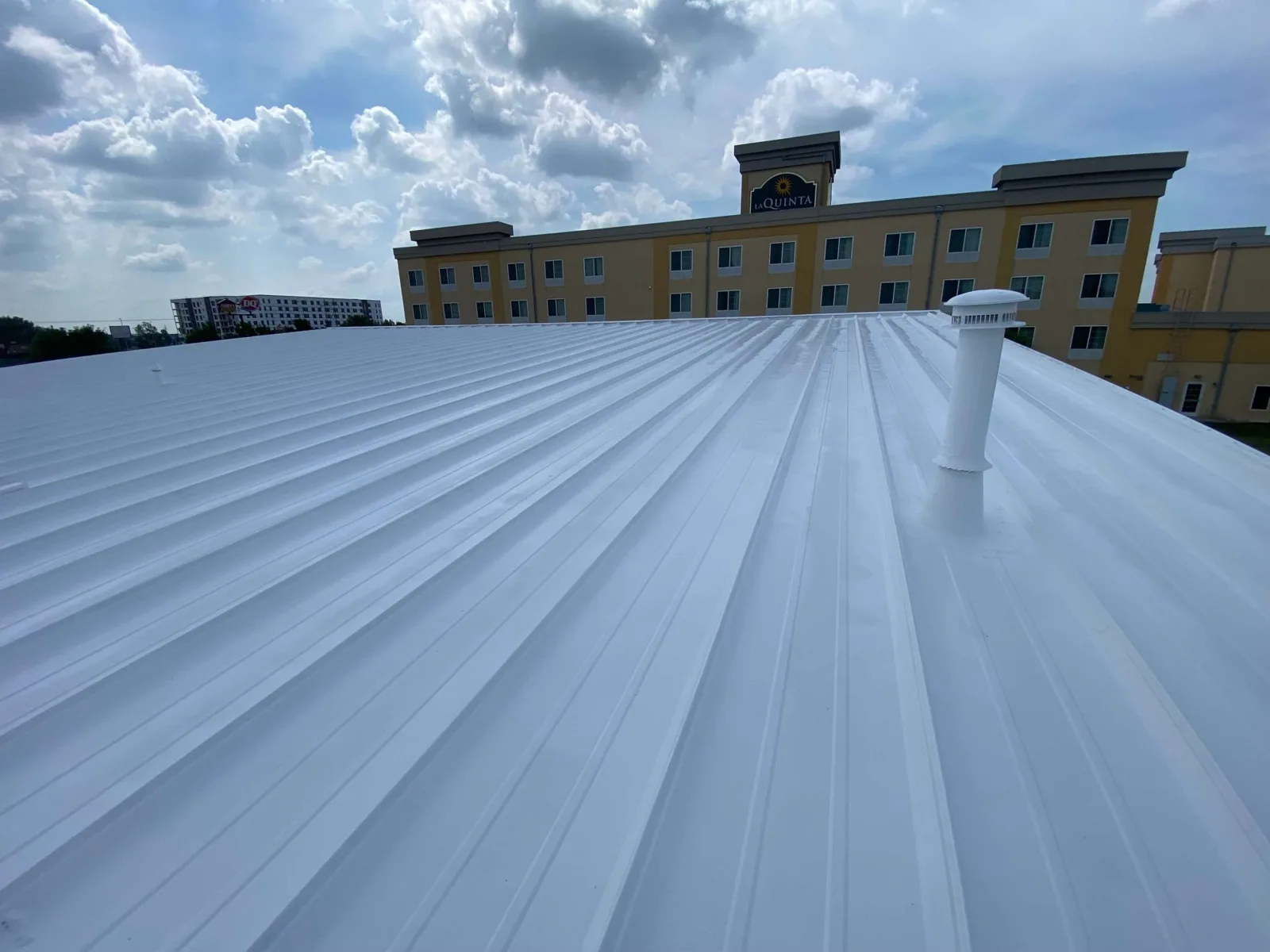
Silicone Roof Coating Systems
What we check, what we recommend and how the crew keeps the building running.
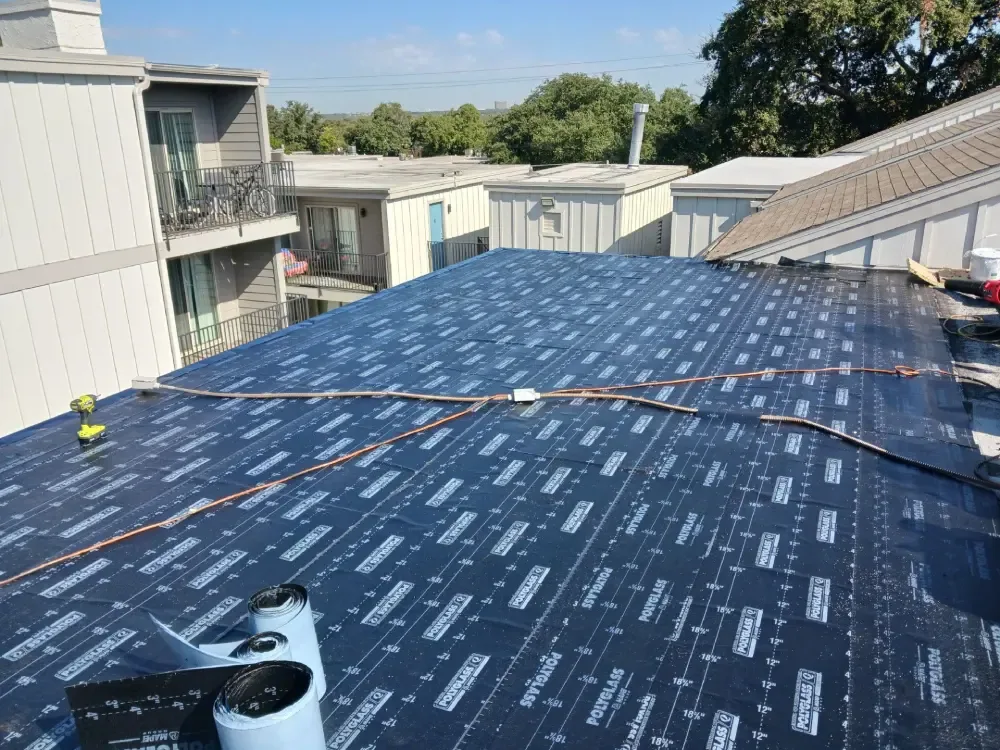
Soprema Roofing and Flashing Systems
Conditions, options and next steps for commercial buildings in East Tennessee.