24/7 Emergency Roof Repair in Johnson City, TN
A roof that has lost a section of membrane to wind, a fallen limb or a failed panel stops being a weather barrier and becomes a funnel. Rain or meltwater enters the opening, spreads sideways through the insulation and down every flute and joint, and begins to saturate the assembly within hours. Each additional hour adds to the area that will have to be removed later and to the interior that has to be dried or replaced. An emergency response exists to interrupt that process: make the roof safe to approach, close the opening with a temporary cover, and stop the spread of water so that the permanent repair can be planned with a clear head and a known scope. In Johnson City, TN, we answer these calls at any hour, on weekends and on holidays, because weather does not wait for business hours.
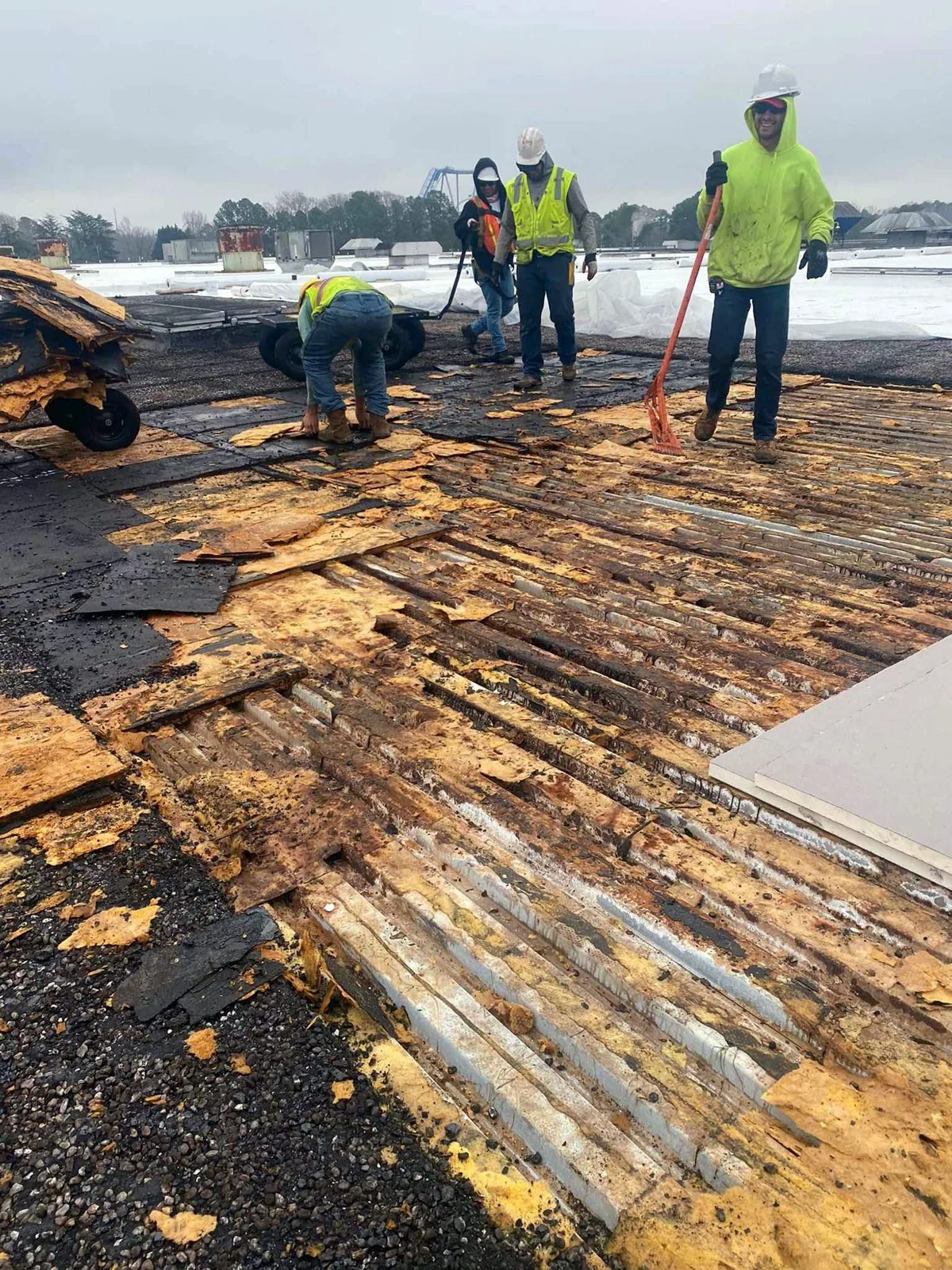
What happens inside the assembly in the first day after a roof opens?
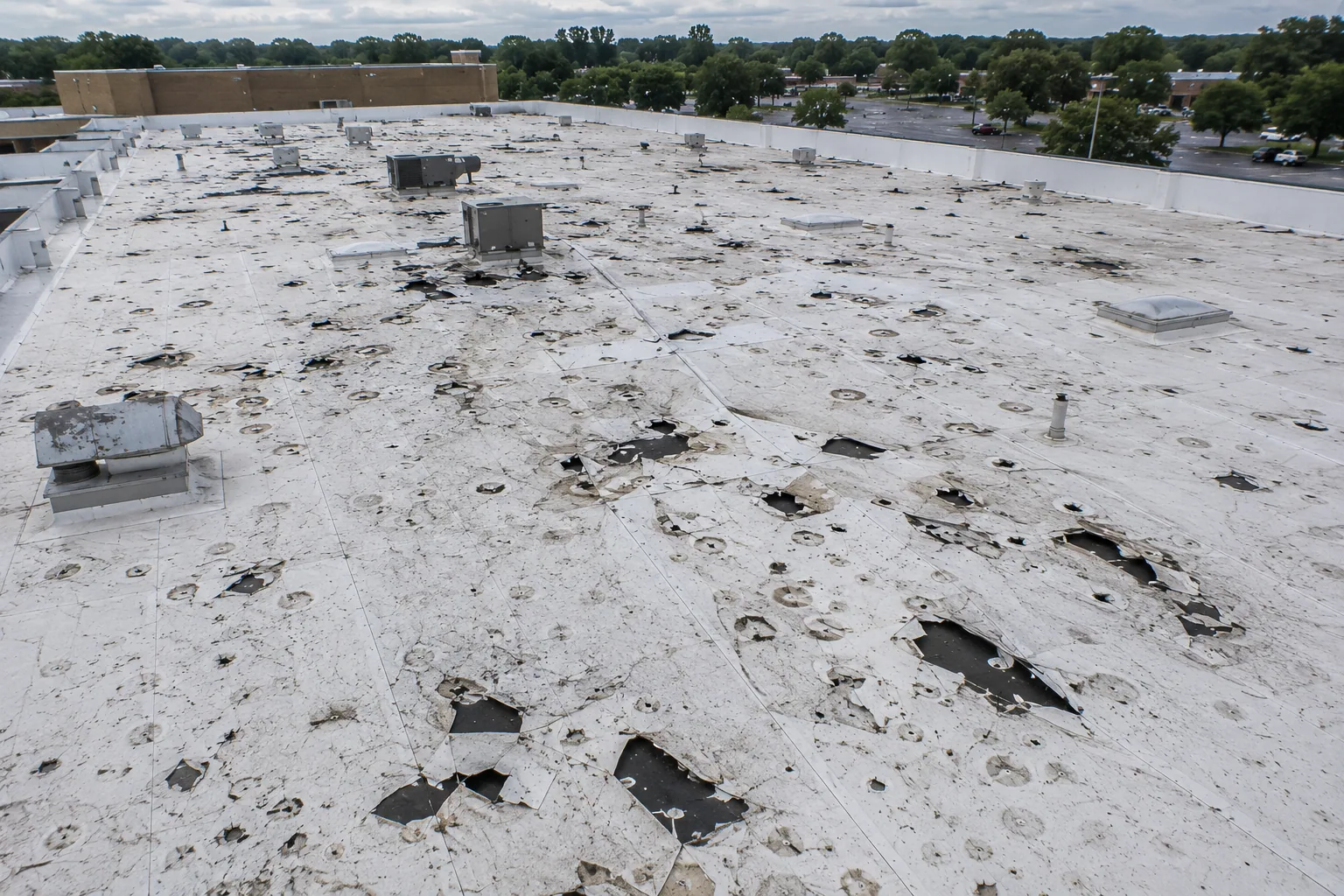
The membrane is only the top layer of a system. Beneath it sit insulation boards, often adhered or fastened to a steel or concrete deck, and each of those layers absorbs and moves water differently. Polyisocyanurate and similar boards take on water at their joints and facers, and once wet they lose much of their thermal value and add weight. Steel decks begin to corrode at the fasteners and laps. Water that reaches an occupied space carries the damage further, into ceilings, finishes and equipment. Cold weather complicates the picture, since water that freezes inside the assembly expands and pries layers apart. The longer an opening stays uncovered, the more of this reaches the point where it can no longer be dried in place. That is the reason a prompt temporary cover is the most valuable thing an emergency crew can provide.
Call at any hour and get the roof closed
Call Commercial Roofing Johnson City, day or night, weekends and holidays included. We will make the building safe and dry, then lay out the permanent repair with the condition data in hand.
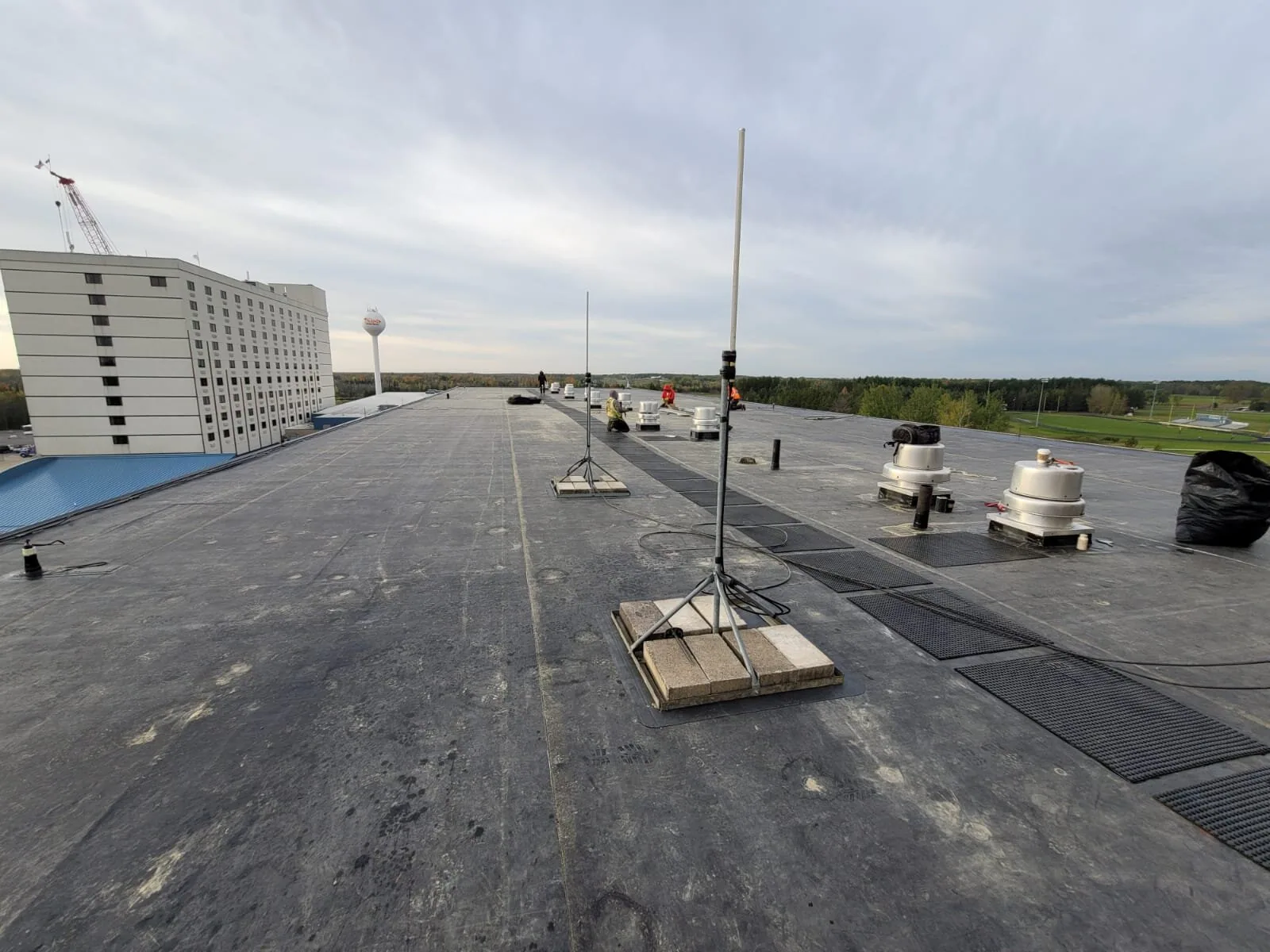
What does an emergency response actually involve on arrival?
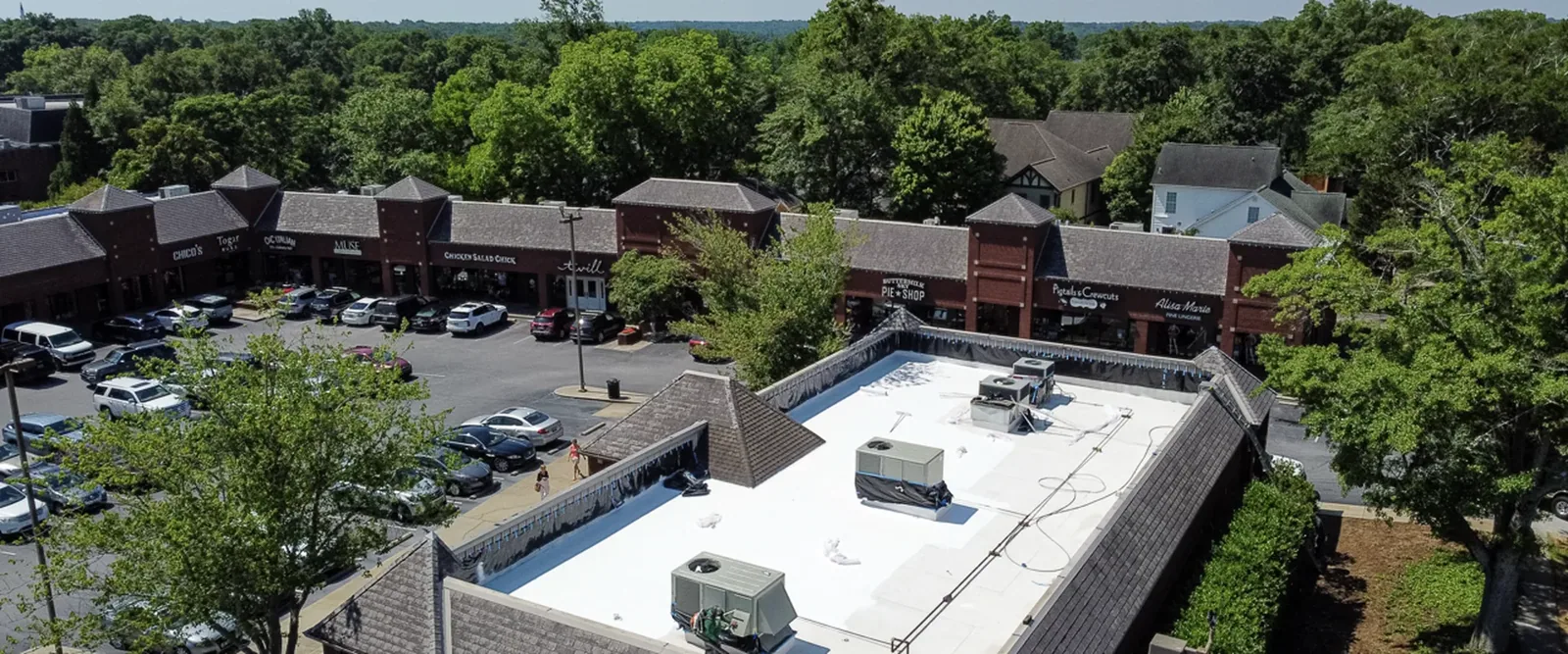
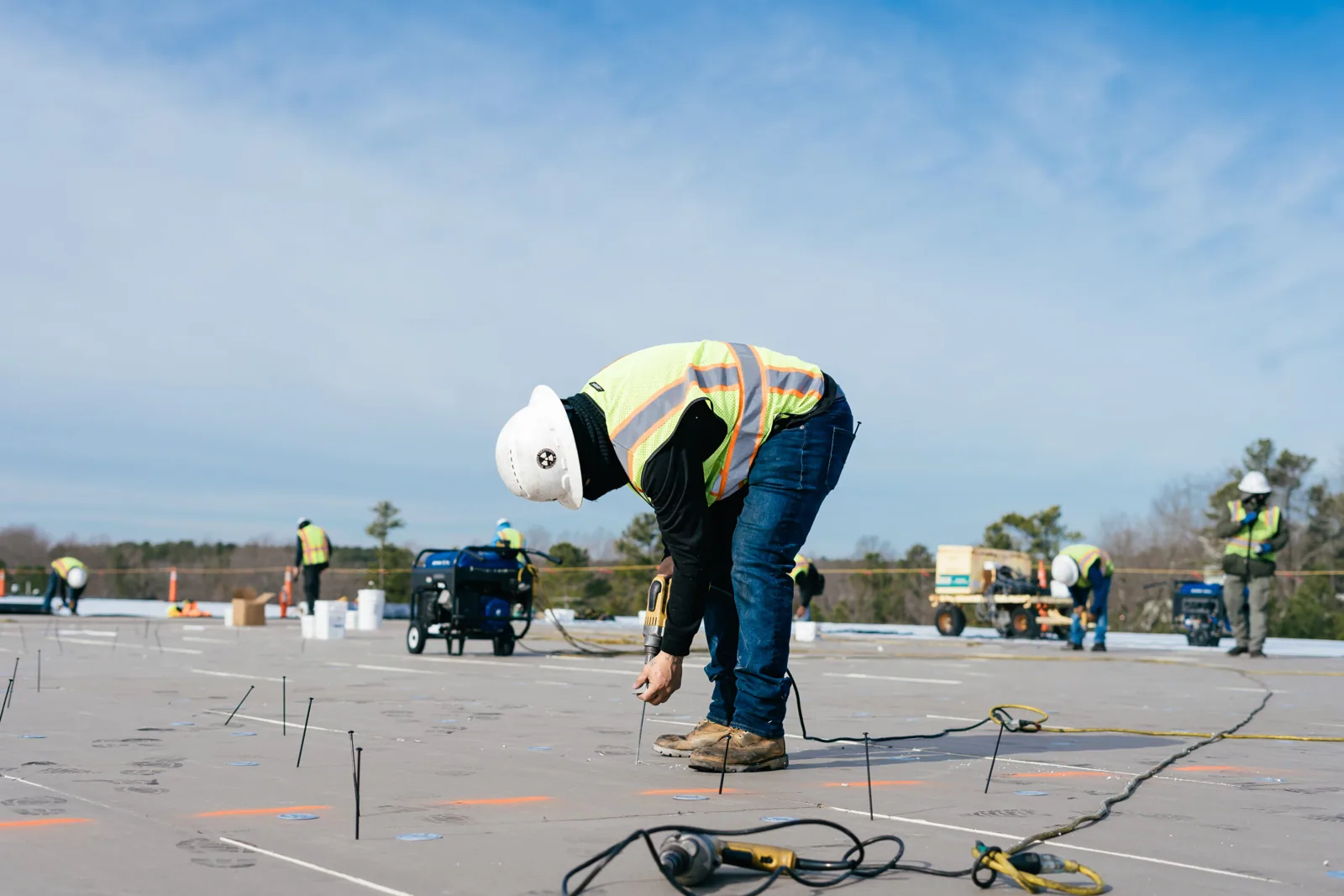
We begin with safety. Before anyone steps onto a damaged roof, we check for compromised decking, loose panels and electrical or gas hazards near rooftop equipment. Then we locate the opening and the extent of water travel, photograph everything for the record, and decide how to close the roof. Depending on the damage, that may mean a heavy-duty tarp secured with battens and sandbags or fasteners, a temporary membrane patch adhered over the opening, or a metal panel closure. Interior protection comes next: catching and diverting water, covering equipment and coordinating with the building engineer about shutting down affected systems. We leave the roof weather-tight for the immediate period, with a written summary of what we found and what we recommend. Where a storm caused the loss, the follow-on work is storm damage roof repair, scoped from the photographs and measurements taken on arrival.
When is a tarp enough, and when does the roof need a temporary membrane?
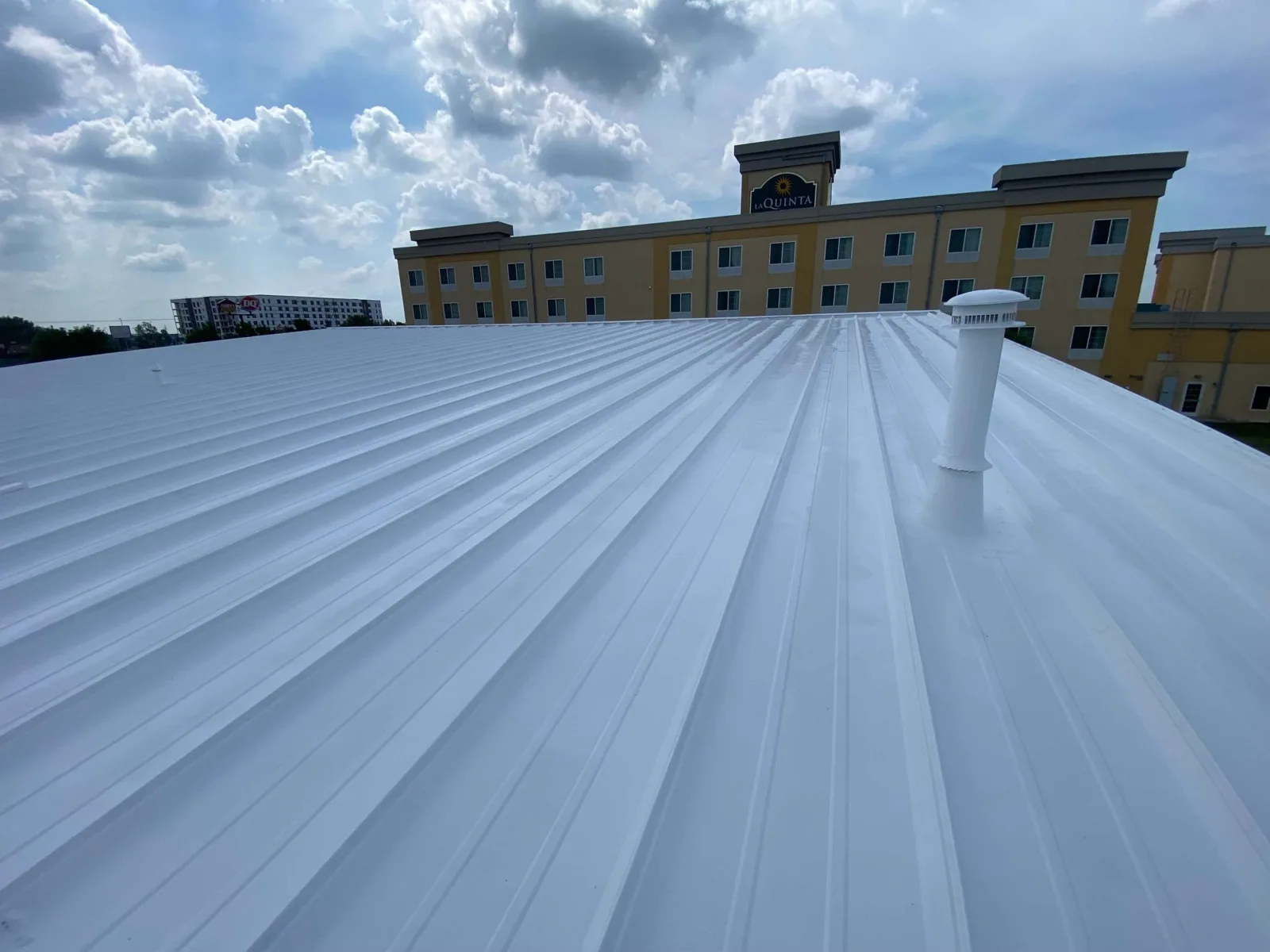
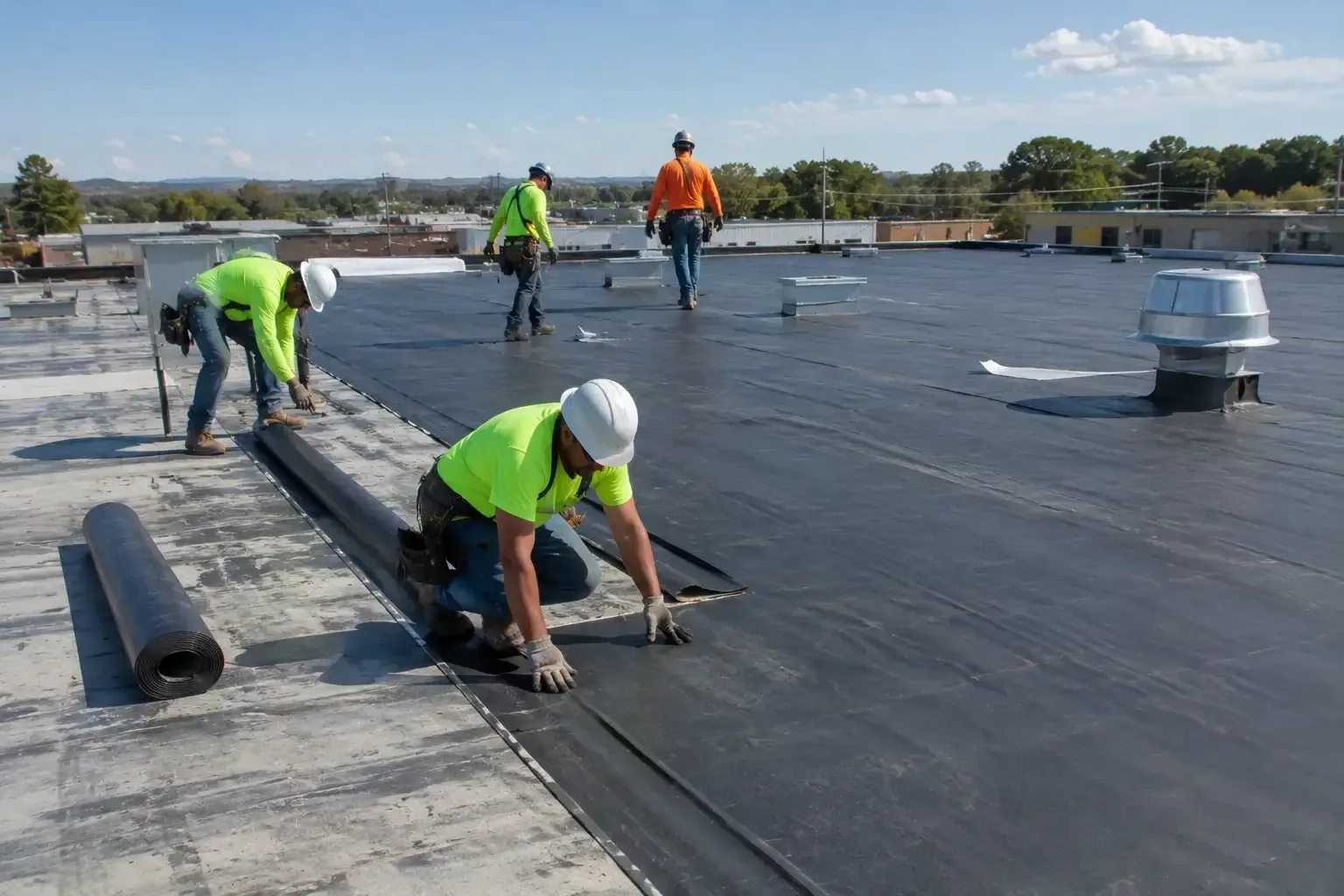
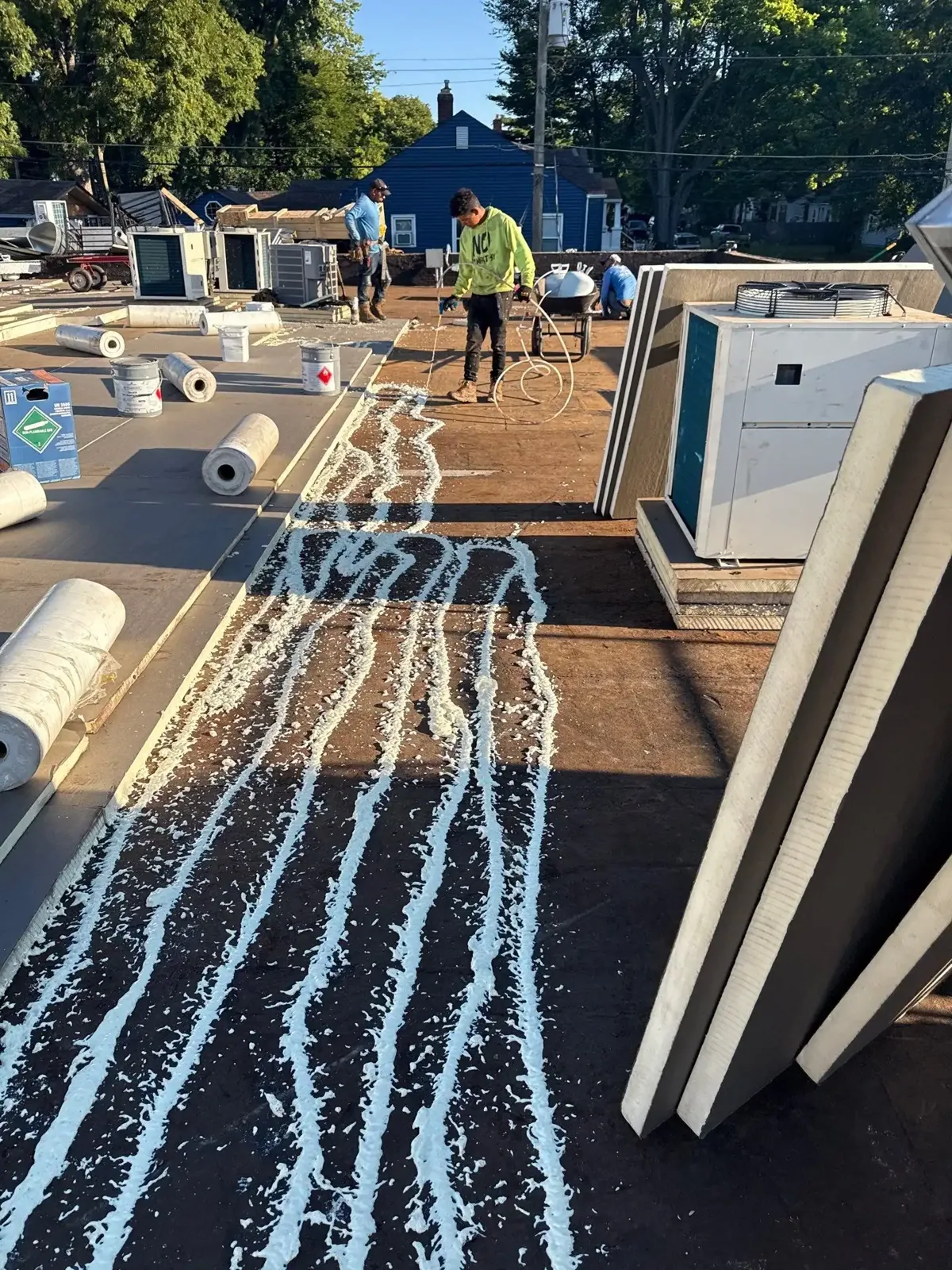
A tarp is the right answer when the damage is localized, the surface is rough or the weather is too cold or wet for adhesives, since it can go on quickly and be secured mechanically. It is a short-term measure, and it is vulnerable to wind that gets under its edges. A temporary membrane patch is more durable and is appropriate when the surface can be cleaned and the temperature allows bonding, and it can protect a roof for weeks instead of days. Large openings from structural failure, such as a collapsed section or a failed panel, may call for a combination, with a temporary closure over the opening and a tarp over the surrounding area. We choose the lighter option that will survive until the permanent repair can be made, and we tell you how long we expect it to last, so nobody mistakes a dry-in for a finished roof.
Which steps protect the building while the crew is on the way?
A few simple steps save a lot of damage. Move or cover anything that can be damaged by water, shut off power to affected circuits if it is safe to do so, and keep people away from areas where ceilings are sagging. Photograph the interior damage and any visible roof damage from the ground, and note the time the water began entering, since an adjuster may ask. Do not send staff onto the roof to attempt a repair. Roofs are slippery in rain and frost, and a damaged deck can fail under foot. If you carry a roof condition report or previous inspection photos, send them, because they show what the roof looked like before the damage and speed up both the repair and the claim.
How do Tri-Cities storms and cold set the terms of an emergency?
The region delivers a range of events. Hurricane Helene in September 2024 brought catastrophic flooding to Northeast Tennessee, a reminder of how much water one system can deliver to a roof that is already open. Washington County has recorded ten tornadoes, with five in 2011 and three on a single day, April 27, 2011, so a tornado is rare but not unknown. Winter adds snow loads, ice at drains and cold snaps, such as the low of minus 6F recorded at Tri-Cities Regional Airport on a Christmas in 1983. We respond to wind damage and snow and ice damage with materials suited to the temperature of the day, and we serve properties from the Med-Tech corridor to the Washington County Industrial Park.
What happens after the building is dry?
The temporary cover buys time, and the next decision is how to spend it. Once the opening is closed, we return to inspect the surrounding roof, measure the wet area with infrared, and write up the permanent repair. Sometimes that is a straightforward commercial roof repair to the damaged area. Sometimes the survey shows that wet insulation has spread so far that replacing a section or the whole roof is the more economical path. We put both options and their timing in front of the owner, and when insurance is involved, we provide the photographs and scope the adjuster needs, with roof insurance claim assistance on request.
Commercial Roofing Questions
How fast can a crew reach my building, and what decides it?
We answer around the clock, and the first conversation tells us what has happened so we can send the right materials. Distance, weather and road conditions set the arrival time: flooded roads, snow and ice can slow travel, and we will tell you plainly what to expect when you call.
What decides whether a tarp will hold through the next storm?
A tarp fastened to solid substrate with battens and sandbags can hold through ordinary rain and moderate wind. High winds that get under an edge can lift one, so we secure each tarp for the conditions forecast and recheck when the weather is severe.
Will the emergency work void my roof warranty?
Read against most warranty terms, emergency dry-in is treated differently from permanent repair. Temporary measures protect the building and are usually expected. We document what was done and keep the record, so that the permanent repair can be made to the manufacturer's requirements.
What does an emergency call cost?
The cost follows the size of the opening, the materials, the hour and the difficulty of access. We explain the response, the cover and the likely follow-up work before beginning, so the price is understood first. Emergency work done properly often reduces the total loss.
Do you handle the paperwork when an insurer is involved?
We supply what the insurer's process requires. That means dated photographs, a written description of the damage and cause, and an itemized scope for the temporary and permanent work. We do not negotiate on the carrier's behalf, but accurate records make the claim easier to document.
Related Roofing Pages
Storm Damage Roof Repair
How the work is scoped, phased and documented on Tri-Cities roofs.
Roof Condition Reports
What we check, what we recommend and how the crew keeps the building running.
Wind Damage Roof Repair
Conditions, options and next steps for commercial buildings in East Tennessee.