
Commercial Roof Repair in Johnson City, TN
Most membrane repairs fail at the edge of the patch rather than in the middle of it. The patch itself is fine, but the old membrane around it keeps moving as the roof warms and cools, and the stress that used to be spread across the whole sheet is now concentrated along a seam of new material against old. On a roof that sees freezing nights and sunny afternoons within the same week, that edge is flexed hundreds of times a season, and a repair made with the wrong adhesive, over a dirty surface, or in cold damp weather lets go long before the roof itself does. Good repair work is mostly preparation: cleaning, drying, matching the material to the membrane, and sealing the perimeter so that the stress has somewhere to go. In Johnson City, TN, that discipline is what keeps a repair budget from turning into a standing line item.
Why does a patch that looked sound in October open by February?
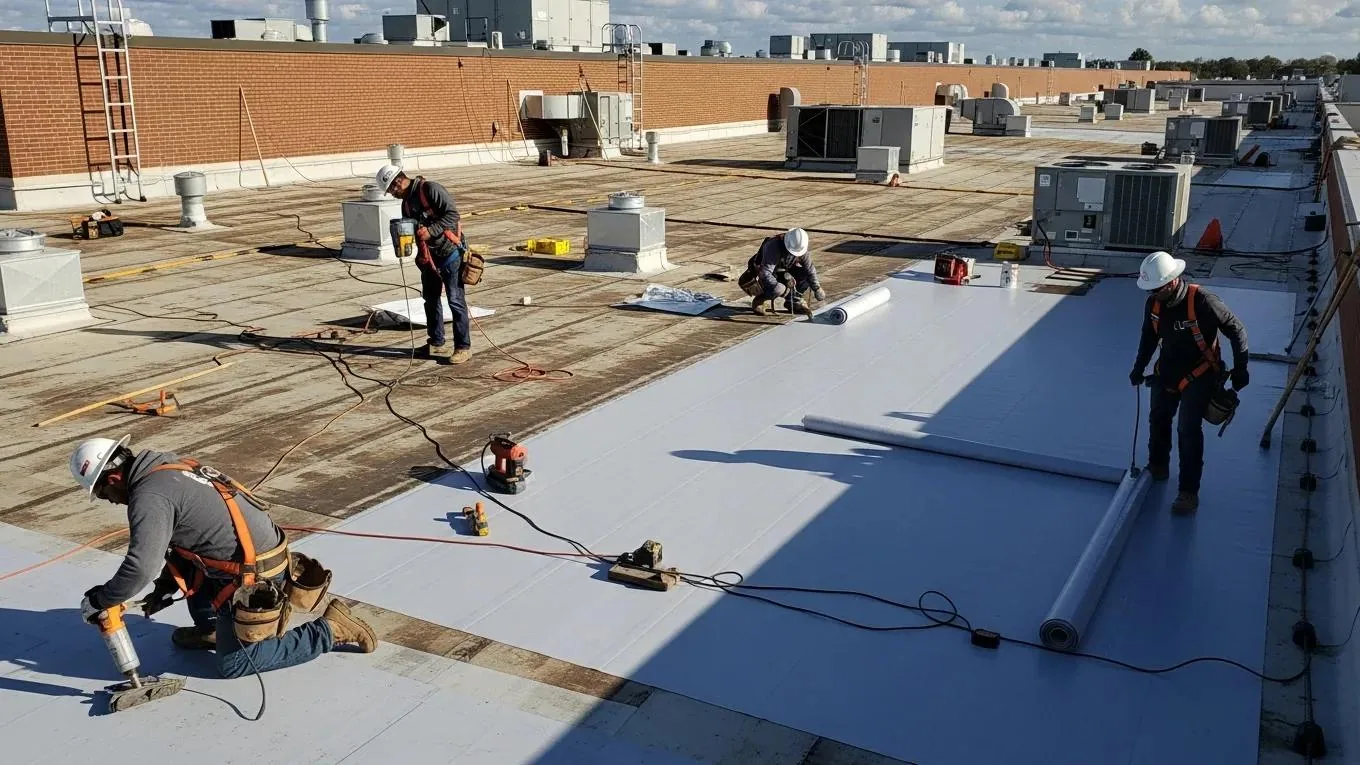
Cold is rarely the villain on its own. What does the damage is the cycle. A dark membrane on a sunny winter afternoon can be far warmer than the air, then drop below freezing after sunset, and every degree of that swing expands and contracts the sheet. A seam that was welded or adhered under good conditions can absorb that movement. A seam made over residue, moisture or an unsuitable primer cannot, and it begins to peel back from its leading edge. Meltwater then enters the opening, refreezes and pries it further apart. We repair against that mechanism. Surfaces are cleaned and, where the membrane type requires it, prepared with the correct cleaner, patches are rounded so corners do not lift, and edges are sealed in a way that matches the original system rather than simply covering it.
Get a repair scope written before the next freeze
Call Commercial Roofing Johnson City to have your roof walked and the defects listed, photographed and priced line by line. You can then decide which repairs to make now and which to plan.
What actually gets repaired on a commercial roof?
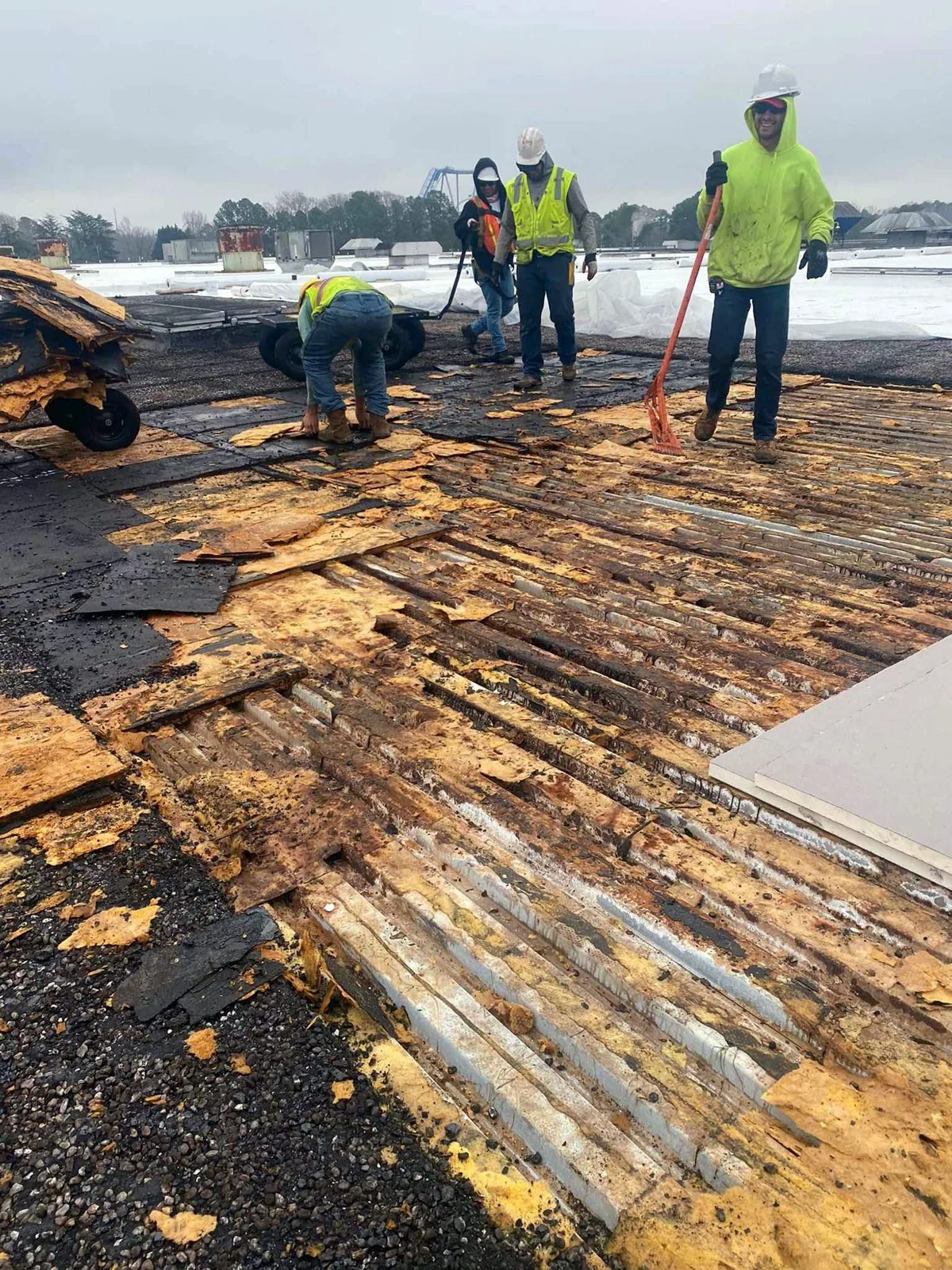
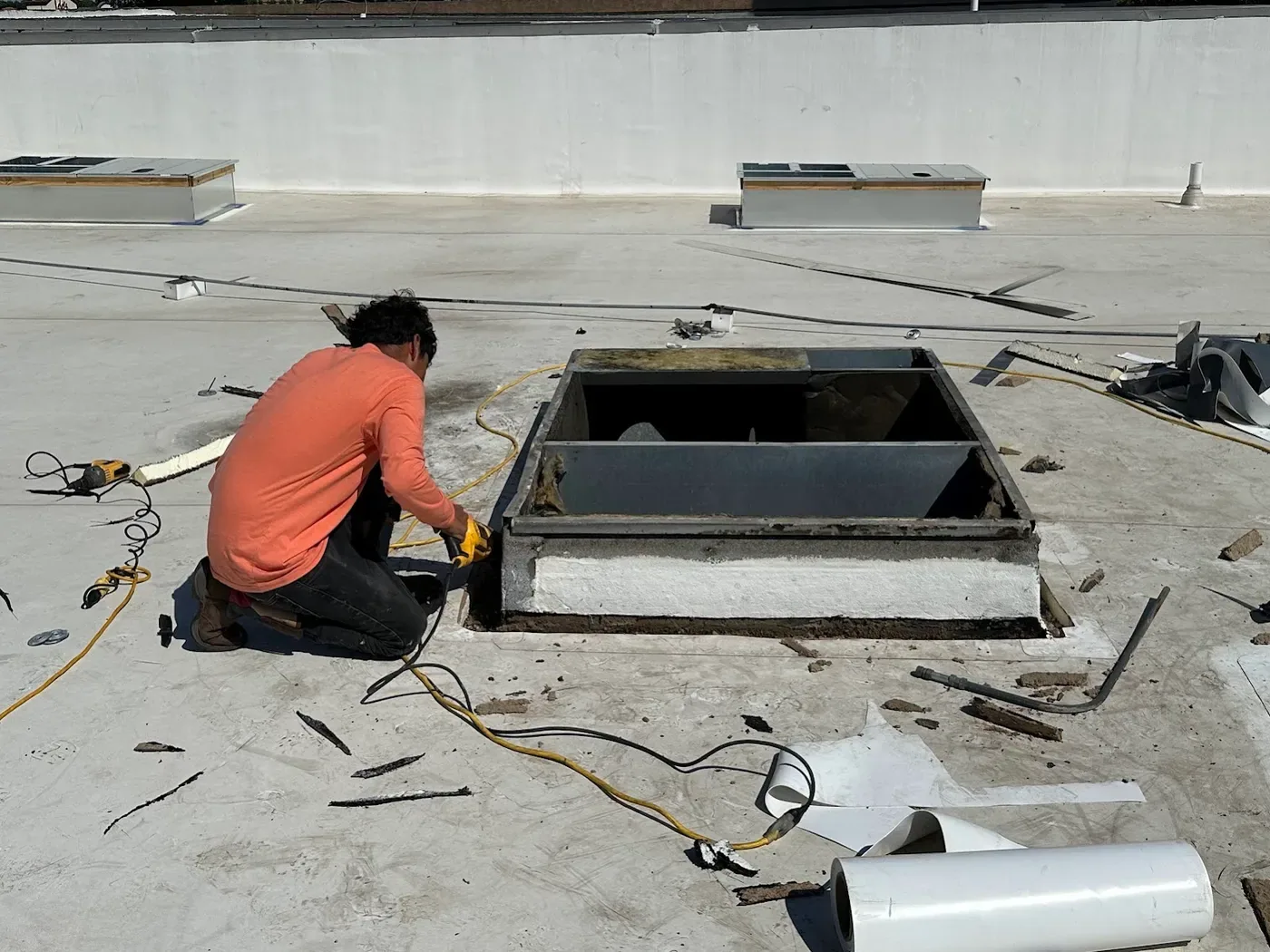
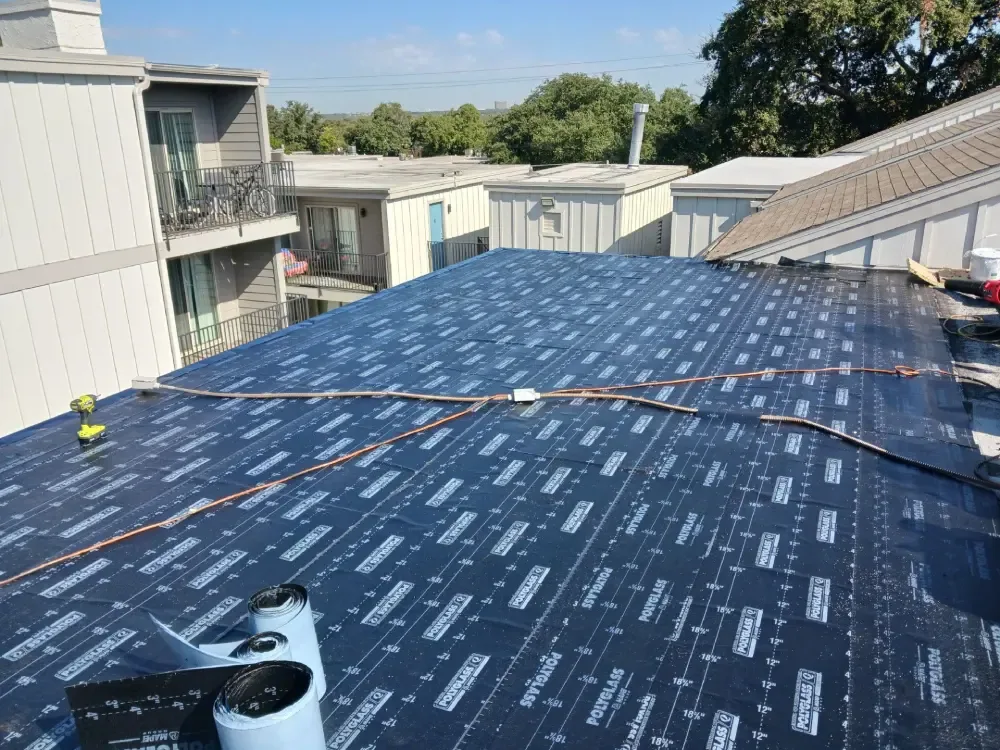
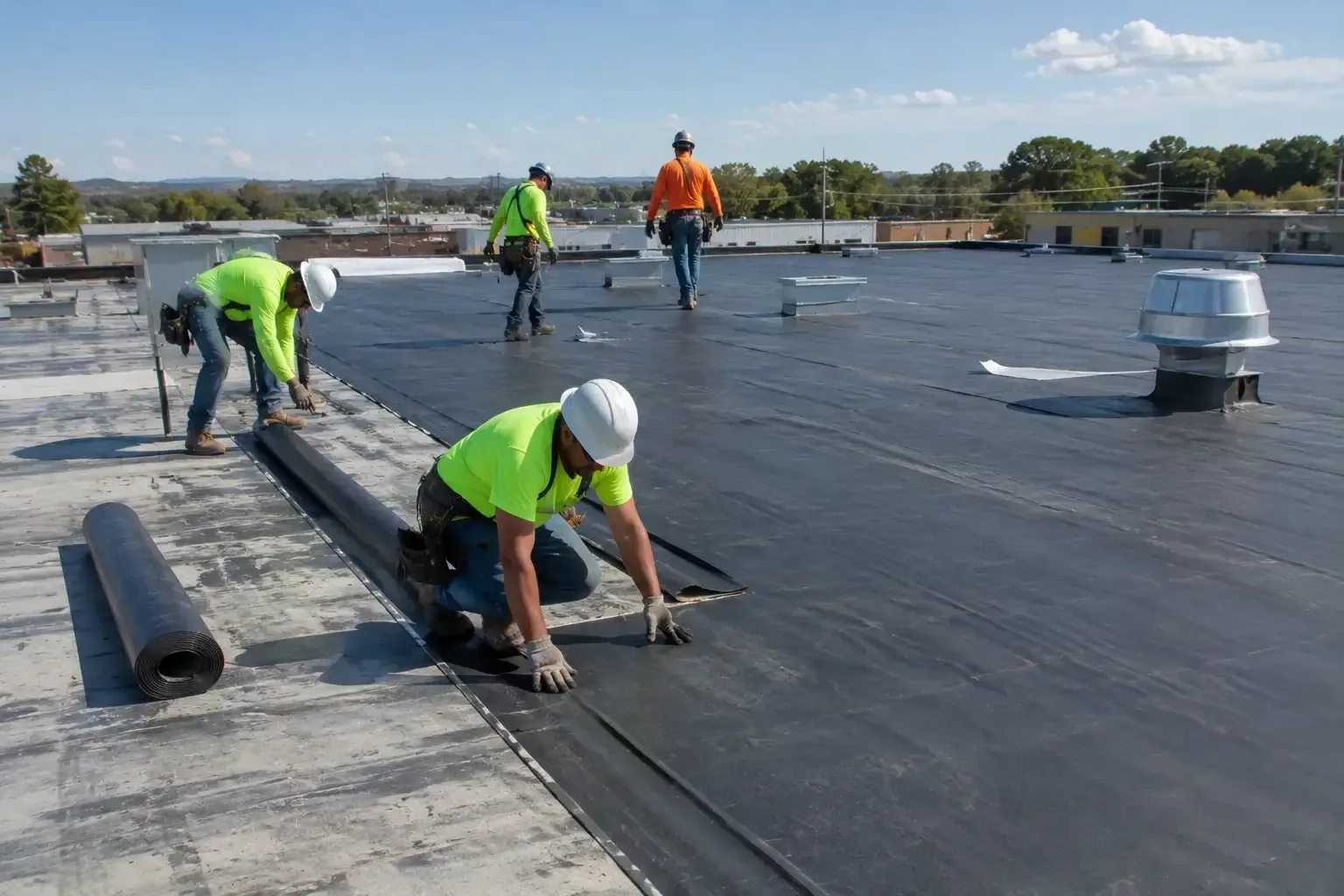
The defects we find fall into a handful of families, and each one has its own method. Open laps and failed field seams on single-ply roofs are cleaned and re-welded or re-adhered, the core of any seam failure repair. Base flashings that have shrunk, split or pulled away from curbs and walls are reworked or replaced, as in any flashing failure repair. Punctures from dropped tools, hail or foot traffic are patched on the membrane type's own terms, and a membrane puncture repair reaches below the surface when the insulation beneath has been wetted. Pitch pockets, pipe boots, drain clamps and sealant joints are replaced instead of re-caulked, because sealant alone is a short-term answer. On metal roofs, we replace failed fasteners and washers, re-seal laps and correct panel movement at ridges and trim.
How do you tell a repair that pays back from one that only postpones?
A repair pays back when the surrounding roof still has service life to protect. A single failed seam on a membrane with plenty of years left is a small expense, and fixing it keeps water out of the insulation and the deck for the rest of that membrane's life. The same repair on a roof with widespread shrinkage, brittle membrane or wet insulation is a bandage over a larger condition. We separate the two by checking the area around each defect, not just the defect: moisture readings, membrane flexibility, the age and condition of adjoining seams, and the history of earlier repairs. When the numbers favor patching, we repair and document it. When they do not, we say so and bring the owner the cost of commercial roof replacement alongside the repair, so the choice is made with both numbers visible.

What does a planned repair visit look like from your side?
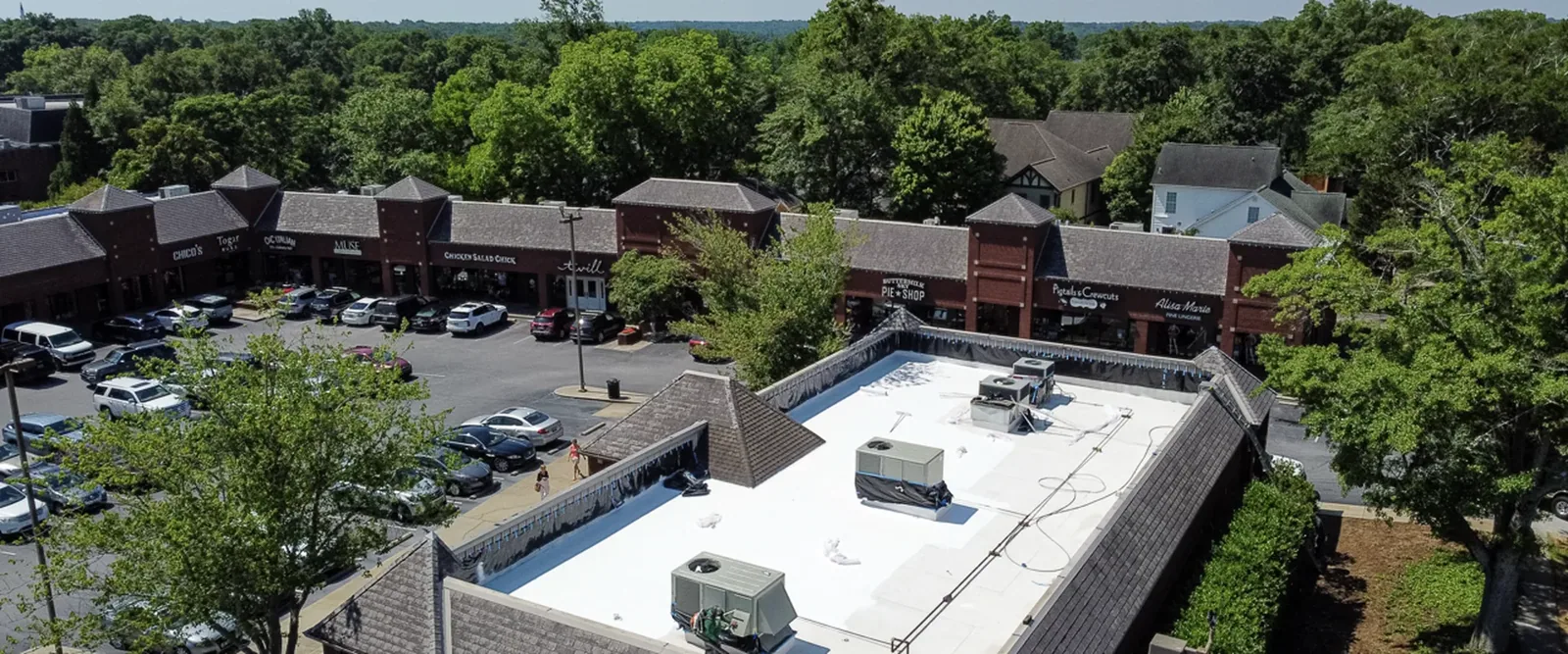
Planned means the repair scope is written before anyone climbs the ladder. We walk the roof, photograph each defect with a location mark, note the membrane type and condition, and agree on a list the facility team can approve line by line. Materials are ordered to match the existing system, since a patch that does not bond to the membrane beneath it is worse than none. Work is scheduled for dry weather, with a fallback day, and the crew leaves the roof cleaner than they found it, with a photo record of every completed repair. Where a property carries a preventive roof maintenance program, the same repairs are folded into the visit schedule, which turns an unpredictable repair budget into a predictable one.
What do historic and industrial Johnson City buildings ask of a repair?
Johnson City carries a mix that rewards careful matching. The Mountain Home VA campus dates to 1904 and is now a National Historic Landmark District, and many of its original Beaux Arts buildings remain in use, so a roof there starts with learning what is up there before a patch is chosen. East Tennessee State University runs ten colleges and schools across 366 acres, and buildings of that many uses call for a repair matched to the membrane actually on each roof. In the Washington County Industrial Park the question is how far a small defect can carry water through the insulation before it shows inside a production building. Seasonal timing matters in all three. Spring and fall are the best windows for adhered and welded repairs, and a winter repair is usually a temporary seal until conditions allow a proper one.
A useful repair record is organized by roof zone rather than by whoever noticed the leak. Label the area, mark nearby drains and equipment, and distinguish the entry point from the interior stain. That lets the next inspector compare the same seam or curb instead of starting over. It also keeps a small repair from being mistaken for a complete roof assessment when a budget committee asks what remains at risk.
Commercial Roofing Questions
How do I decide between repairing a section and treating the whole roof?
Defects that cluster in one area, such as a drain, a curb or a single seam line, call for a repair of that area. If seams, flashings and field membrane are all showing wear at once, repairing piece by piece costs more over time than a coating or replacement decision for the whole roof. A written inspection shows which pattern you have.
Which factor decides how long a repair will last?
Surface preparation and material match decide it. A repair made on a clean, dry membrane with the correct primer, adhesive or weld parameters can last as long as the surrounding roof. A repair made on a damp or dusty surface, or with a generic mastic, may fail within a season. We check the membrane type and condition before choosing a method.
What should I expect a planned repair to cost?
The number of defects, the type of membrane, whether insulation has to be replaced and how difficult the roof is to reach all move the price. We write the repair list with locations and photos so you can see what each line covers, and so you can compare it to the cost of the larger options when the roof is near the end of its life.
Does a repair affect my membrane warranty or manufacturer requirements?
Many manufacturer warranties require that repairs use approved materials and methods, and some require notice before work begins. Send us the warranty paperwork if you have it, and we will plan the repair to the manufacturer's requirements and keep the documentation you may need later.
Which repairs can wait and which cannot?
Anything letting water into the insulation, such as an open seam or a failed flashing, should be done promptly. Surface cracking or minor wear can often wait for the next planned visit, as long as it is documented and watched. We sort the list so urgent items are separated from items that can ride into the next budget cycle.
Related Roofing Pages
Split and Open Seam Repair
How the work is scoped, phased and documented on Tri-Cities roofs.
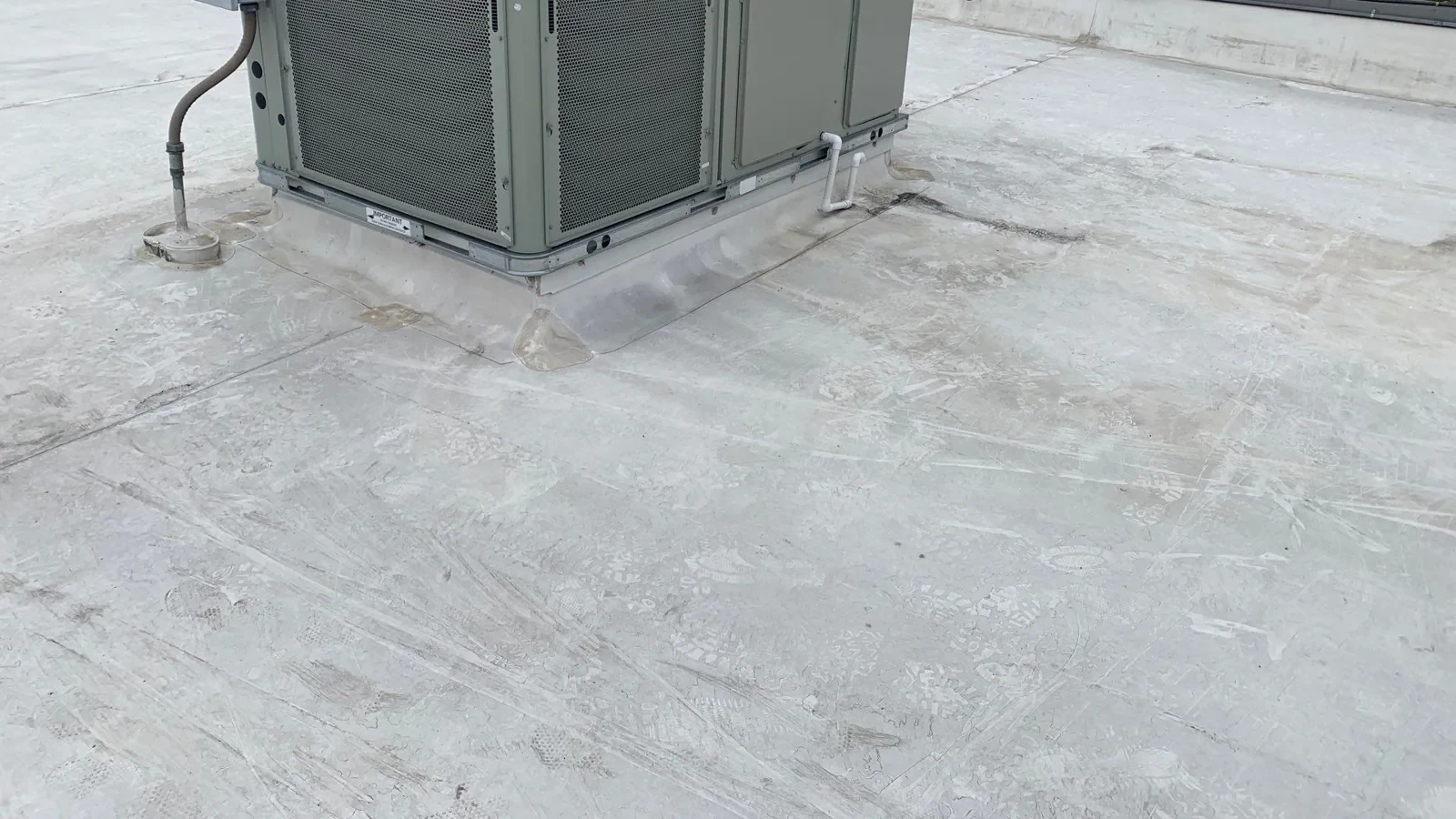
Failed Flashing Repair
What we check, what we recommend and how the crew keeps the building running.
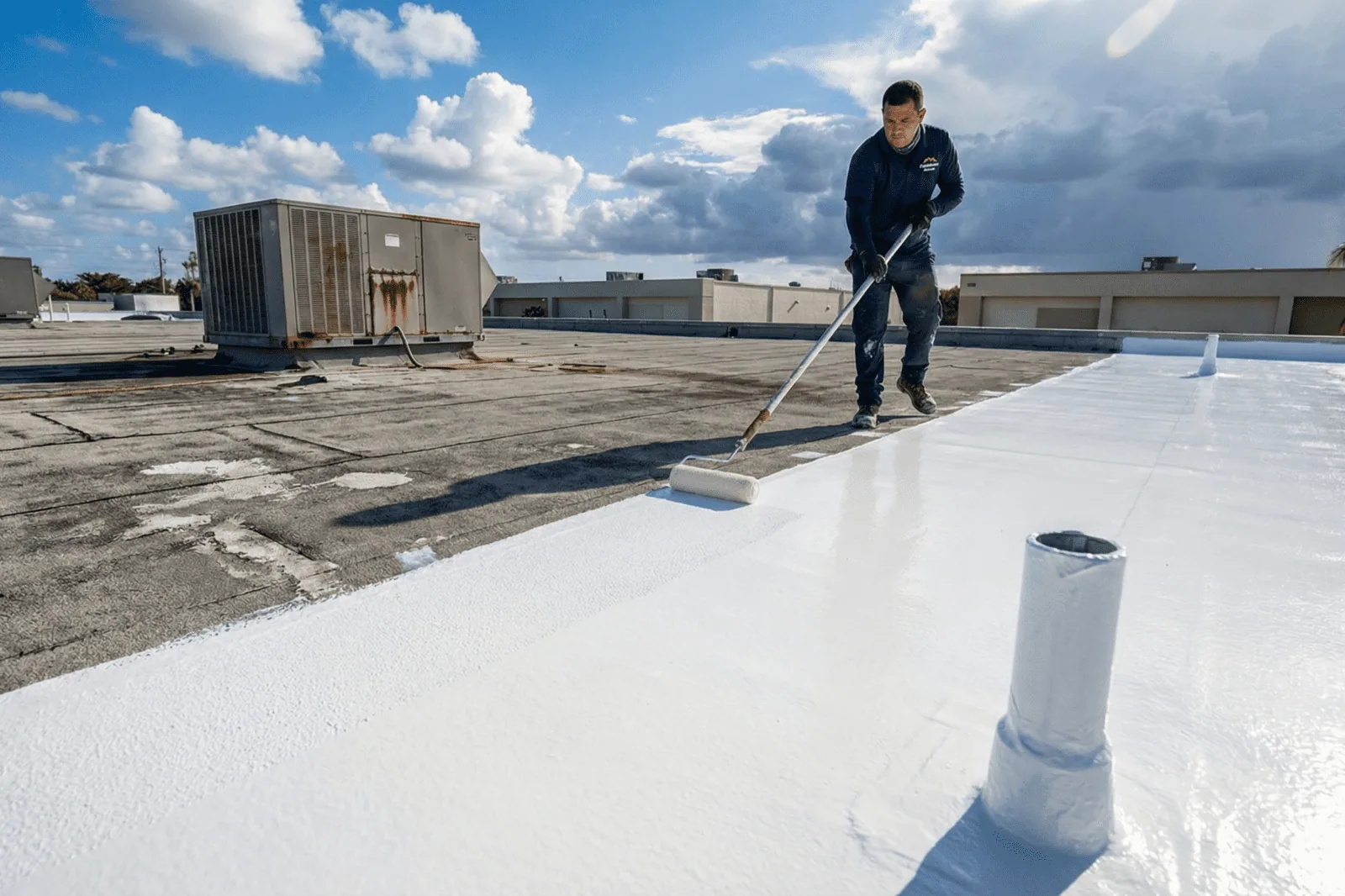
Membrane Puncture and Foot-Traffic Damage Repair
Conditions, options and next steps for commercial buildings in East Tennessee.