
Commercial Roofing in Bristol, TN
A single-ply membrane is laid flat and relaxed, and it does not stay that way. Through a few years of cold nights near the mid-20s and warm afternoons in the mid-80s, as the weather runs in Johnson City, TN, the sheet draws back a little, and wherever it is pinned to a wall, a curb or a pipe, that small shrinkage pulls on the flashing until a termination bar loosens or a corner seam opens a hairline. Nothing shows from the parking lot. Water finds the new gap, wets the insulation behind it, and spreads sideways under a membrane that still looks sound from above. In Bristol, TN, the buildings that live with this include the headquarters of Alpha Metallurgical Resources, the buildings of King University, and the event property around Bristol Motor Speedway on Speedway Boulevard. A flashing pulled loose is a modest repair on the day someone finds it and a section of wet insulation a few winters later, and the gap in cost between those two days is what we help an owner measure.
What do offices, a campus and event property ask of a roof in Bristol?
Bristol, TN sits inside the Kingsport-Bristol metro, and its roofs answer to different calendars. An office roof has to protect occupants and support a defensible capital plan. King University follows an academic calendar, making summer a crowded work window. Bristol Motor Speedway, a major event venue near US 11E, and Bristol Dragway also hosts NHRA national events, and both venues run on dates nobody can move for a roofer.
Each calendar shapes the work differently. Where crowds come and go, technicians for lighting, signage and mechanical units visit a roof more often than they visit a quiet office roof, and every visit is a chance for a dropped tool or a worn path across the membrane. We start by learning which dates are fixed, then lay the roof schedule into the gaps.
Gather the condition data before the next cold snap tests the details
Call Commercial Roofing Johnson City to arrange a walk of an office, campus or event property roof in Bristol, TN. You will receive photographs, moisture findings and a ranked scope to weigh against your calendar, and emergency response runs around the clock.
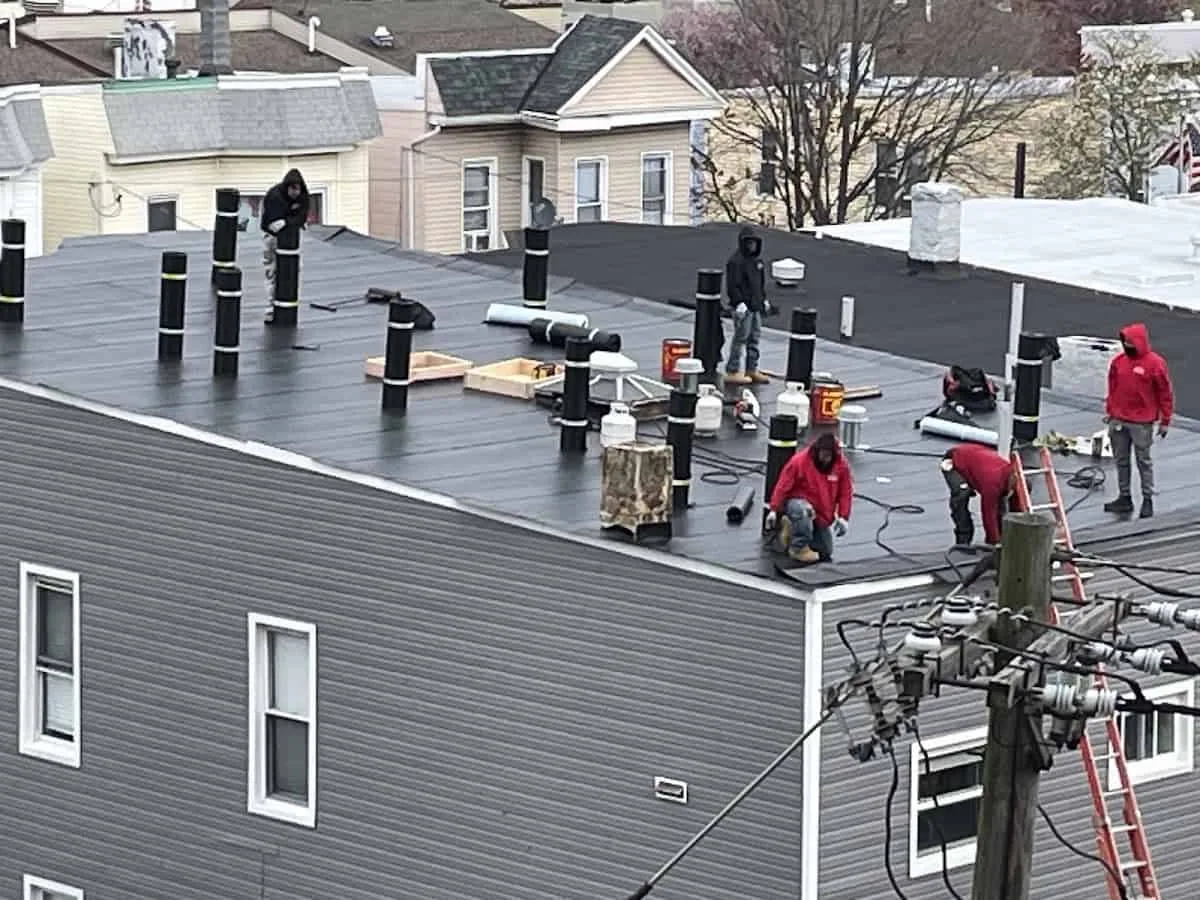
Why does a flashing fail before the field of the membrane does?
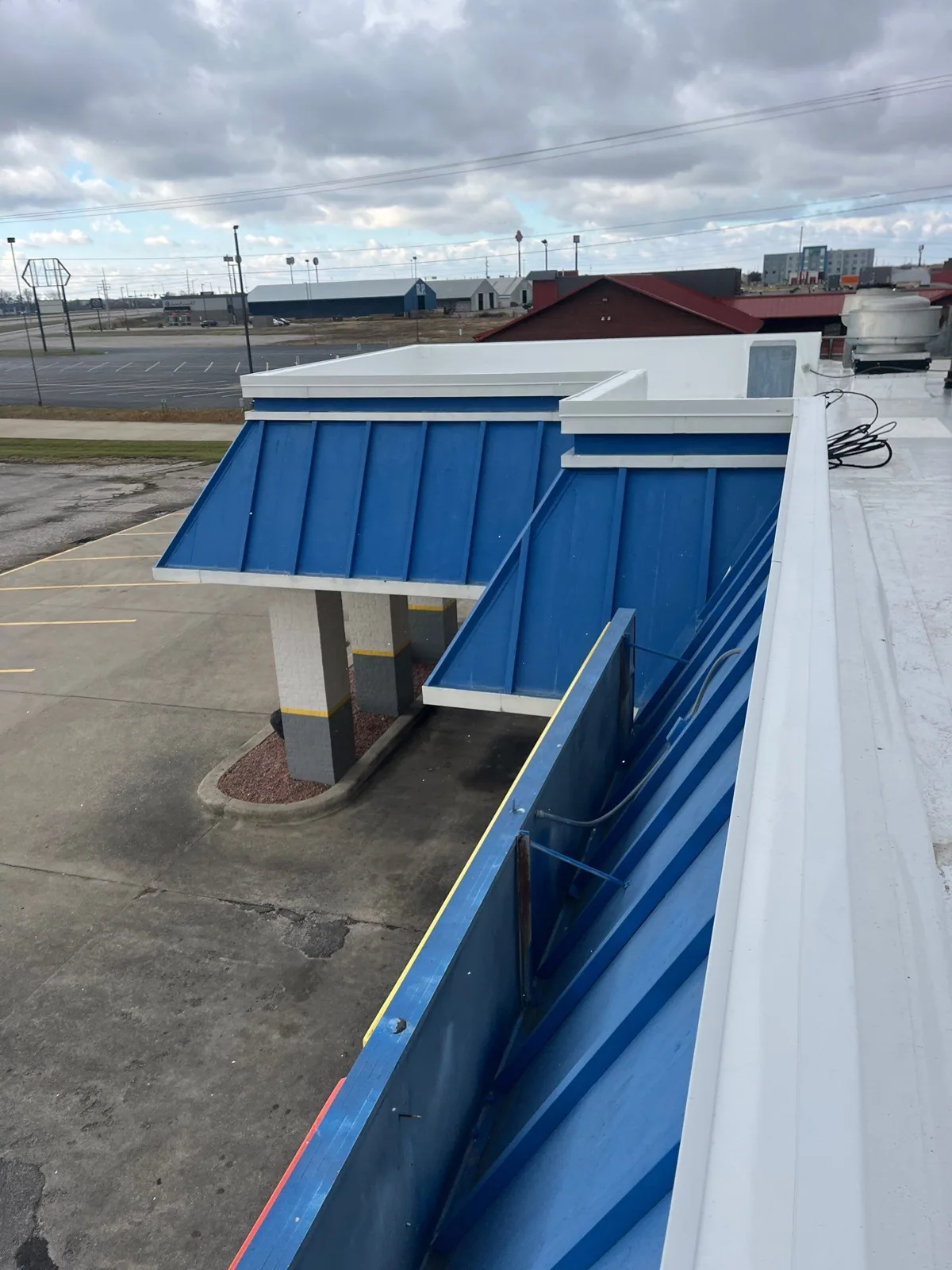
Because the field moves freely and the details do not. A membrane across an open expanse can shift a few thousandths of an inch with each temperature swing and nobody notices, but the same movement stops dead at a parapet wall, a unit curb or a pipe penetration, where the sheet is clamped or glued to something that does not move with it. The stress piles up there. A termination bar pulls its fasteners, the sealant along its top edge splits as it ages in the sun, and a corner under tension lifts from its adhesive.
Winter makes it worse, because a cold membrane is stiffer and draws back hardest when the nights are sharpest. Johnson City averages winter lows near 25F, and the Tri-Cities airport at Blountville has logged a Christmas low of -6F, so roofs across the region take hard cold snaps even when the average winter is mild. When a flashing opens in that cold, the meltwater that enters freezes in the gap and widens it. That is why a loose termination belongs in this season's repairs. Left another winter, the same detail pulls a section of insulation and cover board into the scope.
What does a first walk of an office or campus roof tell an owner?
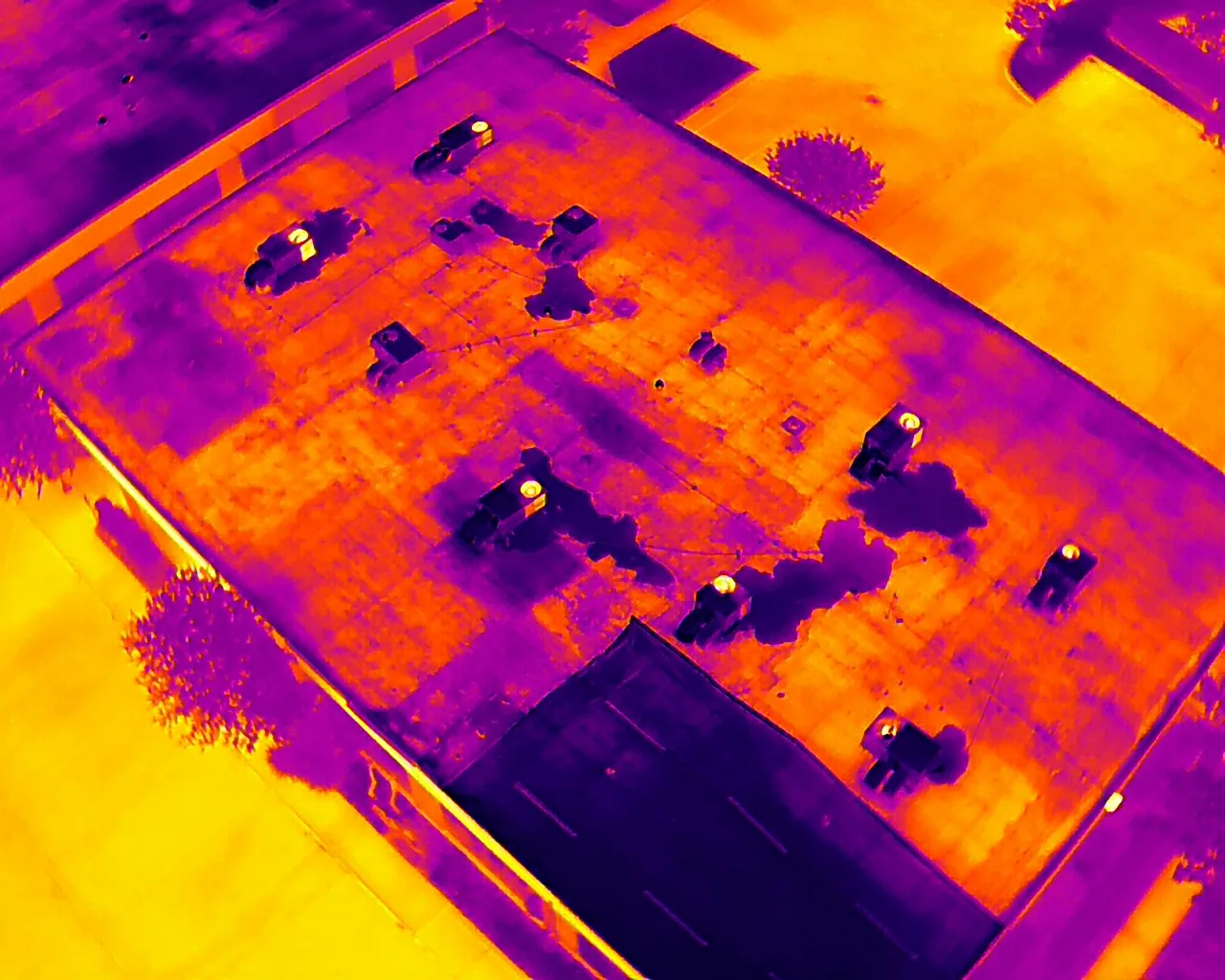
We begin at the edges and the details, since that is where movement concentrates. Every wall termination, curb, drain and pipe boot gets looked at for loose bars, split sealant, lifted corners and the slight wrinkles in a sheet that show where it has been pulled. Then we cross the field for soft spots underfoot and fasteners that have worked up, and we photograph each defect with its location marked so the next walk can be compared to this one. On a roof the owner is unsure about, an infrared moisture survey, flown or walked after sunset while wet insulation still holds the day's warmth, shows whether water has traveled beyond what the eye can see.
What the owner receives is a written roof condition report: photographs, a plan of the roof with each finding marked, and a ranked scope that separates items for this year's maintenance line from items that belong in a capital request. A facilities manager can put that report in front of a finance team without translating it, which is usually where a deferred roof finally gets a budget.
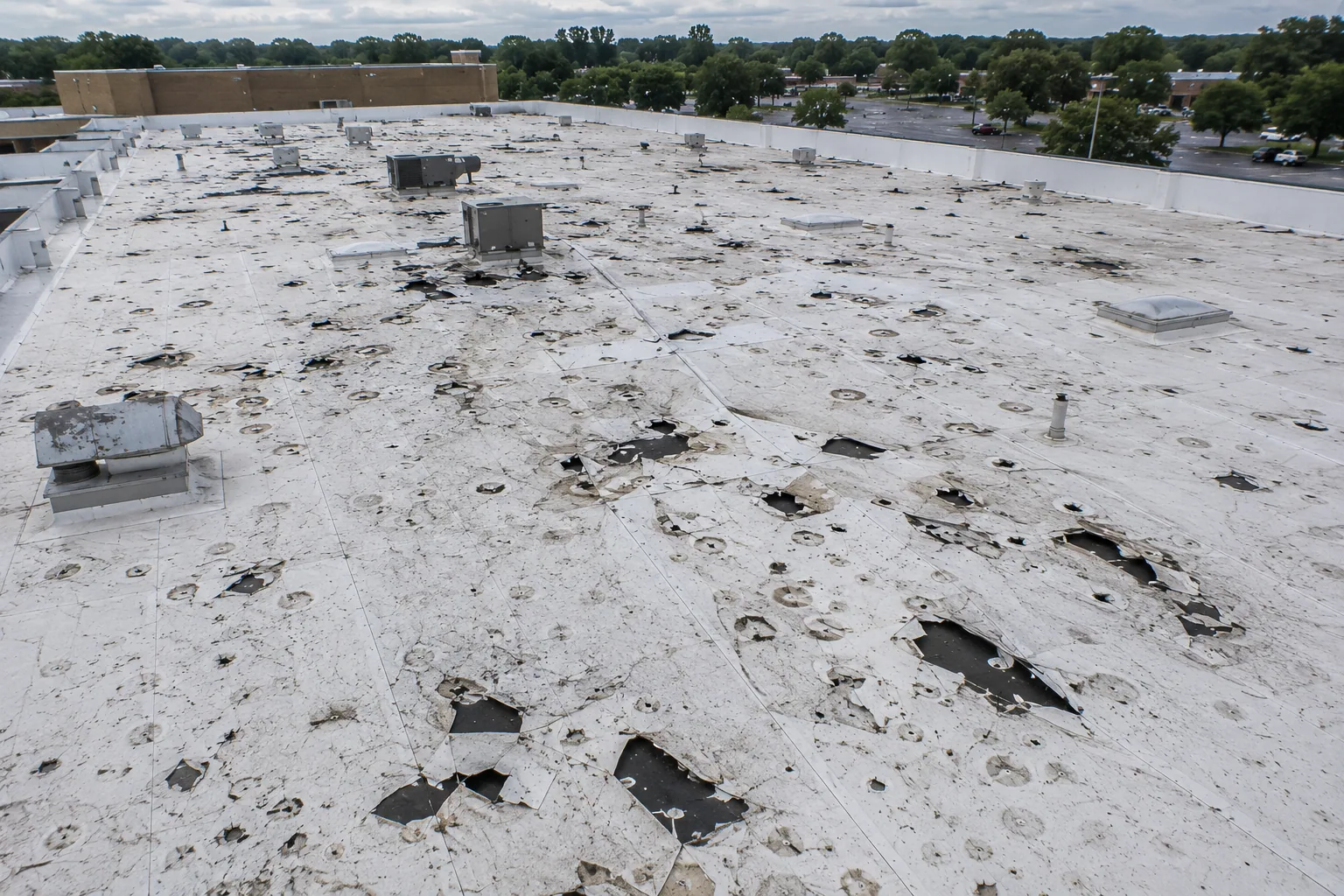
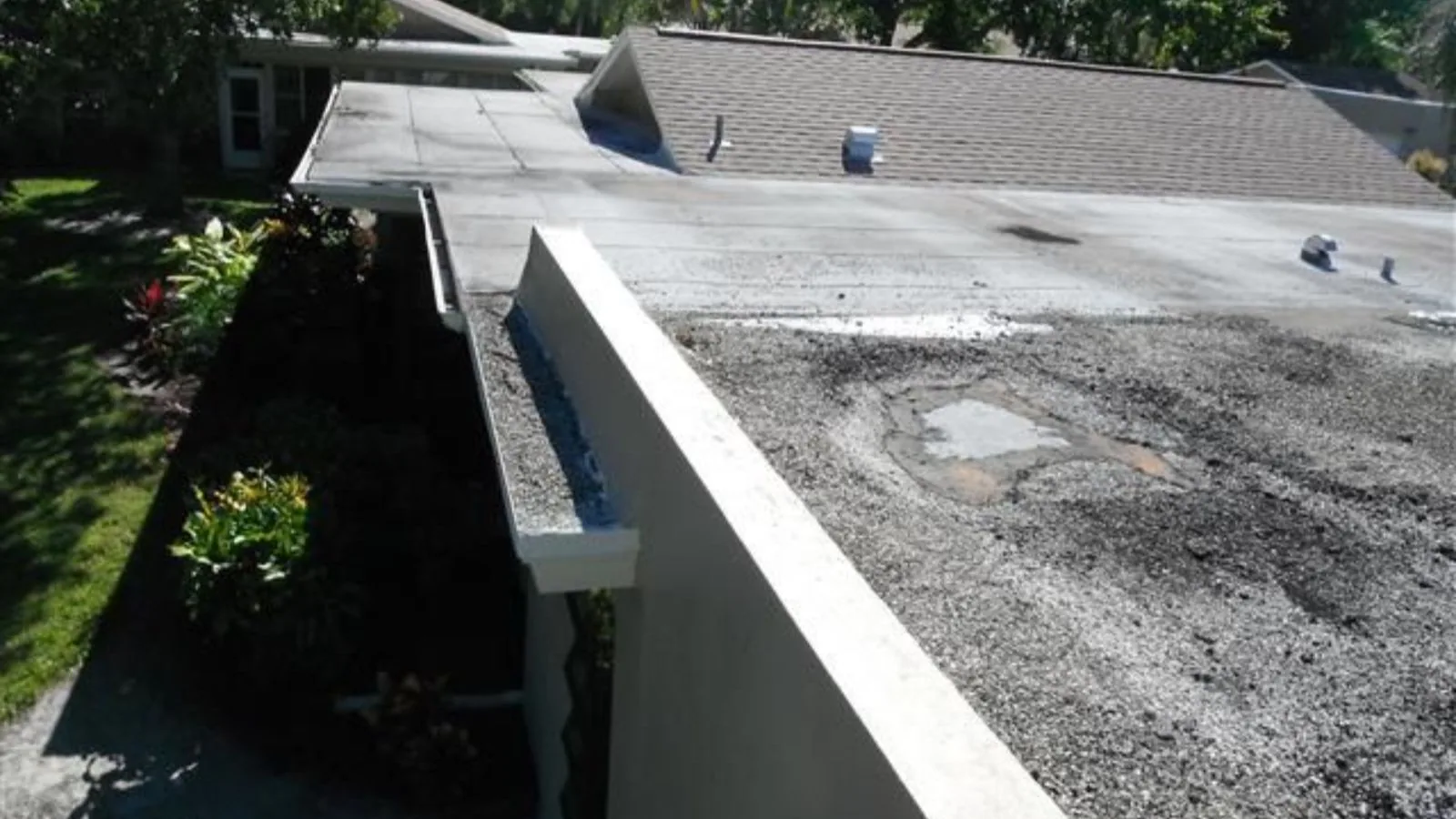
Should an owner repair the terminations, restore the membrane or replace the assembly?
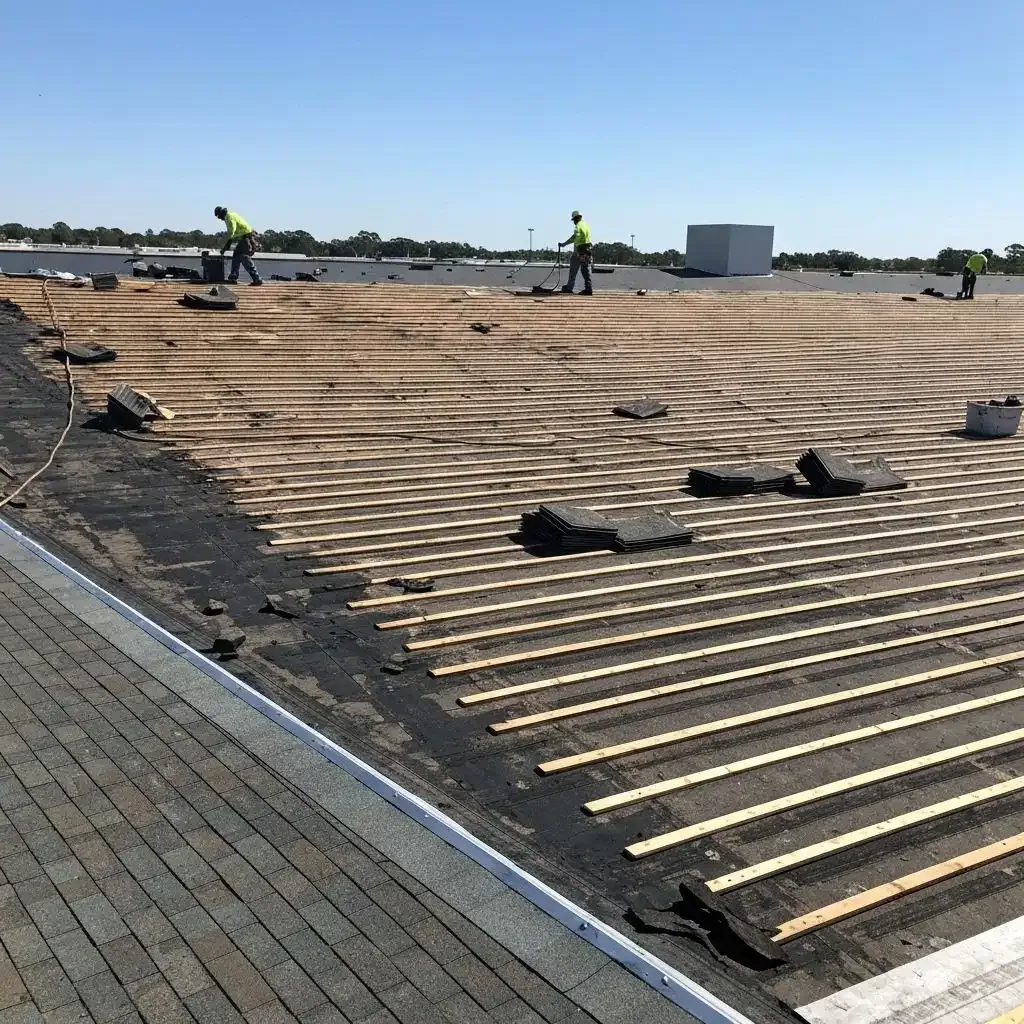
The insulation answers it. If the readings show dry board and a sheet with service life left, repairing the terminations and resealing the penetrations returns the roof to watertight for a small part of replacement cost, and a restoration coating can extend a membrane that is clean, attached and dry. If moisture has spread across a section, the cheaper-looking patch buys little, because wet insulation carries water into the next winter and gives up most of its thermal value while it does. Then the options narrow to a recover over dry insulation where the deck and board allow it, or removal and replacement of the wet area.
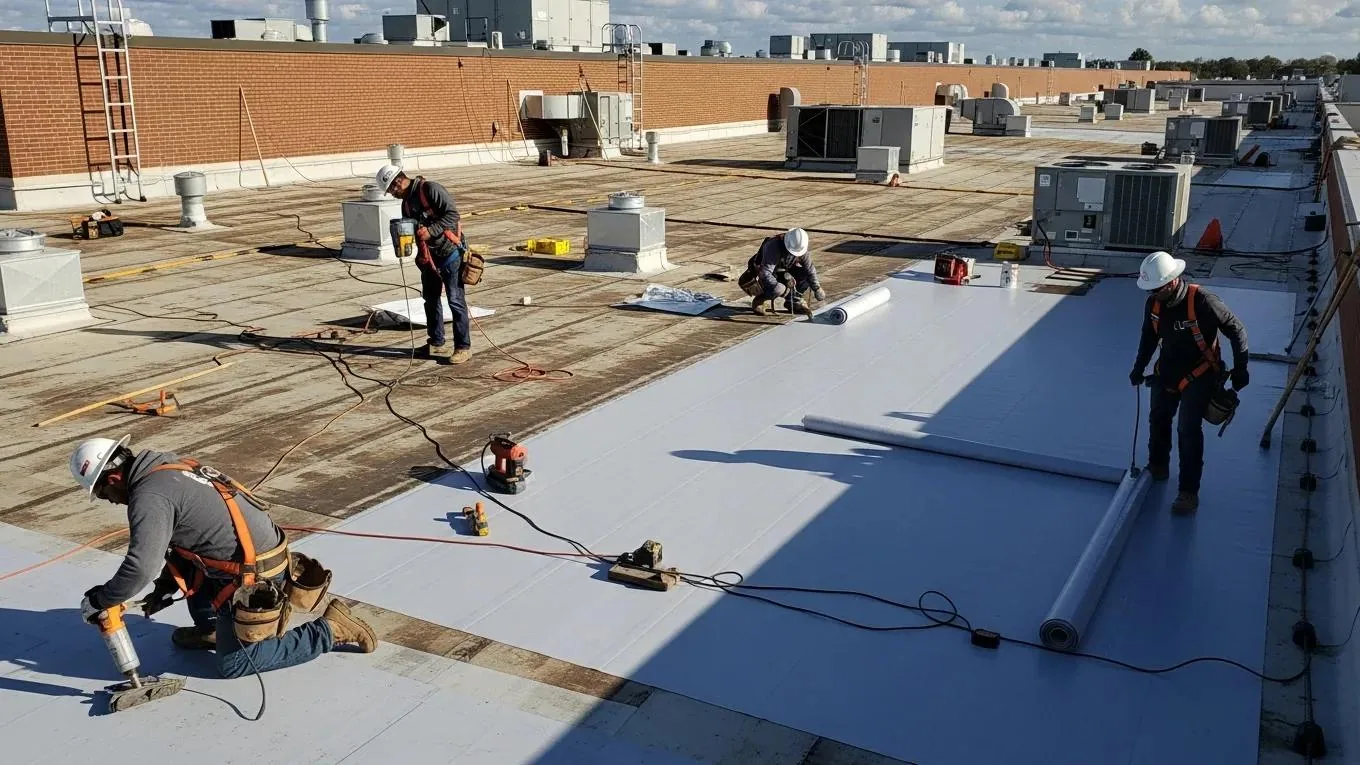
Membrane choice follows the building. An office roof with modest equipment and a wish for a reflective surface often suits TPO, while a roof that technicians walk every week may call for a tougher, more forgiving sheet. We lay the options side by side with their cost drivers: depth of tear-off, insulation condition, equipment disconnects, access and crane time.
How do you schedule a roof around a race weekend or a semester?
You work backward from the dates that cannot move. Event dates at the speedway and the dragway are set far ahead of the season, and a university sets its terms a year out, so the owner knows the quiet stretches before a roofer does. We ask for those dates first, then fit survey, scope, material orders and crew time into the gaps, with a margin for weather, because a membrane glued or welded in the rain has to be redone. An owner who decides in autumn for a summer start has far more room than one who decides in May.
An occupied building adds its own sequence: the crew tears off no more roof than it can dry in before the end of the shift, staging stays away from entrances. Bristol, Tennessee and Bristol, Virginia meet across State Street, so an owner with buildings on both sides can sequence the two roofs together.
Owners with facilities across the state line can keep the same photo and condition-rating method on a building in Abingdon, Virginia.
Commercial Roofing Questions
Can a roof with a pulled flashing wait until spring?
Only if the opening is sealed for the winter. A temporary patch of membrane or sealant keeps meltwater out of the gap, and the permanent repair can then be set for dry weather when adhesives and welded seams cure properly. Left open, the gap fills, freezes and widens until wet insulation joins the scope.
What does wet insulation cost an office owner beyond the leak itself?
Cost climbs in three places at once. Saturated board loses most of its thermal value, so heating and cooling run harder, the steel deck beneath it begins to corrode, and the weight of trapped water adds load the structure was not sized for.
How does an event calendar change a roofing schedule?
Fixed dates set the pace. Work on a property that fills for racing or drag events has to be finished, dried in and cleaned up before the crowds arrive, so the roof is broken into sections that can each be closed in a single shift or a few. Spare days are held for weather.
Should a university start a roof program with its oldest building?
Start with the wettest one instead. Moisture readings rank buildings by urgency more reliably than a construction date. A roof with dry insulation can be maintained and deferred on purpose, while a younger roof with a failed flashing may need money sooner.
Is a coating a sensible choice on a roof that is already leaking?
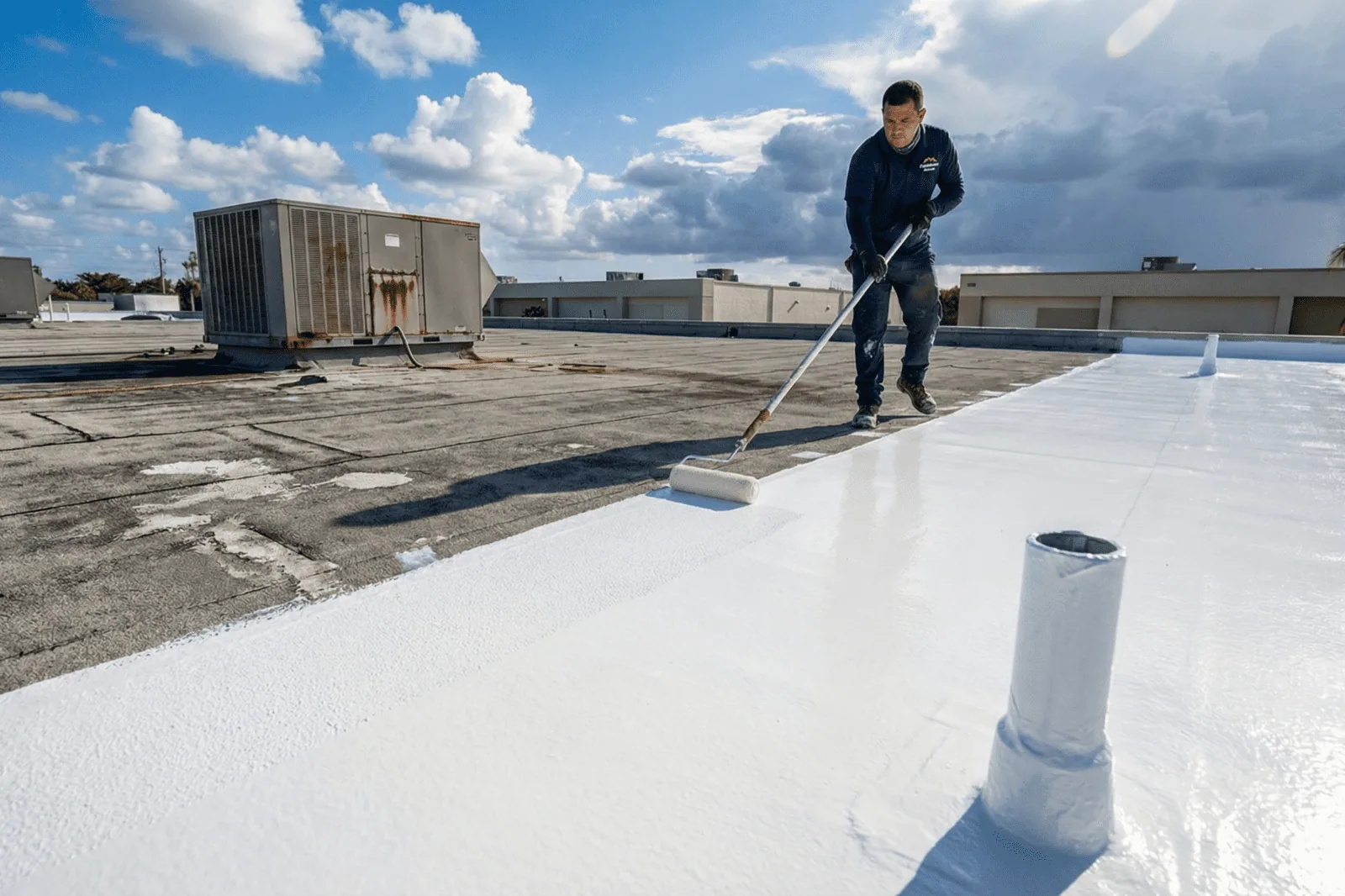
Rarely, until the wet insulation has been found and dealt with. Coating over saturated board seals the water in, and the leak returns at the next weak point. Once the membrane is attached, the insulation is dry and the leak traces to a repairable detail, a coating can restore the surface and defer replacement.
Related Roofing Pages
Roof Insulation, Tapered Systems and Cover Board
How the work is scoped, phased and documented on Tri-Cities roofs.
Infrared and Core-Cut Moisture Surveys
What we check, what we recommend and how the crew keeps the building running.

Roof Condition Reports
Conditions, options and next steps for commercial buildings in East Tennessee.