
TPO Roofing in Johnson City, TN
A white TPO sheet gives up its heat to a clear January sky and contracts by morning, then swells back as the afternoon sun reaches it, and the weakest points in the assembly absorb that movement every day of the cold season: the heat-welded seams, the corners where the sheet turns up a parapet, and the plates of any fasteners beneath. In Johnson City, TN, where the average winter night bottoms out near 25 degrees Fahrenheit, a flashing installed taut can begin to creep off its termination within a few winters, and the small gap it leaves lets meltwater reach insulation that already sits close to its dew point. An owner who finds the gap during a scheduled review pays for a seam repair on dry insulation, and an owner who finds it from a stained ceiling tile often pays for a replacement that had been pencilled in for later.
What holds a TPO seam together through a Tri-Cities winter?
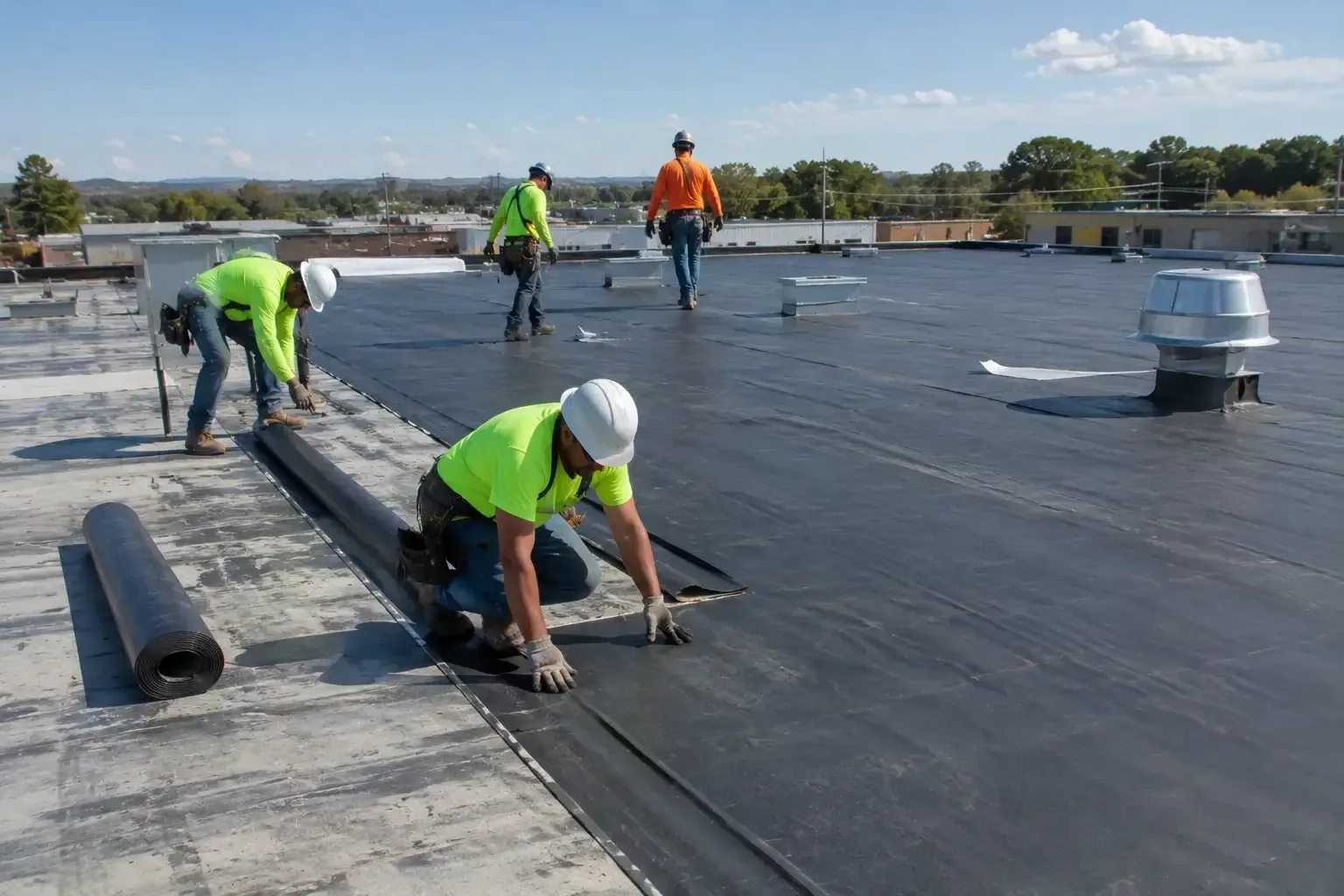
A TPO seam is not glued. A hot-air welder softens the surfaces of two overlapping sheets until the polymer on each side melts together, and the cooled joint behaves as one continuous layer. The joint needs a clean dry surface above all, so a seam made over frost, dust or a film of moisture can look closed from the walking surface and still peel when the sheet pulls on it in January. We probe the seam edge with a pick during an inspection, since a probe finds the open edge that eyes miss, and we read a pattern of open seams along one side of a building as evidence of tension in the roof rather than as isolated bad luck. When the sheet is shrinking and pulling, the answer is relieving the stress and refastening the terminations as part of a proper seam failure repair, not welding a cap strip over the gap and walking away.
Put condition data on the table before the replacement budget is set
Call Commercial Roofing Johnson City and we will probe the seams, scan for moisture and write up what the TPO can still do. You will have the evidence to choose between repair, recovery and a planned replacement.
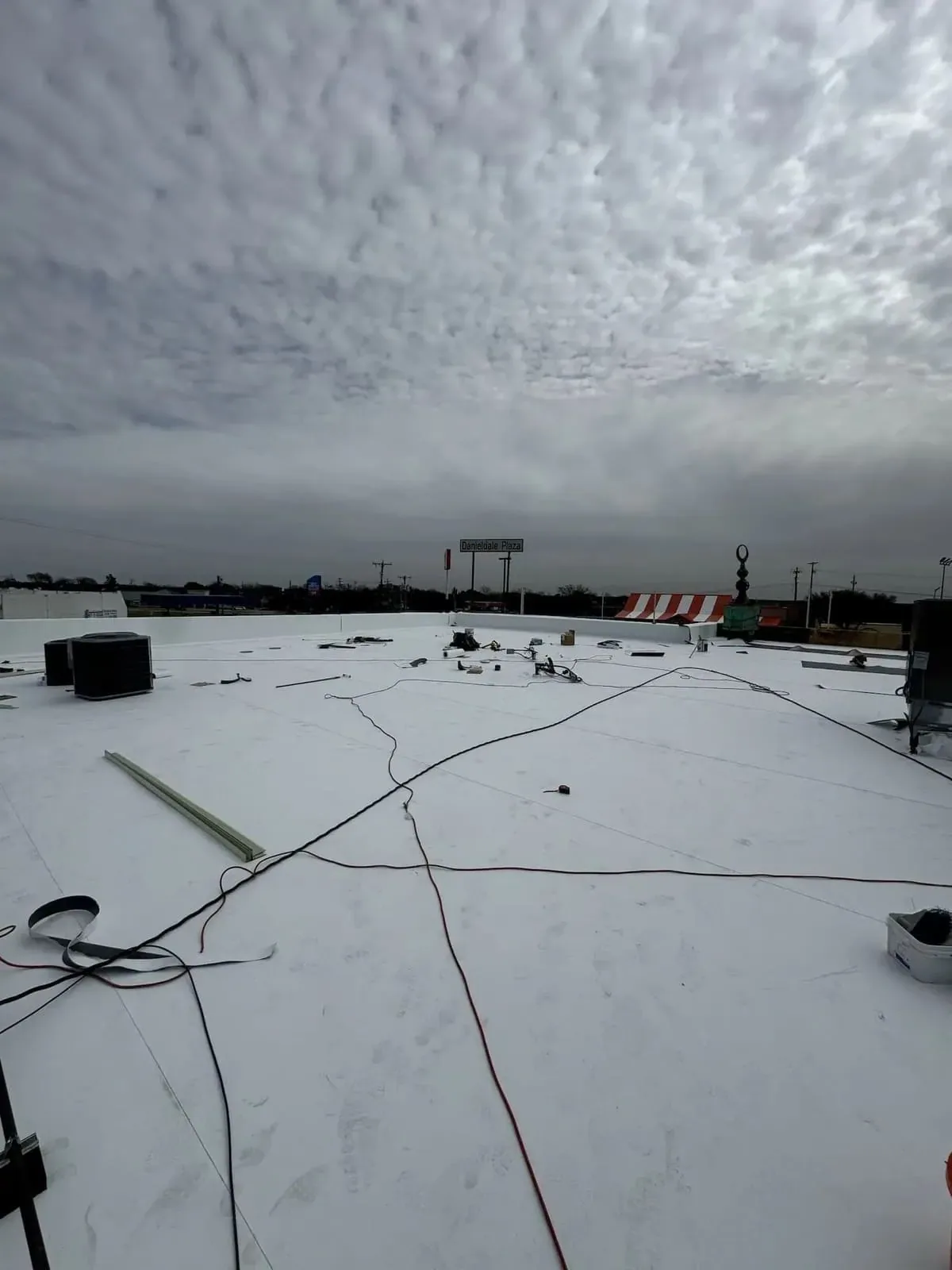
Should the sheet be fully adhered, mechanically attached or induction welded?
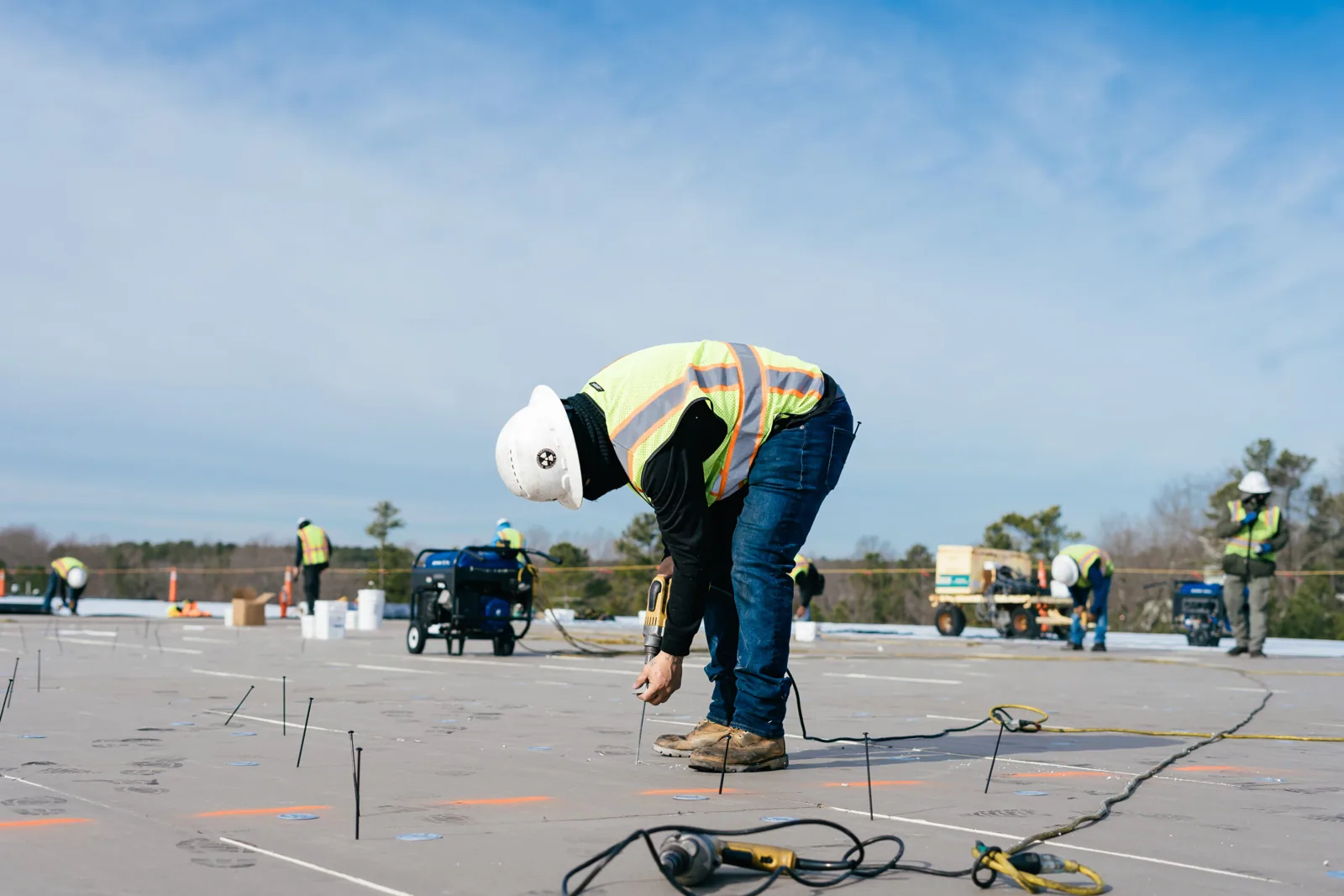
A mechanically attached sheet is fastened through its seam edge with plates into the deck, which is fast and light and suits steel decks that hold fasteners well, though the membrane can flutter in strong wind and the fastener rows carry cyclic load for the life of the roof. A fully adhered sheet is bonded across its face to insulation or a cover board, which spreads wind load evenly and lies flatter, but it demands a dry substrate, adhesive inside its working temperature range and more labor, and it limits how much can be done in the cold months. Compare insulation and cover board and insulation layer belongs in the comparison. Owners weighing TPO against PVC roofing or EPDM rubber should compare seam type as well as price, since TPO and PVC rely on welds and EPDM relies on tape or adhesive.
How do we judge an older TPO roof before anyone says replace?
The visible membrane is the least informative part of the roof. We start by walking the seams with a probe, then look at flashing terminations along parapets and curbs, the condition of walkway pads under hatches and equipment, dirt rings at ponded areas, and the drains and scuppers that decide where water goes. Those findings show how the membrane is aging, but they do not say what lies underneath it. For that we run an infrared moisture survey and confirm the anomalies with small core cuts, because wet insulation can sit beneath a sheet that has no visible defect. The results go into a written condition report with photographs and a moisture map, which gives an asset manager condition data to compare repair, recover and replacement on lifecycle cost instead of arguing from a single stained tile.
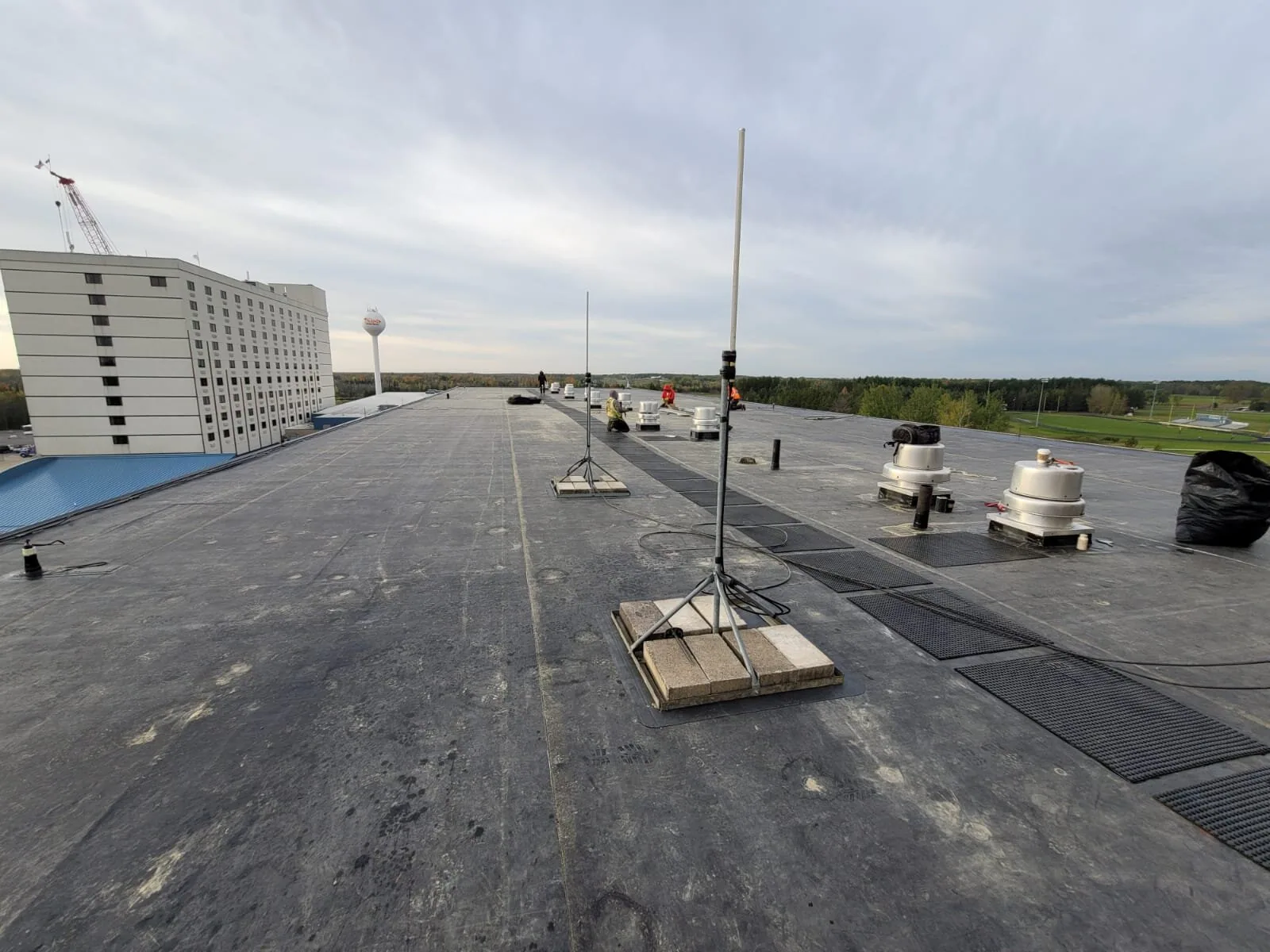
What does an open seam cost by the time it shows inside the building?
By the time water reaches an occupied space, it has usually been through the insulation, and that changes the arithmetic. Saturated board stops insulating, so heating and cooling loads climb while the roof appears sound. A repair on a dry roof is a small, schedulable expense. Once the insulation is wet across a meaningful share of the field, the choice narrows to cutting out and replacing wet sections or removing the system, and the replacement window the owner believed they had can close within a couple of winters. Deferral makes sense only when moisture checks support it.
When can TPO be welded or adhered in Johnson City without trading quality for speed?
A weld needs a dry, clean sheet and a welder running to temperature, and adhesive needs substrate and air temperatures inside its working range, so the calendar matters. For planned work in the Tri-Cities we favor the shoulder seasons and sequence the roof in sections that can be dried in each day, so no open insulation waits overnight for weather. A project approved in late summer can usually be bid, ordered and installed before the hard freezes, while one approved in January often waits for spring or proceeds as a temporary repair. When water is already coming through a deck, our emergency roof repair response runs around the clock to stabilize the opening, and the permanent work is scheduled for conditions the membrane can tolerate.
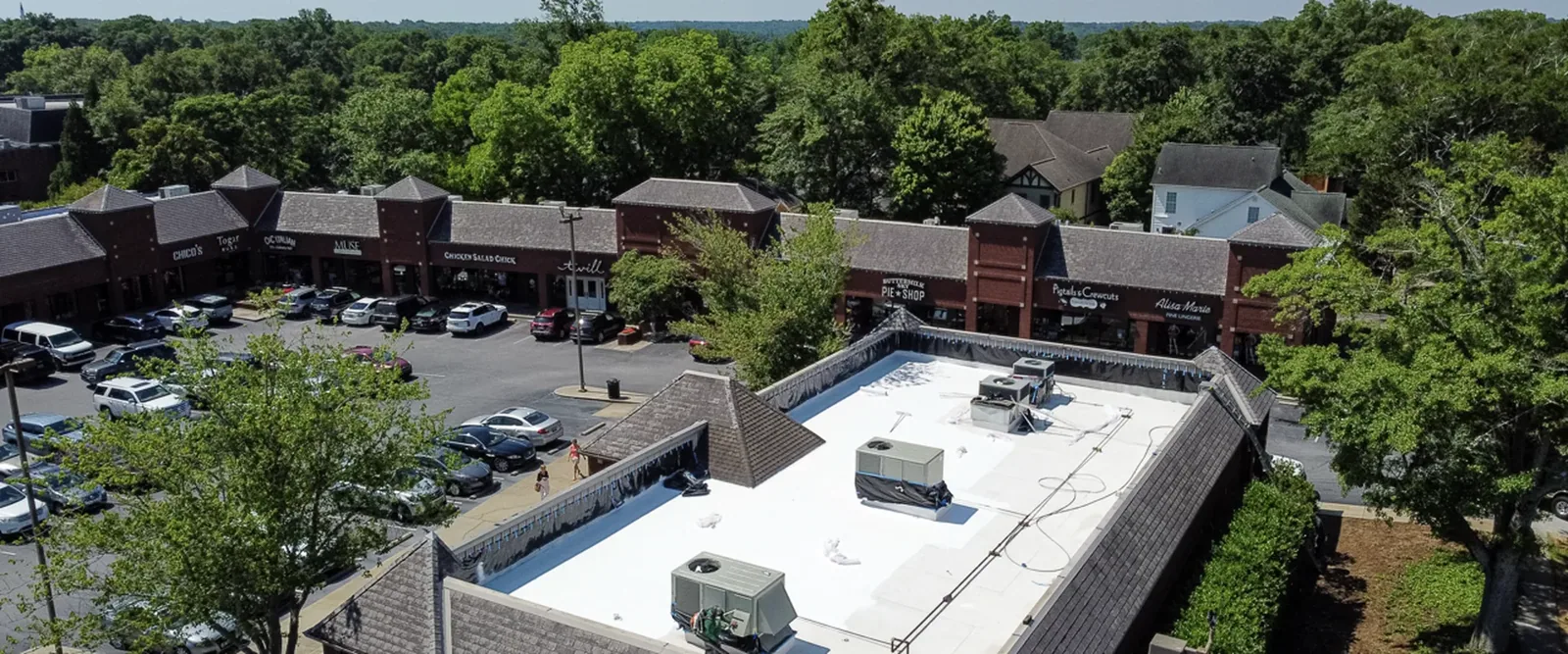
What do Johnson City buildings ask of a single-ply roof?
Along the Med-Tech corridor, Johnson City Medical Center and ETSU bring occupied clinical and teaching uses, so reroofing has to protect air handling and keep interior areas dry. The Washington County Industrial Park near Telford includes production roofs with equipment traffic and large drainage areas. Those uses call for different attachment and phasing decisions. Johnson City averages about 15.6 inches of snow annually, and Hurricane Helene brought severe flooding to the region in September 2024. Clear drains, reliable scuppers and a documented maintenance plan help a TPO assembly handle those conditions without letting water sit at its seams.
Commercial Roofing Questions
Does a white membrane make sense where winter is the harder season?
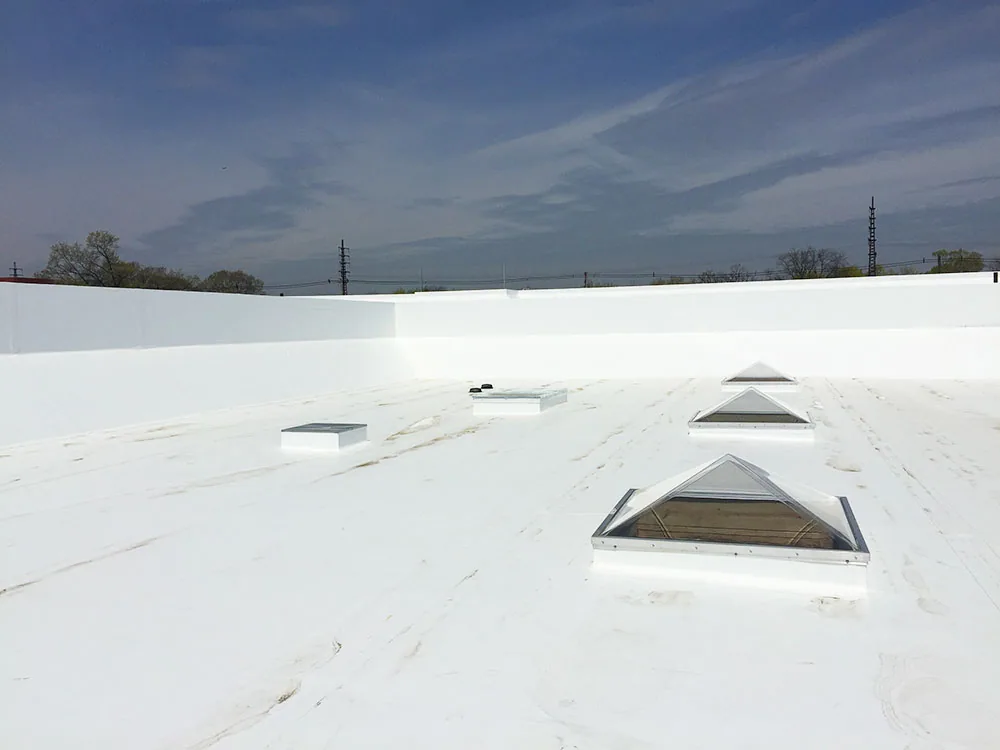
A reflective sheet gives back less in January than it does in July, yet the long-term trouble on a Tri-Cities roof comes from movement and moisture, not from heat gain. The better questions are whether the insulation under it is thick enough and dry, and whether the membrane is sound where it turns up walls and curbs. Surface color is a small variable beside those two.
How can I tell whether the seams on my roof are sound without cutting it apart?
Probing the seam edge with a pick finds most open welds without any cutting, and a thermal scan after a sunny day shows what the seams have already let in. If a seam fails the probe, a small test cut can confirm whether the weld ever fused or only closed on top.
Can new TPO go over what is already on the roof?
Only when the roof beneath is dry, the deck is sound and the layer count stays within what the adopted code allows. Johnson City has adopted the 2018 International Existing Building Code, which is why we count layers and confirm dryness before proposing an overlay. A cover board over the old surface keeps old blisters and seams from printing through the new sheet.
What shortens the life of a TPO roof faster than age does?
Standing water, neglected seams and foot traffic around equipment do more harm than the calendar. Ponded water holds dirt that dulls the reflective surface, carries ice in winter and keeps seams under constant load. Walkway pads belong on the route to every rooftop unit for the same reason.
How should a property manager budget for a TPO roof that is nearing its replacement window?
Start with condition data rather than age. A survey and report show how much of the roof is wet, how much is sound and which repairs would extend service life, and those findings let a manager carry a defined repair allowance now and a replacement line in a specific future year. Deferral is easiest to defend when the report shows dry insulation, and hardest when it shows moisture spreading.
Related Roofing Pages
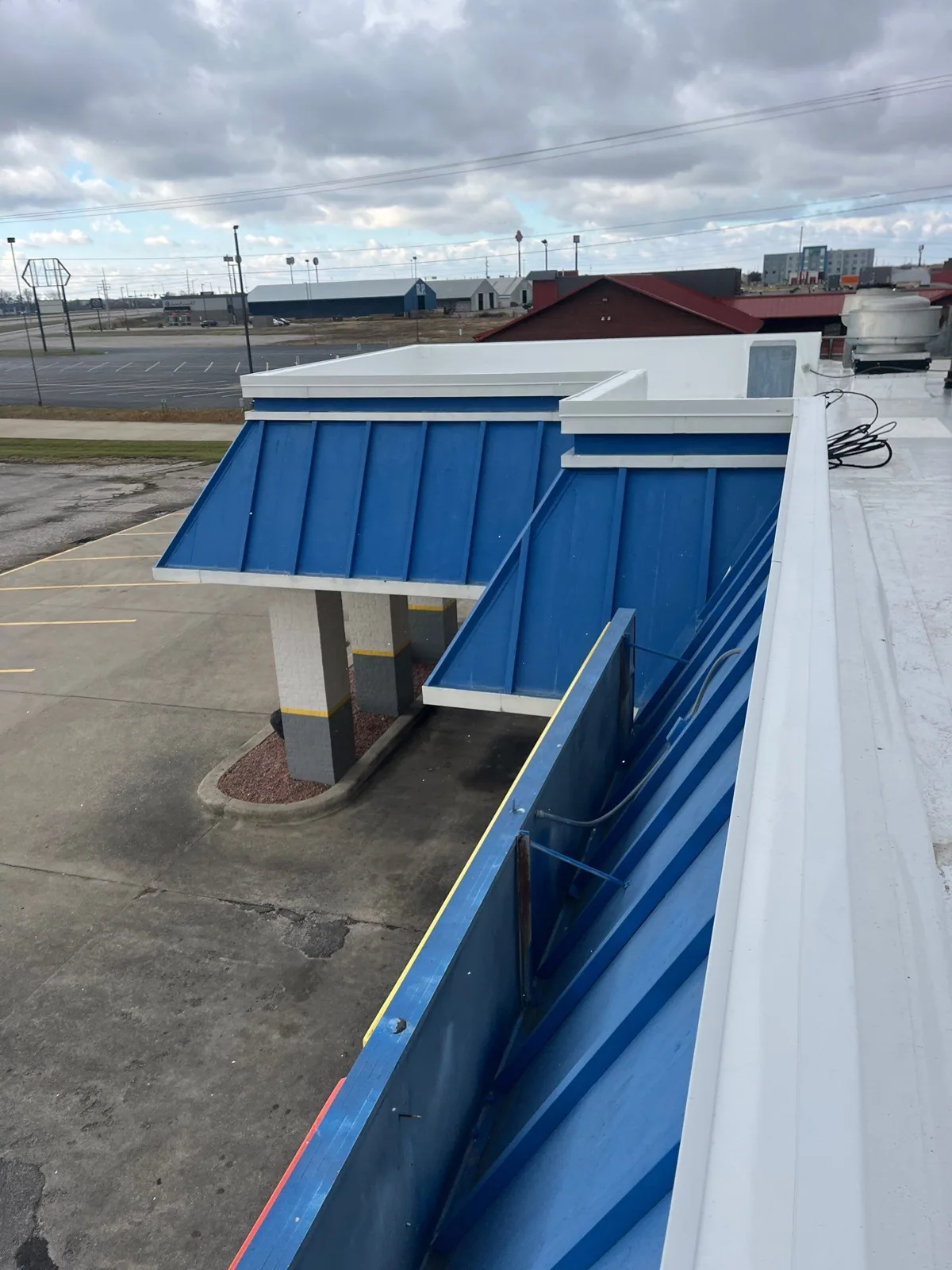
Split and Open Seam Repair
How the work is scoped, phased and documented on Tri-Cities roofs.
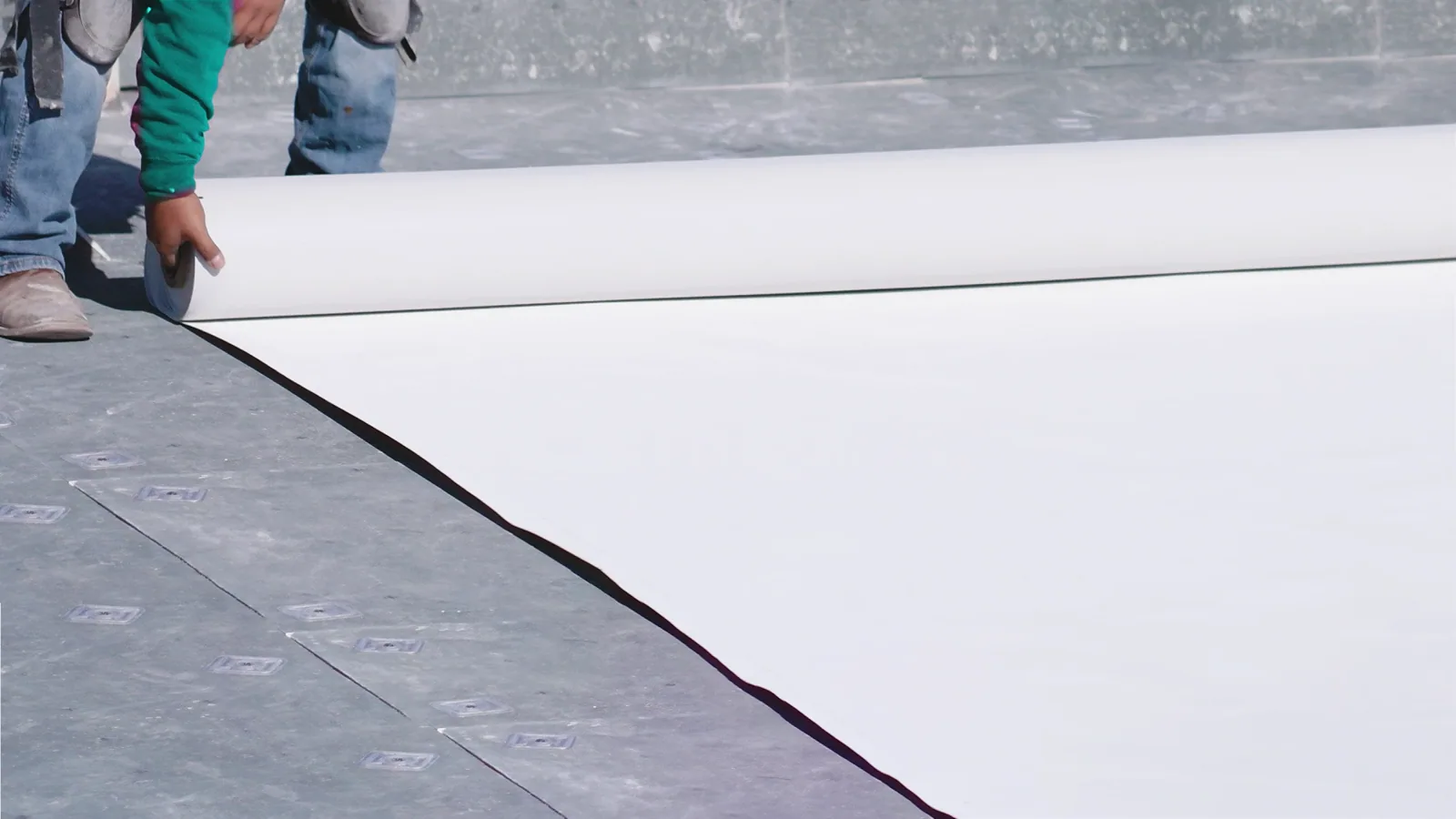
Roof Insulation, Tapered Systems and Cover Board
What we check, what we recommend and how the crew keeps the building running.
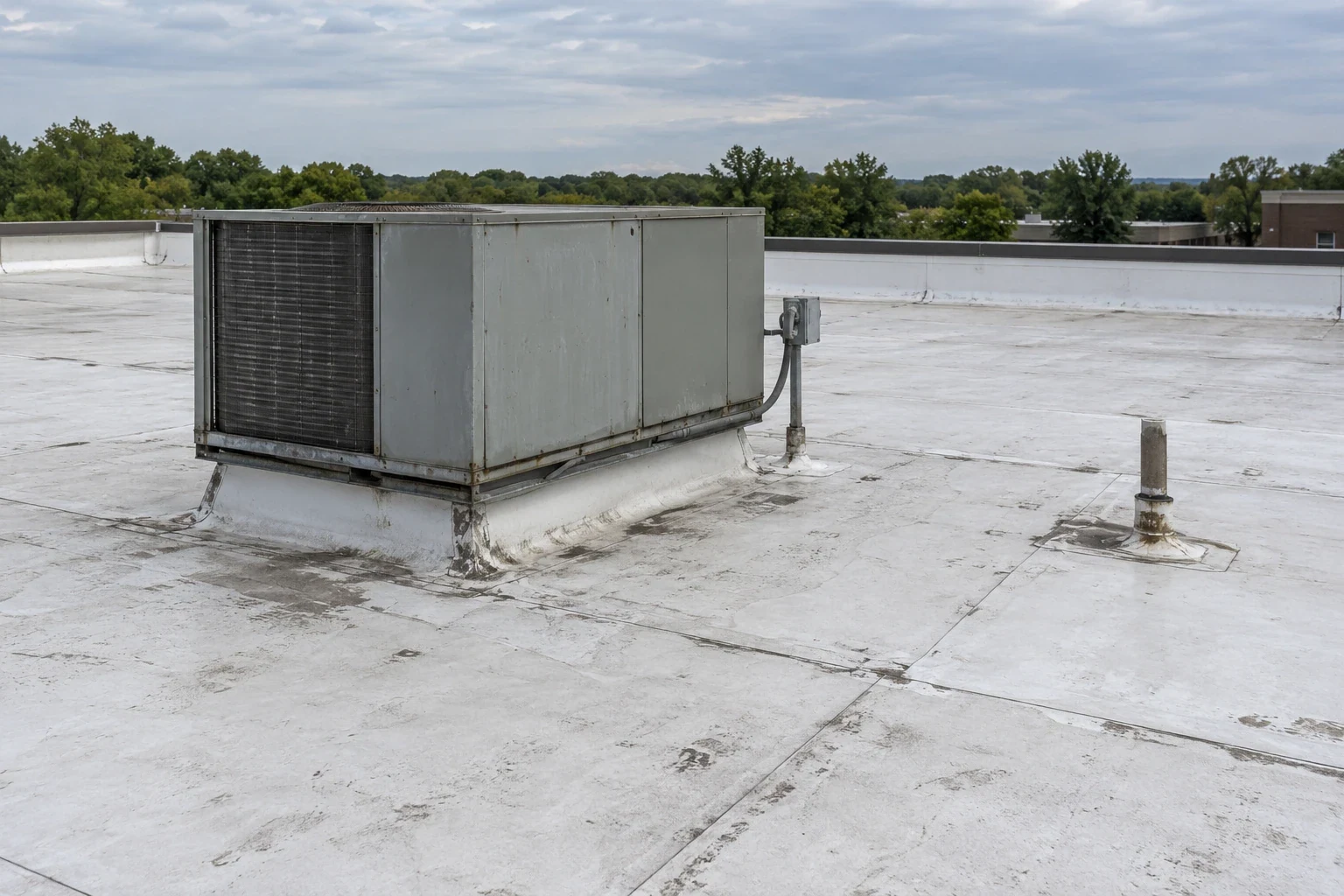
PVC Roofing
Conditions, options and next steps for commercial buildings in East Tennessee.