
Built-Up Roofing (BUR) in Johnson City, TN
Asphalt turns brittle in the cold, and the insulation under a built-up roof is laid in boards with joints between them, so those two facts meet along every board edge. On a January night in Johnson City, TN the boards contract a hair, the bitumen above each joint is stretched at the moment it is least able to stretch, and over many winters a line appears that follows the insulation layout exactly. A hairline split in the plies lets meltwater into the very joint that was opening, and the water spreads through the roof where the felts hold it like a sponge. That is how a roof with plenty of plies can lose its insulation value without showing a single stain. The cost to the owner is not the split but the wet board it feeds, so the first purpose of any built-up evaluation is to find those lines before the water does.
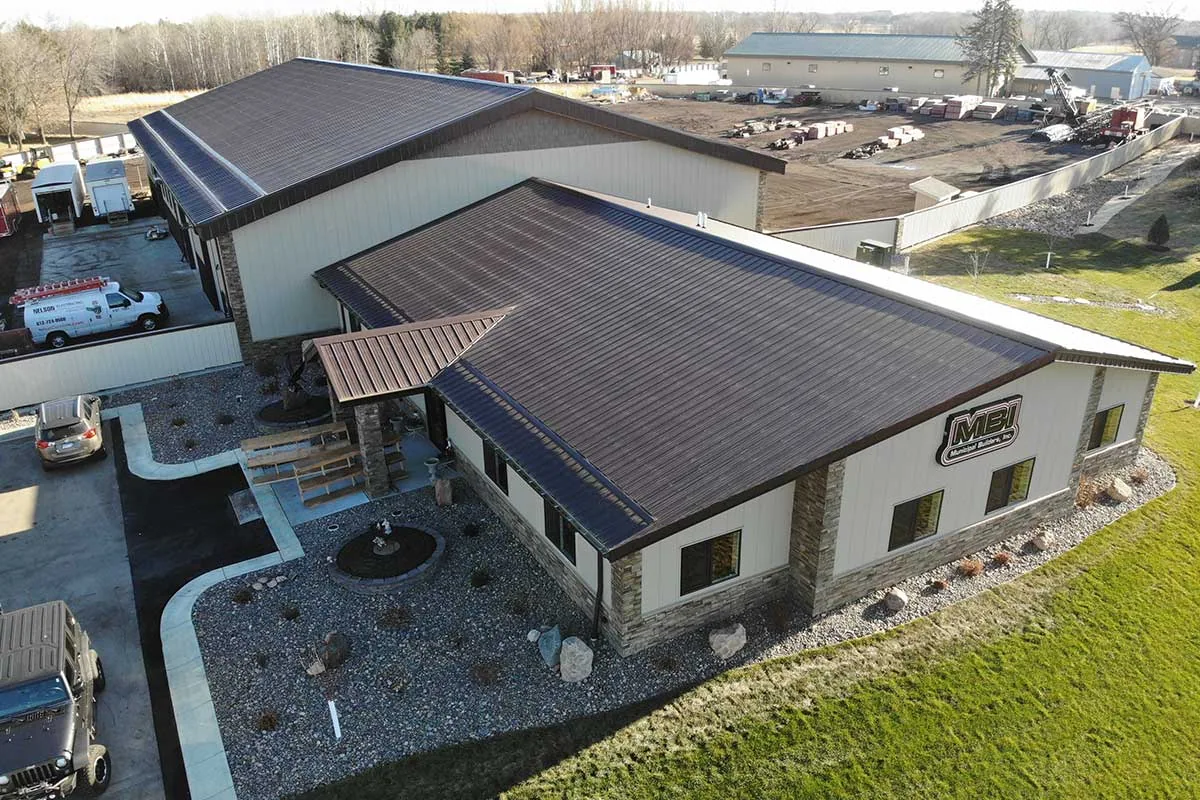
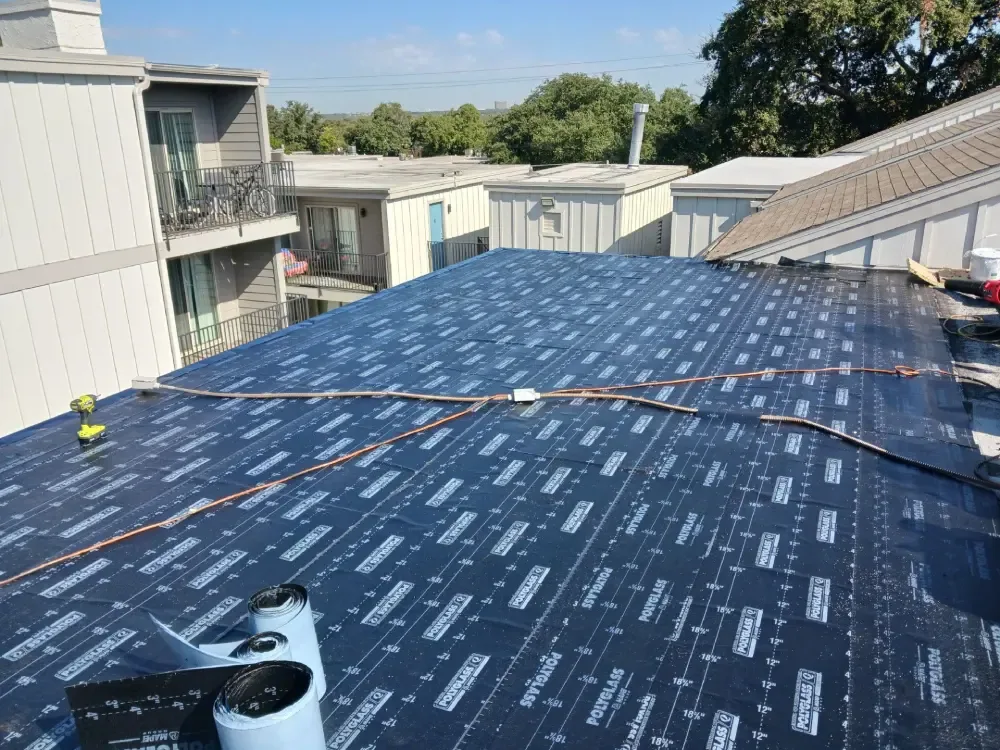

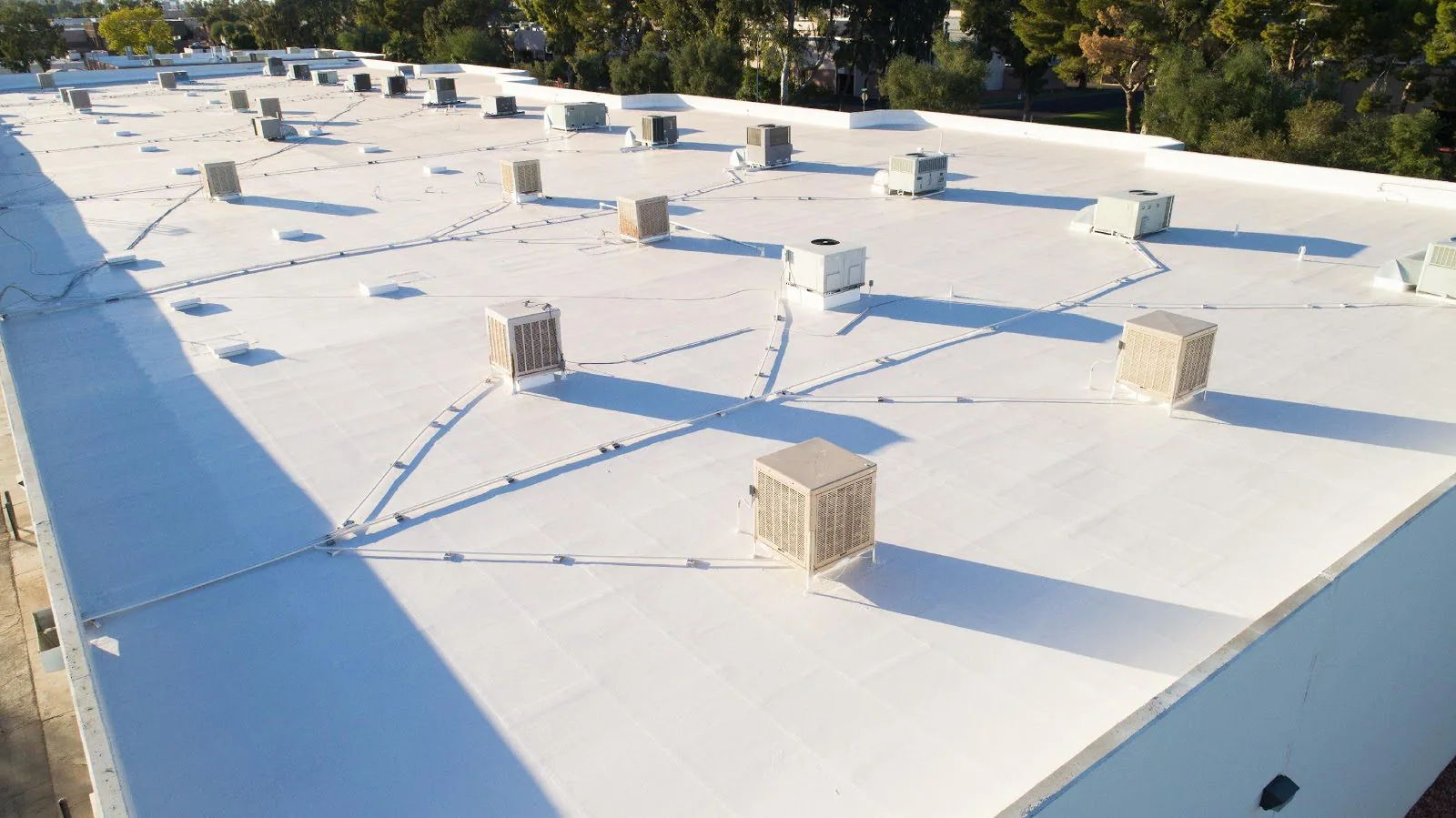
How does a laminate of asphalt and felt come apart after many winters?
A built-up roof is a laminate: alternating layers of hot bitumen and reinforcing felt or fabric, topped with gravel, a mineral cap sheet or a smooth coating. The plies give it redundancy and strength, but a laminate fails where its layers part. Repeated thermal cycling hardens the asphalt, so the bitumen between plies loses adhesion, blisters rise where vapor is trapped, and ridges form over the insulation joints where the felts have been pulled and wrinkled. Surface exposure matters too. Where gravel has scattered or the flood coat has worn, sunlight oxidizes the top layer until it alligators into small cracks that pass water to the plies below. None of this happens fast. It is the accumulated result of many freeze-thaw seasons, which is why a roof can look dark and intact in October and leak after the first deep thaw.
Count the plies and test the board joints before budgeting
Call Commercial Roofing Johnson City for core cuts, a moisture scan and a written read on the built-up roof you own. You will know whether to repair, recover or plan a replacement, and when each is cheapest.

Gravel, mineral cap sheet or smooth surface: what should protect the plies?
Gravel is the traditional shield. It protects the asphalt from sun and foot traffic and adds fire resistance, but it also adds dead weight, scatters, clogs drains and makes leaks harder to trace. A mineral-surfaced cap sheet gives a cleaner surface with less weight, and a reflective coating can replace the stone entirely. For new work, the same owner should price the modern alternatives. Modified bitumen roofing keeps the multi-ply logic with a more elastic asphalt, while spray polyurethane foam roofing can be applied over a sound built-up roof as a continuous insulating layer. Choosing between them depends on what the existing deck can carry, what the building's drainage can handle and how long the owner intends to hold the property. A commercial roof replacement that removes a heavy gravel roof changes the structural load, and that is worth knowing before any bid is compared.
How do we count plies and test an old built-up roof?
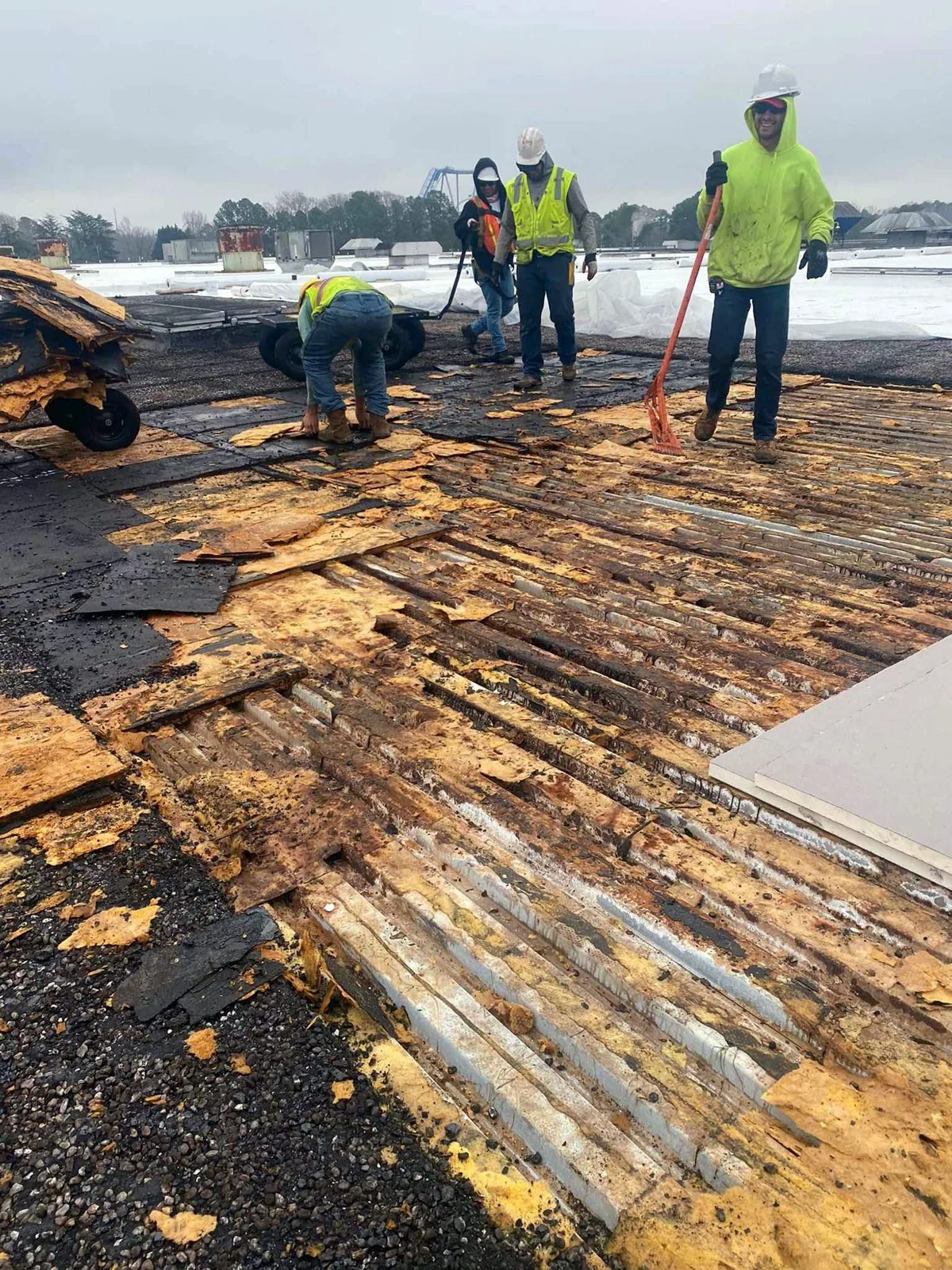
A core cut tells the truth the surface hides. We take samples at several locations to count plies, identify the felt type, assess the insulation and look for a film of moisture at the deck. We probe gravel-free spots for soft insulation, mark blisters and ridges, and check flashings for cracking where the bitumen meets walls and curbs. Older felts may contain regulated materials that call for sampling and proper handling before any tear-off is planned, so that question is raised at the start rather than at the dumpster. The findings are recorded in photographs and a plan view, and the owner's commercial roof repair budget can then be matched to what is actually wrong: splits to patch, flashings to rebuild, or a layer count that rules out a recover.
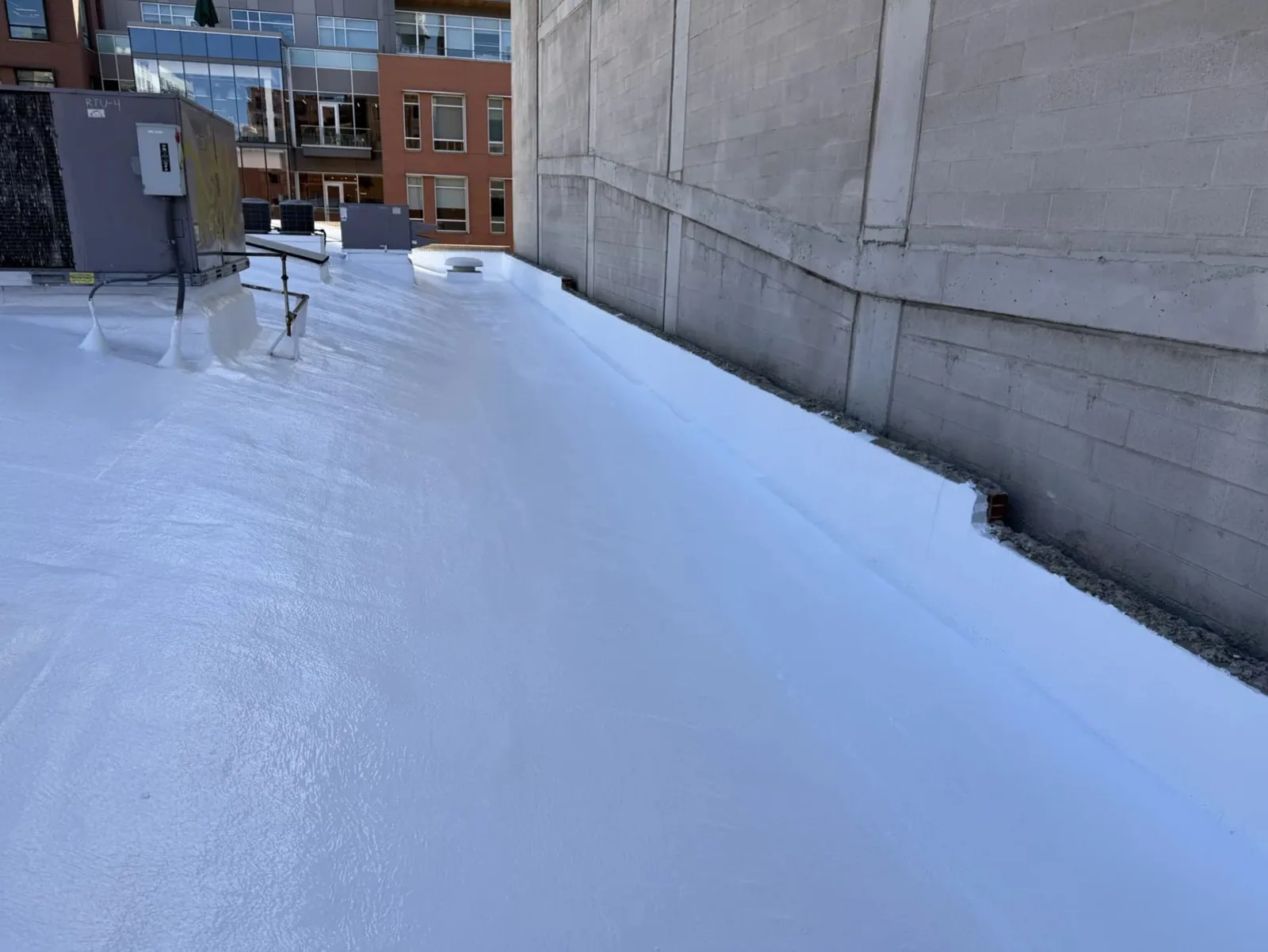
What do loose gravel and clogged drains cost a built-up roof?
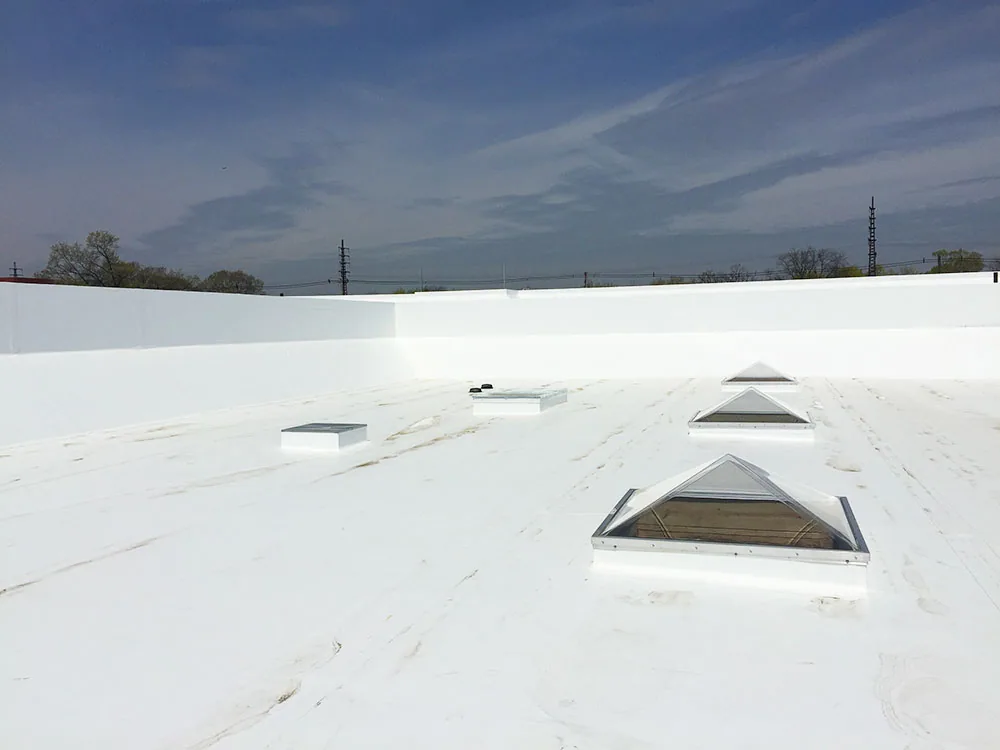
Gravel migrates toward the low points of a roof, and a drain buried under stone is a drain that has stopped working. Water then stands on the surface and presses on every flaw, and ponded areas add load to the deck and speed the aging of the bitumen beneath. Multi-ply roofs hold moisture well once it gets in, since the layers trap water between them and the insulation dries slowly or not at all. That is why a few small neglected splits can turn into a large wet area over two or three winters. A layer limit is in play as well. An owner who waits until the roof is saturated may lose the option of a recover and be left with a full tear-off, which on a gravel roof means removing and hauling a heavy layer of stone before the new work starts.
What does hot asphalt mean for the schedule of an occupied building?
A kettle or tanker heats asphalt to its working temperature, and the placement of that equipment, the route of the hose and the direction of fumes all matter near air intakes. On an occupied building we locate the intakes first, move the equipment away from them and coordinate with the facility manager on days when odor could be a problem. Application temperature matters as much as air temperature, since asphalt that cools before the felt is embedded forms a weak bond, which is why cold, windy days are poor days for hot work. Gravel removal on a tear-off adds dust and noise, and the weight of stone being carried across a deck is itself a planning item. Johnson City's adopted fire code adds hot-work controls, so permitting belongs in the early schedule.
Which older Tri-Cities buildings raise the built-up question?
An owner of an older commercial building should know how many layers the roof already carries before planning any work, and the older districts of the Tri-Cities make that question practical. Downtown Johnson City is a historic commercial core of older masonry buildings in a city that began as the railroad hub Johnson's Depot, and Jonesborough was founded in 1779 as Tennessee's oldest town. A buyer of an older building in either place should learn what lies on the roof before closing, which is the purpose of a due diligence roof survey. Wind is a quieter factor. Washington County has recorded ten tornadoes, five of them in 2011 and three on April 27 of that year, and a gravel-surfaced roof can lose stone in strong wind, which is why edges are checked after severe weather and why the repair of a wind-damaged roof often starts at the perimeter.
Commercial Roofing Questions
How can I tell how many layers my roof already carries?
Only a core cut shows it reliably. We cut small samples at several places, because earlier repairs and additions can leave one area with more layers than another, and we photograph each cut before patching it. The count matters because the adopted code limits how many layers may be stacked, and that limit decides whether a recover is even available.
Is hot asphalt work a smoke and odor problem for tenants?
It can be if the kettle is placed carelessly. Equipment goes downwind and away from fresh-air intakes, and the facility manager is told which days are heaviest. On buildings where odor is intolerable, cold-applied or self-adhered systems remove the kettle from the job.
Why does my gravel roof leak in winter but stay quiet in summer?
Cold stiffens bitumen and shrinks the insulation boards, so splits open along the joints between them. Summer sun softens the asphalt and often closes the same gaps. The leak is seasonal, but the water it admits in winter is cumulative, and the insulation does not dry on the same schedule as the surface.
Is it better to repair a built-up roof or put a new membrane over it?
Repair makes sense while the roof is dry and the splits are isolated. A recover makes sense when the insulation is dry across the field and the layer count has room. Once moisture is widespread, neither choice fits, and tear-off is what the lifecycle numbers support.
Does the weight of gravel matter if I switch to a lighter system?
Removing the stone lightens the deck, which can help an older structure, though disposal and the temporary load during removal need planning. The new system still has to be designed for wind uplift at the perimeter and corners, so attachment is chosen for the building and not for the weight saved.
Related Roofing Pages
Modified Bitumen Roofing
How the work is scoped, phased and documented on Tri-Cities roofs.
Spray Polyurethane Foam (SPF) Roofing
What we check, what we recommend and how the crew keeps the building running.
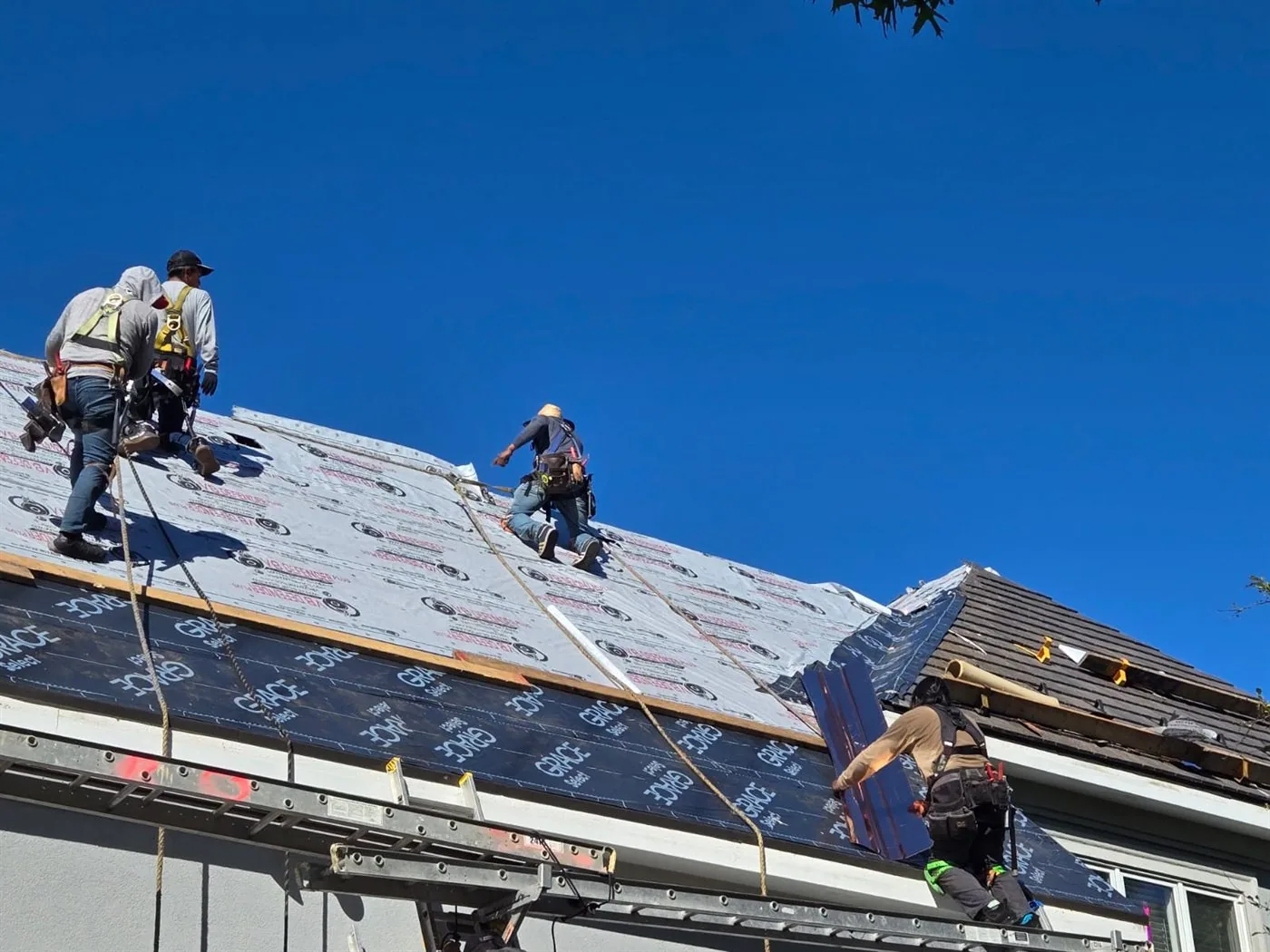
Commercial Roof Replacement
Conditions, options and next steps for commercial buildings in East Tennessee.