
Cold Storage Roofing in Johnson City, TN
Water vapor moves toward cold, and in a freezer the cold is on the inside. On a humid July afternoon in Johnson City, TN, with highs near 86F and a climate that delivers roughly 45 inches of precipitation a year, the air above a refrigerated building is loaded with moisture, and the roof assembly beneath it is held well below freezing from the other side. Any vapor that finds a path through a seam, a pipe penetration or a damaged membrane condenses on the cold plane and freezes. Layer by layer, a lens of ice forms inside the insulation, pushing the board apart, lifting the membrane and carrying weight that no one designed the framing to carry. The roof looks fine for years, then fails abruptly and expensively.
Why does a freezer roof collect ice in the middle of summer?
Because the direction of vapor flow reverses. In an ordinary heated building the warm side of the assembly is the interior, and the vapor retarder goes there. In a cold storage building the warm side is outside in summer, so the retarder has to sit on the exterior side of the insulation, and it has to be continuous. Every gap in it is a chimney. A cut for a refrigeration line, a corner that was not lapped, a patch that was cut through without being resealed: each lets humid air reach the frozen zone. The ice builds slowly and silently, until the board is saturated and the thermal value collapses. The compressors then work harder to hold a temperature the roof can no longer help keep.
Find the ice before it finds your deck
Call Commercial Roofing Johnson City to arrange a moisture survey of your cold storage roof. You will receive core results, a map of wet and dry areas and a clear choice between repair and replacement.
What does an iced-up assembly cost in energy and in structure?
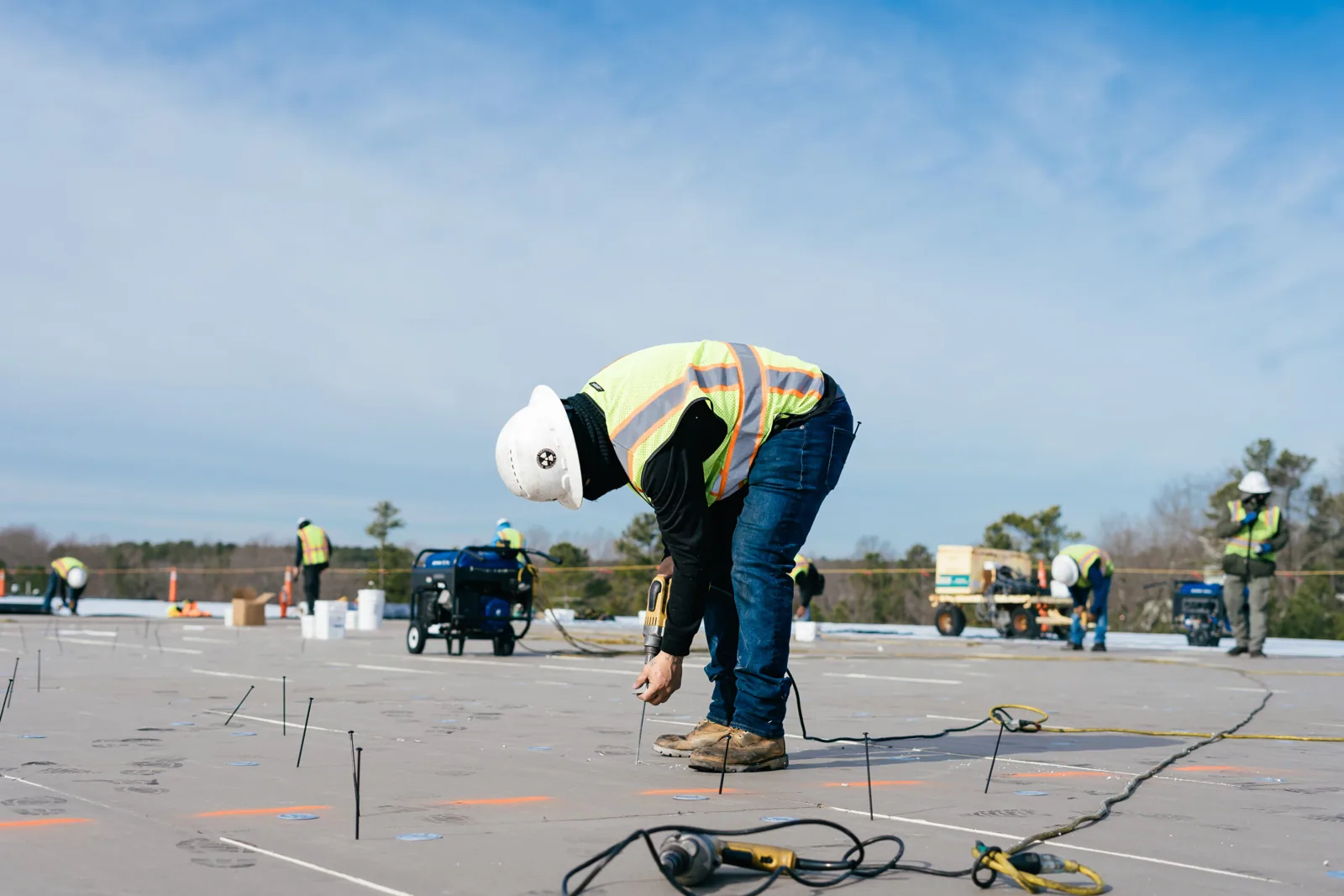
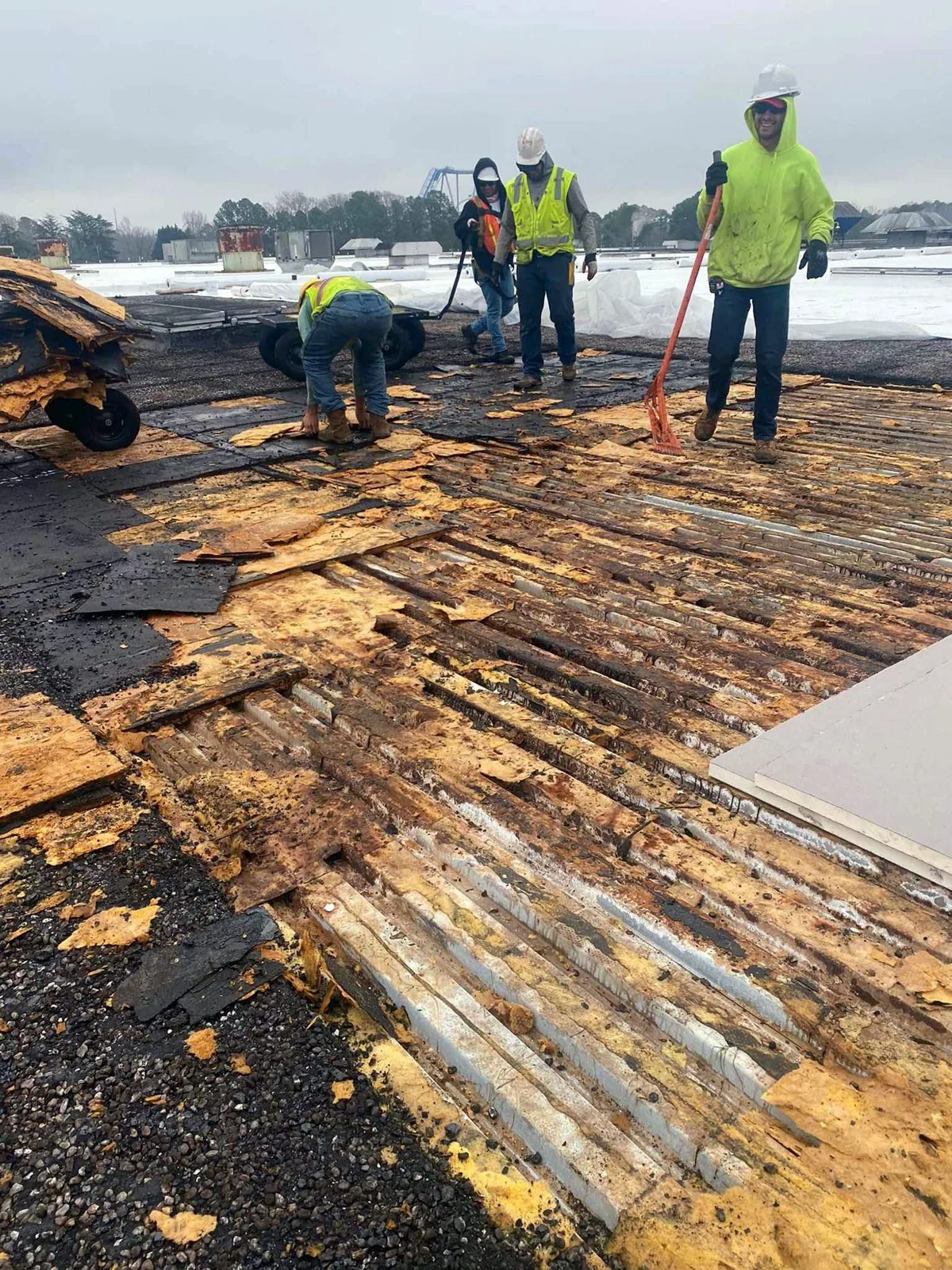
Energy shows up first. Insulation holding ice conducts heat far better than dry board, so the refrigeration plant runs longer every day just to hold the setpoint, and the owner pays for that on every utility bill. Structure follows. Ice expands as it forms, so a saturated assembly can bulge the membrane, buckle the deck or loosen the fasteners that tie them down. At that stage the work is a tear-off to the deck and sometimes a deck repair, not a patch, and it has to happen in a building whose contents cannot be allowed to warm. Waiting for visible symptoms turns an early, controlled intervention into an emergency with product at risk.
How do we read a roof when we cannot simply cut it open?
Slowly and with more than one tool. An infrared moisture survey is harder over a refrigerated space because the cold interior flattens the thermal signals that normally show wet insulation, so we often scan at times when the roof surface is changing temperature the most, and we back every reading with core samples taken and resealed the same day. We trace where refrigeration lines, conduit and condenser supports pass through the membrane, because those are the likeliest vapor paths. We check the perimeter and the parapet flashings for gaps, and we weigh the findings against what the owner already knows from compressor run times and any frost seen inside the building.
Vapor retarder repair, new insulation or a full tear-off?
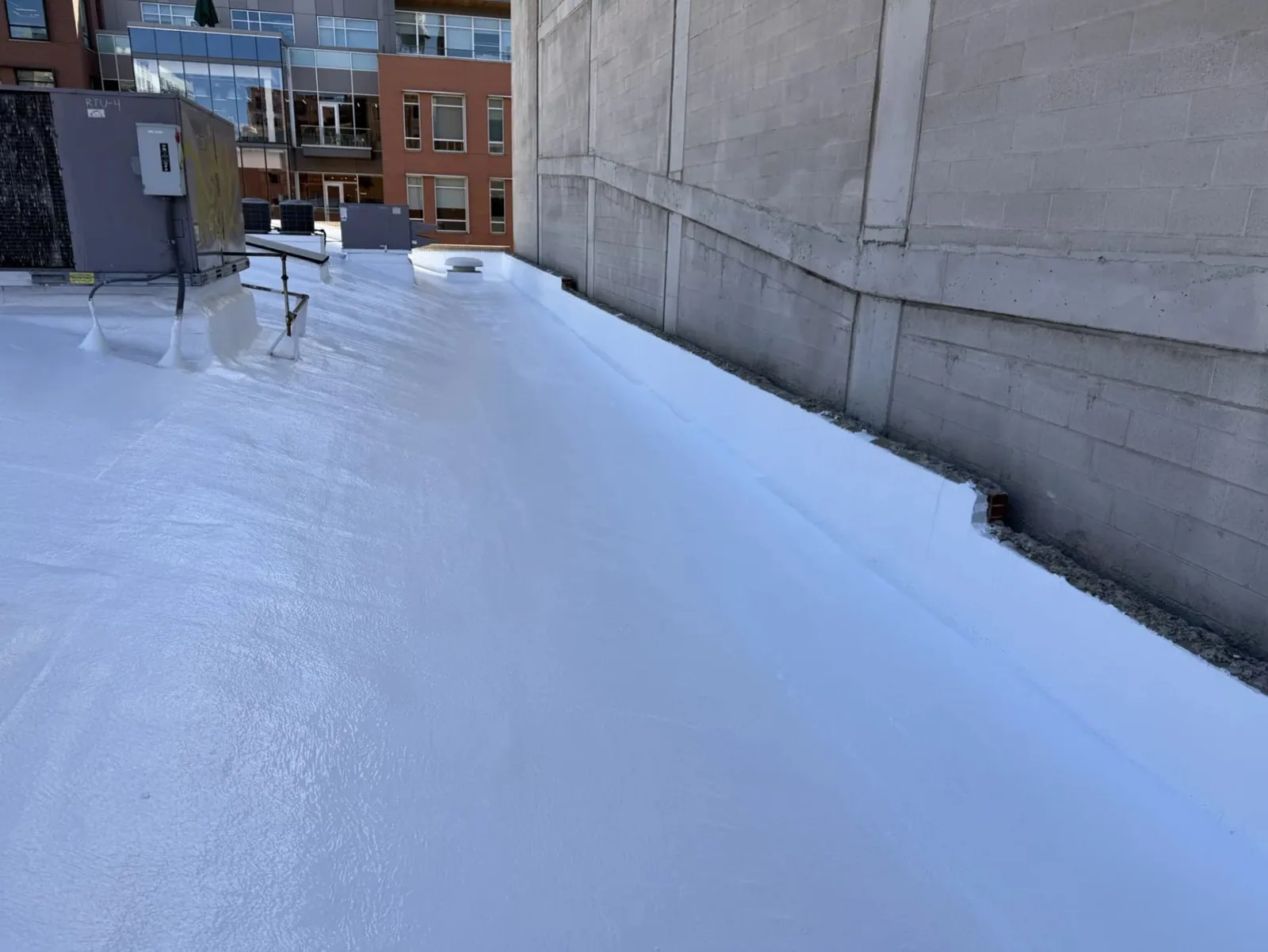
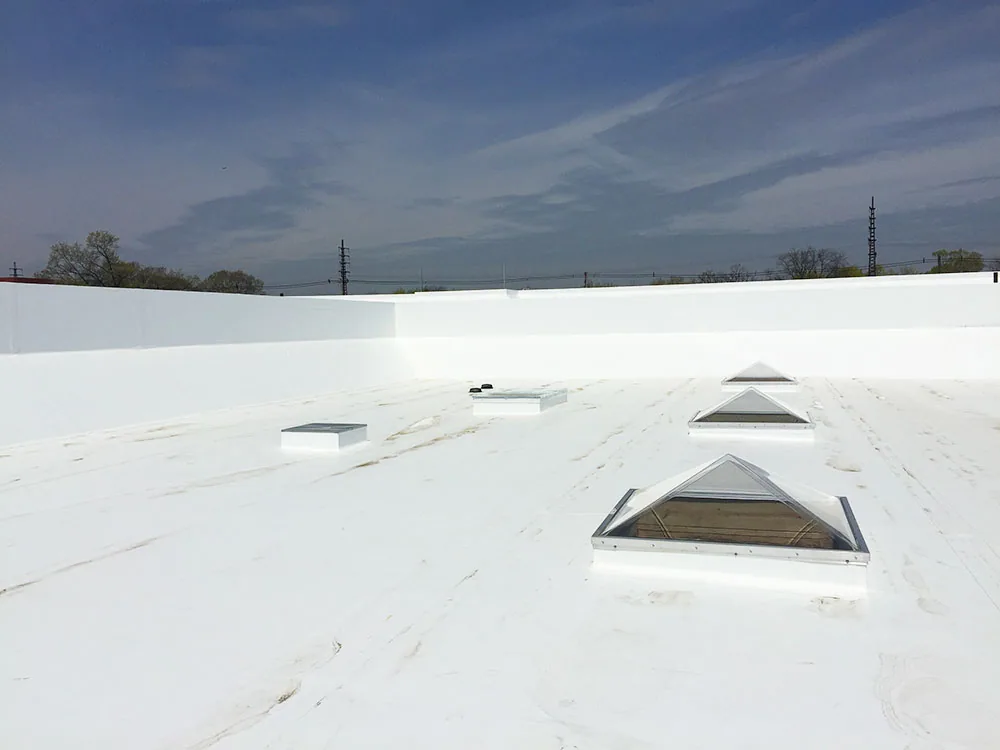
The sampling answers it. If the cores are dry and the retarder is intact except at a few identifiable penetrations, targeted repairs and resealing can extend the roof and protect the energy performance of the building. If the insulation is wet in patches, those areas can be cut out and rebuilt with a continuous retarder tied into the sound surrounding assembly. When saturation is widespread, a full commercial roof replacement is the only reliable remedy, with new insulation and cover board and a membrane chosen for low-temperature stability. A recover over wet insulation is not an option in a freezer, because the trapped ice would simply keep growing.
Can a roof come off while the building stays at temperature?
It can, but only with a tight sequence. We never open more roof than can be closed with insulation, retarder and membrane in a day, because a hole over a freezer draws humid air downward and brings frost with it. Interior zones under the work are protected with temporary barriers, and the facility team monitors temperatures as each section goes down. We prefer the dry months, when the deck is not cold and damp, and we sequence pipe and conduit penetrations so each one is flashed before the crew moves on. The schedule is built backward from the sections that matter most to product: loading areas first, deep storage last.
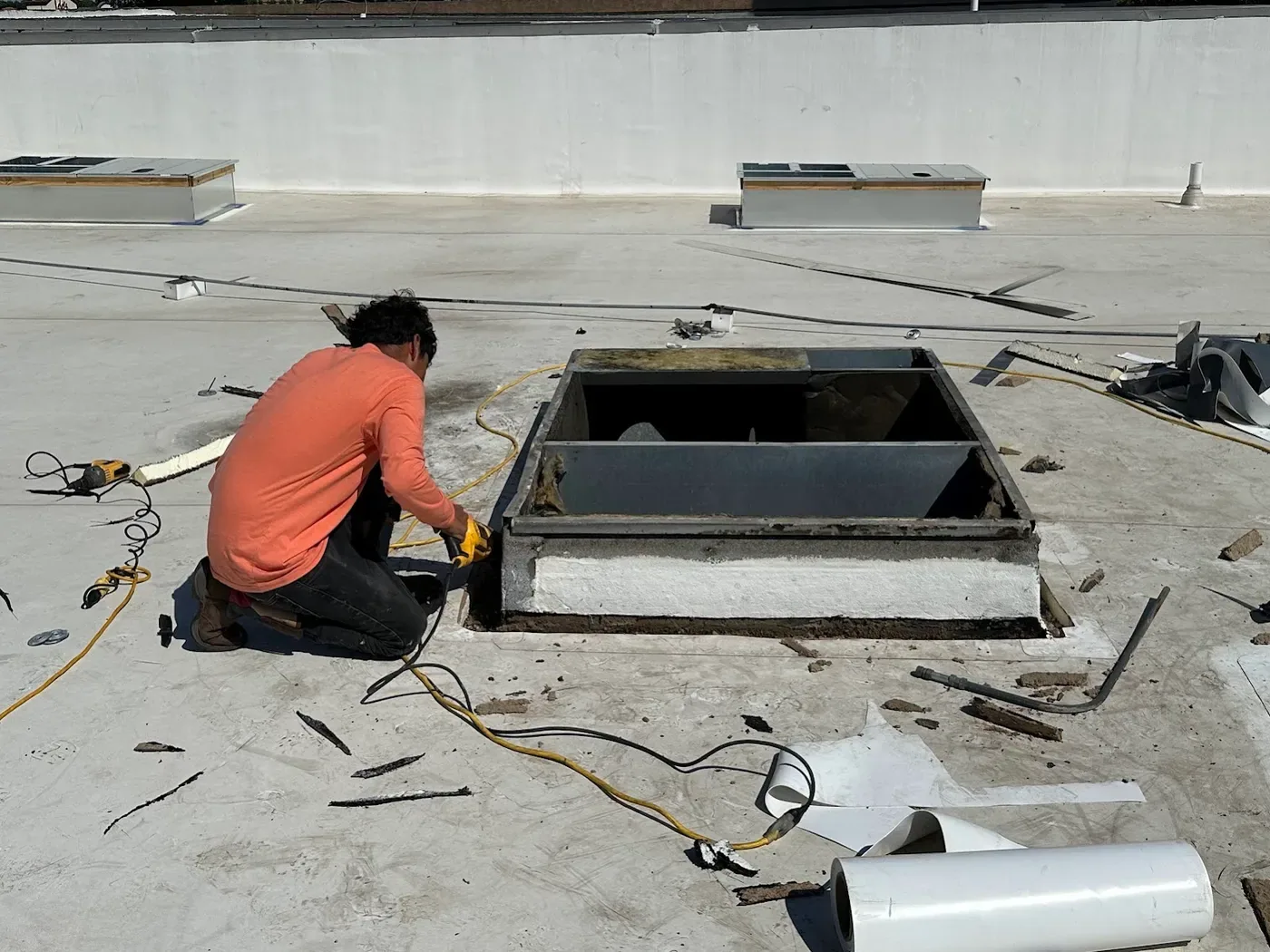
What does a humid Tri-Cities summer ask of a refrigerated building?
It asks for patience with moisture. The climate is humid subtropical, and Helene's flooding of the Nolichucky River in September 2024 is a reminder of how much water this region can deliver. Refrigeration touches the local industrial picture: the ebm-papst plant in the Washington County Industrial Park makes fans for refrigeration and air conditioning, and freight moves through the region along I-26 and I-81. A cold storage owner has much in common with the owner of a distribution center, but the vapor drive runs the opposite way, and the repairs follow that difference.
A conventional warehouse roof has a different interior moisture load, but it still needs sound drainage and safe service access.
A maintenance log should pair roof readings with refrigeration alarms and compressor run times, so a moisture change can be compared with a shift in cooling demand. Assign responsibility for restoring the vapor retarder after each refrigeration-line change; one unsealed conduit cut can undo a sound field assembly. A turnover check should confirm that the barrier is continuous before a new line is insulated.
Commercial Roofing Questions
What decides where the vapor retarder belongs in a freezer roof?
The warm side of the assembly decides. In a freezer that is the exterior in summer, so the retarder sits above the insulation and has to be sealed at every lap, penetration and perimeter. Putting it on the interior, as in an ordinary heated building, would trap the moisture that does arrive and let ice build in the board.
Why do some cold storage roofs bulge or sag long before they leak?
Ice expands as it forms, so a saturated assembly moves before water ever reaches the interior. The bulge is the sheet being lifted by frozen insulation, and the sag is board and deck losing strength as the ice cycles. Either sign means the retarder has failed somewhere, and a survey should follow soon, because the longer the ice grows, the larger the area that has to come out.
How reliable is a thermal scan over a freezer?
It helps less than on an ordinary roof, since the cold interior masks the temperature difference between dry and wet areas. We scan under conditions that give the best contrast and treat the image as a guide to where to take cores. The cores decide what is wet, what is dry and where the repair boundary falls.
Does a white roof pay for itself over a refrigerated building?
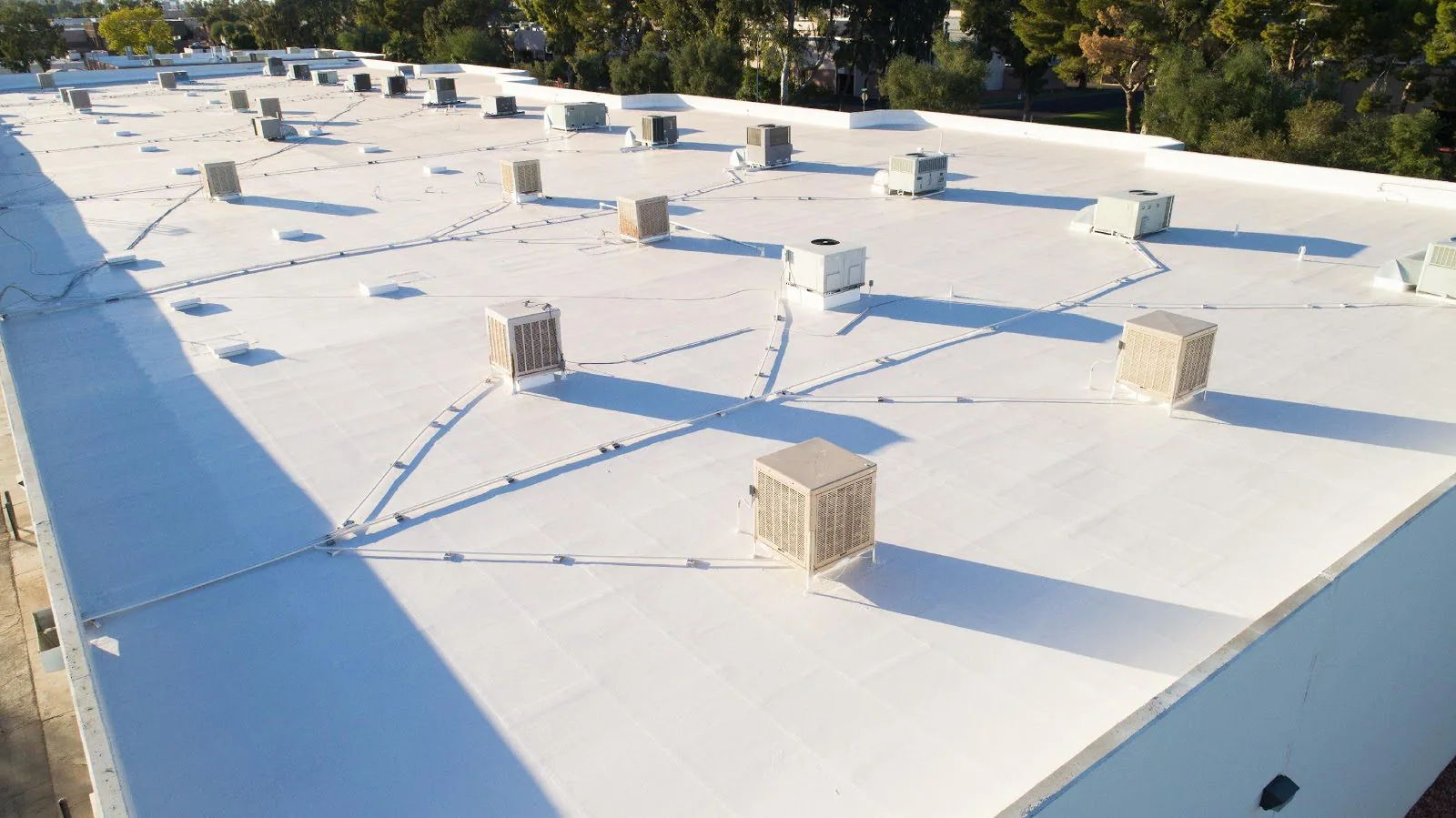
Cooling load carries most of the answer. A reflective surface lowers the heat the building absorbs in summer, which reduces the work the refrigeration system does at the hottest hours. A cool roof still has to be paired with a sound vapor retarder, because reflectivity does not stop vapor from entering through a bad seam.
How do owners keep small penetrations from becoming ice problems later?
Every new line through the roof is a planned opening with a flashing detail that ties into the retarder, not a hole cut on the day. A program of preventive roof maintenance checks those seals every season, so a cracked boot is found when it is a small repair rather than after a winter of frost.
Related Roofing Pages
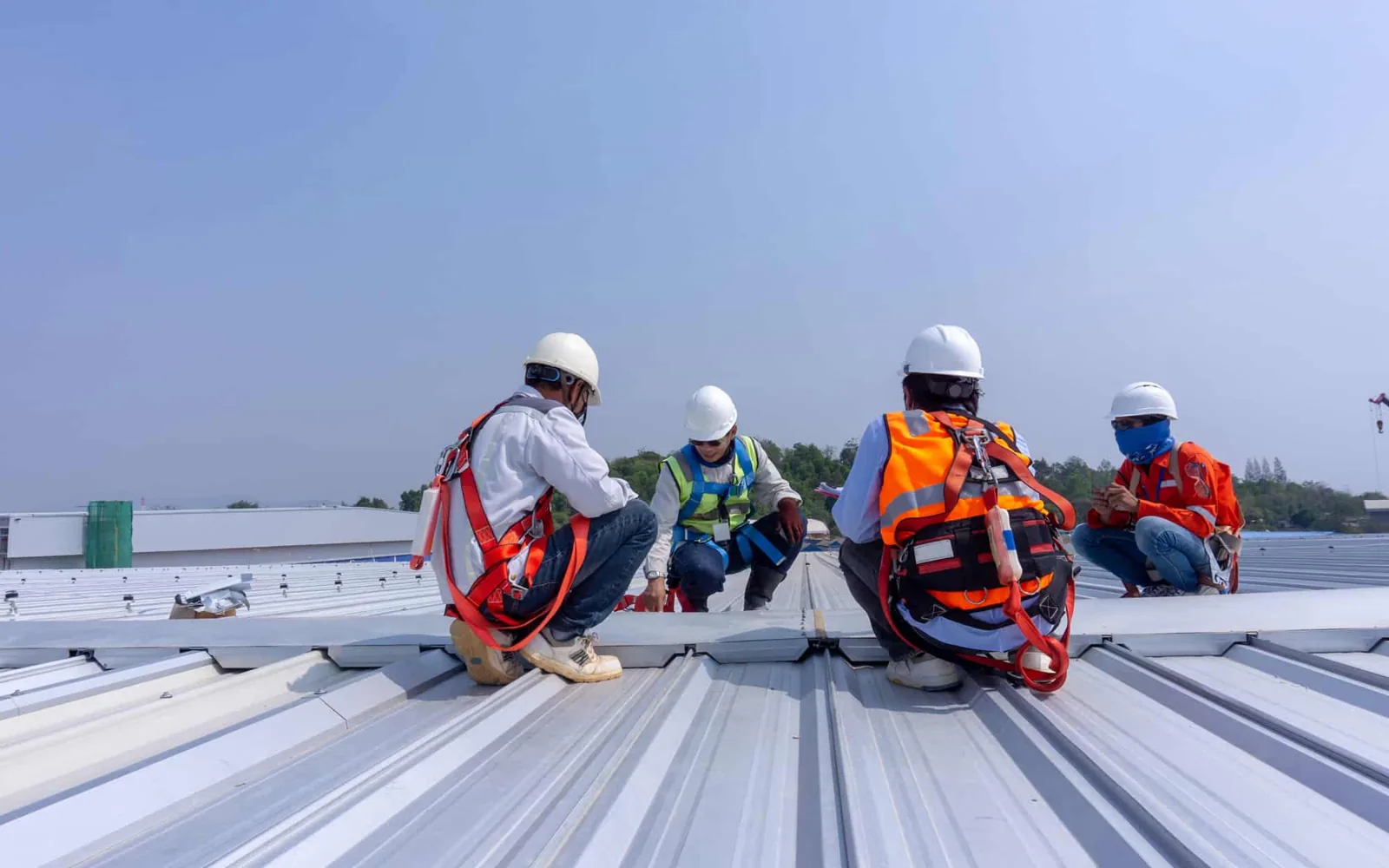
Infrared and Core-Cut Moisture Surveys
How the work is scoped, phased and documented on Tri-Cities roofs.
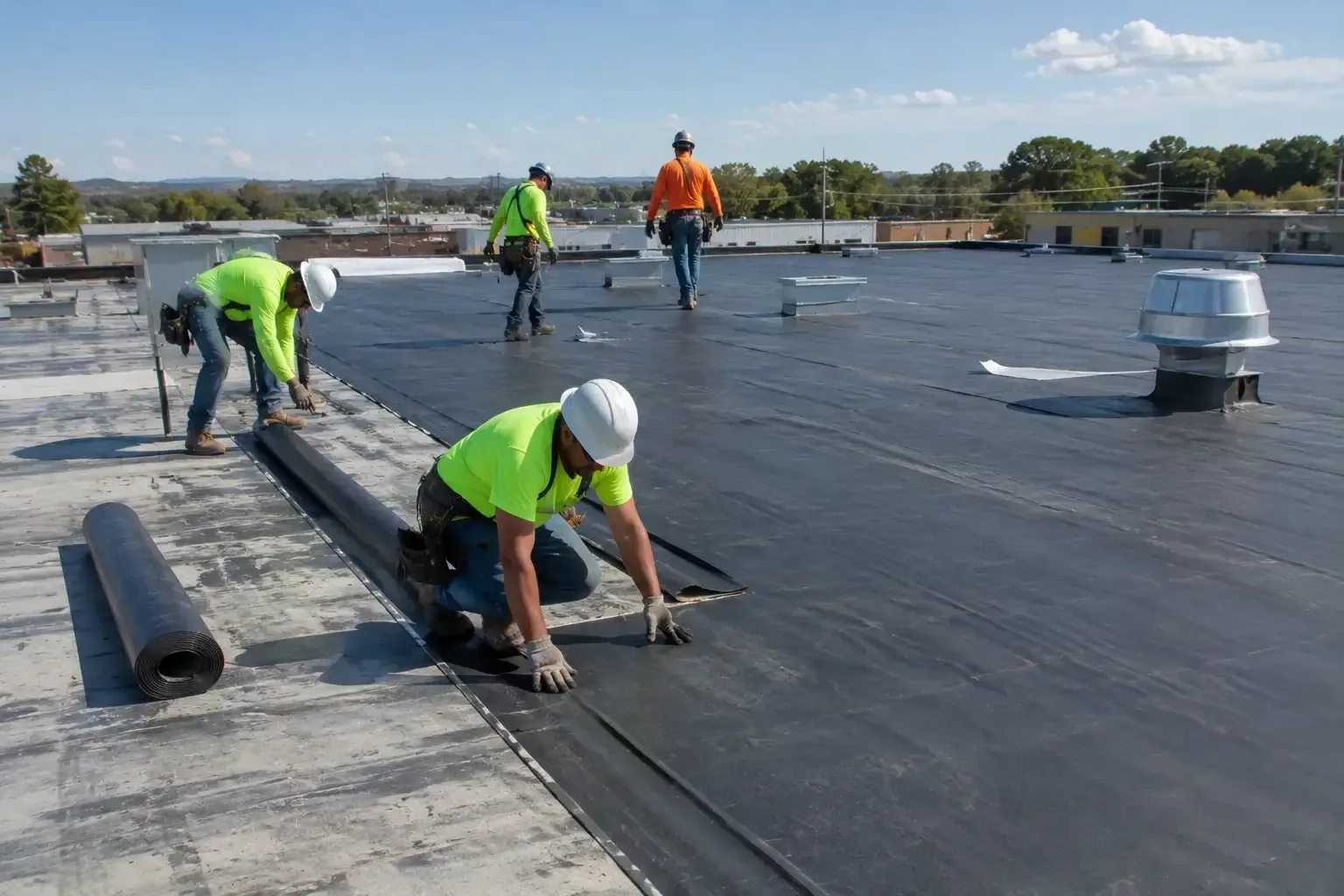
Commercial Roof Replacement
What we check, what we recommend and how the crew keeps the building running.
Roof Insulation, Tapered Systems and Cover Board
Conditions, options and next steps for commercial buildings in East Tennessee.