
Storm Damage Roof Repair in Johnson City, TN
A gust strong enough to flutter a membrane does its damage in the half second the sheet lifts, and then the sheet falls back and the roof looks intact from the parking lot. In that half second the fastener plates can tear partway through the membrane, the bond to the insulation can break across a strip of the field, and loose edge metal can start to catch the next gust. Nothing leaks that night. The water arrives weeks later, after a thaw has worked into the broken bond, and by then an owner in Johnson City, TN, is paying to replace wet insulation and asking an insurer to connect a ceiling stain to a storm that has faded from memory. A roof walked within days of the weather costs an inspection. A roof walked after the stain costs the assembly.

What does a storm do to a roof that nobody can see from the ground?
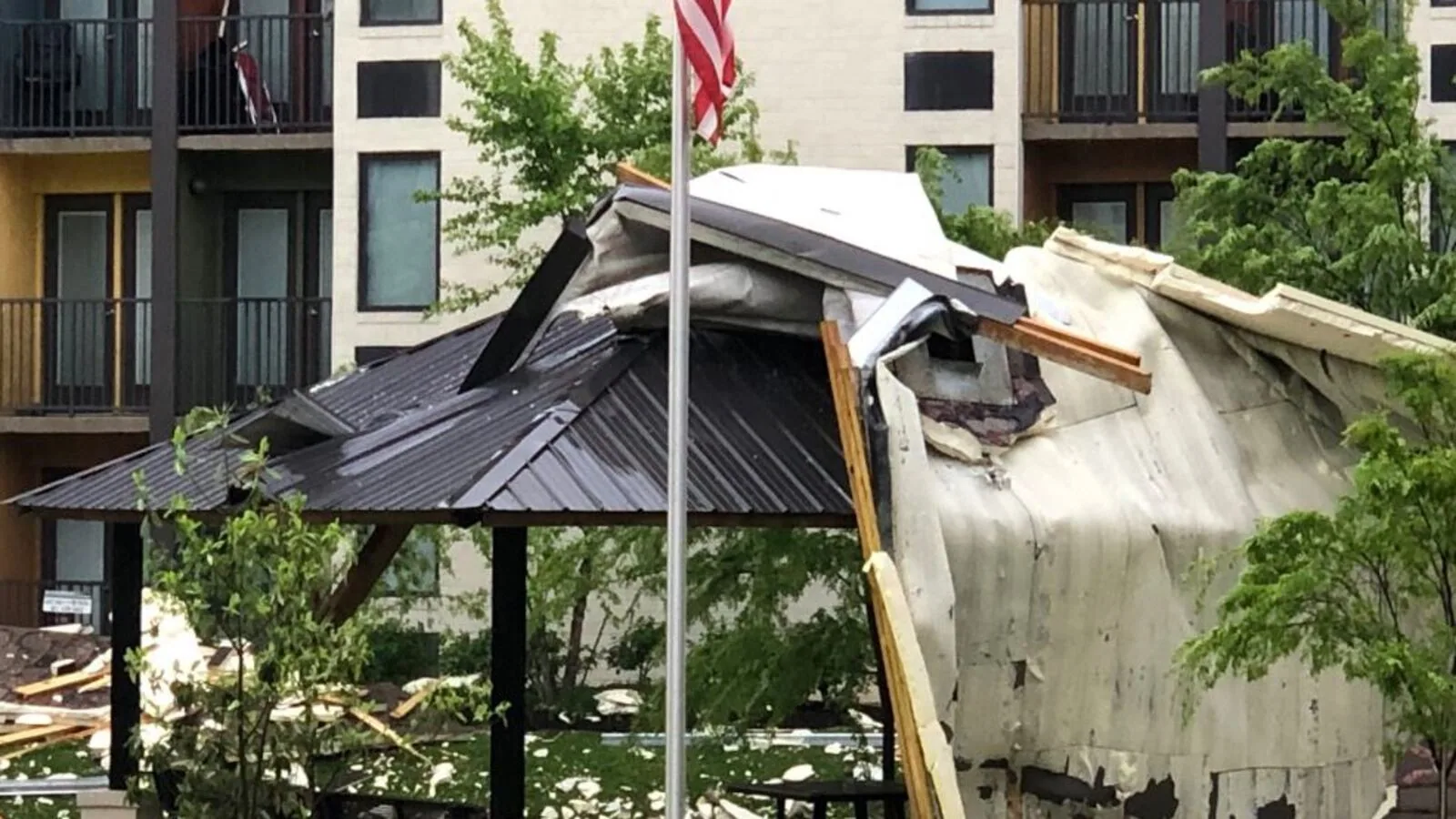
Wind, water and snow each leave a different mark. Wind lifts membranes and edge metal, and it drives debris across the roof that punctures the sheet where it lands. Heavy rain finds every flashing that was already marginal and every drain that was not cleared, and a downpour can overrun a scupper that was undersized from the start. Snow and ice load the structure and grip rooftop equipment, then slide or thaw in ways that tear off vent caps and bend flashing on the way down. Hail, where it falls, bruises the membrane and cracks the facer of the insulation beneath without always cutting the surface. Each kind of damage has its own pattern, and reading the pattern is how we separate storm damage from long-standing wear.
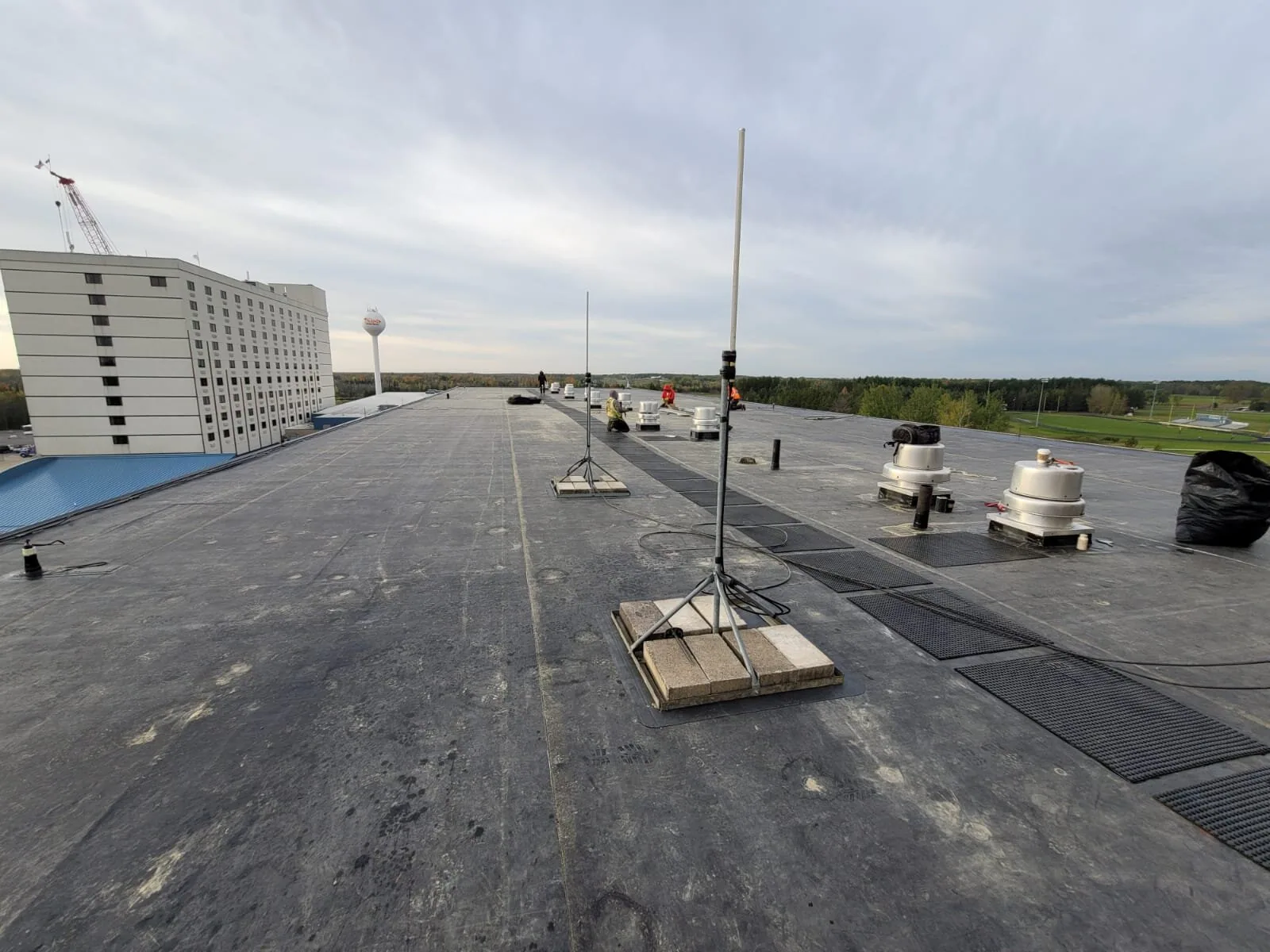
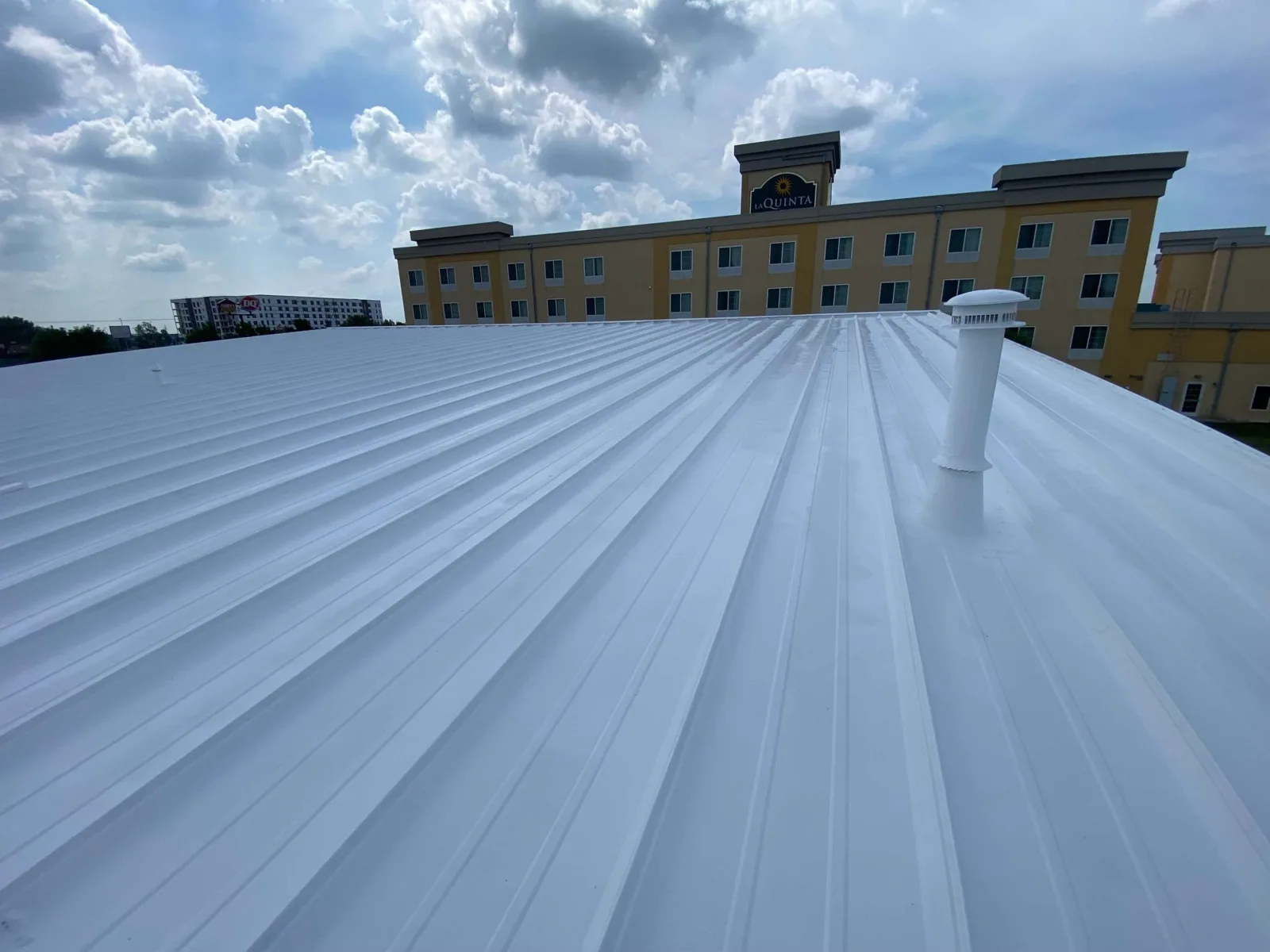
The attachment method changes what to look for. A mechanically attached single-ply shows fastener pull-through and fluttered laps along the perimeter and corners, where uplift pressure is highest. A fully adhered system shows lifted patches and bubbles in the field. Ballasted roofs show displaced stone and exposed membrane, and standing seam metal shows loosened clips, shifted panels and cracked sealant at ridges and trim. Knowing the system before we climb saves time and keeps small damage from being missed.
Have the roof walked while the evidence is fresh
Call Commercial Roofing Johnson City after any storm, at any hour. We will make the building dry, document what the weather did and lay out the permanent repair.
How do you tell storm damage from ordinary wear after the weather has passed?
Storm damage leaves directional, recent evidence. Torn or lifted membrane runs along the windward edge or a corner. Fresh punctures and debris marks fall in a line. Displaced coping, bent counterflashing and scattered gravel point the same way. Wear, by contrast, shows as ultraviolet crazing, uniform shrinkage at flashings and dirt lines that predate the event. We photograph each area against the roof plan, take moisture readings where the membrane has been breached and, on a large roof, fly a drone inspection before anyone walks across a compromised deck. The report separates damage that belongs to the storm from conditions that existed before it, because a carrier will make that distinction whether or not the owner does.
What does a month of waiting cost after a storm?
Water in a compromised assembly behaves on a clock. In the first day it wets the top layer of insulation. Within weeks it spreads sideways along the deck, rusts steel flutes and fasteners and invites mold in the space below. Every freeze-thaw cycle that follows enlarges the damaged area, because absorbed water freezes inside the insulation and breaks it down. Late repair also complicates a claim, since policies commonly expect prompt notice and reasonable steps to prevent further loss, and an owner who tarped promptly and photographed the scene is in a better position than one explaining a delay. The cost of an early dry-in through emergency roof repair is small against the cost of replacing insulation that spent a winter wet.
In what order does the work run once a storm has passed?
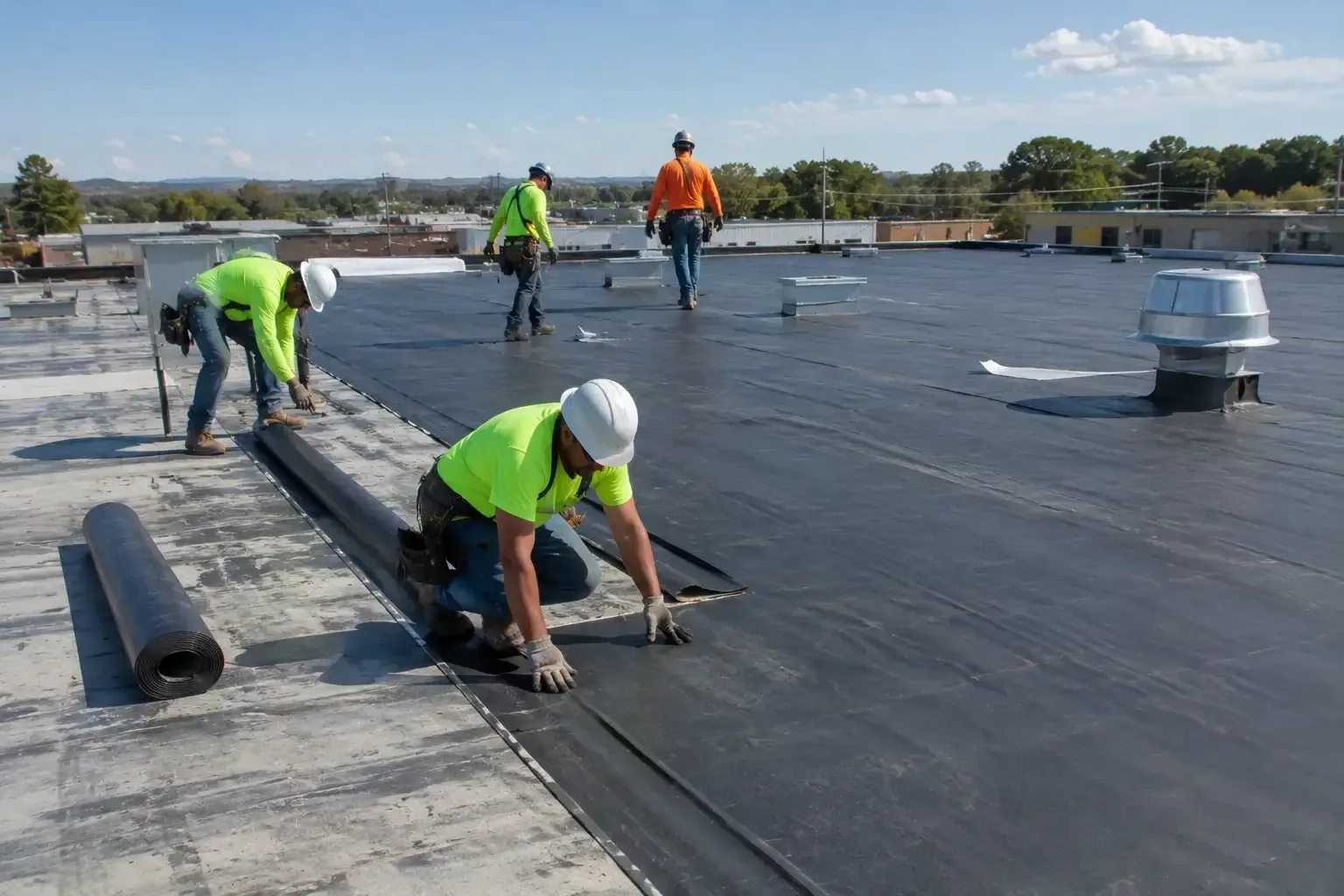
The sequence is the same whatever the size of the storm. First the building is made safe and dry, with temporary membrane or tarps over breaches and loose metal secured, and that happens at any hour. Second comes documentation: photographs, moisture mapping and a written scope that separates emergency measures from permanent repair, prepared as the record an adjuster needs when we help with roof insurance claim assistance. Third, permanent repair is scheduled with materials ordered and a weather window chosen, since a membrane welded in cold, wet conditions becomes the next failure. A property with several roof areas is staged so the worst-exposed areas are closed first, and a moisture survey follows when the wet footprint is uncertain.
Which Tri-Cities weather events should an owner have in mind?
Tornadoes are rare in Washington County, with ten recorded in its history and the strongest an F2 in 1929, but they have occurred: five touched down in 2011, three of them on April 27. A roof does not need a tornado to be hurt, and ordinary thunderstorm wind is enough to lift an aging edge, but the 2011 record is a reason for owners of occupied buildings, including Johnson City Medical Center and the other institutions along the Med-Tech corridor on State of Franklin Road, to keep an emergency plan on file. Repairing wind damage quickly is easier when the roof plan and contact list already exist.
Water is the other local concern. Hurricane Helene in September 2024 pushed the Nolichucky River to catastrophic flood levels, with the gauge at Embreeville reading 92,500 cubic feet per second before it failed, and I-26 was closed by the flooding. Flood damage is mostly a ground-level problem, but the same weather puts rain on roofs, and drains that were never cleared are tested all at once. Winter brings its own load: 8.7 inches of snow fell in 1969 on Christmas Day at Tri-Cities Regional Airport, and mountain communities such as Roan Mountain collect considerably more winter precipitation. Snow and ice damage is a storm in slow motion.
Commercial Roofing Questions
Should the roof be tarped before the insurer has seen it?
Protecting the building is generally expected before an adjuster arrives, and policies often say so. Photographs taken before and after the temporary protection show what the storm did and what the tarp covers. Permanent repairs usually wait for the carrier's review, while dry-in work does not.
Can a roof be hurt in a storm without any visible leak?
Often, and that is the usual pattern. Fluttered membrane, torn fastener plates and broken bonds leave the surface watertight until a thaw or a hard rain finds the opening. A moisture scan a few days after the storm finds those areas while they are still small.
What decides whether a damaged section can be repaired or the roof has to be replaced?
The extent of the wet insulation and the age of the membrane decide it. A localized breach on a sound roof is repaired. When damage is widespread or the membrane is near the end of its life, repair money is better spent toward replacement, and the moisture map shows which case applies.
Who documents the damage when several buildings are affected at once?
Each building receives its own numbered roof plan, photographs and priority ranking, and the property receives a combined summary. That structure lets the most exposed buildings be dried in first and keeps one building's findings from being mixed into another's claim.
Does storm repair change the roof's warranty status?
Repairs made with the system's own materials and methods generally preserve a manufacturer's warranty, while improvised patches can put it at risk. We identify the membrane type before choosing a repair, and the work is recorded so the file shows what was done and when.
Related Roofing Pages
Drone Roof Inspections
How the work is scoped, phased and documented on Tri-Cities roofs.
24/7 Emergency Roof Repair
What we check, what we recommend and how the crew keeps the building running.
Roof Insurance Claim Assistance
Conditions, options and next steps for commercial buildings in East Tennessee.