
Wind Damage Roof Repair in Johnson City, TN
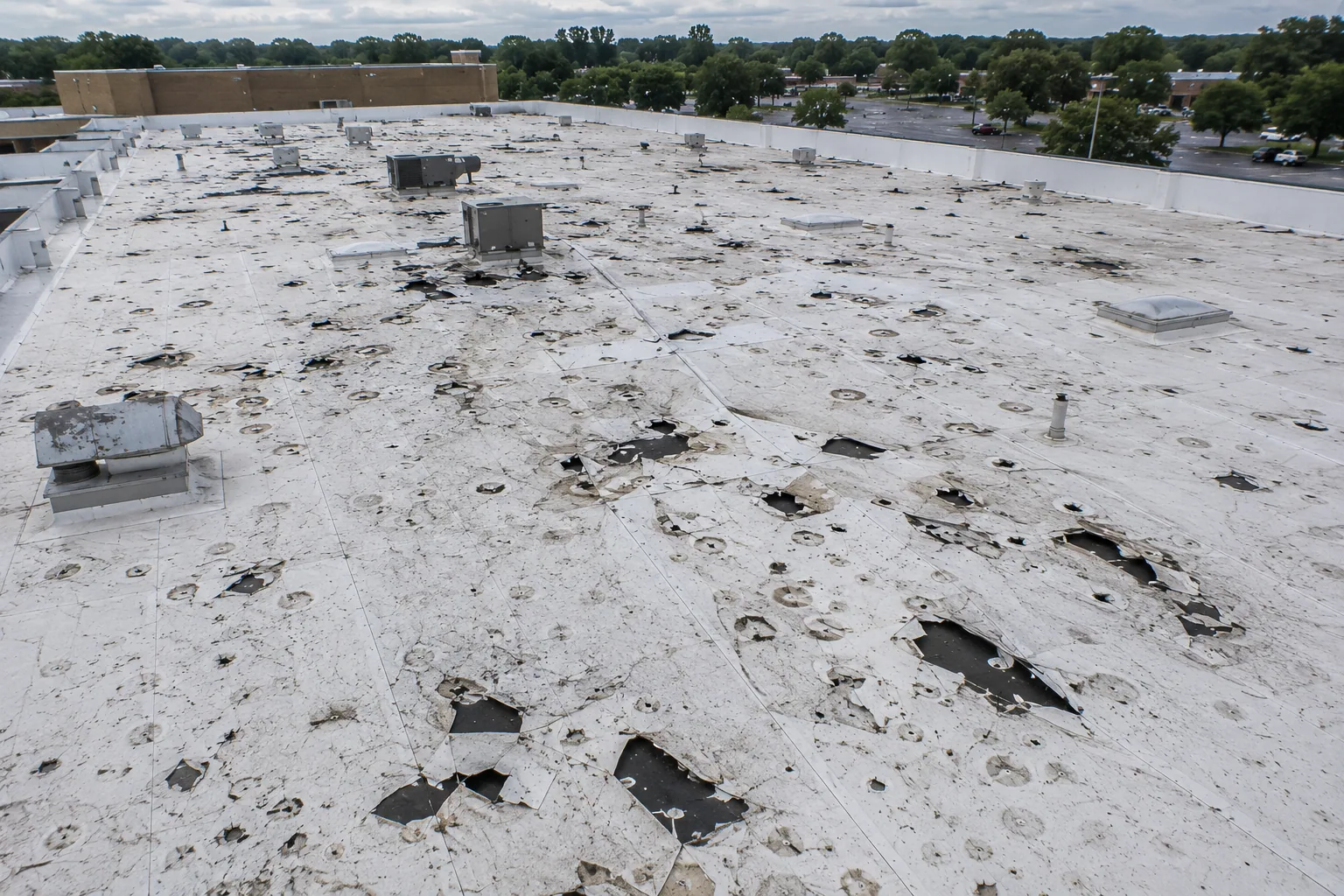
A mechanically attached single-ply sheet holds to the building with nothing more than a row of steel plates, and each plate answers a pull that grows fastest at the corners and along the perimeter. When a hard gust catches a sheet whose laps or edge metal have already loosened, the membrane lifts, the plates saw at the fabric around each screw, and the insulation underneath shifts a fraction of an inch against its neighbors. Then the sheet settles back and the roof looks whole from the ground. What remains is a bruise inside the assembly: elongated fastener holes, a broken bond, a lap beginning to peel. In Johnson City, TN, winter freeze-thaw cycling works on that bruise, and it can turn into a leak within weeks, which moves the work from a perimeter repair to a wet-insulation replacement.
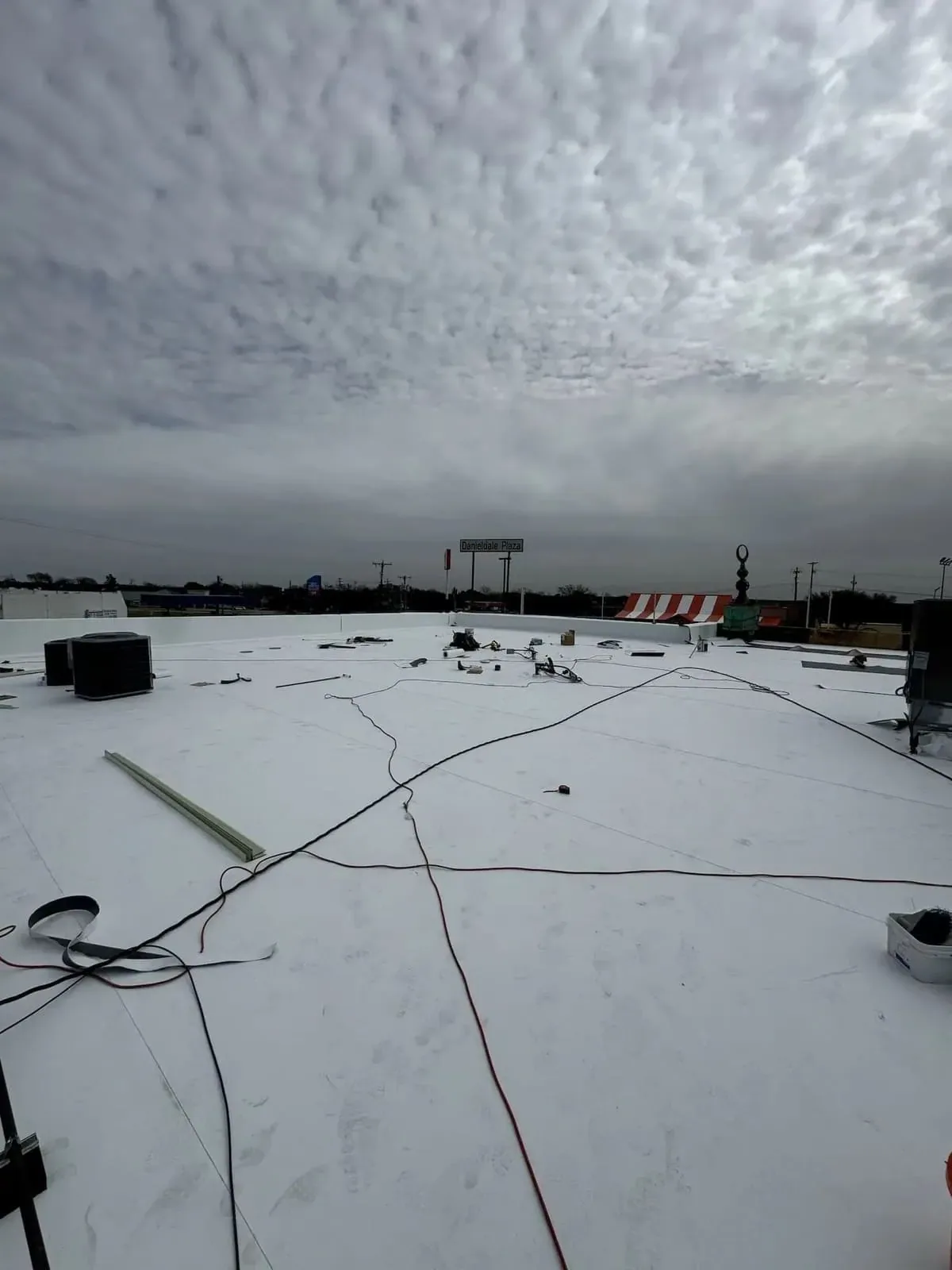
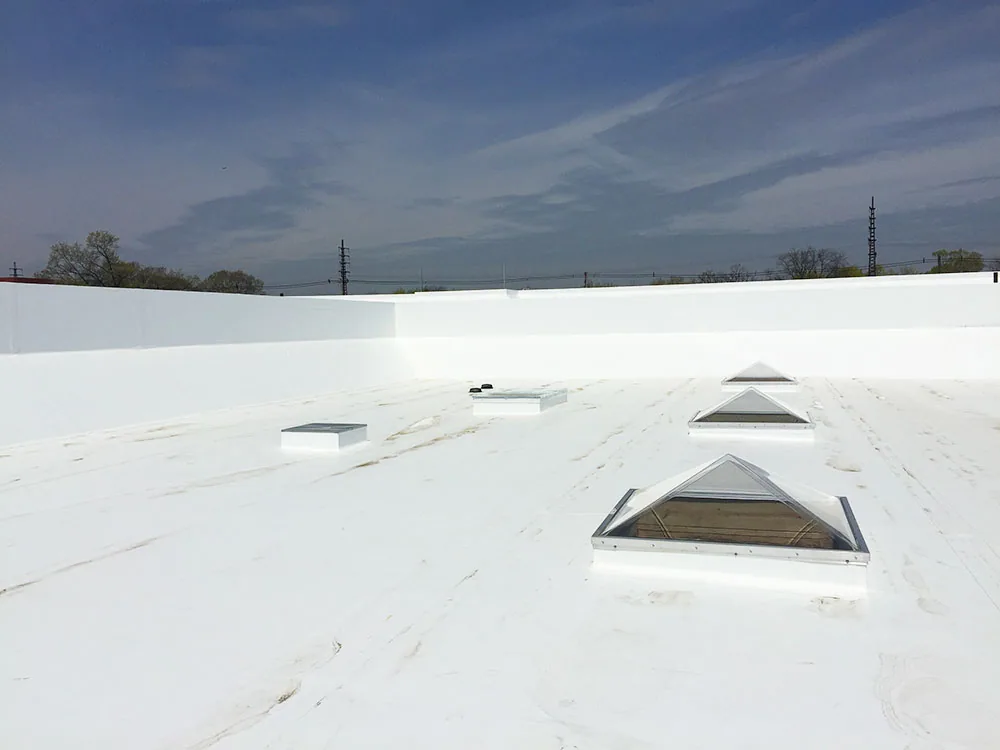
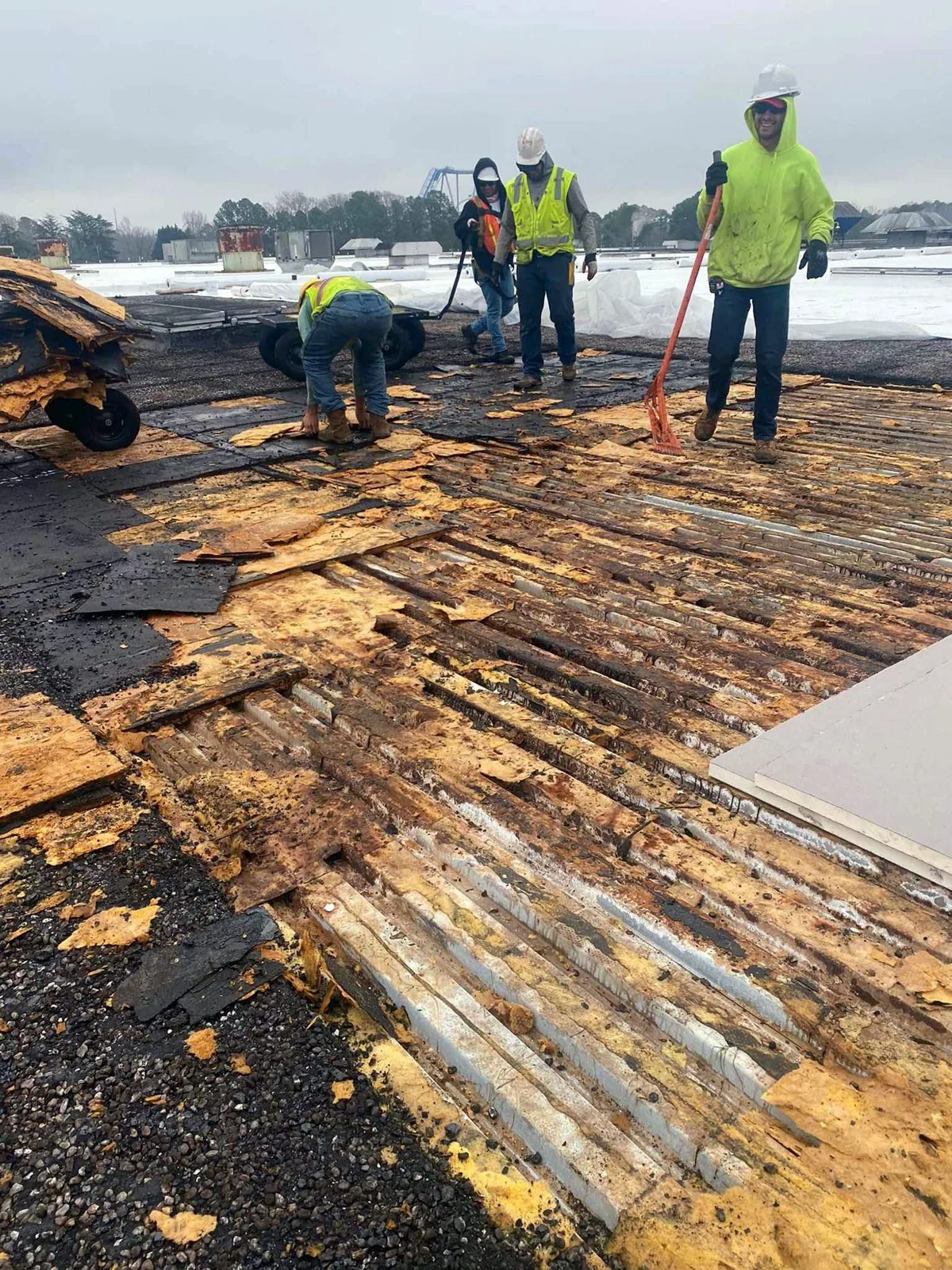
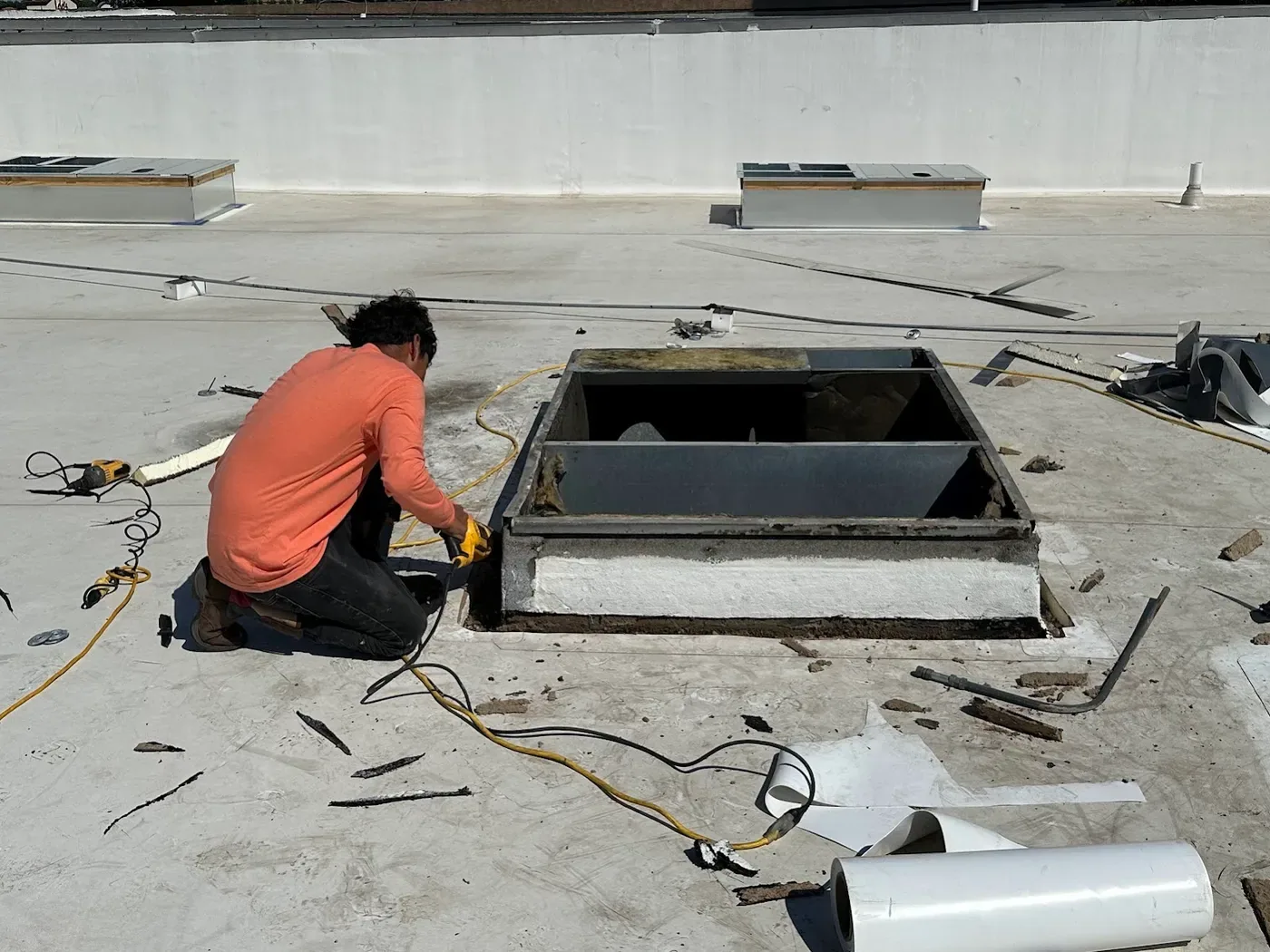
Where does a gust get its grip on a commercial roof?
Wind does not push a flat roof down. It flows across the parapet or the eave, separates from the surface, and creates suction that pulls up on whatever it can reach. That suction is strongest at corners, then along edges, then across the field, which is why the first thing to give is nearly always the edge metal. Once a run of coping or fascia peels away, air gets beneath the edge of the membrane, and the sheet is loaded from underneath instead of from above. The next gust works on a roof that is already open.
The failure takes a different form in each assembly. A fully adhered sheet loses its bond and balloons in patches. A mechanically attached sheet tears at the plates and flutters along its laps. A ballasted roof shows bare membrane where stone has migrated, and a standing seam metal roof shows clips that have walked out of their seats and panel ends that have lifted at the eave. Even a well-built TPO roof loses holding power as its adhesive ages and its fastener holes elongate, so a membrane that survived many winters can fail in a gust that would not have bothered it when new.
Gather the condition data before the next gust does
A perimeter walk with photographs, bond and fastener readings, and a moisture scan of any breached zone gives you facts to budget against. Call us and we will schedule that walk, then set out what to repair now and what to plan for the replacement window.
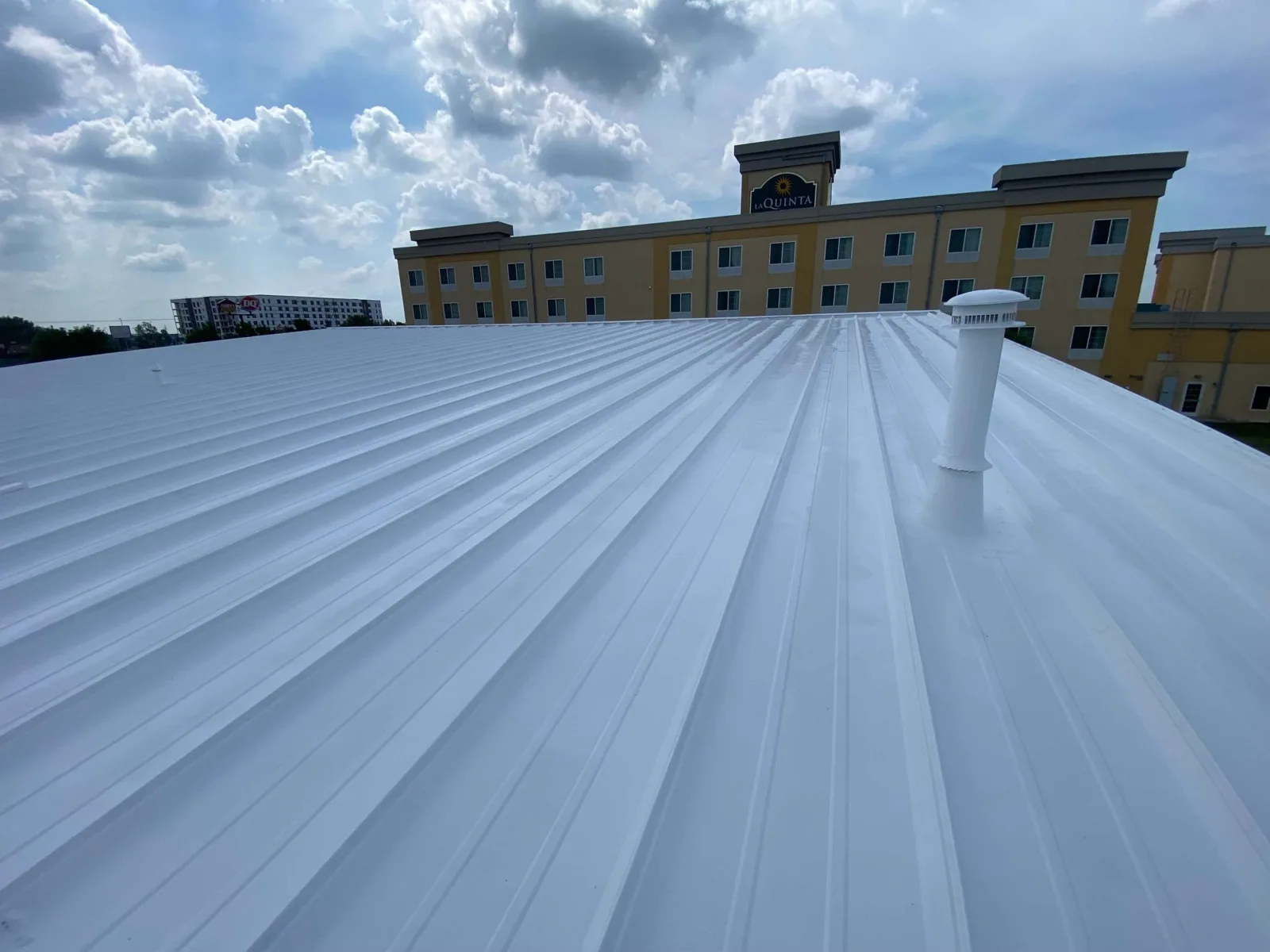
What does exposure add to the wind a roof sees in Johnson City?
Wind codes treat exposure as a property of the site: a building with open ground on several sides takes pressure that a building sheltered by its neighbors does not. Johnson City has adopted the 2018 International Building Code, which sends designers to ASCE 7 for roof pressures, and the exposure category in that calculation depends on what surrounds the building. That is worth keeping in mind for plants such as the 300,000 square foot ebm-papst building on its 30-acre parcel in the Washington County Industrial Park, or for a roof in Gray, which sits just beyond the junction of I-26 and I-81 and has added commercial establishments and retail chains since 2000. A roof detailed for a protected downtown block may not carry the same margin out on open ground.
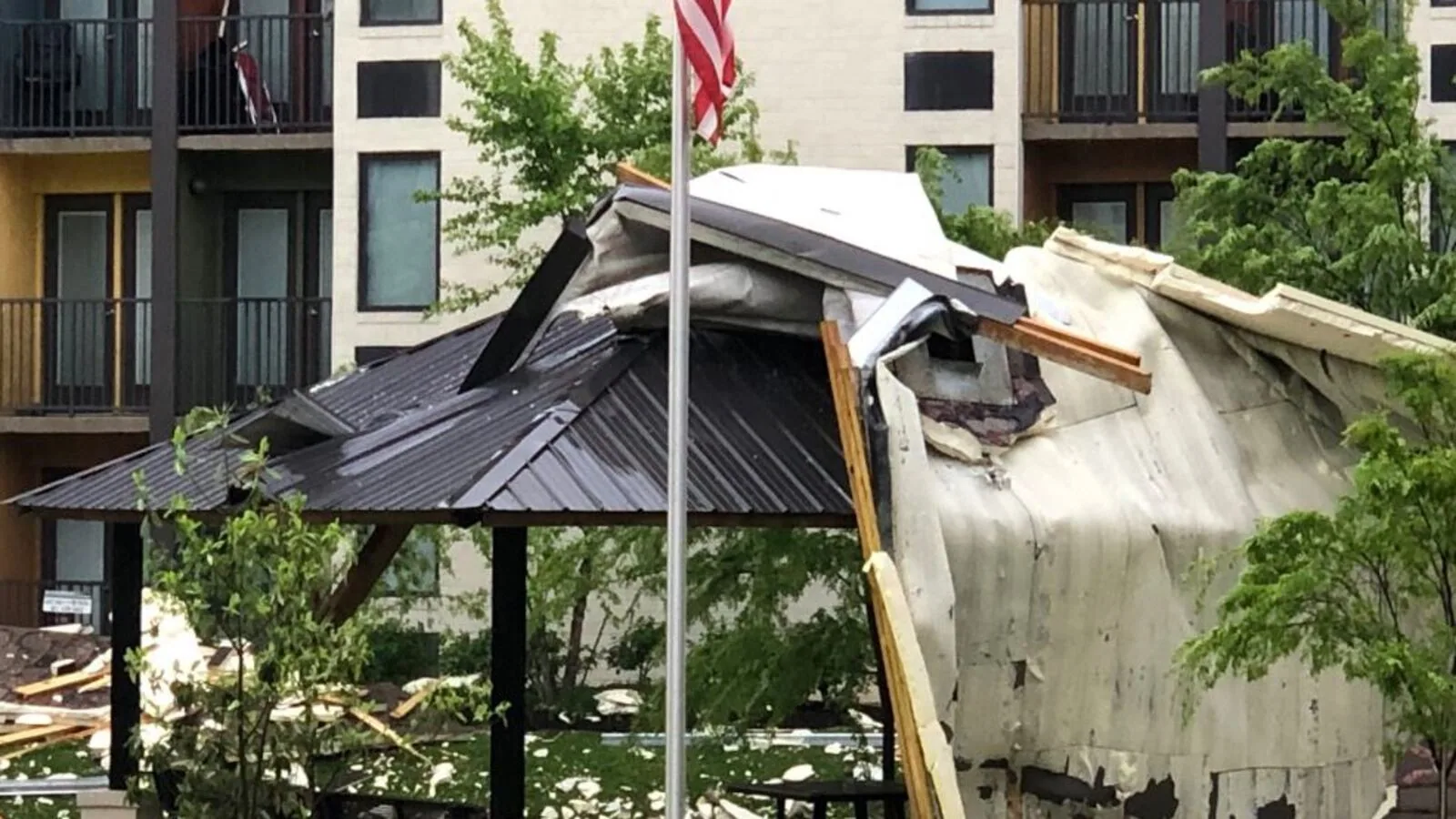
Severe wind is not routine here, but it has a record. Washington County has logged ten tornadoes, the strongest an F2 in 1929, and five of them came in 2011, three on April 27. No roof is specified to survive a tornado, yet an owner with a current roof plan and an emergency contact list is ready sooner, and the storm damage roof repair that follows any significant wind event begins with the building being made watertight at any hour.
How do we sort new wind damage from wear that was already there?
The evidence is directional. Wind damage lines up with the windward side and the corners: lifted edge metal, a strip of membrane pulled back from its termination, plates showing fresh bright metal where they dragged, debris marks running the same way. Wear shows as uniform crazing, dirt lines older than the storm, and sealant that has been failing for several seasons. We photograph each finding against a roof plan, probe the laps, test the bond of the adhered areas, and read moisture across the breached zones. On a large roof we fly it first so nobody walks over a deck that may be compromised, using the same methods as a drone roof inspection. The written report separates what the wind did from what time did, because the carrier will draw that line, and an owner with the line already drawn negotiates from the better position.
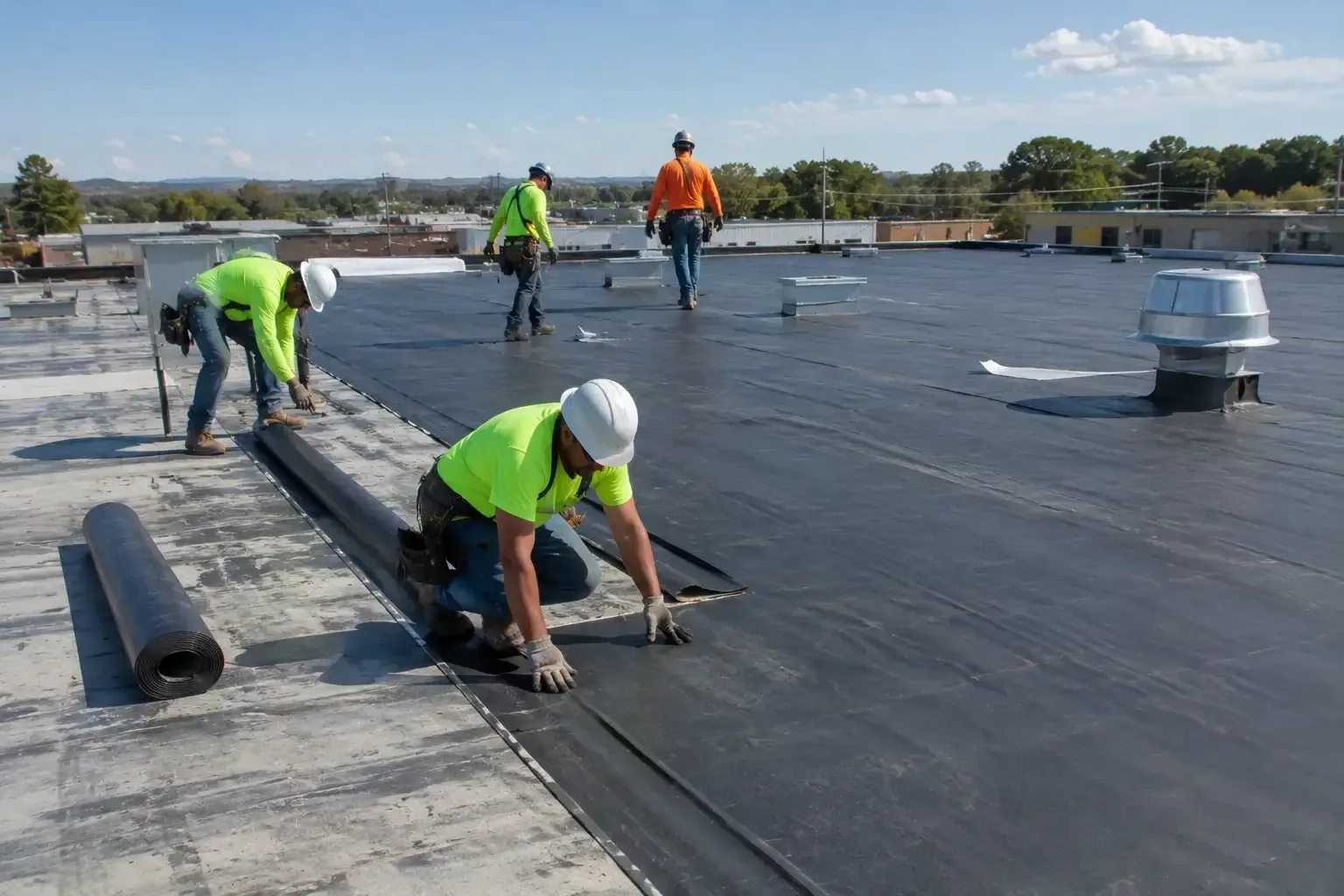
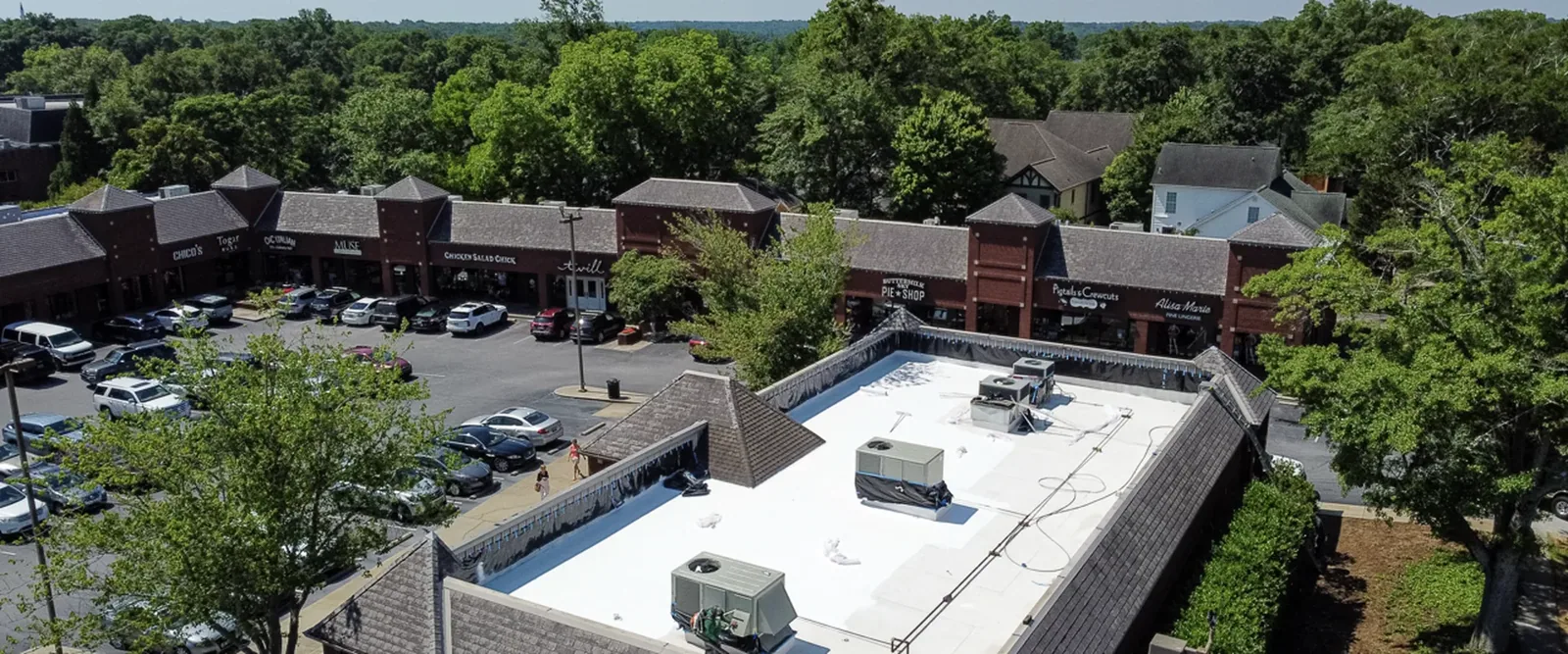
Re-secure the edge, rework the perimeter or replace: which scope fits the damage?
When the damage is confined to a few feet of loose coping and a short run of lifted membrane, the sound move is to re-secure the metal to a stronger standard, replace the damaged sheet, and flash the repair so it does not become the next weak line. When the perimeter band has fluttered all the way around and the fastener holes have enlarged, the better scope is a reworked perimeter with added attachment, a fresh sheet along the edges and new edge metal and coping rated for the pressure at that location. When the membrane is near the end of its life and the wet footprint is wide, putting repair money into a patched roof postpones a replacement without avoiding it, and the moisture map shows which of these cases the building is in. We price all three against the same findings so the choice rests on service life and capital timing rather than on the urgency of the week.
What does a loosened edge cost by the next thaw?
A lifted edge is cheap on the first day and expensive in February. Water enters through the opening, moves sideways through the insulation along the deck flutes, and freezes there on the next cold night, expanding inside the boards and breaking them down from within. Each cycle enlarges the wet area, and a steel deck begins to corrode where the water sits. The same gust that opened the roof can be followed by a second event before the first is repaired, and a second event against an unrepaired edge peels far more membrane than the first. Prompt dry-in through emergency roof repair costs a fraction of replacing saturated board, and photographs taken before the cleanup make the later insurance claim easier to support.
After loose material is cleared, inspect the field for impact openings and scope each one as membrane puncture repair.
A lifted perimeter can pull wall and curb details with it. Include those transitions in the flashing failure repair review.
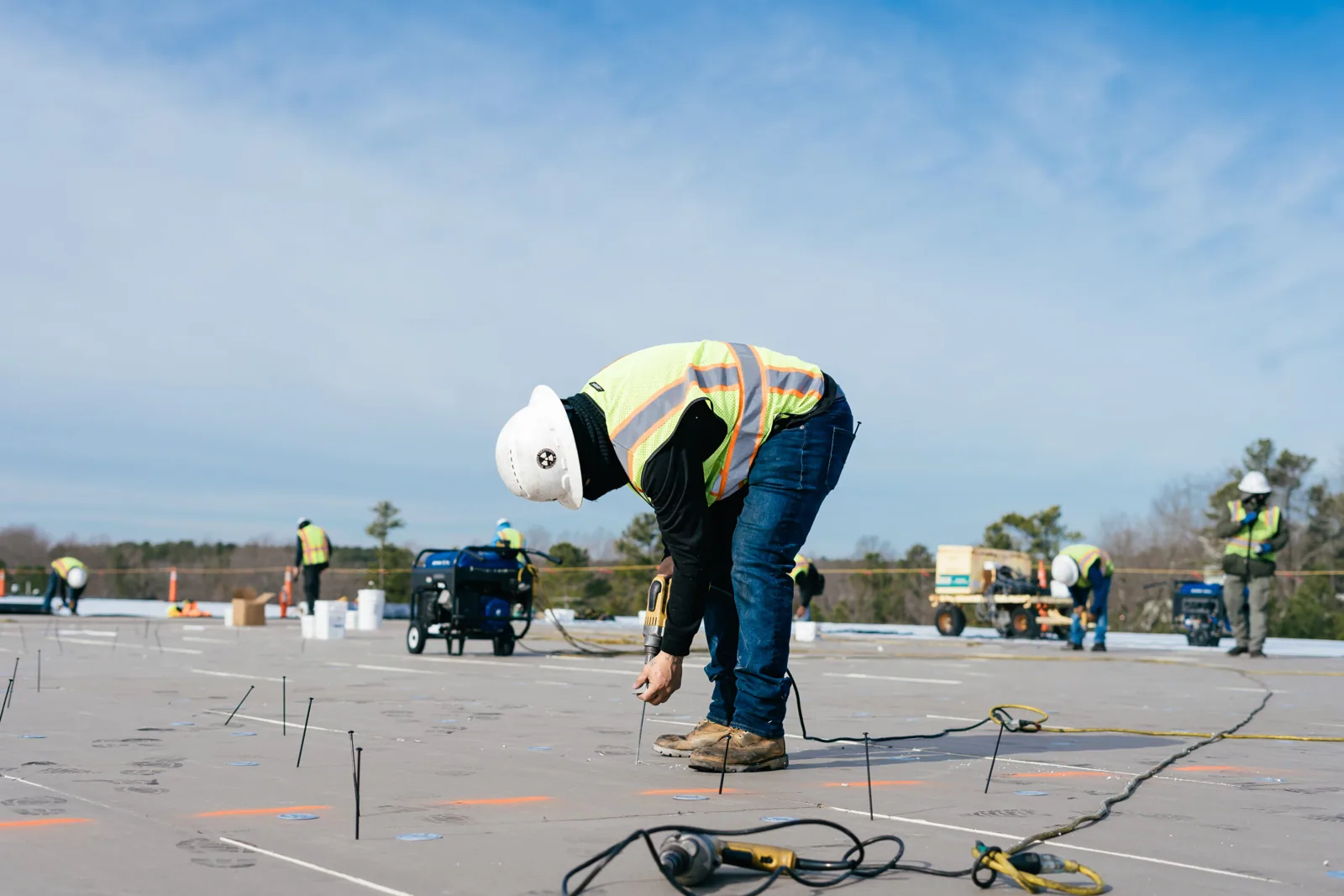
Commercial Roofing Questions
Can a roof lose wind resistance without losing a sheet or a panel?
Often it does. Attachment is the part that weakens: plates elongate their holes, adhesive loses bond across patches, clips shift in their seats. The surface stays watertight while the margin that resisted the next gust quietly drops, which is why a post-storm walk matters even when nothing is visibly missing.
Will a repaired edge hold in the next big gust?
That depends on whether the repair restores the original attachment or improves it. Re-fastening a coping run into the same worn substrate reproduces the old weakness. Replacing the cleat, upgrading the fasteners and sealing the joints to the pressure the location calls for gives a repair that can outlast the original.
What does a pull test on an older roof tell an asset manager?
It converts a guess into a number. Sampling fastener withdrawal and adhesive bond at corners, edges and the field shows how much holding power remains, and a low reading at the perimeter can justify added attachment before any storm arrives. The result also sets the reroof timeline for the capital plan.
Which damage should be handled first on a property with several roof areas?
The areas with open penetrations over occupied space come first, then roofs with exposed insulation, then edge work on sound membrane. Each roof gets its own plan, photographs and priority number, so crews close the most exposed buildings before the next rain instead of working in the order the calls arrived.
Does wind repair change a manufacturer's warranty on the membrane?
Most manufacturer warranties expect repairs to follow the maker's details and use compatible materials, so a quick fix with the wrong sealant or tape can cost coverage the owner still has. We identify the sheet and how it is attached first, then log each repair by location and date for the building file.
Related Roofing Pages
TPO Roofing
How the work is scoped, phased and documented on Tri-Cities roofs.

Gray
What we check, what we recommend and how the crew keeps the building running.
Storm Damage Roof Repair
Conditions, options and next steps for commercial buildings in East Tennessee.