
Edge Metal, Coping and Gutters in Johnson City, TN
A twenty-foot run of aluminum coping grows and shrinks by roughly a third of an inch between a winter night and a sunny summer afternoon, and steel moves about half as far. In Johnson City, TN, that movement happens daily for most of the year, and it tugs at every sealant joint, every fastener hole and every splice plate along the edge of the roof. A joint that is only caulked has no way to absorb it, so the sealant splits within a few seasons and the gap lets rain behind the metal and into the top of the wall. The wall, the insulation beside it and the finishes below all begin taking water at a place no one inspects. Edge work is inexpensive when it is done as detailing and expensive once it has become a wall repair.
Why do edge joints open when the metal itself is still sound?
Because the joint was built to hold a gap shut, and a gap that has to move cannot be held shut. Good coping has a splice plate under each joint, bedded in sealant but left free to slide, and a cleat or continuous clip that secures the outer face while the top of the cap is free to expand. Joints that are butted and caulked, or caps fastened through the top with exposed screws, resist the movement until the sealant fails or the screw holes stretch oval and leak. Water then enters at the fastener, runs down the inside of the metal and wets the top course of the wall and the membrane flashing beneath it from above.
Edge metal at an eave or fascia has a different job and a different weakness. It captures the membrane edge and resists wind uplift, which is higher at corners and perimeters than in the field, so it is usually held by a continuous cleat fastened more closely at the corners. A cleat that is loose, rusted or spaced too wide lets the edge flutter, pulls the membrane away from its termination and starts a peel that travels inward. Edge systems are tested to the ANSI/SPRI ES-1 standard, which the building code points to for low-slope roofs, and replacement metal is chosen with that rating in mind.
Look at the roof edge before winter tests it
Call Commercial Roofing Johnson City to have the perimeter walked, photographed and priced joint by joint. You will know which sections need resealing, which need new metal and which have already let water into the wall.
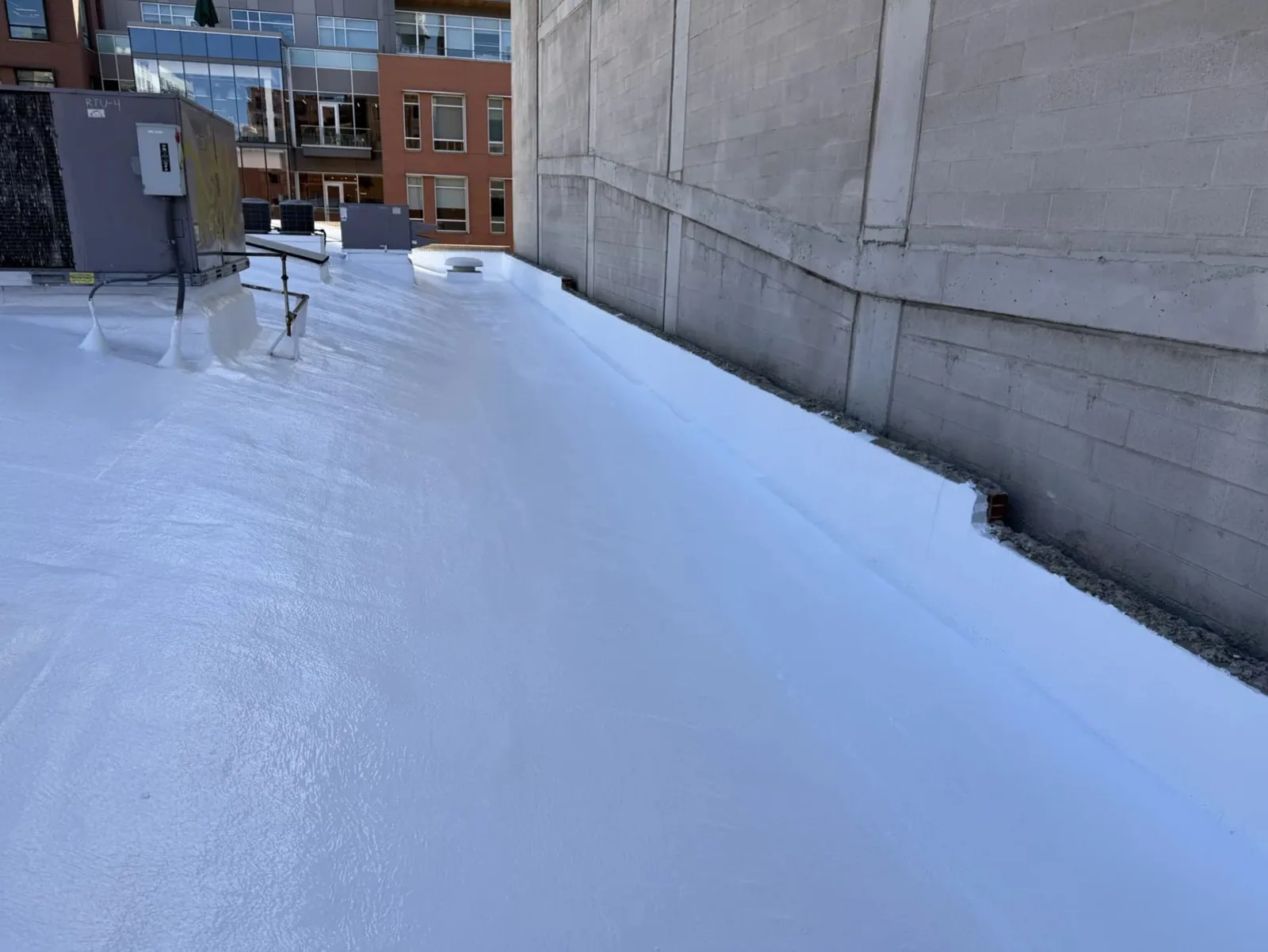
What do we check along the edge of a roof?
We walk the full perimeter and look at four things. First, the splices: whether the gaps are consistent, whether the sealant has split and whether cover plates are present and seated. Second, the fastening: exposed screws, backed-out fasteners, stretched holes and rust streaks that show where water has been running. Third, the cleats, checked by hand pull and by looking for deflection in the face of the metal. Fourth, the gutters and downspouts: pitch to the outlet, joints, hangers and where the downspout discharges. At a parapet we also read the wall itself, because efflorescence, stained masonry and cracked mortar below the cap are signs that water has been getting behind the metal for a long time. Failures found here often turn out to be flashing failures as well.
Which edge detail fits a parapet, an eave and a fascia?
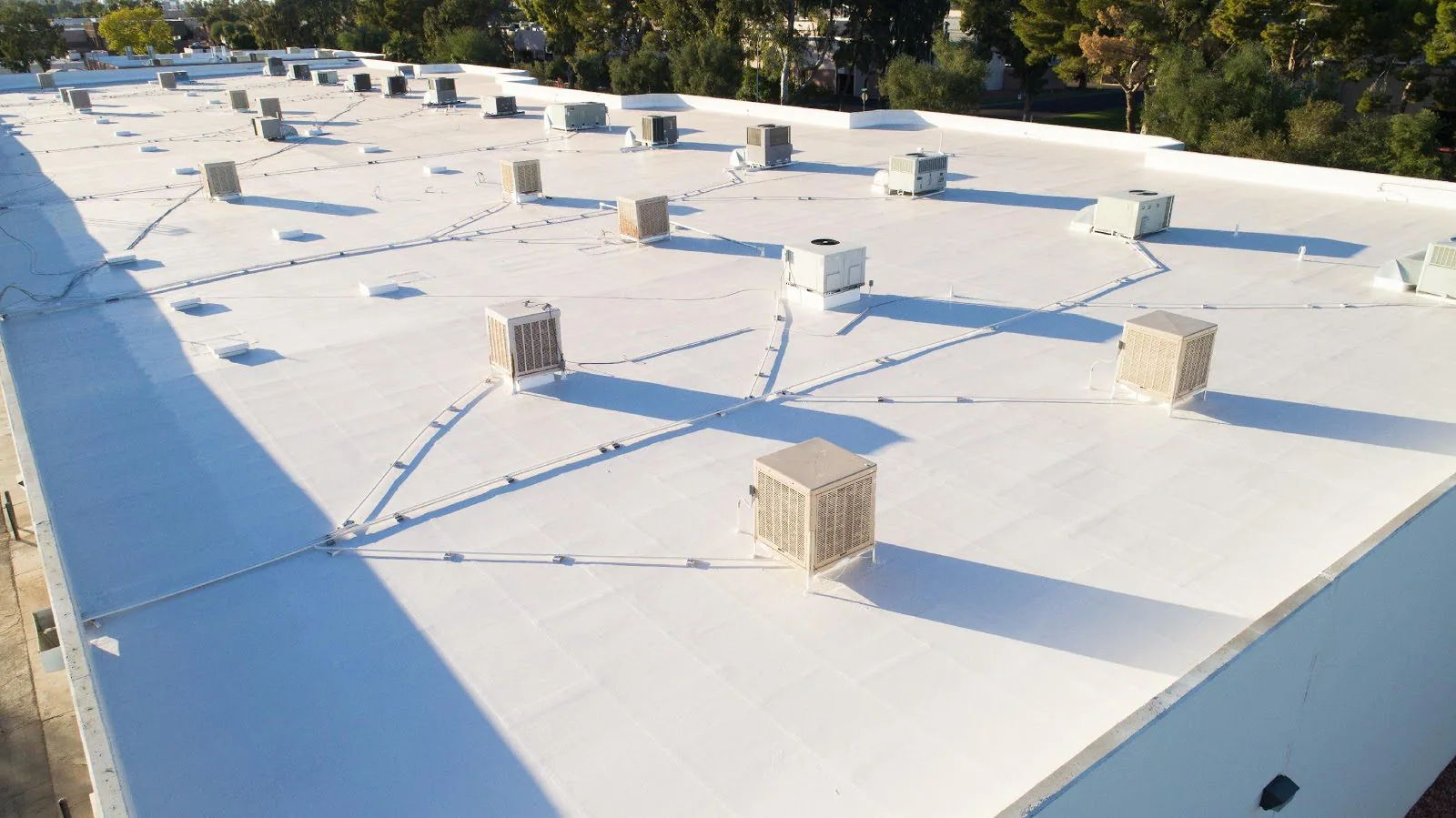
A parapet is capped with coping, either a formed metal cap on concealed cleats and splice plates or a precast or stone cap on masonry. The metal version is the common repair because it can be installed over a prepared substrate without rebuilding the wall, but the cap has to shed water toward the roof side and not down the outside face, where it stains and freezes. An eave or low-slope edge uses a drip edge or a fascia system with a continuous cleat.
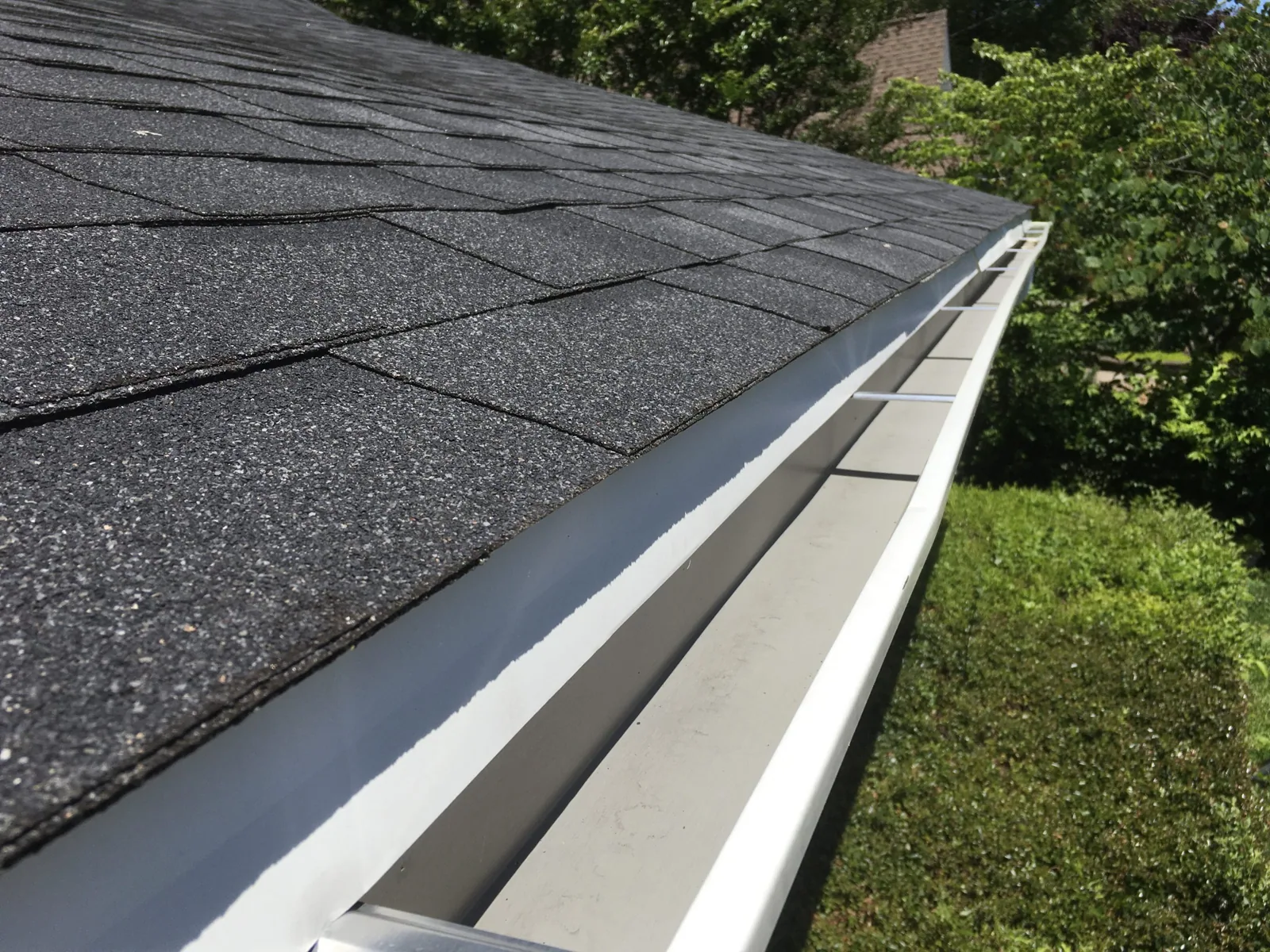
Gutters and downspouts are sized to the roof area they serve, and in a climate with real winters they are best specified with larger outlets and sturdy straps. Gutters are the first component to fail when ice and snow slide off a roof, and ice in a cold downspout can split a seam from the inside. Where a gutter keeps failing, the better answer is often to reconsider the whole edge, adding a larger conductor head or a scupper that clears water faster, and re-flashing the membrane to the new profile. Panels on a standing seam metal roof bring their own ridge and eave trim, which moves with the same temperature swing.
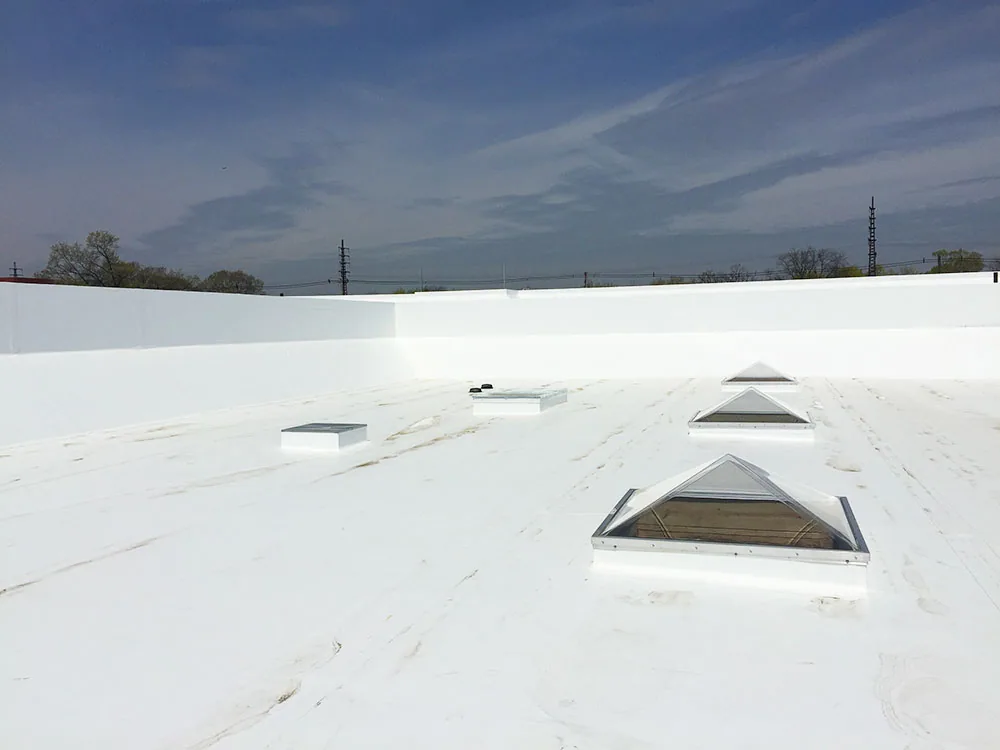
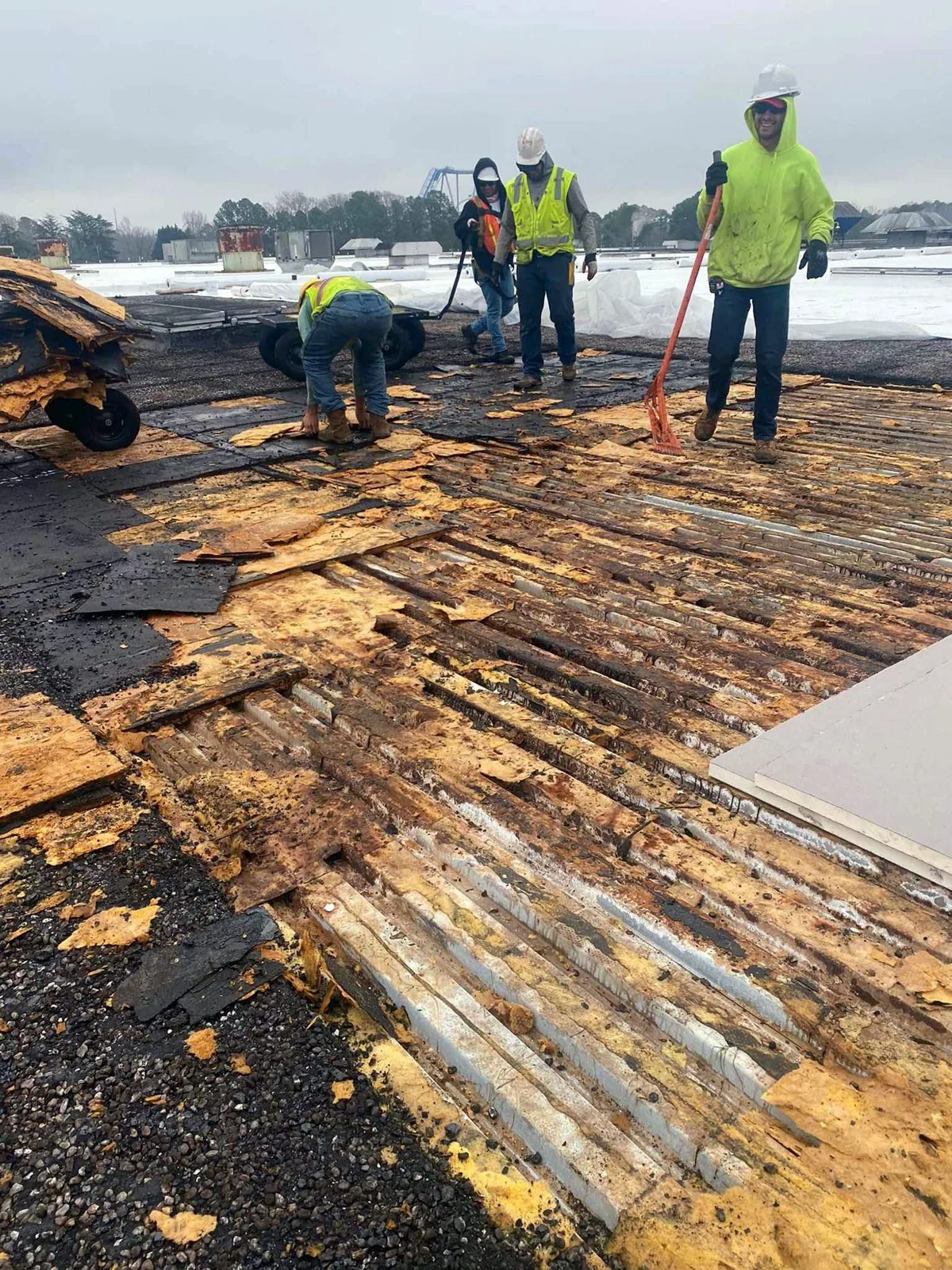
What does an open coping joint cost over a winter?
Water entering at a coping joint wets masonry, and masonry holds that water against freezing. A saturated parapet course that freezes expands, spalls the face of brick or stone, cracks mortar and lets in more water, which makes the next freeze worse. The wall flashing below the cap is wetted from above, the membrane termination lifts, and the insulation next to the wall takes on moisture and loses its thermal value. The repair that began as a splice plate and fresh sealant has become tuckpointing, wall flashing replacement and a section of insulation. Edge metal is among the least expensive components of a roof and among the most costly to ignore, because the damage it prevents sits in the wall where nobody looks until a piece falls.
How do older downtown buildings and mountain snow change the edge?
Downtown Johnson City is a historic commercial core with older masonry buildings, and where one of them carries a parapet, open coping joints do their damage fastest, because brick and mortar pick up water and freeze it. Replacing coping on a building of that kind is also a matter of appearance, since the cap profile and color are visible from the street. Mountain Home VA has Beaux Arts buildings that opened in 1904 inside a National Historic Landmark District. Historic status means new metal should respect the edge profile and finish, with the owner and reviewing authority aligned before orders are placed. For work in the broader Interstate 26 corridor, confirm staging and deliveries before material arrives.
Snow and ice test gutters and edges across the region, and more in the mountains. Mountain City, at 2,418 feet the highest incorporated city in Tennessee, and Roan Mountain, at about 2,550 feet, sit well above the valley floor and receive considerably more winter precipitation than Johnson City, where about 15.6 inches of snow falls in a year. Even in the valley, a winter low near 25F can freeze a gutter solid, which makes a downspout that discharges onto a walkway a slip hazard as well as a drainage fault, and it is why snow and ice roof damage repair so often begins at the eave.
For a reroof, detail the edge transition with commercial roof replacement.
Commercial Roofing Questions
Is exposed-fastener coping acceptable on a commercial parapet?
It is a short-term answer at best. Screws driven through the top of the cap pass through the surface that sees the most water, and thermal movement works their holes oval. Concealed cleats and splice plates are the lasting method, and they let the cap move without opening a joint.
What decides how long replacement edge metal will last?
Metal type, finish, gauge and the attachment method decide most of it, with exposure counting next. Heavier material on properly spaced cleats outlasts light material on wide spacing by a wide margin, and a baked finish holds color and resists chalking far longer than a thin paint.
Can edge metal be replaced without disturbing the membrane?
Sometimes. Coping on a masonry parapet can usually be replaced without touching the roof, while edge metal that captures the membrane at an eave comes off together with the membrane edge, so the termination has to be redone. A detail drawing before the work shows which case applies.
Why do my gutters overflow only in winter?
Ice and compacted snow narrow the outlet, and repeated freezing and thawing builds a collar of ice at the throat of the downspout that sends meltwater over the lip. Larger outlets, a check of the pitch and heat in the worst sections correct it. Cleaning alone seldom does.
How is the wind rating of replacement edge metal confirmed?
The edge system is selected against an ANSI/SPRI ES-1 test rating that matches the design wind pressure for the building's height and exposure, and cleat spacing and gauge follow the tested assembly. If the earlier edge was never tested, the replacement is the chance to bring it up to current practice.
Related Roofing Pages
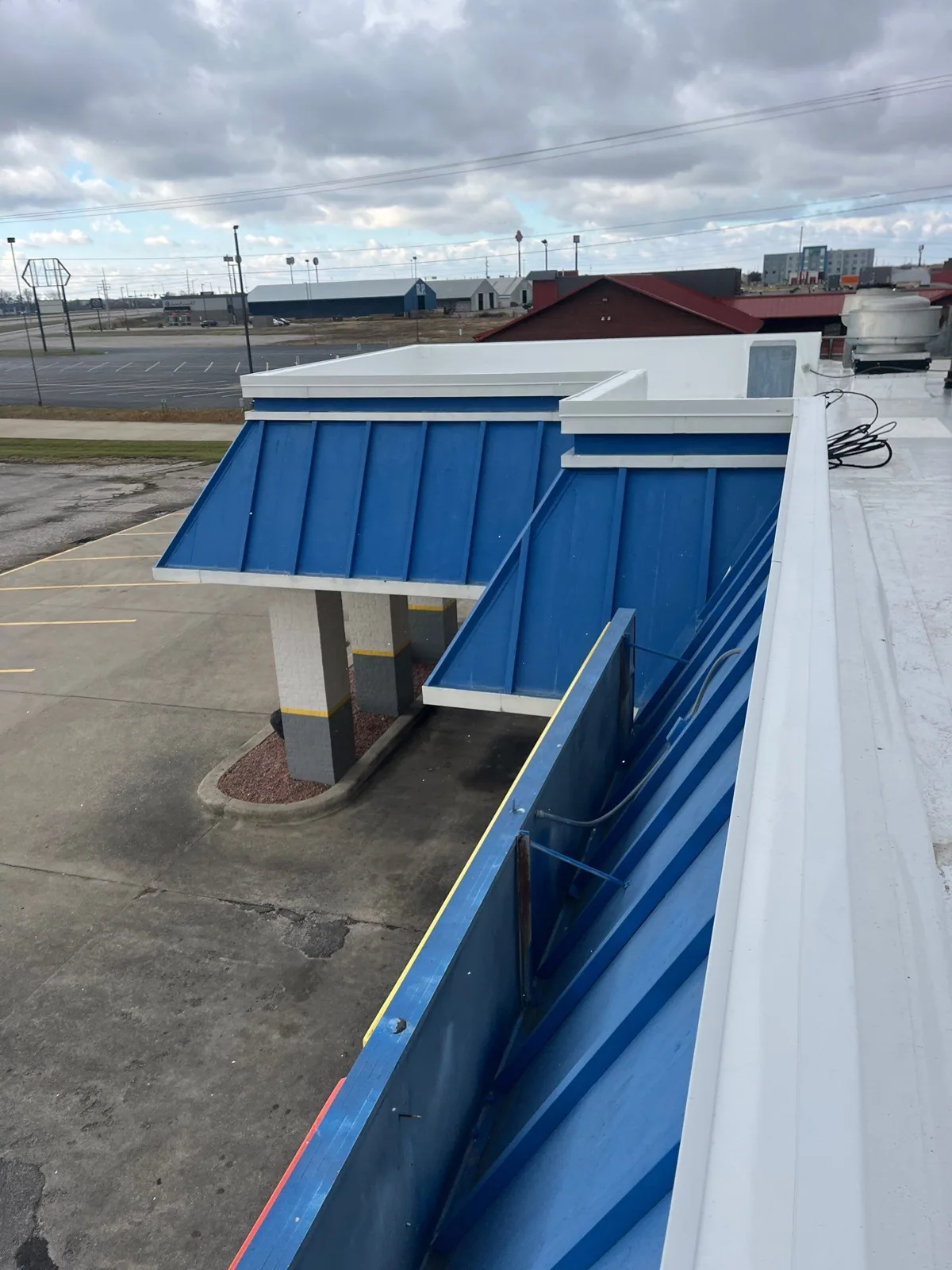
Failed Flashing Repair
How the work is scoped, phased and documented on Tri-Cities roofs.
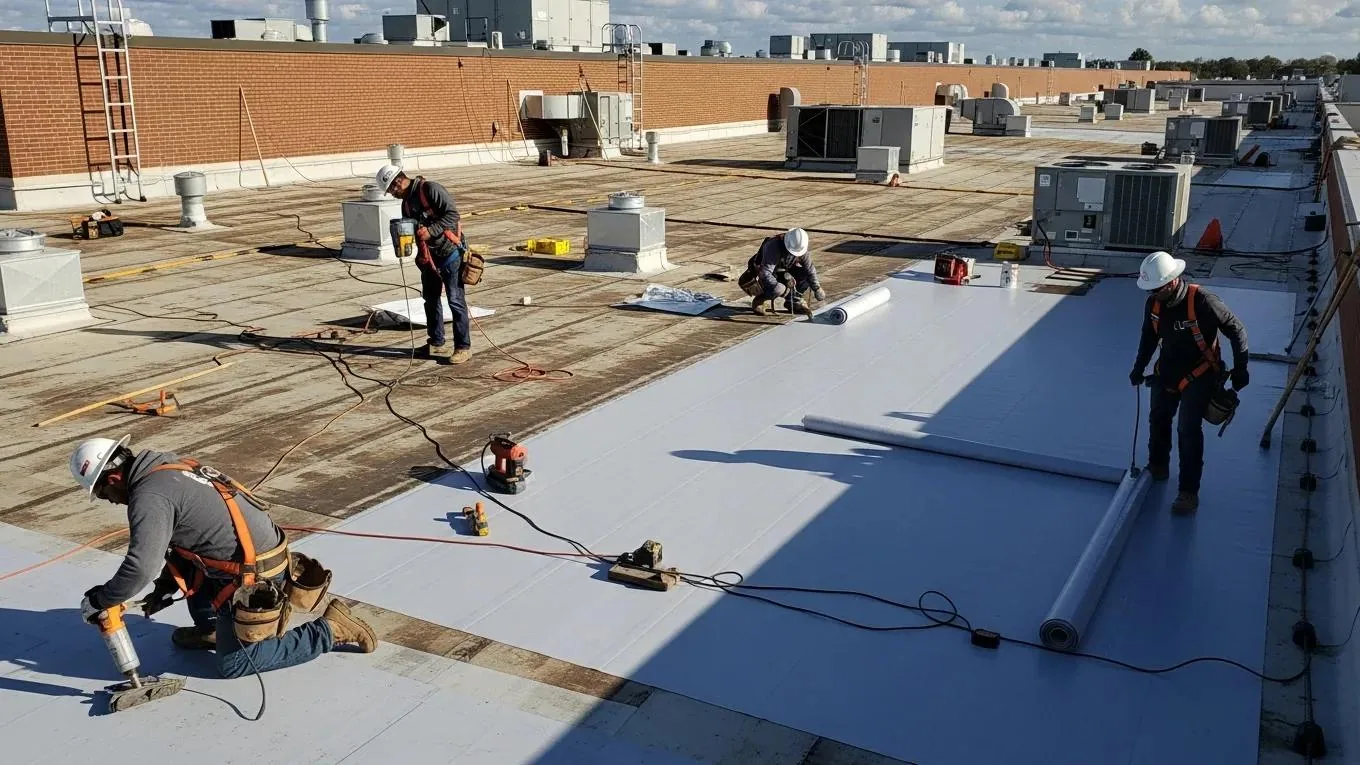
Roof Drains, Scuppers and Ponding Correction
What we check, what we recommend and how the crew keeps the building running.
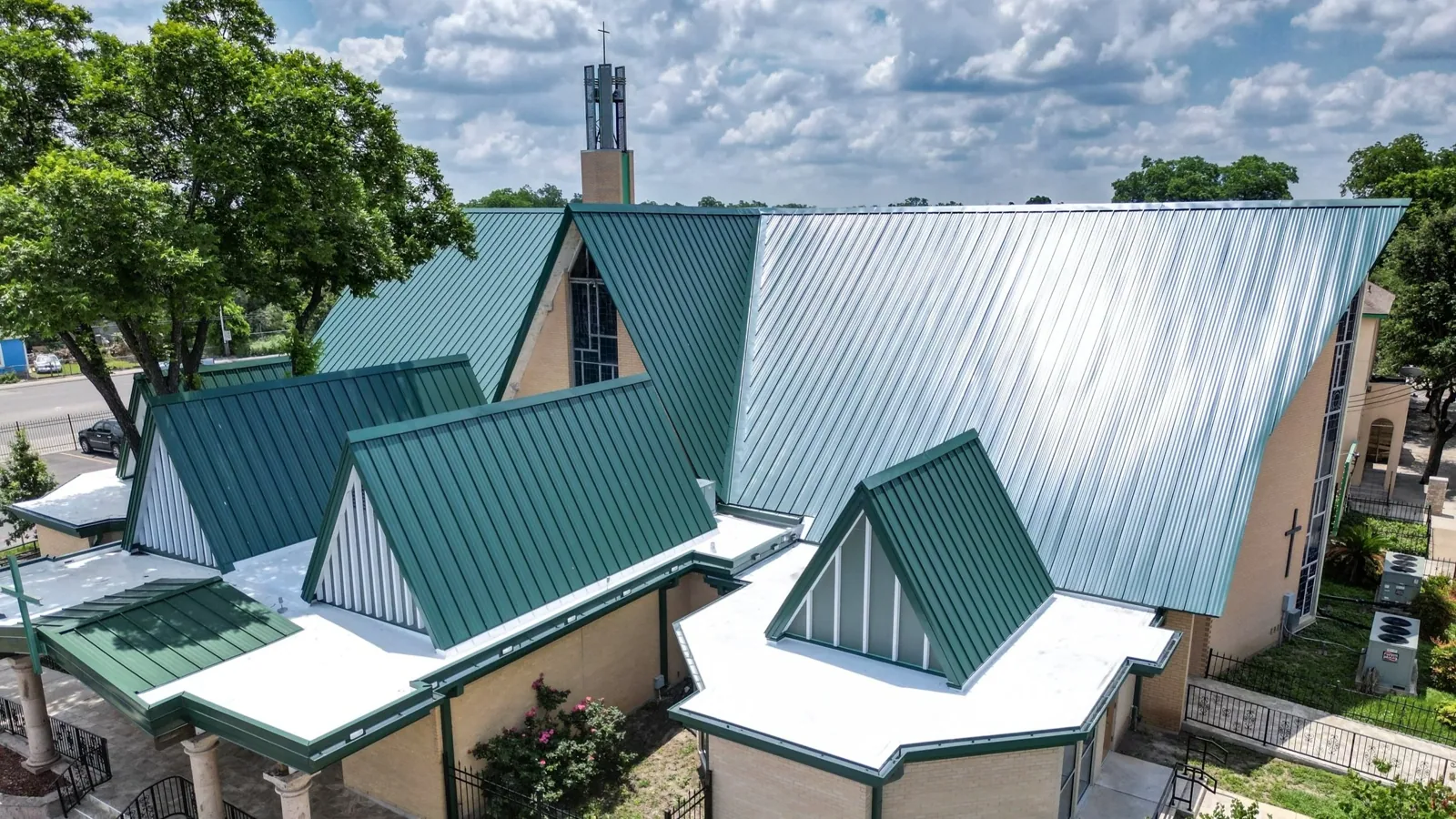
Standing Seam Metal Roofing
Conditions, options and next steps for commercial buildings in East Tennessee.