
Commercial Roofing in Roan Mountain, TN
Meltwater under a snow pack is a slow experiment in heat flow. Warmth leaking up from the building melts the underside of the pack, the meltwater runs downslope to the eave or the drain line, and there it meets metal still below freezing and turns back into ice. Roan Mountain, TN sits at about 2,550 feet on the upper Doe River, with the mountain itself rising to 6,285 feet, so its commercial roofs sit far above the valley floor around Johnson City, where winter lows average about 25F and snowfall runs roughly 15.6 inches a year. Mountain terrain in the region collects considerably more winter precipitation than those valley figures show. A roof here carries more snow, holds it longer and cycles through more freezing and thawing. We start with the drainage path and the moisture load, then size the repair, recover or replacement to the winters the building is likely to see.
What does 2,550 feet add to a commercial roof's winter?
Altitude changes the arithmetic of every cold season. Roan Mountain lies in Carter County, a county that sits entirely in the Blue Ridge, and the high country around it takes considerably more winter precipitation than the valley does. Mountain City, which stands at 2,418 feet and is Tennessee's highest incorporated city, shows how much of this region climbs well above the valley. For a roof, the added precipitation is a load and a wetting event together. Snow is weight the structure carries until it melts, and each thaw puts water onto seams, flashings and drain bowls that a valley roof might meet only a few times a season. When a clear night follows a mild afternoon, the refreeze begins before the water has drained, and ice forms where a membrane is thinnest or where metal panels overlap. A system that performs well in the valley can reach the end of its service life sooner at this height, and only condition data shows how much sooner.
Gather the condition data before the next hard freeze
Call Commercial Roofing Johnson City to arrange a walk of your Roan Mountain roof. You will receive photographs, moisture findings and a ranked scope that you can weigh against next year's capital plan.
Where does meltwater go when snow sits on a roof for days?
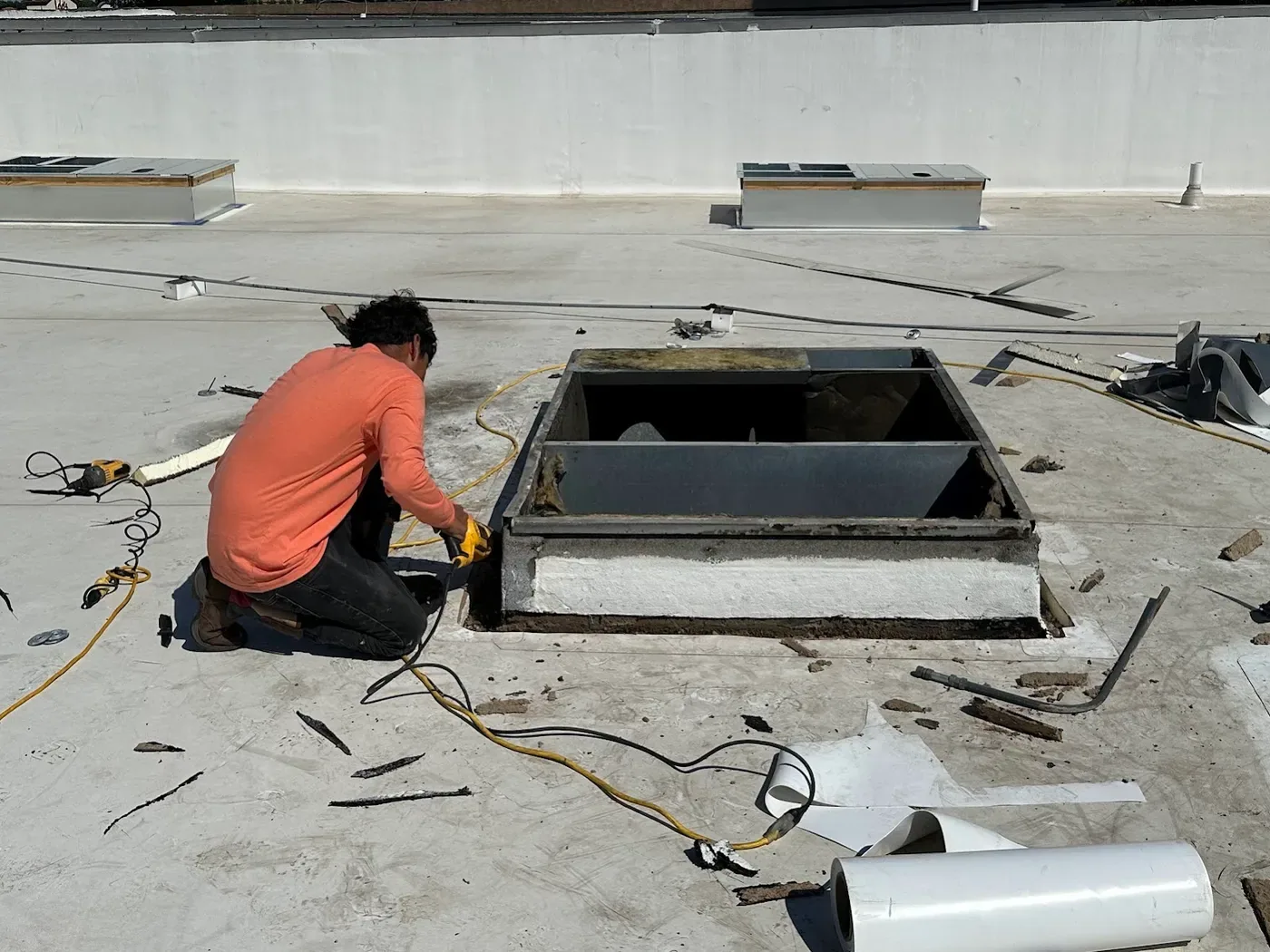
It follows the lowest path, and that path is rarely the one the designer drew. Under a snow pack the roof surface stays near freezing, so melt from the warm underside of the pack creeps downslope until it reaches the edge, a gutter or a scupper, which are the coldest places on the roof. There it freezes, narrows the opening, and the next melt backs up behind the ice. Water standing against a flashing or a lap for hours will find any gap, and a gap of a few thousandths of an inch is enough. On low-slope roofs the same backing up happens at roof drains and scuppers that are choked with ice or with the debris that collects over autumn. On steep metal roofs the question flips to where the snow lands, because a pack that releases in one piece can tear away gutters, snow guards and whatever sits below the eave. Our repair work after snow and ice roof damage begins with tracing where the water travelled, since the ceiling stain is usually several feet from the opening.
What do we check on a first walk of a mountain roof?
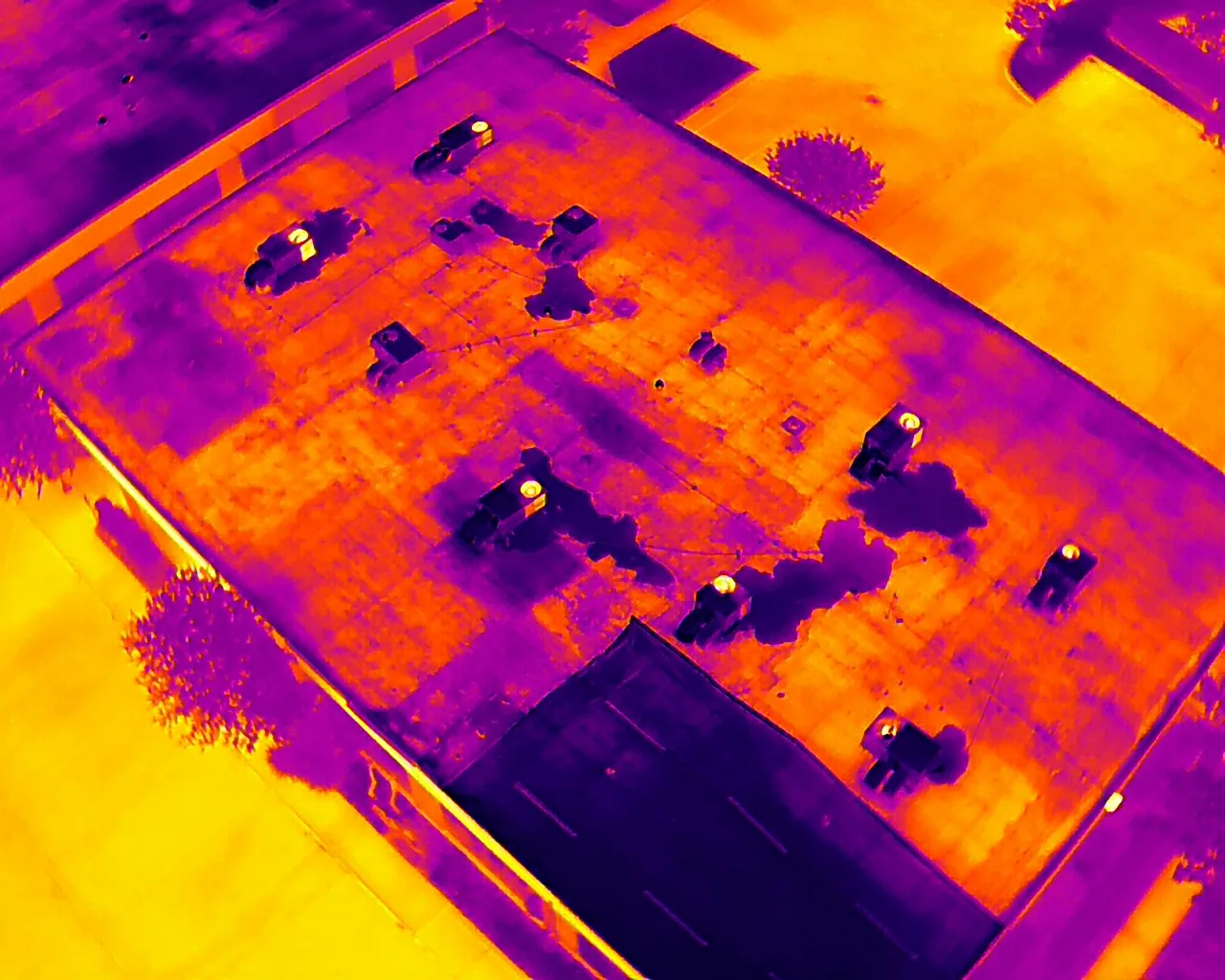
We start at the edges and the outlets, then work inward. At the eave we study edge metal, drip edge and gutter attachment for the bending and pulled fasteners that ice leaves behind. Across the field we look for backed-out fasteners on metal panels, open laps, blisters, and soft spots underfoot that suggest saturated insulation. Where the surface raises a question, an infrared moisture survey after sundown shows which insulation is holding water, and cores at the suspect spots confirm it. From inside the building we look at the underside of the deck and at rust or staining along fasteners, because a roof that has carried repeated heavy snow records that history in the structure. The findings from a hands-on commercial roof inspection come back as photographs, moisture readings and a ranked scope, so the owner can assign each item to the coming budget or to a later one.
Metal, membrane or coating: which roof earns its keep at this altitude?
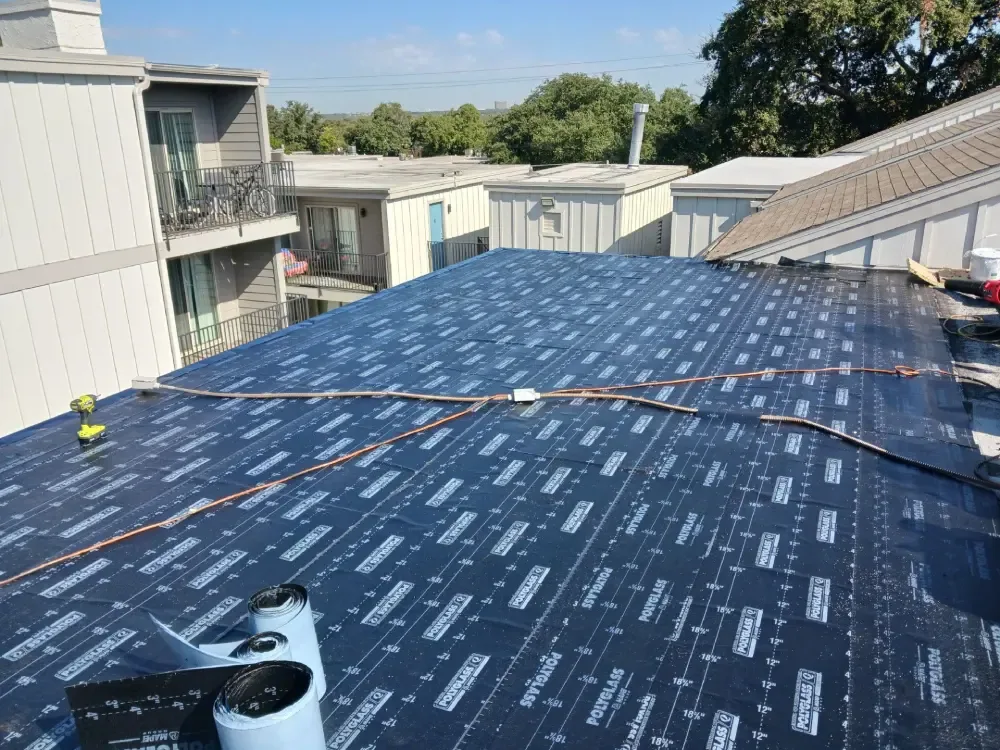
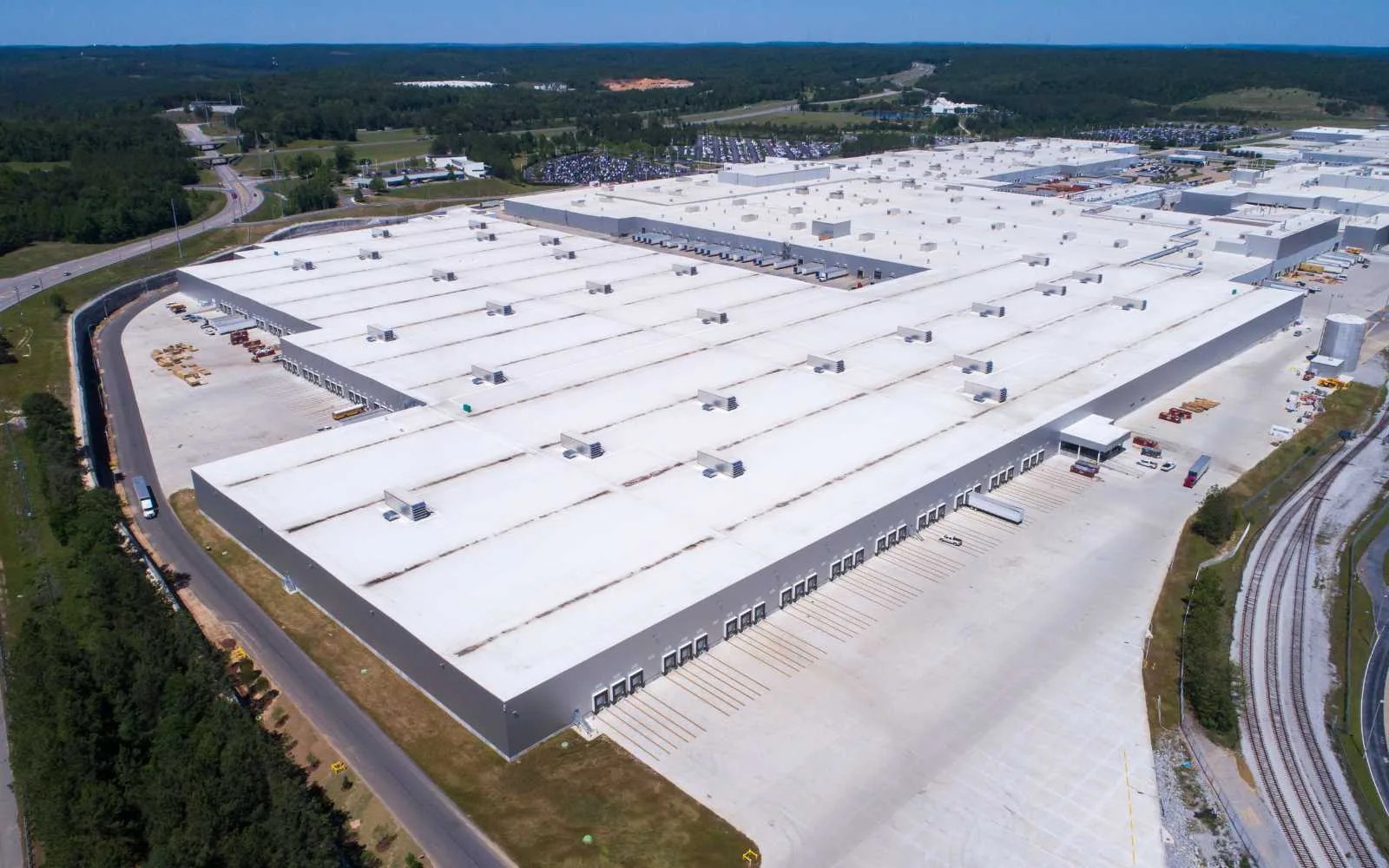
Each system answers snow differently. A standing seam metal roof sheds snow quickly and has few exposed fasteners, but the release is sudden and calls for snow retention wherever people or equipment sit below. Over an exposed-fastener panel roof that has loosened with age, a metal roof retrofit can add a new weathertight skin without tearing off the old panels, provided the framing can carry the added weight on top of a winter snow load. On a low-slope roof, a welded single-ply membrane gives a continuous surface with few entry points for meltwater. A coating can restore a sound membrane or metal roof whose insulation is dry, and it cannot rescue one whose insulation is wet. Cost follows what lies under the surface: dry insulation keeps a recover or coating available, while saturated insulation moves the job to tear-off and sets the budget.
When does the work have to happen on a mountain roof?
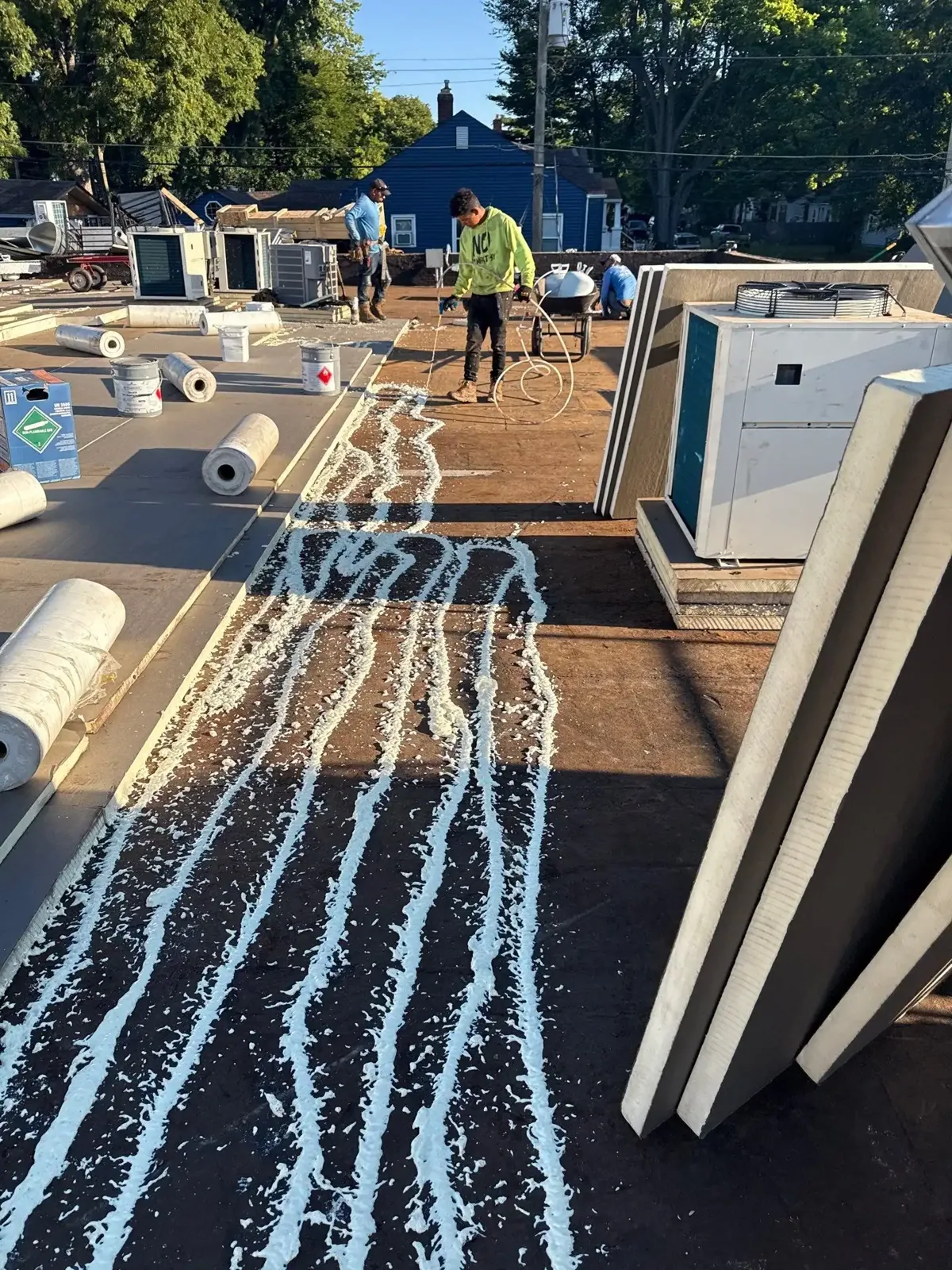
Adhesives, sealants and coatings need mild temperatures and a dry surface to cure, so a replacement at 2,550 feet should be planned for spring or early summer, well ahead of the first hard freeze. When a leak appears in midwinter, we stage a temporary repair, photograph it, and return for the permanent one once conditions allow. The same planning logic holds on higher ground around Mountain City and on lower ground such as Unicoi, which sits near 1,923 feet. Buildings stay in use through the work, so we phase it by section and plan material staging around tenants. If a storm opens a roof at three in the morning, our crews respond as readily as they do at noon.
Commercial Roofing Questions
How much more snow should an owner plan for at 2,550 feet?
Plan from the structure rather than a single figure. Roan Mountain’s higher elevations can receive substantially more winter precipitation than the Johnson City valley, and the ground above the community climbs to 6,285 feet. We ask for the original design snow load when it exists, check the deck and framing for deflection and rust, and judge whether the roof can carry a recover layer on top of its winter load.
Do the Doe River and Buck Creek matter to a roof?
Near the Doe River and Buck Creek, keep roof drainage and ground drainage in the same site review. We check each roof outlet, confirm that downspouts carry water away from the wall, and note where runoff crosses driveways or collects near entrances. If water appears indoors after a storm, the first task is to determine whether it came through the roof assembly or entered at grade; that answer sets the repair scope.
Can a leak that starts in January wait for spring?
Temporary protection can carry the building, and the permanent repair should wait for dry, mild weather. Adhesives and coatings applied to a frozen or wet surface bond poorly and fail early. We seal the opening, shed the water, document the condition with photographs and moisture readings, and schedule the lasting fix for the first stable stretch.
What moves the price of a reroof on a mountain building?
Insulation condition leads the list. Dry insulation can stay in place under a recover, while saturated boards must come out, and that single finding can change a budget more than the choice of membrane. Deck condition follows, then roof edge and drainage work, access for lifts and material delivery, and the number of weather days lost to snow and cold.
Is standing seam metal the better answer for heavy snow?
Often it is a strong candidate, because the panels shed snow and have few exposed fasteners. The tradeoff is that sliding snow needs retention where it could land on a walkway, a vehicle or equipment, and a retrofit over an older roof needs a framing check first. A welded membrane can serve equally well on a low slope when drainage is sound.
Related Roofing Pages
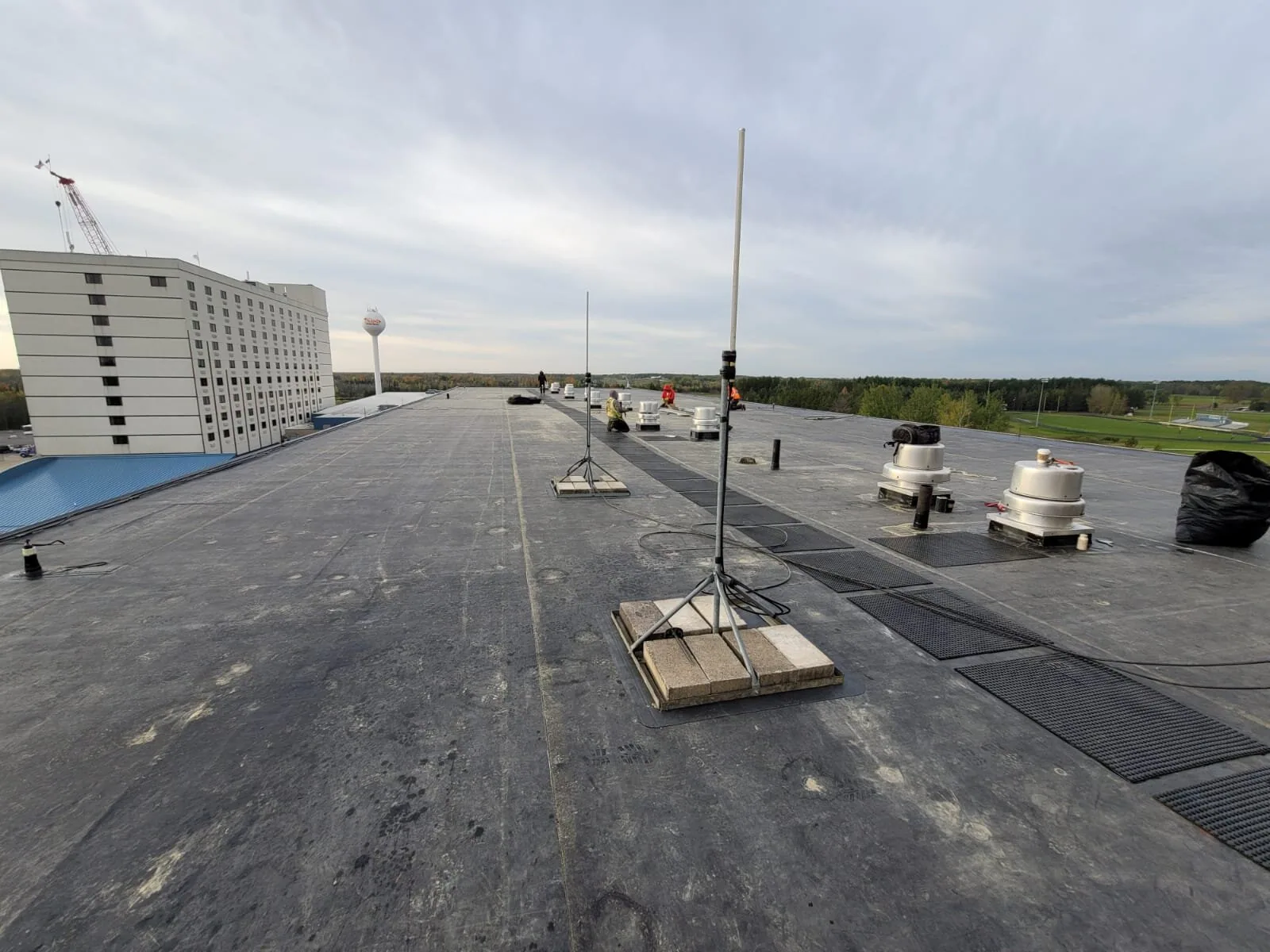
Mountain City
How the work is scoped, phased and documented on Tri-Cities roofs.
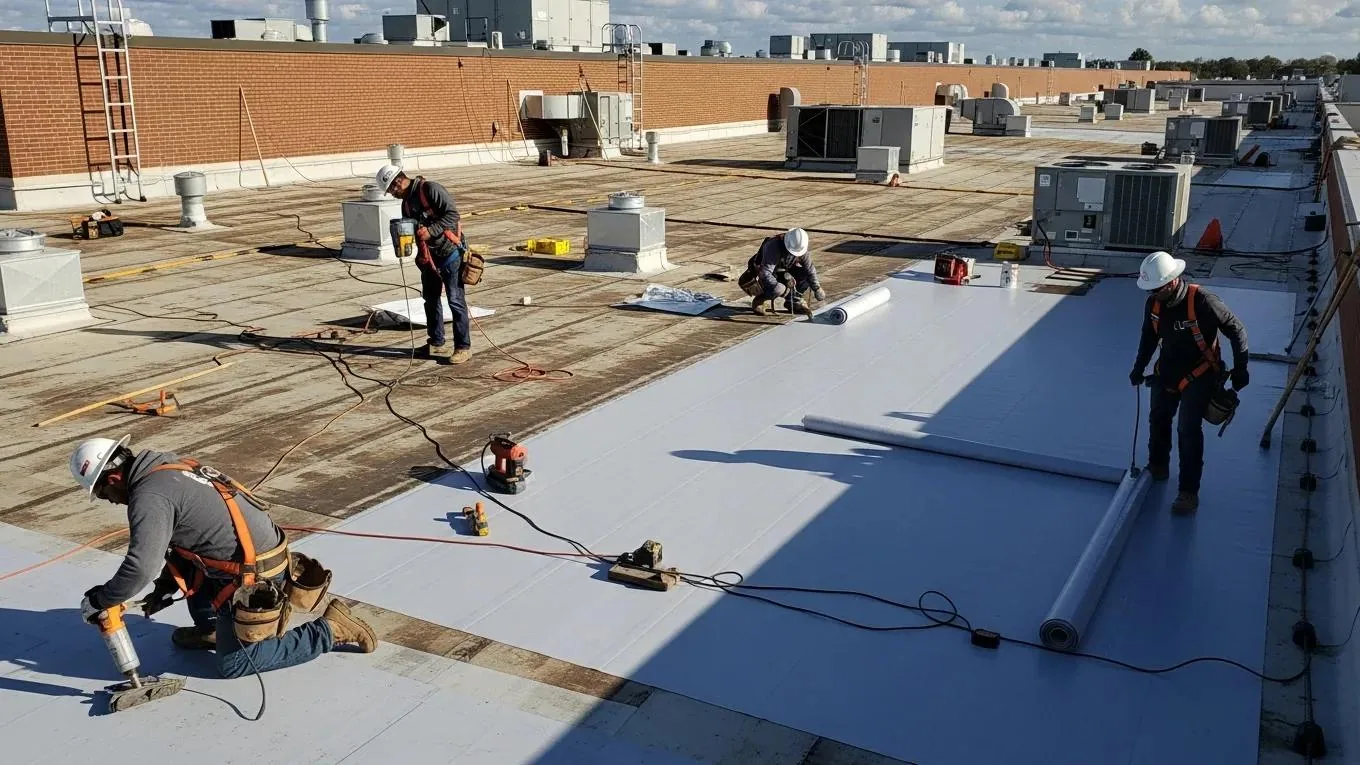
Roof Drains, Scuppers and Ponding Correction
What we check, what we recommend and how the crew keeps the building running.
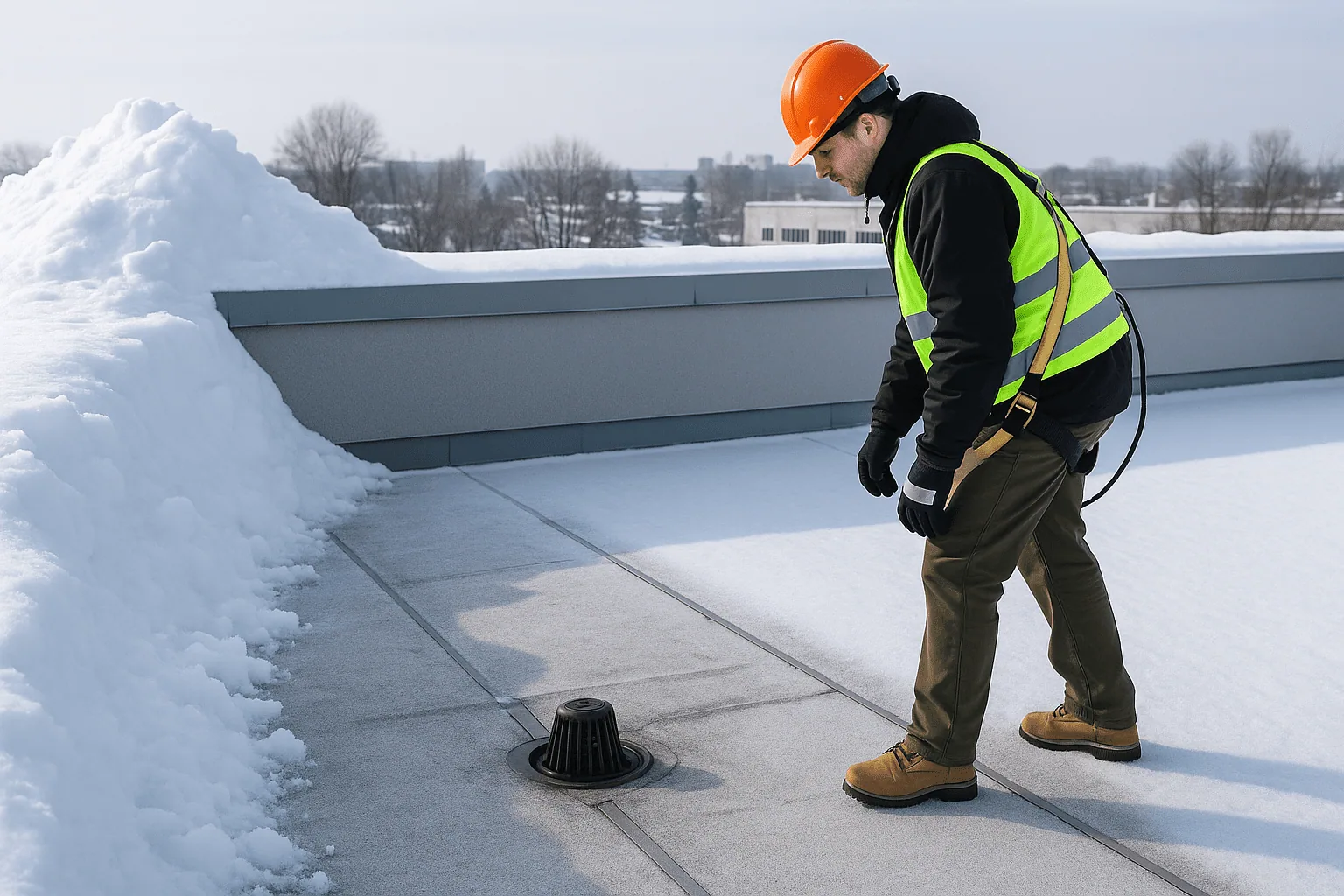
Snow Load and Ice Dam Roof Damage Repair
Conditions, options and next steps for commercial buildings in East Tennessee.