
Roof Drains, Scuppers and Ponding Correction in Johnson City, TN
Water standing on a low-slope roof weighs about five pounds per square foot for every inch of depth, and that figure is what turns a clogged drain into a structural question. A shallow pool forms around a partly blocked sump, the deck deflects a little under the load, the deflection deepens the pool, and the low spot makes itself lower with every rain. In Johnson City, TN, the pool also freezes overnight and presses ice against seams and flashings, so a drainage fault that costs almost nothing to correct in October becomes a membrane problem by February. Drains, scuppers and the slope that feeds them set the pace for the whole life of a roof, which is why a drainage review belongs in a capital plan before the membrane is chosen.
Why does a small pool turn into a structural and a membrane problem?
Ponding does damage in three ways at once. The added load stresses the deck and framing, which were designed for rain that leaves. The standing water holds dirt and organic growth that wear on the membrane surface and seams, while ultraviolet light bakes the film at the waterline of every puddle. And freezing converts the pool into a slab of ice that expands against whatever contains it, lifting edges and working into laps. Many membrane warranties also exclude damage from water left standing beyond a set number of hours after rain, so a ponding roof can lose protection it would otherwise have.
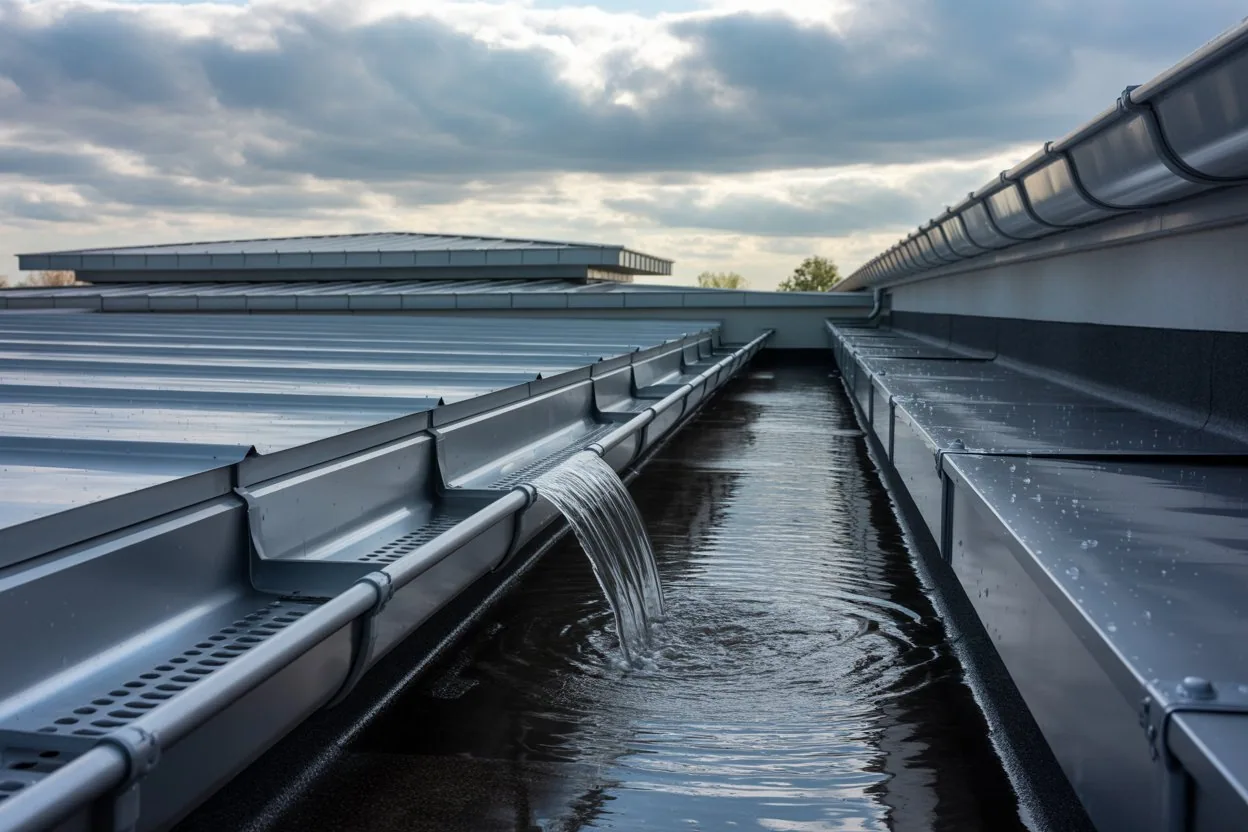
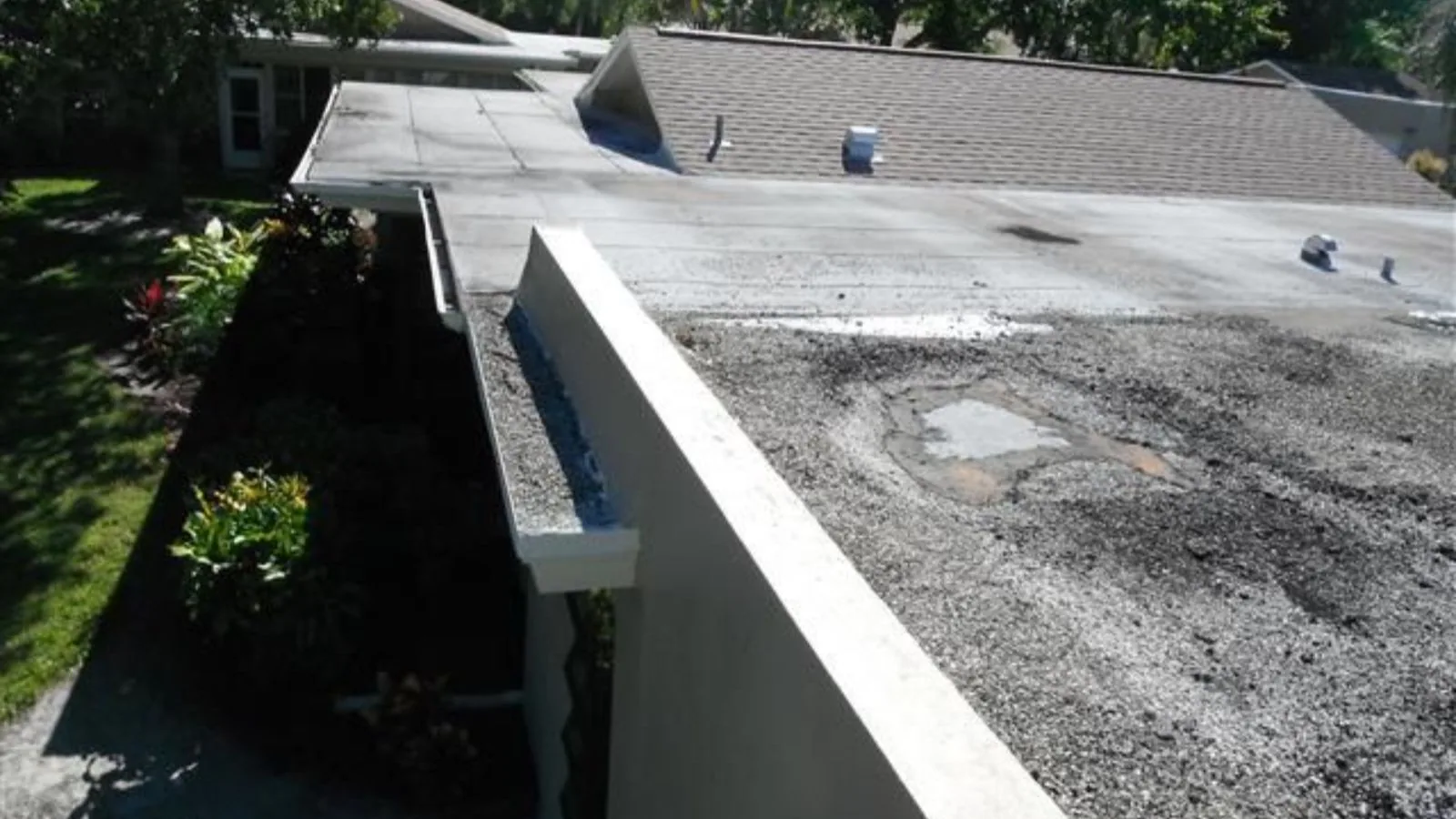
Scuppers and drains fail in their own ways. Interior drains clog with leaves, grit and scraps of membrane, and their clamping rings loosen so water slips beneath the flashing and runs down the outside of the leader. Cast bowls crack where freeze-thaw has worked on them. Through-wall scuppers are lined with membrane or metal that is easy to detail badly, and a conductor head full of debris sends overflow back across the roof. The resulting leak shows up in a ceiling as a drip along a wall, which looks like a flashing problem until the roof is flooded with a hose and watched.
Have the drainage path traced from roof to leader
Call Commercial Roofing Johnson City to have the roof's drainage tested and plotted. You will receive a map of where water sits, what is causing it and which correction costs least.
How do you tell a drainage fault from a slope fault?
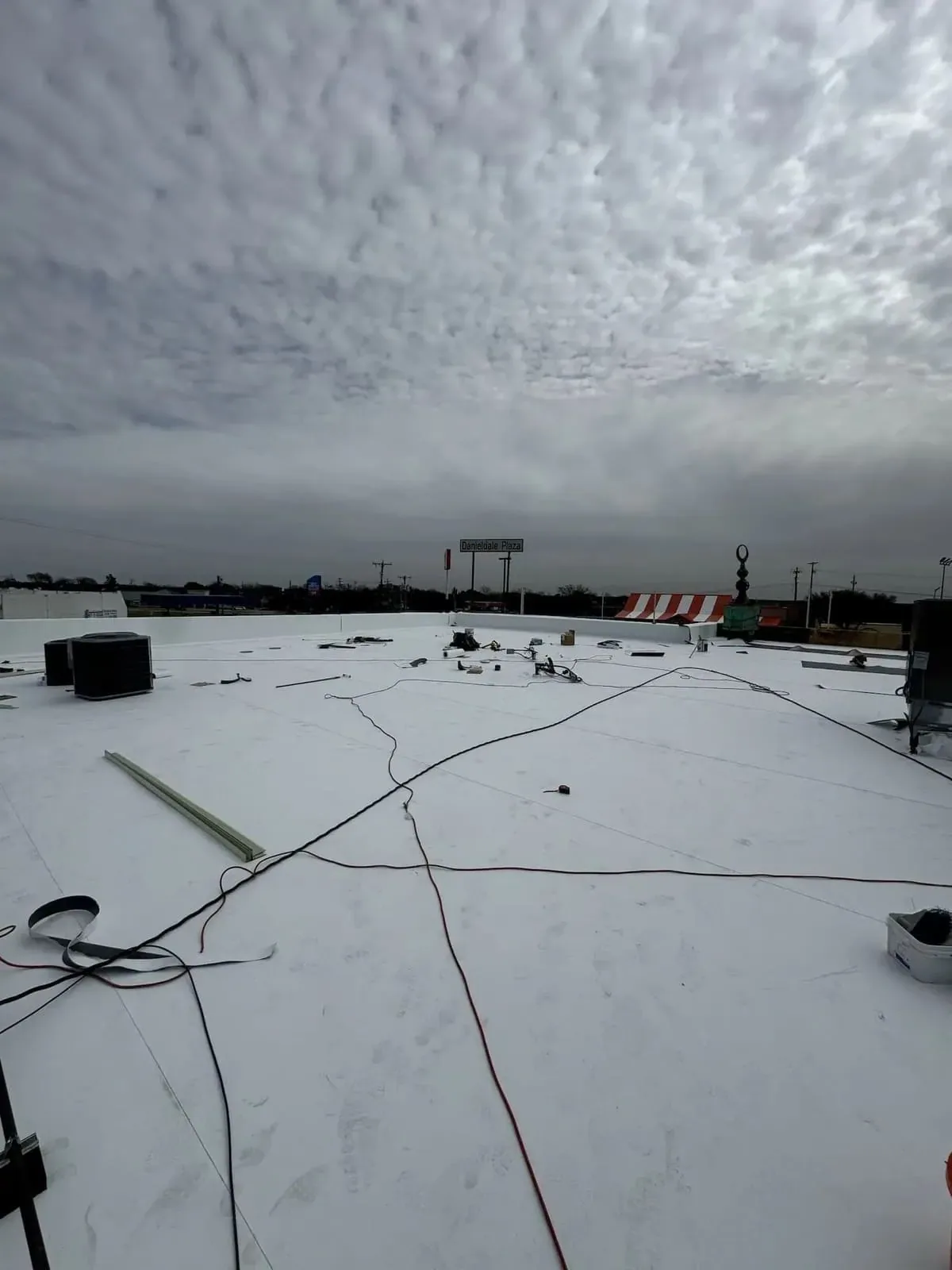
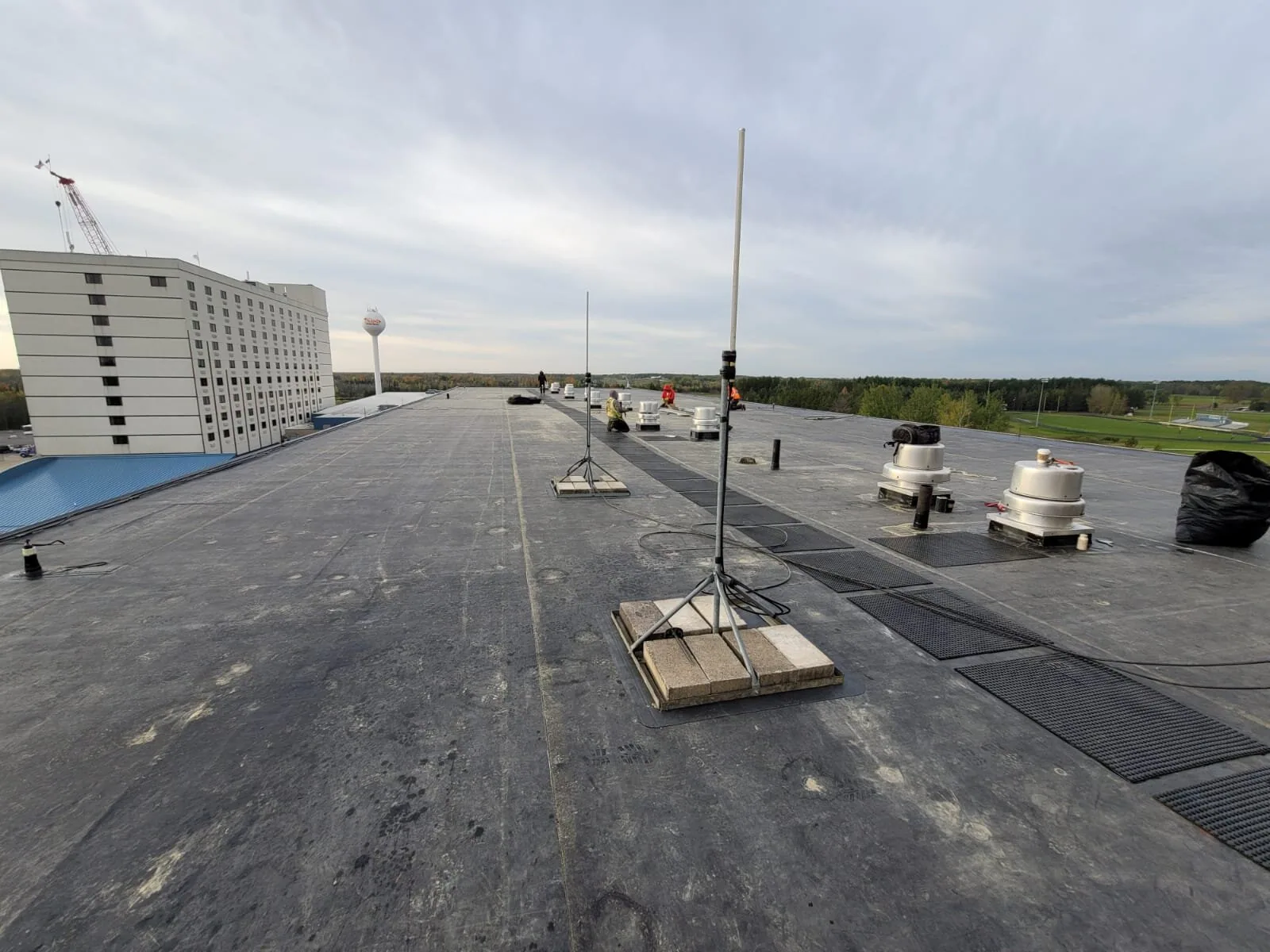
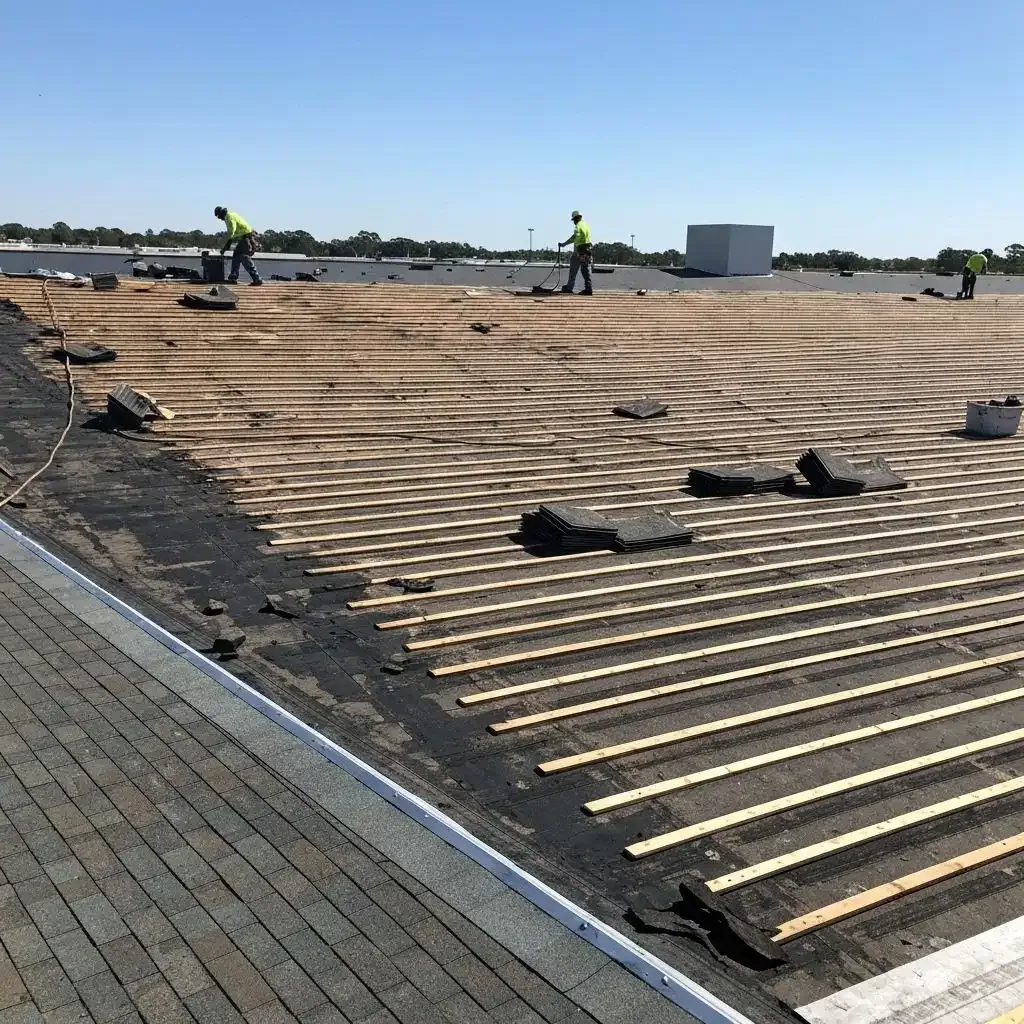
A drain that does not drain is the easy case: we clear it, flush it and watch it. The harder case is a drain that works while the roof around it holds water, which points to the slope. We measure with a level or a water test, mark every area still wet a day after rain and plot those areas against the drains, the structural bays and the equipment curbs. Pools midway between drains point to deck deflection. Pools on the upslope side of rooftop units point to a missing cricket. Pools at perimeters point to scupper height or blocked outlets. That plot tells the owner which of three corrections is needed and keeps the budget from buying the wrong one, and it feeds directly into a ponding water repair scope.
Which correction fits which fault: a new drain, a scupper, a cricket or tapered insulation?
A new or lowered drain is the right answer where the pool sits at a low point the roof cannot shed from, and most of the cost is in the plumbing and the deck cut. An added scupper handles a perimeter, and it is also the code answer: the 2018 International Building Code that Johnson City has adopted calls for a secondary means of drainage where perimeter walls would trap water if the primary drains clogged. Gutters and leaders at the eave belong to the same system, and their joints and slope are part of any edge metal, coping and gutters repair.
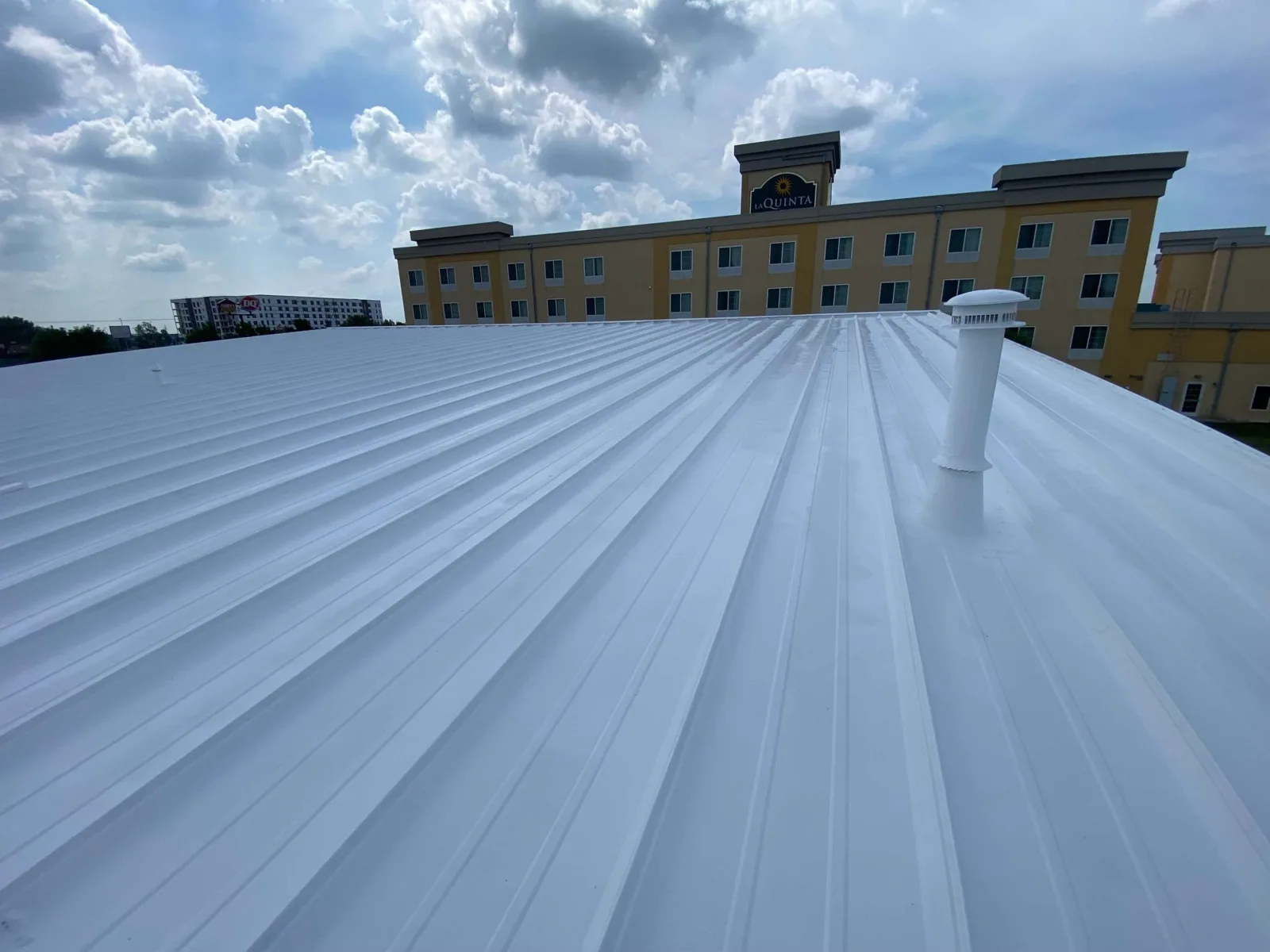
Crickets divert water around curbs and equipment and are built from tapered insulation, while tapered insulation across the whole field creates slope the building never had. Tapered systems usually arrive with a roof recover or a replacement, because they add thickness and require flashing adjustments, and they cost far less to design in at that moment than to retrofit later. The tapered boards themselves are specified together with the insulation and cover board that sit beneath the membrane. Where the structure cannot be re-sloped, silicone roof coatings tolerate standing water better than most membranes, though the pool still loads the deck.
When in a roof's life should drainage be corrected?
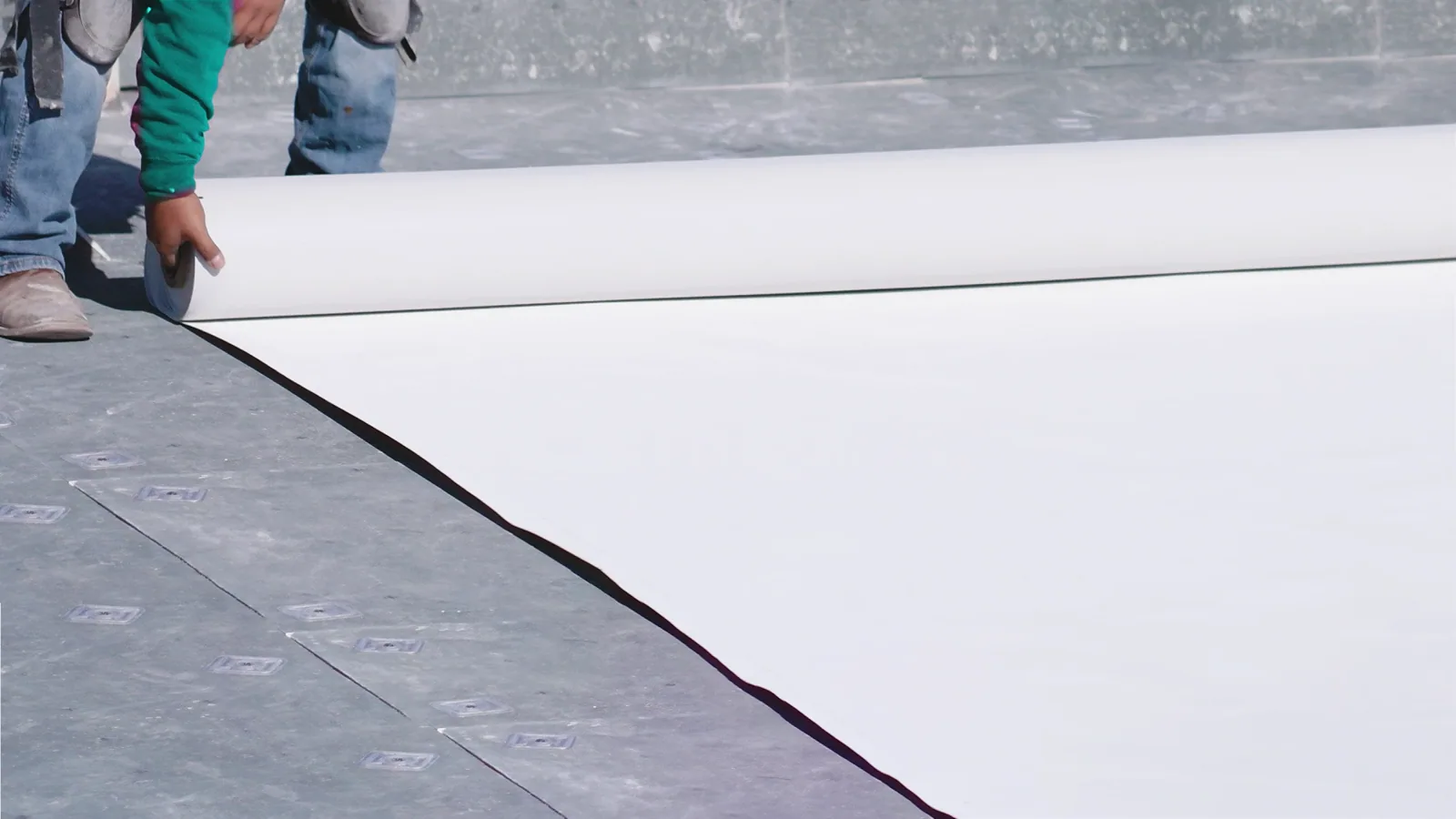
The cheapest moment is during a membrane project, because the drain bowls, flashings and insulation are already open and the new membrane will be flashed to them anyway. The next cheapest is autumn, before leaf fall and the first hard freeze, when drains can be rebuilt, flushed and cleared. The costliest is a January leak report, when ice fills the sumps, repairs need heat and thawing equipment, and a cold-weather membrane repair is the weakest kind. Where a roof has years left and the ponding is minor, a staged plan clears and flushes the drains twice a year, adds crickets at the worst curbs and holds re-sloping for the replacement window.
What do Tri-Cities rain and ice ask of a drain?
Johnson City averages roughly 45 inches of precipitation a year and about 15.6 inches of snow, but the numbers that test a drain are the extremes. Hurricane Helene's flooding across Northeast Tennessee in September 2024 is the reminder that a drainage system sized for ordinary storms meets the unusual one eventually, and a secondary overflow that has never carried water is untested until a day like that. Winter lows average about 25F, and the Christmas low record of -6F, set in 1983, shows how cold an exposed scupper outlet or a leader in an unheated space can get.
Large institutional roofs raise the stakes. On the 366-acre campus of East Tennessee State University, a clogged drain over an occupied corridor is a safety problem as well as a repair. At Johnson City Medical Center, in the Med-Tech corridor, water in a ceiling near patient care is not tolerable, which is the case for clearing drains on a schedule instead of after a leak. Both settings belong on a written drain-clearing calendar, with the pooling areas photographed after each rain so the record shows whether the roof is improving or sinking.
Commercial Roofing Questions
How long can water stand on a flat roof before it counts as ponding?
Some shallow water after a rain is normal, and the question is how long it stays. Many manufacturers treat water that remains around forty-eight hours after rain as ponding for warranty purposes, and that is the practical line most reviewers use.
Is a scupper cheaper than an interior drain?
Where the parapet allows one, yes, because a through-wall scupper avoids deck cutting and interior piping. The trade is that it discharges at the wall, where freezing weather can build ice, so downspout routing and a protected outlet need thought.
What decides whether ponding can be fixed without re-roofing?
Whether the deck and structure allow slope to be added decides it. Crickets and a few extra drains can be installed in an existing roof if the membrane is sound. Re-sloping a whole field needs tapered insulation, which usually means a recover or a replacement.
Can building staff clear the drains, or does that need roofers?
Staff can lift debris from strainers on a schedule, and November and April are worth putting on the calendar. They should not pry at clamping rings, cut membrane or push probes down the leader, because a gouged sump becomes a leak. Anything that opens the flashing is roofing work.
What does flooding the roof with a hose reveal that a visual check misses?
A controlled water test shows where the surface actually drains, how fast a sump empties, whether a clamping ring leaks into the leader and which flashing is passing water. It is often the quickest way to separate a drain leak from a seam leak.
Related Roofing Pages
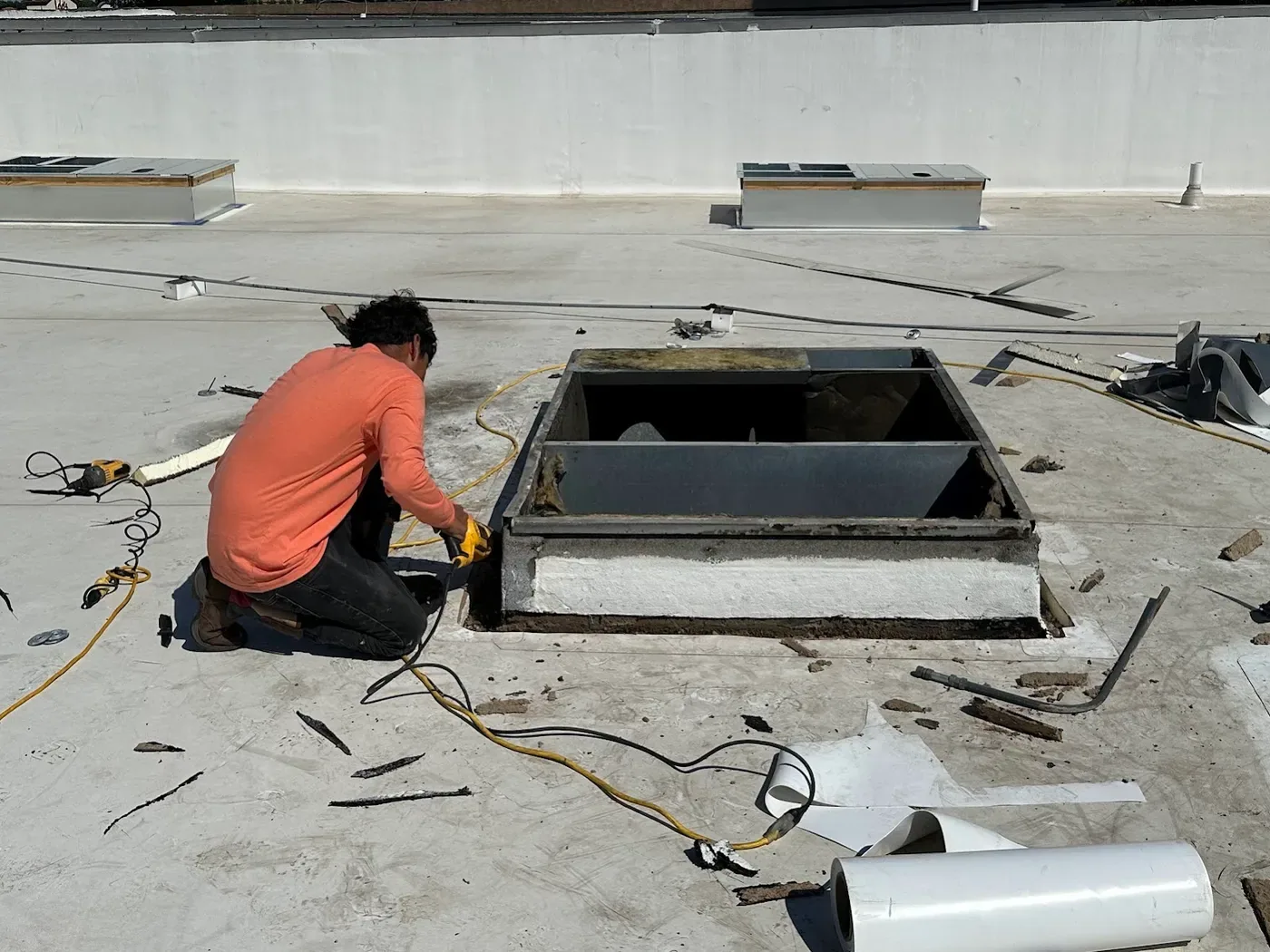
Ponding Water Roof Repair
How the work is scoped, phased and documented on Tri-Cities roofs.

Edge Metal, Coping and Gutters
What we check, what we recommend and how the crew keeps the building running.
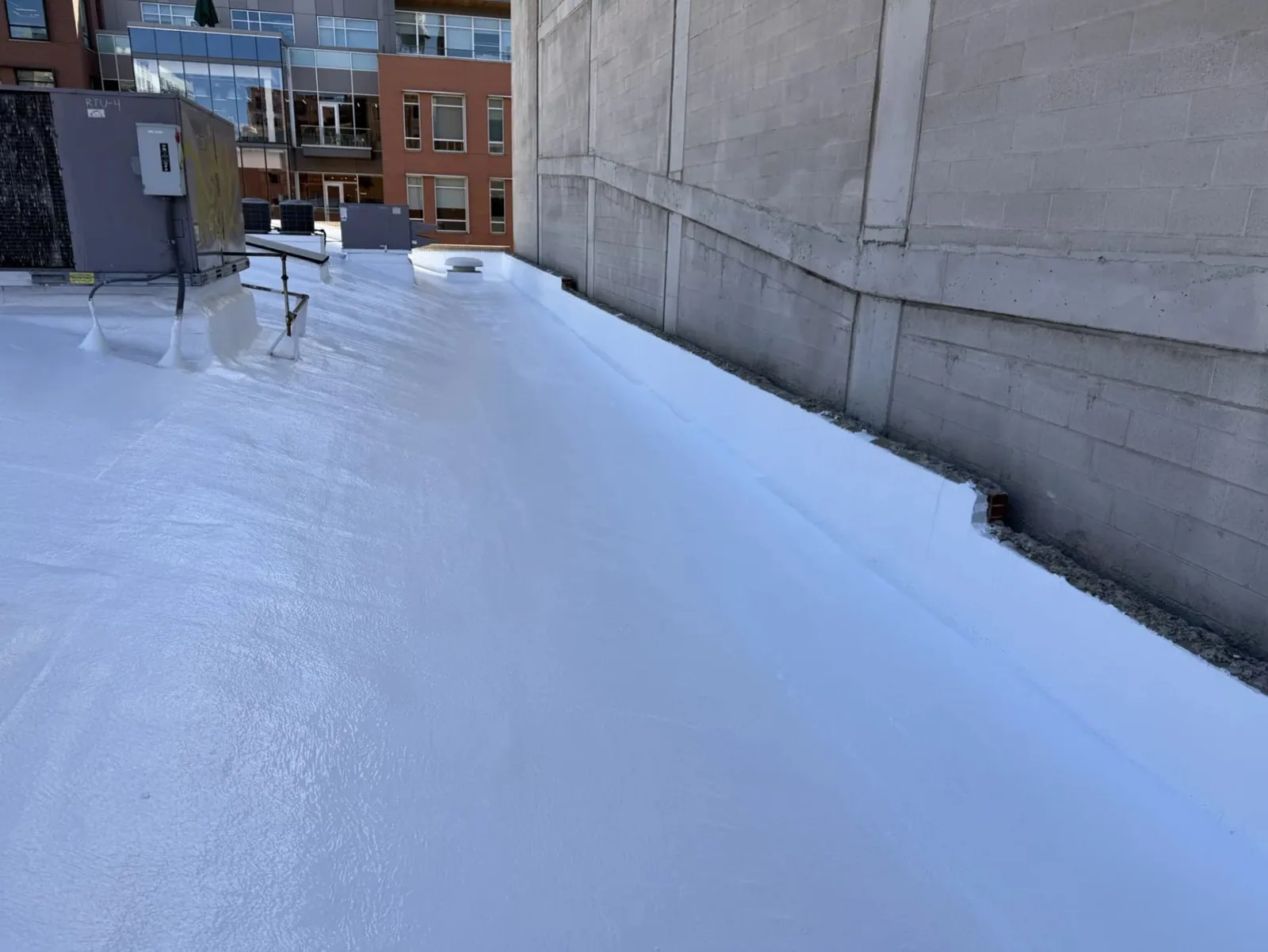
Roof Recover and Overlay Systems
Conditions, options and next steps for commercial buildings in East Tennessee.