
Silicone Roof Coating Systems in Johnson City, TN
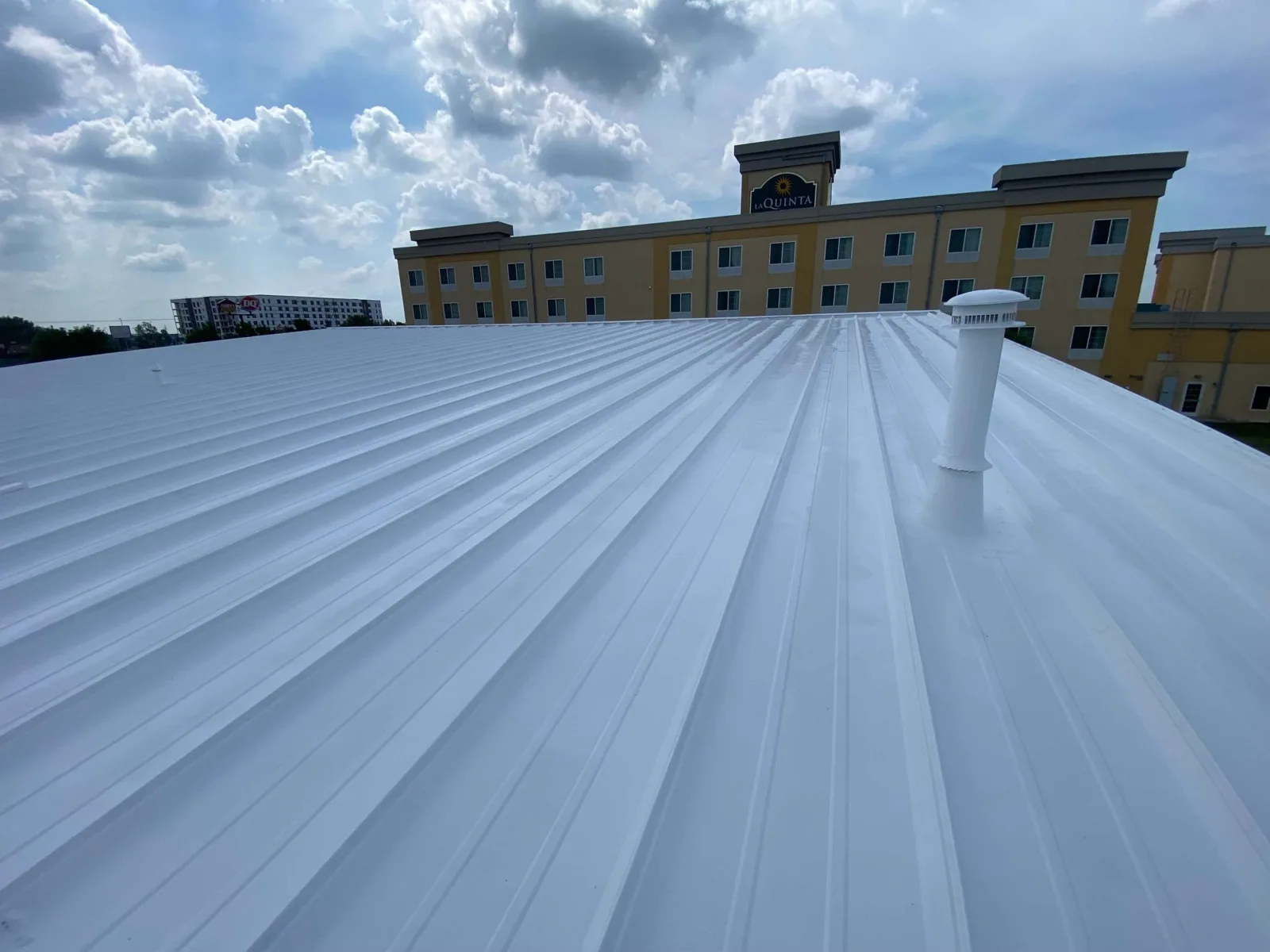
Silicone cures by drawing moisture out of the air, and once it has cured it shrugs off the standing water that would soften most other coatings. That one trait is why owners with shallow ponds on a low-slope roof in Johnson City, TN keep asking about it, and it is also why the choice should be made deliberately. Silicone is difficult to cover with anything else, it collects dust, and a film applied over wet insulation does not dry the roof; it seals the water in and lets the saturated board keep losing thermal value under a fresh white surface. A coating is a bargain on a roof whose assembly is still dry, and an expensive delay on one whose assembly is not.
We apply silicone systems after the substrate has been scanned, repaired and tested for adhesion, and we write the film thickness into the scope so the owner knows what is being bought.
What does a roof have to prove before silicone goes on it?
Four things have to hold: the insulation is dry, the membrane is still bonded, the seams and flashings are repairable, and the surface accepts adhesion. We confirm the first with an infrared scan and core samples, because a visual walk cannot see water inside the assembly. Adhesion is tested with sample patches and pull checks on the actual roof, since a surface carrying chalked residue or an old coating of unknown chemistry can lift a film within a season.
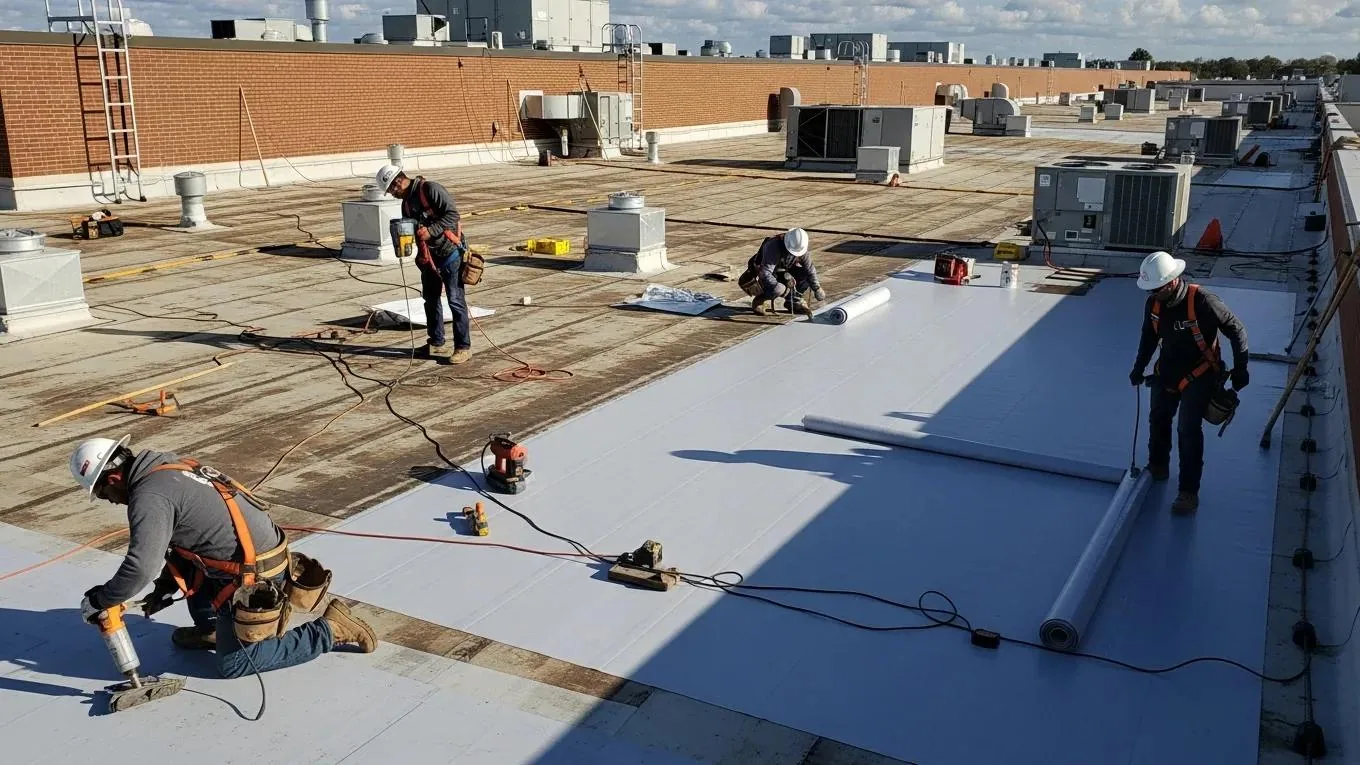
Substrate matters as well. Asphalt roofs can bleed oils through a coating without a barrier primer, rusted metal needs treatment before it is sealed, and heat-welded sheets such as TPO call for a primer matched to the membrane. Failed seams are repaired before the coating, never bridged by it, and that repair belongs in the price. Our wider roof restoration work follows the same sequence.
Learn whether the roof is dry enough to coat
Call Commercial Roofing Johnson City to have the roof scanned, cored and tested for adhesion before a silicone system is priced. You will have condition data in hand to decide between restoring the surface and planning a replacement.
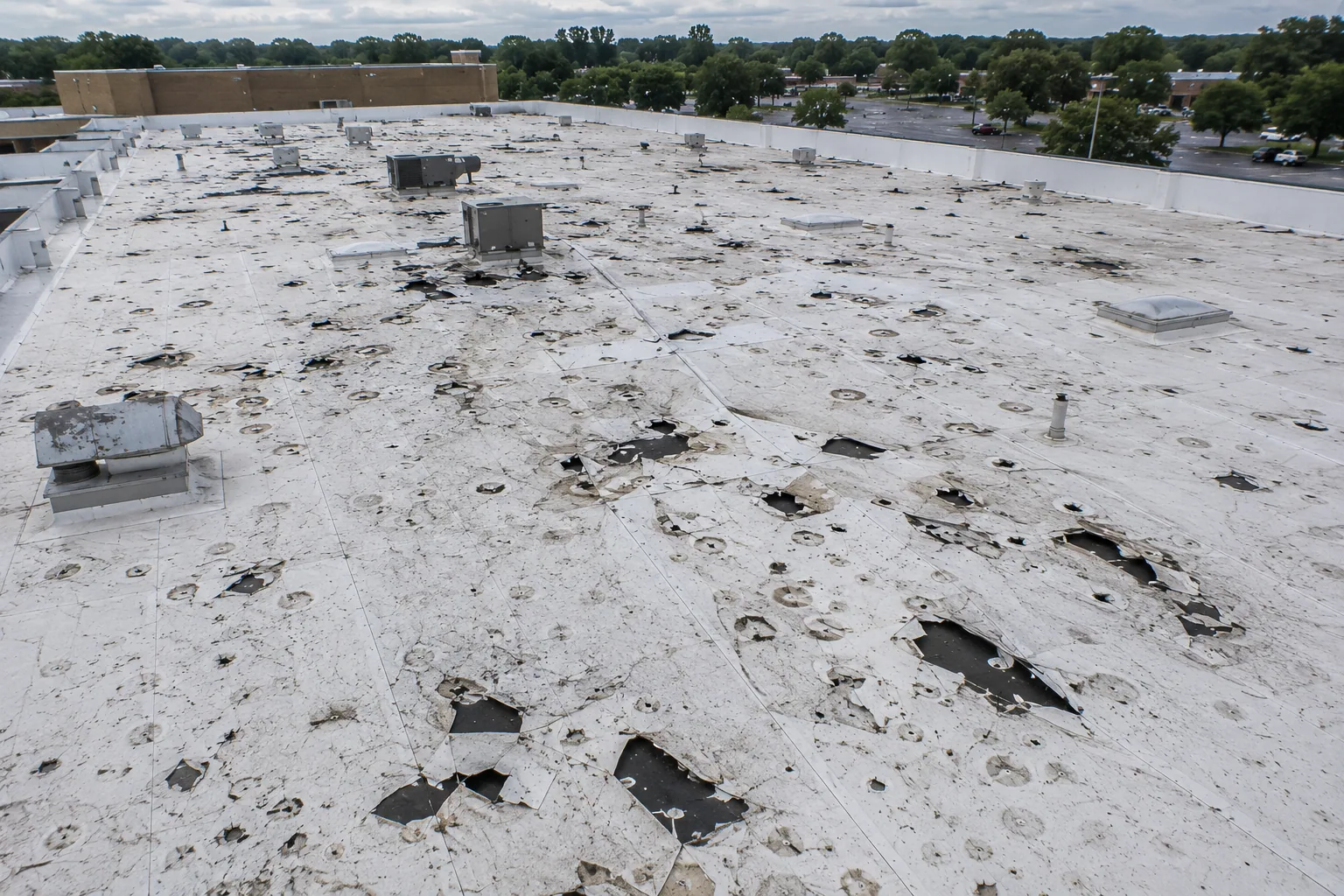
Why does silicone cope with standing water when other coatings soften?
The polymer backbone of silicone is a chain of silicon and oxygen, which resists ultraviolet light and does not take up water the way an acrylic resin can. The cured film is rubbery, high in solids and capable of a thick application in a single pass, so it covers fasteners, seams and small cracks with a continuous layer. It also stays flexible at low temperatures, which matters where winter lows average about 25F and the Tri-Cities Regional Airport has recorded a Christmas low of -6F.
The tradeoff is the surface itself. Cured silicone stays slightly tacky, so airborne dust and pollen stick, and a roof near trees or a gravel lot dulls over time. Washing restores much of the reflectivity, and the chemistry cannot be recoated by most other products, so the first decision tends to be the last one. An acrylic system is easier to renew with a different product later.
What does a weathered membrane cost by the time a coating is approved?
Sun and thermal cycling strip a membrane from the top down. The surface chalks, loses plasticizer and crazes, and for several years the weathered skin is the only part of the assembly that has actually failed. In that window a coating renews the roof for a fraction of the cost of a tear-off, and the same decision a year or two later may carry repairs to splices and flashing that were open for a winter.
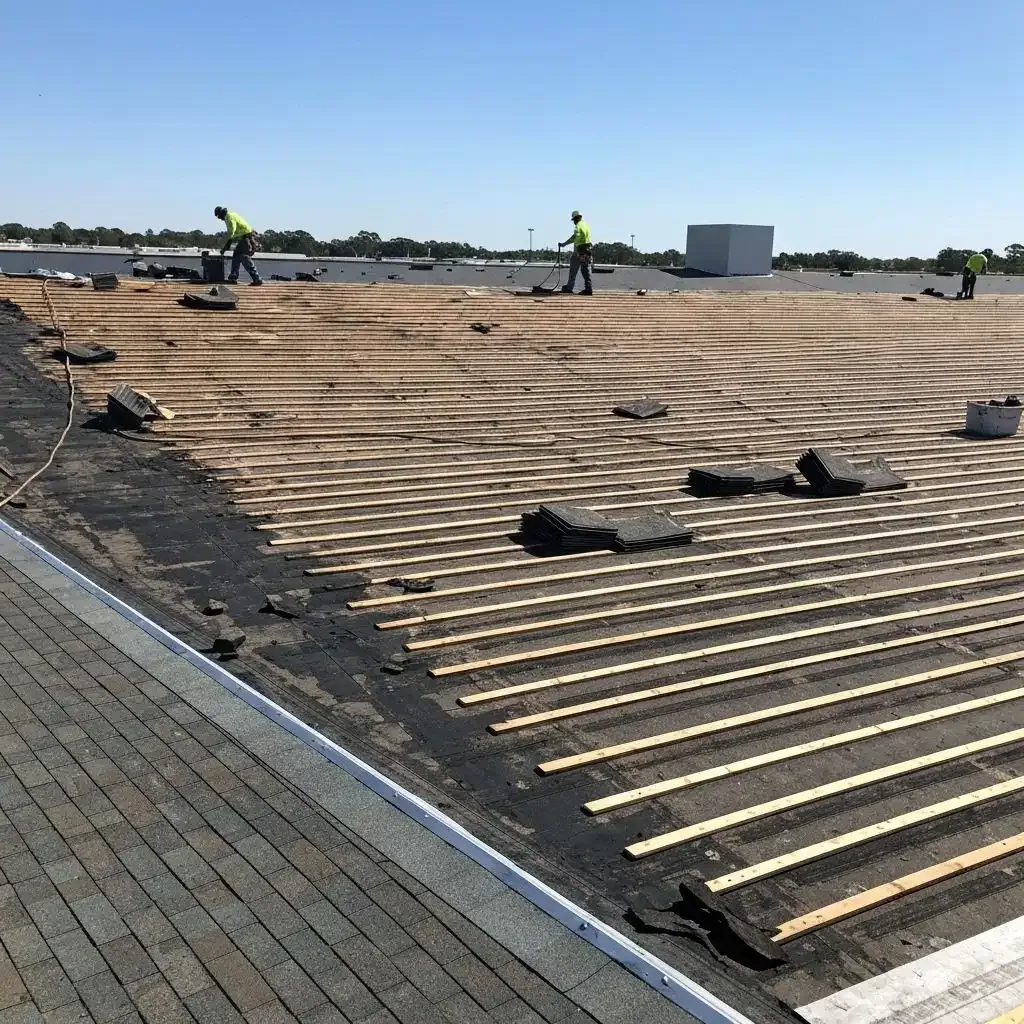
The window closes when water reaches the insulation. Wet board must come out whatever the surface looks like, and a coating bought on top of it becomes a surface treatment on a roof that needed a recover or replacement instead. The owner who orders a moisture survey first spends a little to learn which side of that line the roof sits on, and the capital plan can be built on the answer.
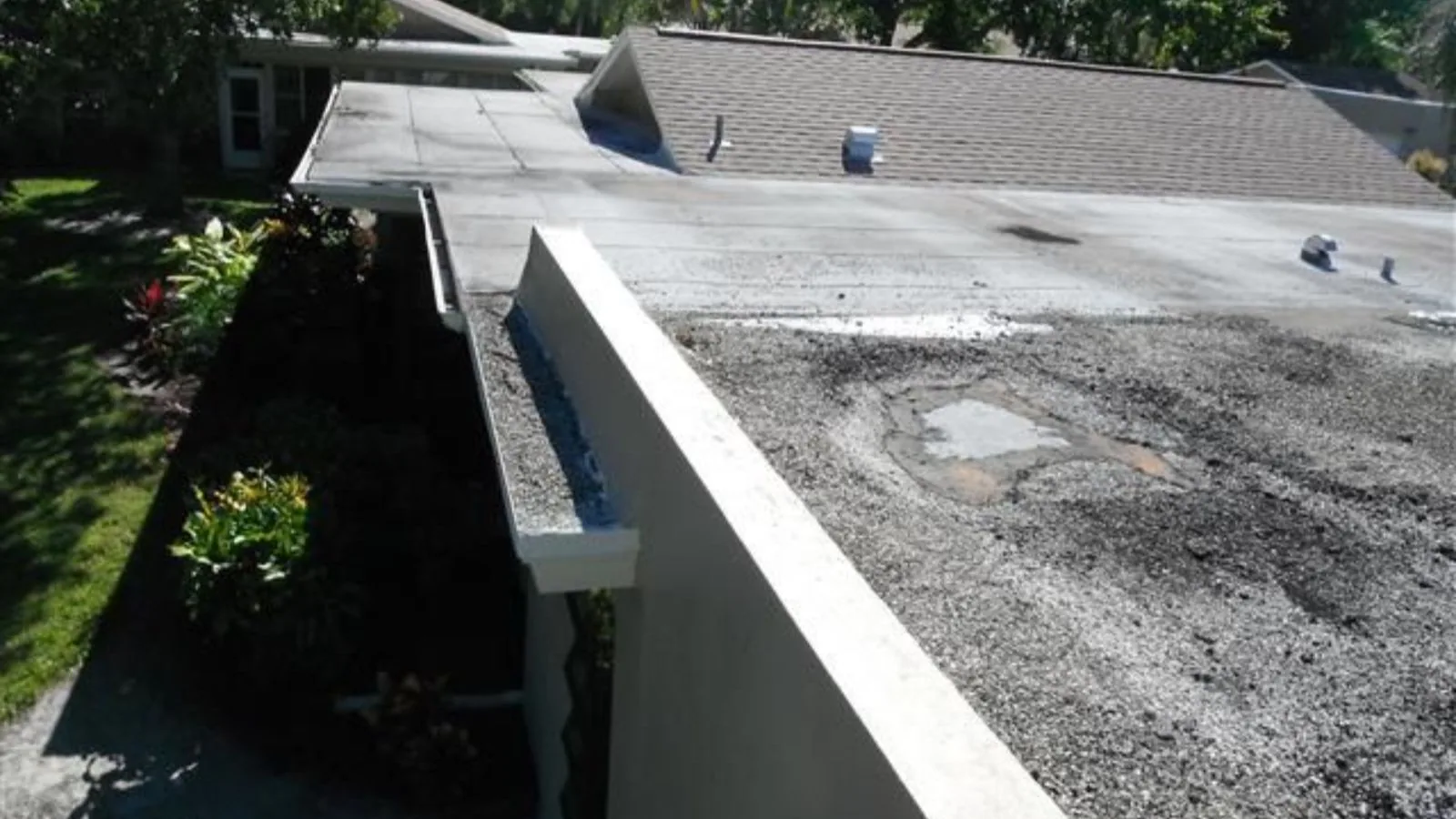
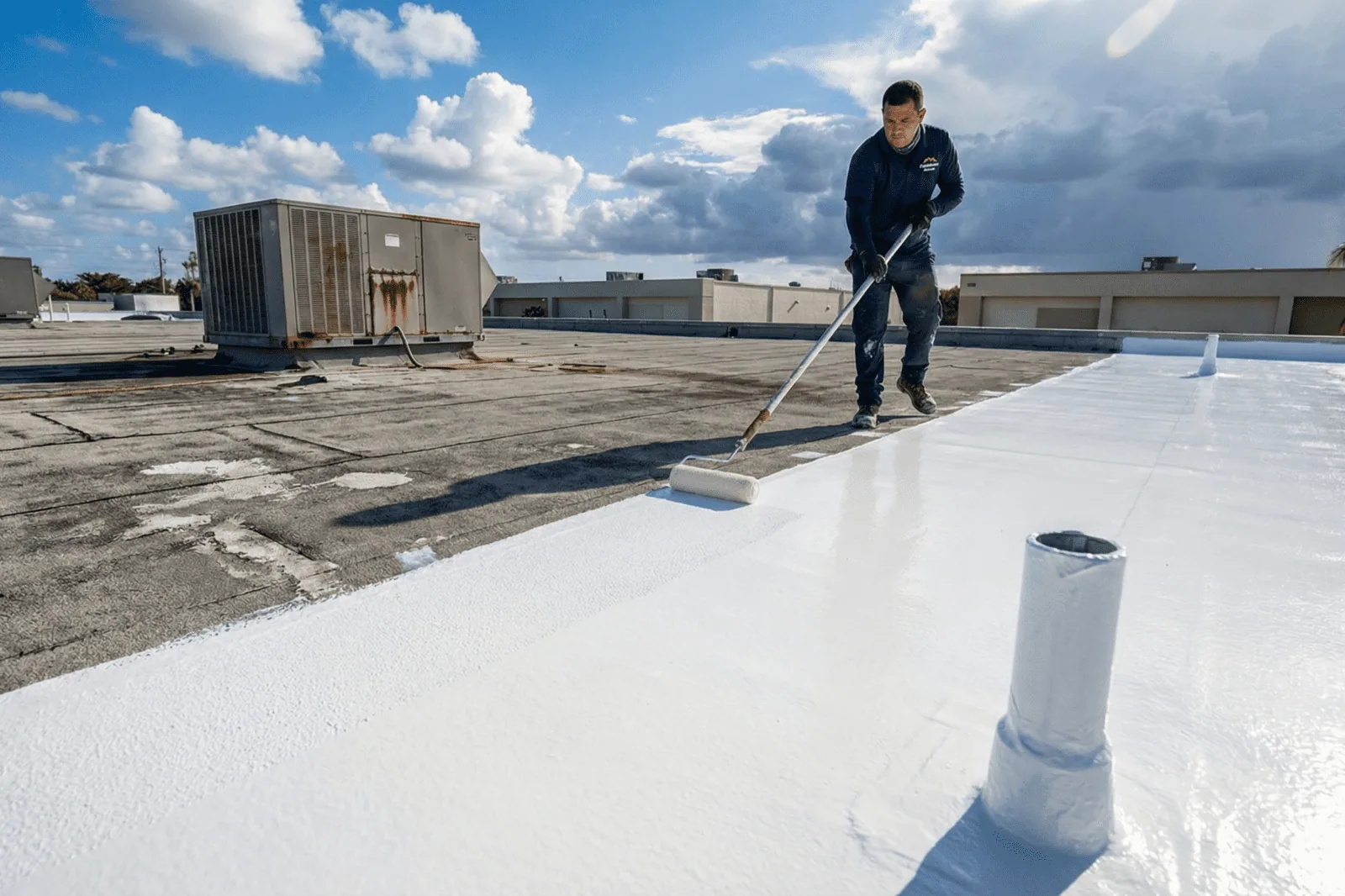
Which Tri-Cities roofs gain the most from a silicone film?
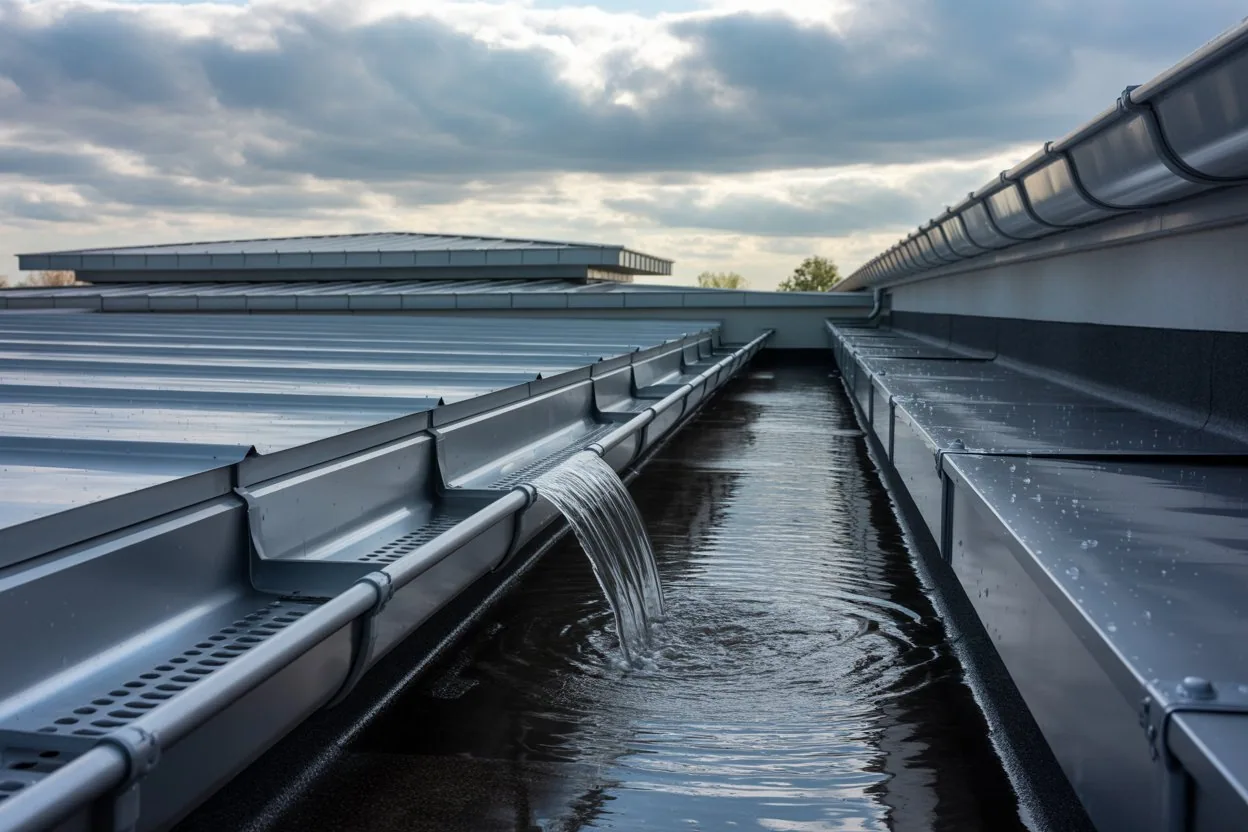
Roofs that hold water after a heavy rain are the natural fit, and Northeast Tennessee saw catastrophic Nolichucky River flooding during Hurricane Helene in September 2024. Retail owners around the Mall at Johnson City and Johnson City Crossings face a calendar problem as well, since a retail center that trades hard through the holiday season cannot lose its entrances to a tear-off; a coating can be applied in sections during the quieter months, provided the readings come back dry.
Snow is the other test. The Tri-Cities Regional Airport has logged 8.7 inches on Christmas Day 1969, and Mountain City stands at 2,418 feet, well above the valley floor, in country that gets considerably more winter precipitation than the valley. Near the Blountville airport and across the valley, a flexible film that stays supple through the cold is a sensible match for a roof that cycles through freezing nights.
How much of the Johnson City year is usable coating weather?
Silicone tolerates humidity better than most coatings because moisture drives the cure, but it still needs a clean, dry surface that sits above the dew point when the film goes down. Early mornings in the cool months leave condensation on the roof even when the afternoon looks bright, so we start late and stop early on those days. Late spring through early autumn gives the longest run of workable days in the valley, and we hold the crew when rain is likely before the film has skinned over. Sequencing on an occupied building follows the same logic: preparation, repair and coating go section by section, and rooftop units are masked so fumes and overspray never reach the intakes.
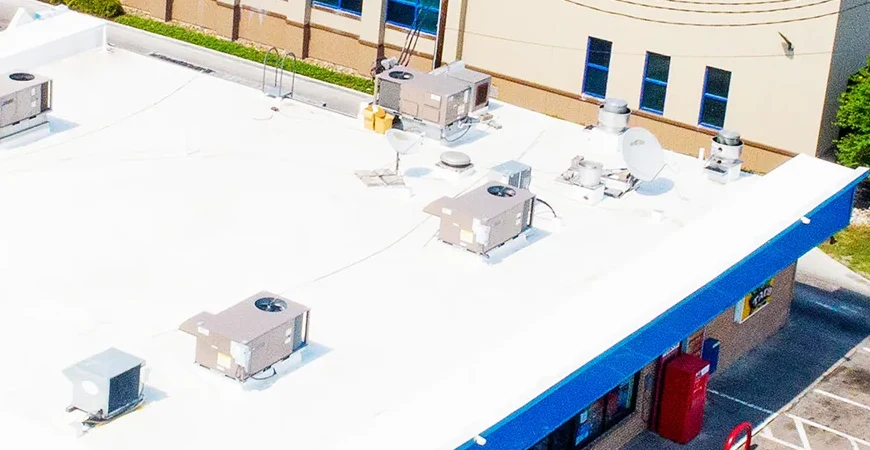
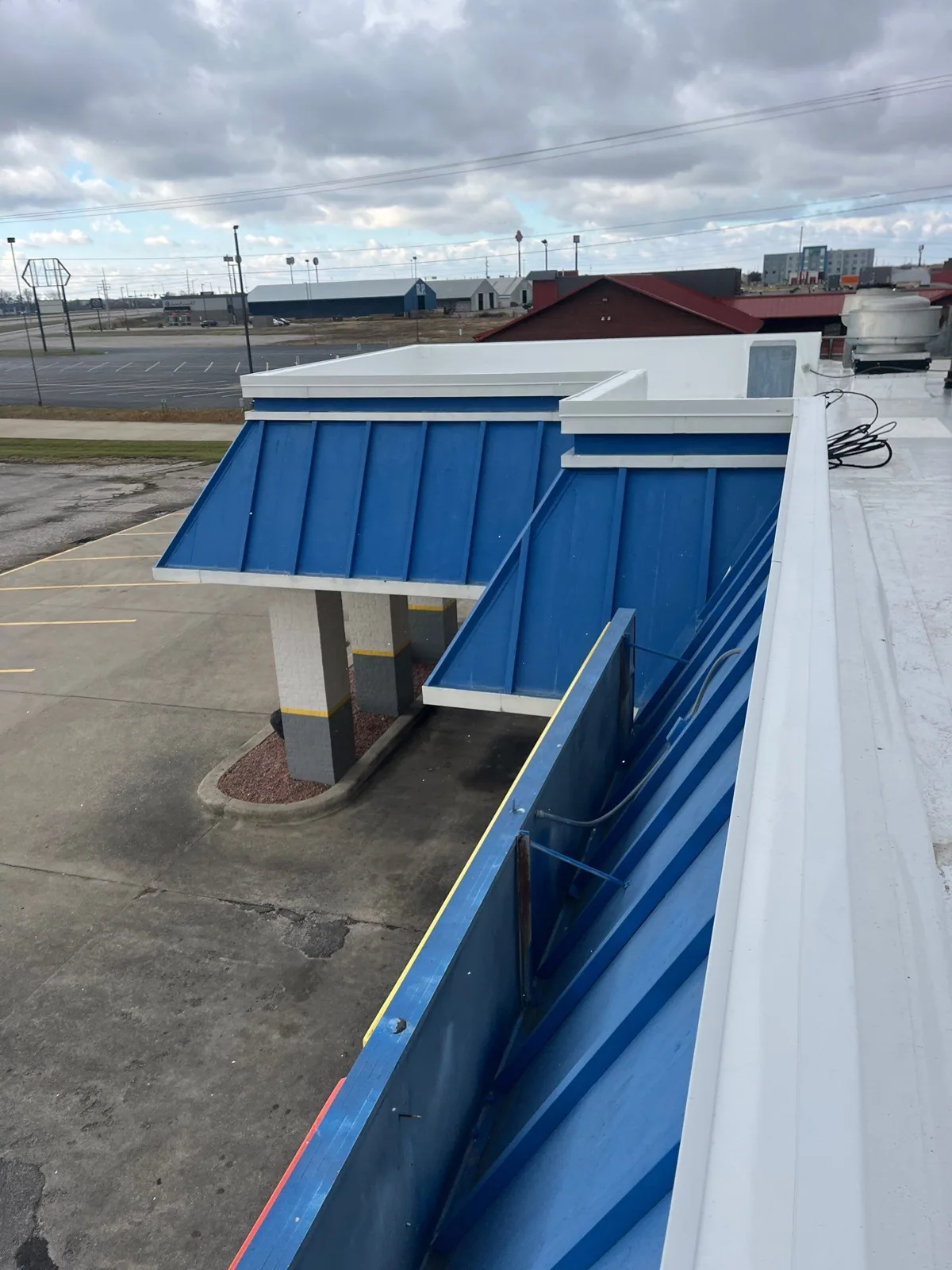
Silicone, acrylic or foam: which one commits the owner to what?
Silicone suits roofs with ponding water, wide temperature swings and low-slope geometry, and it can be applied thickly on the first pass. Acrylic costs less per gallon, recoats easily and does best on roofs that drain well. For a roof that has lost insulation value or needs a slope correction, spray polyurethane foam with a silicone topcoat can solve more than the coating alone. Price is driven by roof area, the repair needed first, the number of penetrations and the film thickness the system requires. We lay these out on the same condition data so the lifecycle cost of each route is visible before the owner commits.
Commercial Roofing Questions
Can a silicone-coated roof be coated with something else later?
Rarely. Most other coatings do not bond to cured silicone, so the realistic paths are another coat of silicone or a full replacement. That is why the first selection deserves more thought than it usually gets.
Why does a white silicone roof look gray after a couple of summers?
A slightly tacky surface holds dust, pollen and soot, and a roof beside trees or a gravel lot collects them faster. Washing restores most of the brightness, and a yearly rinse during a maintenance visit keeps the reflectivity from sliding.
How thick should the film be, and how is that checked?
Thickness follows the system and the substrate, and the number goes into the written scope. Wet film gauges are used during application, and the quantity of material is reconciled against the area covered, so the film on the roof matches the film on the proposal.
Will silicone stop a roof that leaks at the seams?
Only after the seams are repaired. A coating bridges hairline cracks and covers sound repairs, but an open lap keeps working under it, so seam failures and flashing gaps are fixed first and the film goes over a repaired surface.
What happens to silicone on a roof where ponds sit all winter?
The film itself tolerates it, which is the reason owners choose silicone for those roofs. The concern is the dirt that settles in the pond, so we pair the coating with a plan to improve the drainage path where we can.
Related Roofing Pages
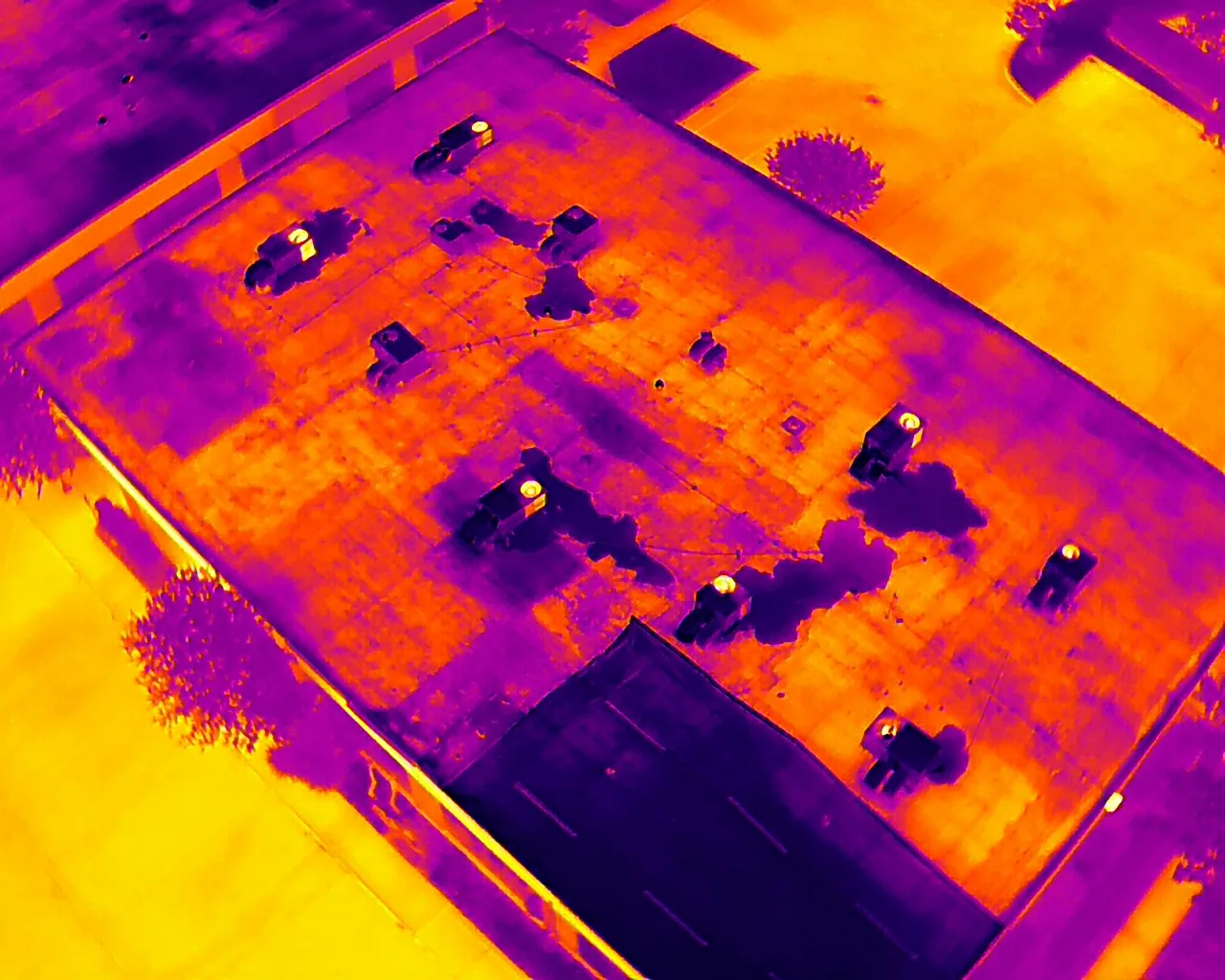
Infrared and Core-Cut Moisture Surveys
How the work is scoped, phased and documented on Tri-Cities roofs.
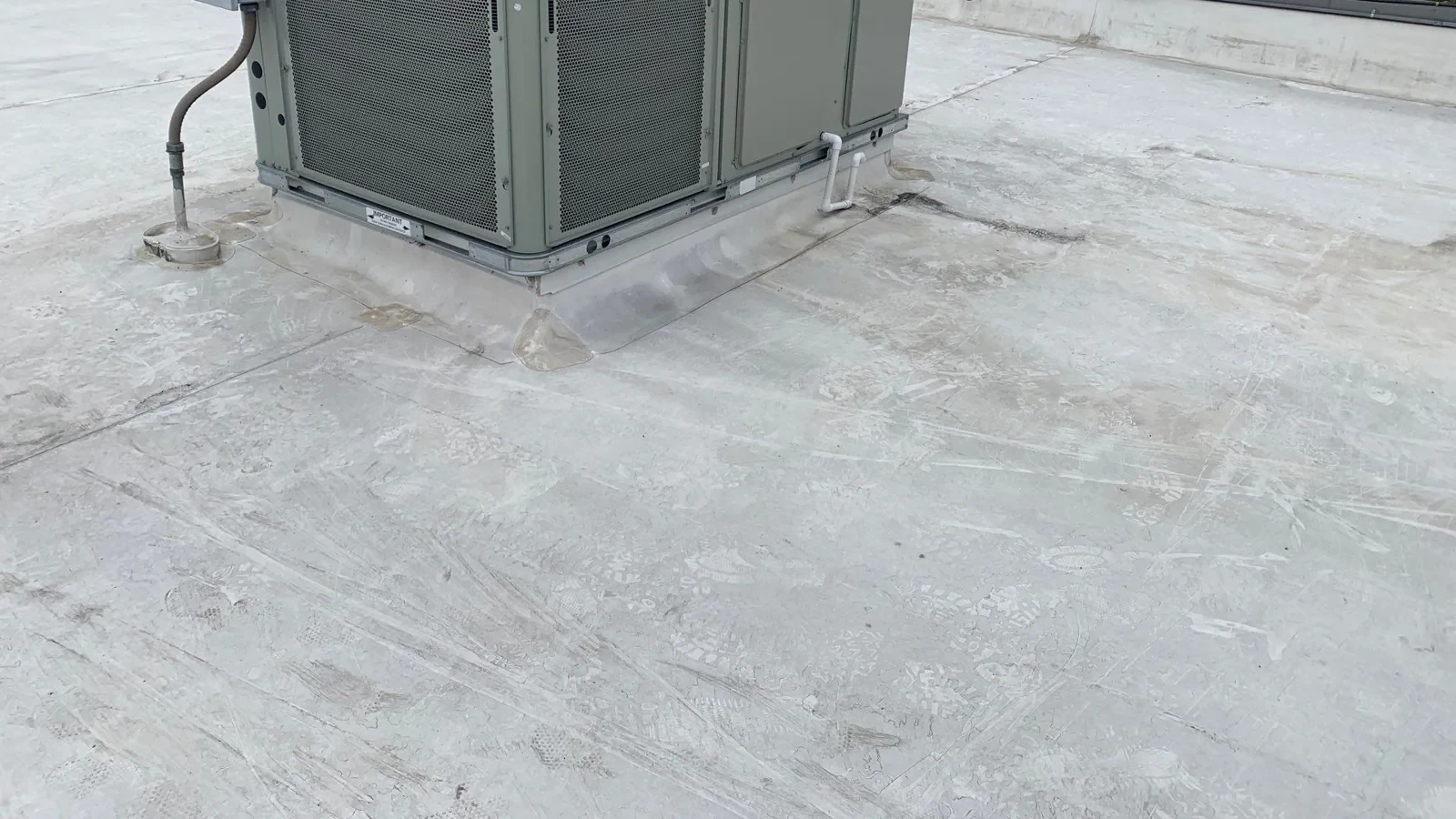
TPO Roofing
What we check, what we recommend and how the crew keeps the building running.
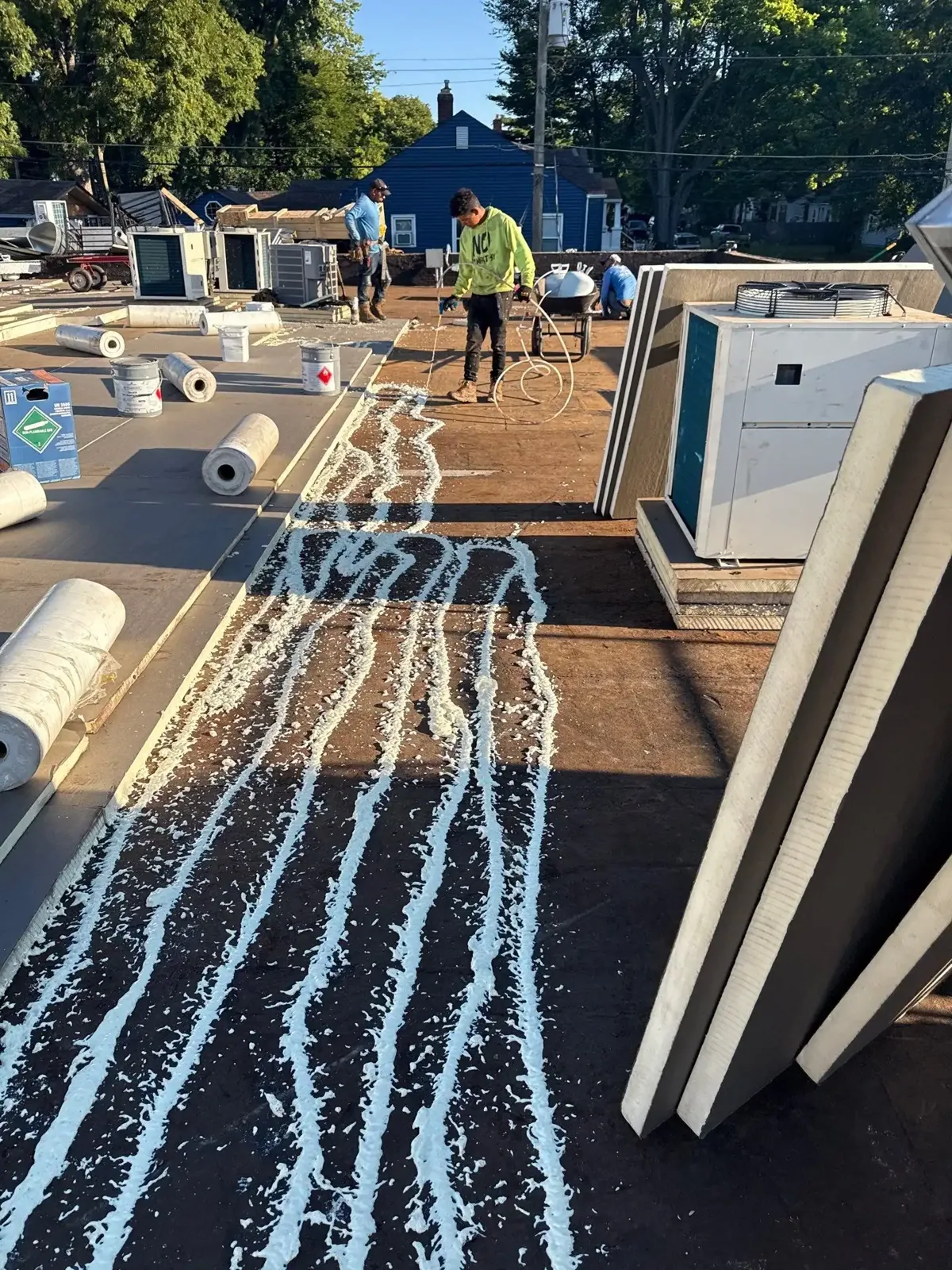
Roof Coating and Restoration
Conditions, options and next steps for commercial buildings in East Tennessee.