
PVC Roofing in Johnson City, TN
Polyvinyl chloride is a rigid plastic made flexible with a plasticizer, and on a roof that plasticizer is the slow-moving ingredient. Sun, heat and contact with cooking oils draw it out of the sheet over the years, and a membrane that has lost enough of it shrinks, stiffens and can no longer stretch around a parapet corner when the first hard freeze arrives. In Johnson City, TN, with winter lows averaging about 25F, a hard freeze can arrive overnight, and the crack that opens at a flashing is only the visible part of the damage, because meltwater then travels into insulation that was dry the week before. The roof that looked perfect in August becomes a moisture problem by February. Owners who understand that sequence stop asking how old the PVC is and start asking how flexible it still is, and how well its details still move with the building.
What keeps a PVC sheet flexible, and what makes it stop?
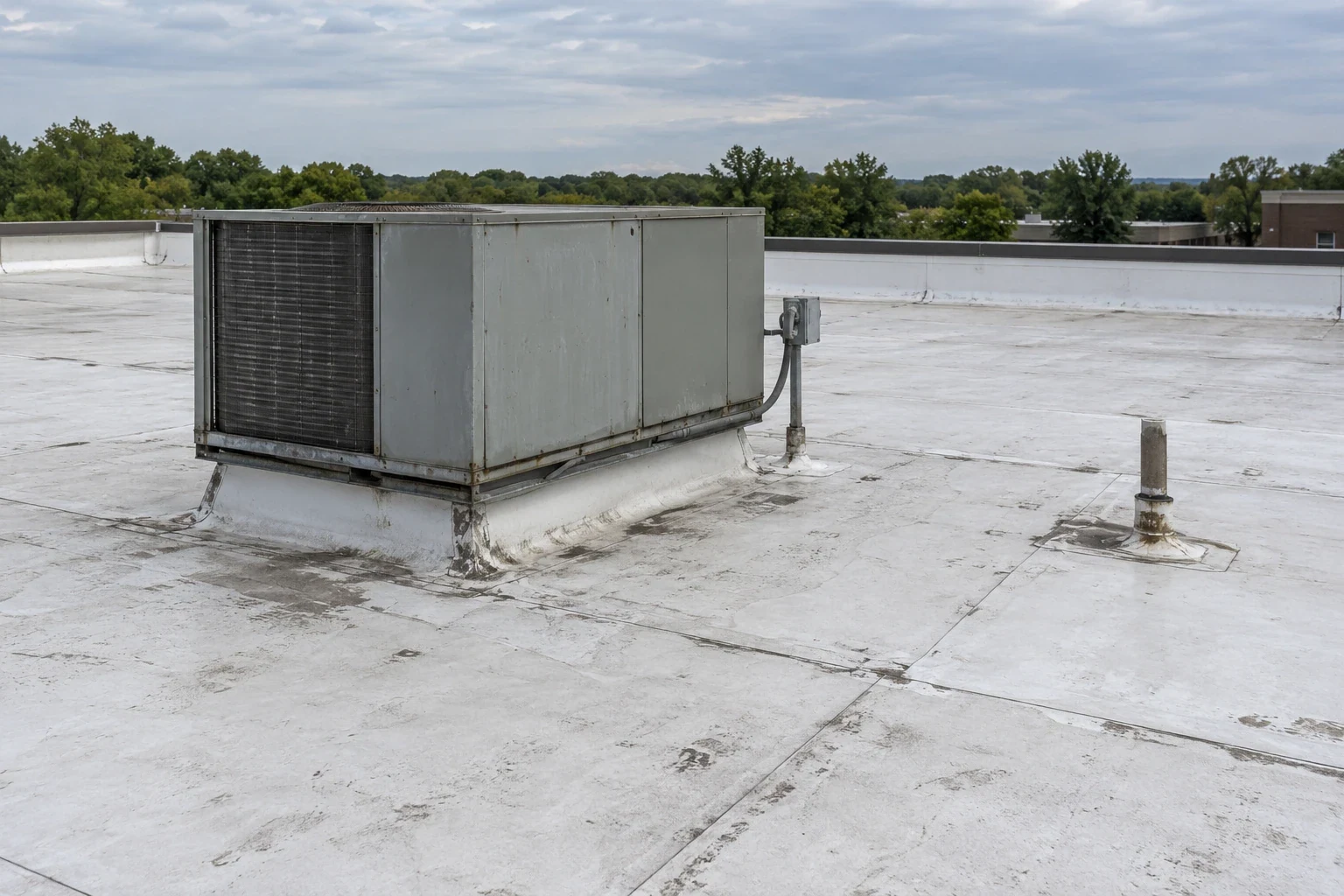
A PVC membrane is a blend of polymer, plasticizer, ultraviolet stabilizers and, in most commercial products, a polyester scrim that gives it tensile strength. The plasticizer lets the sheet lie flat on a cold morning and conform to a curb, and formulations differ between makers in how long they hold it. Heat on a dark or dirty surface speeds its loss, and so does steady contact with fats and oils from kitchen exhaust. The seams are hot-air welded, so a sound PVC seam fuses into one layer and tends to outlast the sheet around it, which means the first failures usually appear in the flashings, where the membrane is formed around corners and pipes and carries the most stress. When we examine an older PVC roof we flex a sample of the sheet at an edge and watch for hairline cracking before we trust a flashing, since a membrane that cracks when folded will crack when the building moves.
Find out how flexible your PVC still is before the next freeze
Call Commercial Roofing Johnson City for a hands-on review of seams, flashings and exhaust zones. You will get condition data you can set beside a replacement budget, and a plain recommendation on the next step.
Where does PVC earn its place over other single-ply sheets?
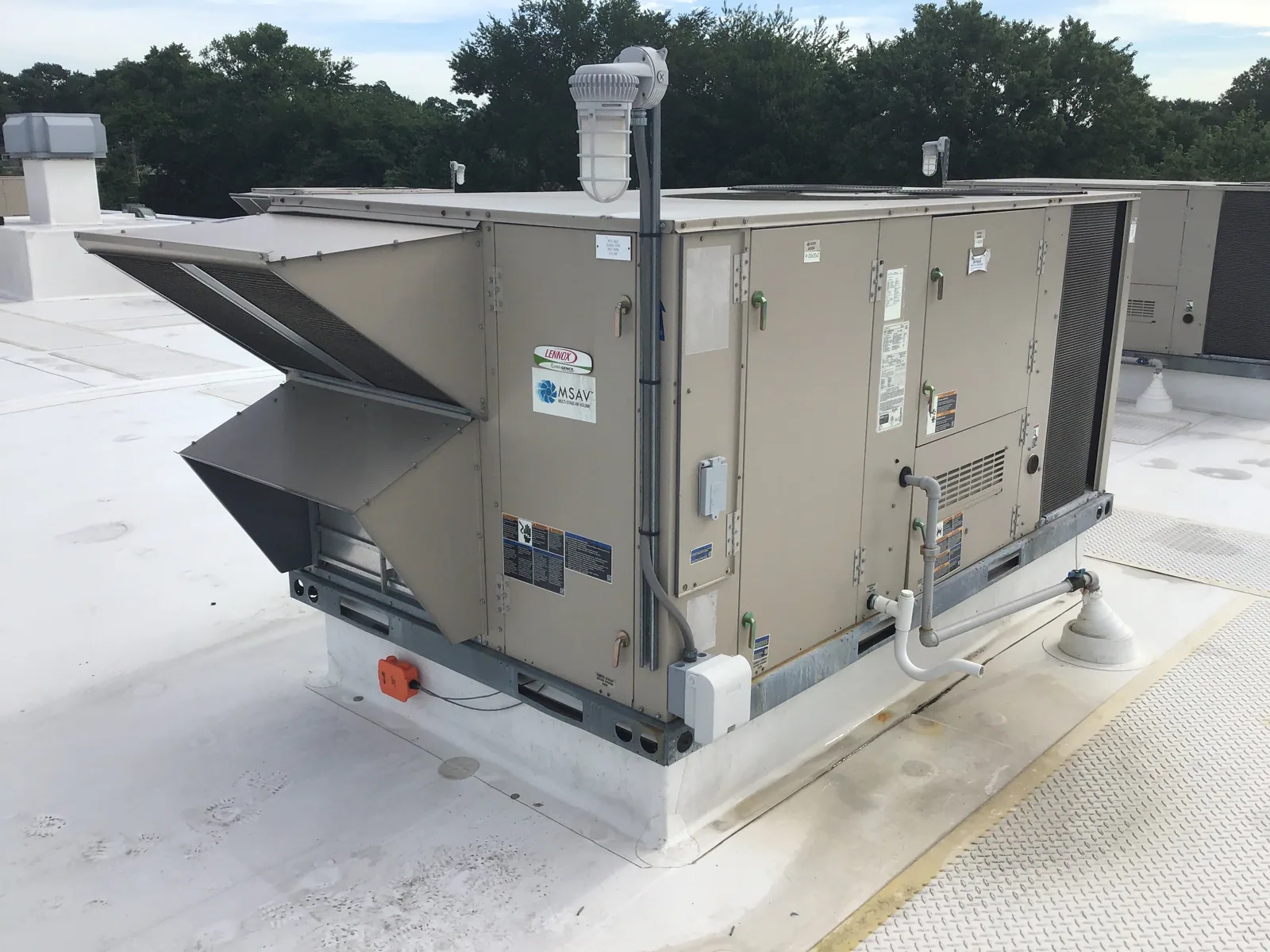
PVC earns its premium where the roof meets something harsh. Resistance to grease, animal fats and many chemicals makes it a common specification over restaurants and food service, and inherent flame resistance suits buildings where rooftop fire exposure matters. Welded seams and a tough wearing surface also take foot traffic around equipment well. The tradeoffs are real. PVC costs more than TPO roofing in most comparisons, it reacts with asphalt and with polystyrene insulation unless a separator or cover board isolates them, and an older plasticized sheet can turn brittle. Where the exposure is severe, a KEE-modified membrane resists plasticizer loss better than standard PVC and is worth pricing. Prefabricated panel systems such as those from Duro-Last and field-welded sheets from Sika Sarnafil both rest on PVC chemistry, so the detailing and the substrate matter as much as the brand name.
What do we look for on a PVC roof that sits under kitchen or process exhaust?
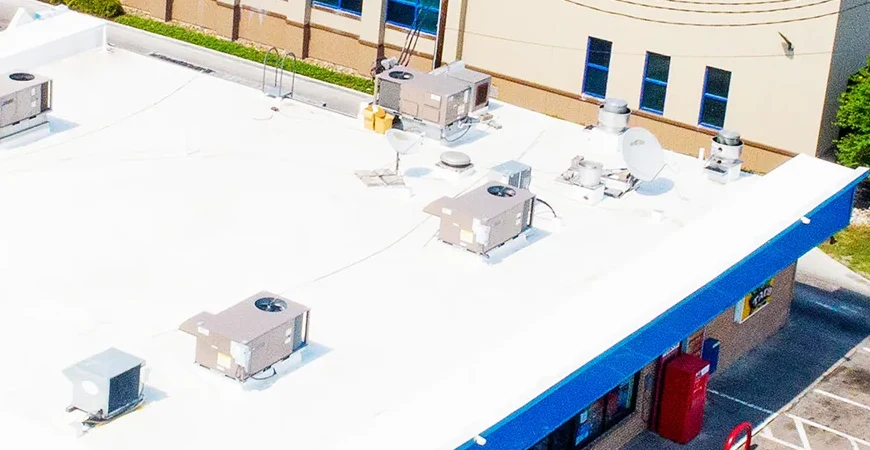
The first check is the surface around each exhaust fan, where grease collects on the sheet and in the drains and can soften or stain the membrane in a pattern that points back to the unit. We then flex-test a sample at an edge, probe the welded seams, measure how far flashings have pulled away from corners and pipes, and look for hairline cracks at inside corners where the sheet is under the most tension. Fan housings, grease containment trays and the condition of curb flashing say more about the coming seasons than the open field does. A commercial roof inspection that documents those points with photographs lets an owner separate a cleaning-and-flashing problem, which is inexpensive, from a membrane that has truly reached the end of its flexibility.
How does a stiffening sheet turn into a wet-insulation problem?
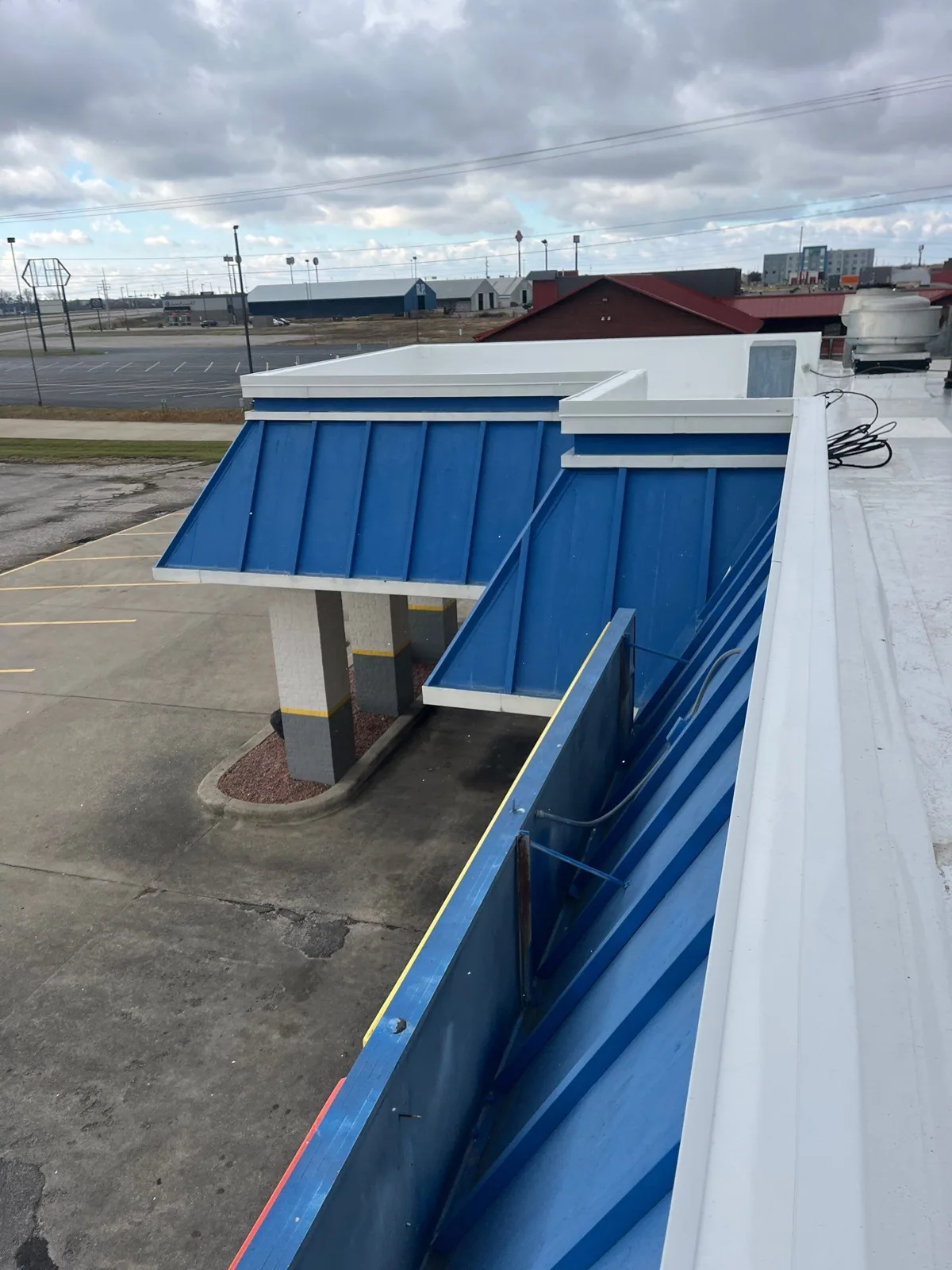
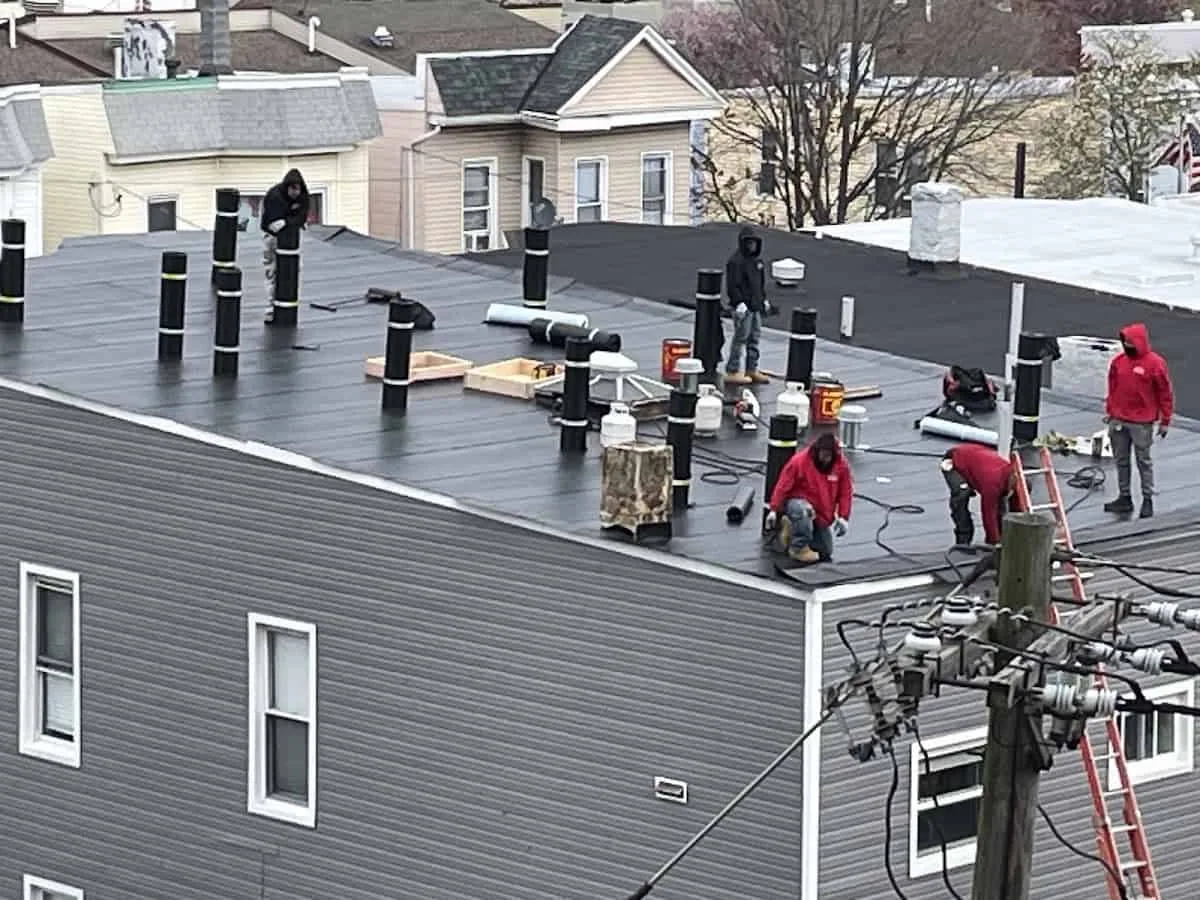
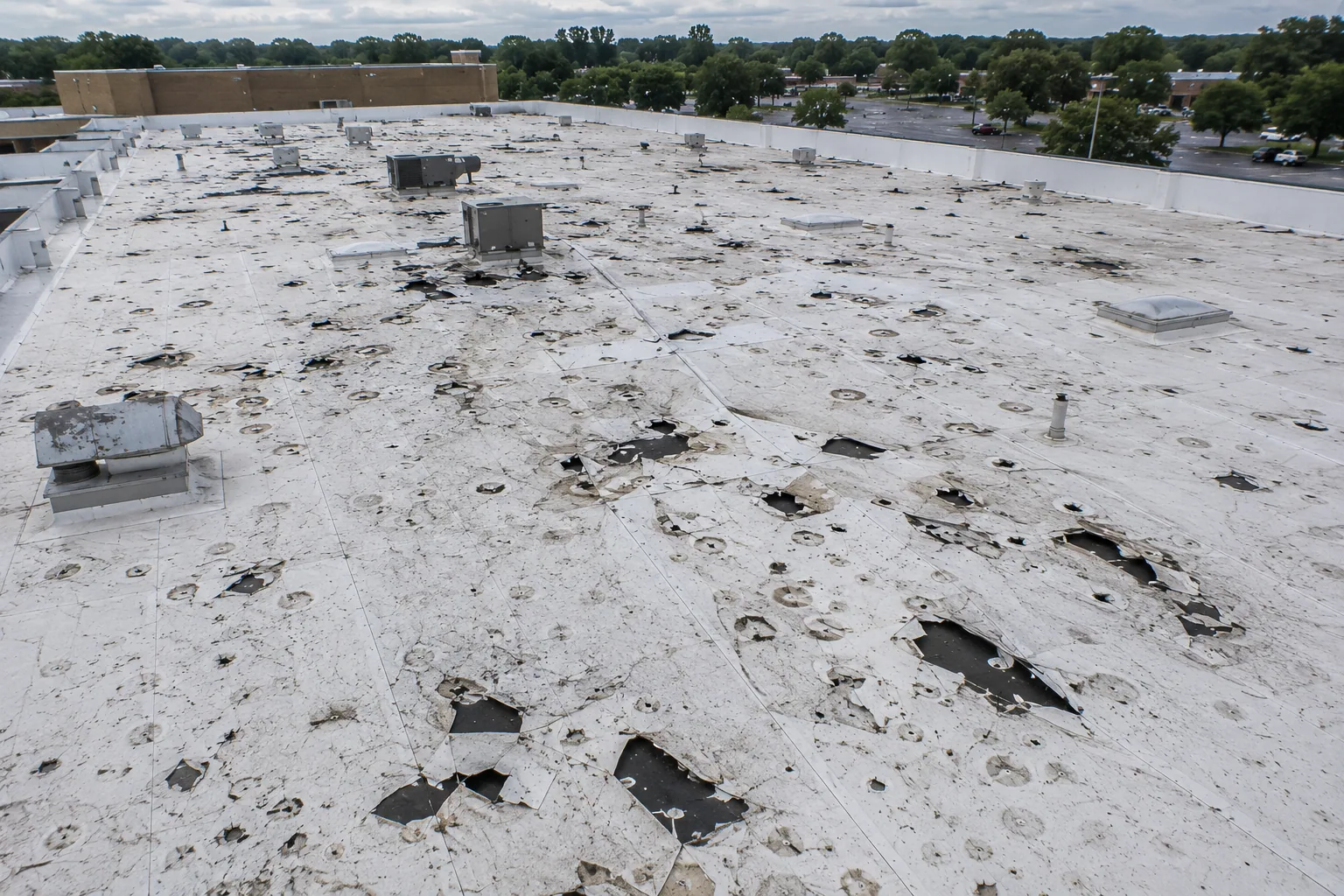
A brittle membrane rarely fails across the open field. It splits at the points of greatest movement, around curbs, pipes and wall bases, and each split admits water at a spot where the insulation below has no drainage path. That water spreads along the top of the deck and saturates board far from the visible damage, so the cost of waiting grows out of proportion to the size of the crack. Replacing failed flashings while the insulation is dry is a contained repair, and a flashing failure repair done in time may extend the life of a sheet whose welds are still strong. Postponed past a couple of freeze-thaw seasons, the same defect becomes a core-cut-and-replace scope across wet areas. Owners who carry the roof in a roof capital plan can place that decision in a chosen year rather than discovering it in February.
When does the Tri-Cities calendar favor PVC work?
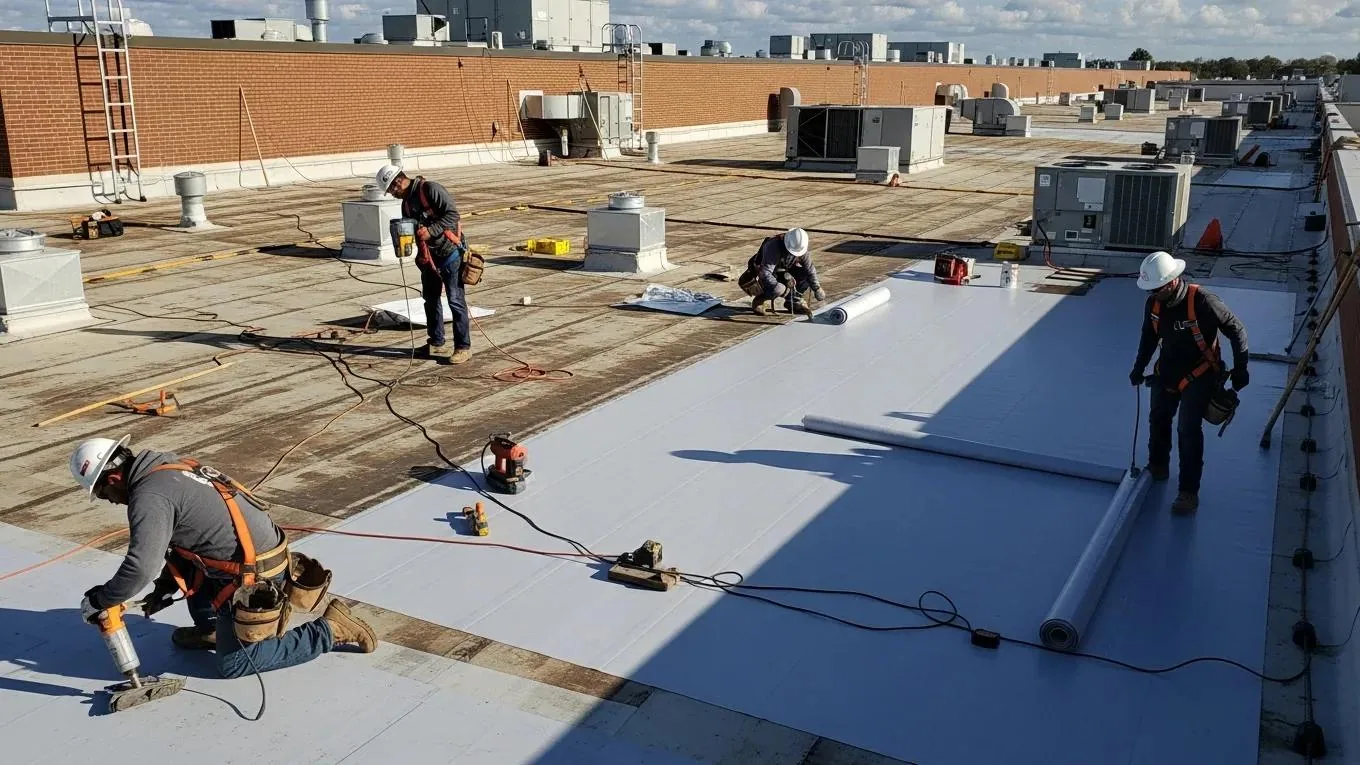
PVC welds in cooler weather than adhesive-dependent systems do, but a cold sheet is stiff, hard to fold into corners and easy to damage, so on the coldest days rolls are kept warm and detail work is saved for the afternoon. Frost or snow on the deck stops the work altogether, since a weld over moisture is a weak weld. For occupied buildings the sequence matters more than the season. On a hospital or restaurant roof, fresh-air intakes are located first, and weld fumes and adhesive vapors are kept away from them by staging the work around the equipment's operating schedule. Planned projects are best bid in late summer so materials are on site before the hard freezes, and emergency openings are dried in at any hour while permanent PVC work waits for suitable weather.
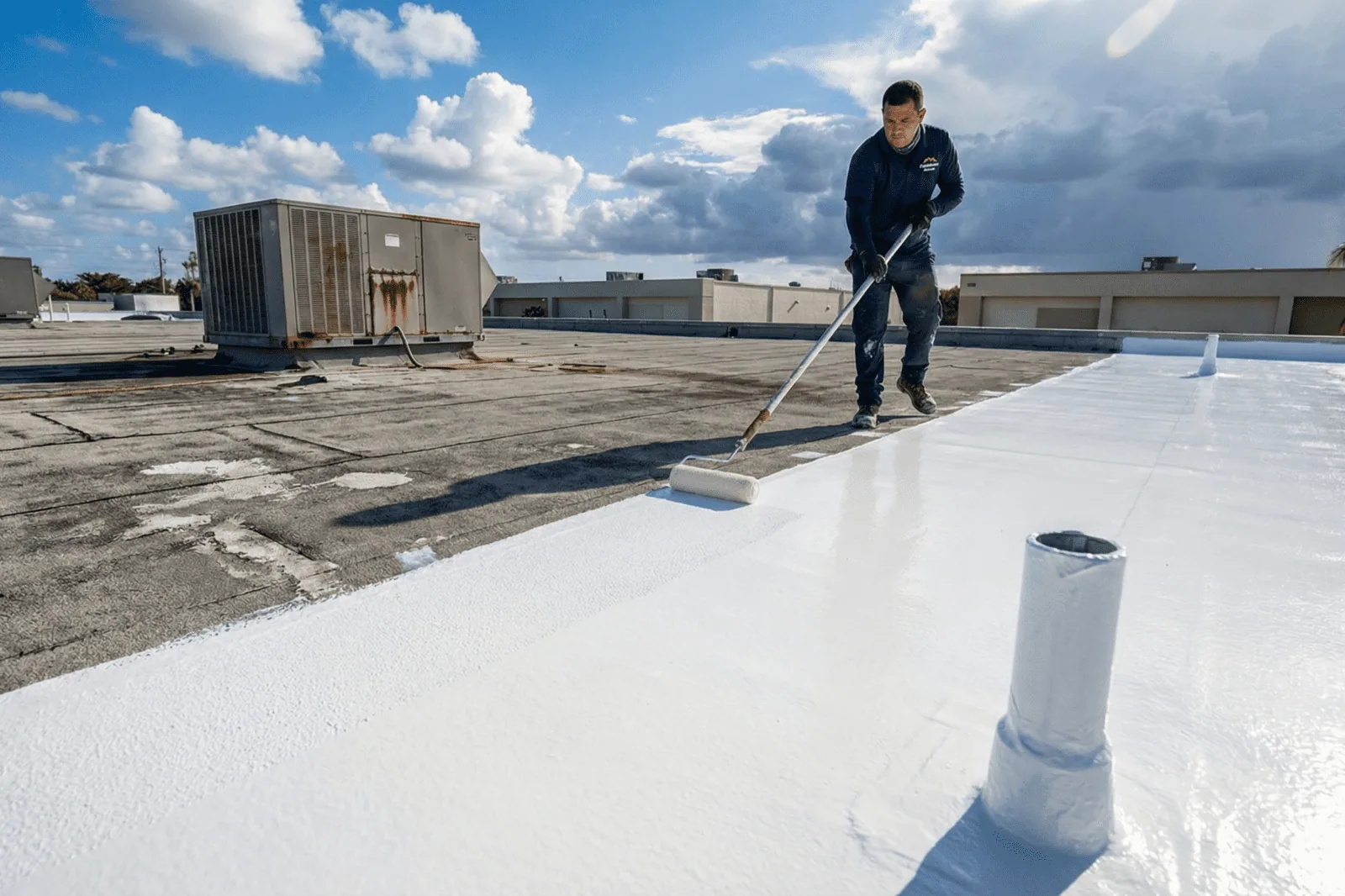
Which Johnson City roofs put PVC to the test?
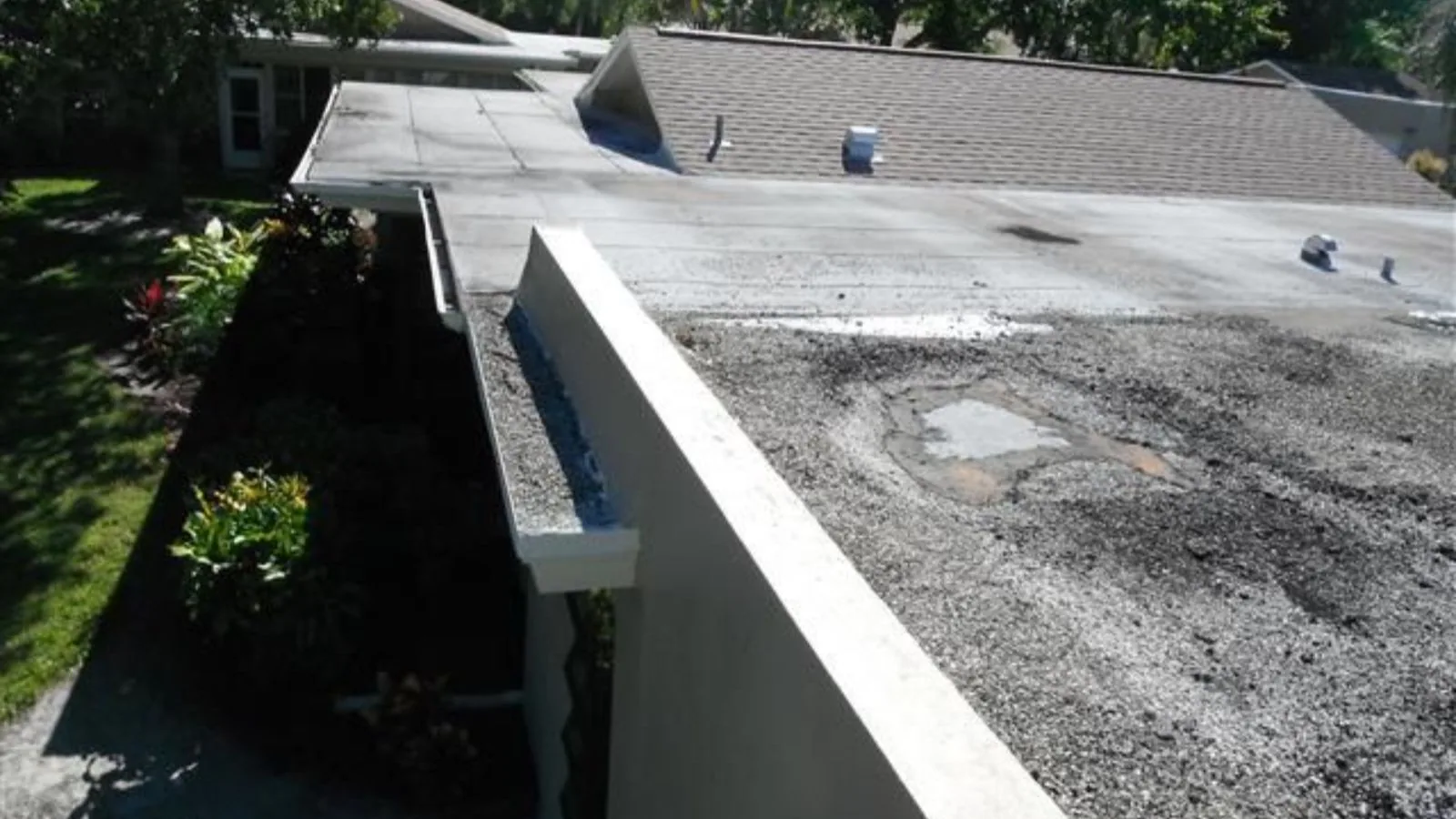
Where exhaust reaches a membrane, chemistry matters. Along the Med-Tech corridor, Johnson City Medical Center and East Tennessee State University bring kitchen, laboratory and mechanical exhaust. Food City and Ingles near Boones Creek add refrigeration and food-service conditions. PVC's welded seams can suit those exposures, but aging sheet still needs a flexibility check. Winter nights near 25F make cold handling relevant; inspect corners and flashings each autumn before a crack admits meltwater.
Commercial Roofing Questions
Is PVC overkill for an office building with no kitchen exhaust?
Not always, but it is worth pricing against TPO only when something specific justifies the difference. Chemical resistance, fire exposure, heavy rooftop traffic and a long expected hold period all argue for PVC. An office with clean air handlers and light access may do well with a less costly sheet, and the money saved can go into insulation and drainage, which influence service life more than the membrane label does.
Will a PVC roof crack the first time a hard freeze hits?
A healthy PVC sheet flexes through a Tri-Cities freeze without trouble. Cracking points to a sheet that has lost plasticizer, a flashing installed under tension, or both. A flex test and a flashing check in autumn tell an owner which kind of roof they have before winter does.
Can PVC go over my existing asphalt roof?
Only with a separation layer or cover board between the old asphalt and the new sheet, since PVC reacts with asphalt and with some insulation facers. The old roof must also be dry and within the layer count the code allows. Johnson City's adopted 2018 International Existing Building Code frames that limit, and a moisture scan confirms dryness before anyone commits to an overlay.
Why do two PVC proposals for the same roof come in so far apart?
Membrane thickness, scrim reinforcement, insulation and cover board thickness, attachment method and flashing scope all change the price, and proposals often compare unlike assemblies. Ask each bidder to state the sheet thickness, the substrate, the uplift attachment and how many penetrations receive new prefabricated flashings. Once those are aligned, the remaining gap usually reflects the quality of the details, which is where future leaks start.
How do I protect the membrane from a tenant's grease exhaust in a multi-tenant center?
Treat the exhaust as part of the roof assembly. Grease containment trays, extended fan stacks and a lease clause requiring regular cleaning keep fats off the sheet, and a walkway pad route keeps service technicians from tracking grease across it. Where a tenant has already stained the membrane, cleaning it and adding protection around the fan curb costs far less than patching later.
Related Roofing Pages
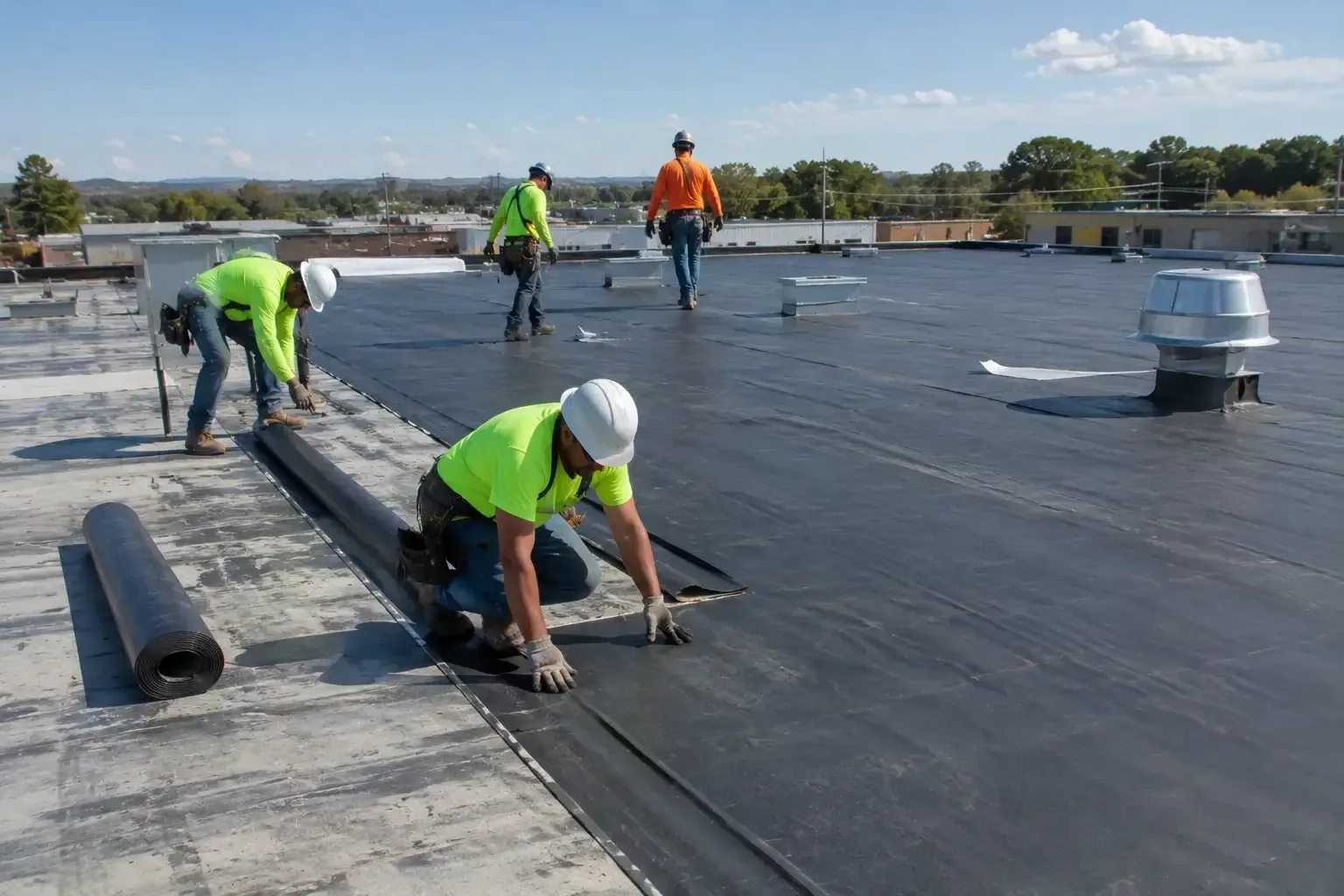
TPO Roofing
How the work is scoped, phased and documented on Tri-Cities roofs.
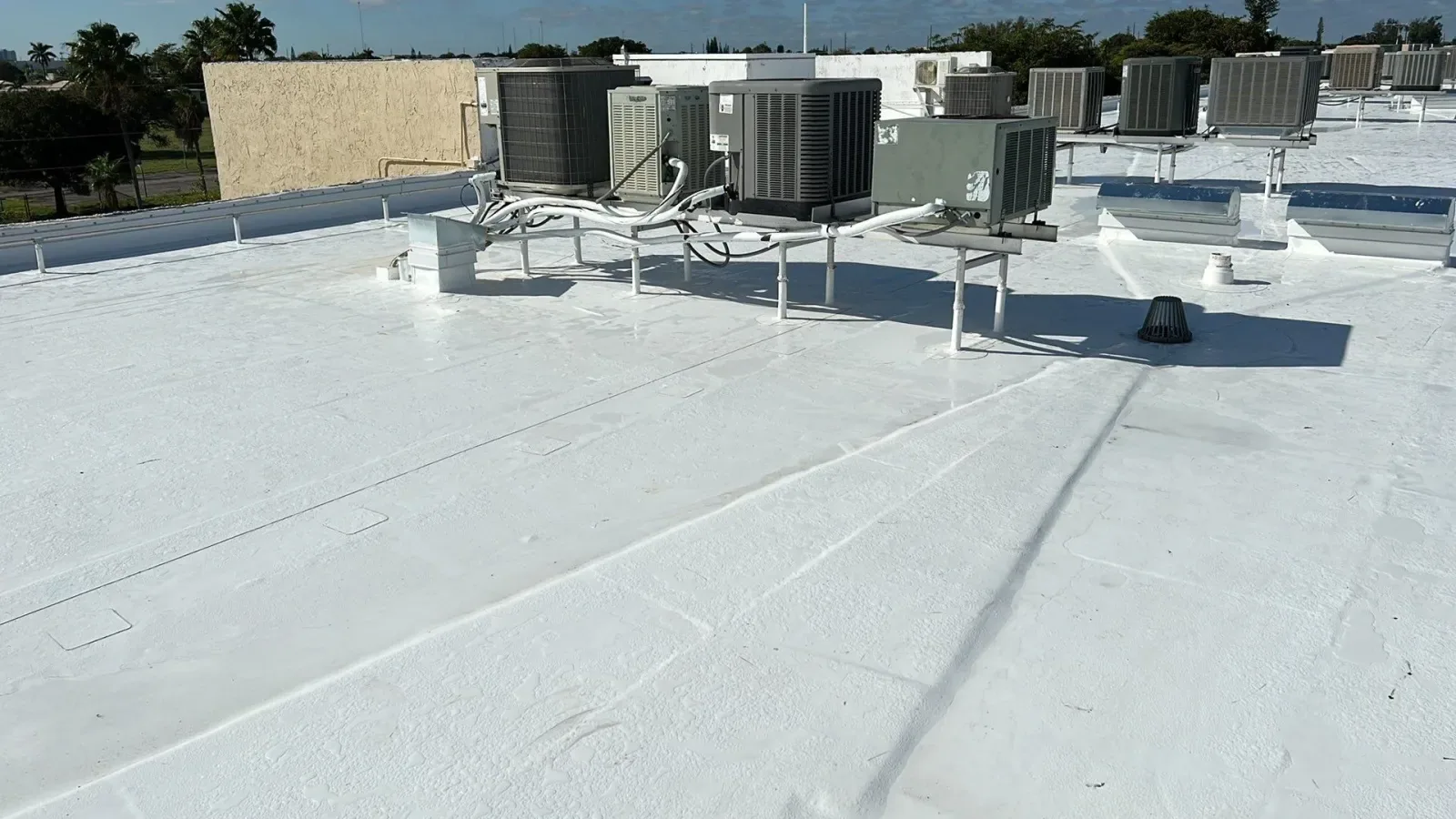
KEE Roofing
What we check, what we recommend and how the crew keeps the building running.
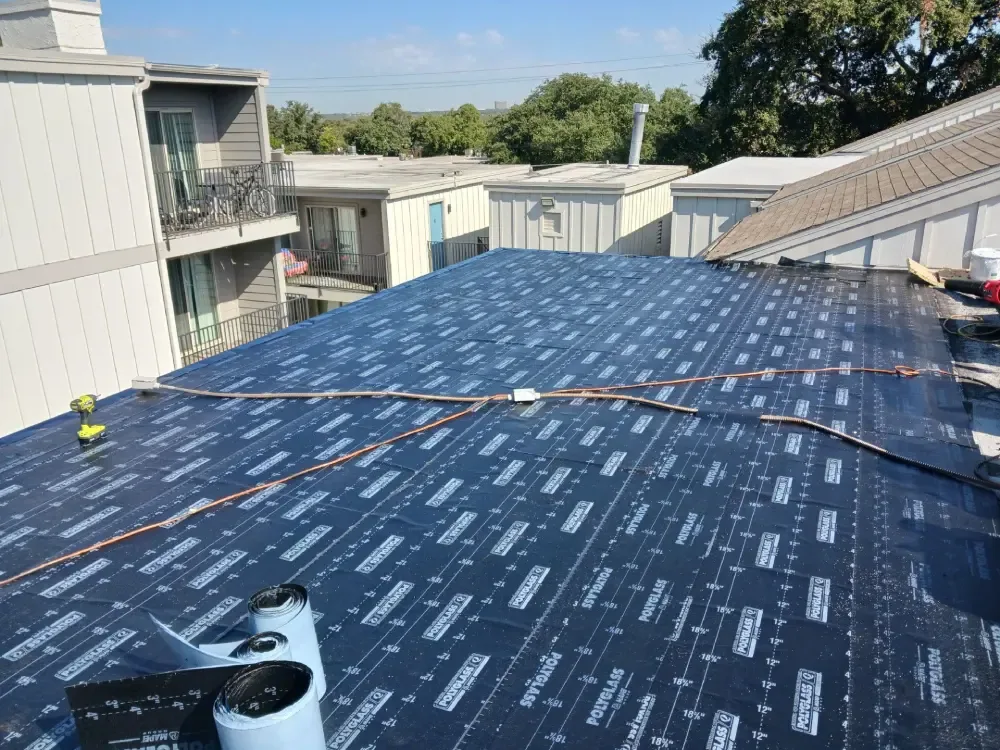
Duro-Last Prefabricated PVC Roofing
Conditions, options and next steps for commercial buildings in East Tennessee.