
Duro-Last Prefabricated PVC Roofing in Johnson City, TN
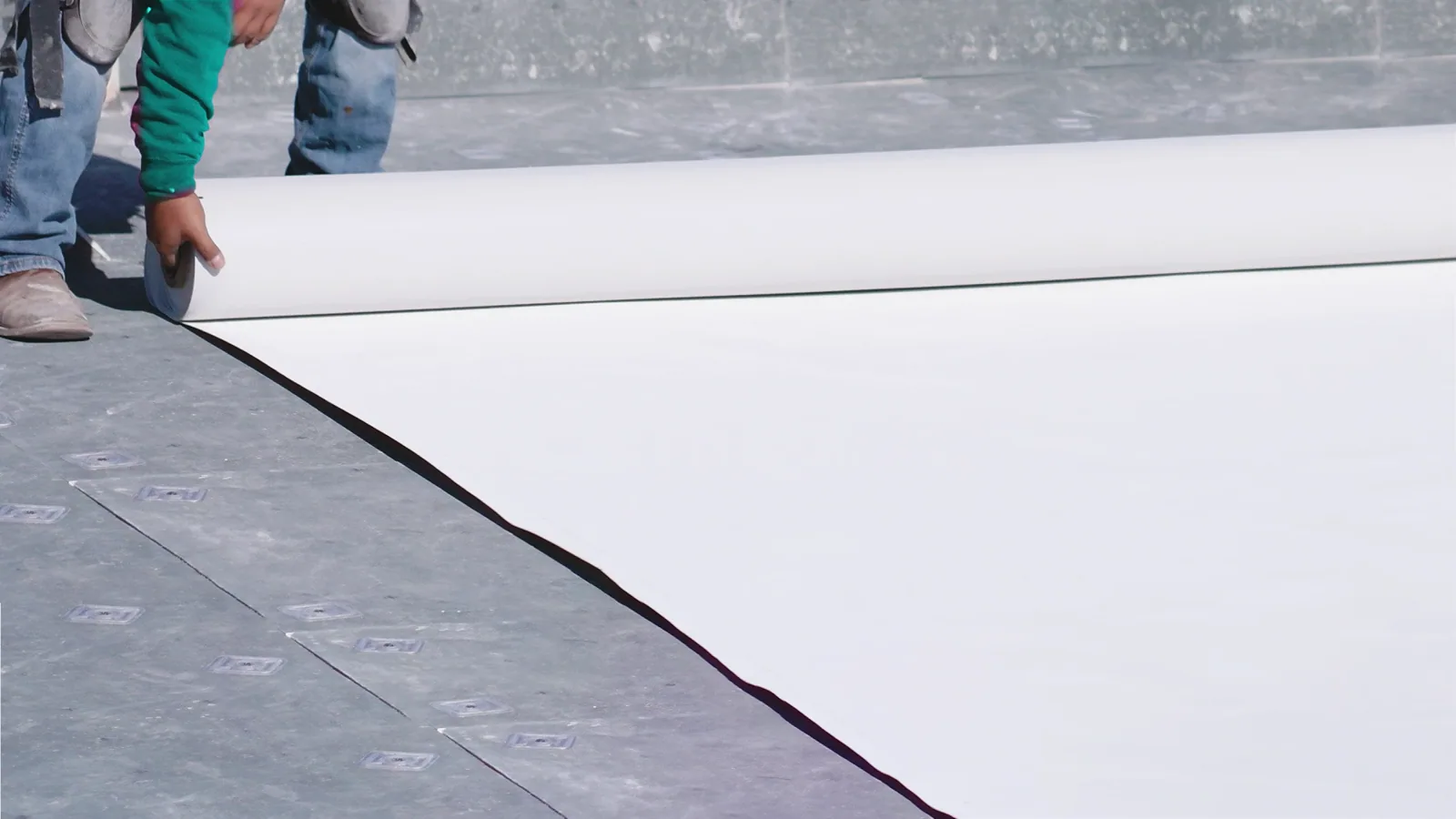
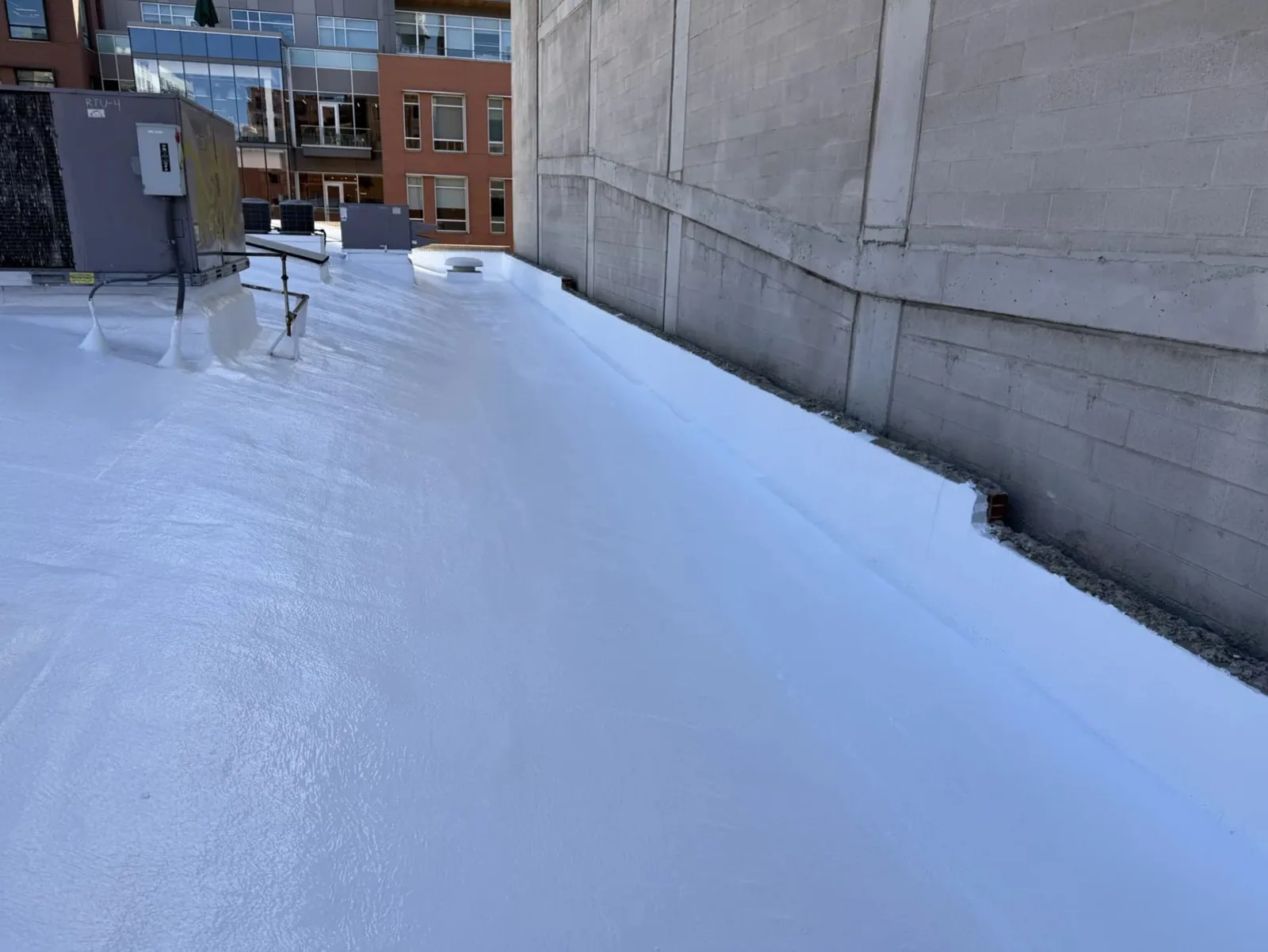
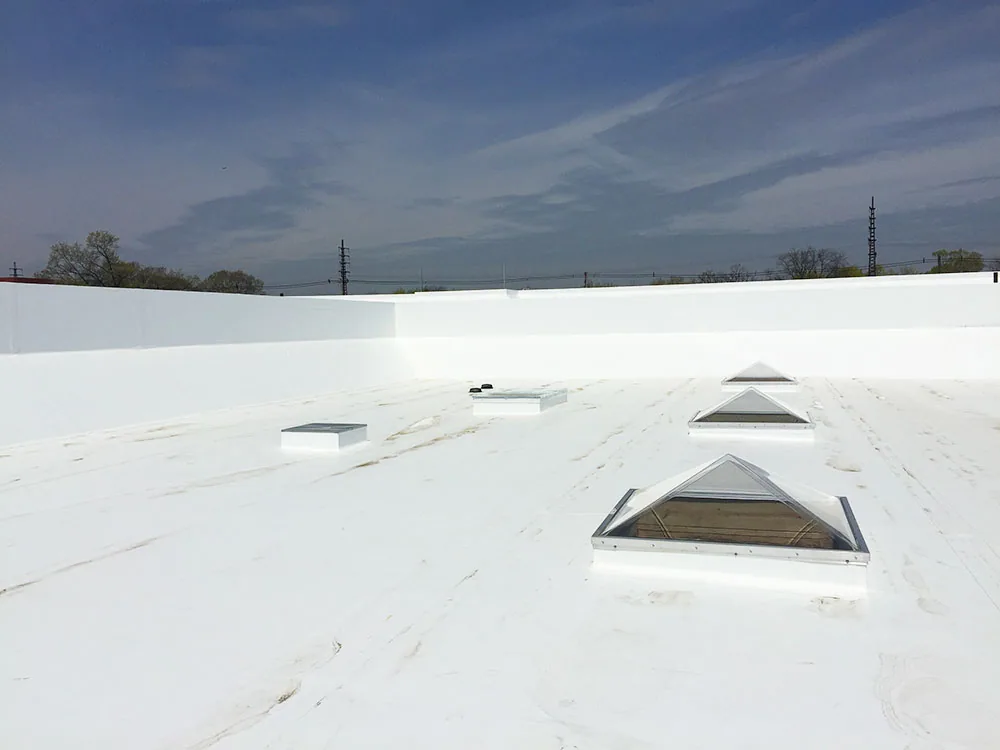
A prefabricated roof begins with a tape measure and ends in a factory weeks later, and the distance between those two moments is where most of its risk sits. A panel welded at the plant to fit a measured roof will not stretch to cover a parapet that was recorded two inches short, and the installer who finds the error on the roof must trim, add a field seam or send the panel back and wait. Duro-Last makes its PVC membrane in a factory, with the long seams welded in advance and the pipe boots and corner pieces prefabricated, and the result is fewer seams made in the weather and a faster day on the roof. That advantage depends on accurate measurements, a deck that is flat and dry, and a plan for what happens when the building is not quite as drawn. In Johnson City, TN, where the average winter low is about 25 degrees Fahrenheit and the wet-dry swings of freeze-thaw work every seam, fewer field joints means fewer places to monitor, and the field joints that remain deserve more attention than they usually receive.
What does a factory weld gain, and what does a field seam cost?
A weld made indoors on a clean table with controlled temperature and uniform pressure is more consistent than one made on a windy roof in October. That is the genuine strength of a prefabricated system, and it is why the long runs of a Duro-Last sheet rarely cause trouble. The weak points move to the places where factory pieces meet field work: the seam between adjoining panels, the perimeter attachment, the curb flashings cut to fit and the boots slipped over pipes. Those joints are made by hand, in whatever weather the day provides, and they are the ones we probe first on any inspection. A PVC seam that looks closed may still peel under tension, and a boot that fits snugly in July can open in January as the pipe contracts. We read the pattern of failures as evidence of tension, traffic or ponding and match the repair to the cause.
Measure twice and survey once before ordering a custom roof
Call Commercial Roofing Johnson City and we will check dimensions, scan for wet insulation and write up the repairs a prefabricated roof needs. You will have the data to schedule the order before the leak decides.
When does a prefabricated PVC sheet beat one built in the field?
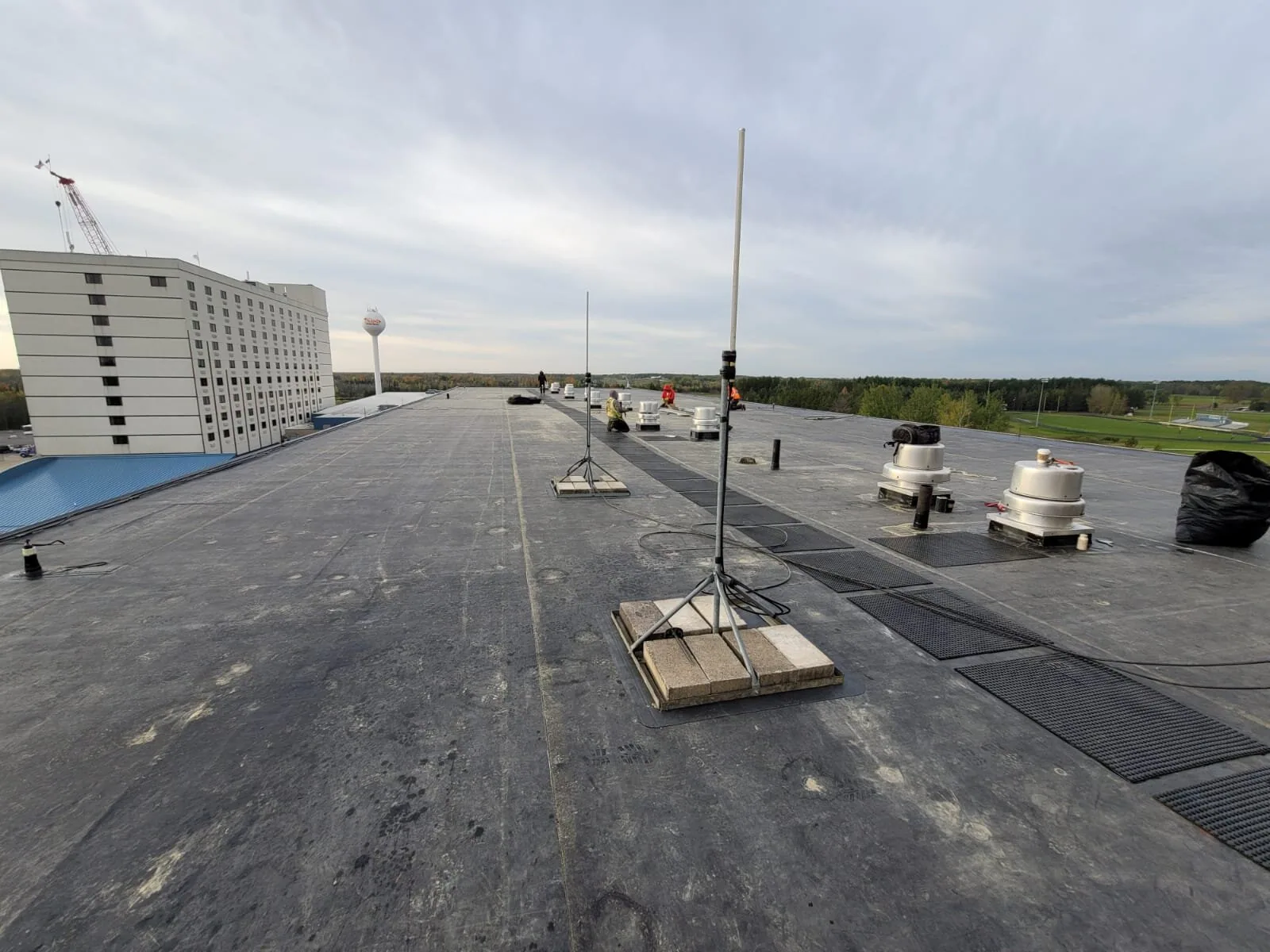
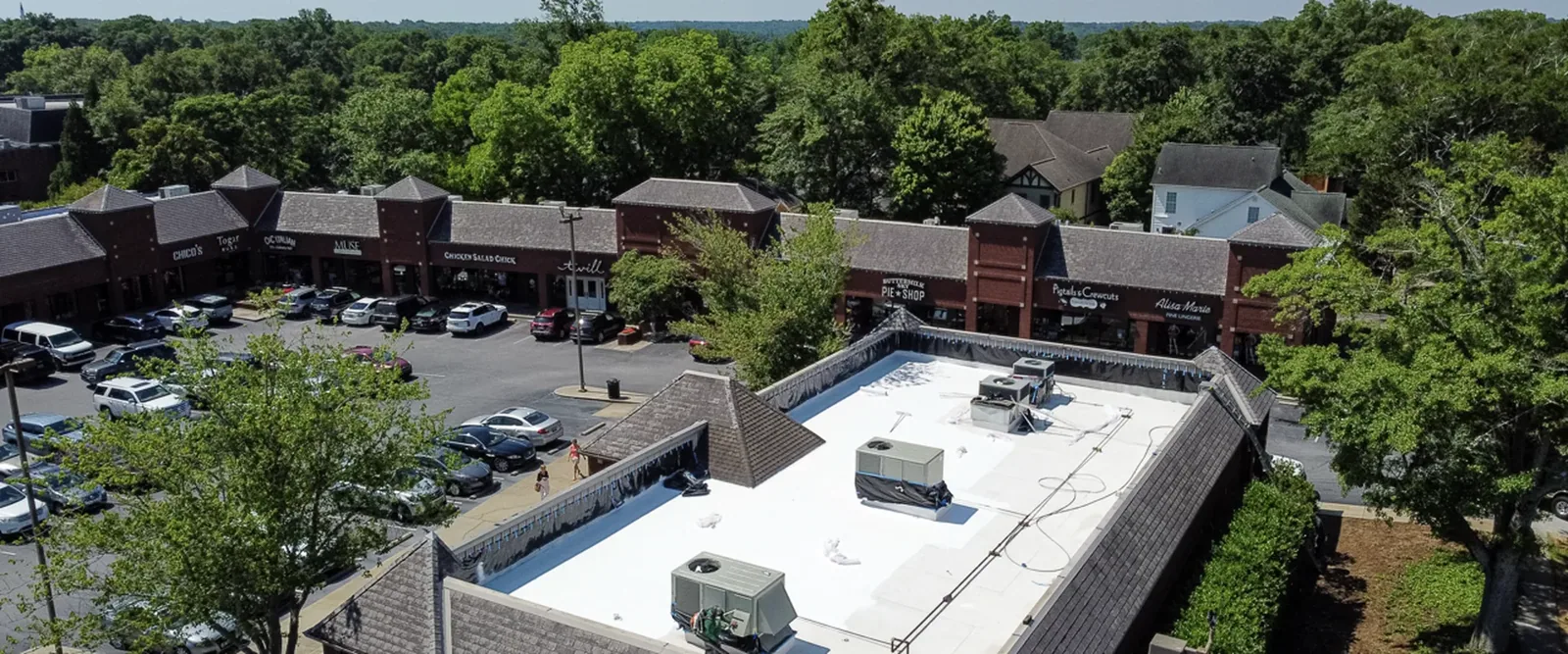
Prefabrication pays where the roof is simple, the access is limited and speed matters, such as a rectangular production building, a strip of small commercial units or a flat roof with many identical penetrations. The factory fit also helps where weather windows are narrow, since a crew can lay panels and weld the field seams in a day. A field-fabricated sheet from Sika Sarnafil or Holcim Elevate suits roofs with unusual geometry, many curves or a complicated edge, because the installer adapts on site. Either way the material is PVC roofing, which resists oils and many chemicals but loses plasticizer over time, so the comparison should include exhaust, grease and the owner's plan for the building. Prefabricated systems also change how repairs are sourced, because replacement panels and boots are made to order and lead times matter.
Which Washington County and Phipps Bend plants face tie-in questions?
Industrial growth produces roof tie-ins, and tie-ins are where prefabricated sheets need the most attention. Koyo Corporation USA expanded in Washington County with 61,000 new square feet of manufacturing space, and the ebm-papst plant at the Washington County Industrial Park is a 300,000 square foot building on a 30-acre parcel, so plants that grow like that raise the tie-in question. When a plant adds a wing, the new roof must meet the old one at a transition that handles different heights, different membranes and different expansion rates, and the detail at that line decides whether the junction stays dry. Along US 11W, Phipps Bend Industrial Park lies near Surgoinsville and holds manufacturers that together employ over 2,000 people, and Surgoinsville sits 18 miles from Kingsport. A manufacturing plant roof or a flex industrial roof carries exhaust stacks, equipment curbs and drainage runs that a membrane must tolerate for years.
How long does a prefabricated roof take, and what must be ready first?
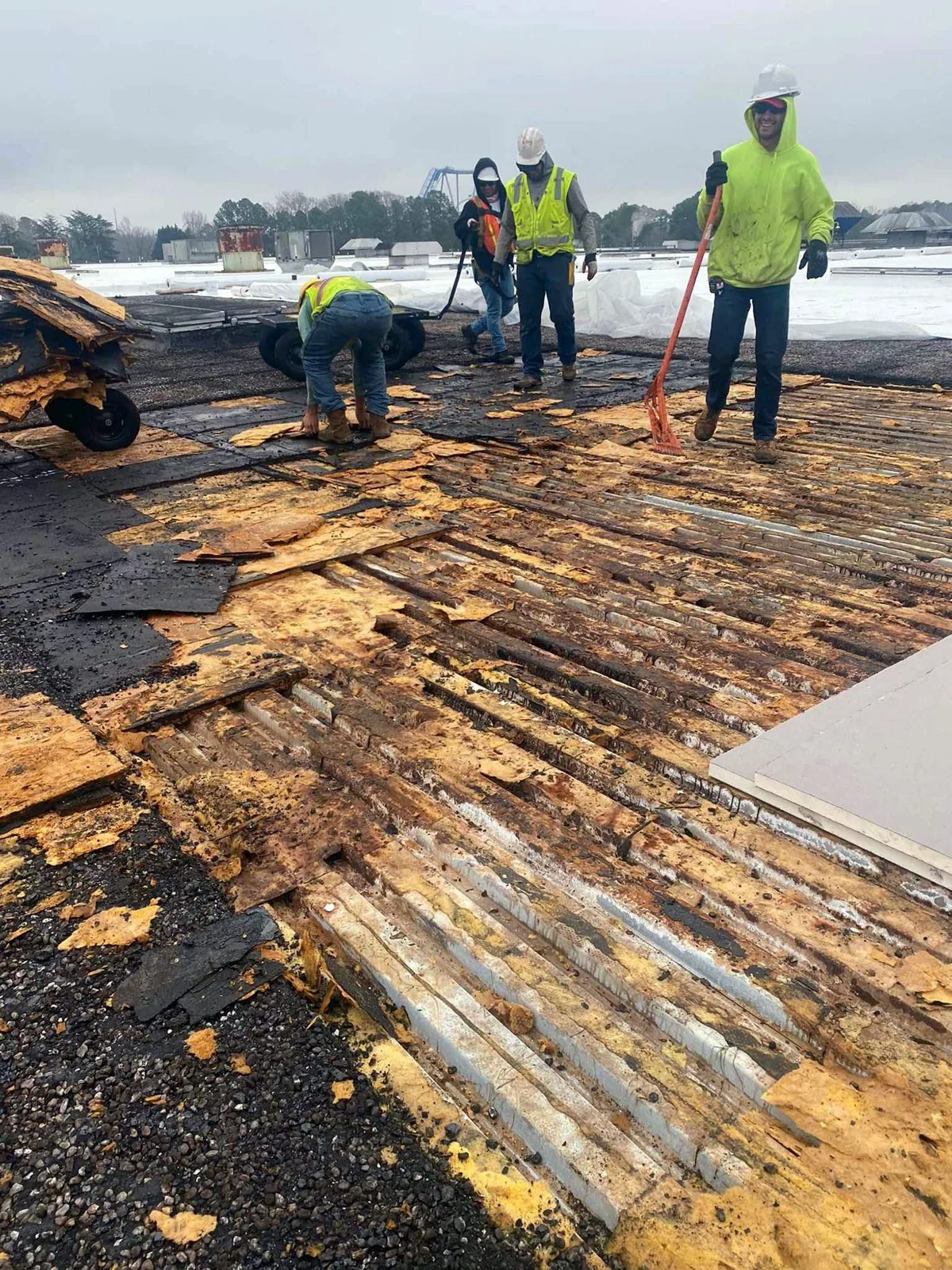
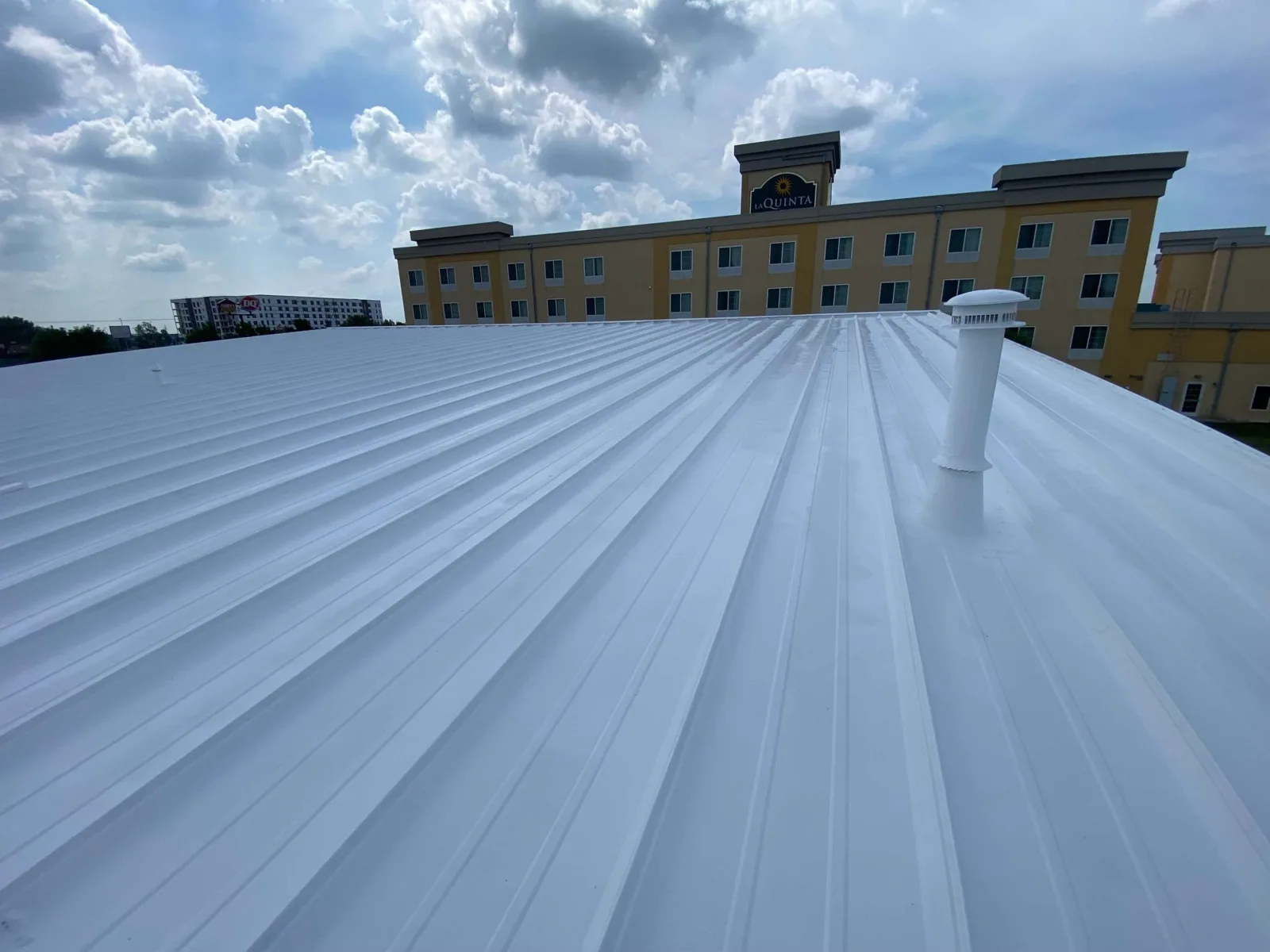
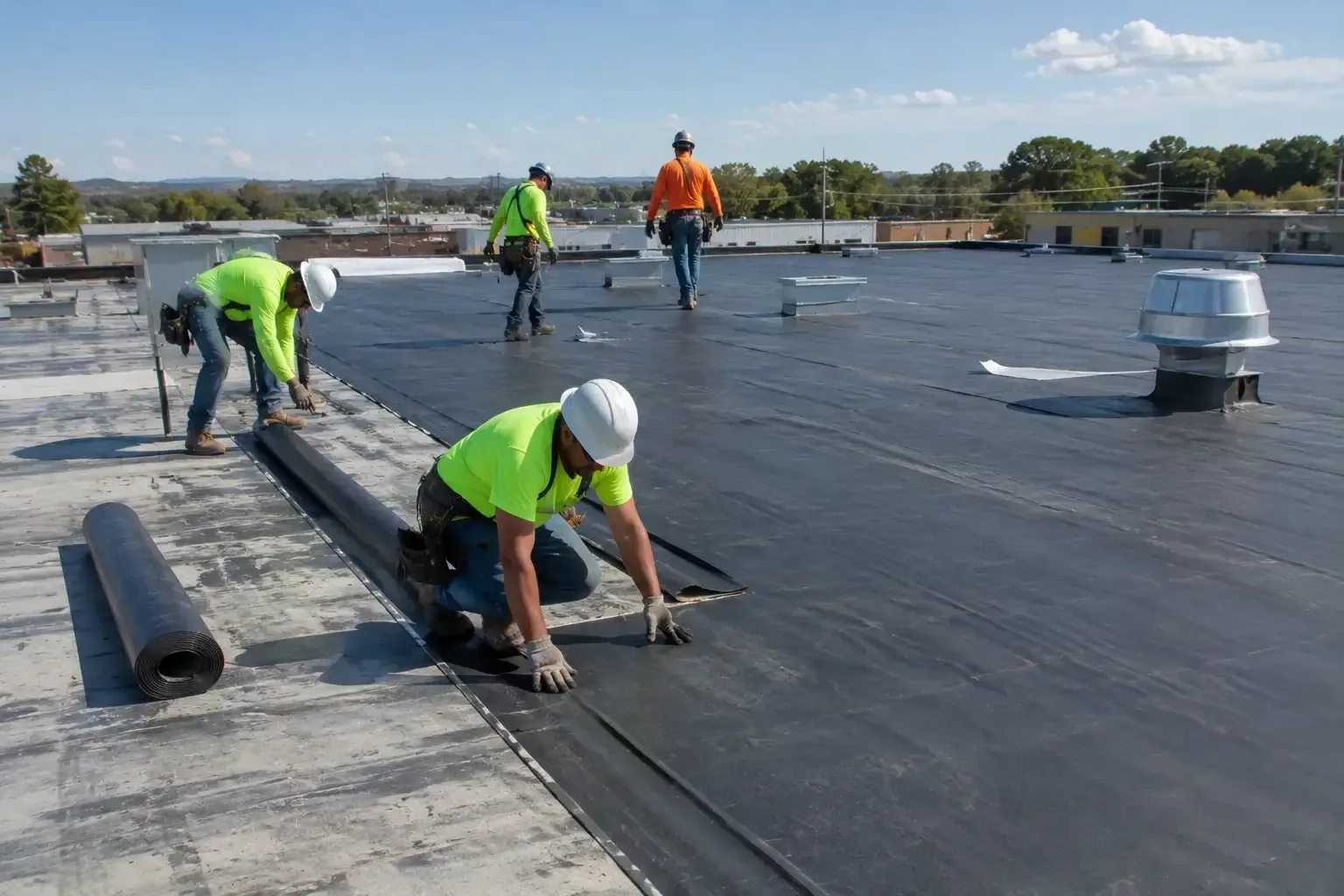
The installation is quick; the preparation is not. Before panels are ordered, the roof must be measured carefully, the deck and insulation must be dry and flat, and any needed repairs or new cover board must be planned. After the order, fabrication and shipping set a lead time that depends on the factory's schedule, and an owner who waits until the first leak to start the process will wait through that lead time with a leaking roof. We build the calendar backward from the capital cycle, starting measurements and moisture checks in summer so that panels can arrive for a window in early fall. If the decision comes in winter, we make temporary repairs and hold the permanent work for spring, since cold, damp conditions are hard on welds and adhesives. On a plant that cannot stop production, the sequence is planned with the maintenance supervisor, section by section, so the roof is dry at the end of every shift.
How do we repair a Duro-Last roof when a boot or panel seam fails?
We start by confirming what is on the roof. The closeout file should name the system, its attachment and the warranty terms, which often speak to who may repair the roof and how. Reading those terms before any cut is part of the job. Then we trace the failure to its cause. A cracked boot at a moving pipe needs a different solution than a lifted seam at a pond, and a perimeter edge pulling loose needs a different one again. Repairs on aged PVC begin with cleaning, a test weld and then a patch or a new boot welded in place, with the edges probed after cooling. If an infrared moisture survey shows wet insulation, the plan changes, because a repair over saturated board only seals the problem in. A recover becomes an option only where the insulation tests dry.
Commercial Roofing Questions
Why do prefabricated PVC roofs need accurate measurements more than other systems?
Panels are cut and welded in a factory to the dimensions supplied, so an error cannot be absorbed by trimming on site the way it can with a roll of field sheet. A second visit to verify parapet heights, penetrations and edge details costs little against a rejected panel.
Can a Duro-Last roof be repaired with a patch from another PVC maker?
A weld needs compatible polymer and a surface that fuses, so a test weld comes first. Many PVC patches work on aged sheet, though formulation differences matter and warranty terms may name the repair method. We check both before cutting into the roof.
What happens at the tie-in when a plant adds a new wing?
Heights, slopes and materials differ at the joint, so the transition needs a built curb, a counterflashing and a drainage path that carries water away from the junction. Skipping that detail is a frequent reason a new addition leaks into an old building.
Does a prefabricated PVC sheet handle snow load differently from other membranes?
The membrane carries no structural load, so snow load is a deck and drainage question. In an average Johnson City year about 15.6 inches of snow falls, and melt that cannot reach a drain turns to ice at the scupper. Clear outlets and sound slope matter more than the sheet.
Is the lead time for a custom-fabricated roof a reason to avoid the system?
Only when the roof is already failing. With planning, the lead time runs alongside surveys, permits and scheduling, so it delays nothing. An owner who starts early gets the benefit of fewer field seams and a shorter installation day.
Related Roofing Pages
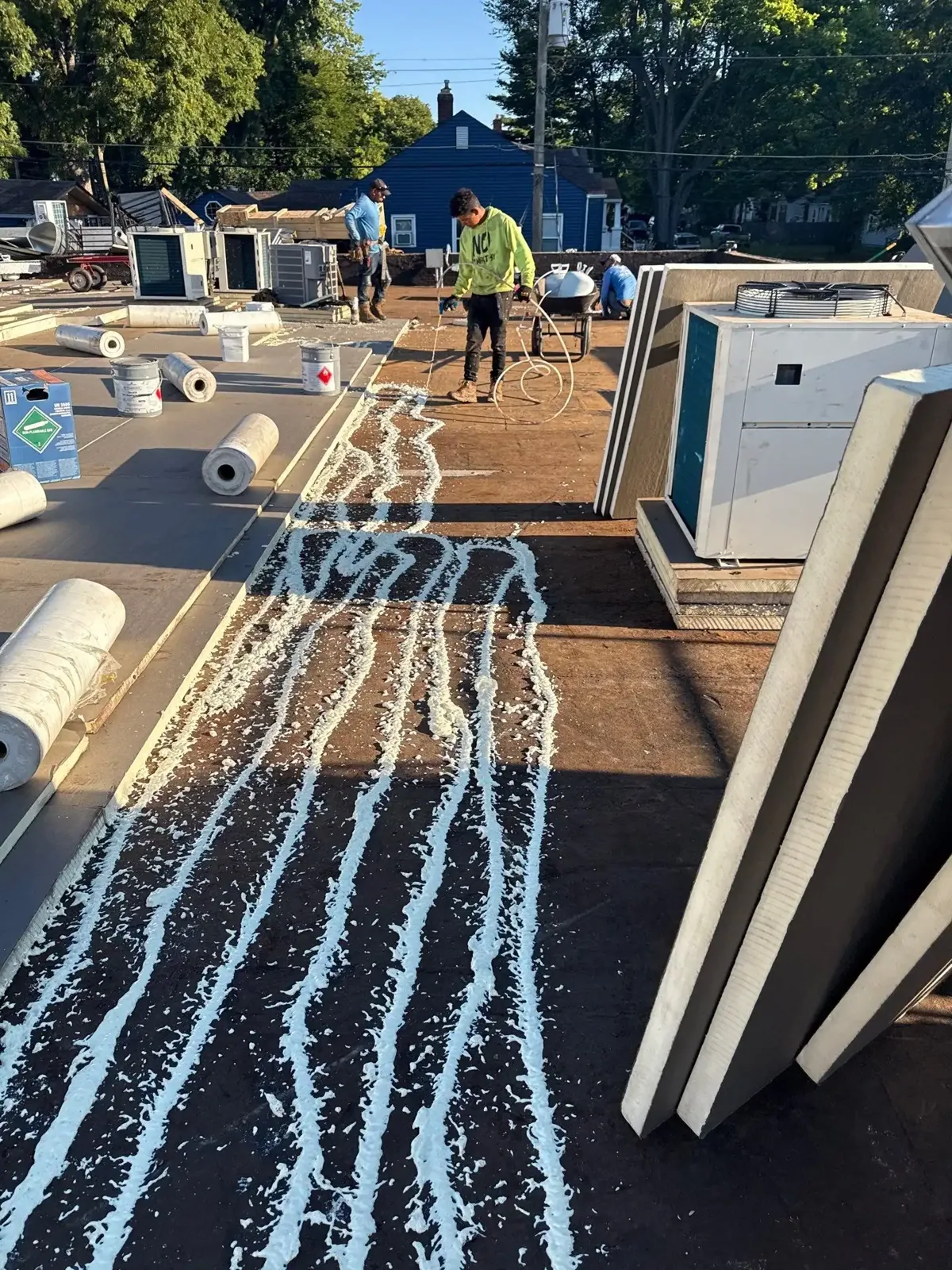
Sika Sarnafil PVC Roofing
How the work is scoped, phased and documented on Tri-Cities roofs.
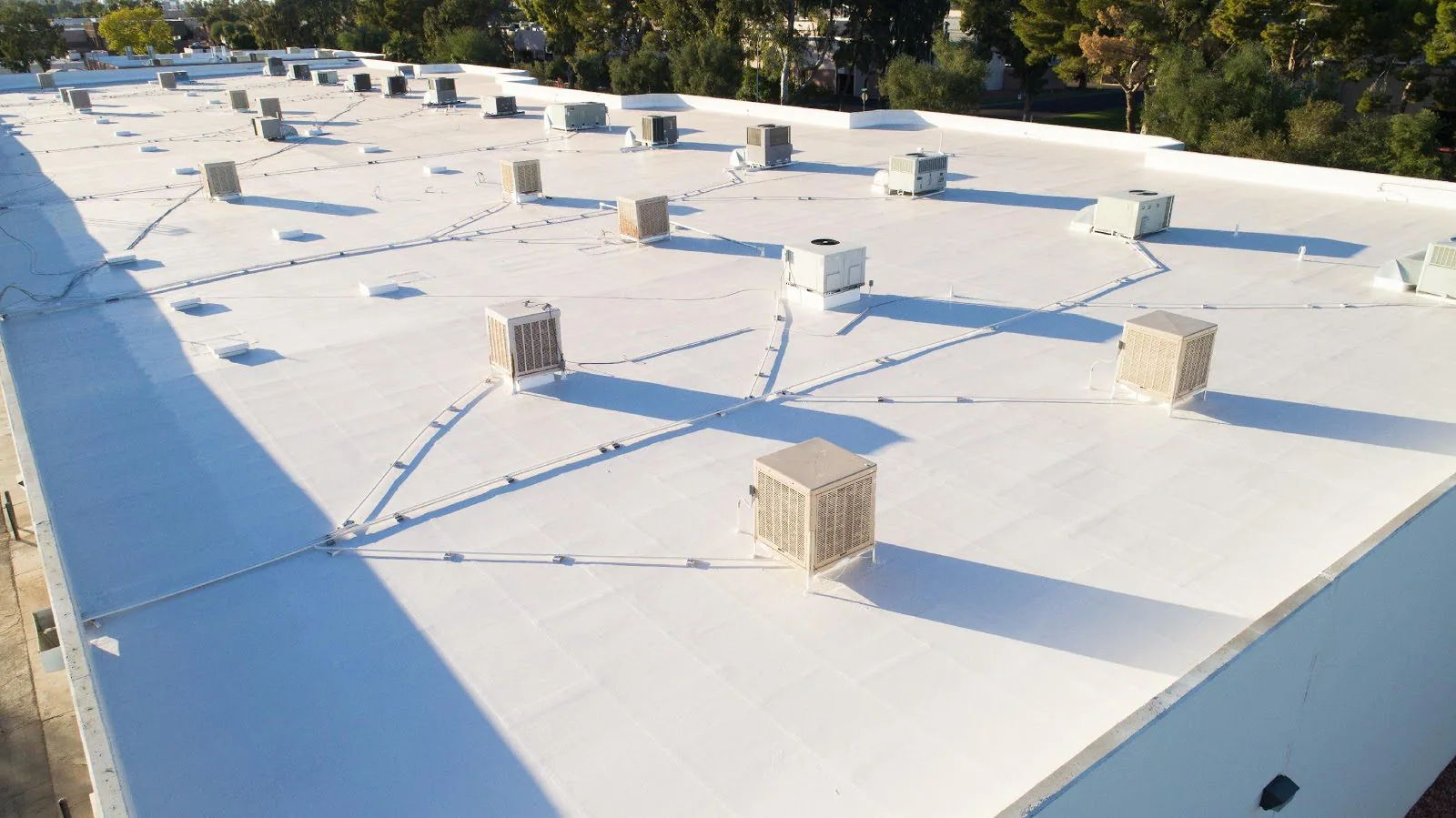
Holcim Elevate (Formerly Firestone) Roofing
What we check, what we recommend and how the crew keeps the building running.
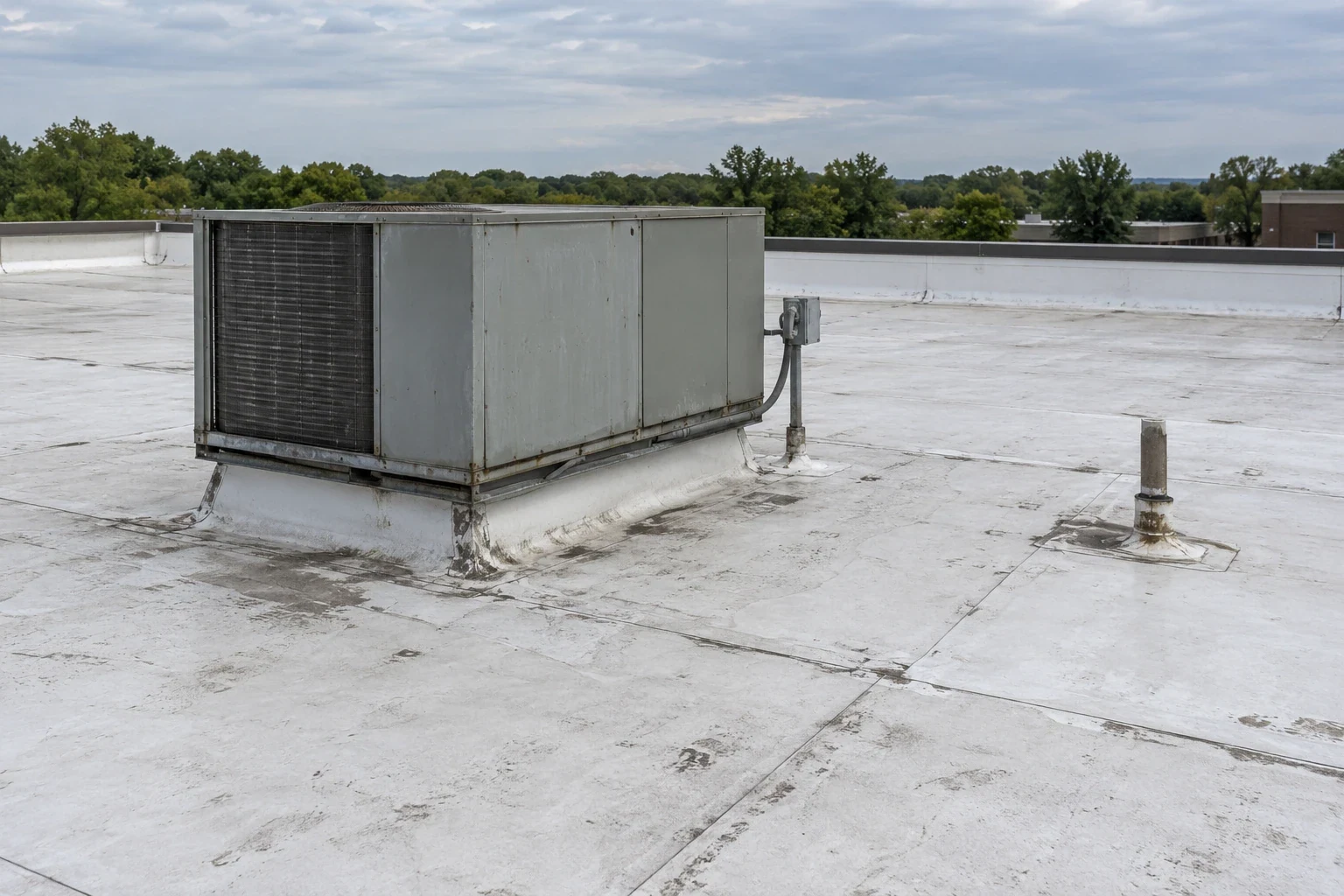
PVC Roofing
Conditions, options and next steps for commercial buildings in East Tennessee.