
Spray Polyurethane Foam (SPF) Roofing in Johnson City, TN
Spray foam starts as two liquids that meet at the tip of a gun and expand within seconds into a rigid, closed-cell layer, and that one fact explains both its appeal and its risk. The foam bonds to the substrate as a continuous skin with no laps, so there are no seams for meltwater to pry open during a freeze in Johnson City, TN, and the insulating value rides on top of the deck instead of hiding beneath a membrane. The same chemistry cannot tolerate moisture at the moment it is sprayed, and the foam itself breaks down in sunlight once its protective coating wears through. An owner who treats that coating as a scheduled maintenance item gets a long service life at a modest recurring cost. An owner who ignores it eventually pays for foam that has eroded down to the substrate.
Commercial Roofing Johnson City installs and repairs spray polyurethane foam over metal, smooth-surfaced asphalt roofs and bare decks, and finishes it with a silicone coating or an acrylic coating matched to the drainage and traffic on that building.
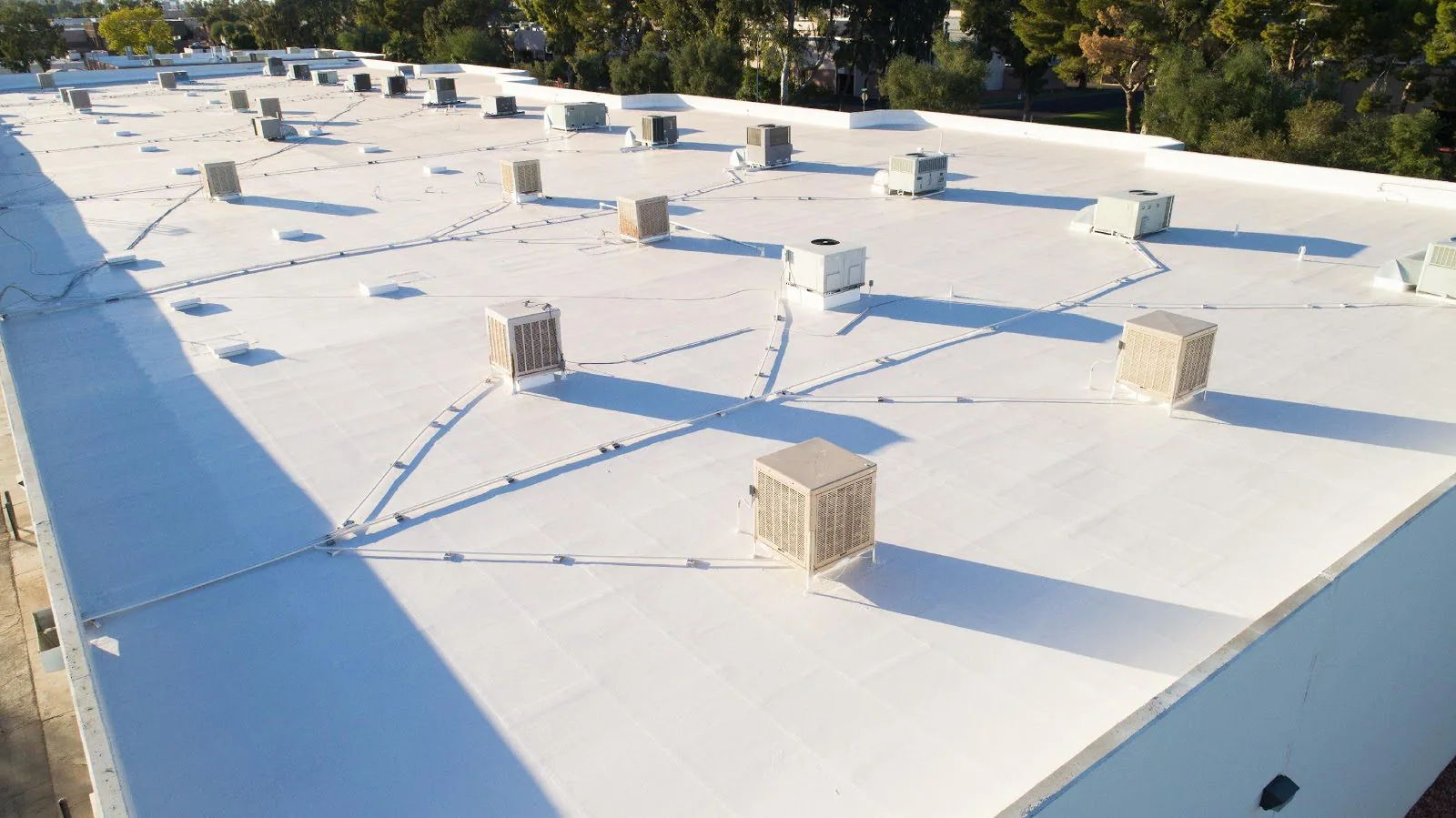
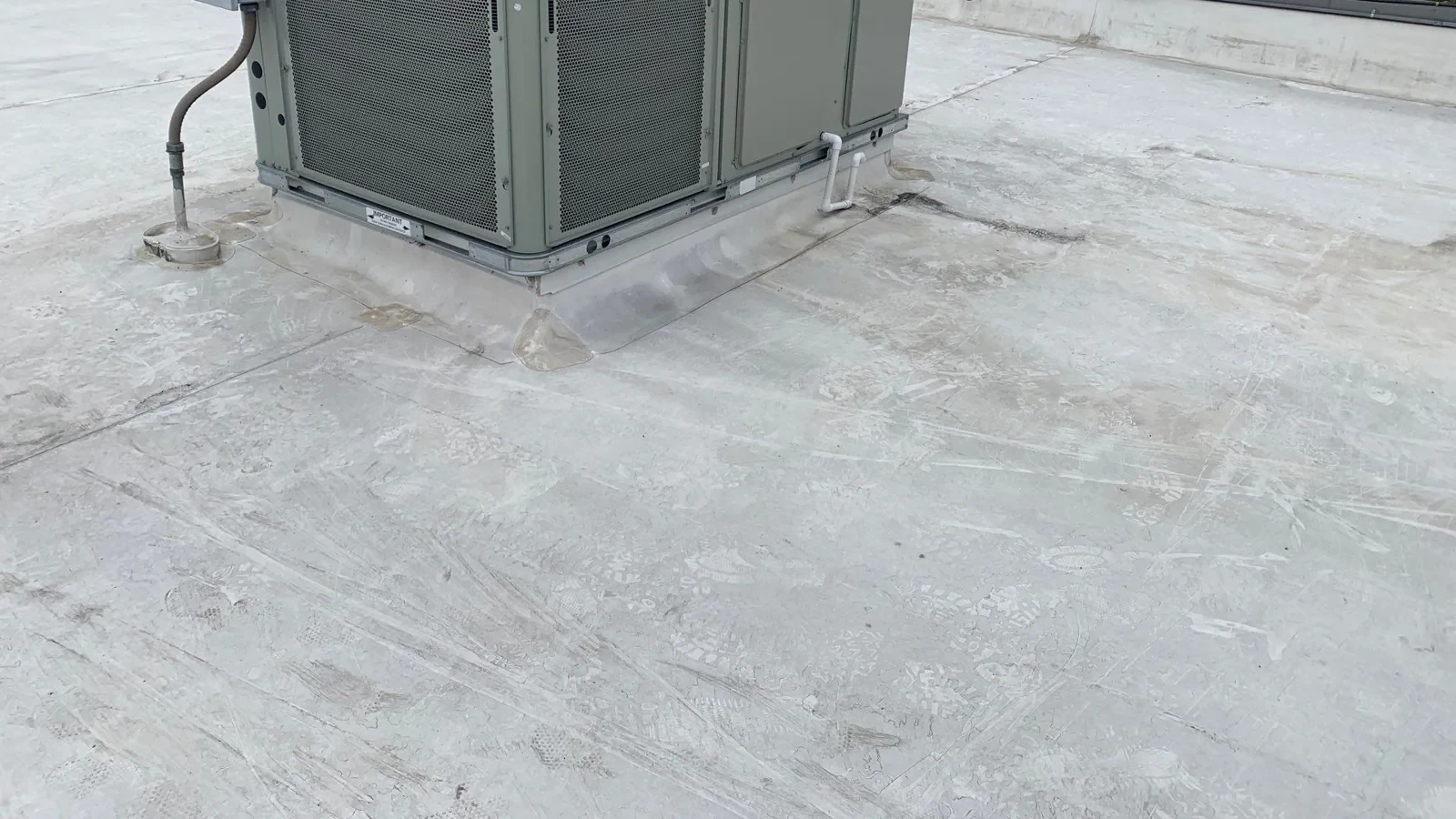
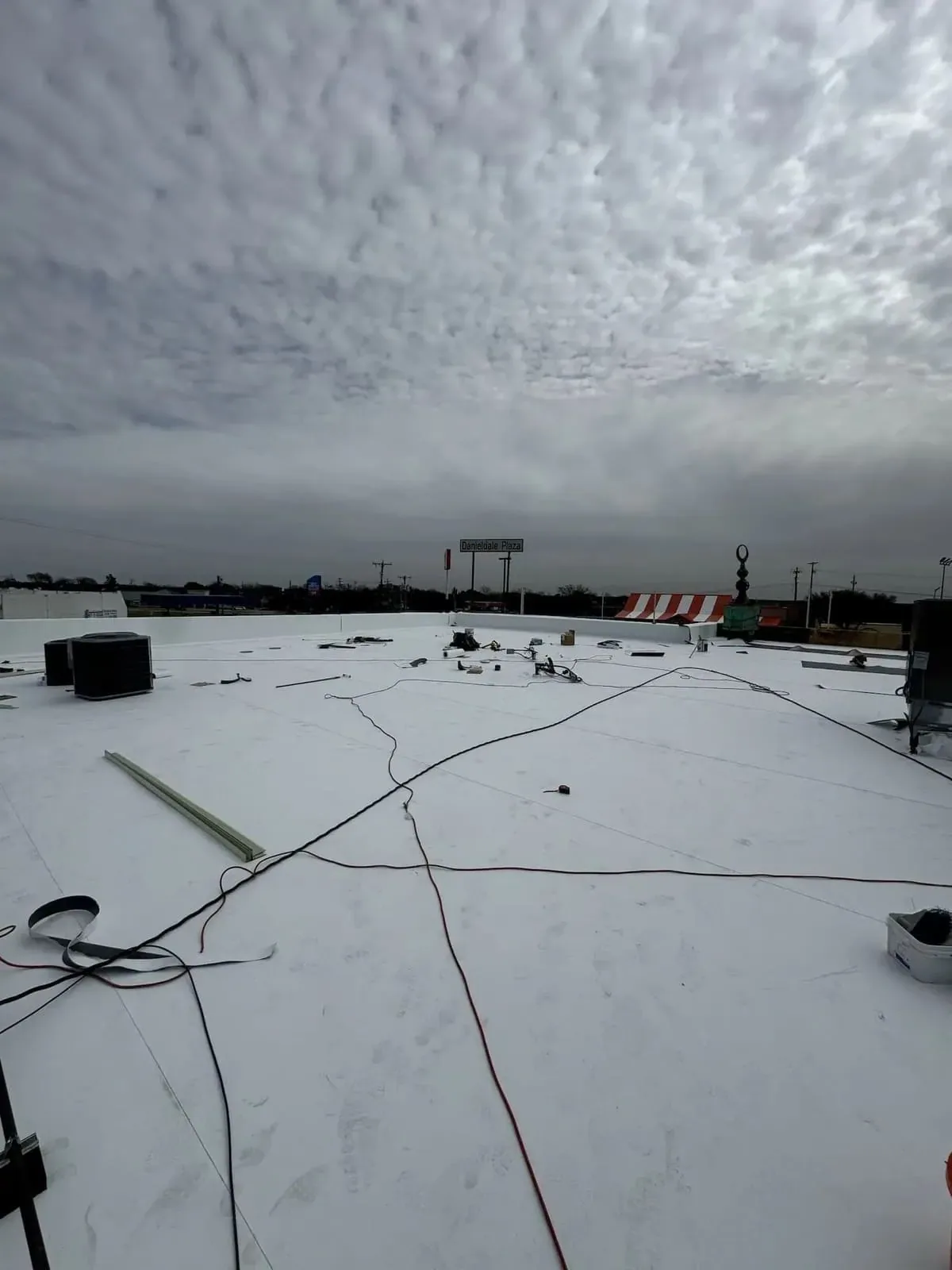
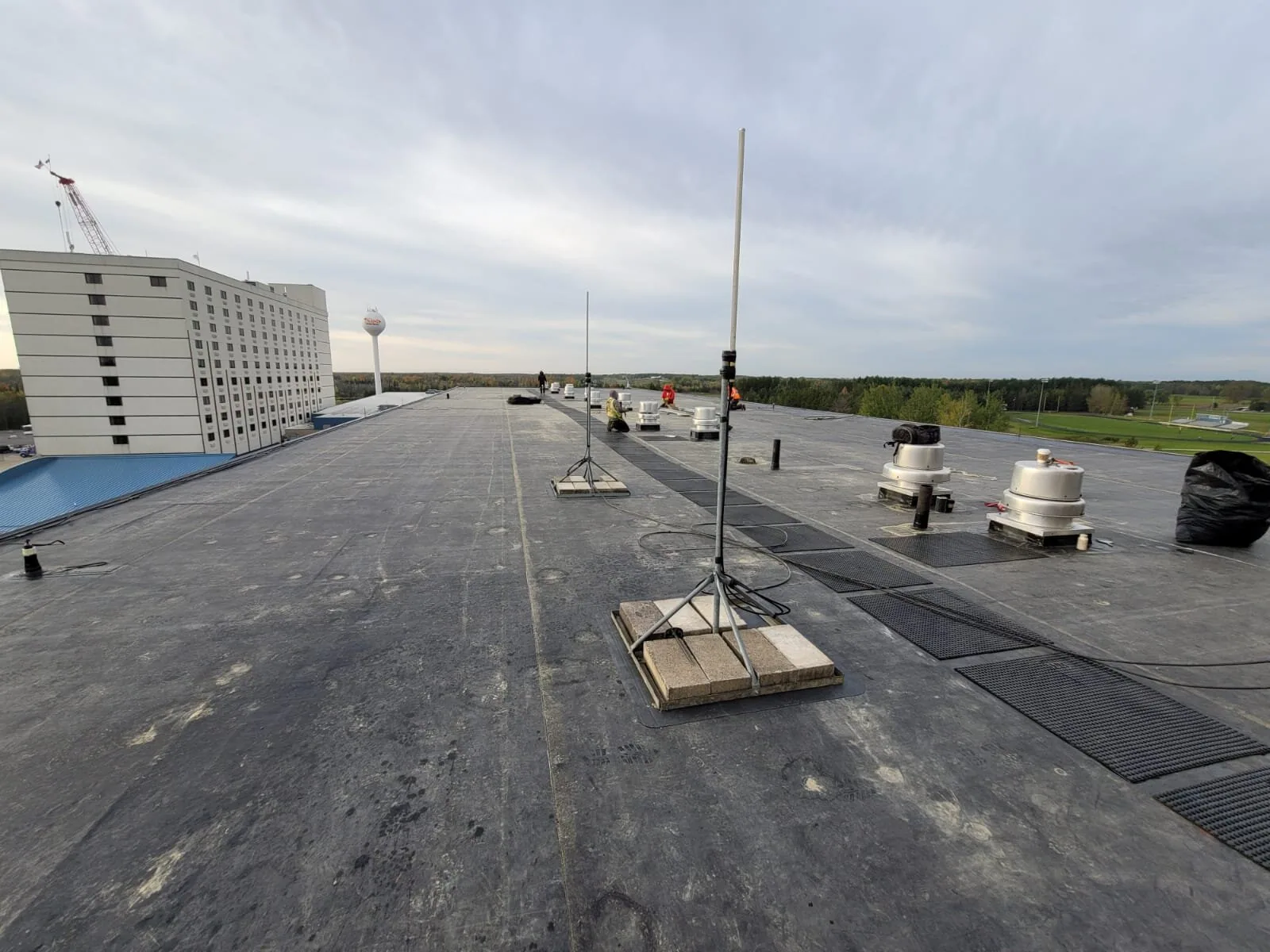
What actually happens when two liquids become a roof?
An isocyanate and a polyol resin are heated, metered and sprayed in thin passes, and the stacked passes build a mass of tiny sealed cells holding a gas that conducts heat poorly. Because the foam adheres across the whole surface, wind uplift is resisted by the bond rather than by fasteners or ballast, and the added weight is slight, which matters on older decks that cannot carry a new layer of stone.
The foam can also be built thicker toward drains, which gives standing water a path out, and penetrations and parapet bases are wrapped in the same material so the flashing is part of the roof. The weak points are mechanical: a dropped tool, a hail strike or a woodpecker can puncture the skin, and an uncoated surface chalks under ultraviolet light within a season or two. The long-term plan for a foam roof is really a plan for protecting its surface.
Find out whether your roof can take foam before anything is sprayed
Call Commercial Roofing Johnson City to have the substrate scanned, cored and tested for adhesion. You will leave with condition data that shows whether foam, a coating alone or a different system belongs in your capital plan.
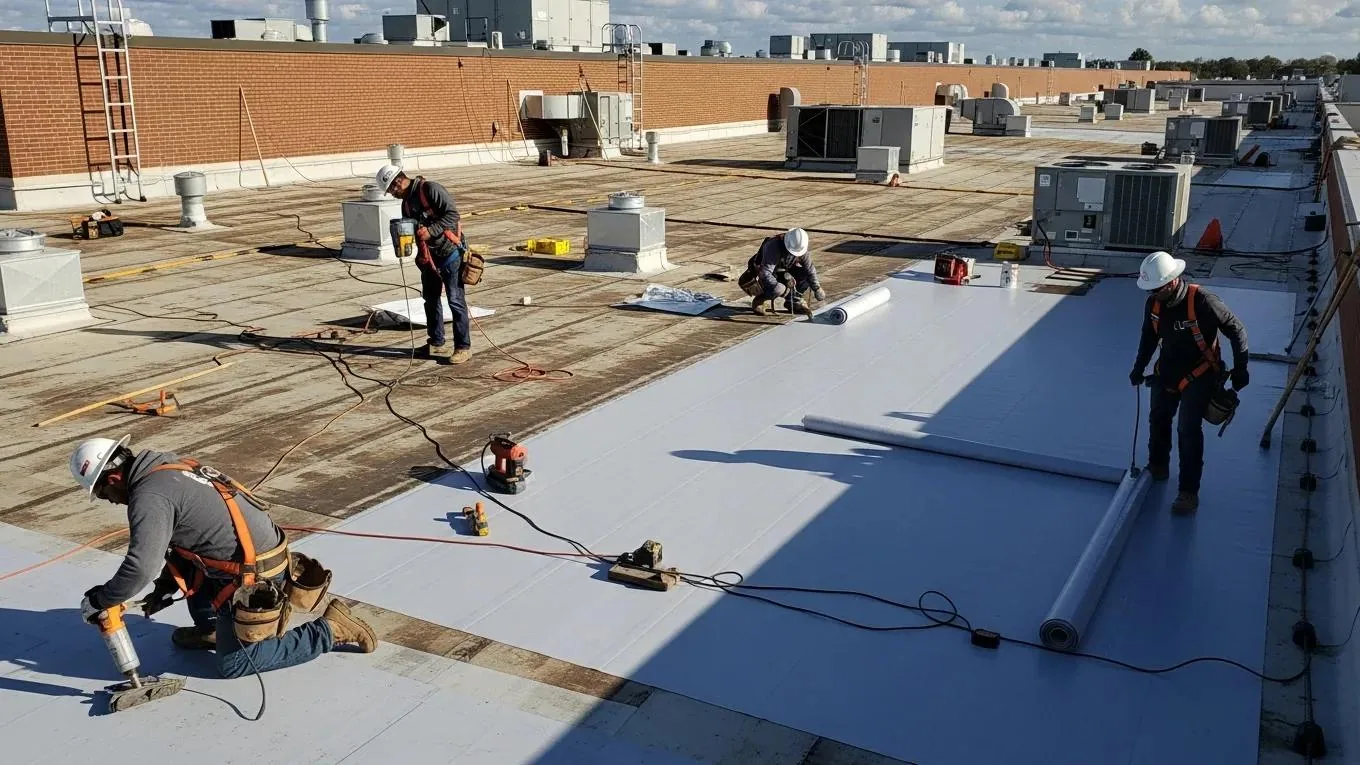
How do we judge whether an existing roof can take foam?
The substrate sets the answer. Foam needs a surface that is dry, clean and firmly attached, which is why we run an infrared and core-cut moisture survey before anyone discusses thickness. If the insulation below an old membrane is wet, spraying over it traps that water against the deck, where it keeps soaking the assembly through every freeze and thaw. Wet board is cut out and replaced first, so the foam goes over a roof that is consistent from edge to edge.
We also test adhesion with sample sprays on the actual surface, since dust, oxidized asphalt or residue from an old coating can lift foam within a year. Metal panels need cleaning and often a primer, and some single-ply sheets are better removed. When the substrate fails a check, we price a different route instead of spraying anyway.
When in the year can foam be sprayed in the Tri-Cities?
Foam is fussy about conditions in a way that a rolled membrane is not. The substrate must sit above the dew point and inside the temperature range the system requires, the surface has to be dry, and wind carries overspray onto cars, glass and neighboring buildings. The Tri-Cities offers a workable window from late spring into early autumn, and even then we hold a day when the forecast shows a shower, because a wet pass cannot be recovered.
On a hospital campus, or any building with air intakes near the work, sequence matters as much as weather. Intakes are isolated during spraying and curing, overspray is screened, and the work is phased so the sections closest to the intakes are sprayed when wind carries drift away. Winter is the season for inspection and temporary repair.
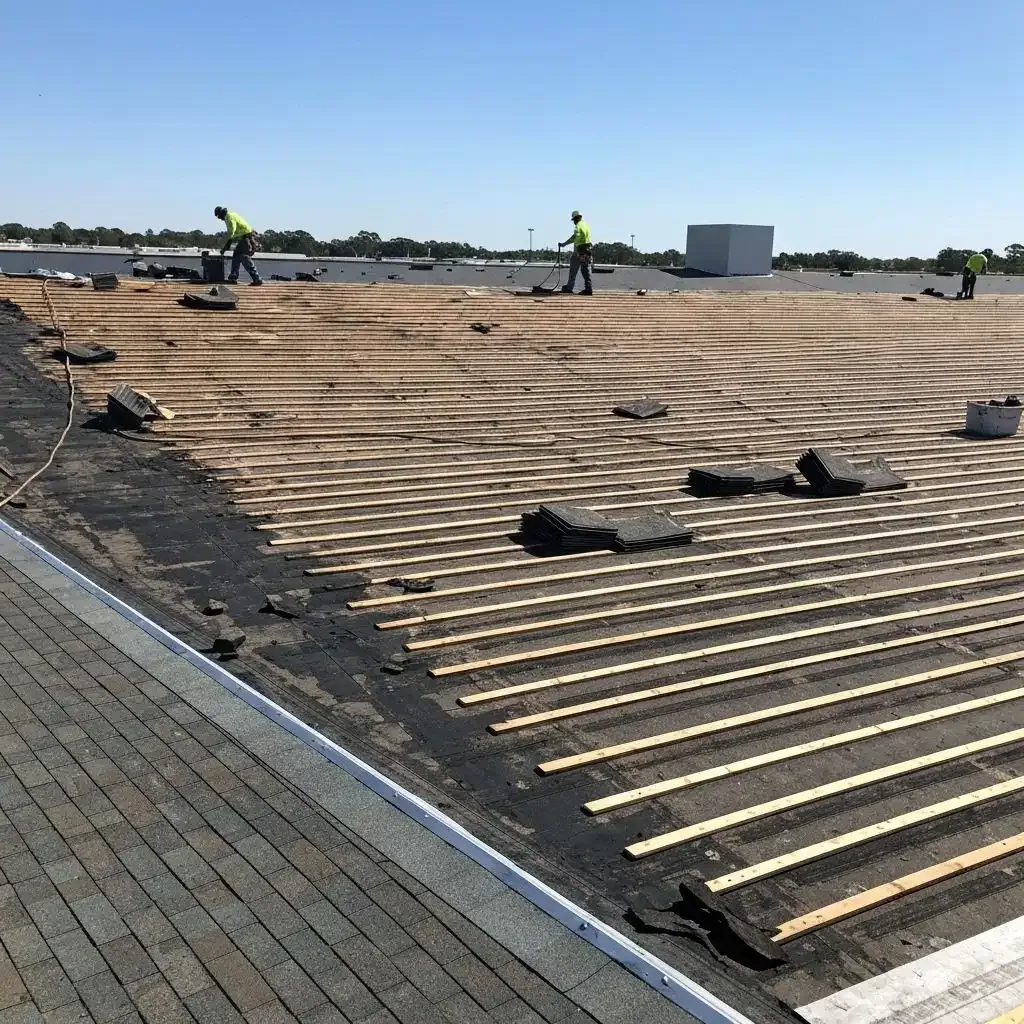
Foam, coating alone or a new membrane: which route pays back?
Foam competes on lifecycle cost, not first cost. It avoids tear-off and disposal when the substrate is sound, adds insulation without much weight, and can be recoated on a schedule for as long as the foam beneath stays intact. The price is driven by thickness, the repair the substrate needs first, the number of penetrations to detail and the coating that protects the surface. A recover over an existing membrane costs less up front but does not insulate or slope the roof, while modified bitumen brings multi-ply redundancy that some owners prefer on roofs with heavy foot traffic.
A failing metal panel roof has another choice: foam sprayed over cleaned and primed metal to seal laps and fasteners, or a metal roof retrofit that adds a new weathering layer. We price both on the same condition data.
What does a worn coating cost an owner who keeps deferring it?
A foam roof rarely fails suddenly. The coating chalks, thins and finally opens in patches, and the foam beneath starts to erode in sunlight and hold grit and moisture. Recoating at that stage is cheap: wash, check adhesion, repair small damage and apply a fresh film. If the owner waits until the foam has lost thickness, the repair adds foam before any coating can go on, and lost thickness is insulation that cannot be bought back at the original price.
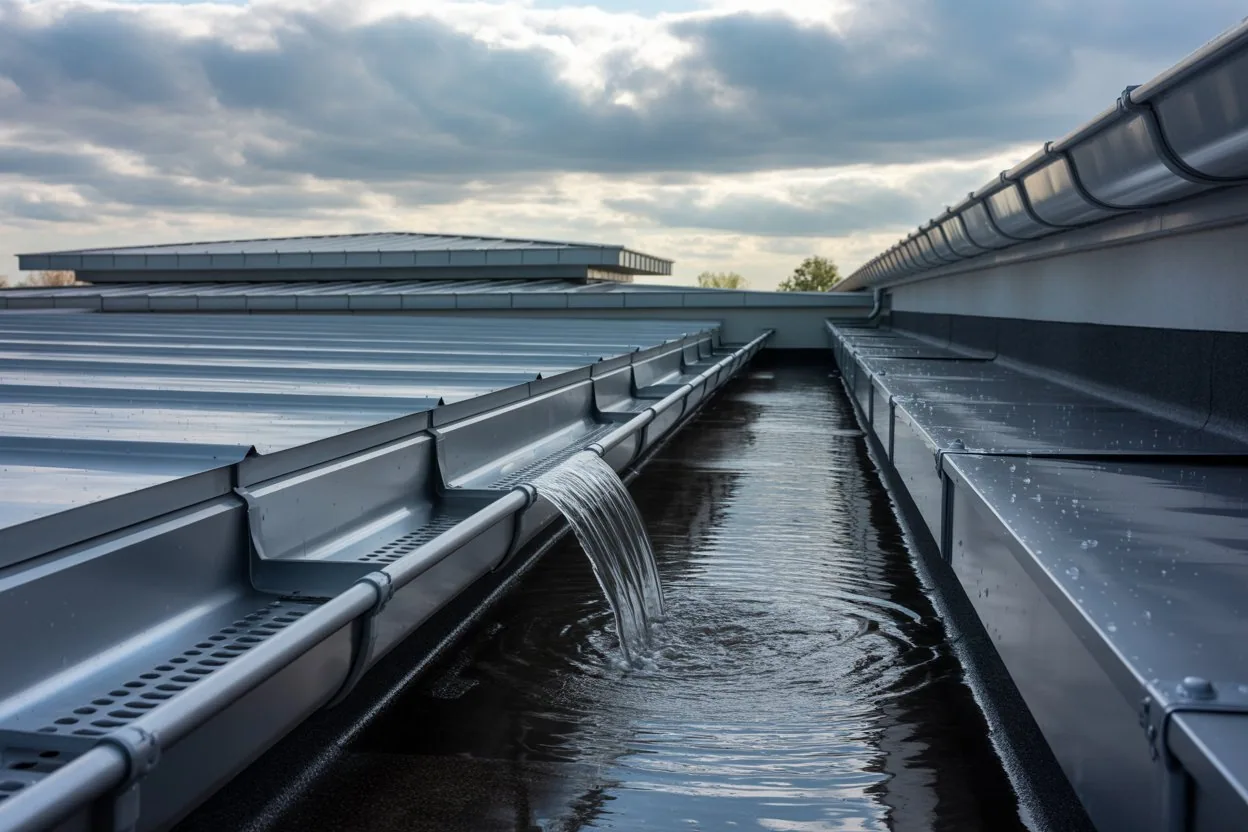
Standing water raises the cost of delay. A pool that sits on foam through several winters can crack the coating, let water reach the bond line and travel along the deck, and the damage surfaces far from the cause. Extra foam to restore the drainage path early costs far less than replacing wet insulation across a bay.
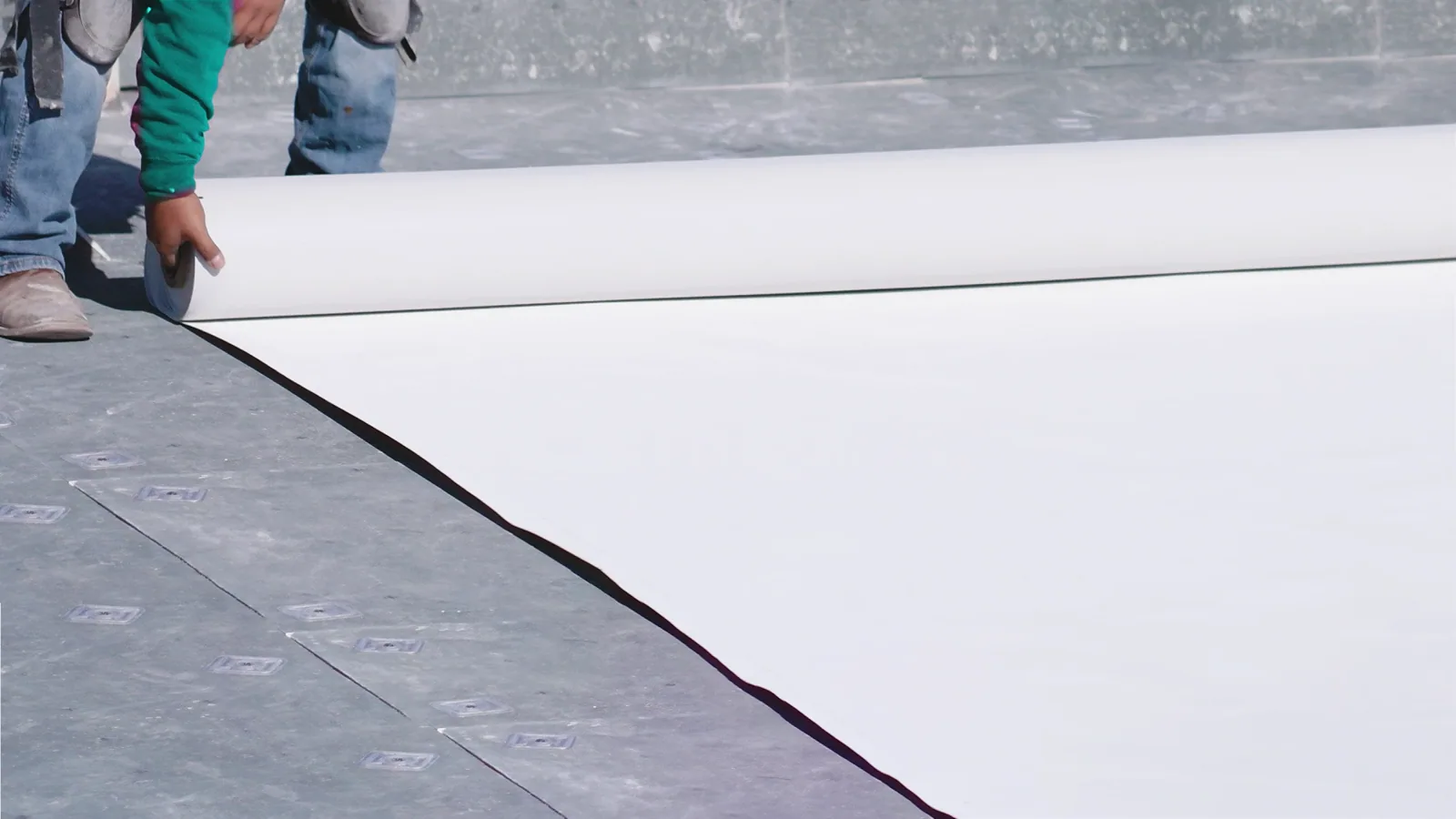
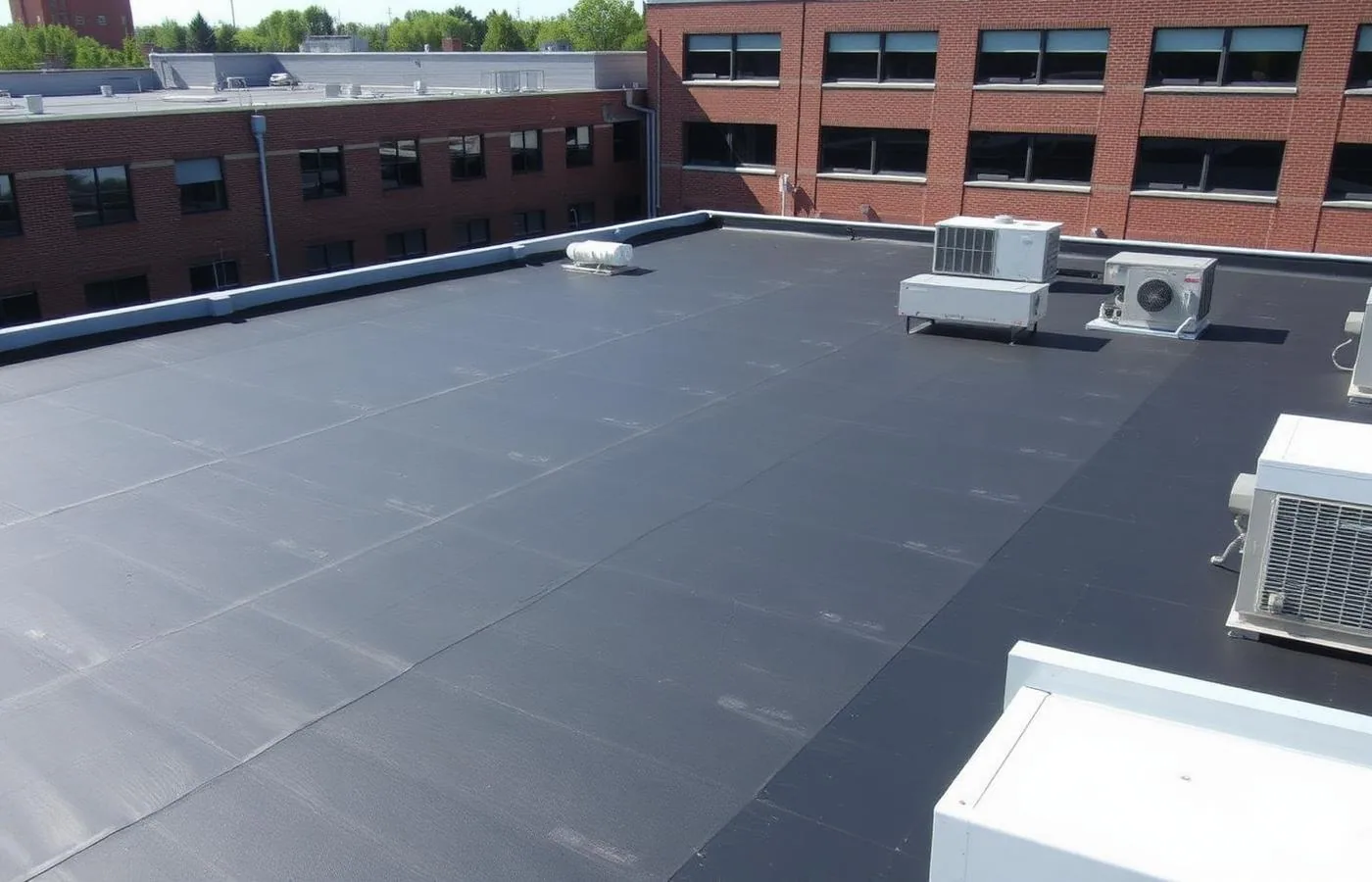
What do Johnson City snow, ice and Helene-scale rain ask of foam?
The climate here is a thermal cycling problem before anything else. Summer highs around 86F and winter lows near 25F swing a roof surface through a wide range, and an adhered, continuous layer moves with the deck instead of working at laps. Snow averages about 15.6 inches a year in Johnson City, and the mountain areas of the region receive considerably more, so a foam roof at altitude faces drifting and ice against parapets that the valley floor rarely sees.
Hurricane Helene in September 2024 showed how much water the Tri-Cities can take in one event, and a coating with pinholes will find them in a storm like that. An owner with a foam roof on a plant at the Washington County Industrial Park, where ebm-papst makes fans in a 300,000 square foot building, or on a campus like East Tennessee State University, should carry a recoat schedule in the capital plan, because each renewal repeats on every foam roof the owner holds.
Commercial Roofing Questions
Will repeated foot traffic from HVAC technicians damage a foam roof?
Light, occasional traffic is fine on a coated roof, but repeated paths to equipment wear the coating and dent the foam. We mark the routes with protective pads or an added coating layer, which costs little next to repairs on a roof worn unevenly.
Can foam level out a roof that ponds water?
Within limits. Extra foam built toward the drains makes the surface fall toward them, one of the few ways to correct slope without a tear-off. The deck must still be sound, because a structural sag is a framing issue that foam should not hide.
How is a foam roof repaired after hail or a dropped tool?
The damaged area is cut back to sound, dry foam, new foam is sprayed to match the thickness around it, and the patch is recoated with a margin of fresh coating. Done this way, the repair blends into the surface and leaves no lap to fail.
What reaches a tenant's air intake while foam is being sprayed?
Odor and fine overspray are the exposures, and sequencing controls both. Nearby intakes are shut or filtered during spraying and curing, the building is told in advance, and spraying waits for wind that carries drift away from the structure.
Does added insulation change how a building performs in winter?
Closed-cell foam resists heat flow well, so a building with thin or compressed insulation may see a steadier interior and less condensation under the deck. We scope the roof for water protection first, since the energy gain varies with what was there before.
Related Roofing Pages
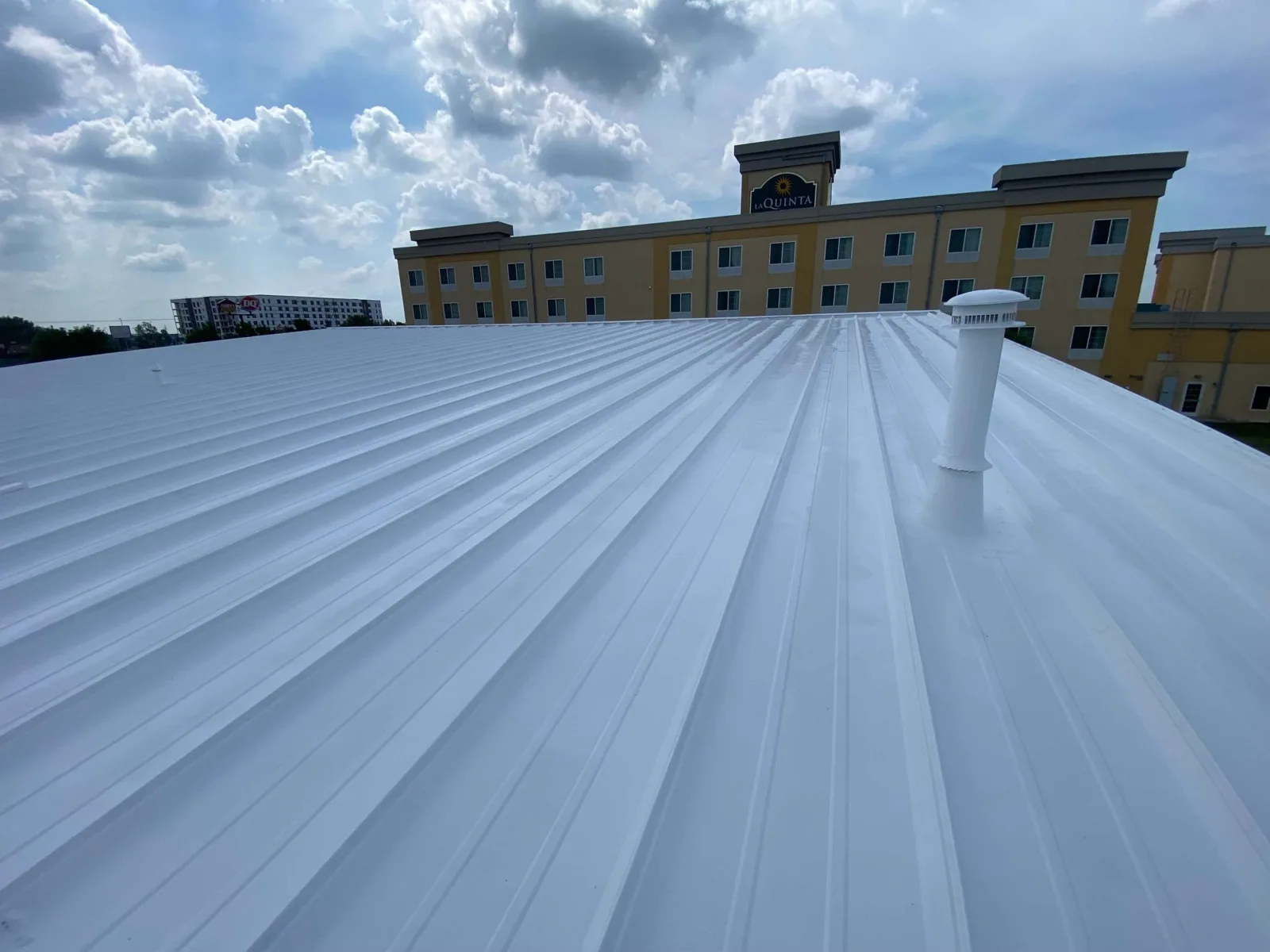
Silicone Roof Coating Systems
How the work is scoped, phased and documented on Tri-Cities roofs.
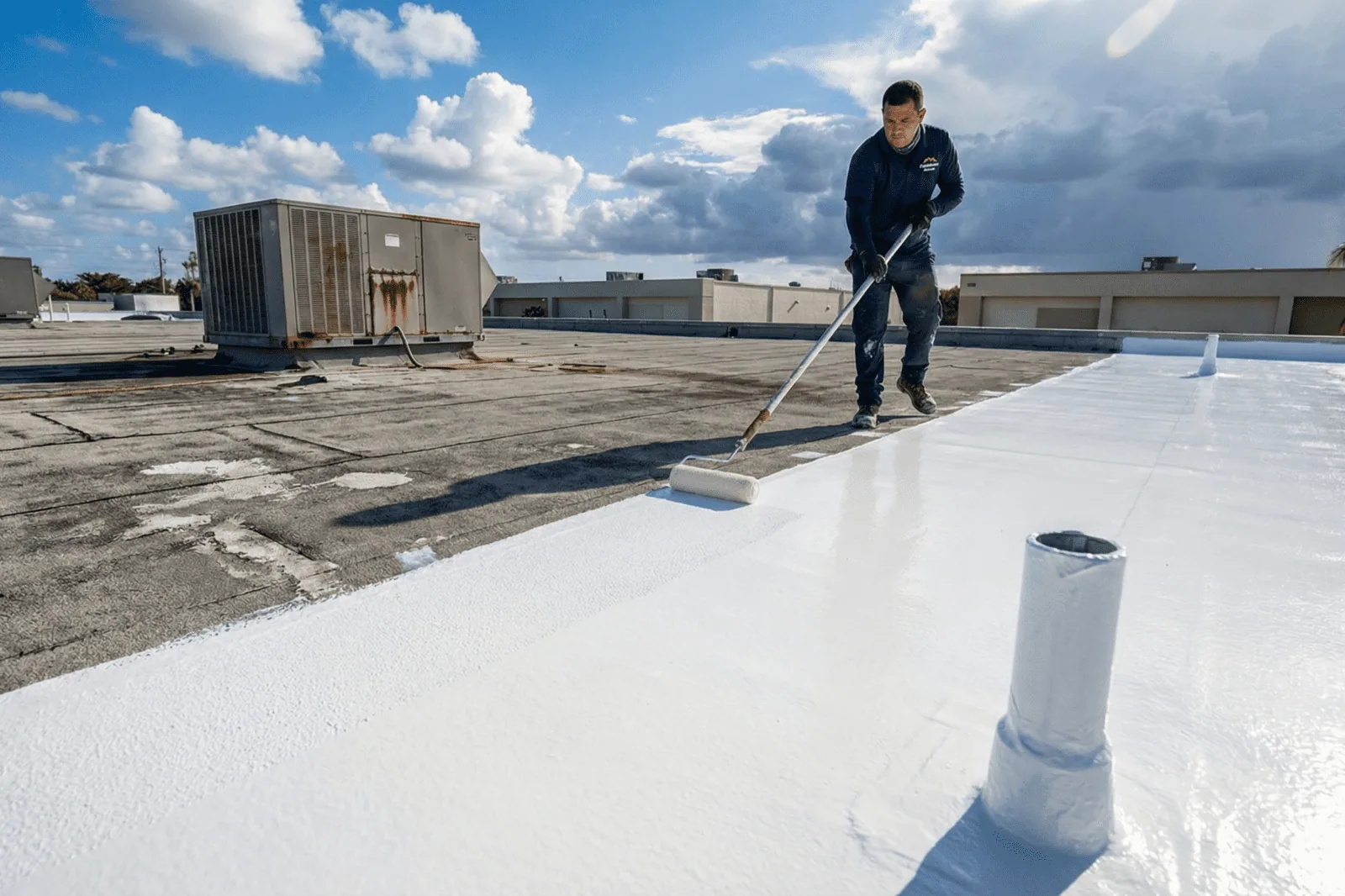
Acrylic Roof Coating Systems
What we check, what we recommend and how the crew keeps the building running.
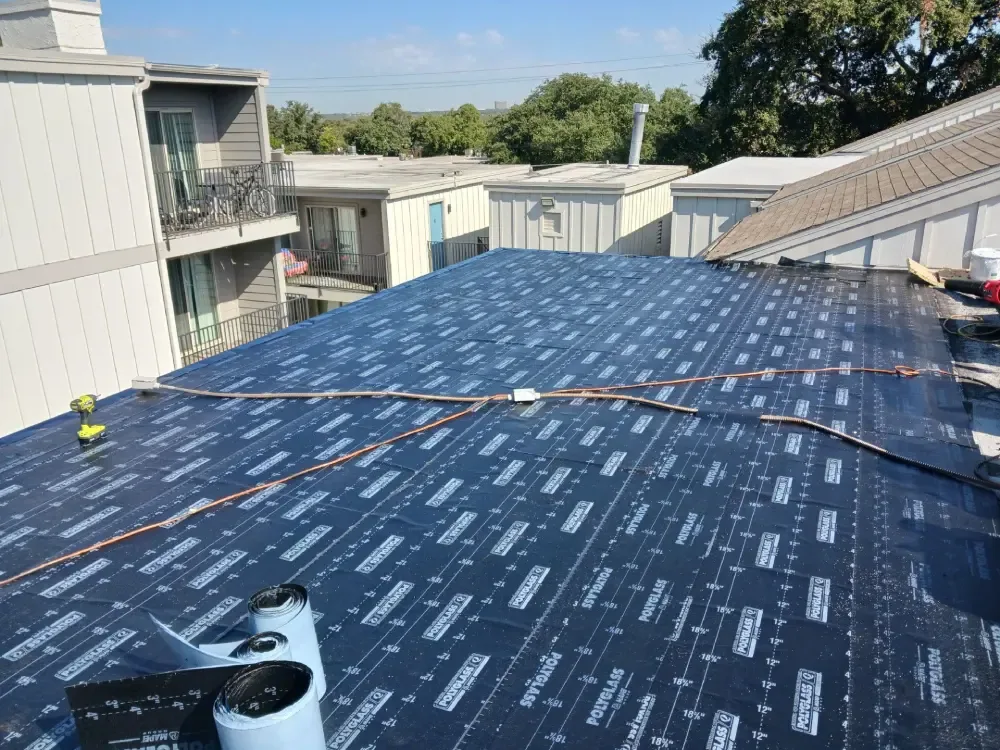
Infrared and Core-Cut Moisture Surveys
Conditions, options and next steps for commercial buildings in East Tennessee.