
Membrane Puncture and Foot-Traffic Damage Repair in Johnson City, TN
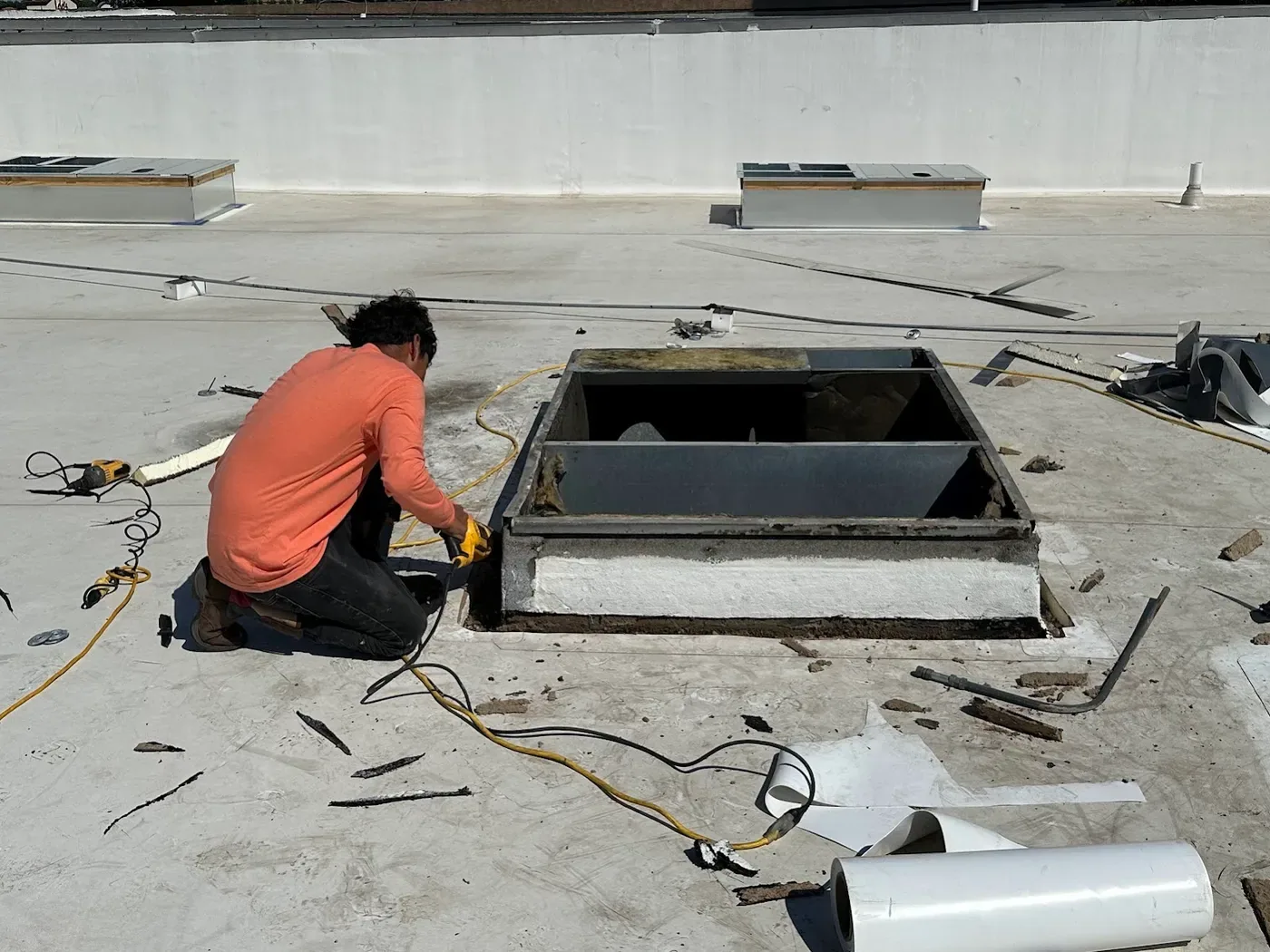
Roof insulation is softer than it looks, and a membrane is only as strong as the board it rests on. A boot heel that lands on a spot where the board has already crushed presses the sheet into a small crater, and a person's full weight on a heel the size of a coin is far harsher than the same weight spread across the sole. Add a cold morning in Johnson City, TN, when the membrane is stiff and a frost layer hides the surface, and a dropped tool or a dragged ladder foot can open the sheet without anyone feeling it give. The hole is small, the first rain that enters it barely registers, and the insulation then draws the water outward like a wick. A puncture costs very little on the day it happens and a great deal by the following spring.
Why does a point load wear a roof out faster than a heavy, spread-out one?
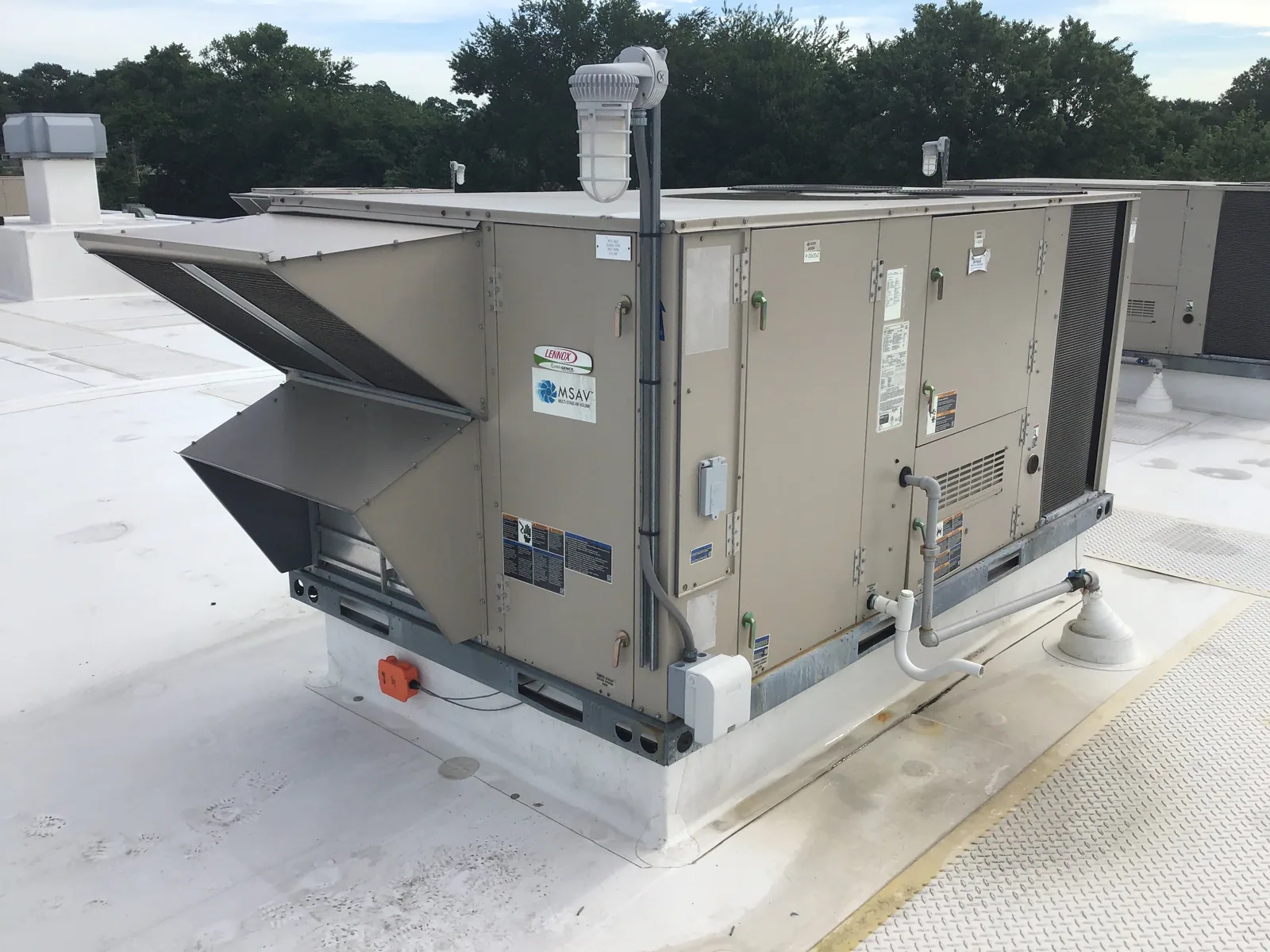
A membrane resists a spread load well and a concentrated one poorly. The same service technician crossing a roof once a month wears a path between the access hatch and the unit, and wherever the path crosses a seam, a flashing edge or a patch, the stress concentrates. Repeated traffic compresses the insulation below the path into a shallow trench, abrades the surface of the sheet and leaves it thinner and more brittle than the field around it. Each visit makes the next one more damaging.
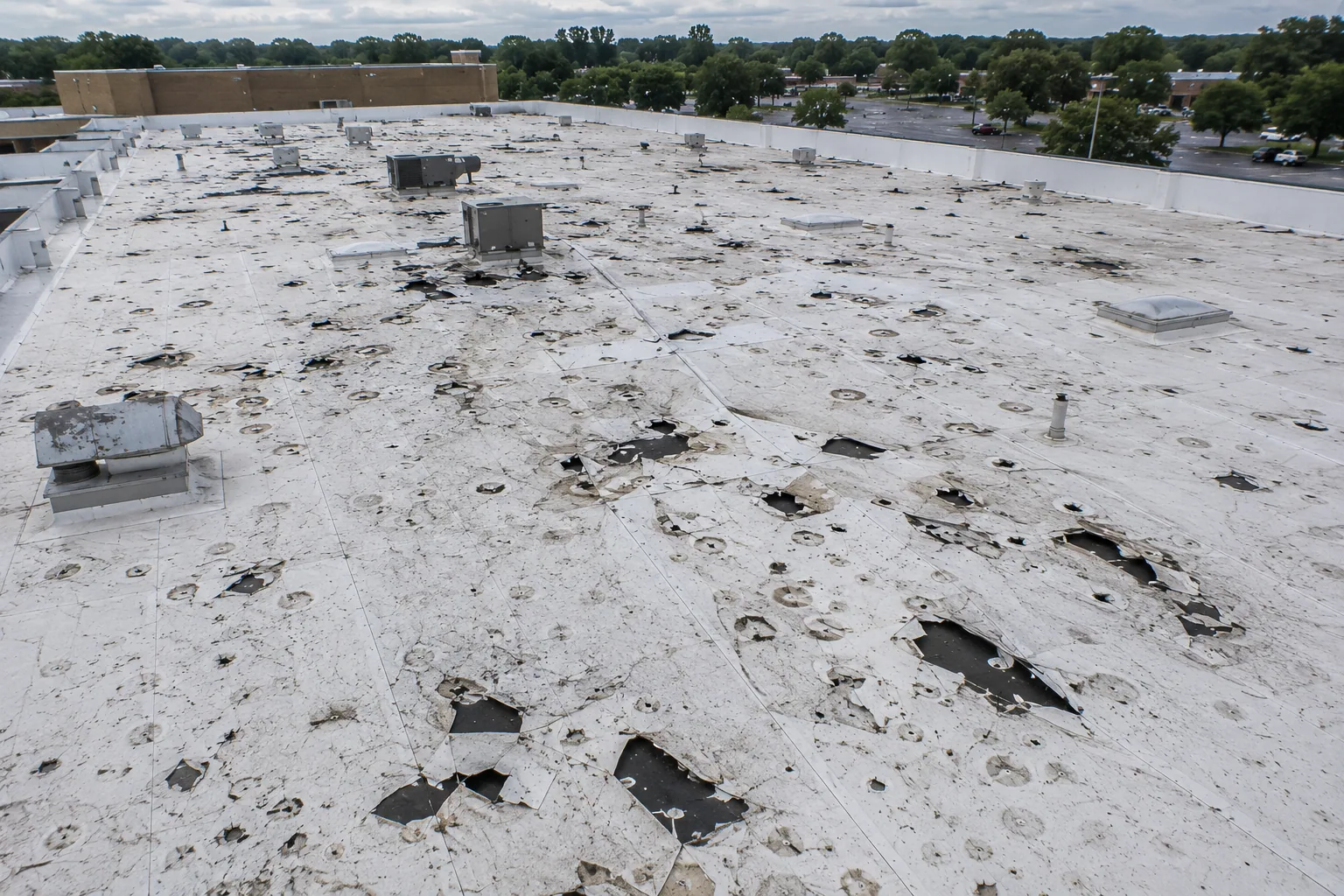
Punctures also come from sources that no one sees: a tool left on the roof until a mower, snow shovel or ladder drags it, a sharp edge of an equipment base that shifted, debris blown against the sheet, a screw backing out of a panel or a pipe support whose pad has worn through. Reflective thermoplastic sheets such as PVC are reinforced and tough, but a cut through the top ply still exposes the scrim, and a built-up roof with a worn surface can be opened by a single heavy impact. Thickness and reinforcement help, but no membrane is immune.
Find the holes before the thaw does
A survey that covers the walk routes, equipment bases and moisture mapping gives you a count of what is damaged and what is already wet. Call us to book that visit and we will mark each spot as a patch, a pad or a section repair.

How do we find every hole, including the ones nobody has reported?
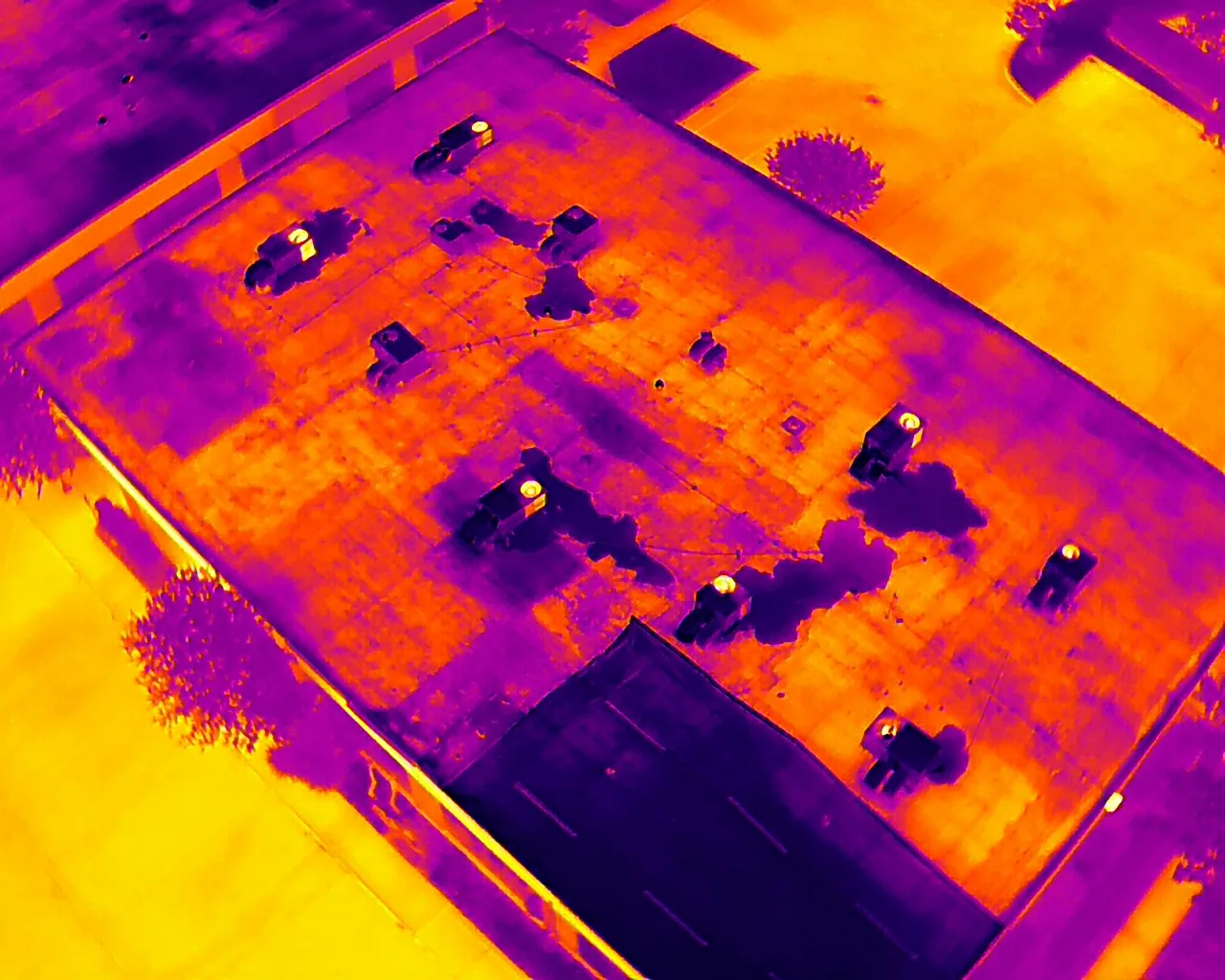
The reported hole is rarely the only one. We begin with a slow visual survey in good light, concentrating on the walking routes, the equipment bases and the areas under trees and antennas, then follow with a tapping and pressing survey that finds soft spots where the insulation has been compressed or wetted. Moisture mapping with infrared imaging, combined with core cuts at suspect areas, shows where water has already traveled below the sheet, and that footprint, not the visible hole, sets the scope. A moisture survey is cheap compared with replacing board that has been wet for a season. We photograph and mark each damaged spot against a roof plan, record the likely cause, and separate one-time impact damage from a pattern that will recur unless the route changes.
Patch, add walkway pads or replace the worn section?
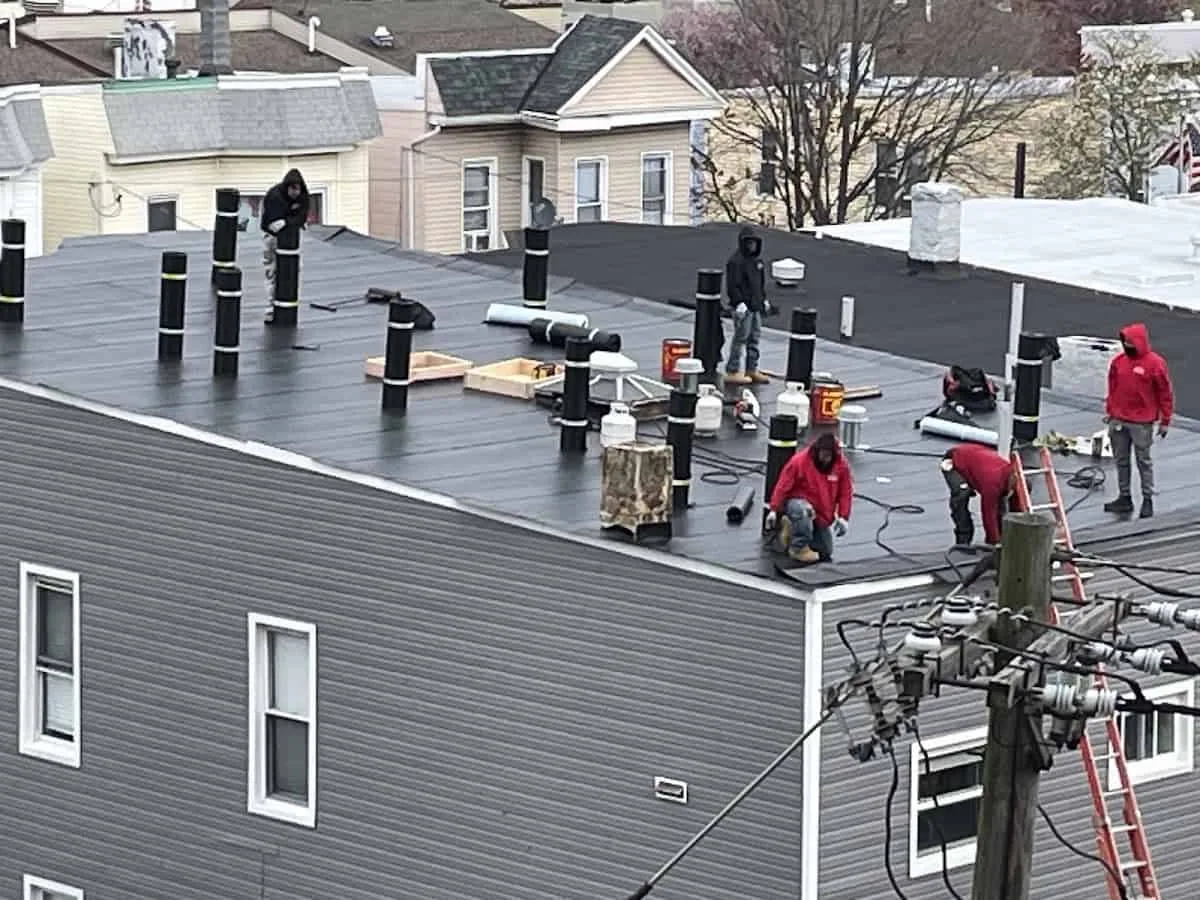
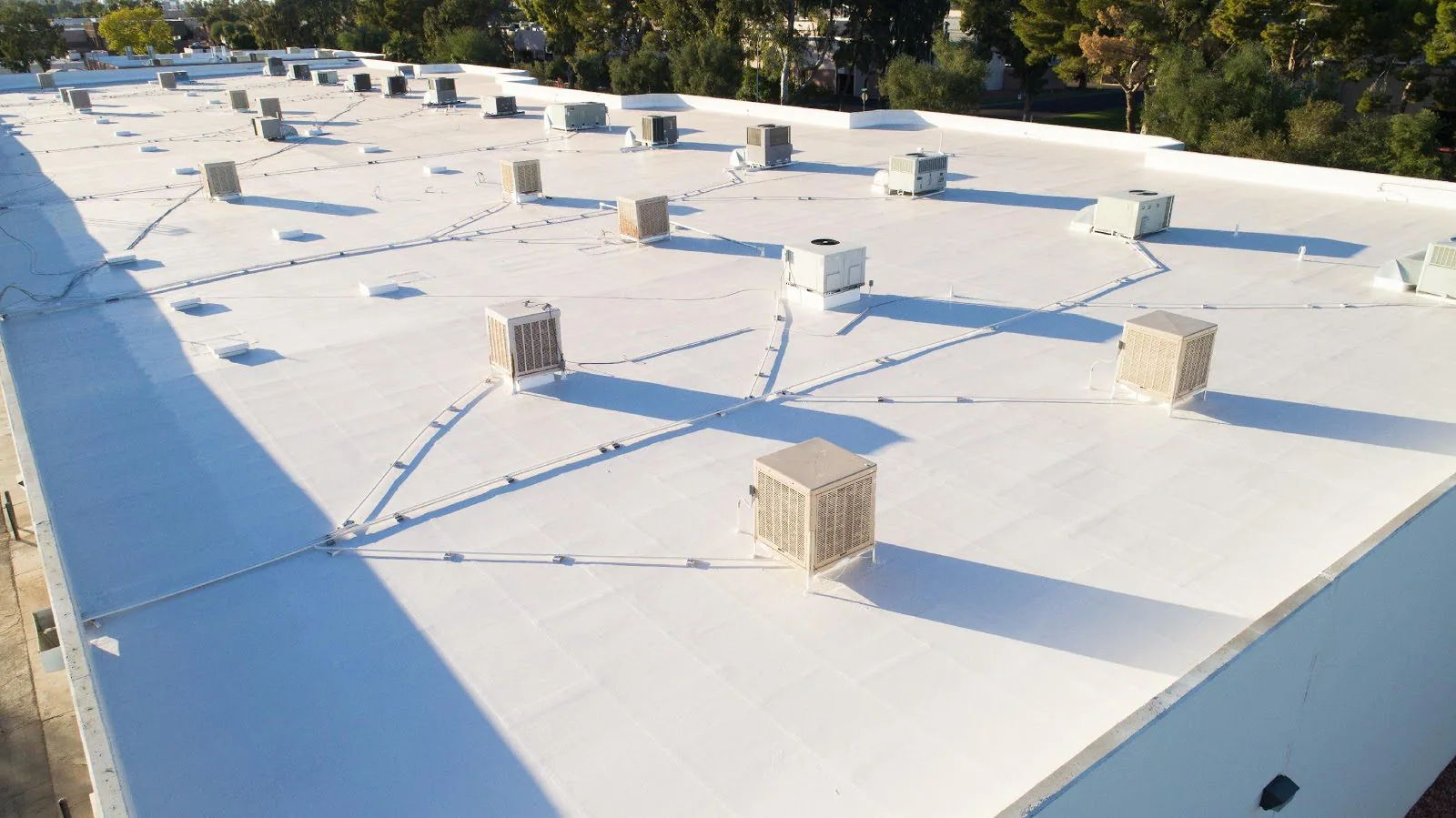
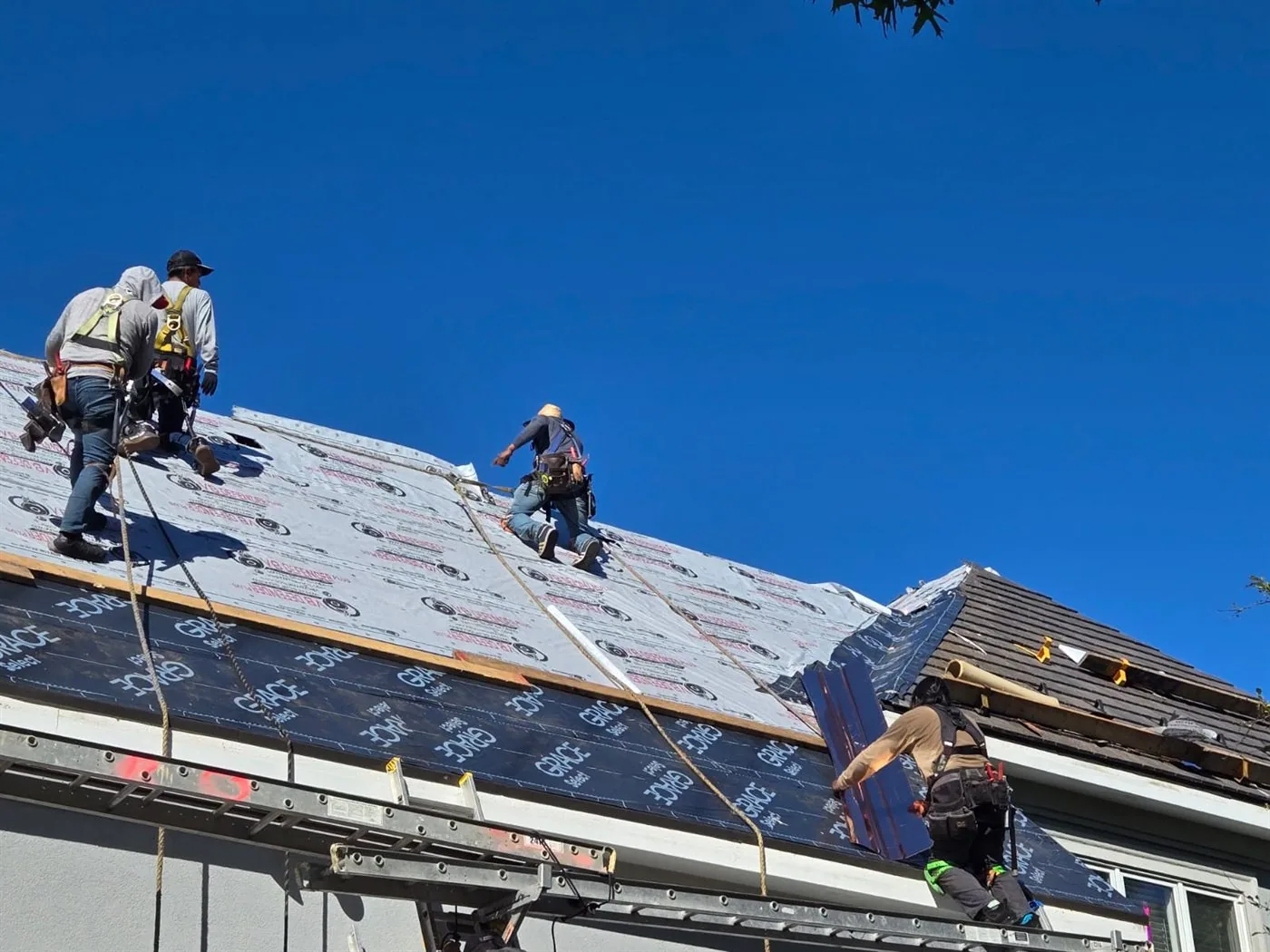
A clean puncture in a sound sheet with dry insulation underneath is a patch: the surface is cleaned and prepared, and a patch of compatible membrane is welded or bonded over the hole with generous margins. If the insulation under the hole is wet, it is cut out, replaced with matching board and the membrane is restored above it. A line of repeated damage along a walk route is different. There the right answer is to add walkway pads, protection mats or a defined path that distributes the load, and to relocate any item that is dragged across the roof. Where traffic is heavy, a full length of the route may need new cover board beneath the membrane, because the compressed insulation is the original cause. If the sheet itself is thin, brittle or shrunken along the whole route, the choice becomes commercial roof repair against replacing that section, and we price each against the section's remaining service life.
What does a pinhole cost once the insulation starts to wick?
A pinhole is cheap to close on the day it opens and expensive after one winter. Water enters in small quantities, moves along the top of the deck and is absorbed by the insulation, where it stays through the cold months and freezes on the coldest nights. Each freeze breaks down the board a little more, and snow cover hides the evidence until a thaw reveals it as a stain. Meanwhile the membrane around the puncture sits over wet board and loses adhesion, so the damage region grows beyond the hole. The cost of a patch becomes the cost of a section replacement, and a repeated pattern of such holes shortens the life of the whole roof. A building that already has a stain should first have its roof leak repair traced back to the puncture, and the neighboring routes checked for twins.
Which Johnson City buildings put the most feet and tools on their roofs?
Wherever a roof carries equipment, someone walks to it. For owners of institutional buildings along the Med-Tech corridor, where Johnson City Medical Center operates as a Level I trauma center, and for the facilities teams on East Tennessee State University's 366-acre campus, the question is whether the routes to equipment are marked and protected or simply worn into the sheet. A multi-tenant retail property such as the Mall at Johnson City, which counts Belk, JCPenney, HomeGoods and Dick's Sporting Goods among its stores, has several tenants and a landlord who may all need a reason to be on a roof, which is another argument for one approved path.
Winter complicates all of it. With winter lows averaging about 25 degrees Fahrenheit and roughly 15.6 inches of snow in a year, the membrane is often stiff and the surface hidden, which raises the odds that a shovel, a scraper or a dragged ladder opens it. Tri-Cities Regional Airport's 8.7 inches of snow on Christmas Day 1969 shows how much a heavy snowfall can hide. Any worker clearing equipment or drains after a storm should follow marked paths and treat an unmarked roof as fragile.
At a wall, curb or pipe, verify the flashing before treating an opening as a field puncture; a failed transition calls for flashing repair.
A cut that follows a lap may be movement rather than impact. The inspection for seam failure repair helps set the right repair boundary.
Commercial Roofing Questions
Can foot traffic damage a roof without anyone seeing a hole?
Yes, and it is the common form. Repeated steps crush the insulation beneath the sheet and abrade the top surface, leaving a thin, brittle strip that looks intact. The first sign is usually a soft feel underfoot or a leak at a seam that crosses the route.
What should a walkway protect, and where should it run?
Pads belong along the route between each access point and the equipment that needs service, extended past any seam, flashing or patch the route crosses. A single marked path concentrates wear in a place designed for it and keeps the rest of the field untouched.
Is a cut in a reinforced membrane more serious than a cut in an unreinforced one?
A cut through the top layer of a reinforced sheet exposes the fabric inside, which can wick water along its length even when the hole is tiny. That makes prompt sealing more urgent, and it is one reason patches in reinforced membranes use generous margins.
Who is responsible for puncture damage caused by another trade on the roof?
The records answer that. Dated photographs from before and after a service visit, along with a note of who was on the roof, let an owner trace damage to the work that caused it. We recommend an inspection after any equipment replacement for that reason.
Does a patch last as long as the surrounding membrane?
A properly prepared and welded or bonded patch on a sound sheet can last the rest of the membrane's service life. A patch over wet insulation or a thin, tired sheet will not, because the substrate under it keeps moving and the bond fails at the margin.
Related Roofing Pages

PVC Roofing
How the work is scoped, phased and documented on Tri-Cities roofs.
Built-Up Roofing (BUR)
What we check, what we recommend and how the crew keeps the building running.
Infrared and Core-Cut Moisture Surveys
Conditions, options and next steps for commercial buildings in East Tennessee.