
Roof Insurance Claim Assistance in Johnson City, TN
Wet insulation does not stay where the storm put it. Gravity, capillary action and the daily thermal cycle spread moisture sideways from the breach, so the wet footprint measured in week six is larger than the one measured on day two, and an adjuster who sees the roof after a delay faces a bigger, older and more ambiguous problem than the storm actually made. An owner in Johnson City, TN, whose claim depends on that adjuster has one dependable defense, which is a record that fixes the date, location and extent of the damage while the picture is still sharp. That record is the cheapest part of the whole process, and it is the part owners most often skip until the first denial letter.
Why does the age of the damage matter so much to a carrier?
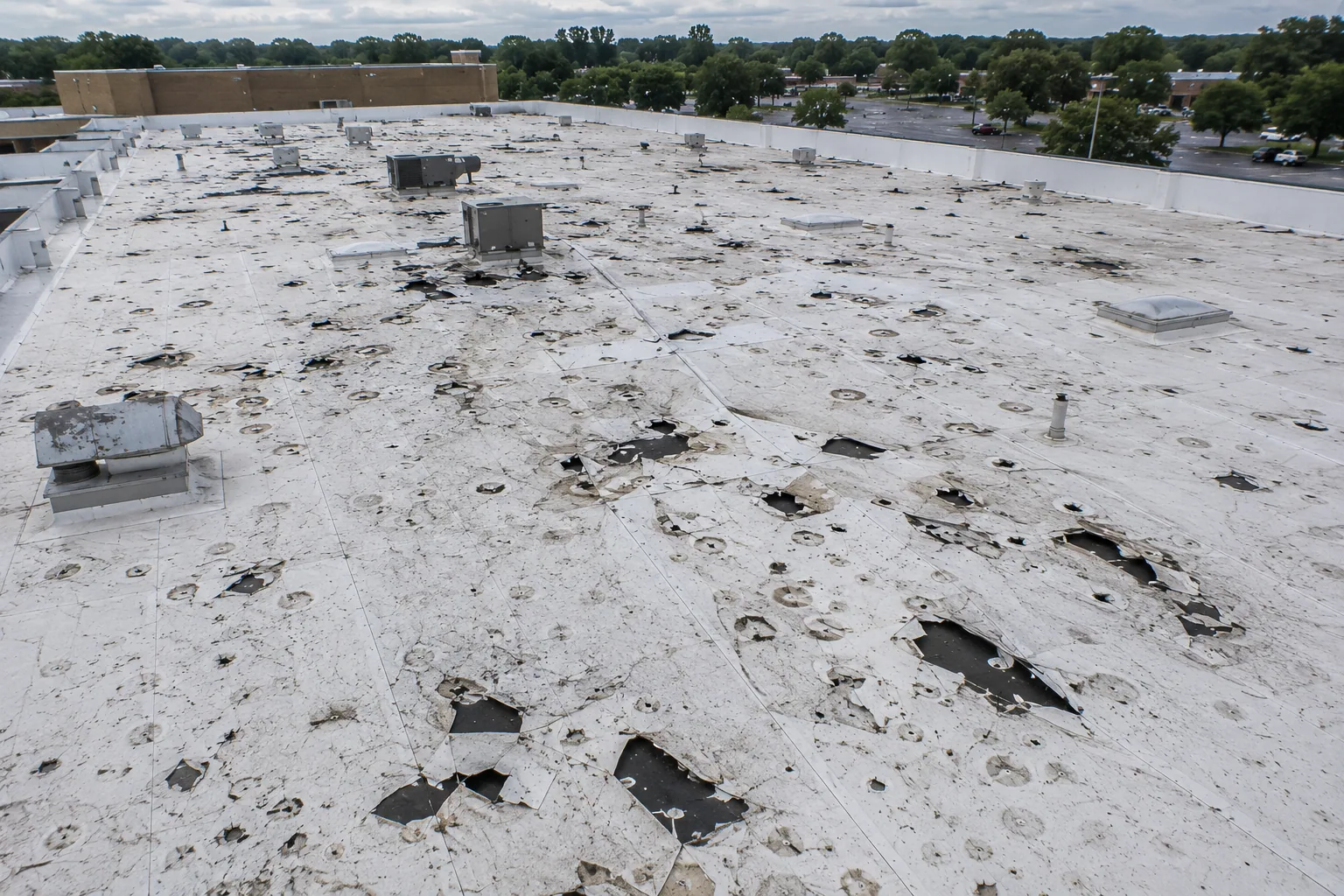
A carrier pays for sudden loss from a covered event and generally does not pay for long-term deterioration, so every roof claim turns on a question of dates. A torn membrane with clean edges and bright, dry insulation exposed in the tear looks new. One with weathered edges, rusted fasteners and algae growing in the opening looks old. Ponding stains, shrunken flashings and eroded surfacing read as wear. The same visible defect can land on either side of that line depending on photographs, weather records and maintenance history, which is why a dated report from before the storm, such as those produced by preventive roof maintenance, carries so much weight.
Depreciation and coverage form matter too, and they live in the policy rather than the roof. Some policies pay replacement cost, others pay actual cash value less depreciation, and some limit roof payments by age or apply separate wind and hail deductibles. We do not read the policy into the claim. We supply the physical facts that make any of those provisions easy to apply: the age of the system, the extent of the damage, the share of the roof affected and whether repair is feasible.
Put the physical facts on paper before the claim is filed
Call Commercial Roofing Johnson City to have the damage photographed, mapped and measured. You will receive a dated report your carrier can check against the roof.
What does the roof side of a claim file need to contain?
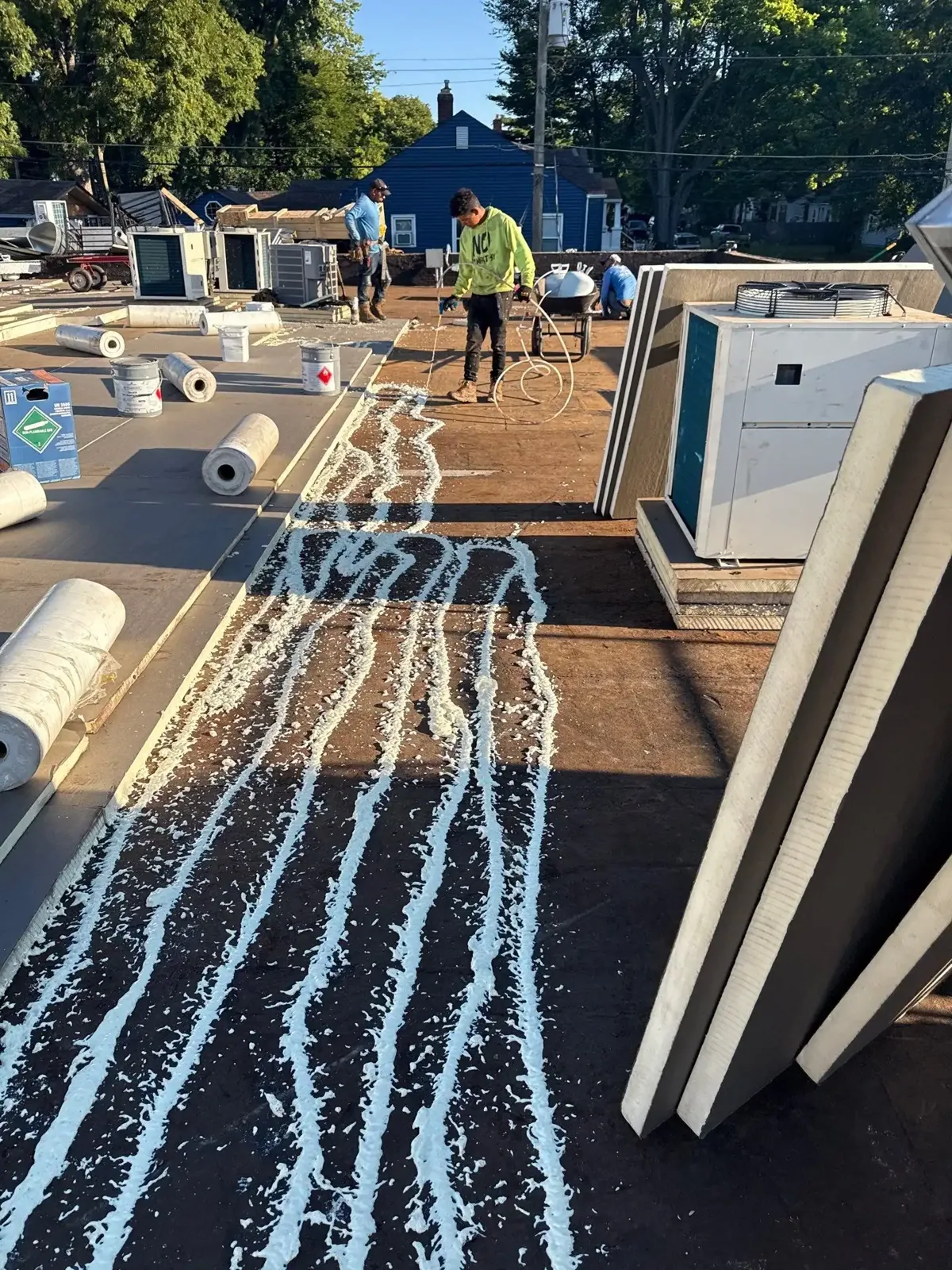
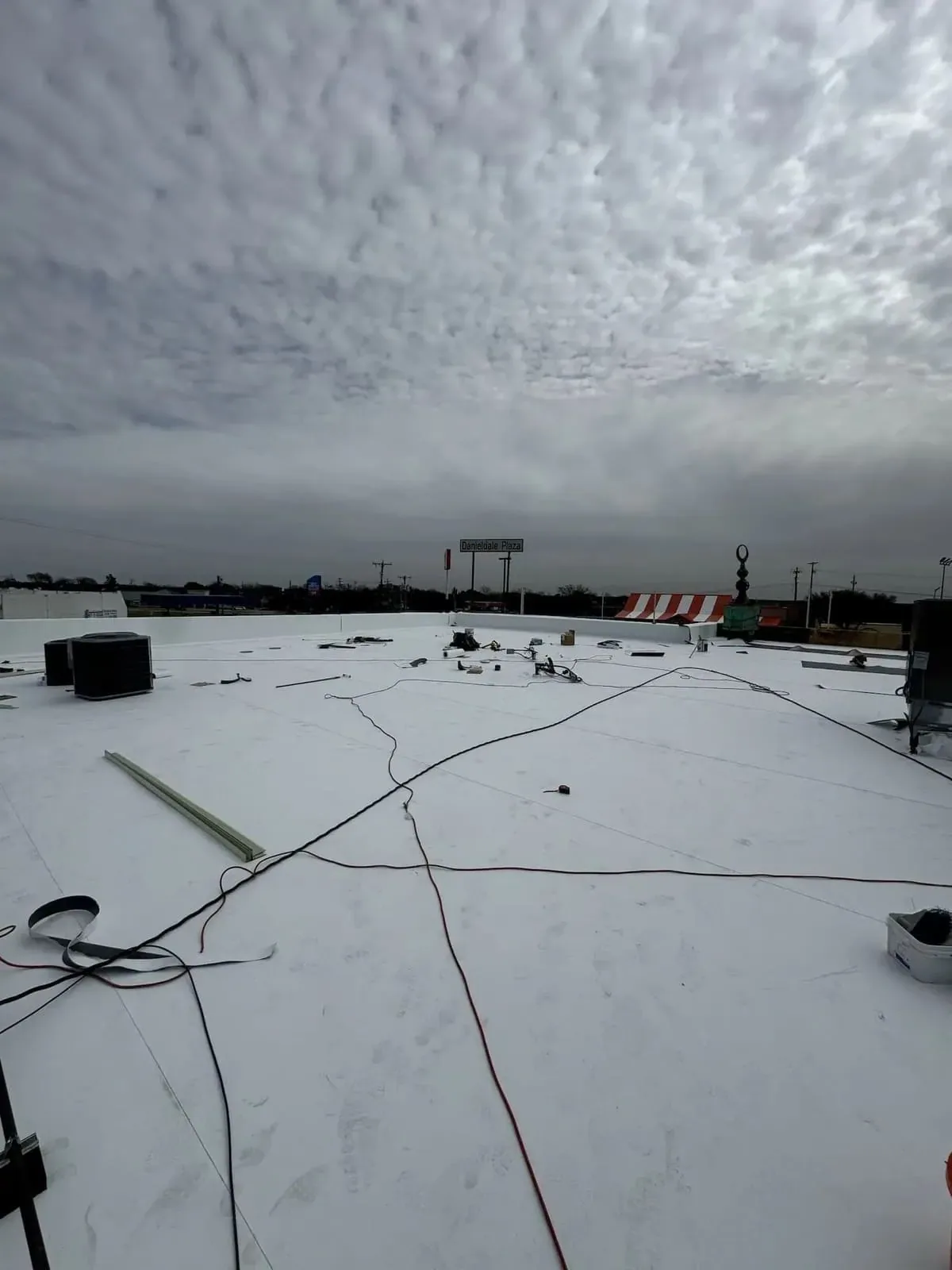
A usable file has five physical parts: dated photographs of every roof area, taken both wide and close; a roof plan marking each defect; moisture readings or thermal images showing where insulation is wet; core samples establishing the number of layers, the insulation type and its condition; and a written narrative that separates storm damage from pre-existing wear. We add the membrane type, approximate age and last-known repair history, because adjusters price a roof by system, and a PVC sheet and a ballasted EPDM roof are not interchangeable. The wet areas come from an infrared moisture survey, and on a large roof a drone survey captures every area in one set of images under the same light. The result is a roof condition report the carrier can check against the roof.
What does a first adjuster's scope leave out that a roofer will find?
Scopes written from a first walk tend to price what is visible: the torn membrane, the displaced coping, the stained ceiling. They miss what lies beneath or behind. Insulation can be wet under an intact membrane, fasteners corrode after a breach, flashings may need rebuilding because the substrate behind them moved, and tapered insulation can lose its slope. Code can add items too. Johnson City has adopted the 2018 International Building Code, the 2018 International Existing Building Code and the 2018 International Energy Conservation Code, and those documents can affect what a repair or replacement must include once an assembly is opened. We write any supplemental request in terms the carrier can check against physical findings, and we leave the coverage argument to the owner and the policy.
How does the sequence run from first notice to final repair?
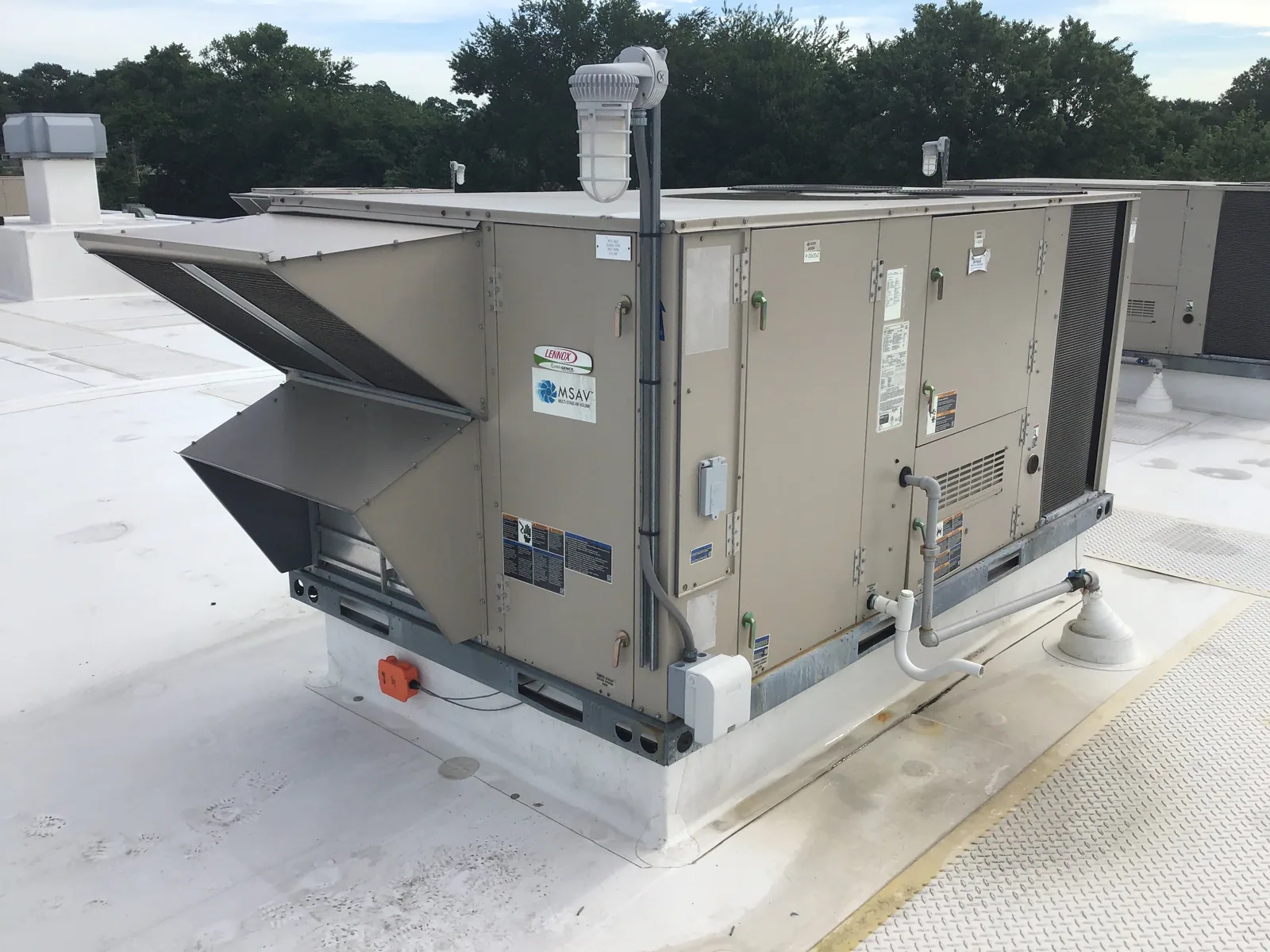
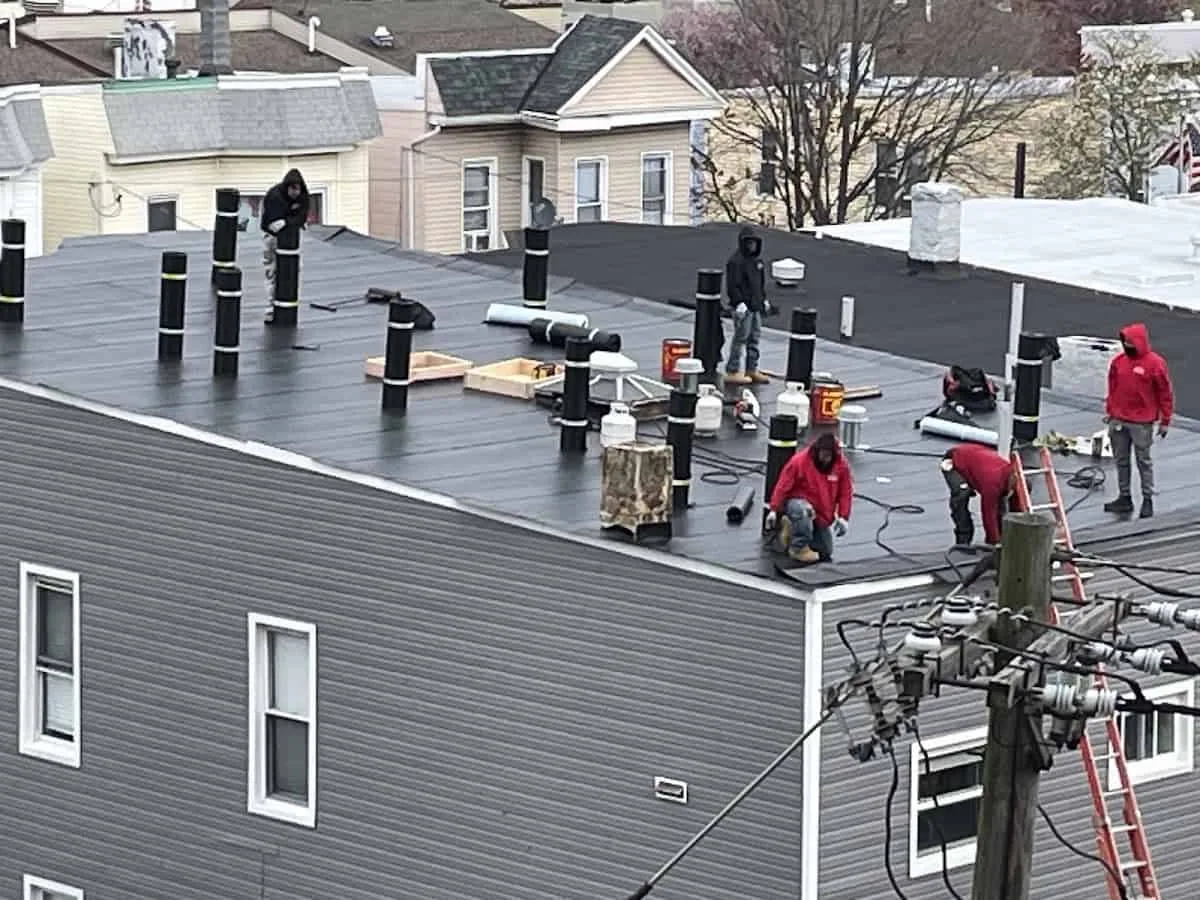
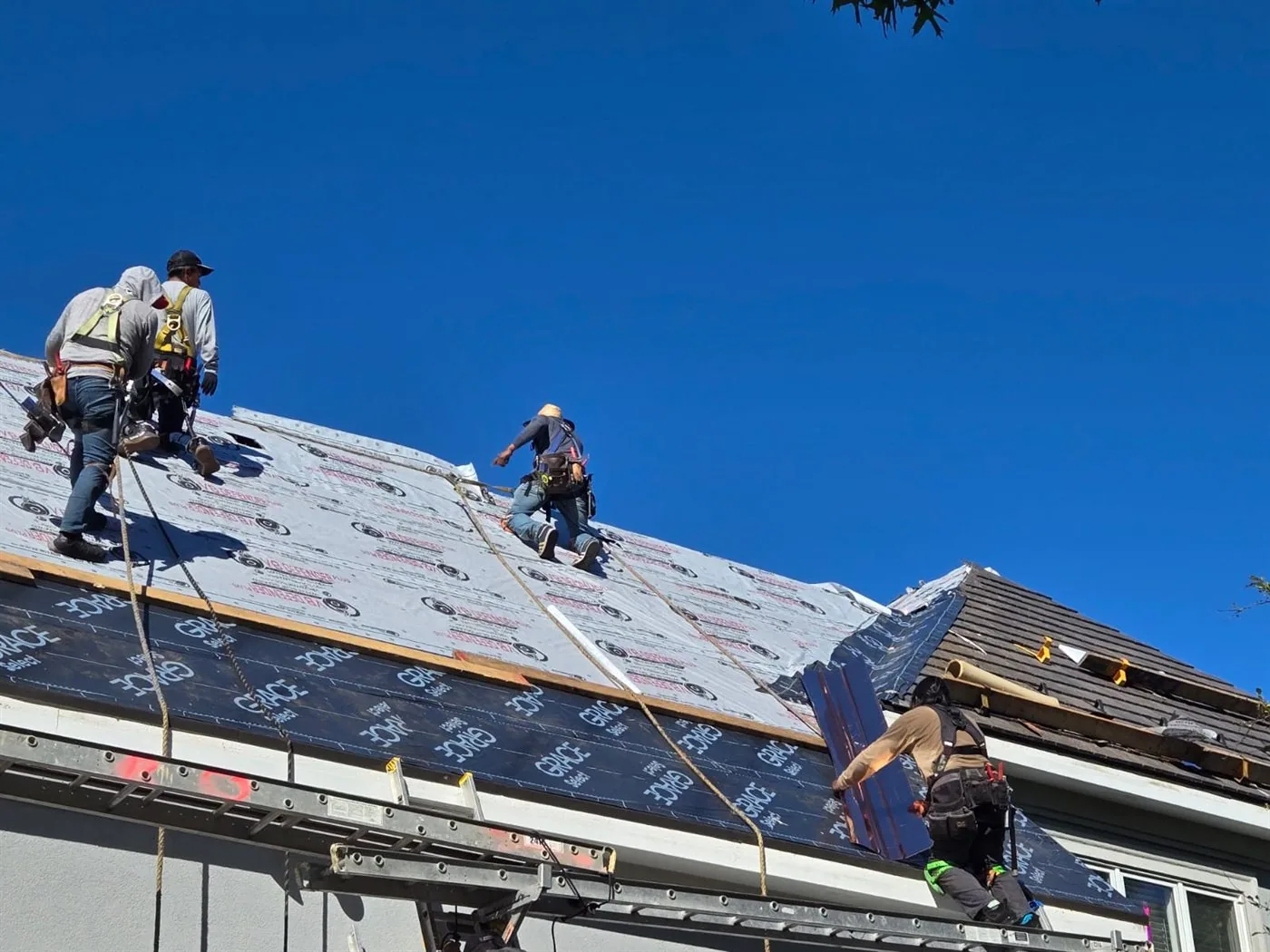
Report the loss to the carrier promptly, since most policies set a notice requirement and a duty to protect the property from further damage. Temporary protection goes on first, usually the same day, through emergency roof repair, with photographs before and after. Inspection and documentation follow while the evidence is fresh, and the adjuster is welcome to walk the roof with us. The permanent repair scope and a written estimate then wait for the carrier's inspection unless water is still entering. Once the scope is agreed, materials are ordered and a weather window is picked for the storm damage roof repair. Delay is most expensive in the cold months, because temporary measures do not hold well through repeated freeze-thaw, and a roof left in a temporary state through January collects further damage that a carrier may treat as the owner's responsibility to prevent.
Which Johnson City properties face the most complicated claims?
Owners with several roofs face the largest bookkeeping job. Ballad Health, headquartered in Johnson City, operates 20 hospitals across four states, and Johnson City Medical Center on North State of Franklin Road, a Level I trauma center, has to stay in service through any roof work. A claim on a building like that has to be staged around patient care, with a separate record for every roof section so work over occupied space is tracked accurately. The Med-Tech corridor is the clearest local example, and the same discipline applies to the work that insurance restoration professionals coordinate.
Weather history supplies a second complication. The tornadoes that struck Washington County on April 27, 2011, and the flooding that followed Hurricane Helene in September 2024 are dated, documented events that give a claim a clear cause, while freeze-thaw damage accumulates gradually and is harder to place on one date. A snow event such as the 8.7 inches that fell at Tri-Cities Regional Airport on Christmas Day 1969 can be a loss date, but a roof slowly opened by months of freezing and thawing reads as wear. Campus and industrial owners, from East Tennessee State University to the plants in the Washington County Industrial Park, benefit from keeping inspection records so that the dividing line stays visible.
Commercial Roofing Questions
Can you file the claim for us?
Filing and negotiating belong to the policyholder and, in some cases, a licensed public adjuster or attorney. What we supply is the roofing side: photographs, moisture findings, a written scope and a clear explanation of cause and extent. Those pieces go to whoever is presenting the claim.
What if the carrier's estimate is lower than the repair the roof needs?
Send us the estimate. We compare its line items with our findings, mark what is missing, such as wet insulation or code-driven additions, and supply a written scope with photographs for the owner to return. Whether the carrier agrees is its decision, and the policy's appraisal provisions apply if the two sides cannot settle.
What decides whether a claim pays for repair or for replacement?
The share of the roof that is damaged and the wording of the policy decide it. A contained breach in an otherwise healthy roof is normally a repair. Damage spread across the field, or damage to a membrane close to the end of its service life, moves the discussion toward replacement, and the moisture map shows which situation applies.
How soon should the carrier be told after damage is found?
As soon as the damage is found, since policies commonly require prompt notice and a delay lets the evidence change. Photographs taken the same day, even by building staff, help. Temporary protection should follow immediately, with the receipts kept.
Will a temporary repair hurt the claim?
Reasonable temporary protection is usually expected and often reimbursable. Permanent work started before the carrier sees the damage can complicate the file, so we photograph everything, keep removed material when practical and hold permanent repairs until the scope is agreed.
Related Roofing Pages
Preventive Roof Maintenance
How the work is scoped, phased and documented on Tri-Cities roofs.
Infrared and Core-Cut Moisture Surveys
What we check, what we recommend and how the crew keeps the building running.
Drone Roof Inspections
Conditions, options and next steps for commercial buildings in East Tennessee.