
Roofing Support for Insurance Adjusters and Restoration Contractors in Johnson City, TN
Water that enters a low-slope roof rarely drops straight down. It runs along the top of the insulation, follows the slope of the deck to the lowest point, and leaves through a seam, a drain bowl or a wall cavity, which can put a ceiling stain many feet from the actual opening. In Johnson City, TN, where about 45 inches of precipitation a year are worked over by freeze-thaw cycles, that traveling water is the ordinary case.
For an adjuster the stain is a poor witness, because it shows where water emerged and says nothing about where it entered or when. For a restoration contractor it sets the boundary of what must be opened and dried. The roof has to be read before the interior scope is written, and the reading costs far less than a scope that is revised twice after the next rain.
Where does water go once it passes a roof opening?
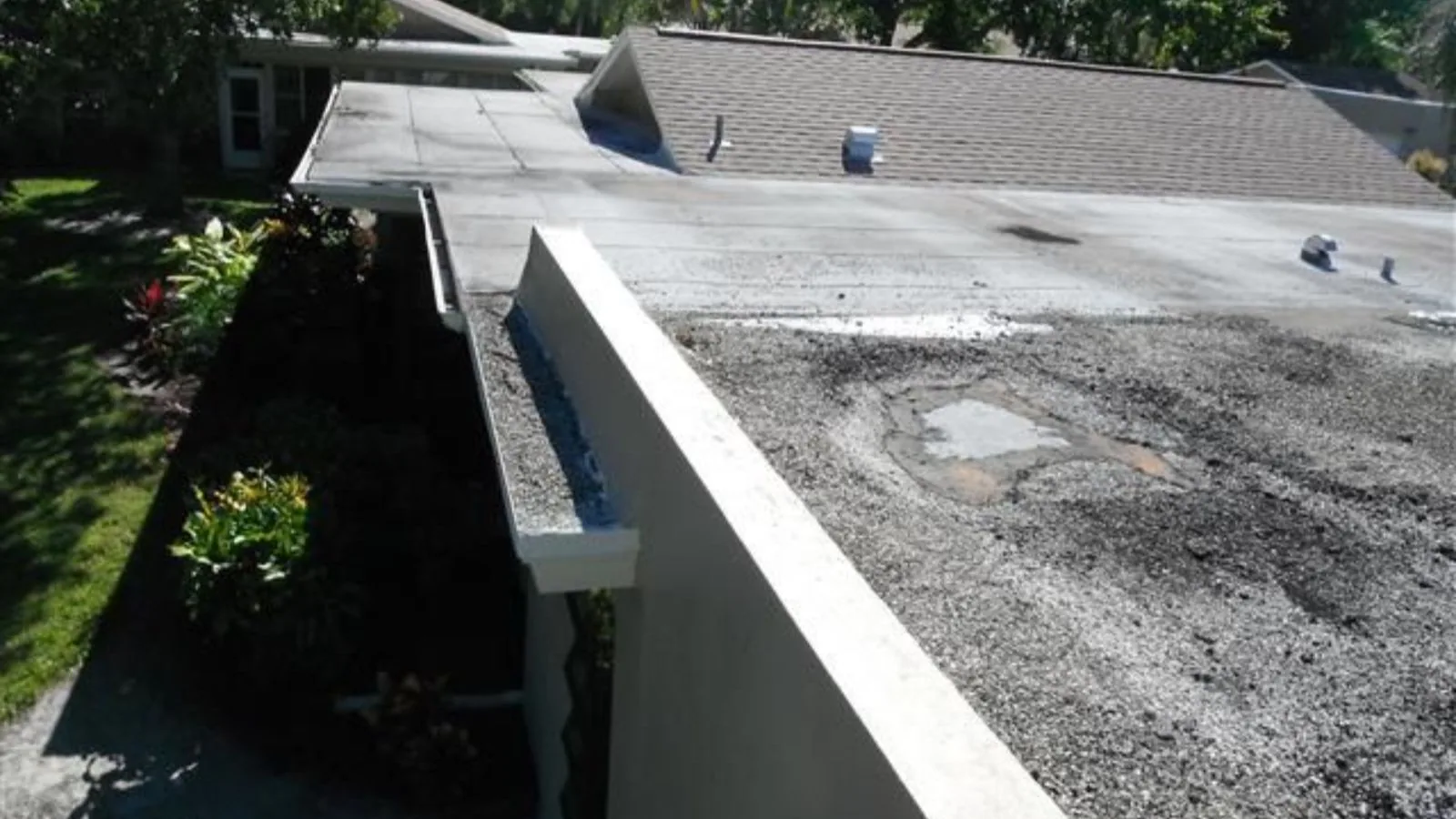
The insulation acts as a sponge and the deck acts as a channel. Over a steel deck, water follows the corrugations sideways until it meets a fastener, a lap or an end joint and drips. Over concrete or wood it spreads along the interface and exits at drains, penetrations and wall junctions. In the older masonry buildings of downtown Johnson City, a failed parapet flashing can also send water into the wall cavity itself, so the first sign is staining on an interior wall below the ceiling line. Each path gives the wet footprint a different shape, and the shape tells us where to look.
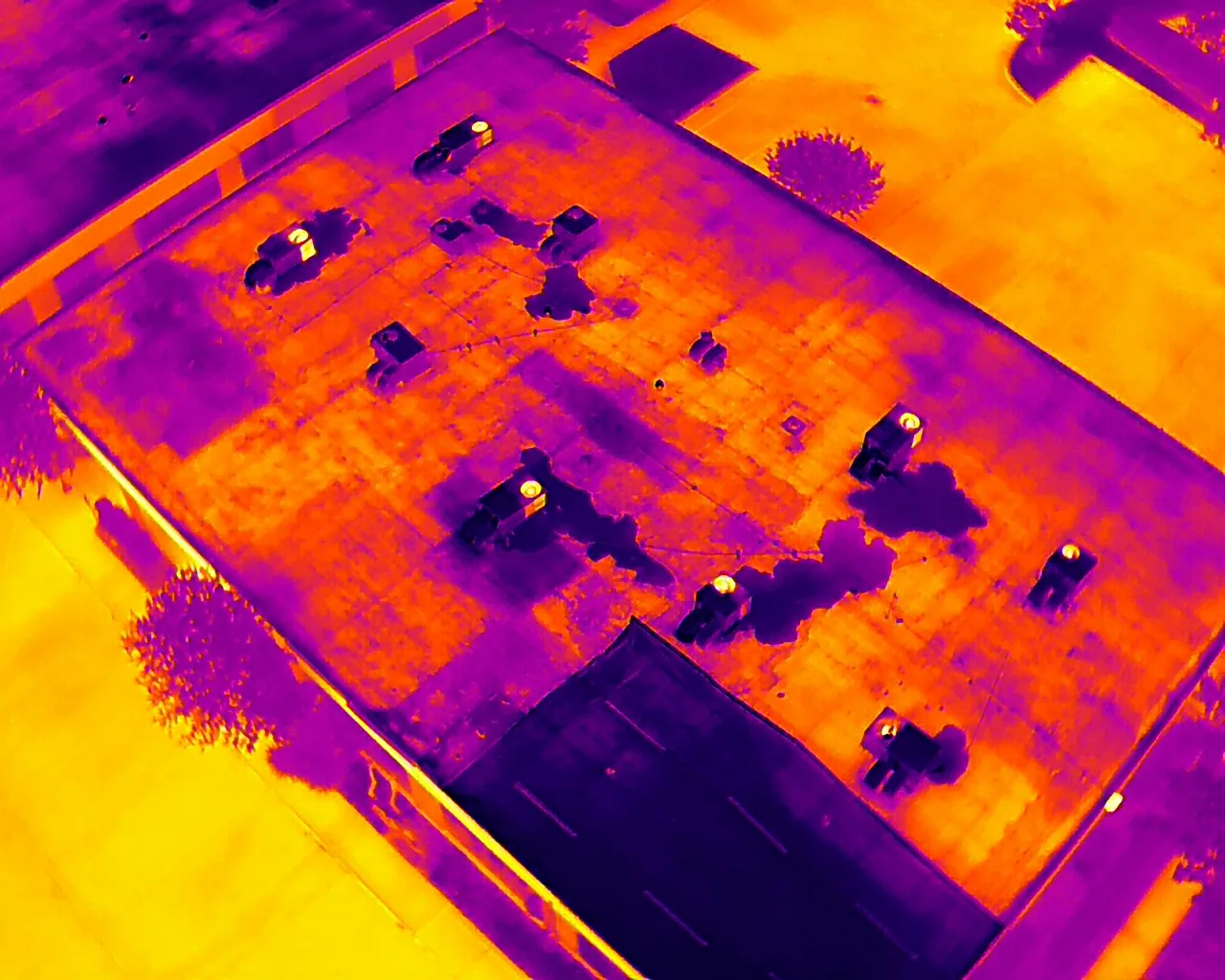
An infrared moisture survey at dusk draws that footprint, and cores at its edge fix the boundary with measured readings. The restoration firm gets the area to open and dry, and the adjuster gets a documented link between a specific opening and a specific wet area. Without it, ceilings are opened too far or not far enough, and both errors are expensive.
Bring us the loss while the evidence is fresh
Call us when a roof opening is first reported. We will protect the building, record the roof condition with dated photographs and moisture readings, and give the carrier and the restoration firm one set of facts to work from, with crews available any hour of any day.
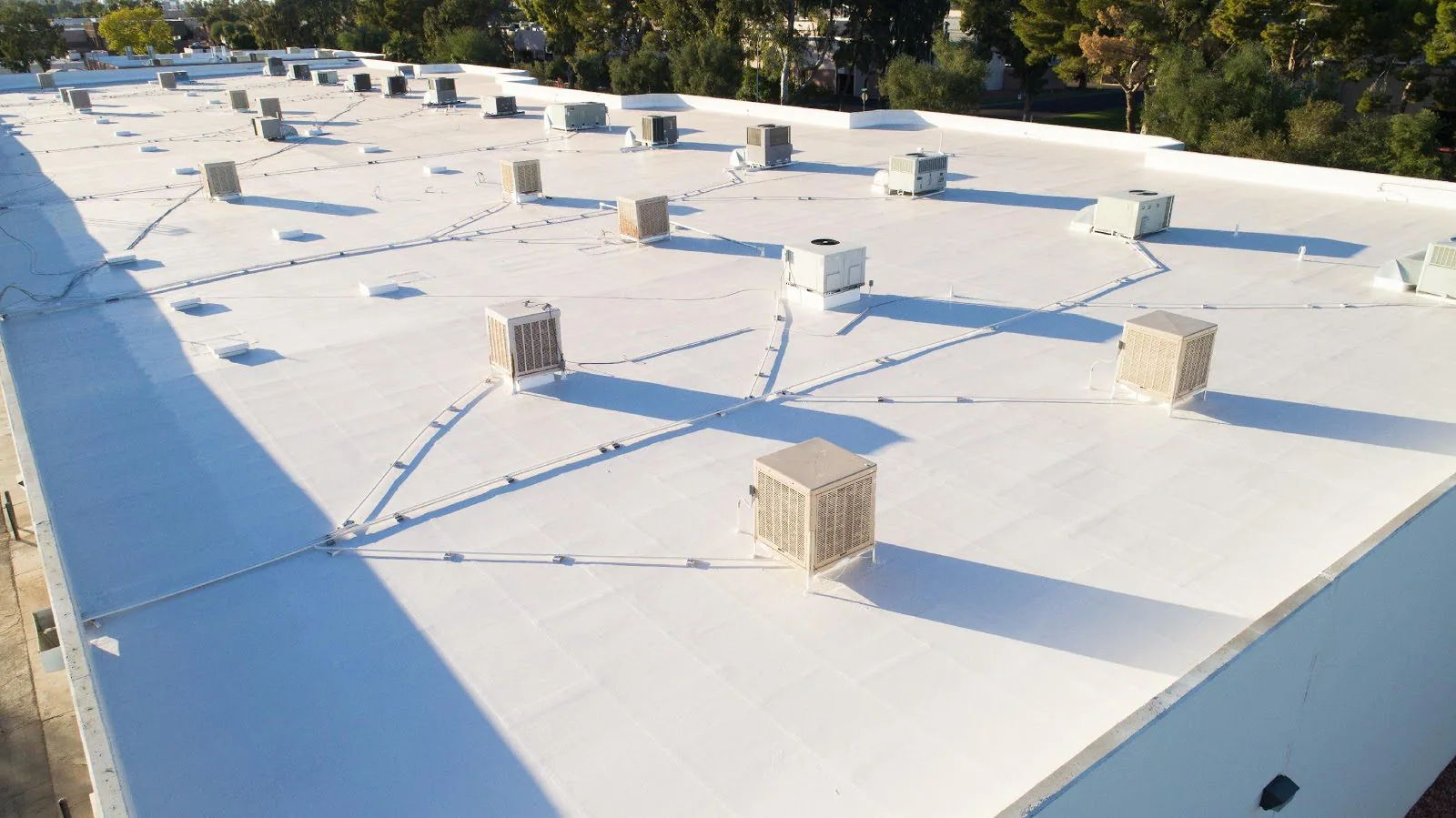
Which Tri-Cities events produce roof losses, and which produce something else?
Hurricane Helene is the clearest example of a loss that is not one loss. The Nolichucky River reached catastrophic flood levels, and flooding closed I-26 and reached Unicoi County Hospital in Erwin. River water enters at ground level, so a flooded lower floor is a different cause from a wet ceiling. Under that much rain, weak drains, scuppers and flashings can also admit water on upper floors. A roof inspection separates the sources early, which matters because policies often treat flood and rain intrusion differently.
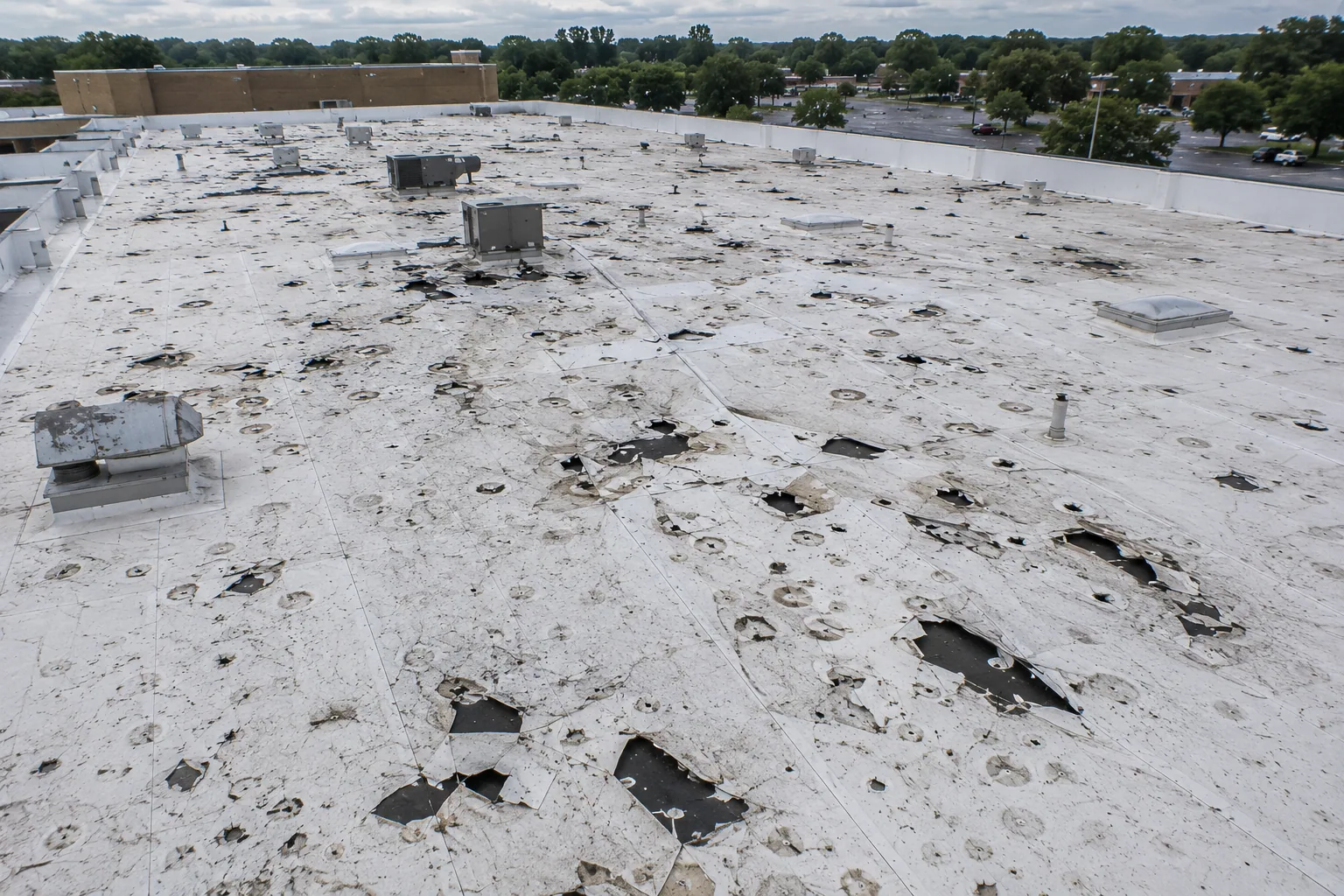
Wind events are rarer but real. Washington County has ten recorded tornadoes, the strongest an F2 in 1929, with five in 2011 and three on April 27, 2011. Wind leaves a recognizable pattern, and wind damage roof repair starts with edge metal, coping and the membrane attachments at the perimeter. Snow is slower: the city averages 15.6 inches a year, and the 8.7 inches that fell on Christmas Day 1969 at Tri-Cities Regional Airport shows how one heavy snowfall can load a roof that already holds water.
How is the line drawn between a section repair and a full replacement?
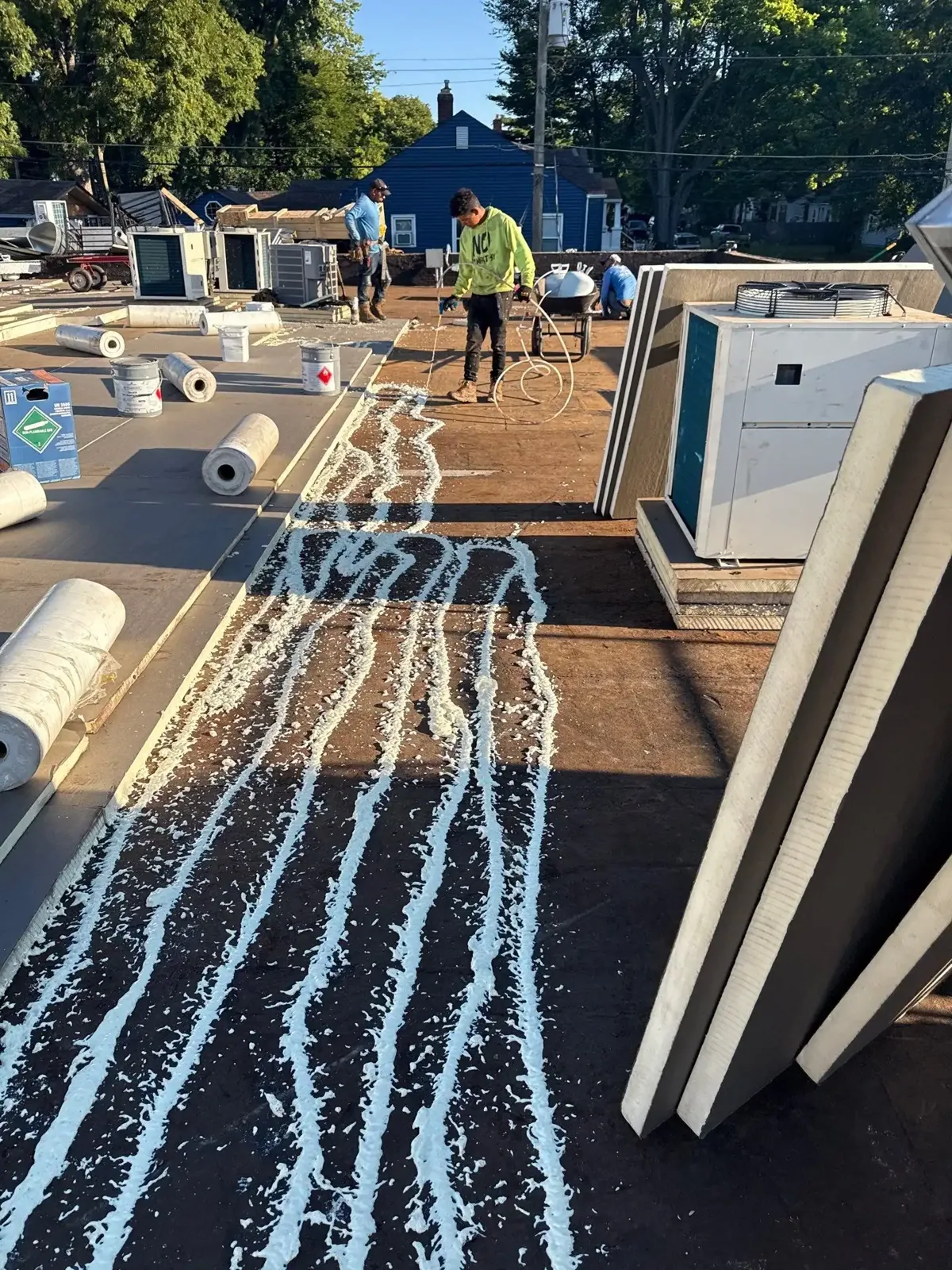
Measurements are the extent of wet insulation, the number of separate roof areas divided by walls or curbs, the remaining service life of the membrane, and whether a matching material is still made. A clean tear over dry insulation is a repair however loud the storm was. The same tear over saturated insulation is a larger scope, because the insulation has to come out before a patch will hold.
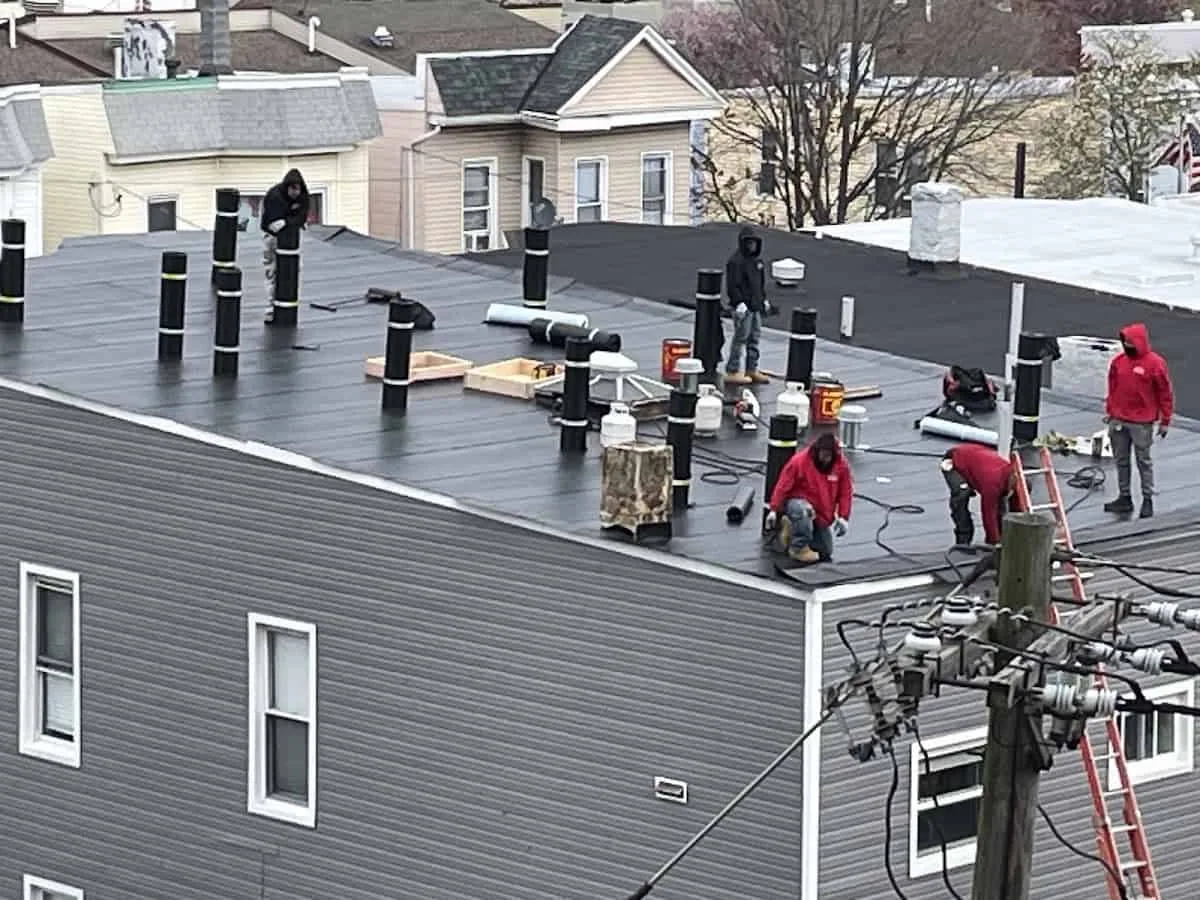
Section replacement fits when a roof is divided into separate areas and only one is wet, with the new section tied into the old by a termination the manufacturer details. Full replacement fits when moisture is widespread, when old and new material cannot be joined, or when repeated repairs would approach the price of a new roof. Our report prices each option and marks which items are storm-related, so the carrier sees the choice with its reasons rather than a single number.
How fast must the roof be dried in before interior drying can begin?
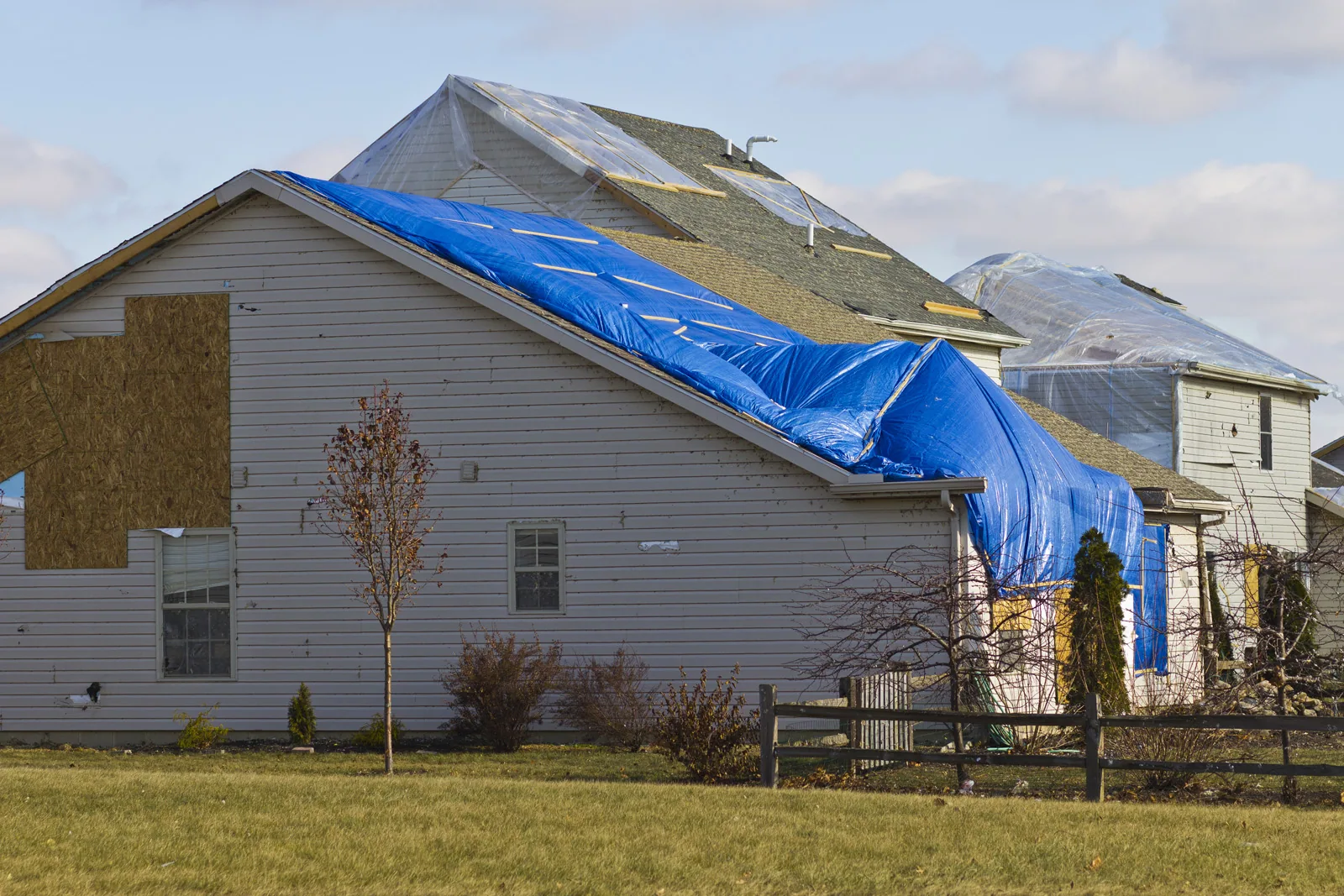
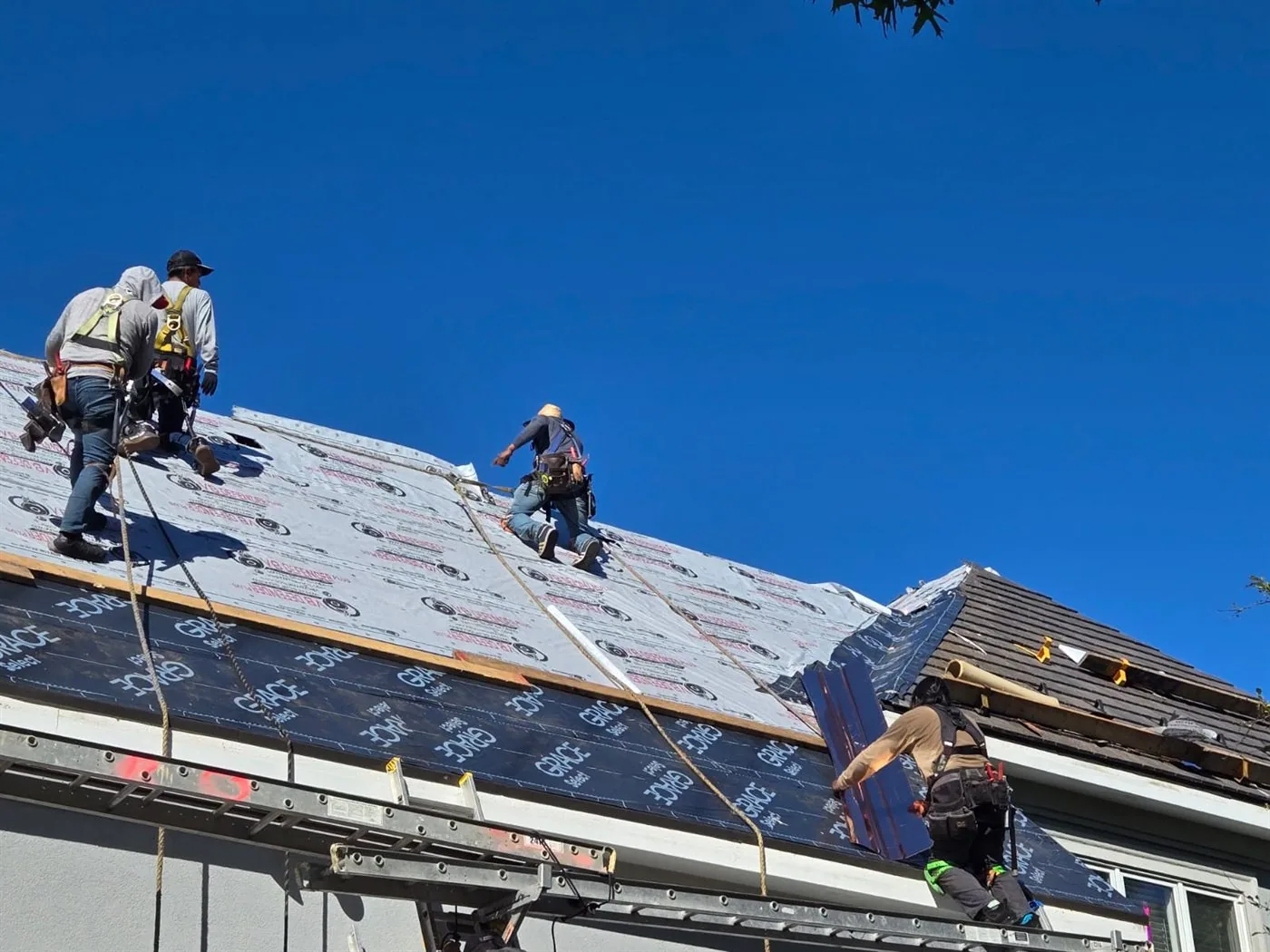
Dehumidifiers and air movers cannot beat a roof that is still taking water. Interior drying starts only after the roof is closed, which makes dry-in the first item on the critical path of any water loss. Our emergency roof repair crews respond around the clock, and the temporary measure fits the opening: a secured tarp over a small breach, a temporary membrane adhered over a larger tear, a sealed penetration. Photographs before and after go to the file, and the work is built to survive several rains because the permanent scope often waits on an inspection.
From there the two schedules interlock. The restoration firm logs readings on ceilings and walls, we log readings on the roof, and when both curves flatten the rebuild can start. Cold slows both sides, since slow evaporation in an unheated space and frost on the deck delay drying and permanent roof work alike, so winter losses deserve a longer expected duration in the budget.
What does a delayed roof scope do to a restoration budget?
Every rain on an unsealed roof restarts the interior. Ceiling tile that had dried is wet again, insulation that was beginning to release moisture reabsorbs it, and mold can begin on damp drywall within days. A mitigation job that should have closed after one drying cycle repeats that cycle. The quiet cost of waiting for a roof scope is not the roof, it is the second and third mitigation.
Multi-tenant buildings multiply it. The Mall at Johnson City is a two-story enclosed mall with five large tenants and over 90 inline stores, and in a building that houses that many tenants one opening can reach several tenant spaces, each with its own interior claim. Properties run by property management companies or leased to retail and restaurant chains share that exposure, which is why a roof plan keyed to unit numbers is worth building before a second storm, especially around the North Johnson City retail hub. The roof record supports an insurance claim.
Commercial Roofing Questions
What can a restoration contractor do before the adjuster has seen the roof?
Protect, photograph and measure. Close the opening with temporary cover, shoot wide and close images of the roof and every wet ceiling with dates visible, and log moisture readings room by room. Keep damaged materials or samples, because the carrier may want to examine them. Tearing off or discarding roof material before the inspection removes the evidence that separates a covered event from long-term wear.
Can wet insulation under an intact membrane be part of the loss?
Wet insulation is a legitimate finding when the moisture map ties it to a documented opening or event. We provide the scan and the cores with the date of each reading, so the carrier can follow the path from breach to wet area and the restoration firm can scope removal on the same boundaries. Without that path, the wet area is argued from the stain, which is the weakest evidence in the file.
Can one roof report serve several tenants or units?
One report can serve many units if the roof plan is keyed to ceiling and unit numbers, so each tenant's interior damage points to a numbered roof area. That prevents the usual problem on shared roofs, where every tenant claims the same opening and no one can say which tenant space the water actually reached.
What does the roofer need from the restoration firm?
Moisture logs, room-by-room photographs, and the times when interior crews will be working beneath the roof. Interior drying equipment can exhaust humid air near rooftop intakes, and demolition below can disturb temporary work above, so a shared daily plan avoids damage in both directions. We hand back roof moisture readings and photographs in the same format, so the carrier receives one consistent record.
Is a tarp enough, or does the roof need a temporary membrane?
For a short interval over a small opening, a secured tarp holds. A larger tear, a forecast with repeated rain or a permanent scope that will wait weeks calls for a temporary membrane adhered or fastened to dry substrate, with edges sealed. Wind is why many tarps fail on low-slope roofs, so fastening along solid edges matters more than the size of the sheet.
Related Roofing Pages
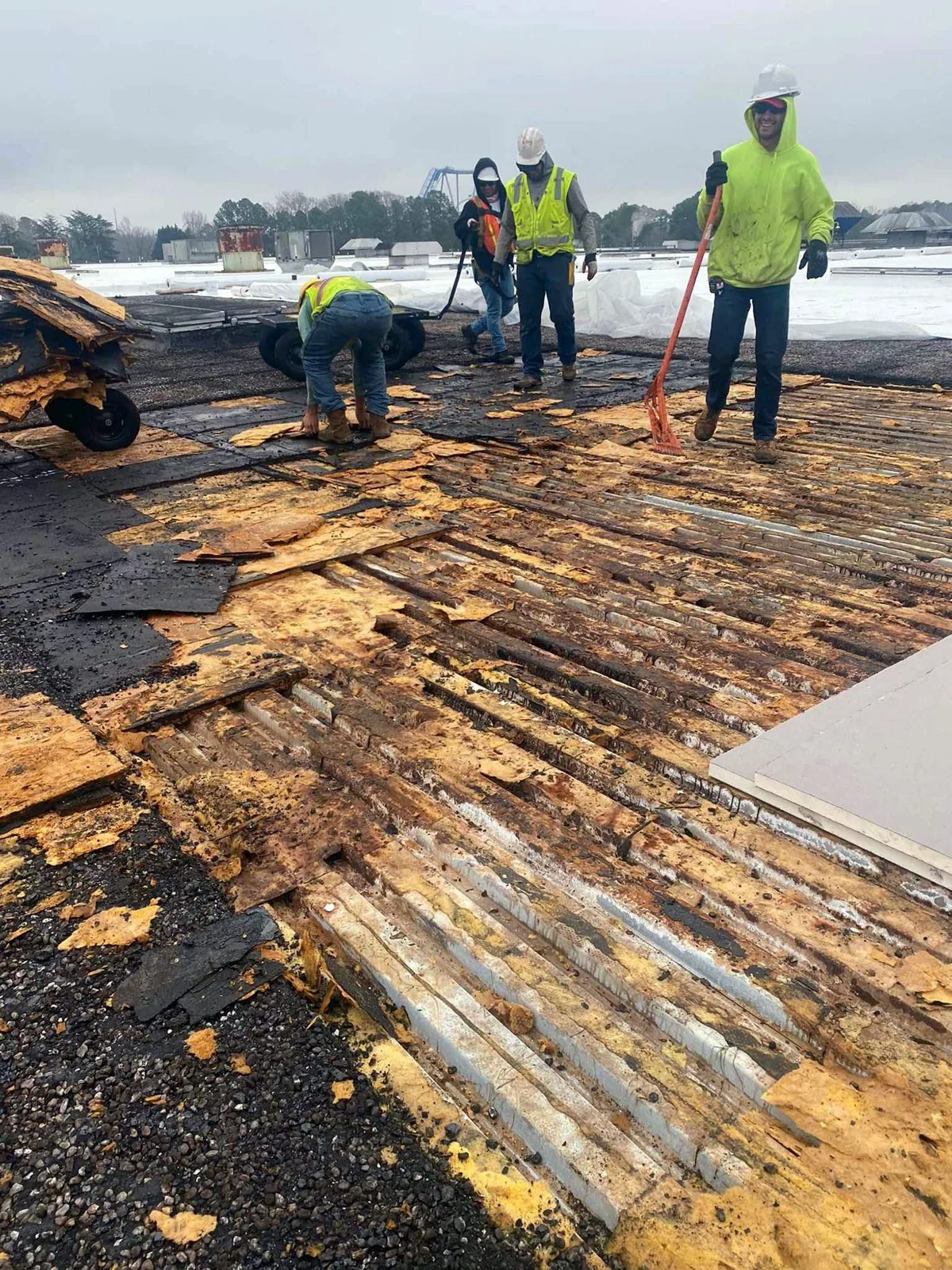
Downtown Johnson City
How the work is scoped, phased and documented on Tri-Cities roofs.
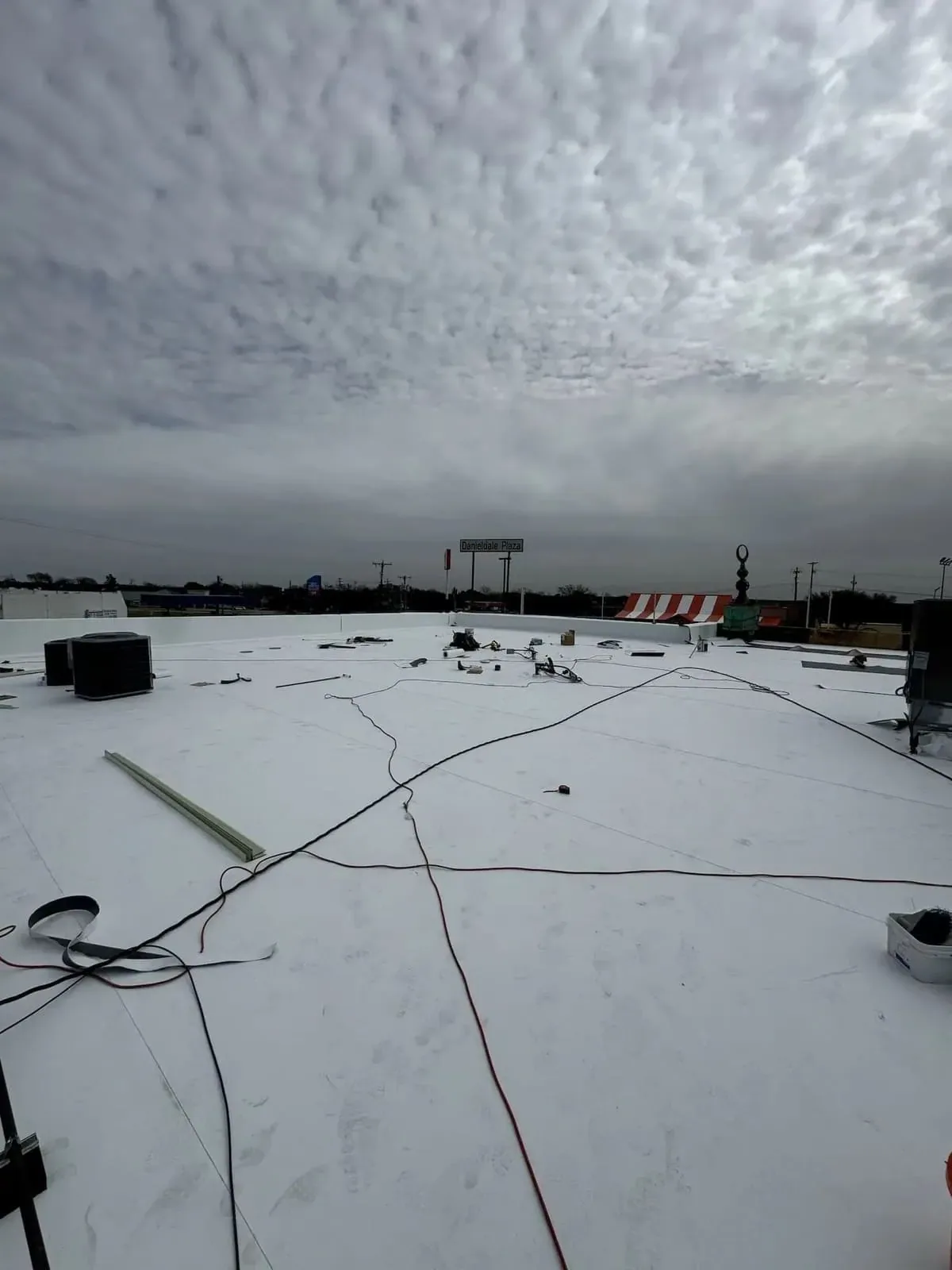
Infrared and Core-Cut Moisture Surveys
What we check, what we recommend and how the crew keeps the building running.
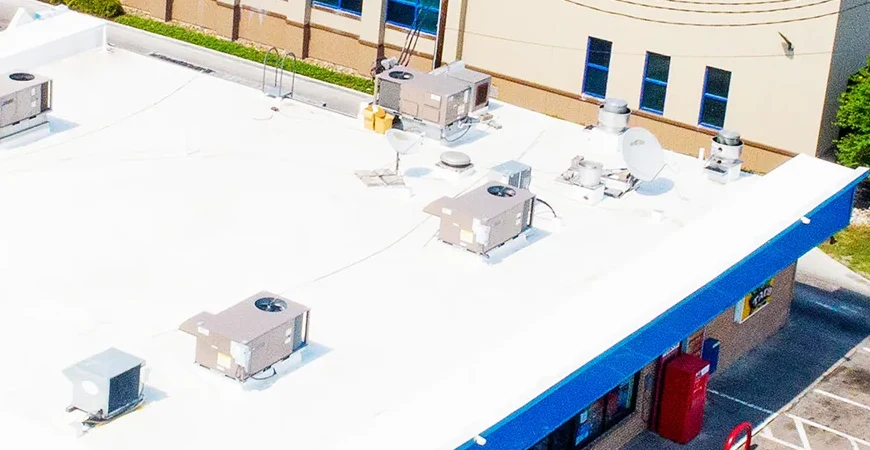
Erwin
Conditions, options and next steps for commercial buildings in East Tennessee.