
Commercial Roofing in Erwin, TN
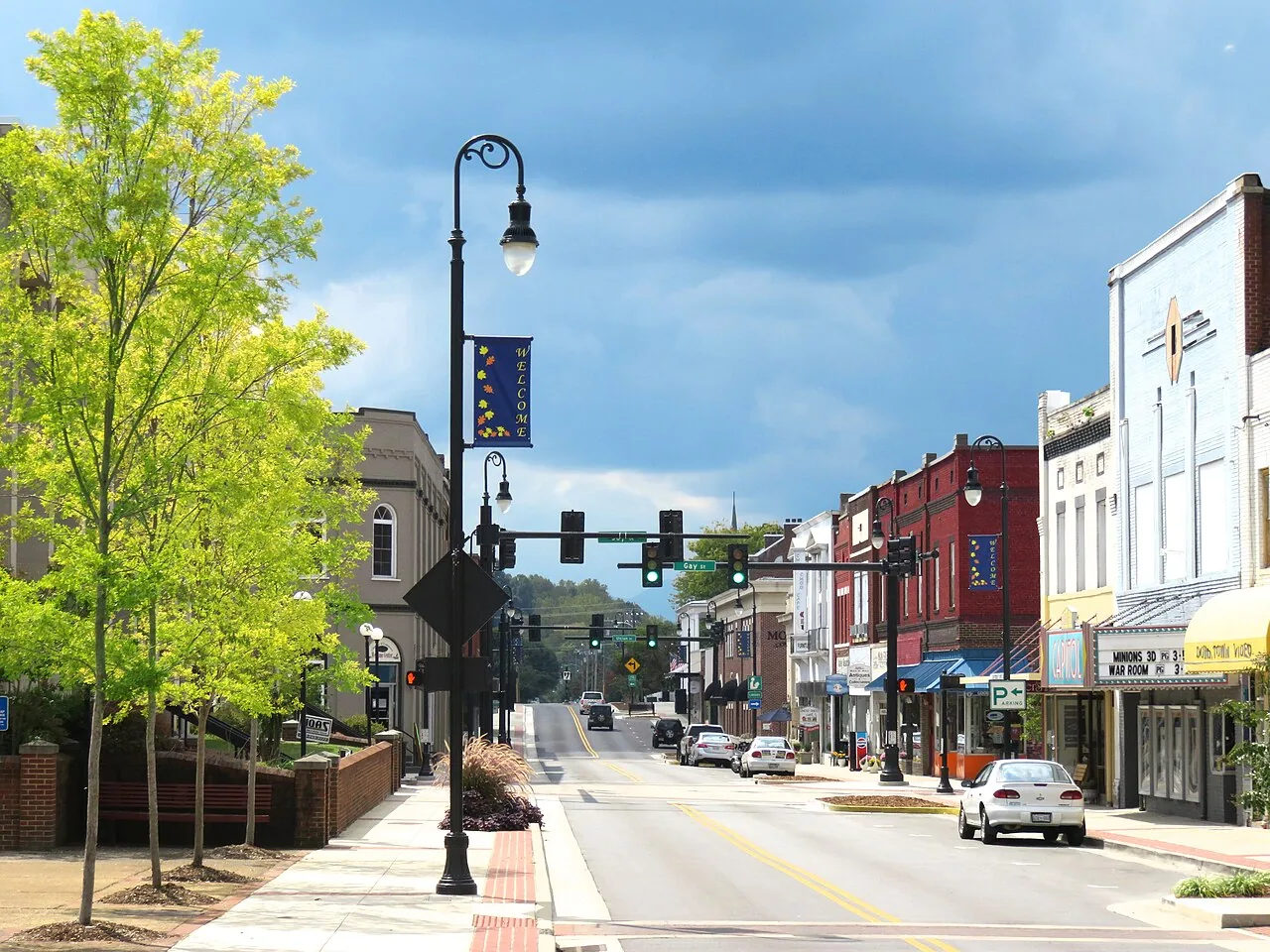
A roof drain is sized for a design rainfall rate, and when a storm outruns it the roof becomes a shallow pond. Water rises until it finds an overflow, a scupper or the top of a flashing, and each inch of depth adds weight to the deck. Hurricane Helene in September 2024 was that kind of event for Northeast Tennessee: it sent the Nolichucky River to catastrophic flood levels, destroyed part of the I-26 bridges at Erwin and flooded Unicoi County Hospital. Erwin, TN is the Unicoi County seat, a town of 6,083 on the I-26 corridor south of Johnson City, with a hospital, a uranium processing facility established in 1957 and a railroad history that ran from 1890 until CSX closed its Erwin operations in October 2015. A roof in Erwin is judged after a storm by one question: did the drainage path work, and what did the water do on the way off? We answer it with condition data before an owner commits capital to a repair, a recover or a replacement.
What did Helene show owners about their roofs in Erwin?
The storm tested a quiet assumption, that drains will always carry the water away. Flooding on the river was the headline, but the same storm passed over each roof across the region, and a roof is the one part of a building that takes that test from above. Unicoi County Hospital was flooded, and any building that took water from below deserves a check for water entering from above before anyone calls the repairs finished. At Embreeville, the Nolichucky gauge read 92,500 cubic feet per second before it failed, a measure of how much water the river carried. Owners in Unicoi and across the corridor have the same question to answer: whether the roof shed that water as designed or only appeared to.
Check what the last big storm did to your roof
Call Commercial Roofing Johnson City to arrange a walk of your Erwin roof. You will receive photographs, drain findings and moisture readings that show whether the roof shed the water as designed.
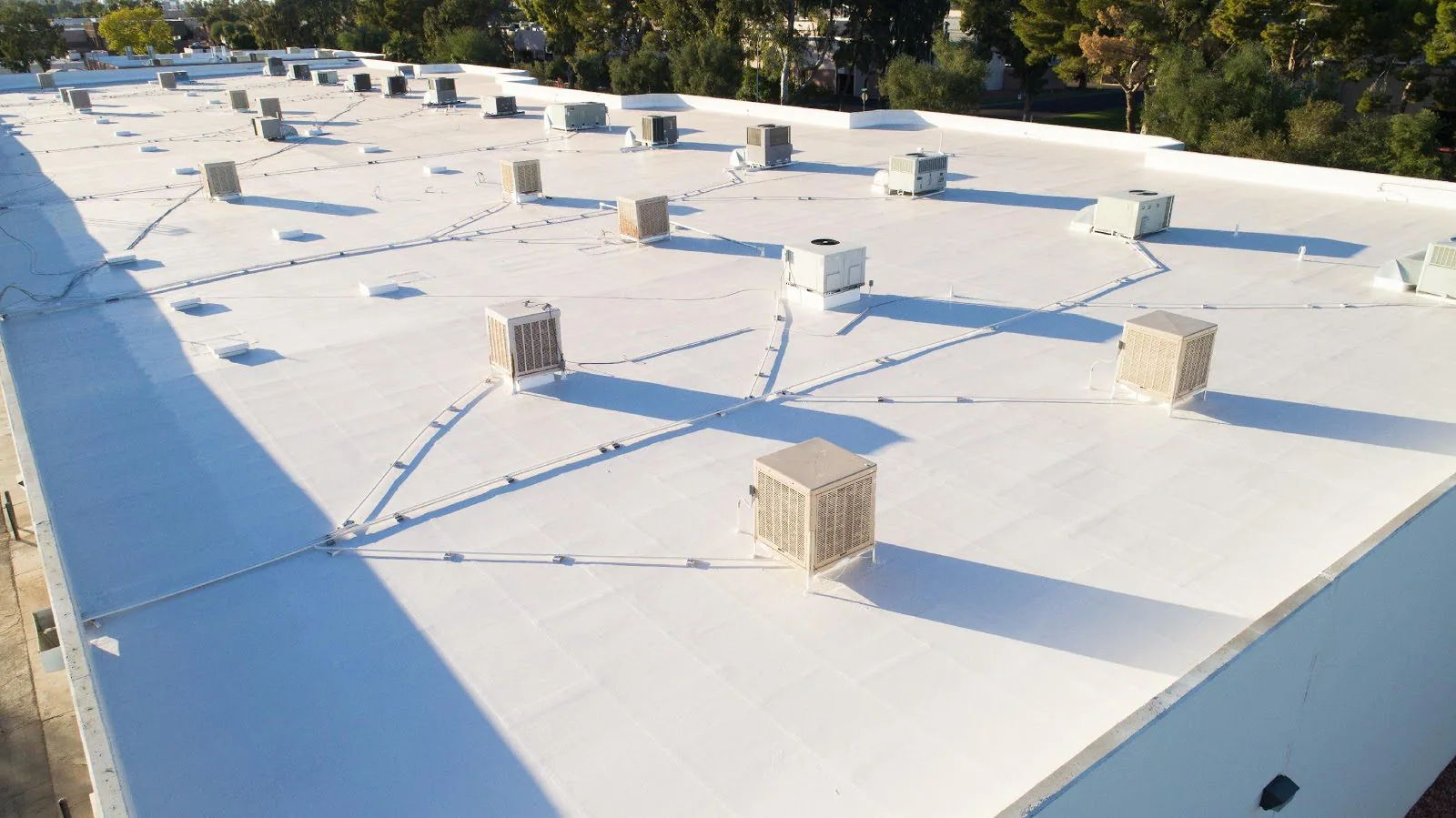
How does water behave on a roof when rain outruns the drains?
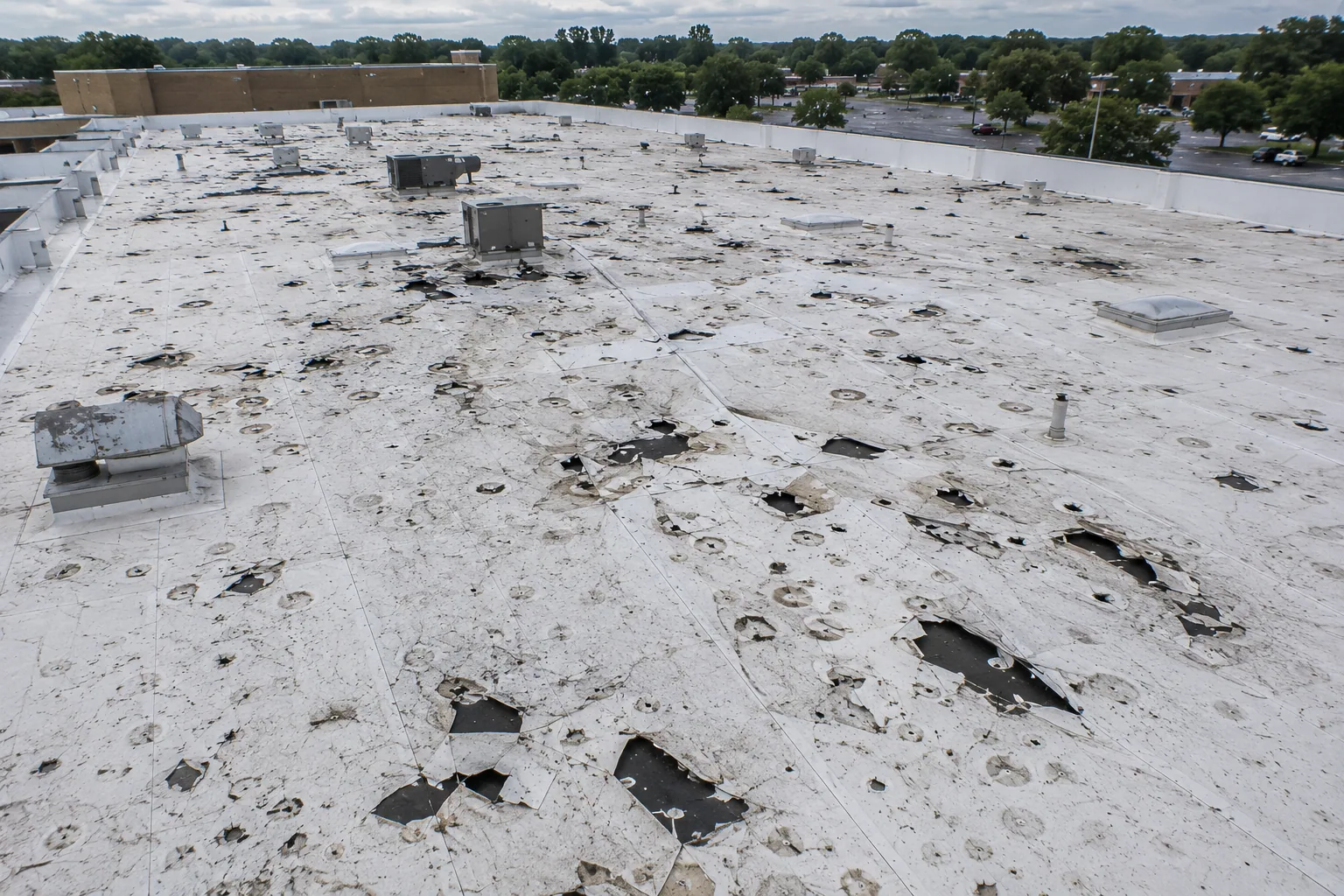
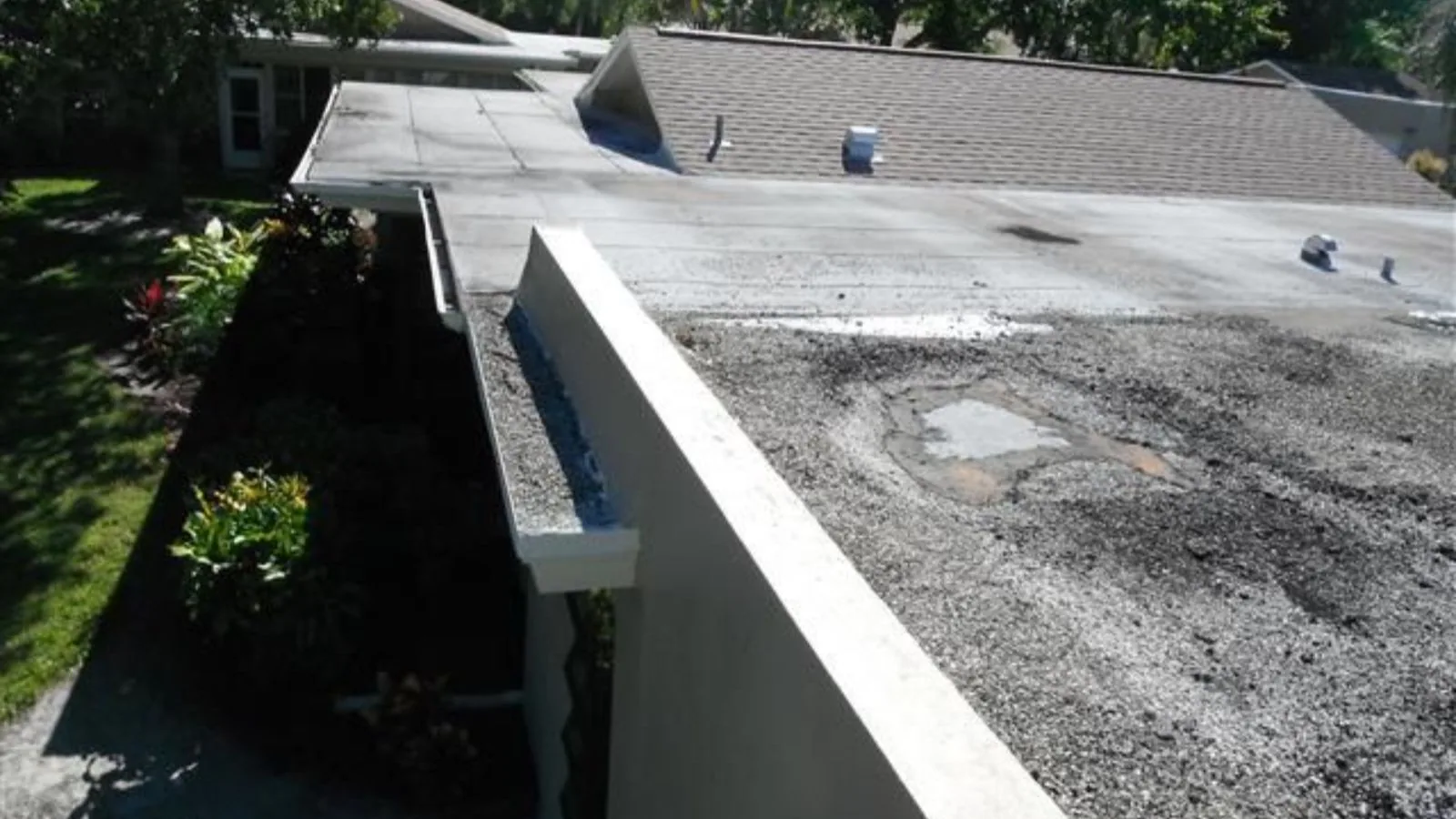
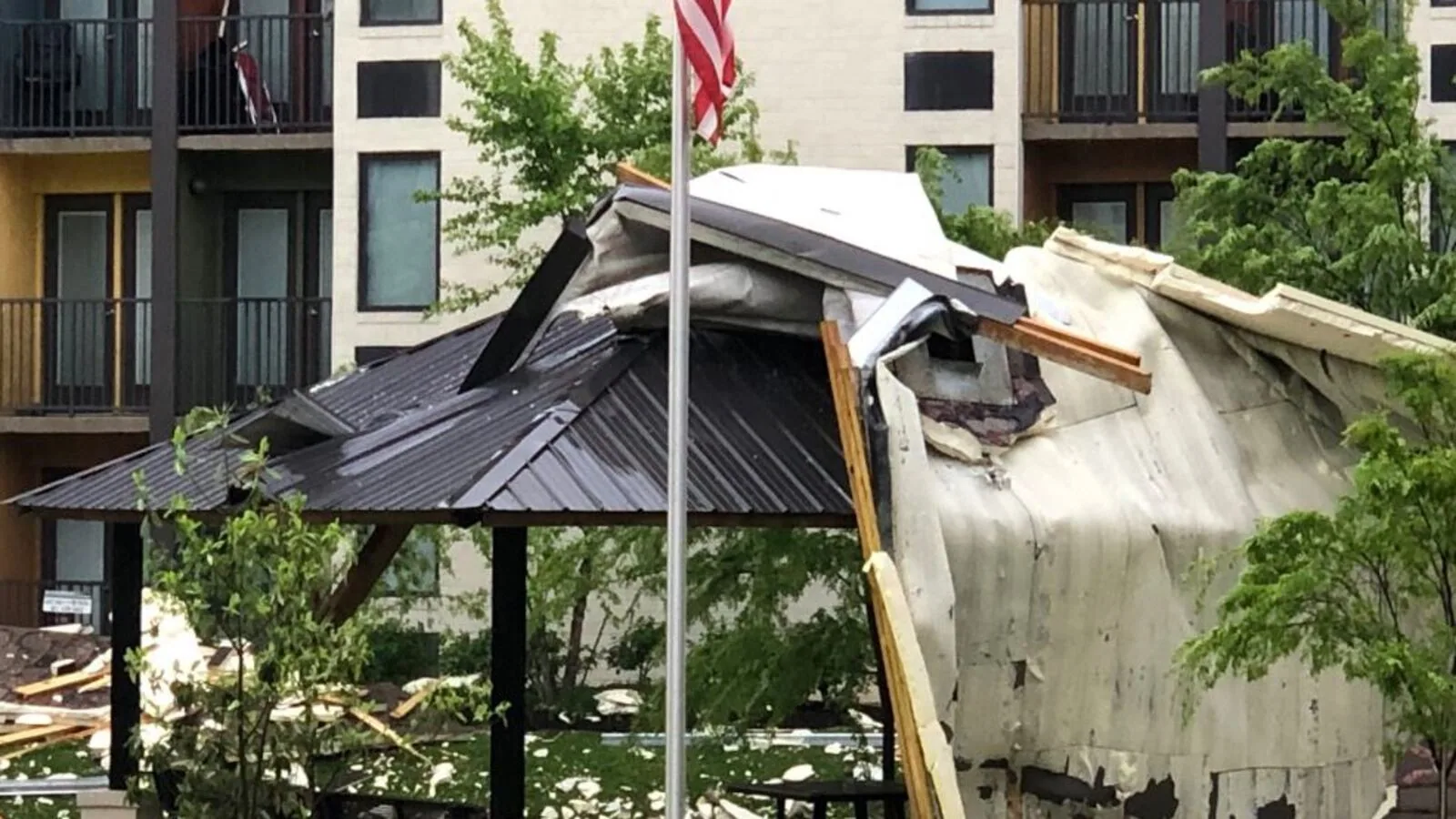
It rises, spreads and takes the easiest exit. A membrane is waterproof against water that runs across it and far less tolerant of water that stands against its seams and edges. Once depth reaches the base of a wall flashing, the water begins testing the top of that flashing, the counterflashing and the joint where a curb meets the deck. Roofs with overflow scuppers shed the excess through a planned opening, and roofs without them shed it through the weakest detail. Debris completes the picture, since leaves and silt carried by storm winds settle over a drain strainer and cut its capacity at the moment it is needed most. When the rain stops, the surface drains and the roof looks fine. The insulation beneath any breach may have taken on water that will not leave by itself, and that wet layer is the cost owners meet in the next winter. Sorting wet insulation from dry after an event like that is the core of storm damage roof repair.
What do we check on a roof after a flood-scale storm?
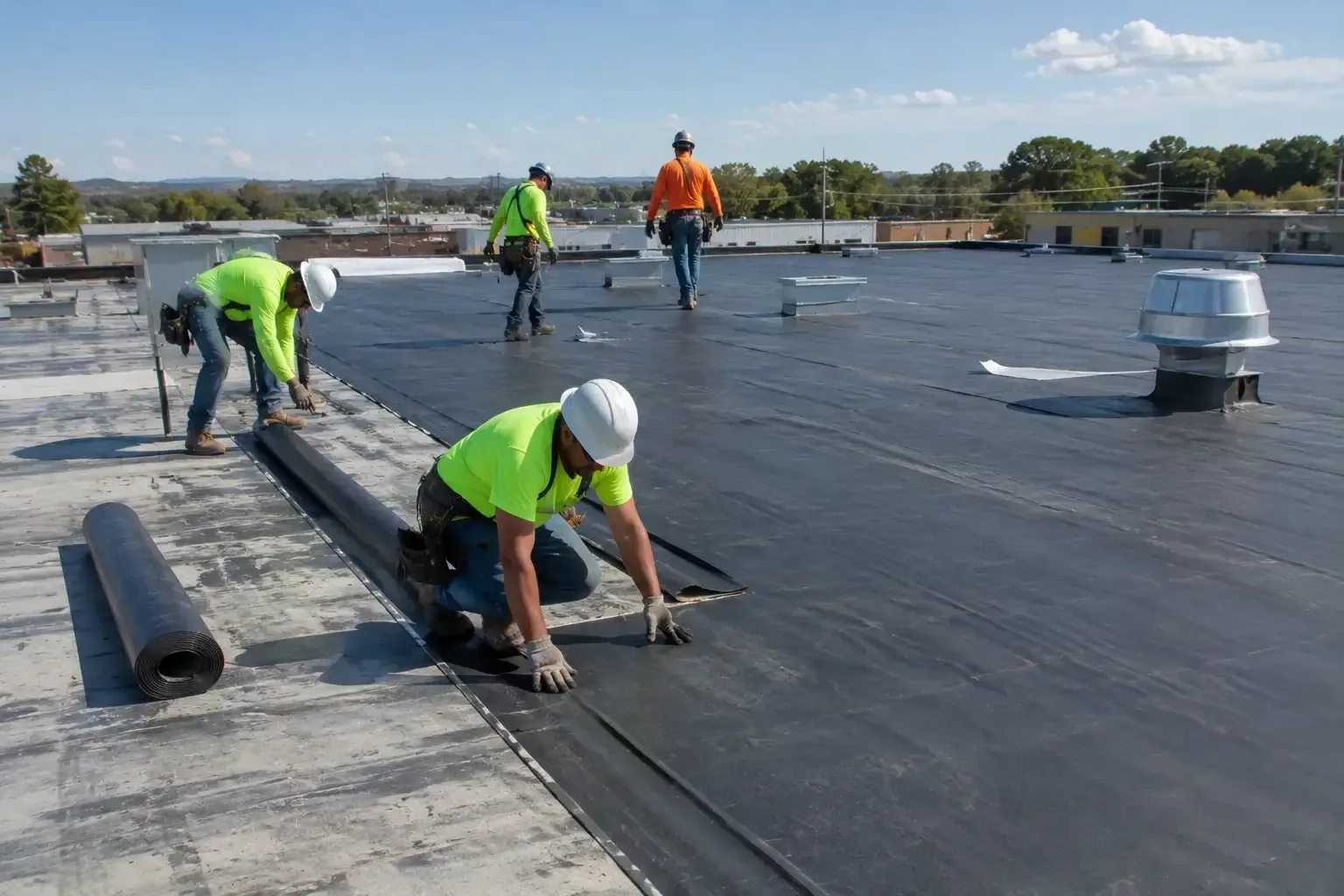
We start with the outlets. Every primary drain, overflow and scupper is cleared, photographed and measured against the debris it held, because the depth of silt in a strainer shows how much capacity the roof lost. Then we walk the edges, looking for metal that wind lifted and for sealant that rain worked behind. In the field we check seams for ridges and blisters, and we press along penetrations where a flashing has slipped. Where the surface leaves a question, an infrared moisture survey finds insulation that holds water, and cores confirm the layers. Each finding is dated and photographed, which matters if an owner needs to document storm damage for an insurer. The result is a ranked scope that separates items needing attention now from items that can wait for a planned reroof, and it lets the owner time spending to the roof's real condition.
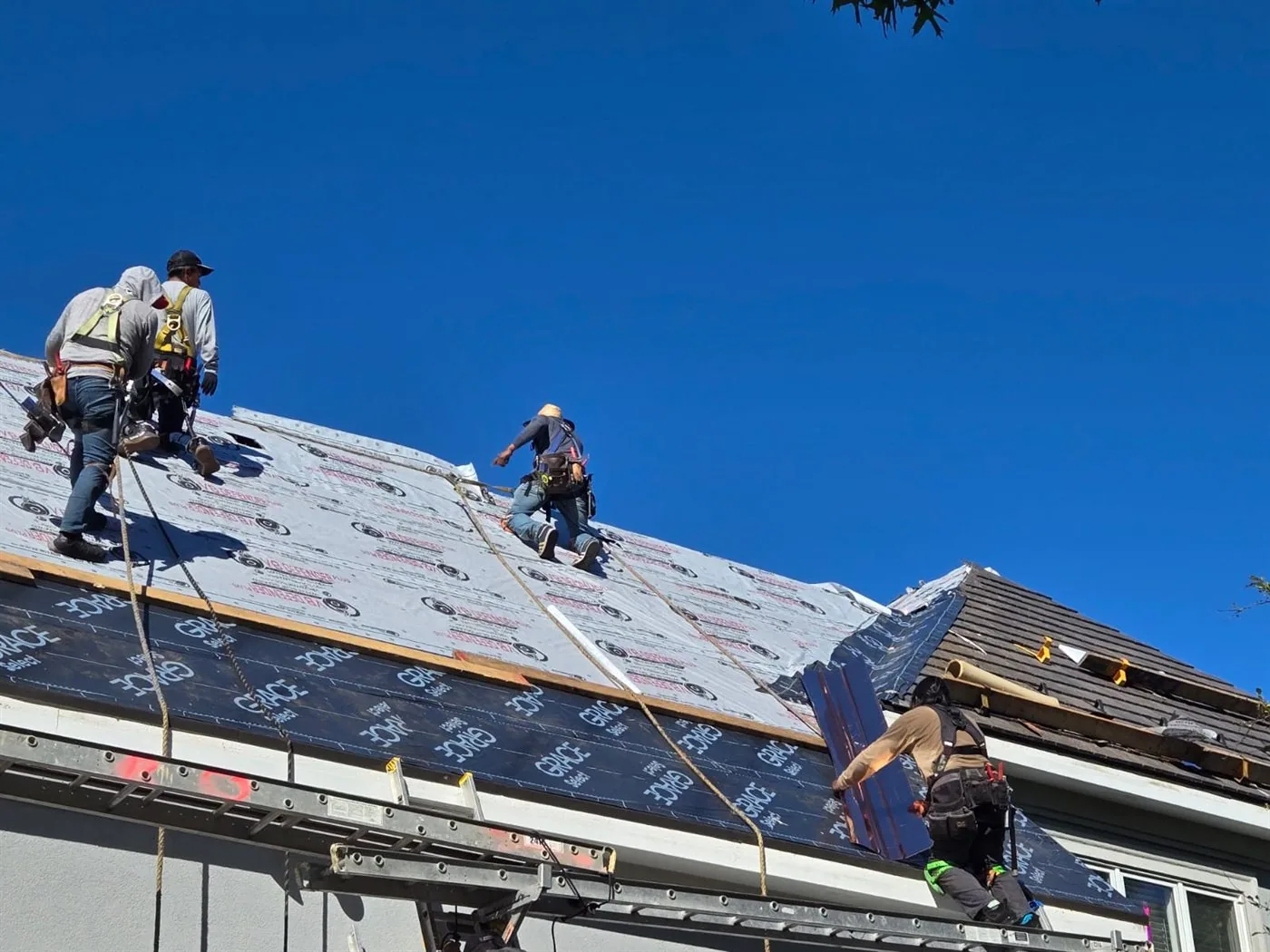
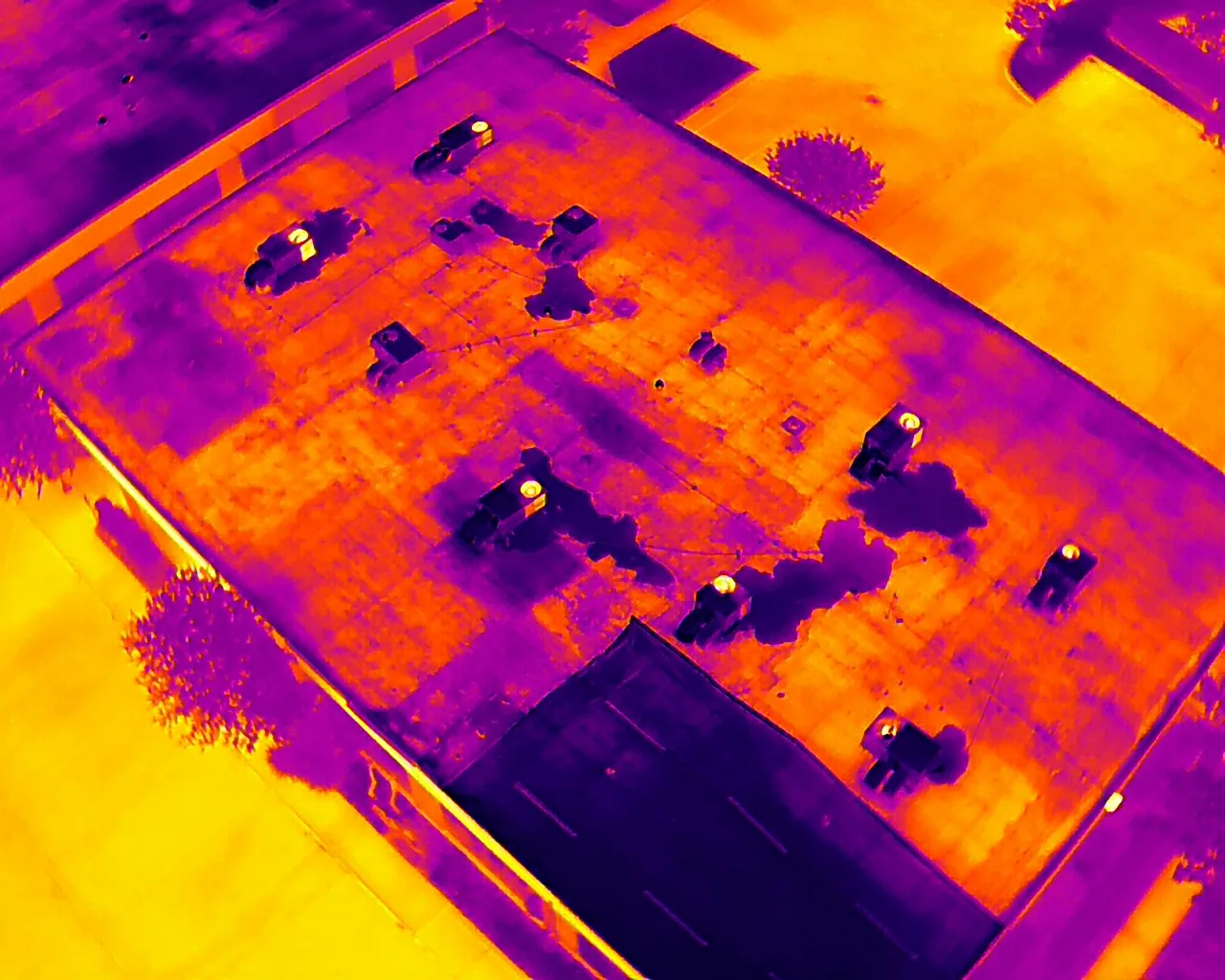
How does an owner weigh repair, recover and replacement when a building changes hands or use?
Start with the roof's remaining service life, since that number belongs in the price. Railroad operations were central to Erwin's economy from 1890 until CSX closed its Erwin operations in October 2015, ending more than 300 jobs, and a building that has changed tenant or use in the years since deserves a roof survey before the purchase or the lease is signed. A due diligence roof survey gives the buyer moisture findings and an estimate of years remaining, so the choice becomes arithmetic. Dry insulation and a sound deck leave repair or recover on the table. Wet insulation moves the project to replacement and the purchase price down with it. On a building headed for new equipment, such as a manufacturing plant adding units on the roof, curbs and structure matter as much as the membrane.
How is roof work sequenced at a controlled-access industrial or healthcare site?
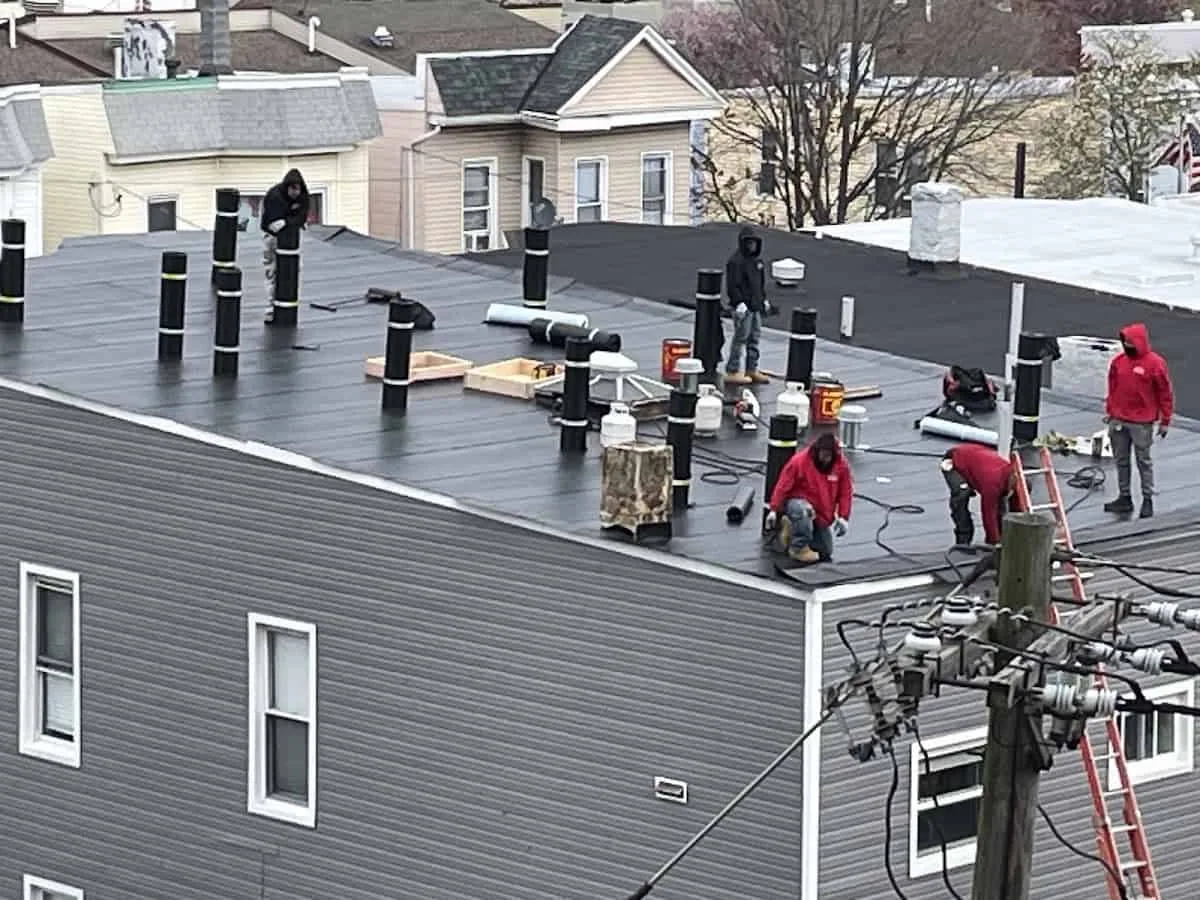
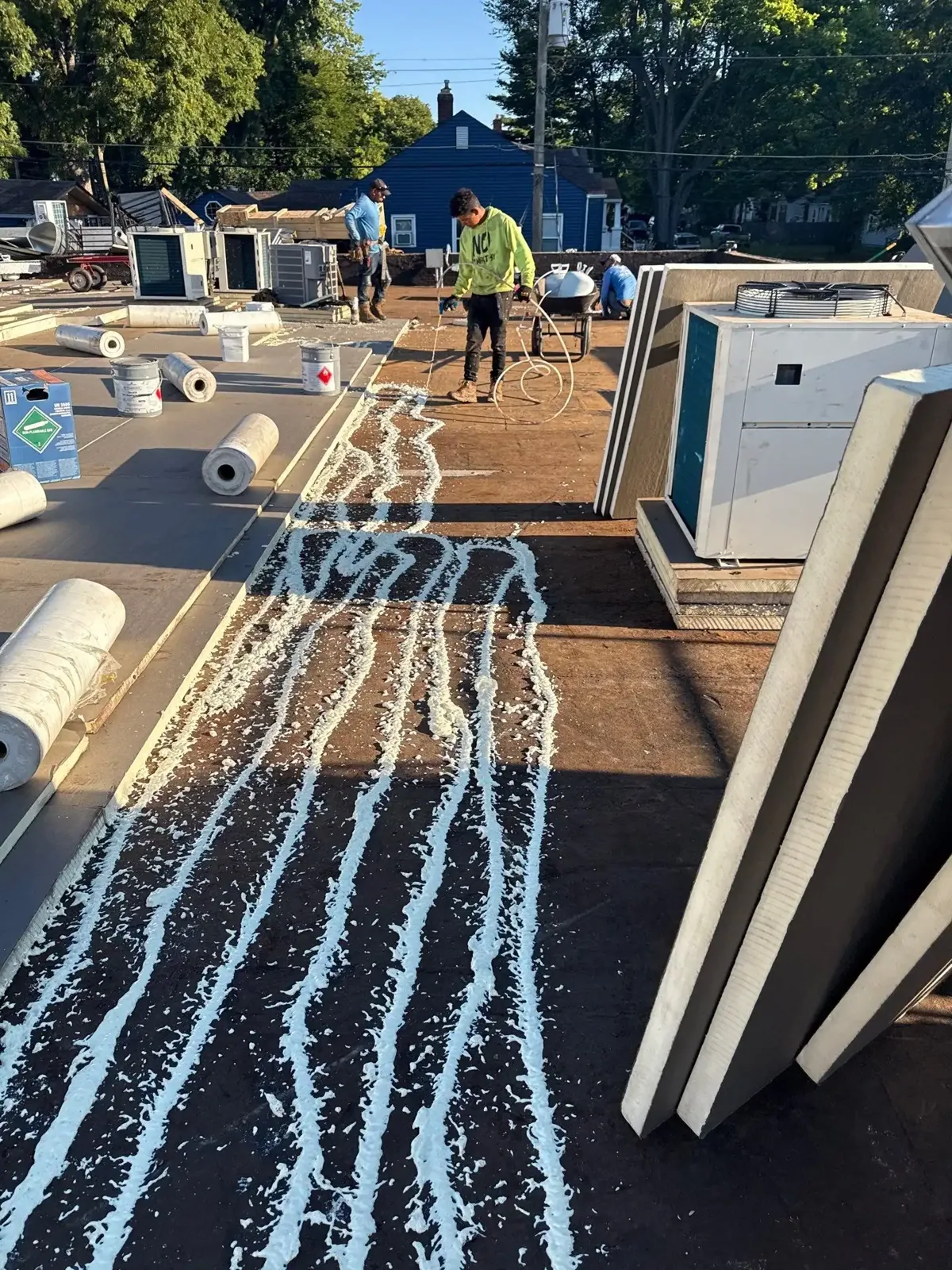
Around the rules of the building. Erwin's industrial base includes the uranium processing facility that Nuclear Fuel Services established in 1957, and any roof visit at a site like that begins with the owner's access rules: badging, escorts, material checks at the gate and restricted areas. Where open flame is limited, cold-applied or mechanically attached systems replace torch work, and hot work moves to permit windows. A hospital adds its own demands. Work above patient areas on a hospital roof goes in section by section, with dust, fumes and noise held away from air intakes and treatment spaces, the same sequencing that occupied building reroofing depends on. Schedules also carry storm risk: a section torn off in autumn must be dried in before dark, and a temporary seal stays ready for the night a front arrives early. Emergency calls reach us around the clock, holidays included.
Commercial Roofing Questions
If Helene never caused a leak, is there anything left to find?
Moisture can hide for a season. Wind-driven rain can work behind a flashing and into the insulation without ever reaching a ceiling tile, and the first sign may be a stain the following winter when freezing pushes the water through. A survey after a major storm costs far less than a reroof forced by hidden damage, and a dated set of photographs gives the owner a baseline.
Do overflow drains matter as much as the main ones?
They carry a different job. Primary drains handle ordinary rain, and overflow openings sit slightly higher so they only begin moving water when the primaries cannot keep up or a strainer clogs. That makes them the last protection against ponding depth that the structure was never meant to carry. We check that overflow openings are present, sized and clear.
What does a roof survey give a buyer that a walk-through does not?
Numbers. A walk-through sees the surface, and a survey reports where insulation is wet, how much service life the membrane retains, and which repairs would extend it. For a buyer of an industrial building that has changed hands before, the survey separates a roof that needs routine care from one that will need replacement soon.
How is a replacement phased above a hospital wing?
One section at a time, with each section torn off and dried in before work stops for the day. Ventilation intakes near the work area are protected or shut down, noisy work is scheduled around procedures, and staging keeps equipment away from entrances and emergency routes. The facility team reviews each phase before it begins.
How soon after a storm can a repair be permanent?
Once the insulation under the damaged area is dry. A temporary seal stops water that day, but a permanent patch over wet insulation traps the moisture and fails early. We map the wet area, remove what cannot dry, and then close it with the correct membrane or flashing repair.
Related Roofing Pages
Embreeville
How the work is scoped, phased and documented on Tri-Cities roofs.

Unicoi
What we check, what we recommend and how the crew keeps the building running.
Storm Damage Roof Repair
Conditions, options and next steps for commercial buildings in East Tennessee.