Commercial Roofing in Greeneville, TN
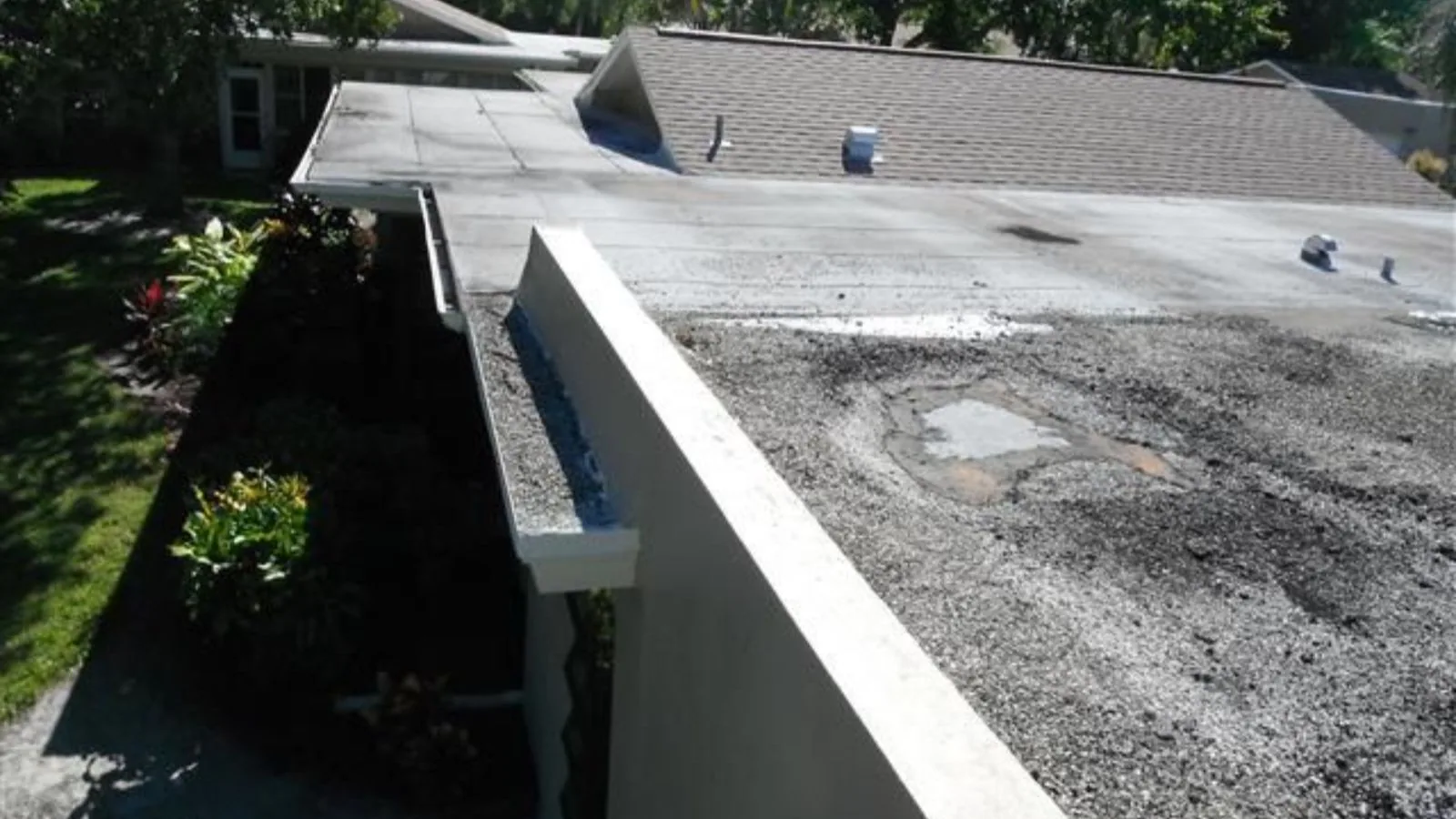
Water that sits on a low-slope roof for more than two days after rain has stopped is already doing damage, and the damage grows with every freeze. A shallow pond puts weight on the deck, keeps the membrane wet where it should be dry, and gives dirt and algae a place to collect that speeds the wear of the surface. On the first cold night the pond becomes ice, the ice presses on seams and flashings, and the thaw sends water into whatever the ice has loosened. For the hospital, campus, retail and manufacturing roofs in Greeneville, TN, the seat of Greene County, that cycle is the main way a roof loses service life. We start by finding where water stays and why, then decide whether a repair, a recover or a replacement gives the owner the best lifecycle cost.
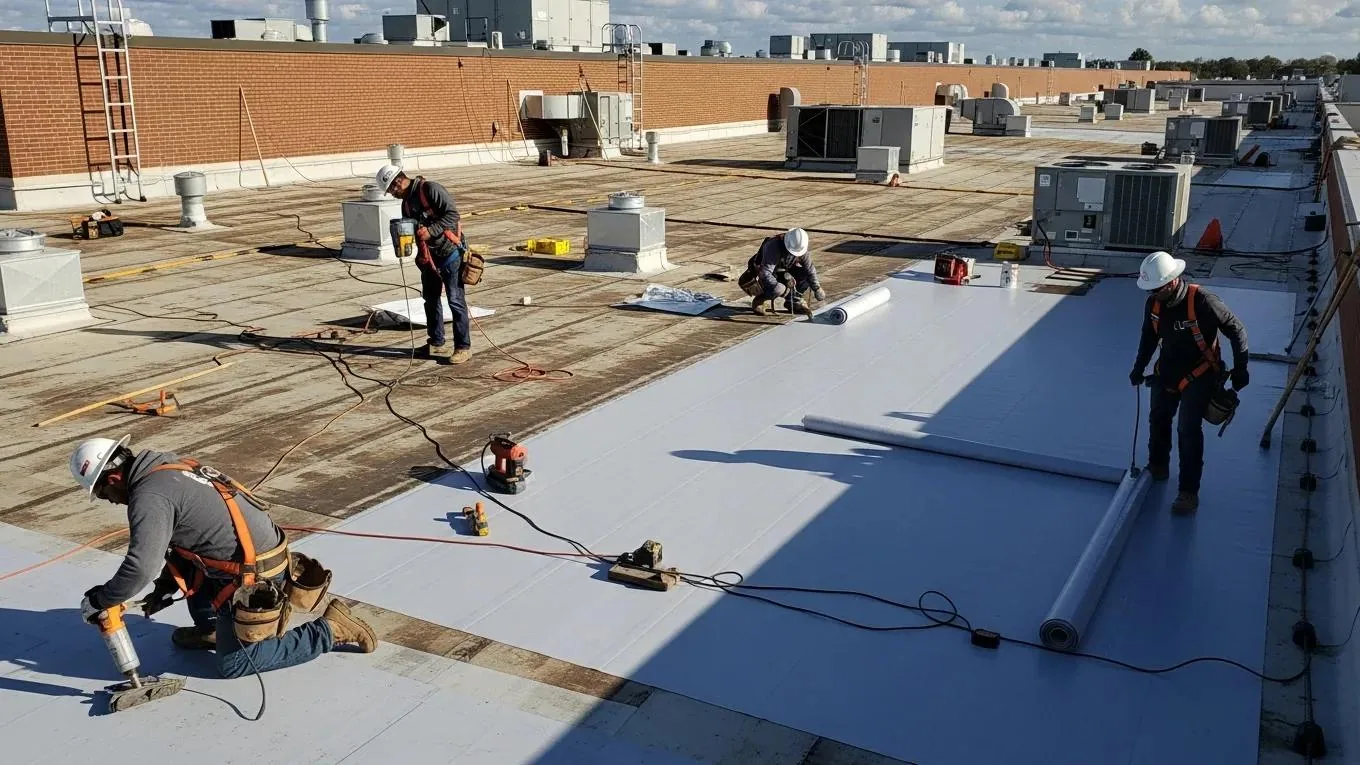
Why does ponding shorten the life of a flat roof?
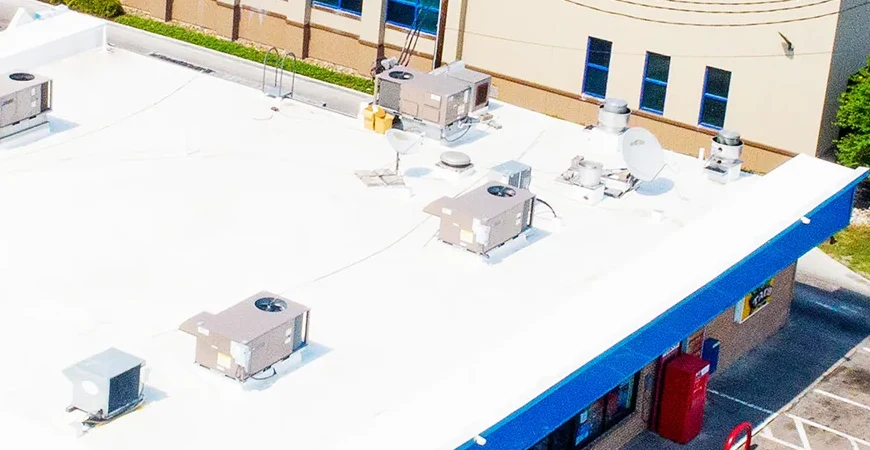
A roof is designed to move water to a drain, and most of the time it does. Over years, though, decks deflect, insulation compresses under foot traffic and equipment, and drains fill with debris, so low areas form that were not on the drawings. Standing water raises the load on the structure, and a gallon of water weighs more than eight pounds, which adds up quickly across a shallow dip of any size.
The membrane suffers as well. Water holds heat against it in summer and freezes against it in winter, so the surface swings across a wider range than neighboring dry areas. Seams that sit under a pond are the ones that open first. A ponding water repair may mean re-sloping with tapered insulation, adding a drain, or clearing a blocked outlet, and the right choice depends on whether the deck itself has moved.
Find where the water stays before the next freeze does
Call Commercial Roofing Johnson City to arrange a walk of your Greeneville roof. You will receive photographs, drainage and moisture findings and a ranked scope to weigh against your capital timing, and emergency calls are answered at any hour.
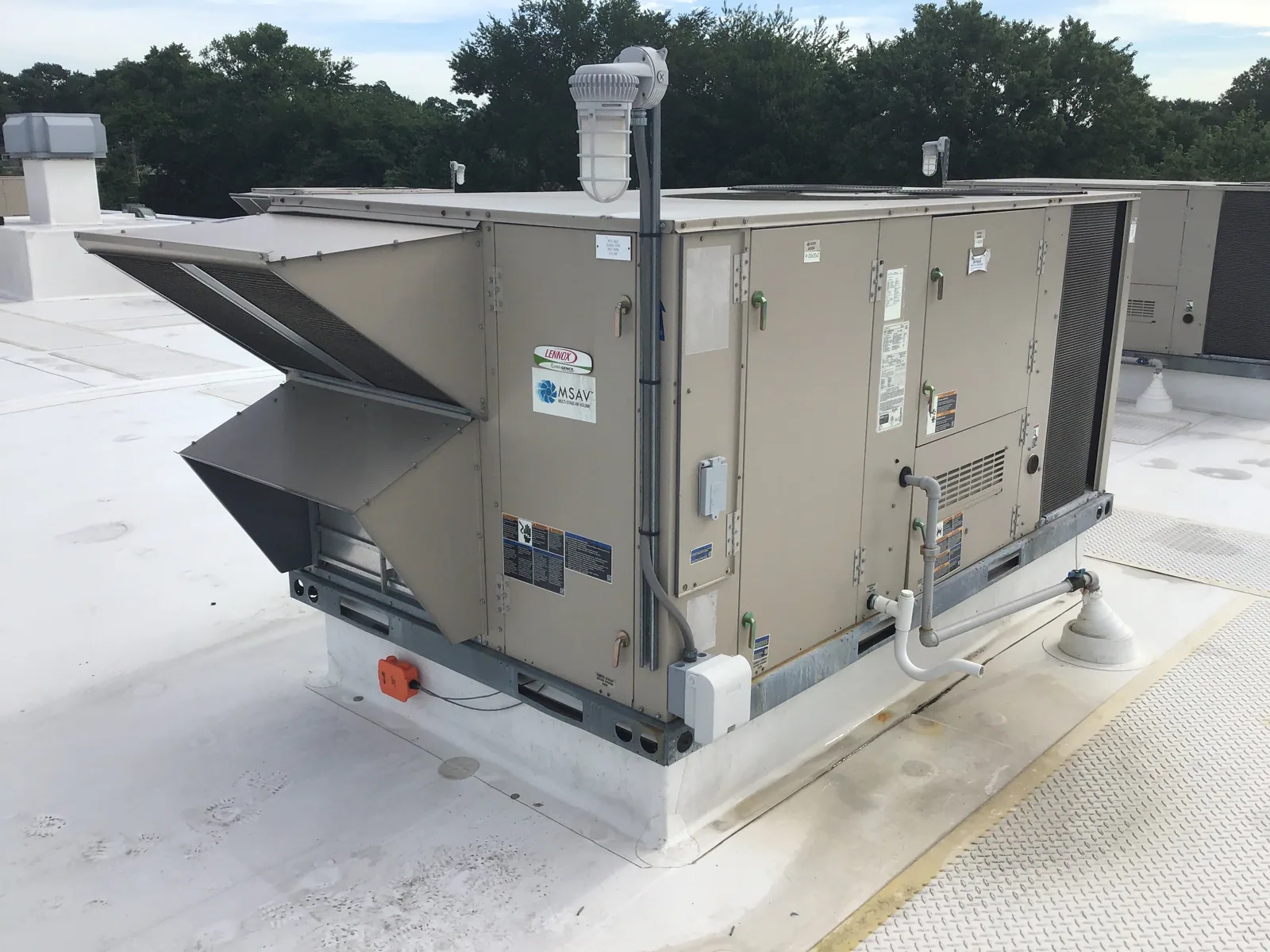
What does a roof in Greeneville carry through a Tri-Cities winter?
Greeneville is served by US 11E and US 321 through downtown and has I-81 nearby. For a Greeneville roof the Tri-Cities record reads like this: Johnson City lows near 25F in winter, about 15.6 inches of snow and some 45 inches of precipitation a year, and measurable snow at Tri-Cities Regional Airport on ten Christmas days since 1937. That is a real freeze-thaw season.
The mix of buildings matters as much as the weather. Greeneville's major employers include Laughlin Memorial Hospital, American Greetings and Parker-Hannifin, with Walmart as its large retail employer, a Walters State Community College campus in town, and commercial buildings along both highways. Each has a different tolerance for leaks and for interruption, which changes the order in which roofs should be inspected, repaired and replaced.
Which roof decisions suit a hospital, a campus and a plant?
The roof type matters less than what happens beneath it. A hospital roof has the least tolerance for water, noise and dust, so the plan favors sections small enough to close in a day and moisture checks before anything is cut. A campus building such as the Walters State site in Greeneville is better served by work timed to breaks in the academic calendar, as with other college and university roofs.
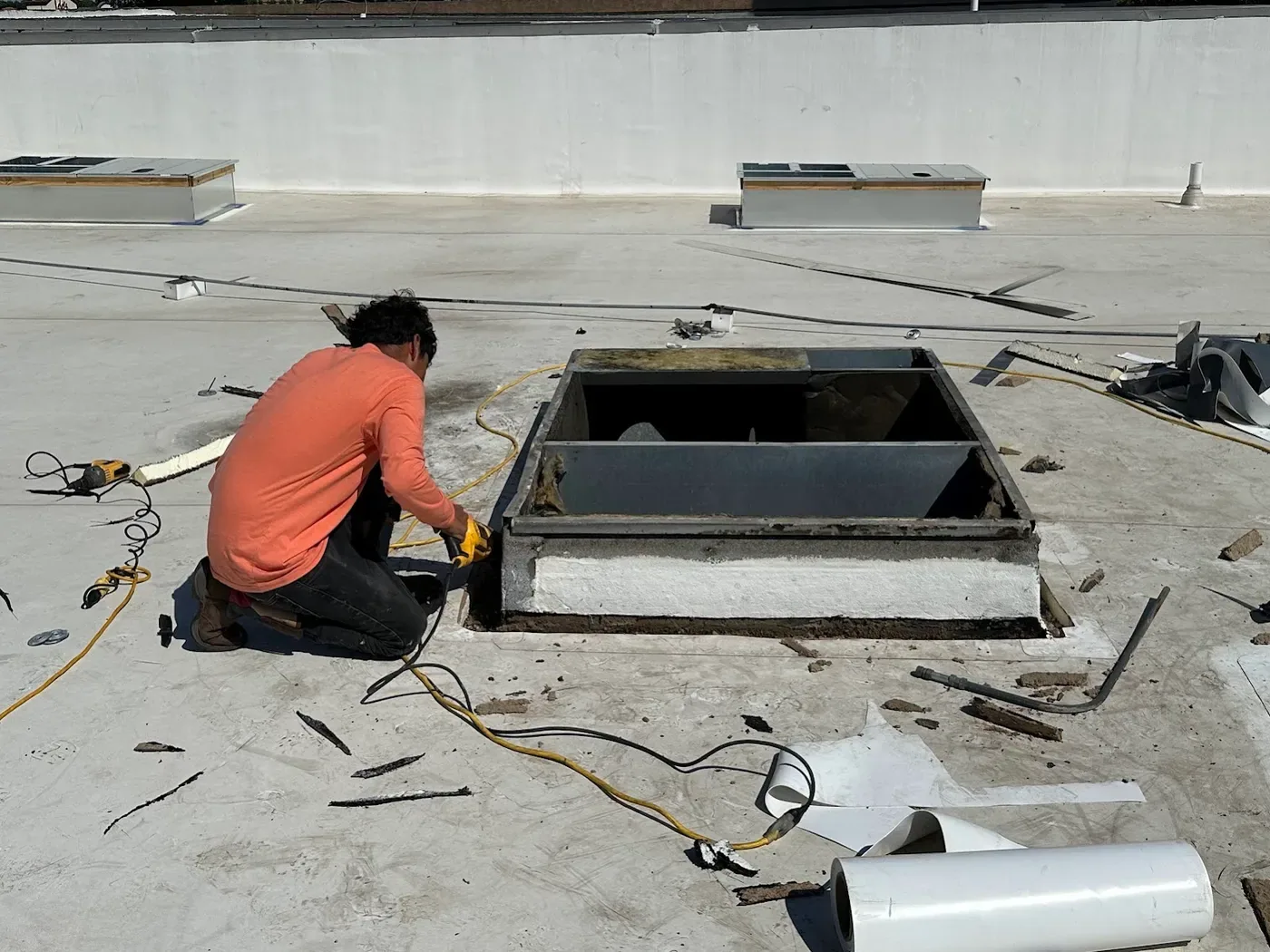
A manufacturing plant with process heat needs the assembly checked for condensation and for the stress of equipment curbs. When the membrane is aging but the insulation is dry, roof coating and restoration can extend service life at a fraction of the cost of a tear-off, provided the substrate is sound and the seams are sealed first.
How does a first walk of a Greeneville roof begin?
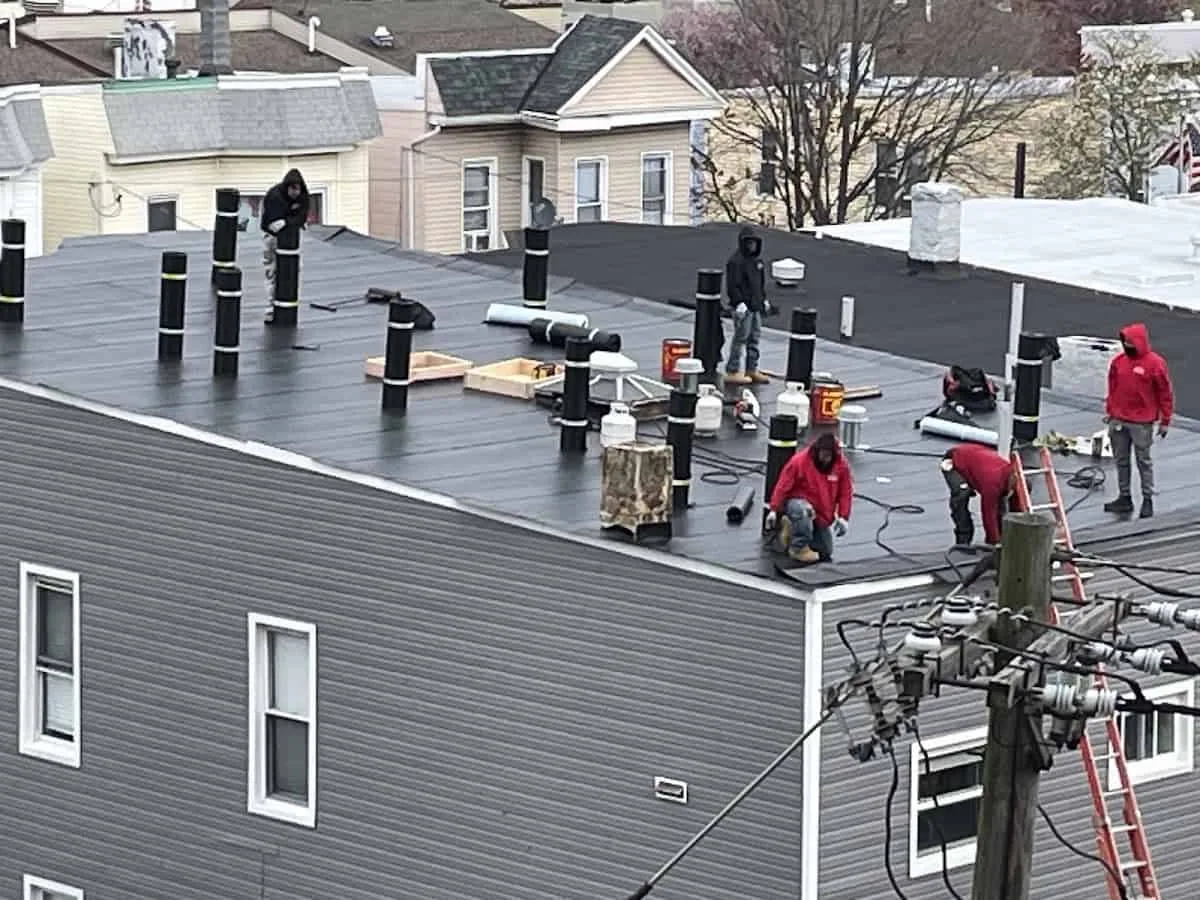
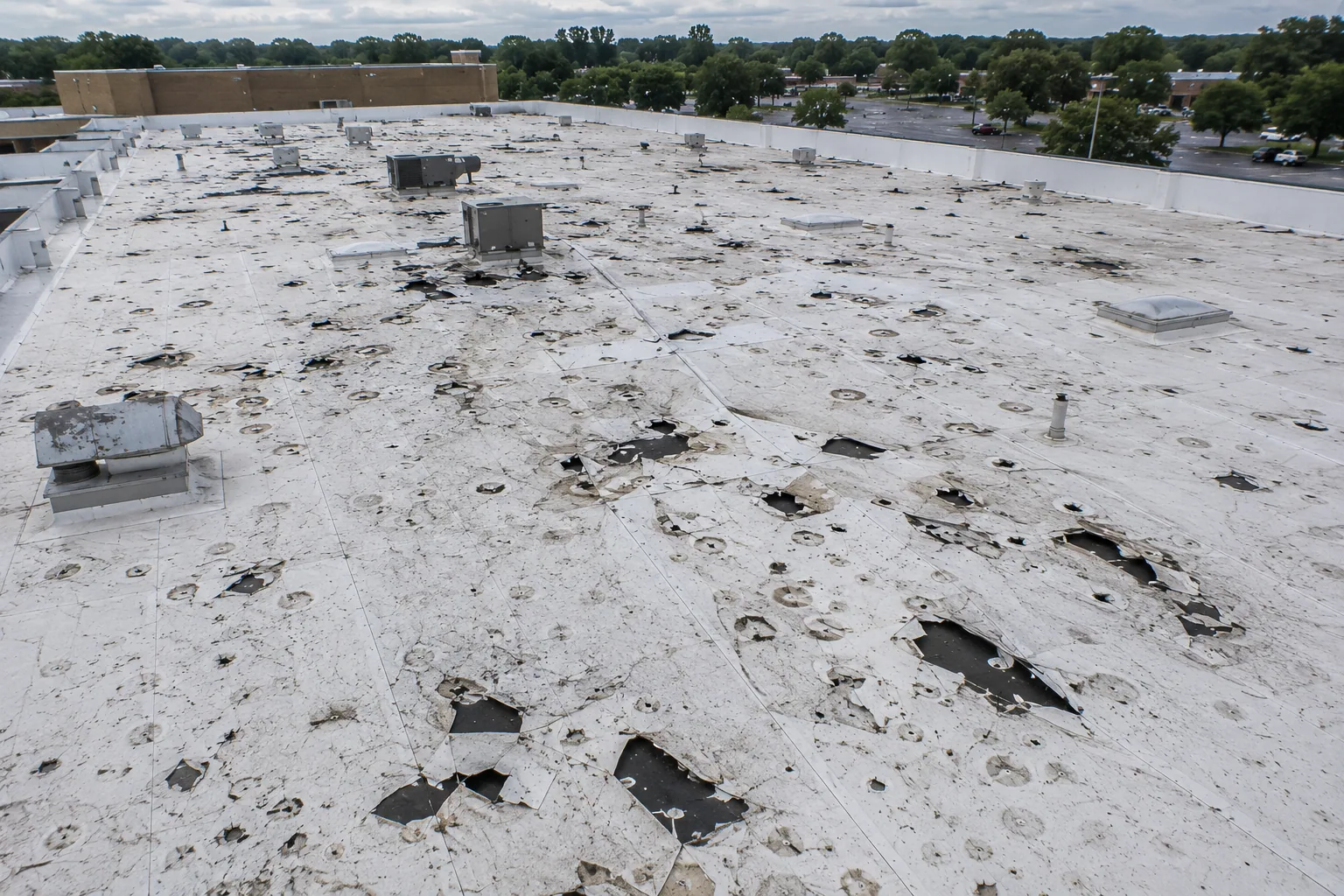
At the drains, because they tell the story of everything else. We check that each outlet is clear and sits at the low point, then look for rings of dirt or staining that show where water lingers. From there we follow the perimeter, inspecting coping, edge metal and terminations, and then cross the field looking for blisters, open seams, splits and soft spots underfoot.
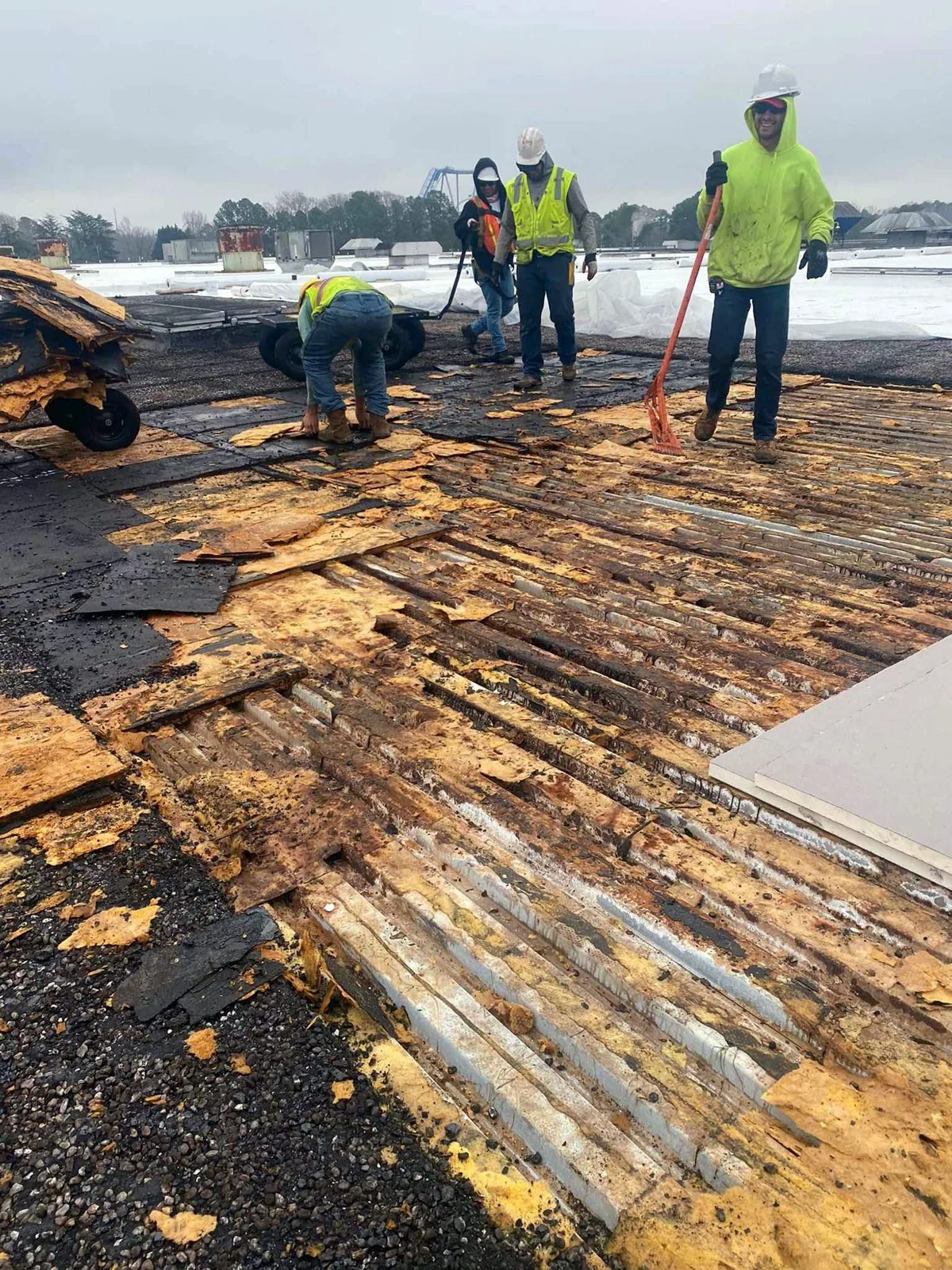
Soft spots usually mean wet insulation, so we mark them and recommend a moisture reading before any estimate is built. A written commercial roof inspection report lists each finding with a photograph and a location, so a property manager can see which items are routine maintenance and which belong in a capital request. For multiple buildings the same report format lets owners compare roofs side by side and sort them by urgency, which is how a hospital roof, a plant roof and a school or campus roof end up in a sensible order instead of competing for the same budget line.
When is the right season for a replacement near Greeneville?
Late spring through early fall gives adhesives and sealants the temperatures they need, so most replacement planning aims at that window. Starting design in winter keeps the schedule honest, because material lead times, permits and building access all need weeks, and a roof bid in August will often wait until the following spring for good weather.
For buildings that cannot stop operating, occupied building reroofing proceeds in sections, with the interior protected and noisy tasks timed to quiet hours. Tusculum, a suburb of Greeneville on the same two highways and home to Tusculum University, faces the same freeze-thaw season and the same planning questions.
A multi-address owner can use one inspection format while keeping each roof’s weather exposure and repair list separate; apply it at Mosheim as well.
A commercial roof record should make the next decision easier even if the original inspector is unavailable. Include a short condition summary, a marked plan, photos tied to roof zones and a ranked list of repairs. Separate work that protects the building now from improvements that can be budgeted later. This gives an owner in Greeneville a practical way to compare bids and phase capital without losing the reason each item was recommended.
Commercial Roofing Questions
How long can water sit on a roof before the membrane is at risk?
Forty-eight hours after rain is a common benchmark for standing water, and a roof that holds water longer than that has a drainage or slope problem worth fixing. The longer it stands, the more it stresses the seams, grows algae and adds weight to the deck. Freezing weather raises the stakes because ice presses on the seams as it forms.
Does a hospital roof need a different kind of repair than a shopping center?
The materials are often the same, but the process is not. In a hospital we protect air intakes, keep dust and fumes away from patient areas, and verify that every opening is dried in before staff arrive. A retail roof can usually tolerate wider work zones, so the crew can cover more area in a day.
What is the cheapest point at which a failing roof can be saved?
Before the insulation is wet. At that stage a repair or a coating addresses seams and flashings and the existing assembly stays in service. Once insulation has absorbed water, the wet material has to be cut out and replaced, which turns a maintenance cost into a capital cost.
Which parts of a manufacturing roof wear out first?
Penetrations and curbs, long before the membrane field. Exhaust fans, vents and rooftop units vibrate, expand and contract, so the flashing around them opens up. Checking those details on every visit is the quickest way to find the next leak before it reaches the production floor.
How should an owner budget for several roofs across Greene County?
Rank them by moisture condition first and by remaining service life second. The ones with saturated insulation go to the front of the line, while roofs with minor flashing issues join a maintenance cycle. Spreading replacements across several budget years keeps the cost level and avoids an emergency purchase.
Related Roofing Pages
Ponding Water Roof Repair
How the work is scoped, phased and documented on Tri-Cities roofs.
Hospital Roofing
What we check, what we recommend and how the crew keeps the building running.
College and University Roofing
Conditions, options and next steps for commercial buildings in East Tennessee.