
Rooftop Equipment Curbs and Supports in Johnson City, TN
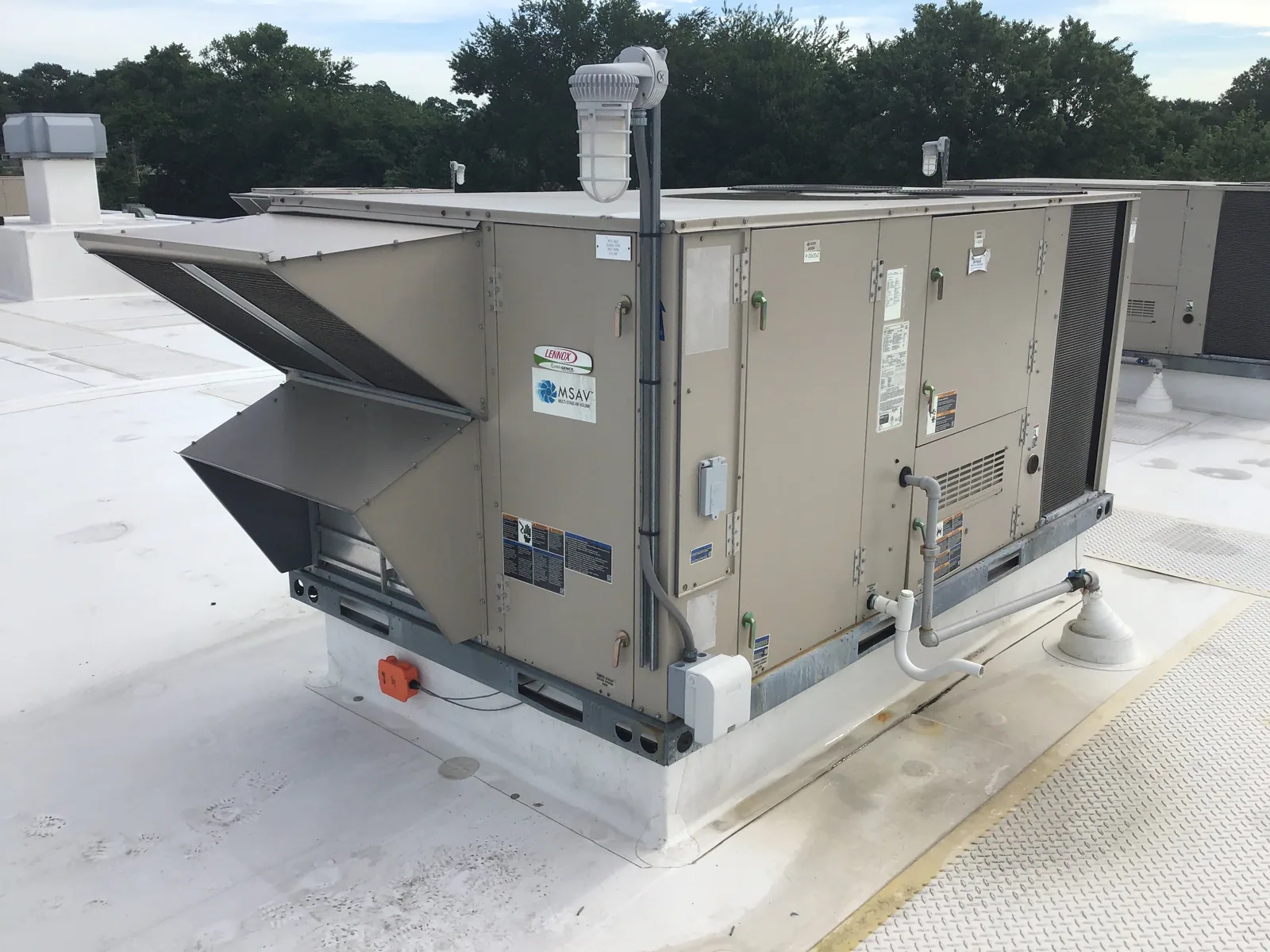
A rooftop unit presses on the roof and keeps talking to it through vibration at the frame, condensate that drips onto the membrane, and a metal curb flange that grows in July and shrinks in January faster than the roofing wrapped around it. Every one of those motions lands on the same few inches of flashing, and in Johnson City, TN that flashing has to survive winter lows that average about 25F and the thaw that follows each cold snap. The field of the roof can be sound while one curb corner has opened and is feeding water into the insulation beneath it. Because curbs, dunnage rails and pipe supports are the most numerous penetrations on a commercial roof, they are where service life is usually won or lost, and where an owner who plans the work spends less than one who answers a stained ceiling tile.
Why does a curb leak when the rest of the membrane is still sound?
A curb is a small box with a membrane climbing all four sides, and each corner is a place where flat sheet has to fold into a vertical plane. Those corners are made from field-cut patches or pre-molded boots, and they carry every cycle the equipment imposes: compressor vibration, expansion of the metal as the afternoon sun strikes it, and foot traffic around the unit. The sealant at the top of the counterflashing dries and cracks, the base flashing shrinks and pulls away from the curb wall, and a gap a few thousandths of an inch wide is enough to admit meltwater.
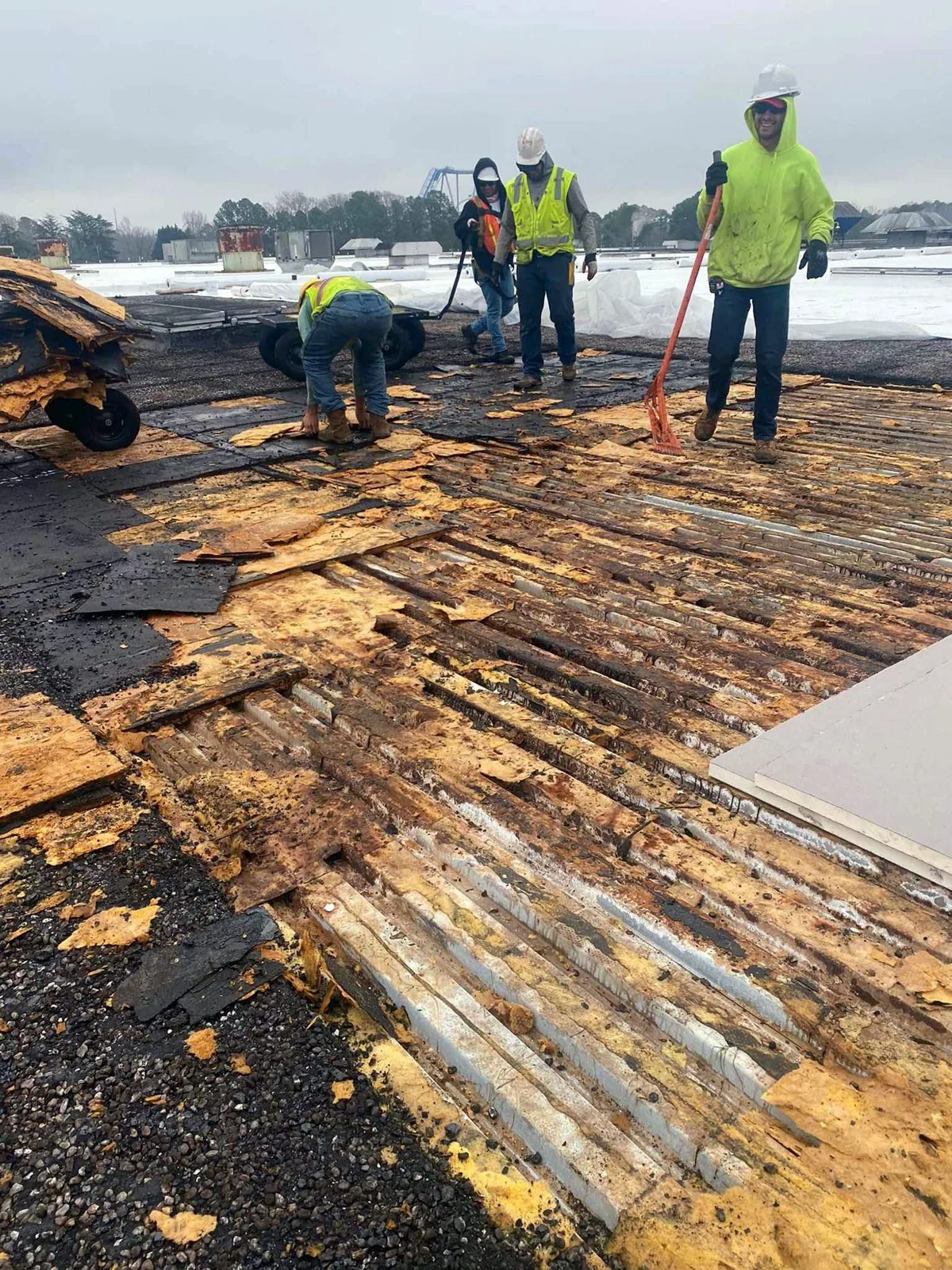
Once water is inside, freezing does the rest. Ice forms in the gap and widens it, and the thaw sends more water down the curb wall toward the low point under the unit, where no one can see it. By the time a stain appears on the ceiling, the assembly around the curb may have been wet through a full season, and a flashing repair has grown into a tear-out of insulation and perhaps a section of deck.
Look at the curbs before the next freeze does
Call Commercial Roofing Johnson City to have every curb, rail and pipe support walked and recorded. You will receive a written condition picture that shows which flashings can wait, which should be renewed with the next equipment change, and which are already letting water into the insulation.
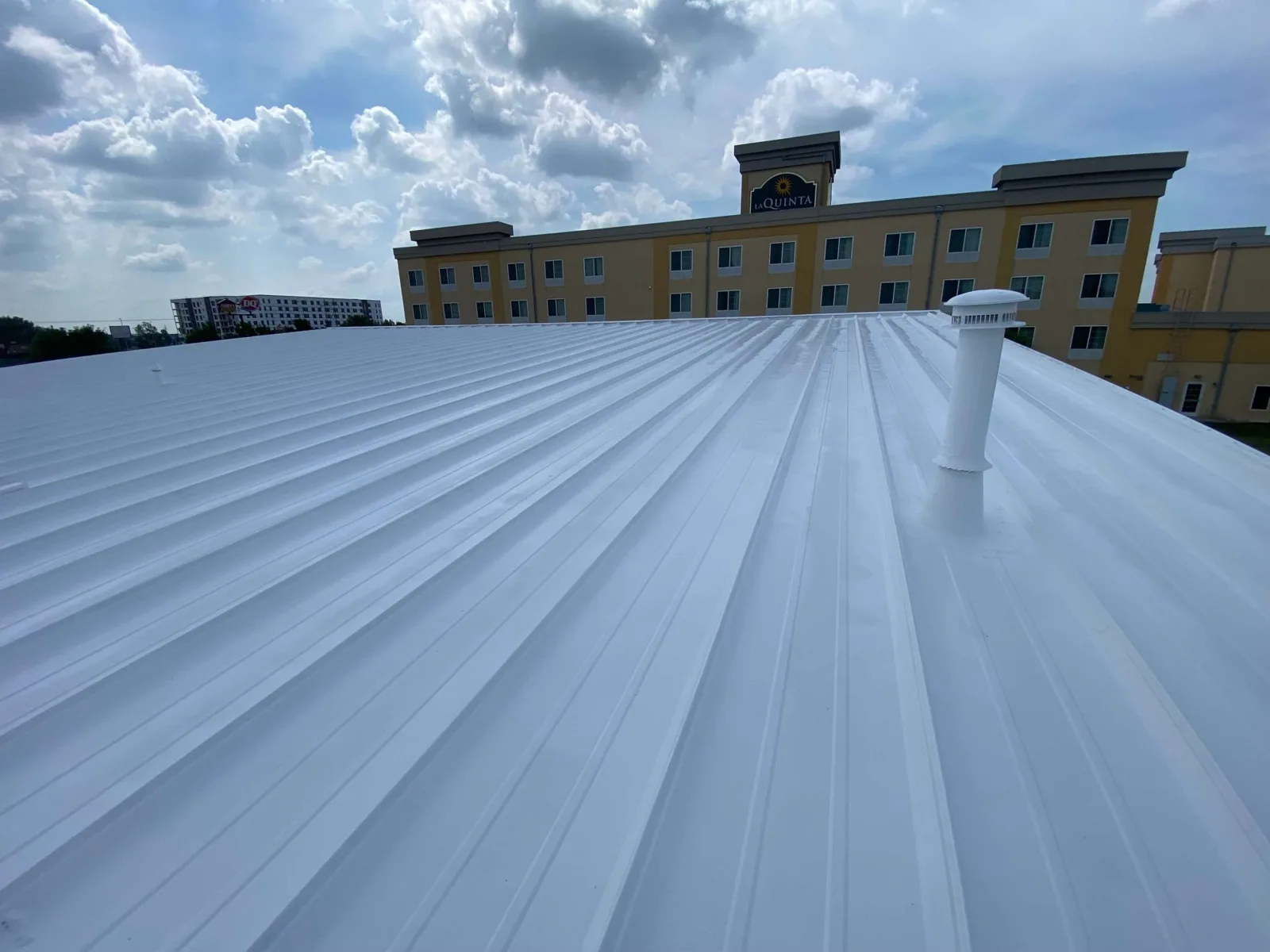
What do we check on an existing curb, rail or pipe support?
The first check in any commercial roof inspection is height. Base flashing should rise far enough above the roof surface to stay clear of ponding water and drifted snow, and many older curbs sit lower than a snow-load winter justifies, so meltwater reaches the top of the flashing before it reaches a drain. The walk then covers counterflashing and its fasteners, curb corners, the sealant around pipe boots, pitch pockets that have shrunk away from the pipe, and support legs that sit directly on the membrane instead of on pads. Condensate lines get followed to where they discharge, because a line that empties onto the surface rots a patch of membrane faster than weather does.
Curbs on wood nailers get probed for softness, and where the deck under a unit shows staining from inside we pair the walk with an infrared moisture survey and core samples, so the scope rests on readings.
Should the curb be reflashed, raised or replaced?
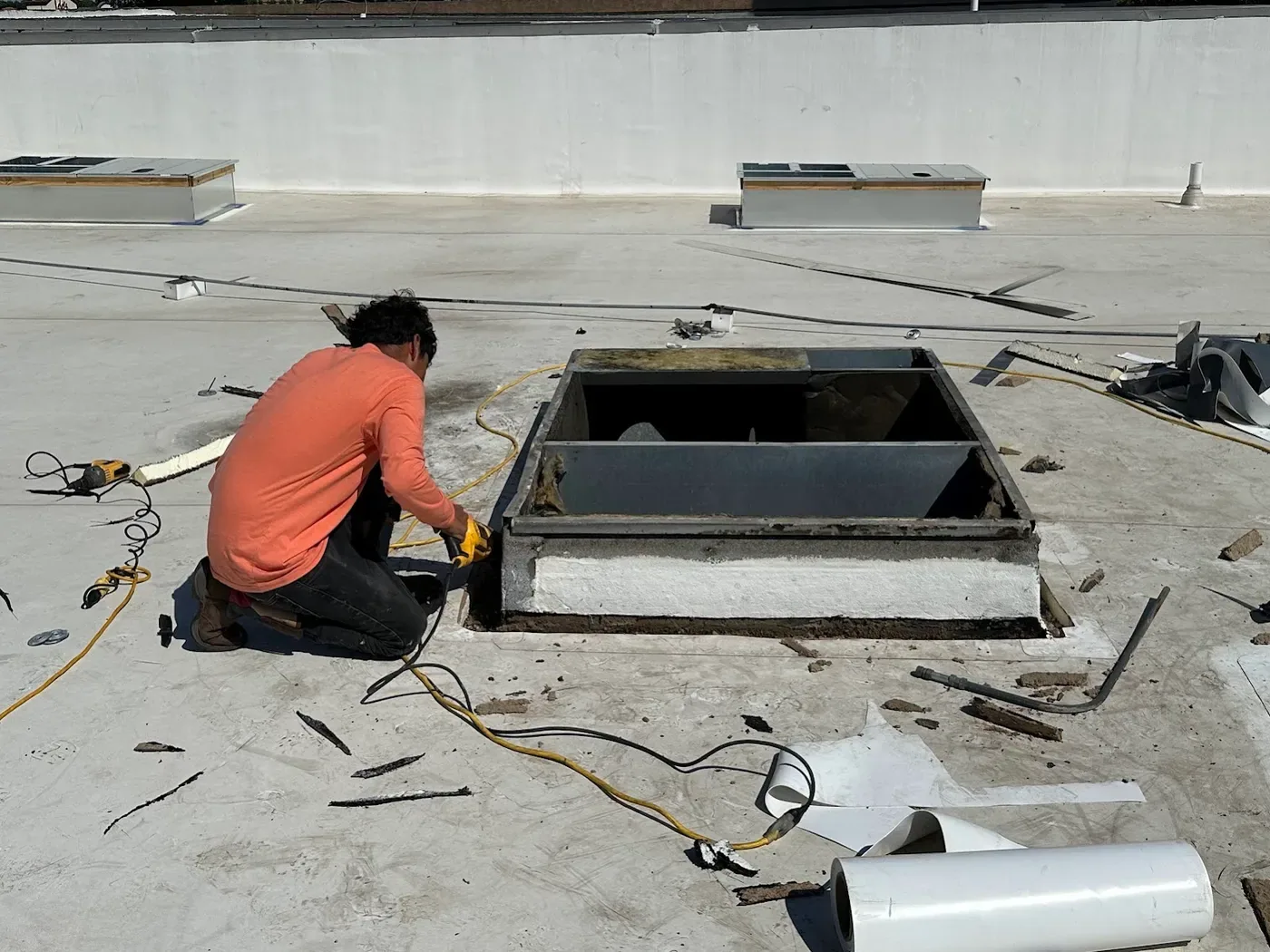
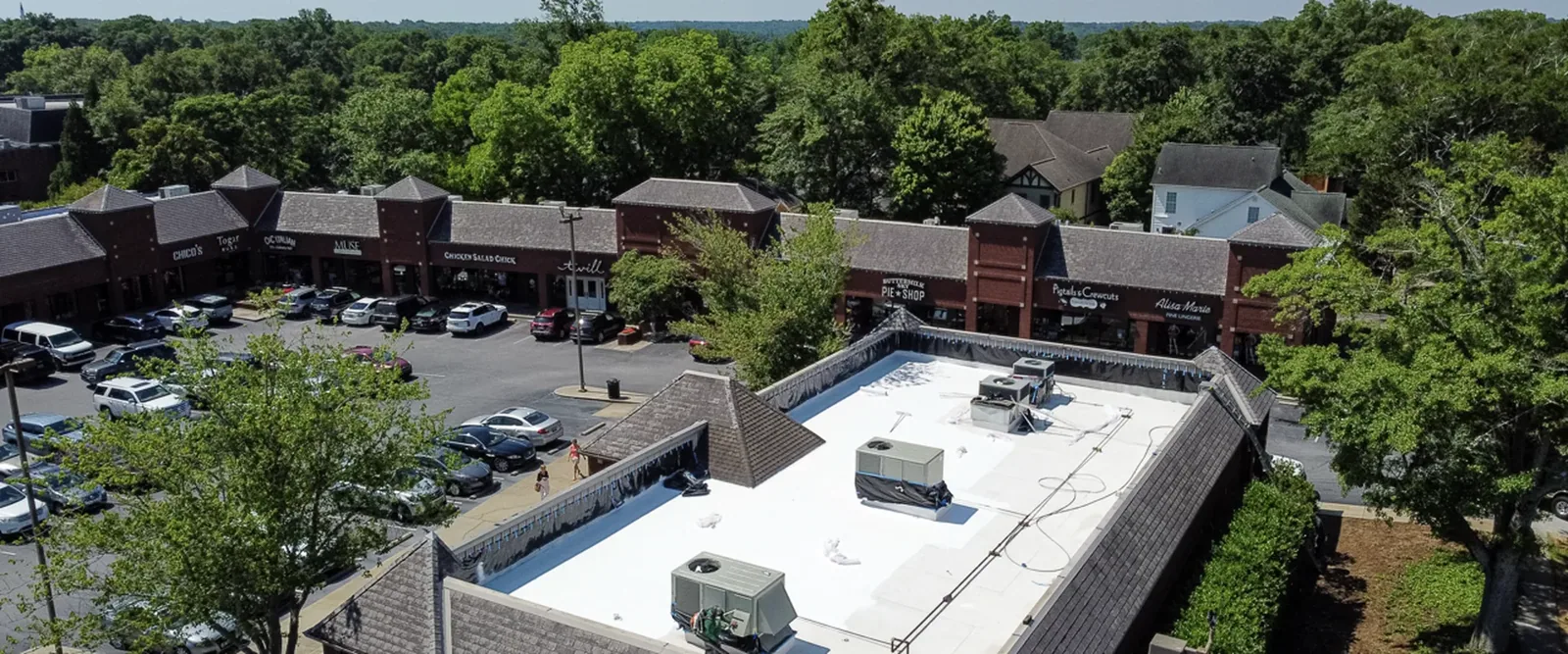
Reflashing is the right answer when the curb itself is sound and only its flashing has aged. We cut back to good material, set a new base flashing by the method the membrane calls for, and finish with counterflashing and a sealant that can move with the metal. Raising or replacing the curb is the better move when it sits too low, has rotted, or no longer matches the unit on top of it, which happens whenever a replacement unit arrives with a different footprint. A curb adapter can bridge the mismatch, but every adapter is one more joint to maintain.
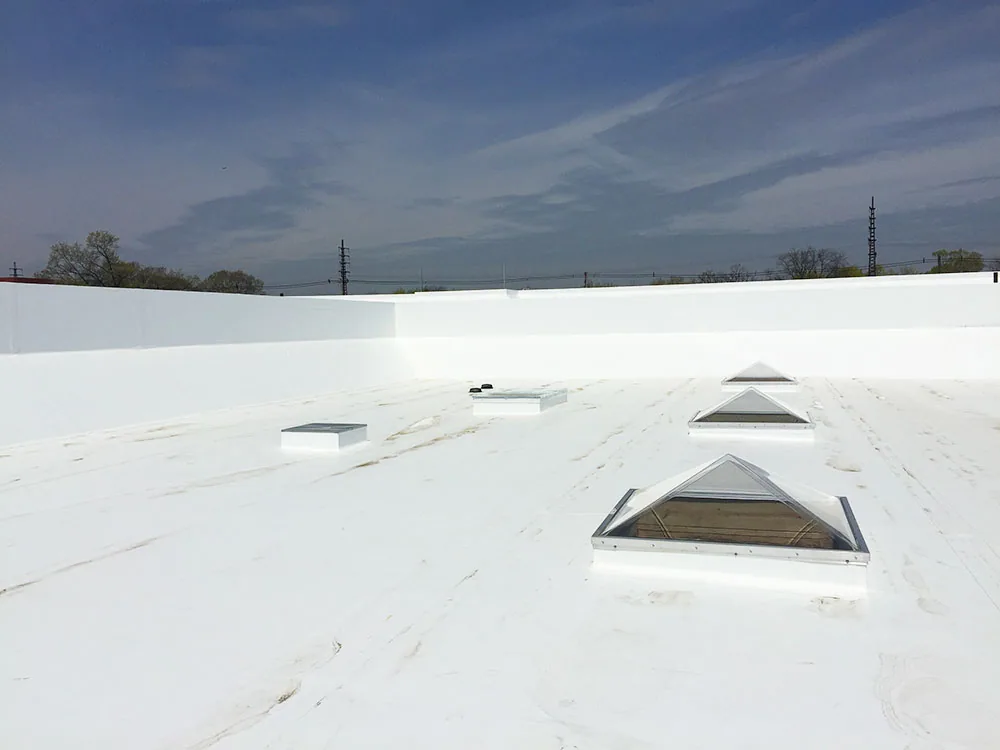
Pipe and conduit runs call for a different fix: take the point load off the membrane. A single raised rail with protective pads carries a gas line or conduit with fewer penetrations than a row of small supports. Where sealant pockets keep failing, a pre-formed boot or penetration flashing detail tied into the membrane lasts longer. Corners that have already let water in are a flashing failure repair, and several of them across one roof point toward a wider scope.
How is curb work scheduled around equipment that cannot go dark?
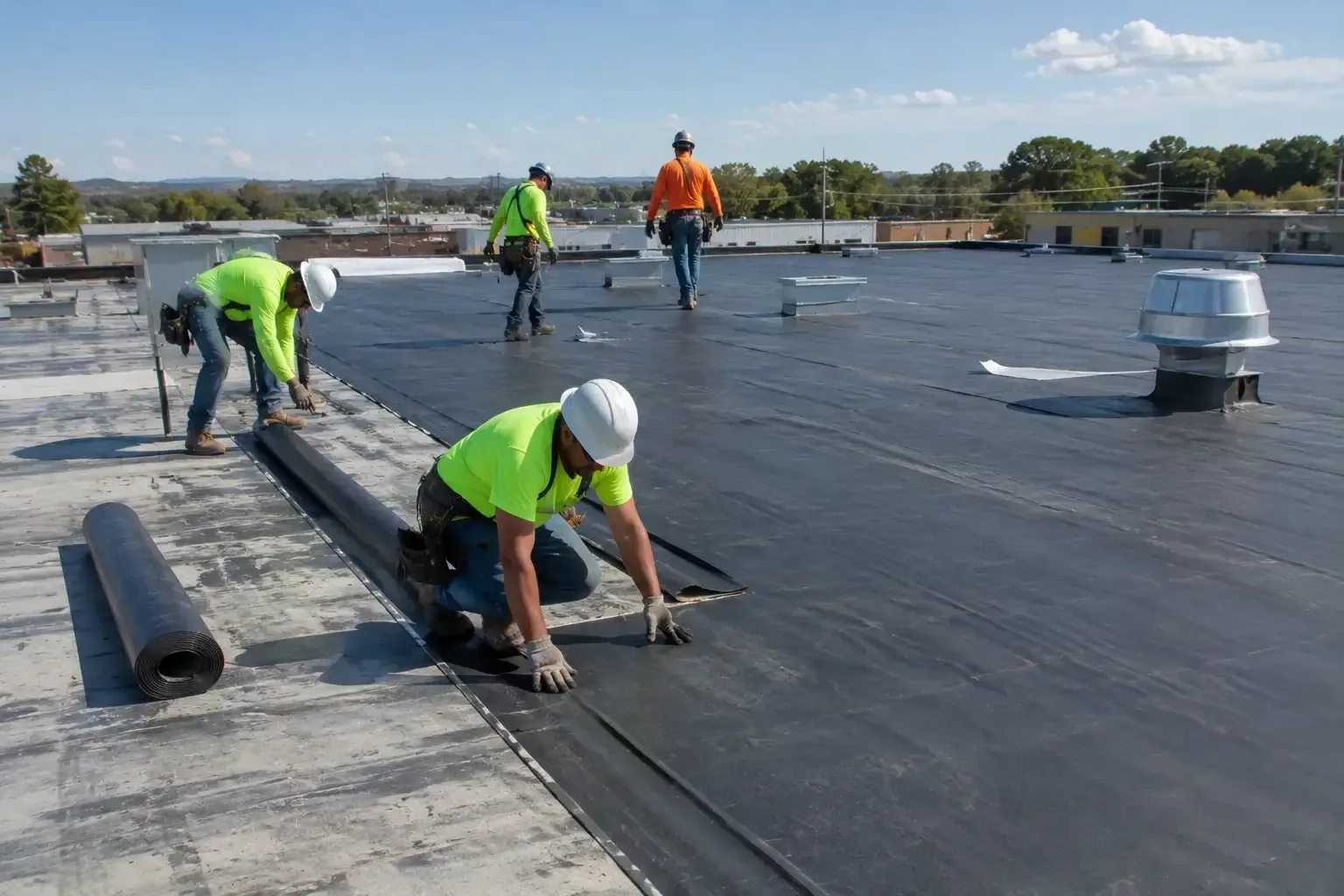
Equipment is the constraint, not the roofing. A Level I trauma center such as Johnson City Medical Center on State of Franklin Road leaves little room to shut air handling down, and a production floor anywhere may tolerate a shutdown only during a planned outage. The roofing sequence follows those windows: which units can be lifted, which bypassed, and which curbs reflashed with the unit in place. A crane day and a mechanical disconnect each carry their own cost, so roof work timed to the next scheduled equipment change can save a second disconnect.
Weather sets the other half of the schedule. Adhesives, primers and sealants need dry surfaces and temperatures inside the manufacturer's range, and a January curb rebuild may have to be staged as temporary protection now with the permanent flashing placed when the weather allows. On a tenant-heavy building the same coordination applies as on any occupied building reroofing job, and a standing preventive roof maintenance visit catches sealant failures before they need a crane.
What do Tri-Cities winters and Helene-scale rain ask of a curb?
Johnson City sees roughly 45 inches of precipitation a year, plus about 15.6 inches of snow, and the cycle of freezing nights and warm afternoons keeps working on every curb flashing in the valley. Helene's September 2024 flooding along the Nolichucky River is a measure of the rain a curb with a failing top edge can face, and it admits far more in rain of that scale than in an ordinary summer storm.
Code adds a second layer. Johnson City's adopted 2018 International Existing Building Code and Energy Conservation Code apply, so replacing a unit and its curb on a hospital roof along the Med-Tech corridor, where rooftop equipment brings many penetrations, can raise insulation and flashing questions that a like-for-like swap would not. The Washington County Industrial Park is home to ebm-papst, which makes fans for refrigeration, air conditioning and ventilation, and a unit change at any plant there is a moment to inspect that curb.

Commercial Roofing Questions
Why do leaks so often appear soon after a rooftop unit is replaced?
The new unit rarely lands on the old curb footprint exactly. Mismatched openings, shifted pipe penetrations and counterflashing cut for the previous box leave joints that were never part of the original waterproofing. A replaced unit should be treated as a roofing event: the curb is checked for height and rot, the base flashing is renewed while the unit is off, and the new connections are flashed before the equipment goes back.
Can a curb be raised without lifting the unit off the roof?
Sometimes, but only with the unit disconnected and supported, and the saving rarely lasts. A raised curb needs a continuous new flashing, and working around a live unit leaves corners that cannot be fully dressed. When a full lift is not possible we reflash what is reachable, record the corners we could not, and plan the proper rebuild for the next equipment outage.
Is it worth reflashing curbs while the field membrane still has years left?
Usually yes, because curbs are the first part of a roof to wear out and the cheapest to renew. Reflashing before water gets in protects the insulation, which is the expensive part of the assembly. If the survey shows wet insulation around a unit, the repair grows, and that wet area becomes useful condition data for the capital plan.
How do pipe supports stay watertight on a membrane roof?
Through pads and fewer penetrations. Supports that rest on a membrane directly wear through it, so we place walkway-grade pads or sleepers under each foot and use a raised rail where several lines run together. Each pipe that passes through the membrane gets a boot or a flashed pocket, not a pour of sealant that cracks as the pipe moves.
Who should look after condensate lines that drain onto the roof?
The building owner should assign it, and we flag it on every visit. Condensate dumped on a membrane leaves staining, algae and a brittle patch where the water lands. A short drain line to a scupper or splash pad costs little compared with replacing worn roof around a unit.
Related Roofing Pages
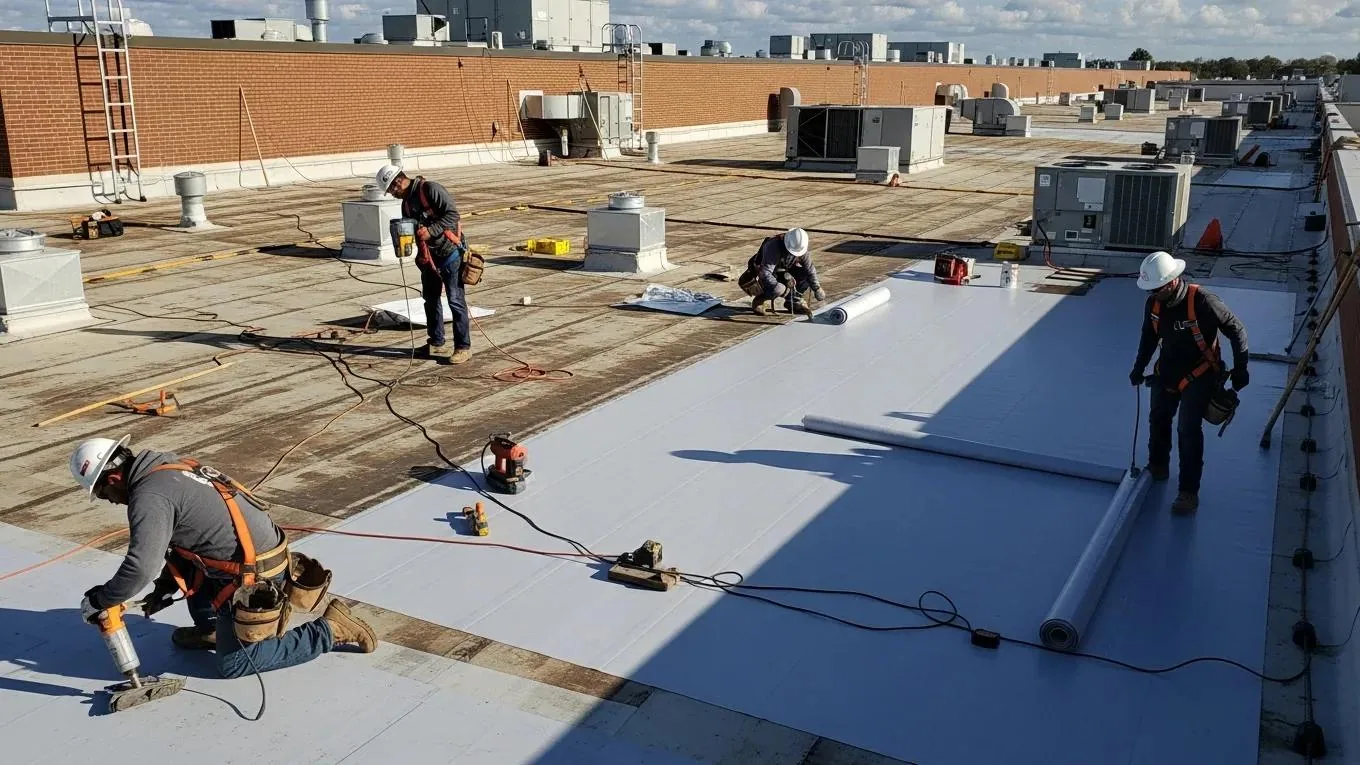
Commercial Roof Inspections
How the work is scoped, phased and documented on Tri-Cities roofs.
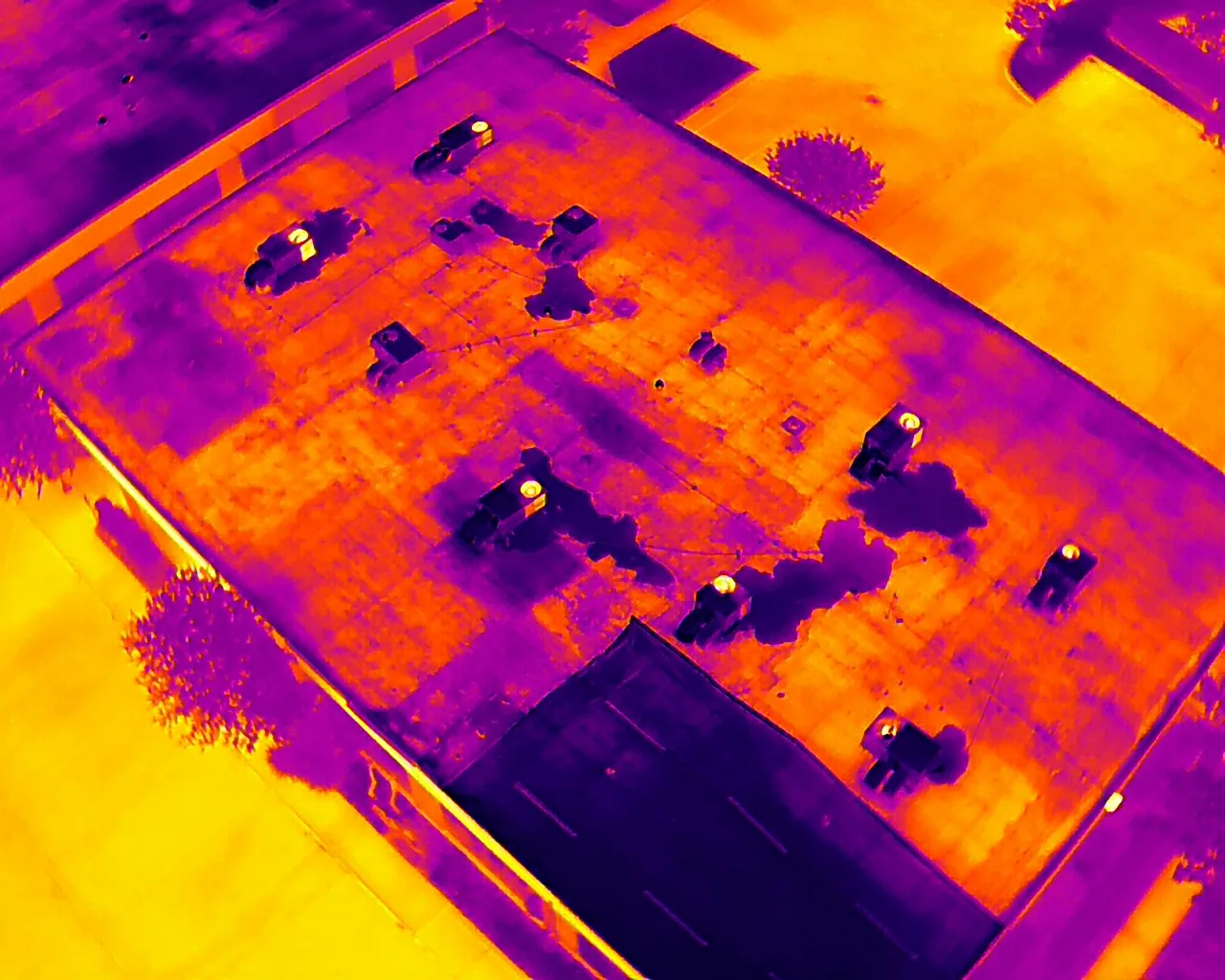
Infrared and Core-Cut Moisture Surveys
What we check, what we recommend and how the crew keeps the building running.
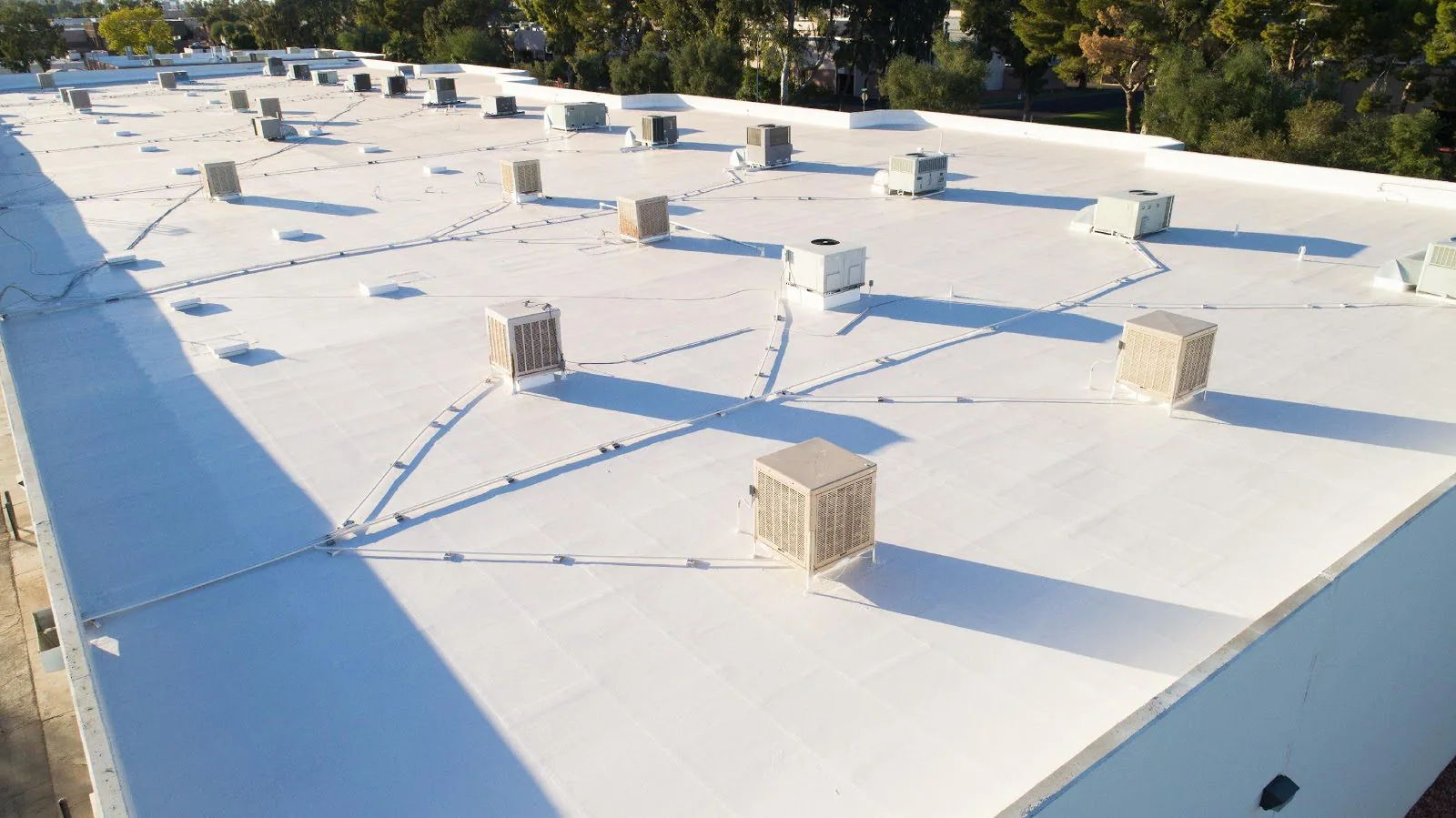
Skylight and Penetration Flashing
Conditions, options and next steps for commercial buildings in East Tennessee.