
Church and Worship Facility Roofing in Johnson City, TN
Snow that slides off the steep roof of a sanctuary lands on whatever sits below it, and on many church campuses that is a low-slope roof over a fellowship hall, a classroom wing or an entry vestibule. A thaw releases the snow in one piece, the weight arrives all at once, and the membrane takes both the load and the scrape of the ice at the step where the two roofs meet, which is already the most complicated flashing on the building. Repeat that through several winters in Johnson City, TN, where lows average about 25F and snow reaches about 15.6 inches in a year, and the termination at the wall loosens, the lower surface wears along the slide path, and water finds the gap. A congregation rarely sees any of this, because the first sign is a damp patch in a nursery or a coat closet, by which time the insulation over the low roof has probably been wet through a cold season and the cost of waiting has grown from a flashing repair into a capital campaign. We start with the data: where the water entered, how far it traveled and how many seasons the roof has left.
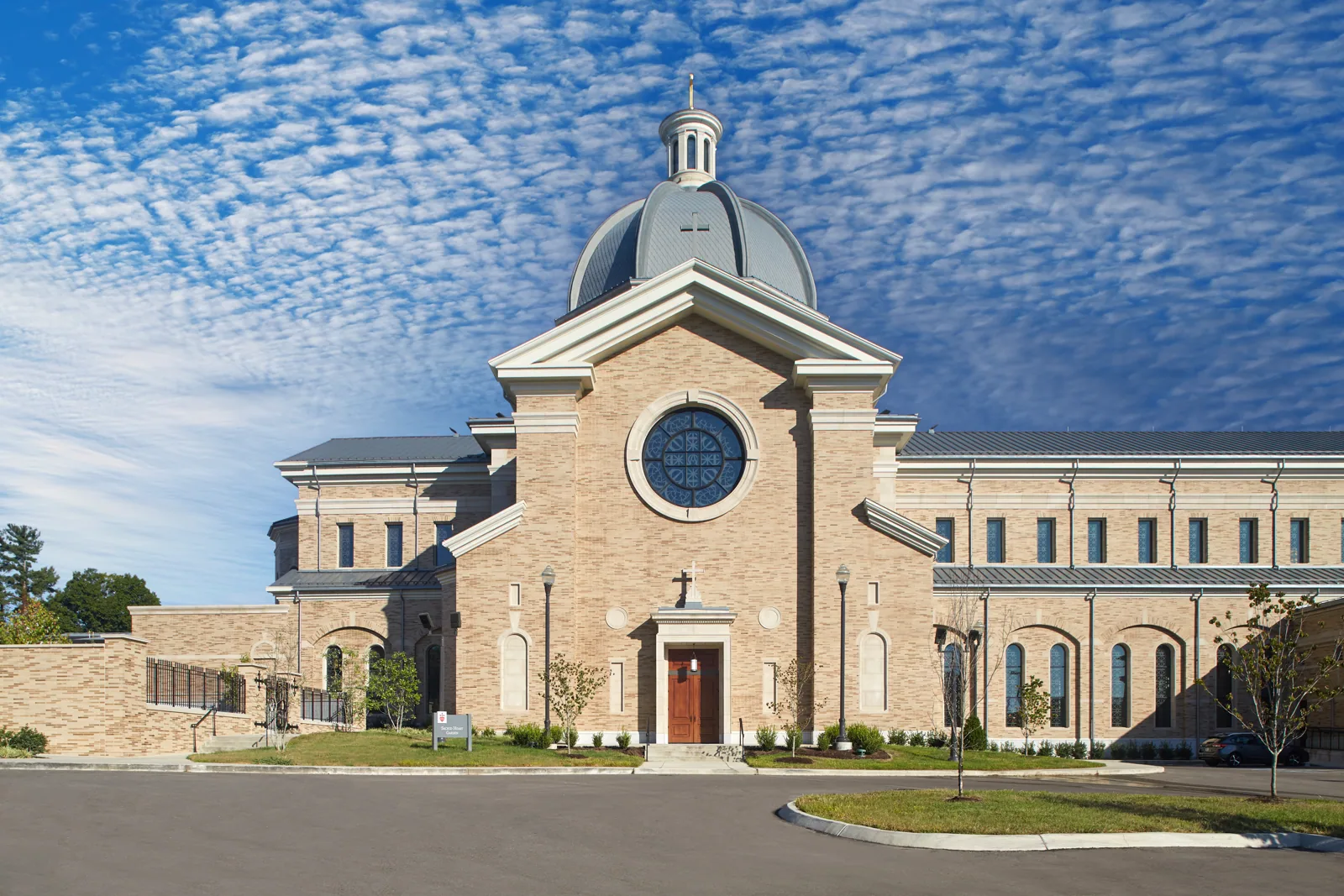
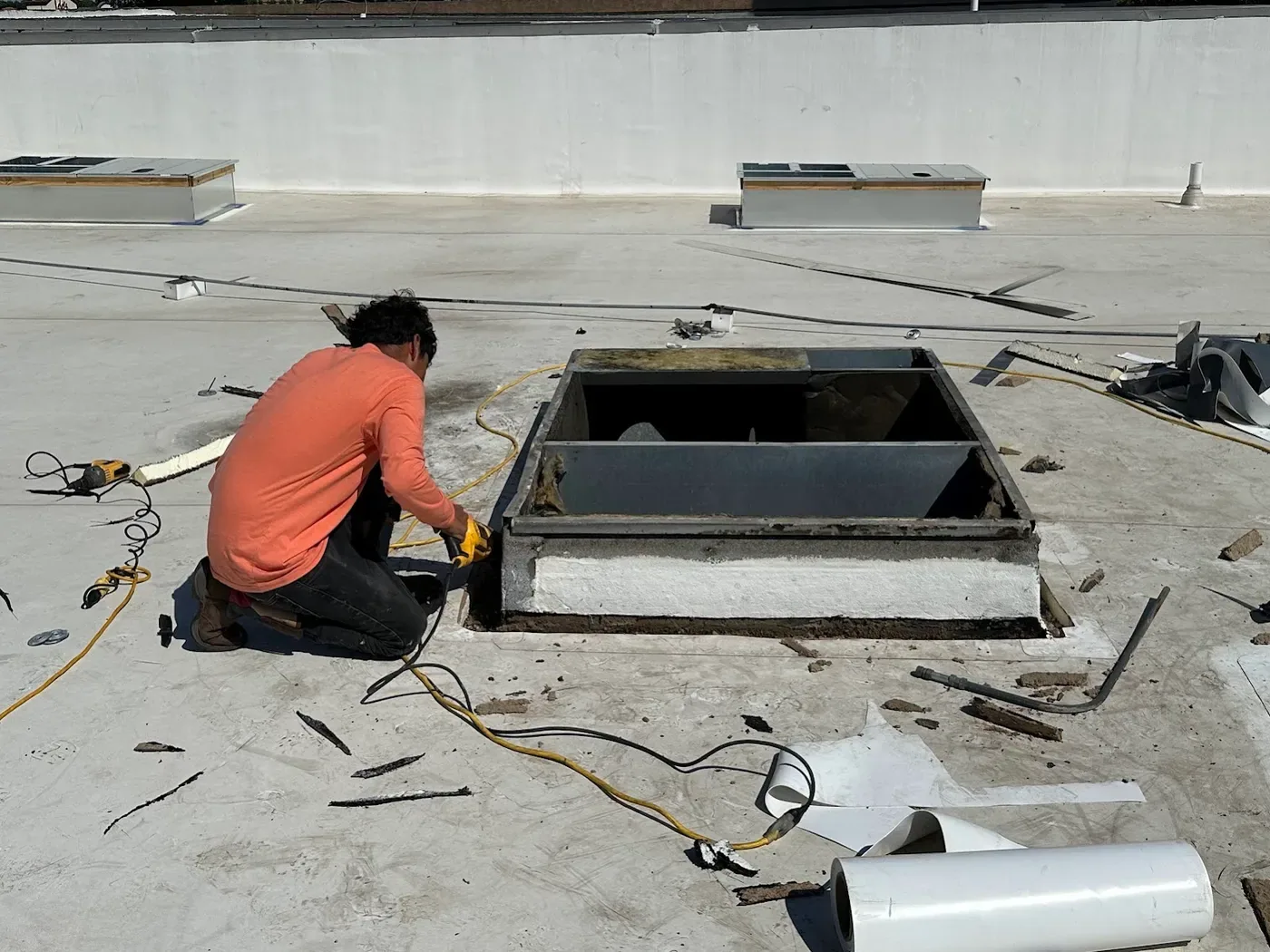
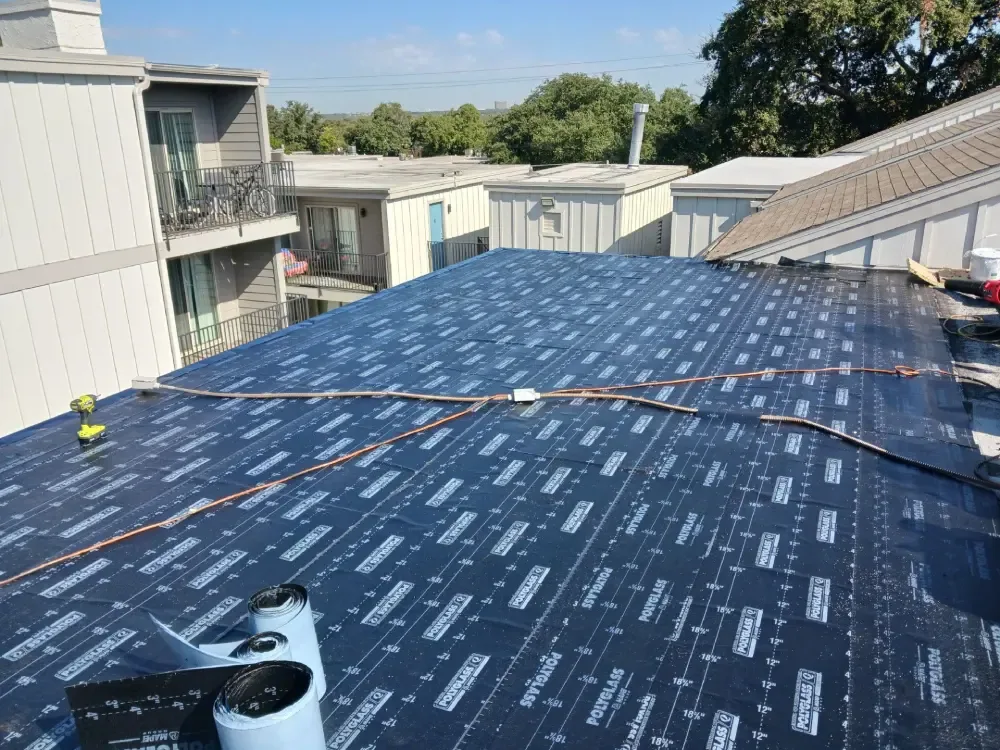
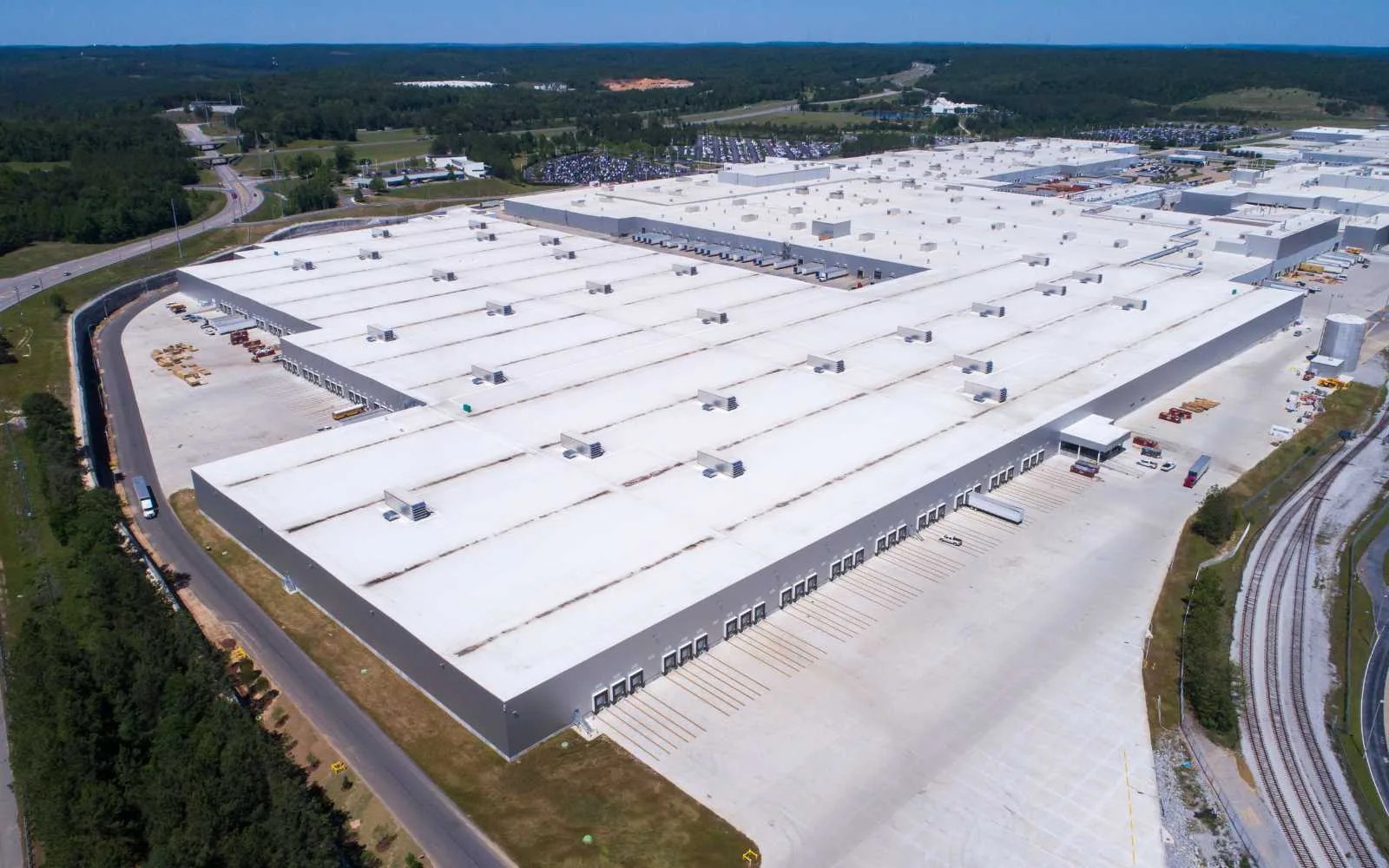
What goes wrong where a steep roof drops onto a flat one?
Three things happen at once. The upper roof sheds its snowmelt onto a small patch of the lower roof, concentrating water where the membrane was never meant to take a stream. A downspout or gutter that discharges onto the low roof keeps scouring the same spot until the surface thins. And the flashing at the wall, which must absorb the movement of two roofs that heat and cool at different rates, is the part most likely to split. Each is cheap to treat early: a splash pad under the discharge, a counterflashing that clears the membrane, and snow guards above a doorway.
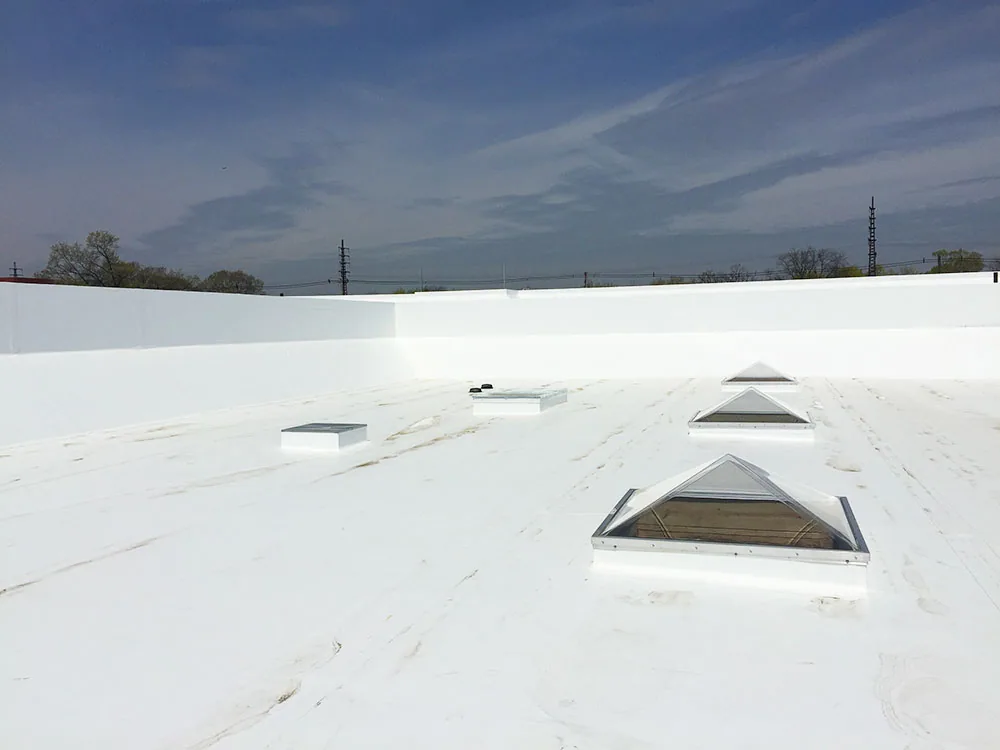
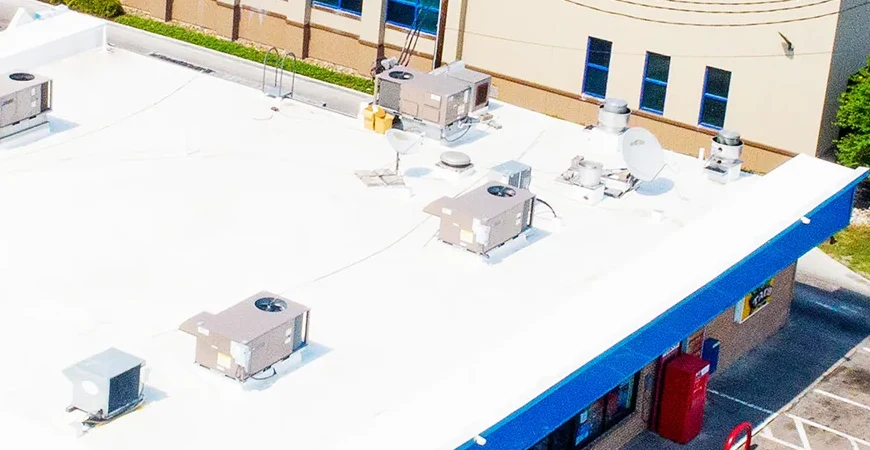
A church adds penetrations that other buildings lack. A bell tower or steeple base, a louvered vent high on a gable, a chimney, a skylight over a narthex, and the roof drains for a flat section hidden behind a parapet each have their own seal and their own failure pattern. Sealants on such details dry out long before the field wears out, so our checks of skylight and penetration flashing cover every one of them, not just the ones visible from the lot.
Give the building committee numbers it can vote on
Call Commercial Roofing Johnson City and we will walk every roof level, scan for wet insulation and write up what each option would involve, so your congregation can plan the work around its calendar and its budget.
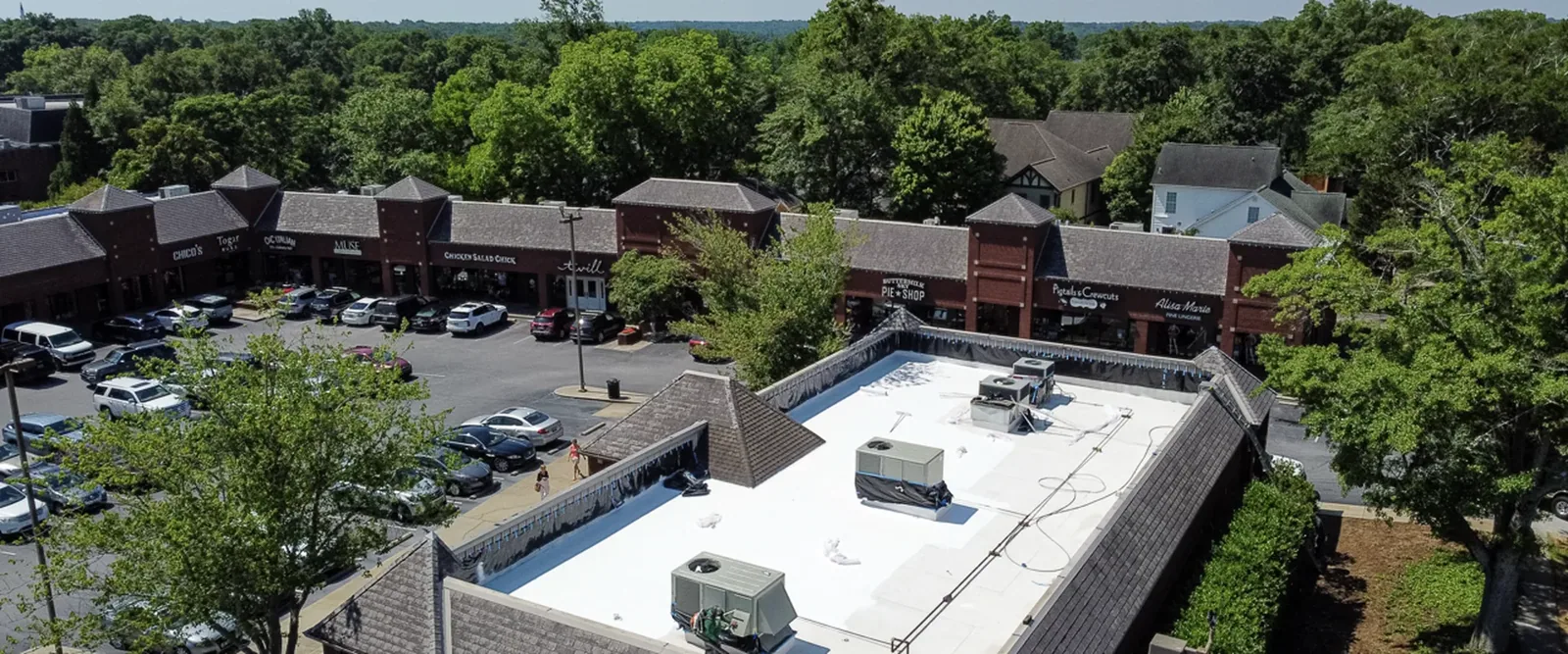
What does a building committee need in hand before it votes?
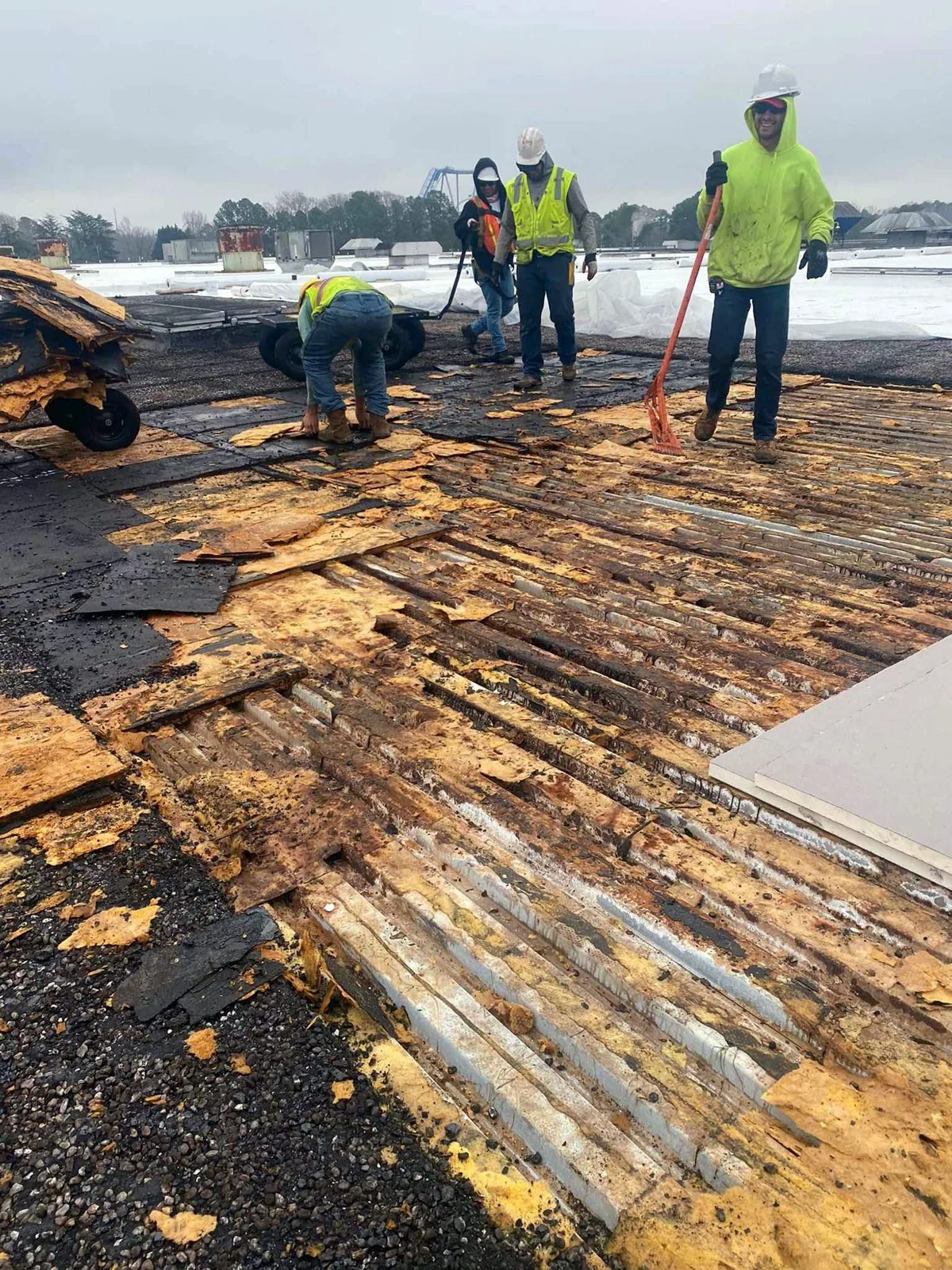
A vote needs more than a worry. A trustee board, an elders council or a finance committee asks three questions: how bad is it, how long can it wait, and what does each choice cost. We answer with a walk of every roof level, photographs of each defect, and a written condition report that ranks the work by urgency. Infrared scanning and core cuts show whether the insulation under the low roofs is still dry, which is the single fact that moves a project from repair to replacement.
The report separates sound areas from failing ones. That lets the congregation spend where the water is entering instead of replacing everything because one section leaks.
What does a deferred roof do to a fundraising calendar?
Congregations raise capital in seasons, often over a year or more, and a roof that fails mid-campaign forces an emergency spend that pushes other commitments aside. Water that reaches a sanctuary can reach plaster or wood finishes, pews, carpet and any piano or organ below, and the repairs inside often cost more than the roof repair that would have prevented them.
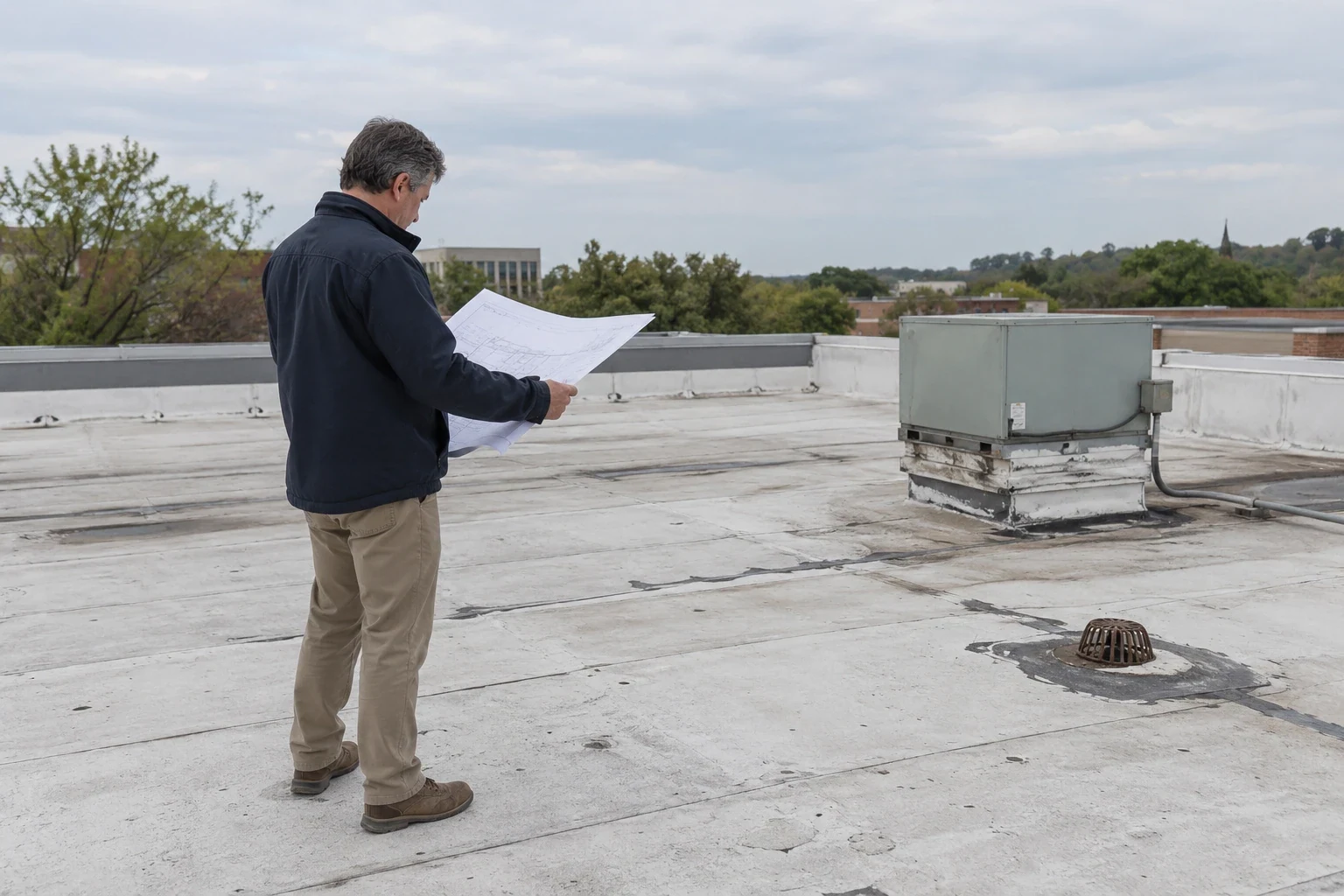
A roof capital plan turns that pressure into a calendar. Dry insulation and a few defects mean the congregation can repair now and budget for replacement in a named year. Wet insulation means the replacement window is nearer than the building committee expected, and it is better to know that before pledges are set than after.
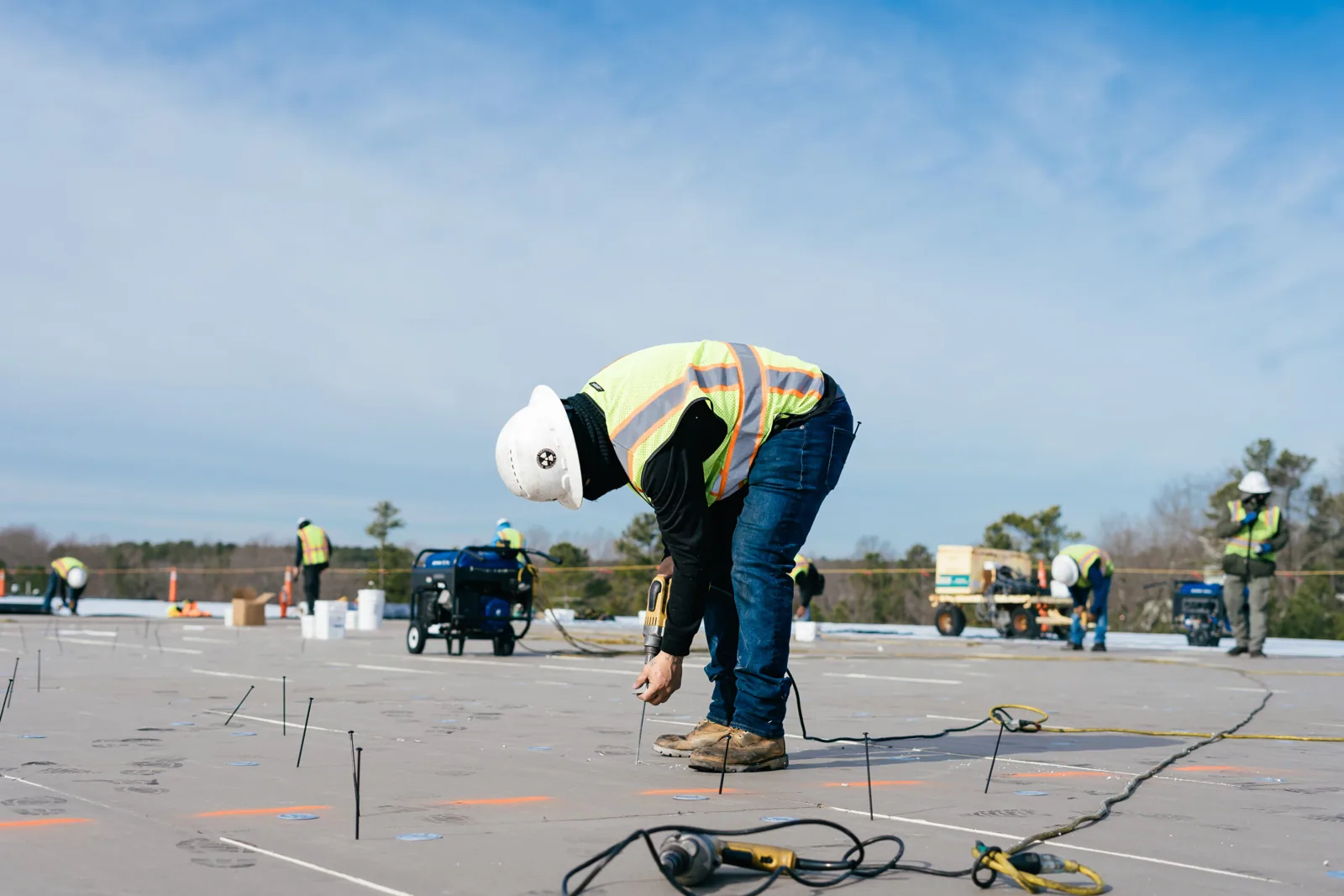
Can a congregation stage the work instead of replacing everything at once?
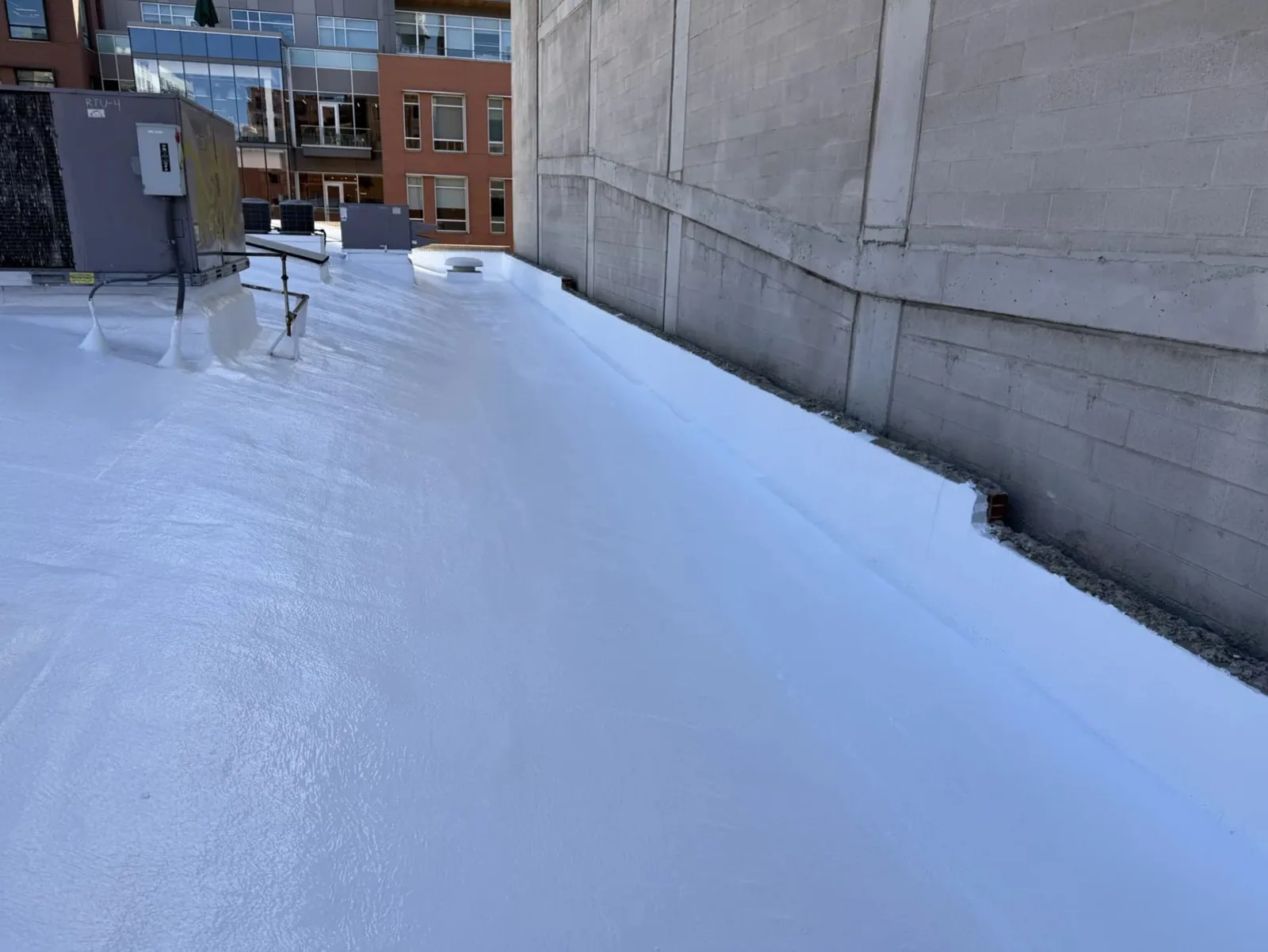
Often it can, and staging is how many churches carry a roof project without a single large appeal. The low-slope sections, where water is most likely to sit, can be replaced first with a membrane such as TPO, while a sound sanctuary roof waits for its own turn. If the steep roof is metal and its fasteners and seams are tired, a metal roof retrofit over the existing panels avoids a tear-off above a sanctuary and keeps debris and noise out of the building. A coating suits a membrane with dry insulation and years of service life still in it.
Corroded edge metal and gutters send water down the face of a wall, where it stains the masonry and soaks the foundation line. Fixing the edge while the roof is open costs far less than returning with a lift.
How is roofing scheduled around services, weddings and funerals?
The calendar belongs to the congregation, and we plan around it. Sunday mornings, midweek services and scheduled weddings are known in advance, so loud work such as removing old membrane is set for days the building is empty, and the roof is dried in before anyone arrives for the next gathering. Funerals are the exception that cannot be scheduled, so we agree on a signal with the church office that lets the crew stop, hold equipment and keep the lot clear on short notice.
Staging stays clear of the main entrance and the accessible path. Weather sets the rest. Late summer and early fall are the best months for a reroof in the Tri-Cities, before hard freezes make adhesives and welds harder to run. A congregation that approves its roof in the spring gives the project time to be bid, ordered and built in that window without forcing winter work.
Which Tri-Cities conditions reach a church roof in Johnson City?
A church standing in downtown Johnson City, where older masonry buildings line the historic commercial core, shares their wall-flashing and parapet drainage questions. Jonesborough, founded in 1779 and still the Washington County seat, draws visitors each October for the National Storytelling Festival, and a congregation in town does well to keep that month clear of crews and trucks. A congregation in Boones Creek, on the northern side of Washington County, meets the same seasons of freeze and thaw as one downtown, so its drain and flashing checks are the same.
A congregation that runs a weekday program carries the duties of a school, and one that rents rooms to a public office meets the questions a government building does. Altitude matters too. Roan Mountain, at about 2,550 feet, and the other mountain areas near Johnson City receive considerably more winter precipitation than the valley, and the September 2024 flooding from Hurricane Helene across Northeast Tennessee is reason enough for any congregation to have its drains checked.
Commercial Roofing Questions
Who signs off on a roof when a church has a board, a committee and a congregation?
Whoever holds the building budget gives the final word, yet the written report does the persuading. We prepare one a finance committee can read in a single sitting, with photographs, a ranked list and a range for each option.
Is it wiser to raise money for a full roof or patch while the fund grows?
Patching works when the insulation is dry and the defects are isolated, and it fails when moisture is spreading. A moisture scan tells the committee which situation it is in, and then repairs can be sized to bridge the years the fund needs.
Will roof work interrupt services, weddings or funerals?
Rarely, once the quiet times are agreed up front. We keep a short list of dates the building must stay still and stop work the moment the church office tells us a funeral is scheduled.
How is the sanctuary protected if the roof is opened during a project?
The roof is opened one section at a time and sealed again before dark, with temporary protection standing by for a sudden storm. Interior finishes, instruments and furnishings stay covered or relocated when a section sits directly overhead.
Can church volunteers look after gutters and drains between roof visits?
Yes, with limits on how far they go. Leaves and debris near drains can be cleared from ground level or from a safe hatch, but no one should walk a wet or snowy roof. We leave a short list of what to watch.
Related Roofing Pages
Skylight and Penetration Flashing
How the work is scoped, phased and documented on Tri-Cities roofs.

Roof Condition Reports
What we check, what we recommend and how the crew keeps the building running.
Roof Capital Planning
Conditions, options and next steps for commercial buildings in East Tennessee.