
Government and Municipal Building Roofing in Johnson City, TN
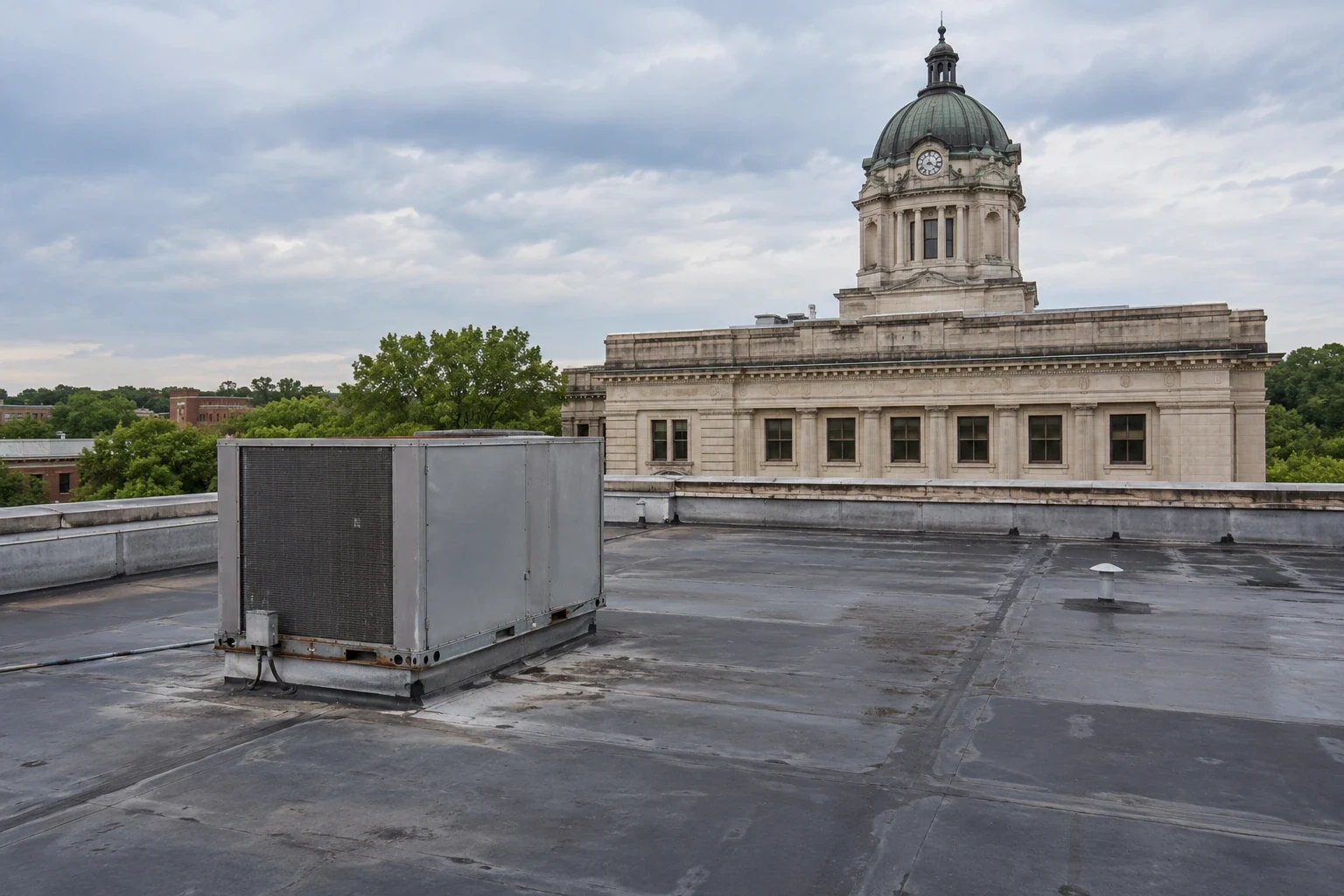
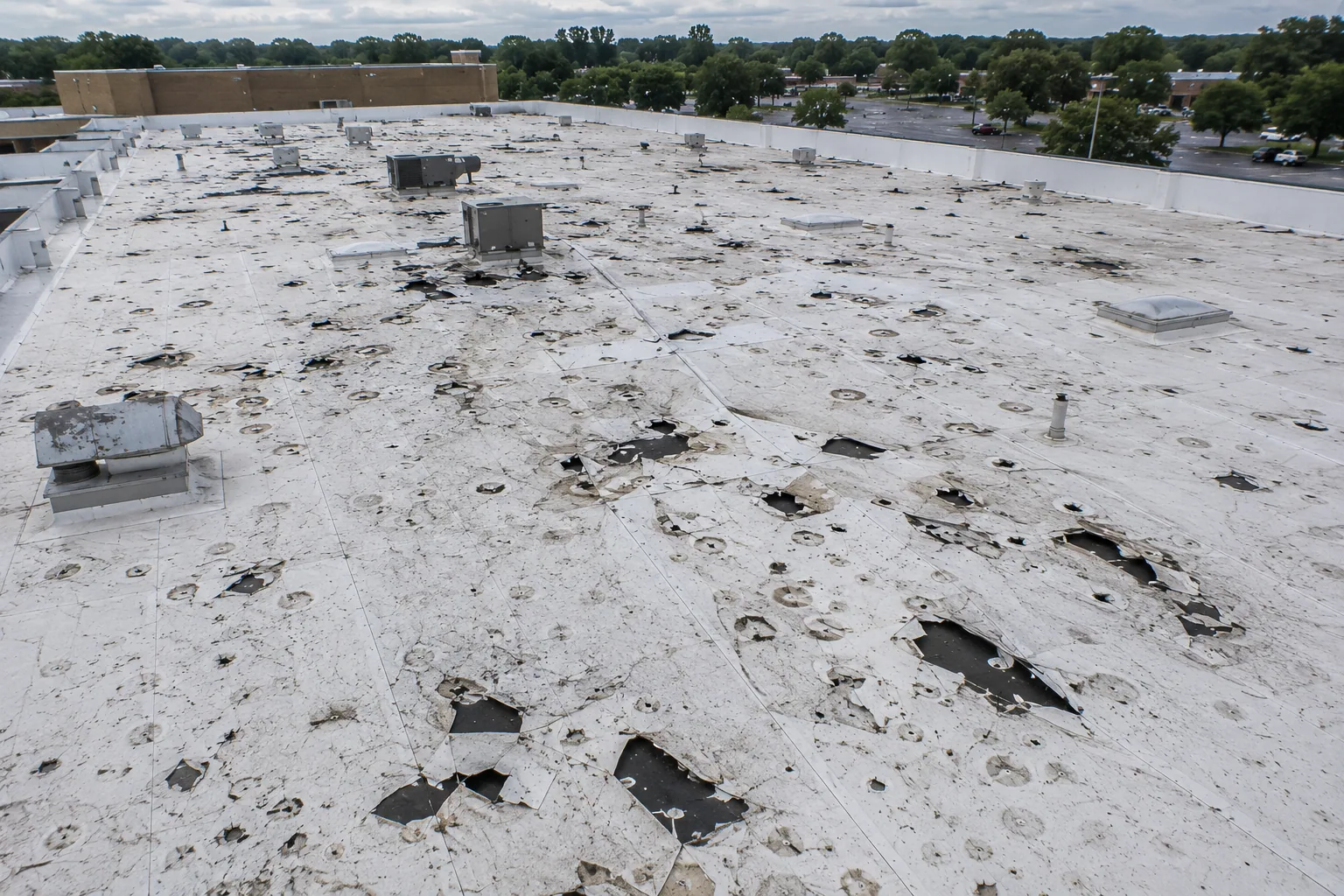
Asphalt mastic, a strip of self-adhered tape, a hand-welded cap sheet and a trowel of roofing cement are four different materials, and a public building that has received all of them over the years carries a roof that behaves like a quilt. Each edge between one patch and the next moves at its own rate through a Johnson City, TN winter that averages lows near 25F and repeats the freeze-thaw cycle night after night, so the seams between repairs open one after another and let in meltwater that the original membrane would have shed. The pattern is easy to understand, because public roofs are usually repaired as budgets arrive, in small amounts and by whoever holds the current maintenance contract. The result is a roof that costs something every spring, shows no single defect worth a headline and hides a growing area of wet insulation underneath all the patches. A council or board that sees only the repair invoices cannot tell how close the roof is to the end of its service life. Condition data can, and it tells the owner whether the next dollar belongs in another patch or in a planned replacement.
What does annual patching cost against the replacement it postpones?
The invoice for a patch understates what it costs. Each visit pulls maintenance staff off other work, each leak that reaches a ceiling needs tiles, paint and sometimes a call to the insurer, and each repair rests on a roof that is older and wetter than it was the year before. Wet insulation also stops insulating, so a municipal building heats and cools harder than it should, and the utility bill carries part of the roof's problem. Water that gets into a records room, a server closet or a clerk's office adds costs that never appear on a roofing line item.
There is a point where repair spending crosses what a replacement would cost when spread across the years it buys. Past that point every patch is a vote for a forced replacement, usually in the worst weather and on an emergency purchasing path that gives the building owner the fewest choices. Owners who calculate the crossover from real moisture data can schedule the replacement for a year their budget can carry, which is a far easier case to make to a council than an emergency request.
Put the roof on the record before the budget is set
Call Commercial Roofing Johnson City and we will survey each public building, map the moisture and write a scope your staff can bid, so the next roofing decision rests on condition data instead of the last invoice.
What belongs in a roof file that a council, board or auditor can read?
A good file treats each roof as a record, with an identifier, a drawn plan, the system type, the repair history and a dated set of photographs. Our condition reports rank each area by urgency and attach an estimated range for the work, so a facilities director can walk into a budget meeting with something more specific than a stained ceiling tile. An infrared scan and a few core cuts show which sections have dry insulation and which are saturated, and that map is the evidence an elected body wants before it commits money.
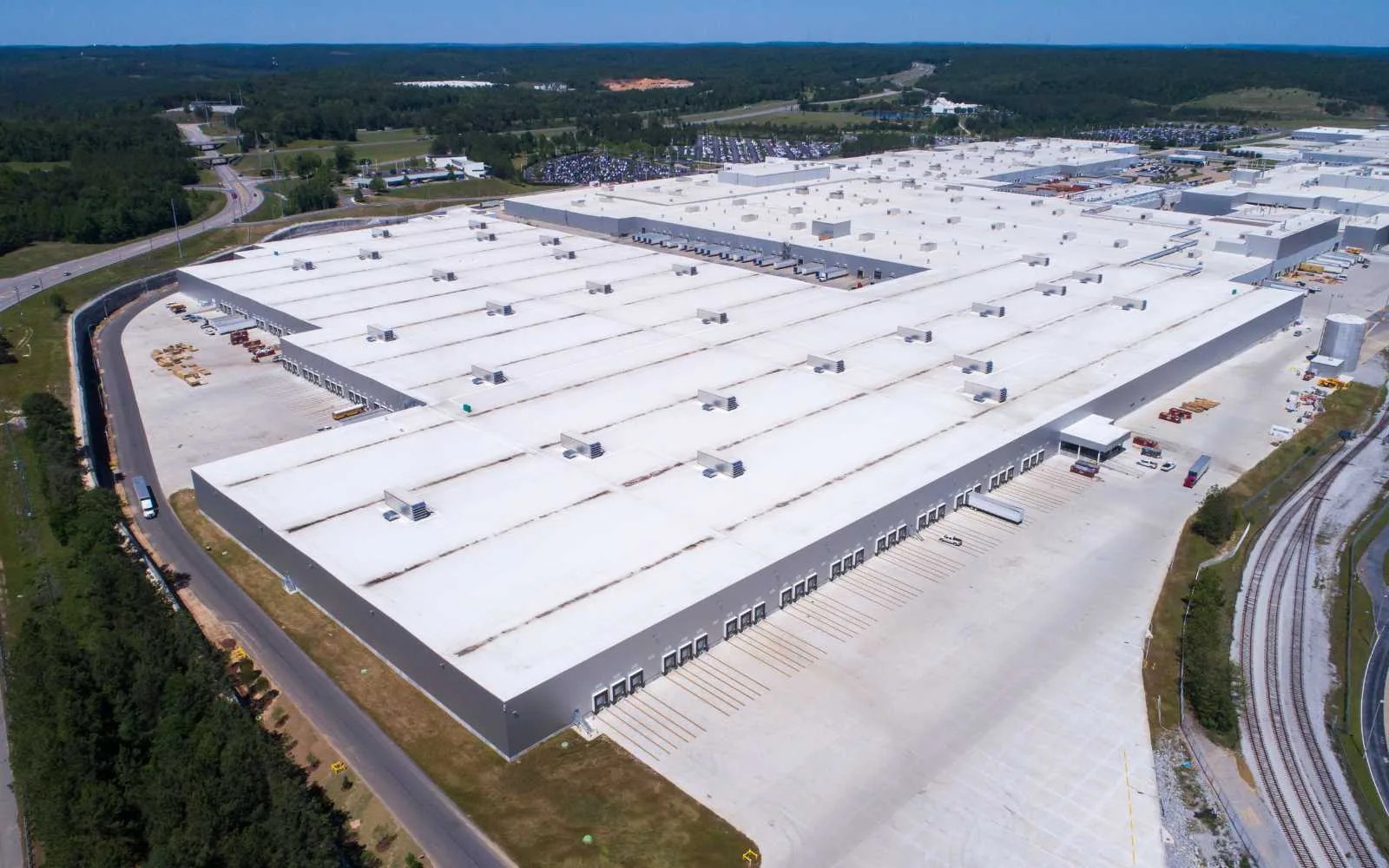
Where an agency holds many buildings, the same format across every roof lets the staff compare them on the same terms and sequence replacements, which is how a multi-site roof program keeps one failure from setting the agenda for the whole portfolio. The capital plan that results can stretch across several fiscal years and still hold together.
Repair it, recover it or take it off: what do the bids compare?
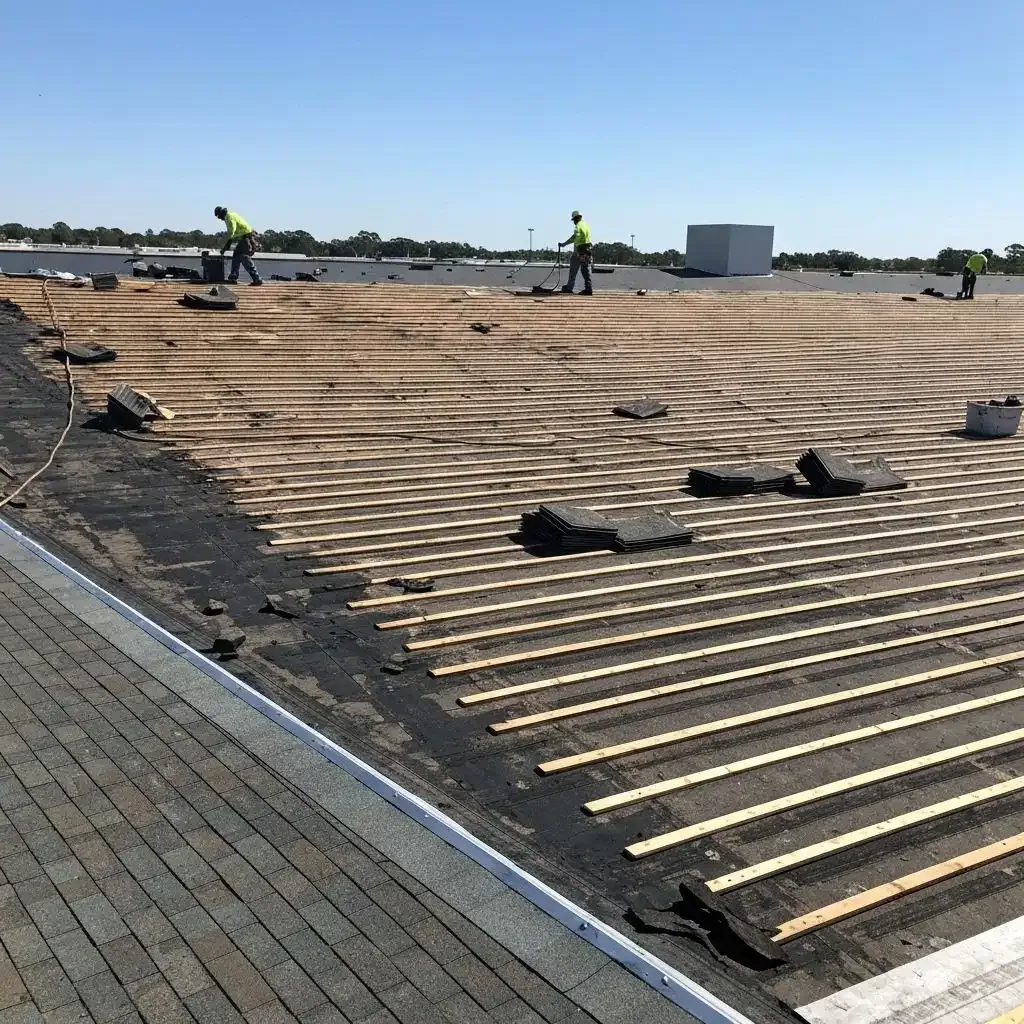
Public bids work best when the specification states what the roof is and what must be done to it, and when alternates let the owner see the price of each path. A repair package makes sense where the insulation is dry and the defects are isolated. A recover adds a second membrane over a sound, dry roof, saves the cost and disruption of tear-off, and has to fit within the layer limits written into the existing-building code in Johnson City's 2018 adopted set. A full replacement removes the wet material and lets the insulation be brought up to the 2018 International Energy Conservation Code, which also applies in the city.
The comparison should run on lifecycle cost, not on first price alone. A cheaper system that needs replacing sooner can cost more per year of service, and a reflective membrane may lower cooling loads in summer without hurting winter performance if the insulation is right. The report we write sets those scenarios side by side so a bid package can ask the right question the first time.

Where do procurement dates and weather windows collide?
Public work follows an approval calendar that private work does not. A board meets monthly, a bid has to be advertised, an award has to be made, and materials have to be ordered, and each step takes weeks. Work approved in late winter can often be installed before the hard freezes the following fall, while a project approved in January may slip a full season. Starting the condition survey a year ahead of the money keeps the roof from reaching the calendar's wrong end.
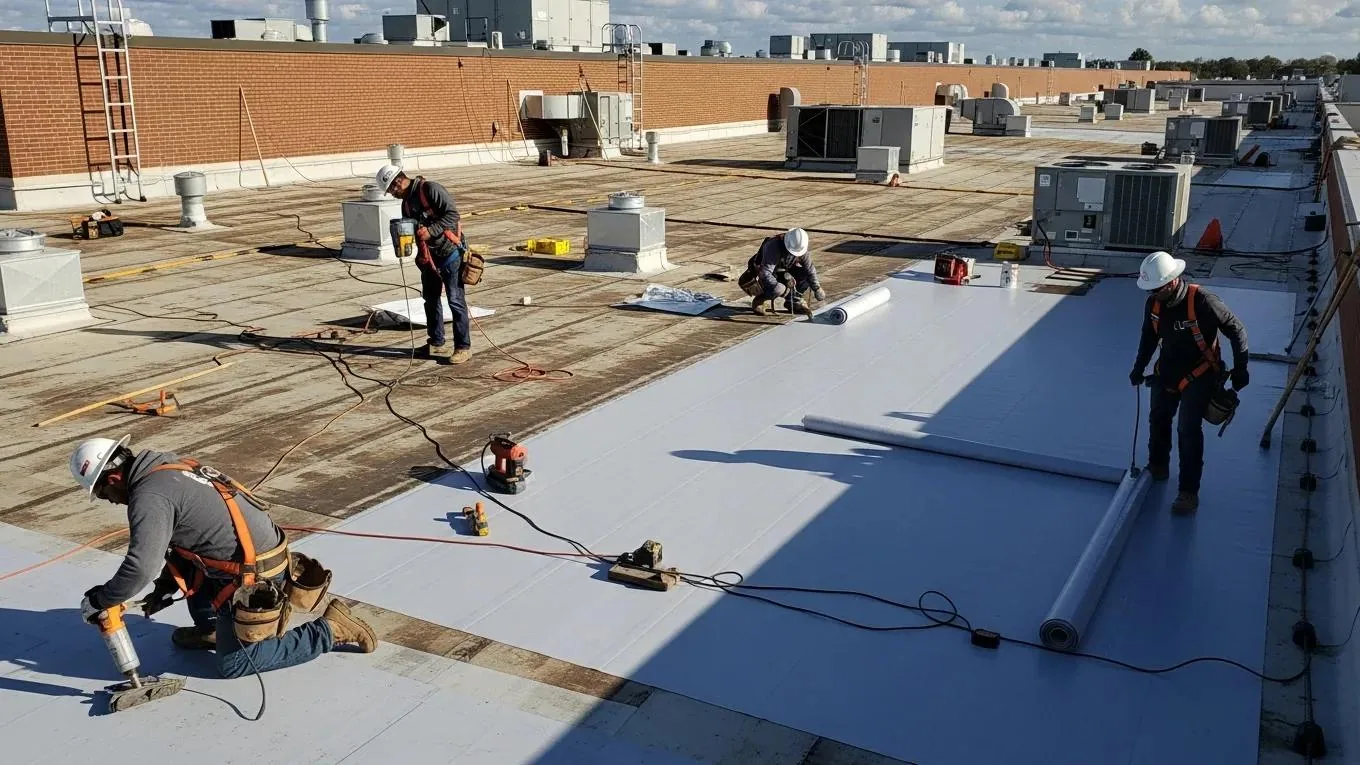
The building stays open to the public throughout. Courts, counters and records offices cannot close for a reroof, so we sequence the tear-off in sections that are closed in each day, arrange material staging away from public entrances and parking, and agree on escort and access rules with building security. When an emergency interrupts the plan, the temporary repair for a public agency is handled as its own step, so the permanent work can wait for its approval without leaving the building open to the weather.
What do county seats and civic buildings around the Tri-Cities ask of a roof?
The region has several courthouse towns, and each keeps its own calendar. Jonesborough is the Washington County seat and the oldest town in Tennessee, and Blountville is the Sullivan County seat, a seat that is not an incorporated city. Rogersville has both a historic district and the second oldest courthouse in the state, and an old public building like that calls for finding out what lies under the existing roof before any plan is made. Elizabethton, Greeneville and Mountain City serve their own counties as well.
Weather reaches all of them differently. Mountain City, at 2,418 feet, is high country, where winters bring considerably more precipitation than the valley normals, so a municipal roof there should be judged against a heavier winter than one in Johnson City. Hurricane Helene's flooding reached across Northeast Tennessee in September 2024, and any public building in the region needs a drain system that works in a long, heavy rain. A congregation raising money for a church roof and a district weighing a school roof against its own calendar face the same tension between budget cycles and weather.
Commercial Roofing Questions
How should a roof be described in a bid package so that bids can be compared?
Start with measured facts: the existing system, the number of layers, the condition of the insulation and the details at curbs, drains and edges. We write that into a scope the owner can attach to the bid, with alternates for items that depend on what the tear-off reveals.
How are records rooms and public counters protected while the roof is open?
Work is divided into sections that are closed in before the day ends, and a temporary membrane or tarp stands ready for the unexpected. Over sensitive rooms we plan the tear-off for dry days and cover equipment and files below when the schedule requires it.
Can several small public buildings be bundled into one roofing contract?
They can, and bundling often brings better coordination and a single schedule. Each roof still gets its own survey and its own scope, since a fire station and a library never fail the same way, and the contract can be phased so the money follows the condition.
What if every bid comes in above the appropriation?
Phase the work according to the moisture map. The sections with wet insulation go first, and the sound sections move into a later fiscal year with a maintenance plan to protect them in the meantime, so the project fits the appropriation without hiding the larger need.
How can a facilities director justify a replacement when the roof still looks serviceable?
Show the council what the surface hides. A moisture map with core samples and photographs makes wet insulation visible, and a comparison of repair spending to date against the replacement cost turns a judgment call into a number.
Related Roofing Pages

Roof Condition Reports
How the work is scoped, phased and documented on Tri-Cities roofs.
Multi-Site Roof Programs
What we check, what we recommend and how the crew keeps the building running.
Roof Capital Planning
Conditions, options and next steps for commercial buildings in East Tennessee.