
Commercial Roofing in Rogersville, TN
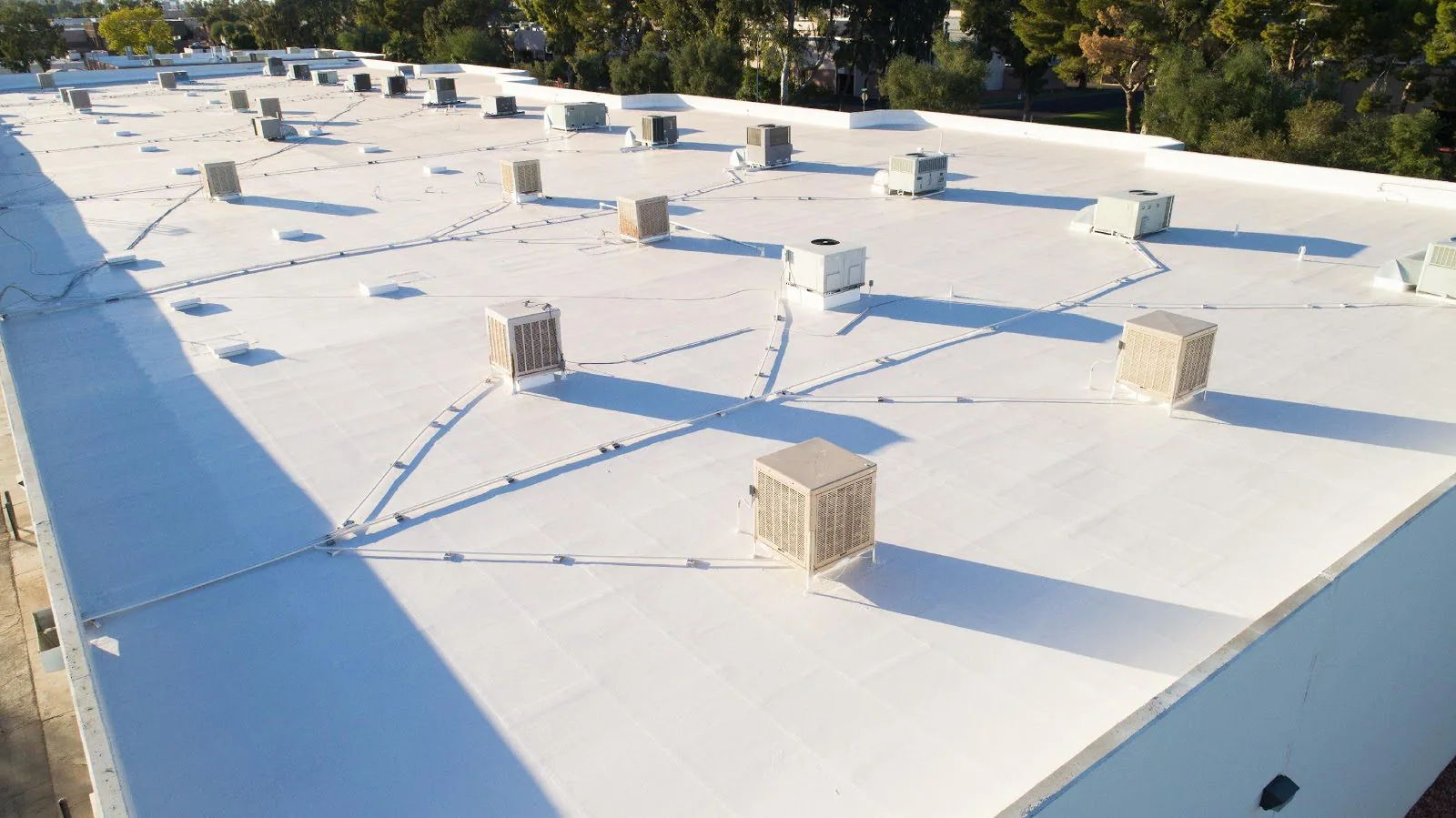
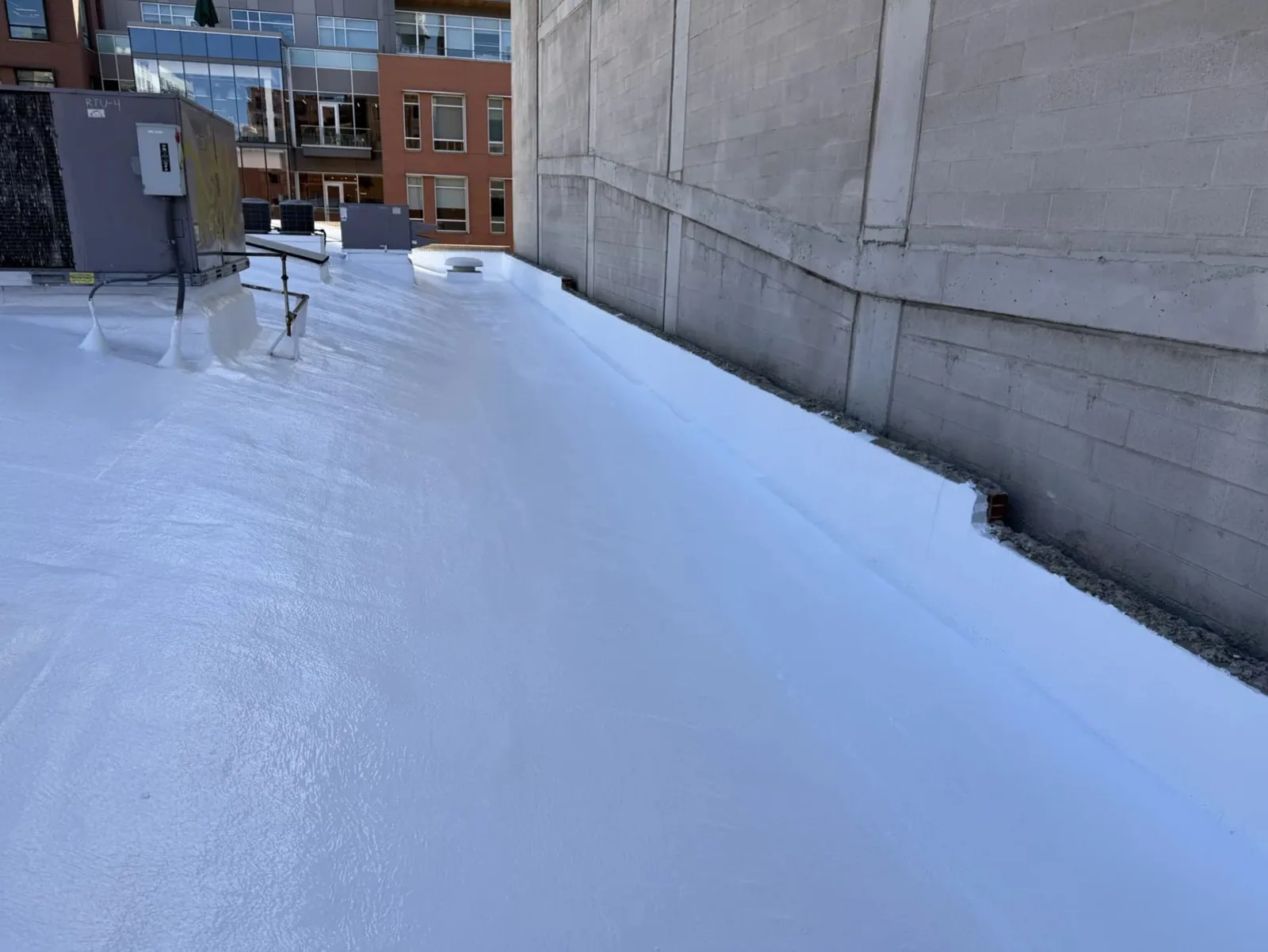
Where a flat roof meets a taller wall, the roof does not simply end. The membrane turns up the wall, stops under a strip of metal, and from that line down to the drain, everything depends on a few inches of flashing, sealant and coping. Rain runs down the face of the wall, meets that line, and if there is a gap behind the coping or a crack in the cladding above it, water slips behind the membrane and travels down inside the wall, where nobody sees it. Wherever a roof in Rogersville, TN, the Hawkins County seat of 4,671 residents, meets a taller wall, that line is the first one we check, in the historic district as much as at buildings near the county's industrial parks. The owner who watches it each year protects the framing and finishes below it as well as the roof.
Why does water behind the coping do its worst out of sight?
Because its path leads into the wall, not into the room. Coping caps the top of a parapet, and if its joints are open or its fasteners have come loose, rain enters the top of the wall, runs down inside it and emerges at a window head, a ceiling edge or a floor below the roof, sometimes feet from the entry point and days after the storm. The flashing at the base of the wall catches what gets past the coping, and when its sealant has failed the membrane edge peels and water continues into the roof assembly. Freeze-thaw finishes the work: a damp wall freezes, expands, and opens joints that were only slightly loose.
The region supplies plenty of cold and plenty of water. Johnson City, TN gets about 15.6 inches of snow in a year, and Hurricane Helene in September 2024 showed how much rain Northeast Tennessee can receive at once, enough to push the Nolichucky River to catastrophic flood levels. Walls and copings meet that water first, long before it reaches a drain.
Start at the wall line before the next heavy rain does
Call Commercial Roofing Johnson City to schedule a walk of a roof in Rogersville, TN, from the coping down to the drain. You will have photographs, core results where they are needed and a ranked scope, and emergency response runs around the clock.
What do a courthouse town and its industrial parks share on the roof?
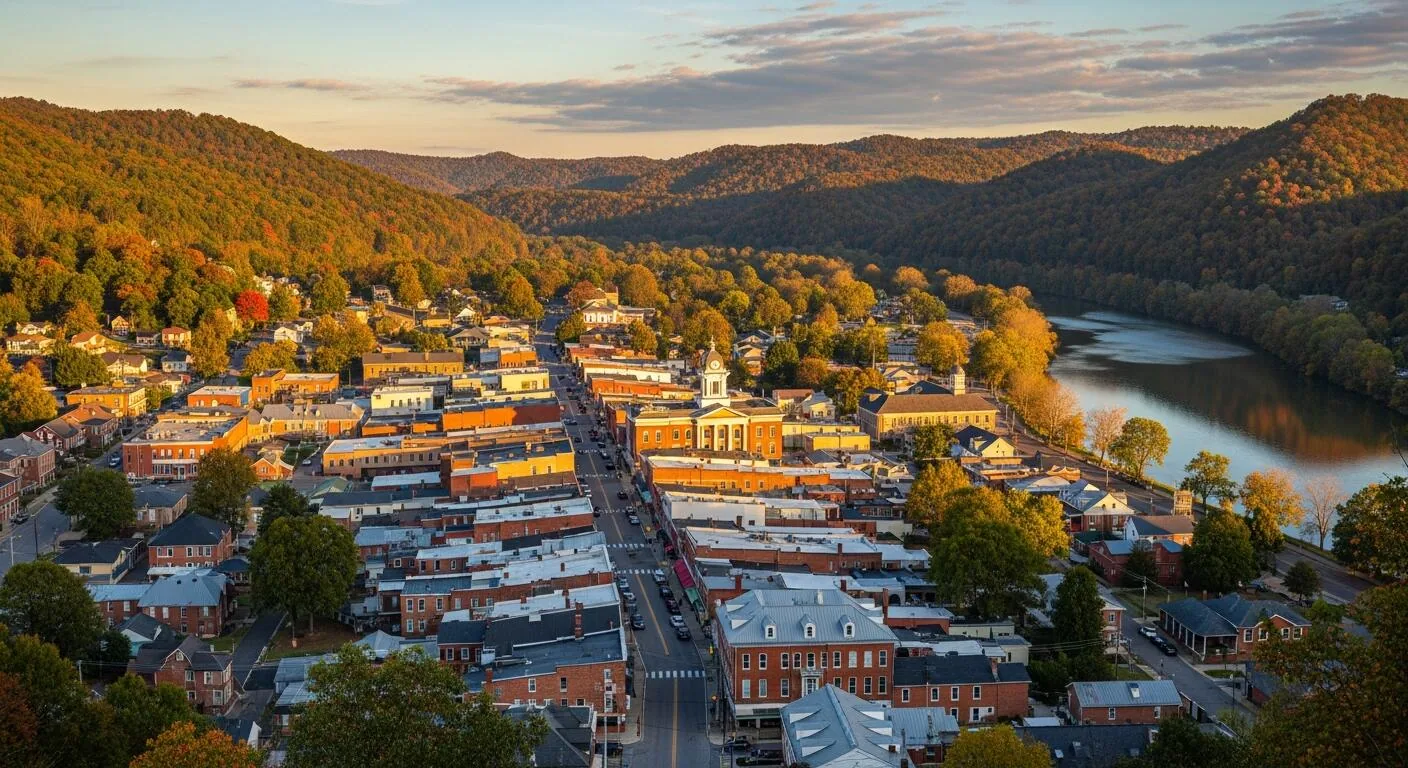
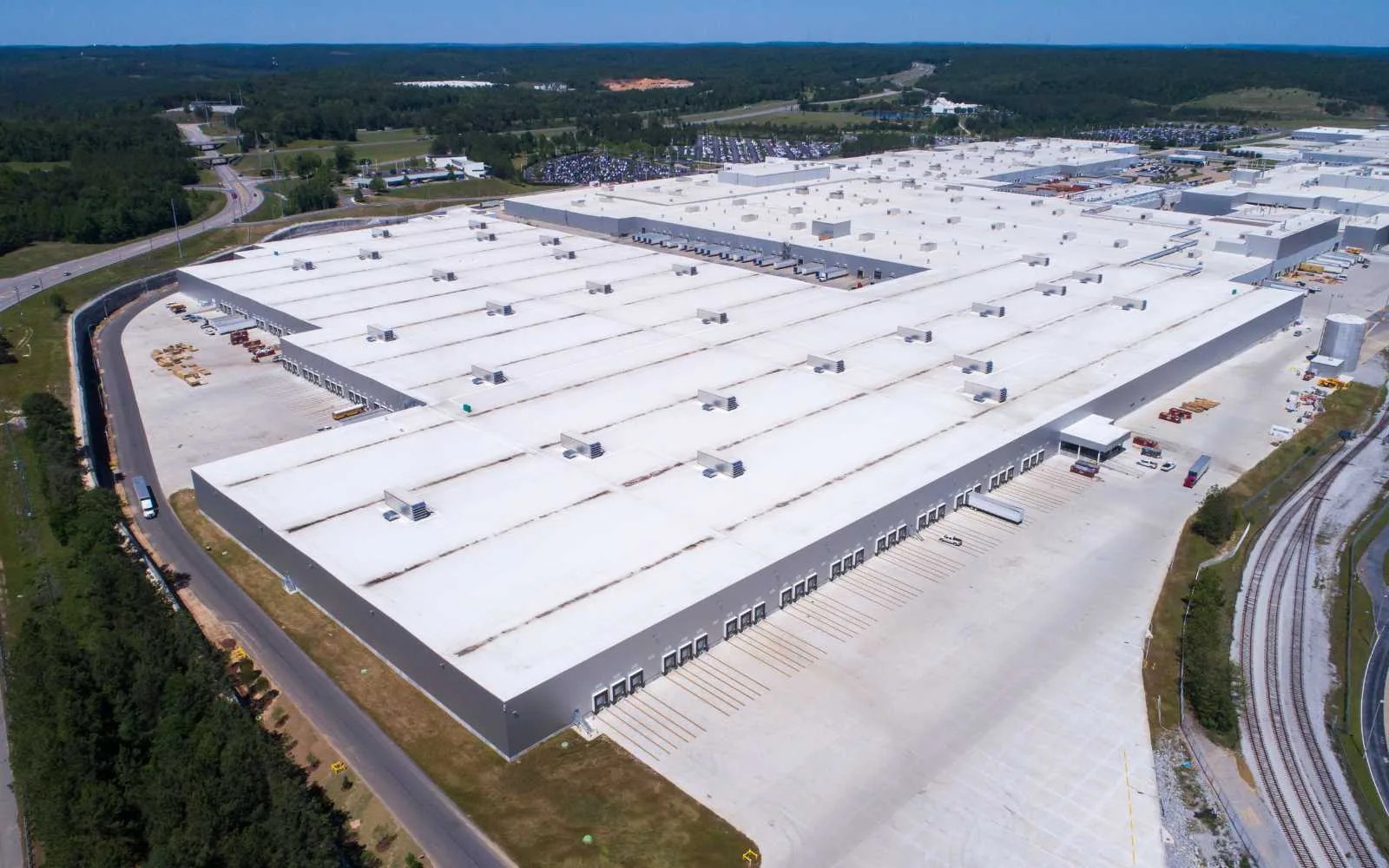
Rogersville sits about 28 miles southwest of Kingsport on US 11W and State Routes 70 and 66, and two kinds of building share its map. One is the older kind that a historic district and the second oldest courthouse in Tennessee point toward. On an older building the roof can carry layers of earlier repair, and part of our work is learning what is already up there before deciding what to add. The other kind sits where Hawkins County industrial parks support employers around the town, and a plant roof is judged by whether production stays dry and uninterrupted.
The two want the same attention at different speeds. The older building rewards a slow, careful look at its wall lines and its earlier patches. The employer rewards a plan that runs by section so work never touches a line that cannot stop. US 11W links Church Hill to Rogersville, and an owner with property in both kinds of building along that road can have the survey done in one trip and the findings written in one format.
What does a first walk of an older building's roof begin with?
With the walls. Before we cross the roof we look at the parapet and the face of the wall, from the ground and again from the roof edge, for open coping joints, stained cladding, cracked mortar and sealant that has split or peeled. On the roof we trace the base flashing for lifted membrane, loose termination bars and gaps at corners, and we check scuppers and drains at the wall because they carry everything the wall sheds. Pipes and conduits that pass through a wall instead of the roof are checked as well, since each is a doorway for water.
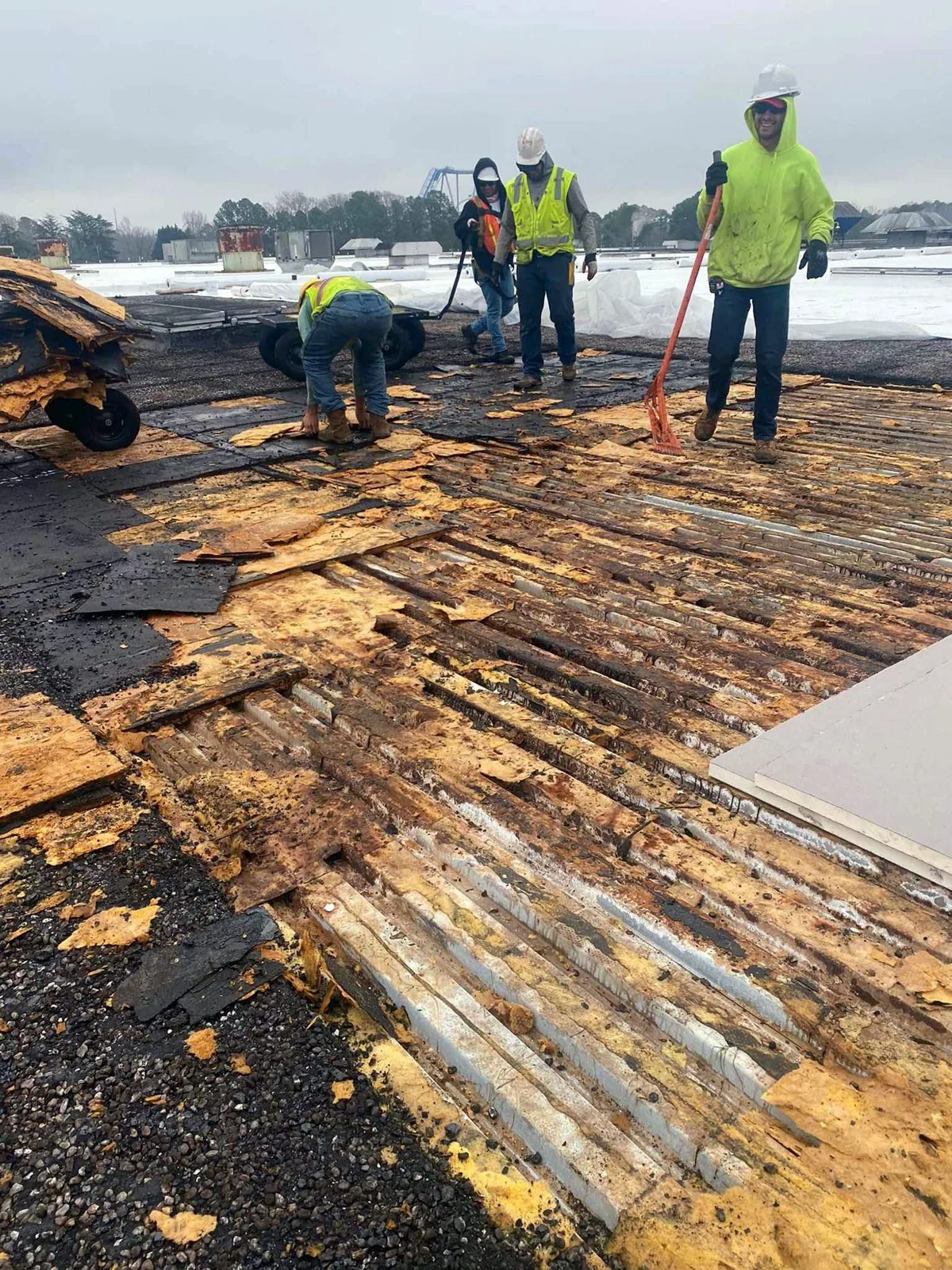
On a roof of unknown age we cut a small core to see the layers, because older buildings often carry earlier roofs under the current one, and a recover is only possible when the weight and the moisture are known. The condition report gives the owner photographs, core results and a ranked scope, including the wall work that sits outside the roof proper but decides how long the roof lasts.
Reflash, recap or replace: where does the money go at a wall junction?
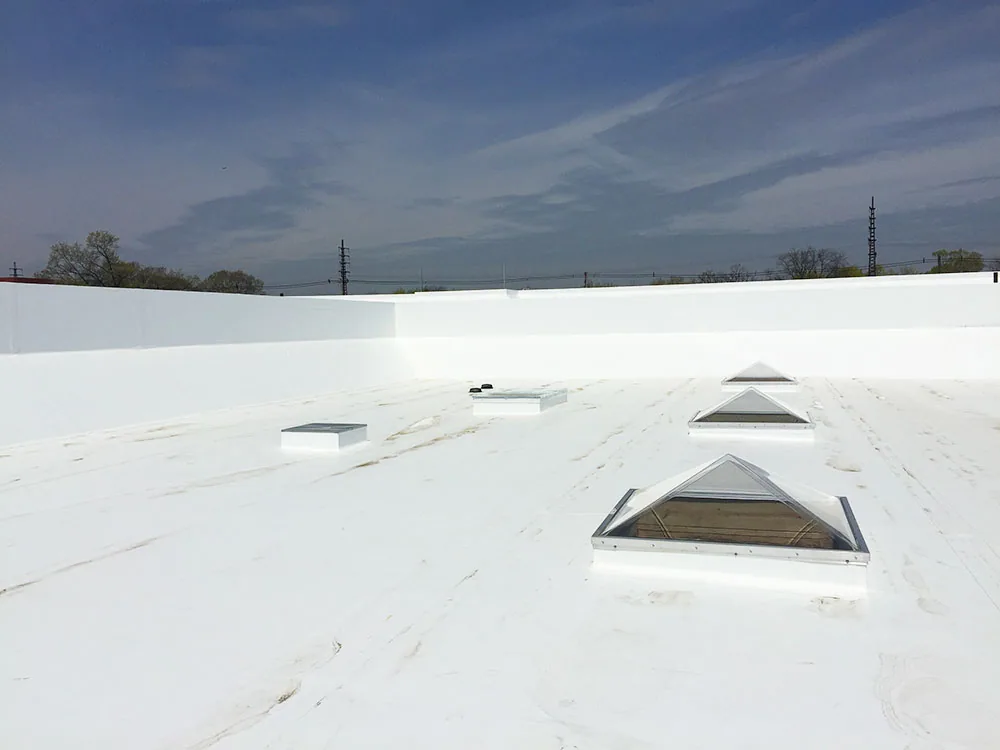
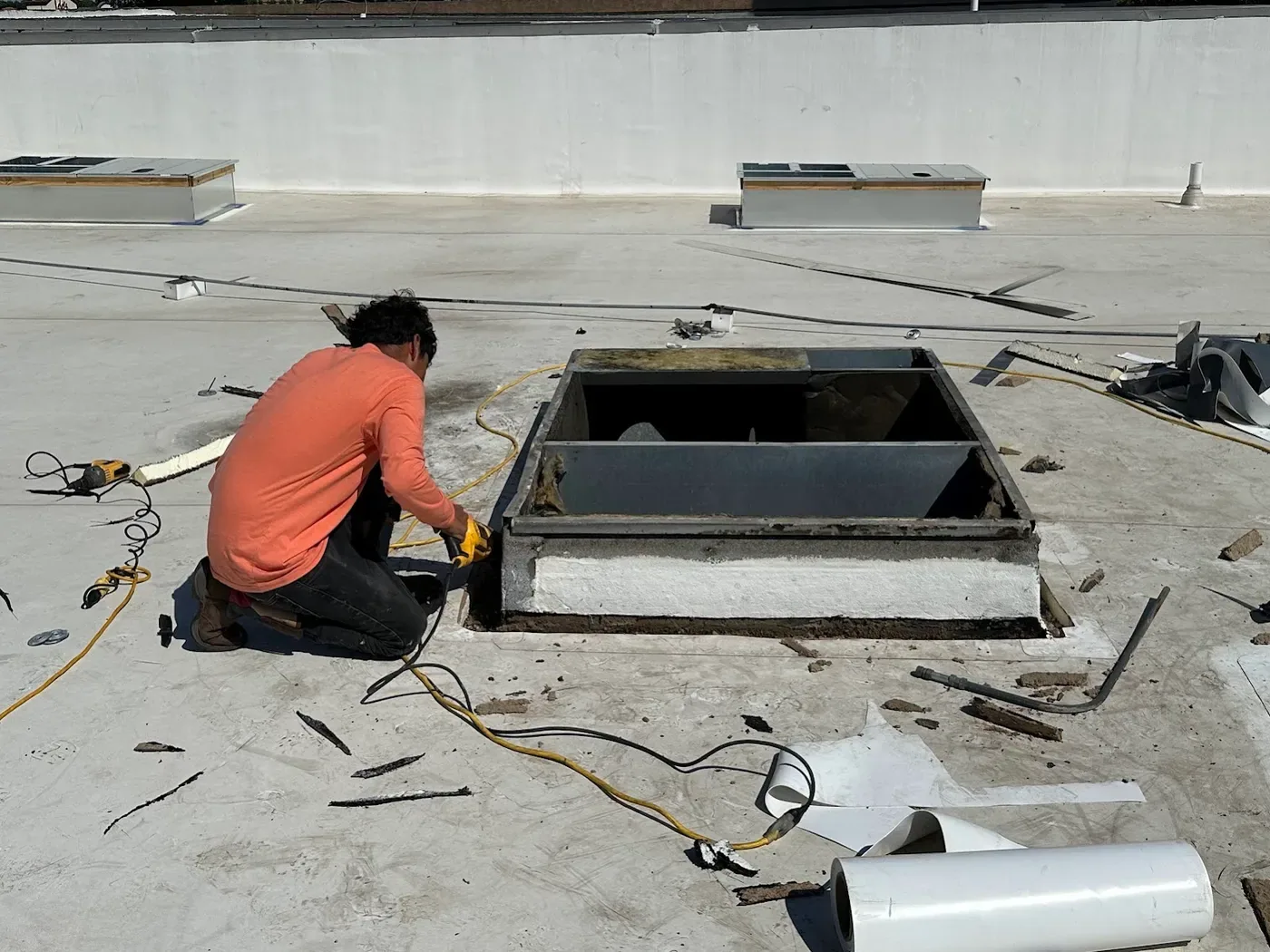
Start with the cheapest layer that works. Resealing open joints and refastening loose lengths of edge metal and coping can stop a persistent leak for little money, provided the wall below is sound. Where the base flashing has lifted or split, a new strip welded or adhered to the membrane and carried up under the coping restores the line, a repair that suits a roof with dry insulation. If the wall itself is admitting water through cracked joints or cladding, no amount of roof work will keep the building dry. Where the membrane has aged along with its flashings, a replacement brings new base flashings and a new coping system together.
The existing system guides the repair. Modified bitumen and built-up roofing roofs, the multi-layer types common on older low-slope buildings, are patched and reflashed in kind, while a single-ply sheet can be tied into with heat-welded flashings.
How does a roof job work around an older block or a plant in operation?
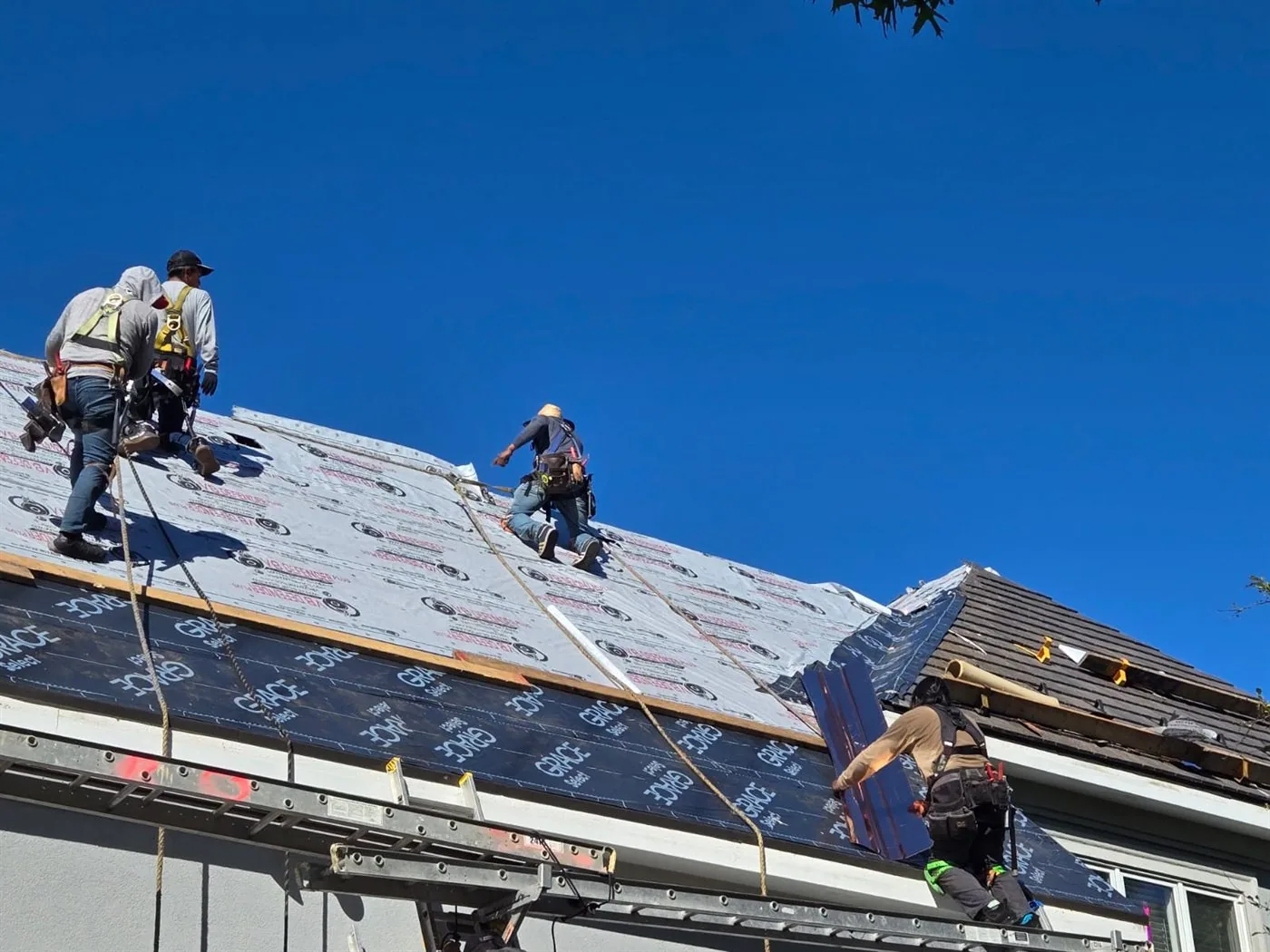
Older buildings in a historic district often bring tight access, shared walls and street frontage, and an owner there should confirm with the local building official whether a new color or profile of edge metal needs review before anything is ordered. We plan staging and hoist positions around entrances, work from the roof side so that nothing hangs over the street, and open only as much roof as can be closed before the end of the day.
For an industrial employer the plan runs by bay or section so lines keep moving, and by season. Welded seams and adhesives want dry, moderate weather, so late spring through early autumn is the comfortable window, and winter is for survey and scope so the material is on order before the weather turns. Owners who also hold property in Kingsport can run both on one calendar.
Commercial Roofing Questions
How can water appear inside a wall far from where it entered?
It travels. Behind the coping or cladding, water follows gravity along the back of the wall and can emerge at a window head, a ceiling edge or a floor below, often days after the rain. The stain marks where the water came out, so we begin at the wall line above it.
Does a parapet need all-new coping when only one joint has opened?
Usually a repair does the job. Open joints are resealed and loose fasteners reset. Where the metal is bent, corroded or short of fasteners across a whole length, replacing that length costs less over time than repairing it every year.
Why would an older building need a core cut before the work begins?
The layers are unknown until someone looks. A core reveals earlier roofs, wet or compressed insulation and the condition of the deck, which tells us whether a recover is possible and how much weight the structure can accept. Each cut is patched the same day.
Who approves exterior metal on a building in a historic district?
That depends on how the district is administered, usually the local building official or a review body. We cannot grant approval for the owner, so before a color or profile is ordered, the owner confirms in writing what the district allows.
How should a plant sequence a reroof so production lines keep running?
In sections. Each bay is opened, dried in and closed within a shift, starting with the area holding the most sensitive equipment, and material is staged on the ground ahead of time. Temporary tie-ins protect every opening overnight, and the schedule leaves room for weather.
Related Roofing Pages
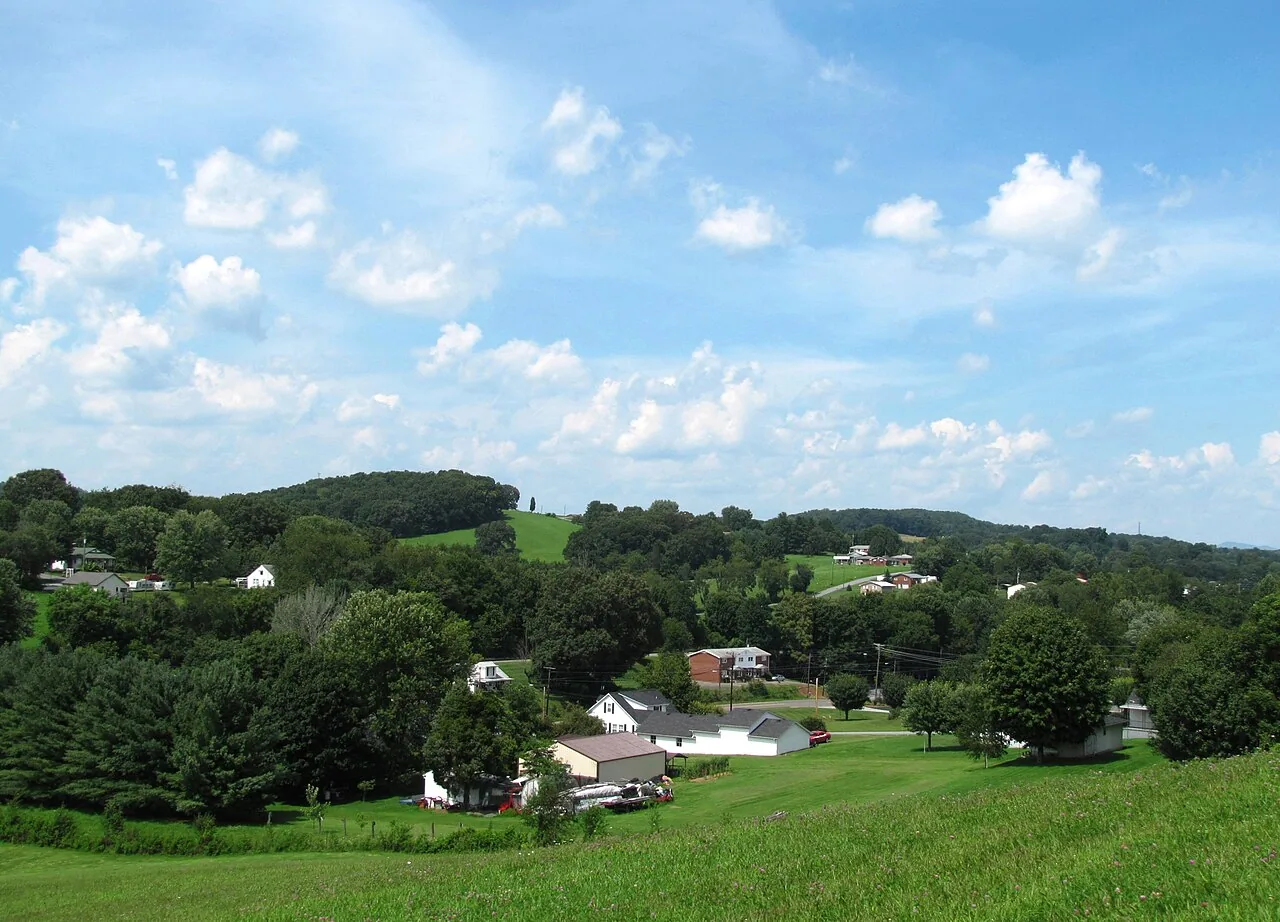
Church Hill
How the work is scoped, phased and documented on Tri-Cities roofs.
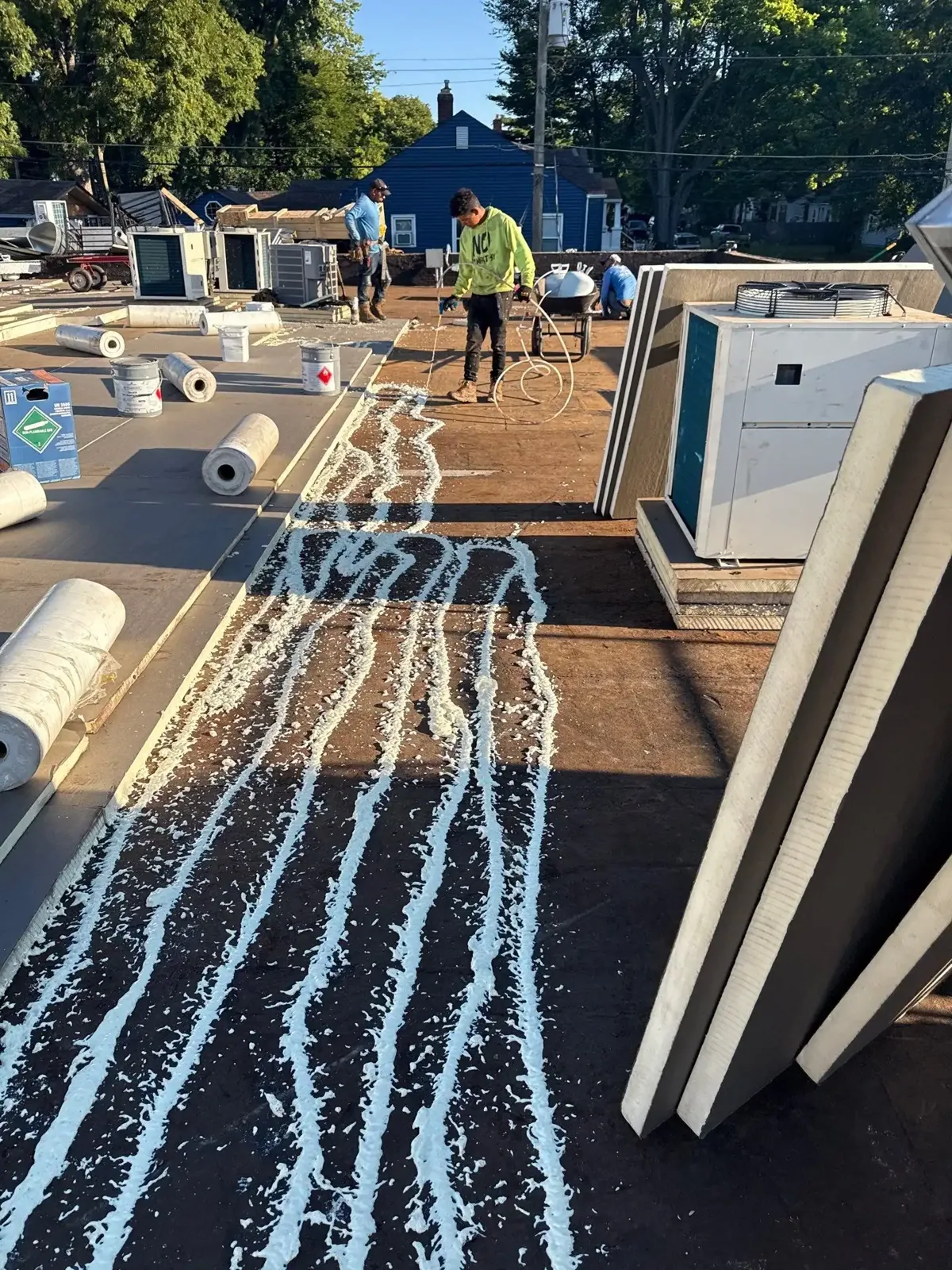
Roof Condition Reports
What we check, what we recommend and how the crew keeps the building running.
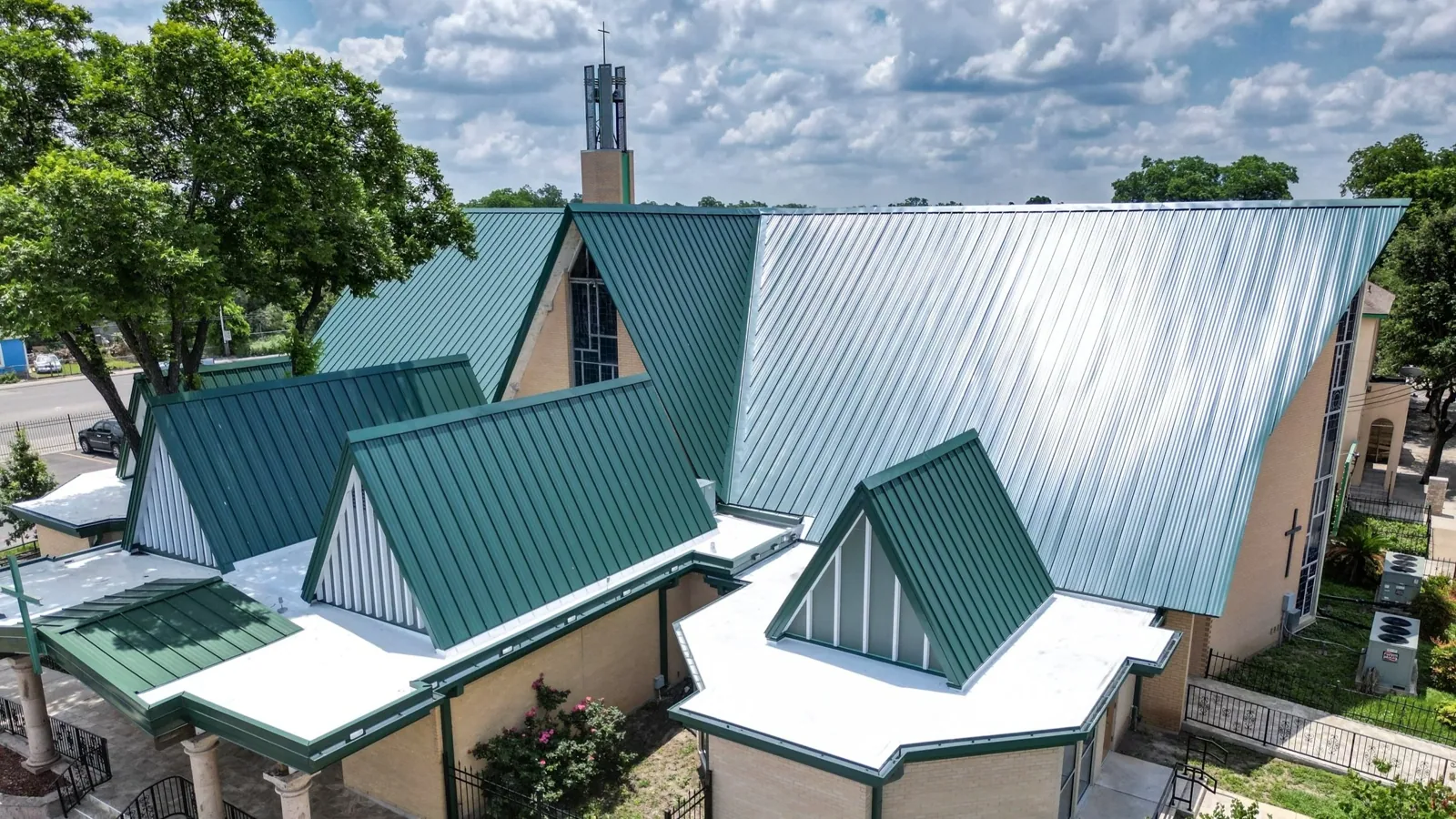
Edge Metal, Coping and Gutters
Conditions, options and next steps for commercial buildings in East Tennessee.