
Aircraft Hangar Roofing in Johnson City, TN
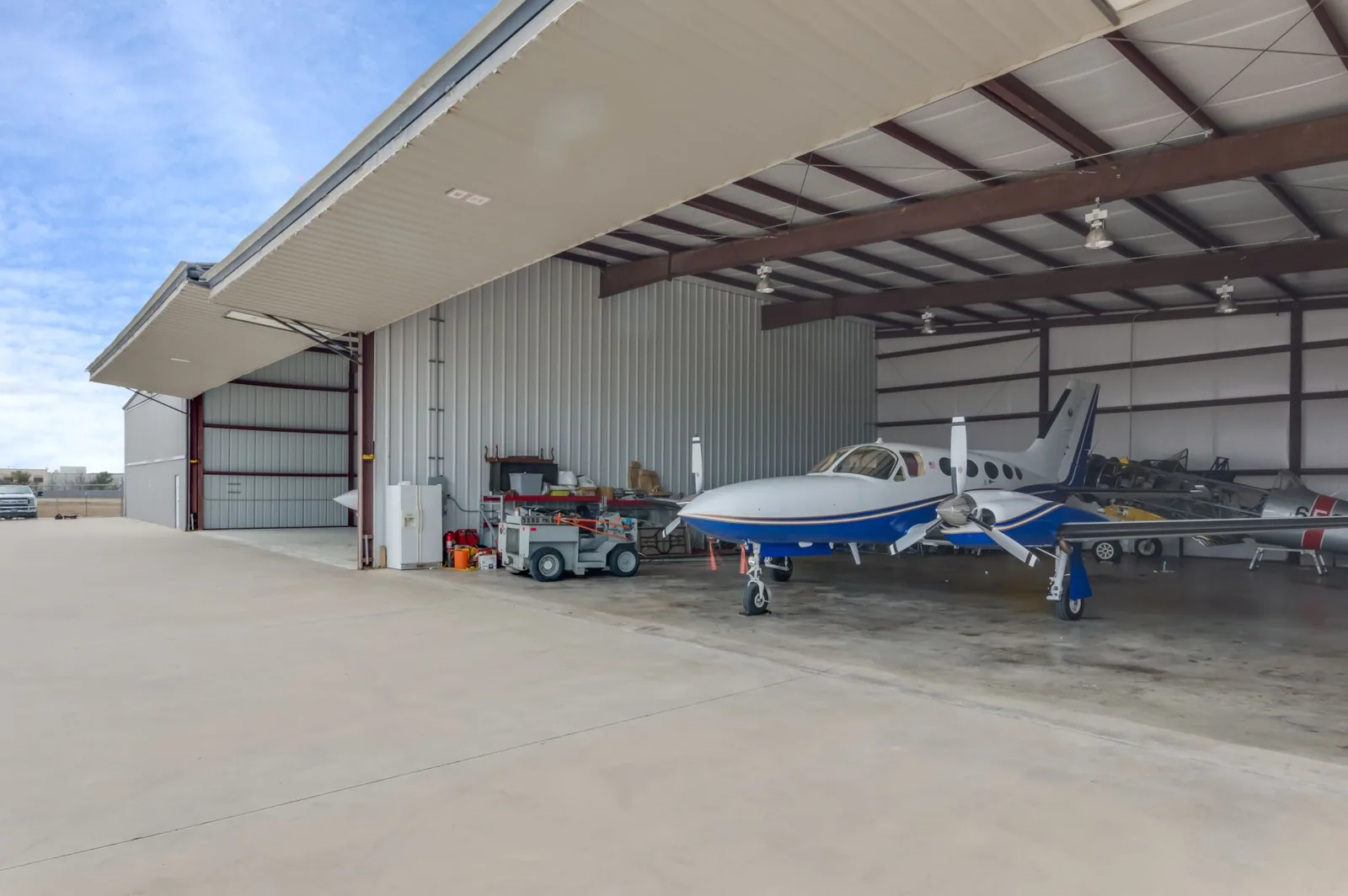
A hangar door rolled open on a windy afternoon lets the wind in, and the whole building fills like a sail. The interior pressure rises, the roof panels are pushed up from underneath at the same moment that the air racing across the top is pulling them up from outside, and the clips and fasteners that hold the roof to its purlins carry a load that a building with closed walls would never see. A hangar is also one enormous room under one roof, with a clear span that leaves nowhere for water to hide and nothing between a drip and the aircraft below it. In Johnson City, TN, where winter lows average about 25F and snow and heavy rain arrive in a normal year, a hangar roof that has lost some of its attachment strength or its seals is a risk that grows quietly through each season. The sensible approach is to learn how the roof is attached and how it is aging before the next severe storm tests it.
Why does a long metal roof move so much, and what does that do to its fasteners?
A long metal panel grows and shrinks with temperature, and a hangar roof is long enough to show it. Panels slide across their clips through each day and season, and the holes and seals that cannot slide wear. Exposed fasteners back out a little at a time as the panel moves beneath them, the neoprene washers harden in the sun, and the sealant at laps and at the ridge splits. A hangar's interior also holds a lot of air that meets a cold underside: aircraft carry in rain, snow and meltwater, and the evaporating moisture condenses on the coldest surface it finds, which is the underside of the metal.
That condensation looks like a leak and drips like one, so it often brings roofers to the wrong repair. We trace the pattern across the building. A drip that follows rain points to a fastener or a lap. A drip that follows a cold morning, across an entire line of panels, points to a missing thermal break or a lack of insulation under the metal.
Learn how your hangar roof is attached before the wind tests it
Call Commercial Roofing Johnson City and we will inspect the fasteners, laps and insulation, separate leaks from condensation and give you a written plan that fits your flight schedule and your budget.
What does a drip over an aircraft cost next to the roof repair?
Water on an airframe, an instrument panel or a stored engine produces claims and conversations that a roofing invoice never does. Tenants who rent hangar space expect the building to protect what they store, and an owner who learns of a leak from a tenant is already negotiating. Corrosion in a roof that has held moisture for several seasons can also weaken the very clips that resist wind, and in that case the repair stops being cosmetic and begins to touch structural safety.
The costs of fixing the roof early are modest by comparison: a program of replacing fasteners, resealing laps and ridge caps, and closing gaps around penetrations. Deferring that program through another winter does not make it cheaper, because freeze-thaw widens every gap, and the day a gust finds a weakened panel is not a day anyone can choose.
How do you inspect a roof that sits above fuel, foam and aircraft?
Carefully, and with restrictions. We check for hot-work limits, mark the fire suppression piping and avoid activities that can ignite vapors, so the inspection relies on observation, moisture instruments and hand tools, not torches or sparks. A walk of the roof looks at fastener condition, panel laps, ridge, eave and gable trim, and the details around skylights, vents and exhaust. Underneath, a look from the hangar floor shows corrosion stains, daylight at laps and sagging insulation.
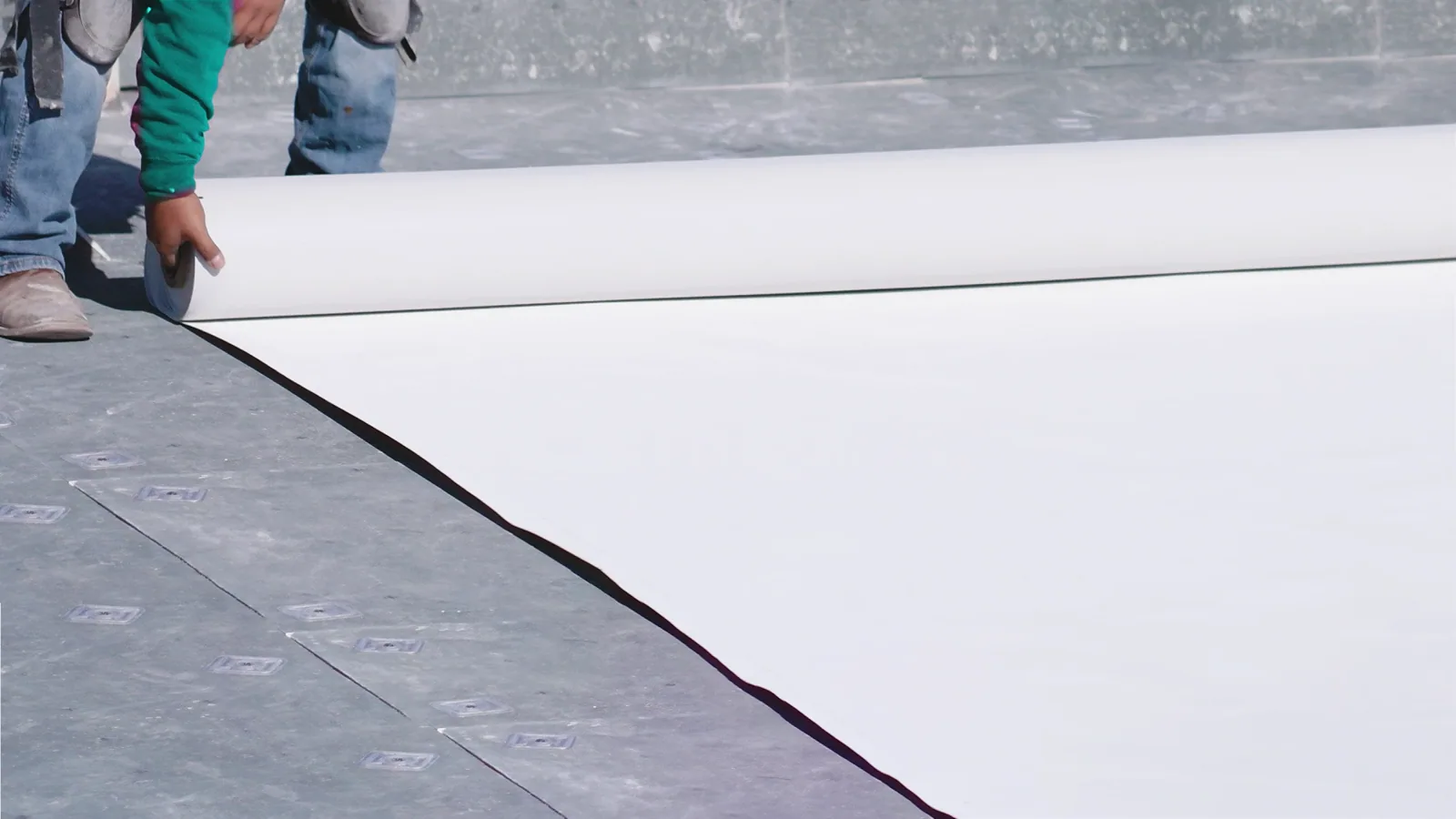
Near an airfield, a drone roof inspection needs airspace permission, so we plan it with the airport operator or substitute foot access and a lift where permission is not available. Where insulation is present, we confirm its dryness, because a wet blanket under the metal is a hidden weight and a source of corrosion, and a layer of insulation and cover board over a low-slope section should be tested before it is trusted.
Re-fasten, retrofit or reroof: which suits the hangar you have?
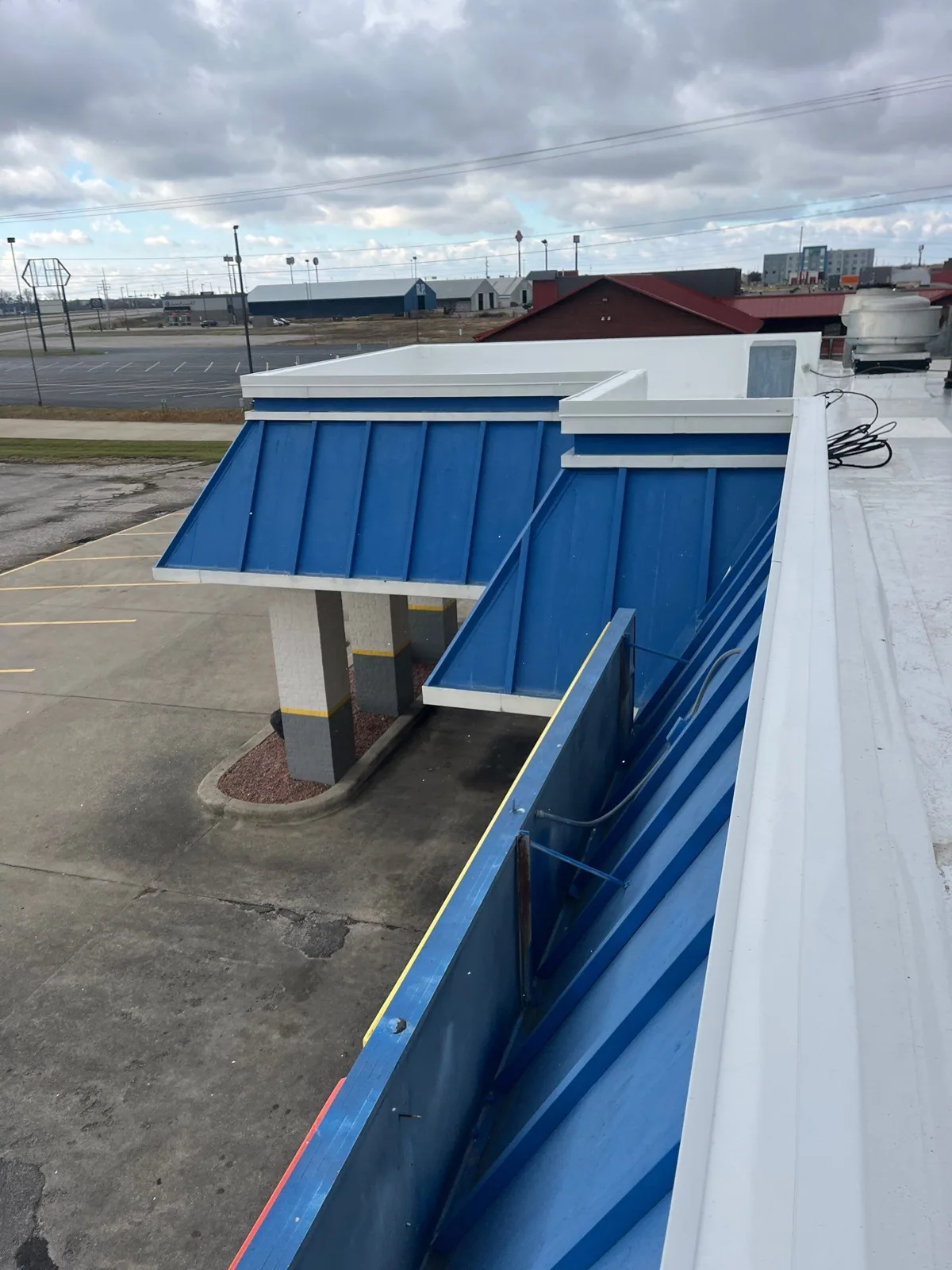
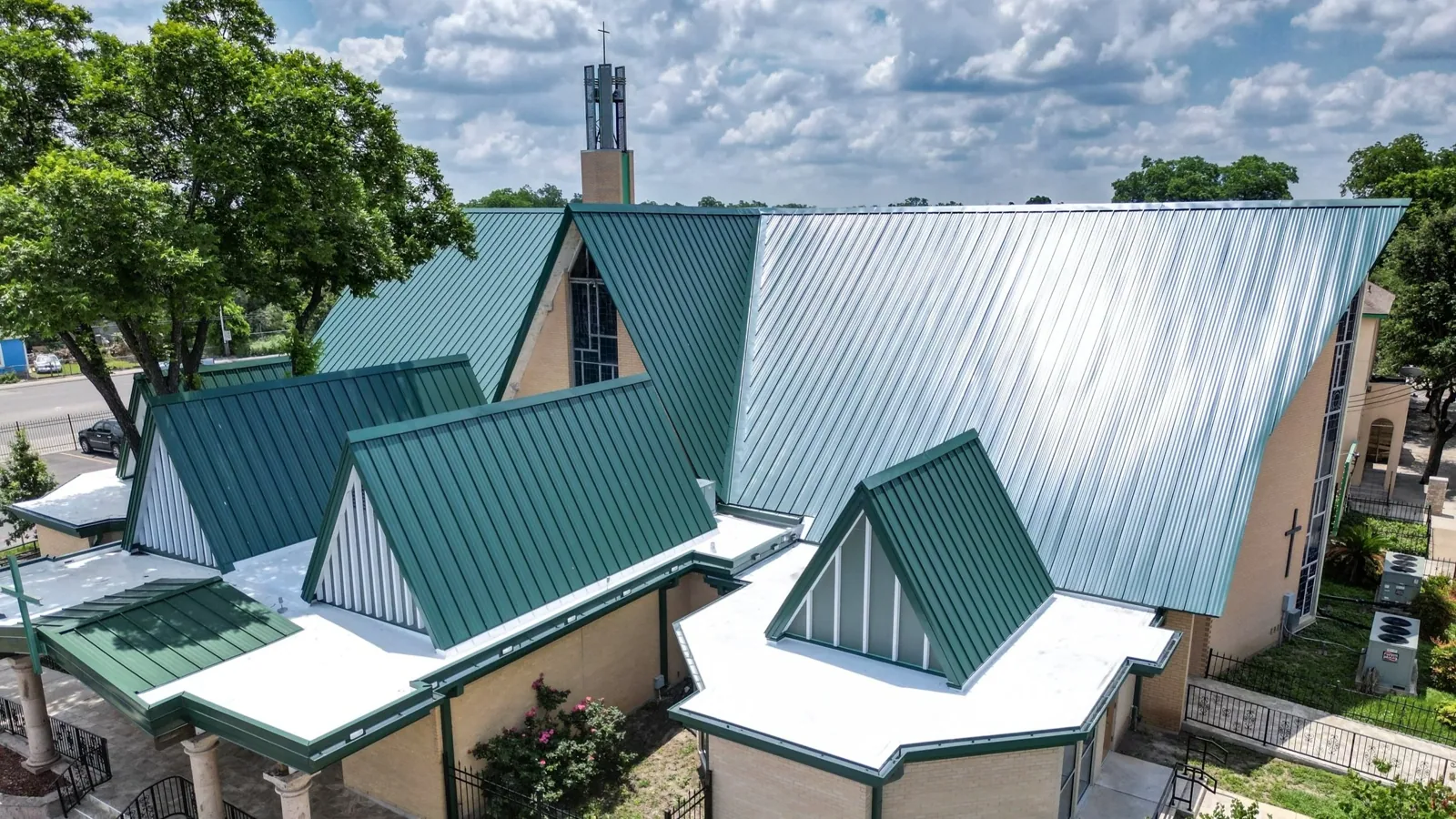
If the panels are sound, a program of new fasteners, washers and sealant restores wind resistance at modest cost. Where corrosion has taken hold, a metal roof retrofit places a new panel system over the old, which keeps debris out of the hangar and avoids exposing aircraft to the weather. A standing seam roof removes exposed fasteners and attaches by concealed clips that tolerate thermal movement, and its uplift rating can be matched to the building's exposure and its door configuration.
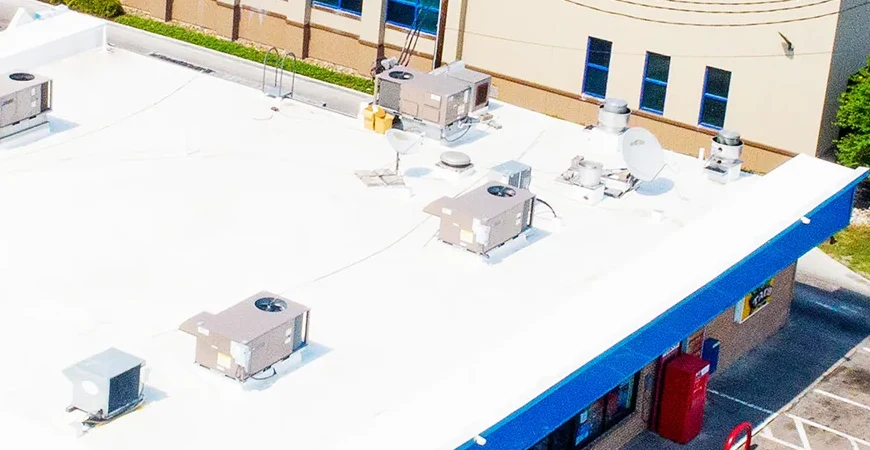
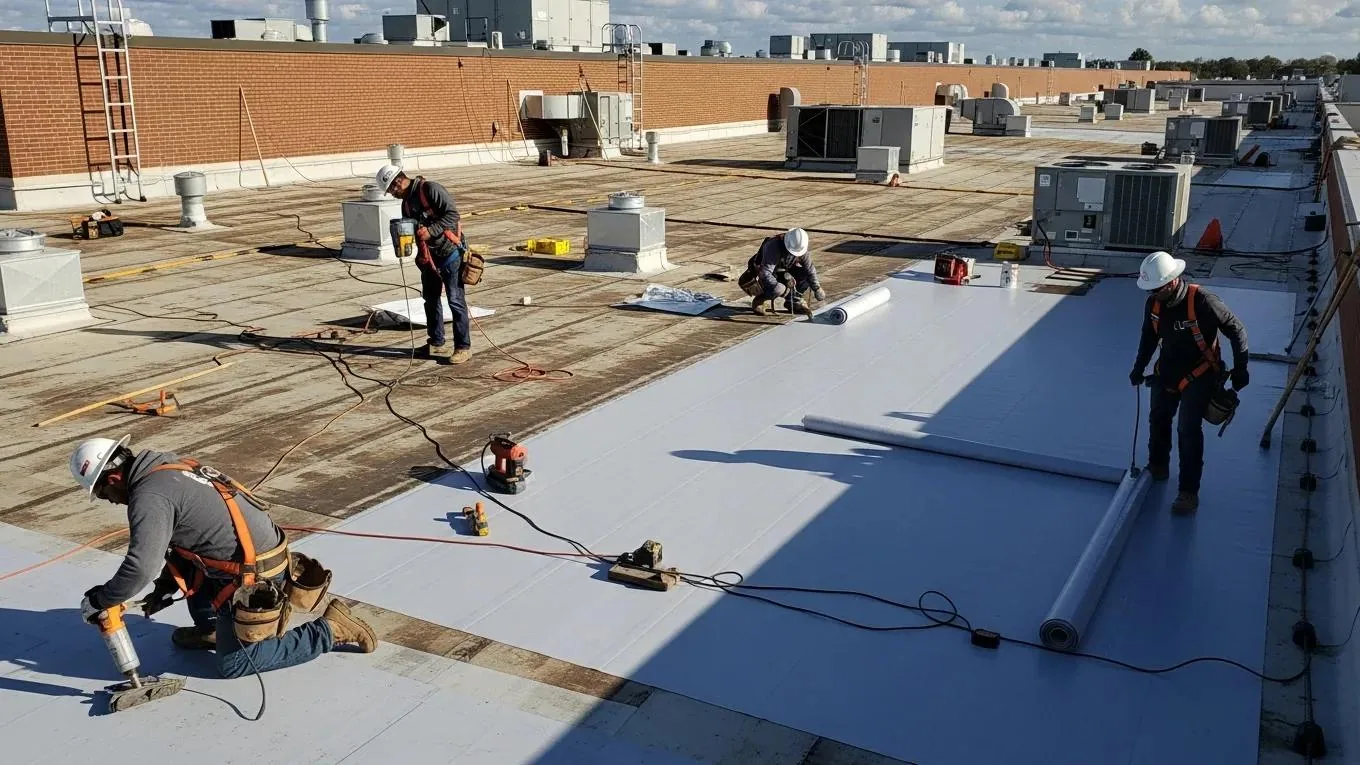
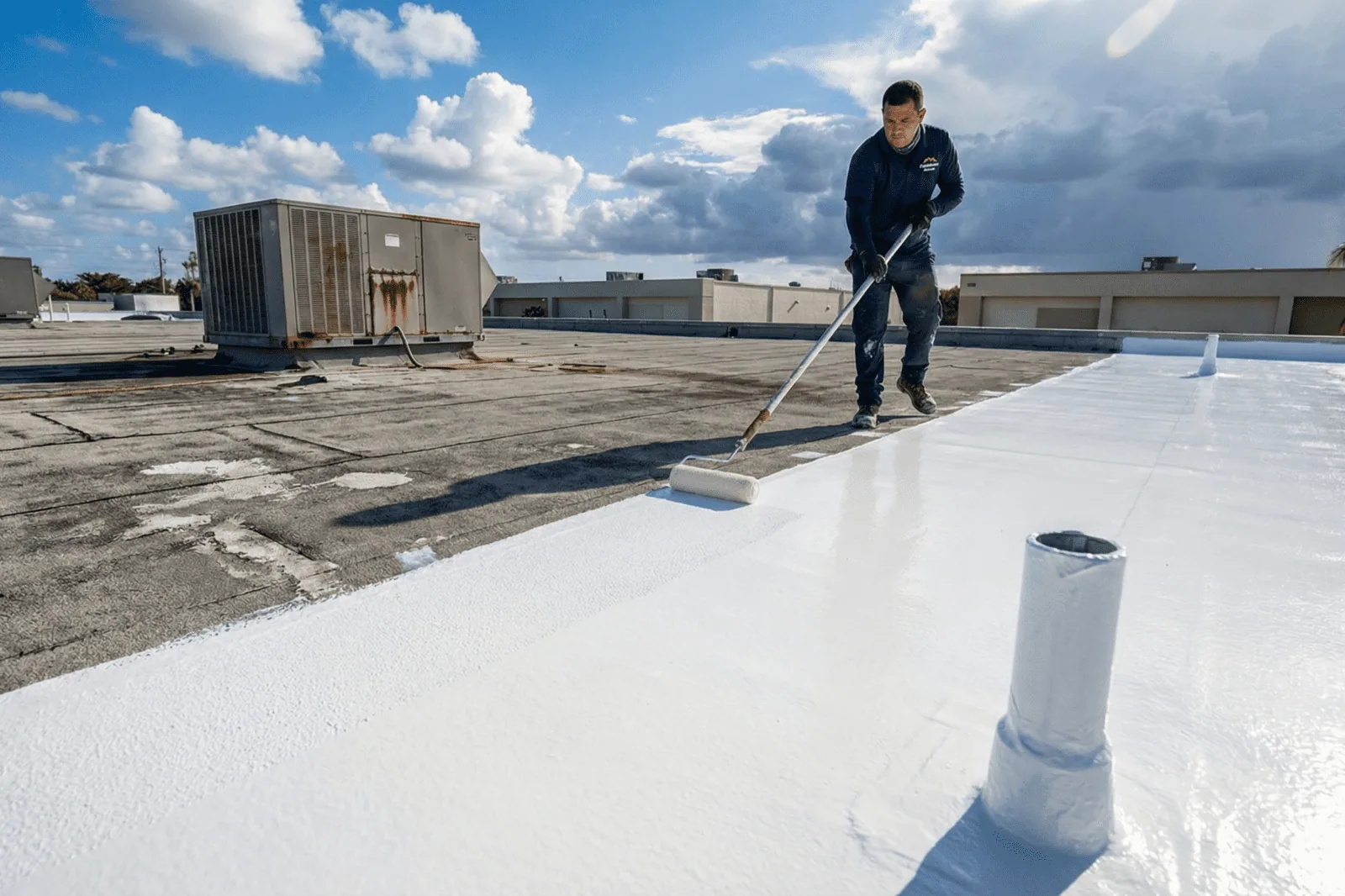
Hangars with a low-slope section for offices or shops, or with a flat roof over an attached shop wing, need the membrane to be treated on its own terms. A mixed building usually requires two answers, one for the long metal roof and another for the membrane, and the survey separates them.
How is roof work coordinated with a flight schedule?
Aviation adds constraints that most roofs do not have. Federal rules limit how high a crane or lift may stand near a runway, loose debris on a ramp is a hazard to aircraft, and access to the airside may require an escort and a notification process. We plan lift locations and staging early, keep material and trash from blowing across the ramp, and agree with the airport operator or facility manager on the hours when tools and equipment can be on the field.
Aircraft inside the hangar are either moved out or covered beneath a protective barrier, and the roof is worked in sections that are closed in by the day's end. Weather sets the calendar. Wind limits crane operations and panel handling, so a hangar reroof is best planned for the calmer months of late spring and early fall, with schedule room for the days that high wind takes away.
What does the Tri-Cities airfield ask of a hangar roof?
Tri-Cities Regional Airport covers 1,250 acres at Blountville, with an 8,000 by 150 foot runway and a 4,443 foot second runway, and it handled about 454,000 passengers in 2024. A hangar on a field like that answers to the airport operator on crane height, staging and access, and those limits shape when a roof crew can work. Piney Flats, along US 11E, has the airport to its north, and the same weather crosses both.
Washington County has recorded ten tornadoes, with the strongest an F2 in 1929 and three on April 27, 2011, so severe wind is rare but it has come, and a long-span roof with large doors is the kind of structure it would test. A flex industrial building or a warehouse with a long clear span shares those concerns, and the repair of a wind-damaged roof after a storm should begin with how the panels are attached.
Commercial Roofing Questions
Does the wind rating of a hangar roof assume the doors are shut?
Not necessarily, but it should be checked. Open doors let wind pressurize the interior, which adds to the uplift on the roof. We ask how the building was designed and how it is used before we choose fasteners or a retrofit system.
How is the roof protected while aircraft stay in the hangar?
Work moves in sections that are closed in before the end of the day, with temporary covers ready for sudden rain. Aircraft are moved out of the active zone or protected beneath a barrier, and the crew keeps tools and debris from falling into the bay.
How does a drone survey work near an airfield?
Airspace near a runway is controlled, so a flight needs authorization before the aircraft leaves its case. Where it is not granted, we survey on foot and from a lift, and the written report still carries photographs and locations.
Why is open flame such a concern on a hangar roof?
Hangars hold fuel, fire suppression systems and valuable equipment, and a torch on the roof is a risk to all of it. We use mechanically fastened and cold-applied methods and observe the hot-work limits of the building.
Does an unheated hangar need insulation under the roof?
Often, to control condensation more than temperature. A thin insulated layer keeps the metal above the dew point, so the underside stops dripping onto the aircraft below.
Related Roofing Pages
Drone Roof Inspections
How the work is scoped, phased and documented on Tri-Cities roofs.
Roof Insulation, Tapered Systems and Cover Board
What we check, what we recommend and how the crew keeps the building running.
Metal Roof Retrofit and Restoration
Conditions, options and next steps for commercial buildings in East Tennessee.