
Auto Dealership Roofing in Johnson City, TN
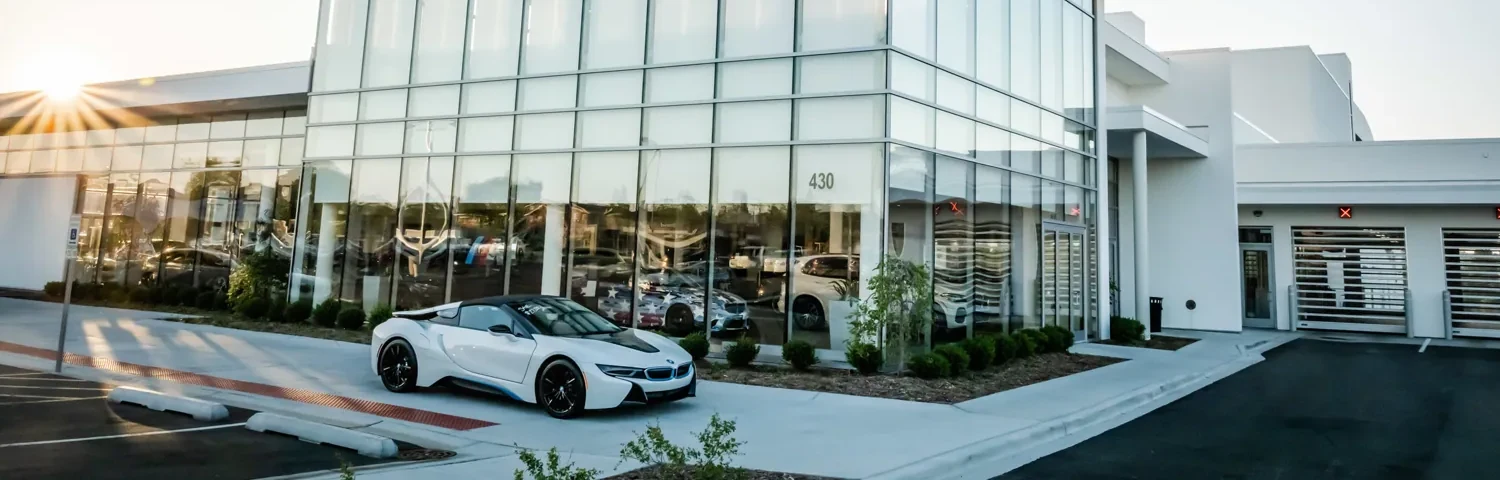
A glass showroom wall and the roof edge above it are two assemblies, built by different trades, that expand and contract by different amounts, and the narrow strip of flashing between them takes the difference every day of the year. On a winter night in Johnson City, TN, where lows average about 25F, the aluminum frame shrinks away from the roof edge while the membrane stiffens, and the sealant bead that bridges them is asked to stretch further than it was ever rated to go. When it splits, water does not drip straight down. It runs behind the framing, follows the head of the glazing and shows up on a ceiling tile above the new-vehicle floor, usually well to one side of the actual gap. The roof over a dealership is a patchwork of unlike conditions, with a glass-front showroom, a service wing full of exhaust, a parts room that behaves like a small warehouse and a canopy that catches wind. Treating the whole building as a single roof is the quickest way to spend money on the wrong part of it, and the first step is to read each section for what it is.
What do service-bay exhaust and rooftop fans do to a membrane?
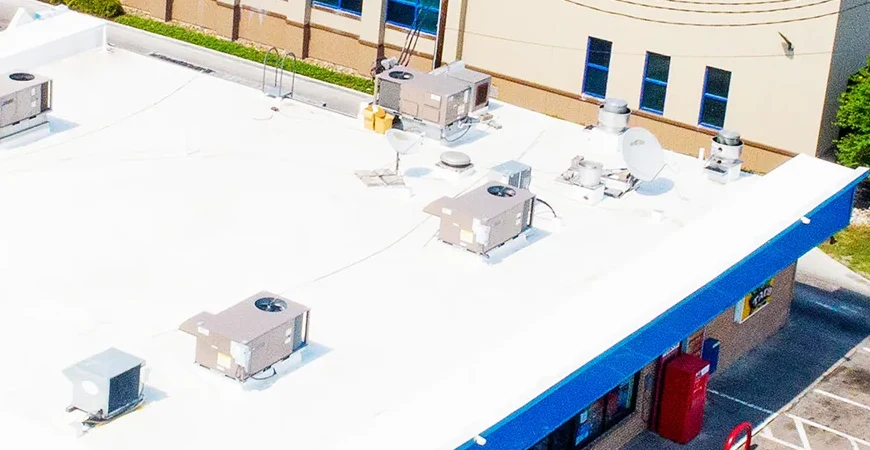
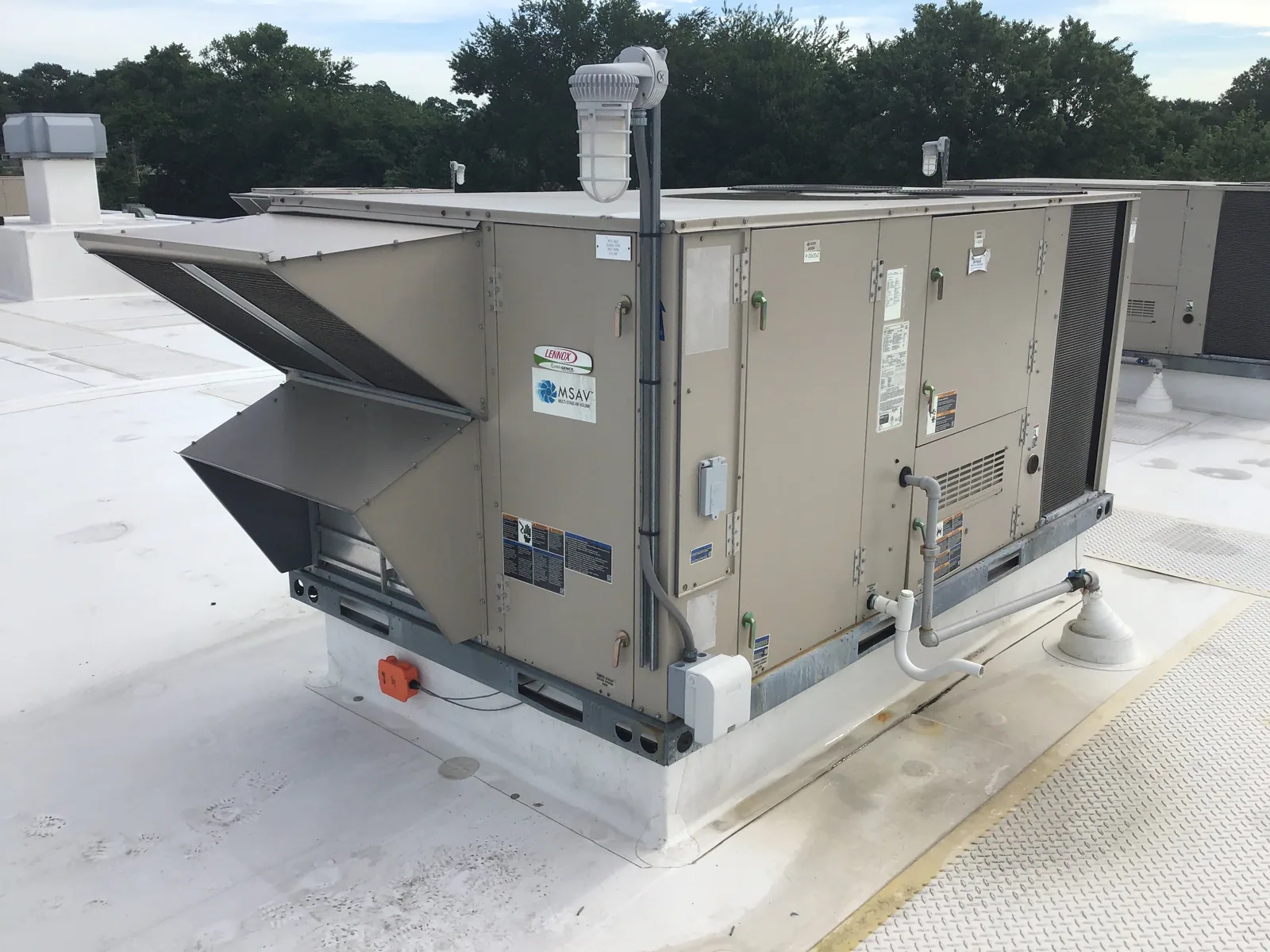
Air pulled out of a service department carries oil mist, brake dust, solvent vapor and rubber particles, and it leaves the building at fans and vents on the roof. The discharge lands on the nearest membrane and builds a film that is slow to notice and hard to remove. Some single-ply sheets soften under oil and fuel residues, shrink at their seams and lose adhesion at the edges, and the damage concentrates around exhaust points, where the roof shows a dark halo before any leak appears. A white membrane in the field can look sound while the stretch around a fan has begun to blister.
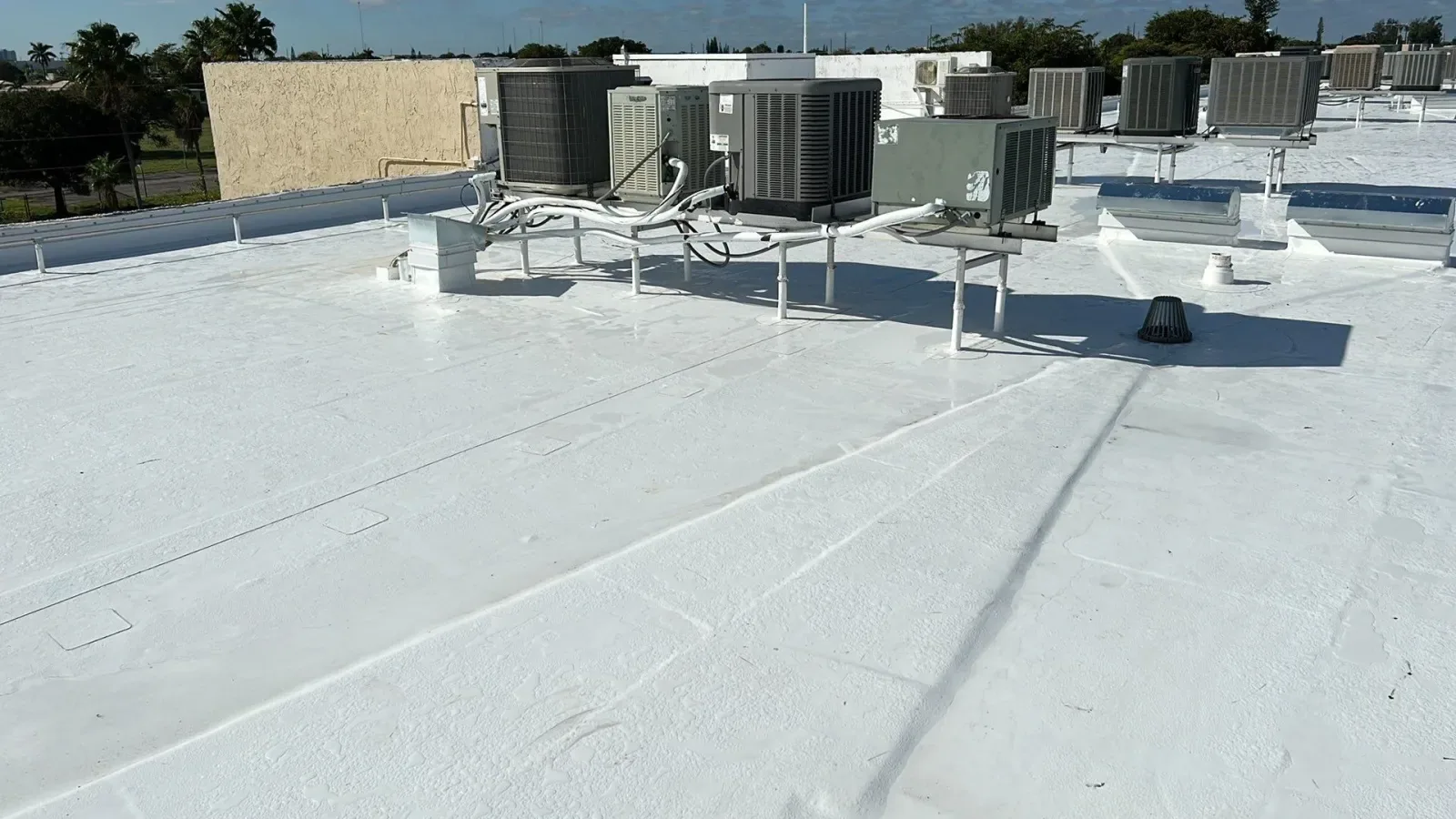
The answer starts with choosing a sheet that tolerates the exposure. PVC and KEE membranes are formulated to resist the greases and oils that wear other sheets, and they are the usual choice near service exhaust. Fan curbs and discharge points get their own attention, since a failed seal at a rooftop equipment curb sends water into the very bays where technicians work.
Know what is overhead before it reaches the floor
Call Commercial Roofing Johnson City and we will survey the showroom, service wing and parts room separately, map any wet insulation and give you a plan that keeps the bays working and the floor dry.
What does a drip over the showroom floor cost in selling hours?
A dealership earns its money in a few hours a day, and water over the showroom does most of its damage to those hours. A bucket beside a new vehicle tells every customer something about the building, and a ceiling tile that falls during a delivery tells them more. The stained tile and wet carpet are minor expenses. The closed service bay is the larger one: a technician who cannot work under a dripping roof is a bay out of service, and the loss runs by the hour.
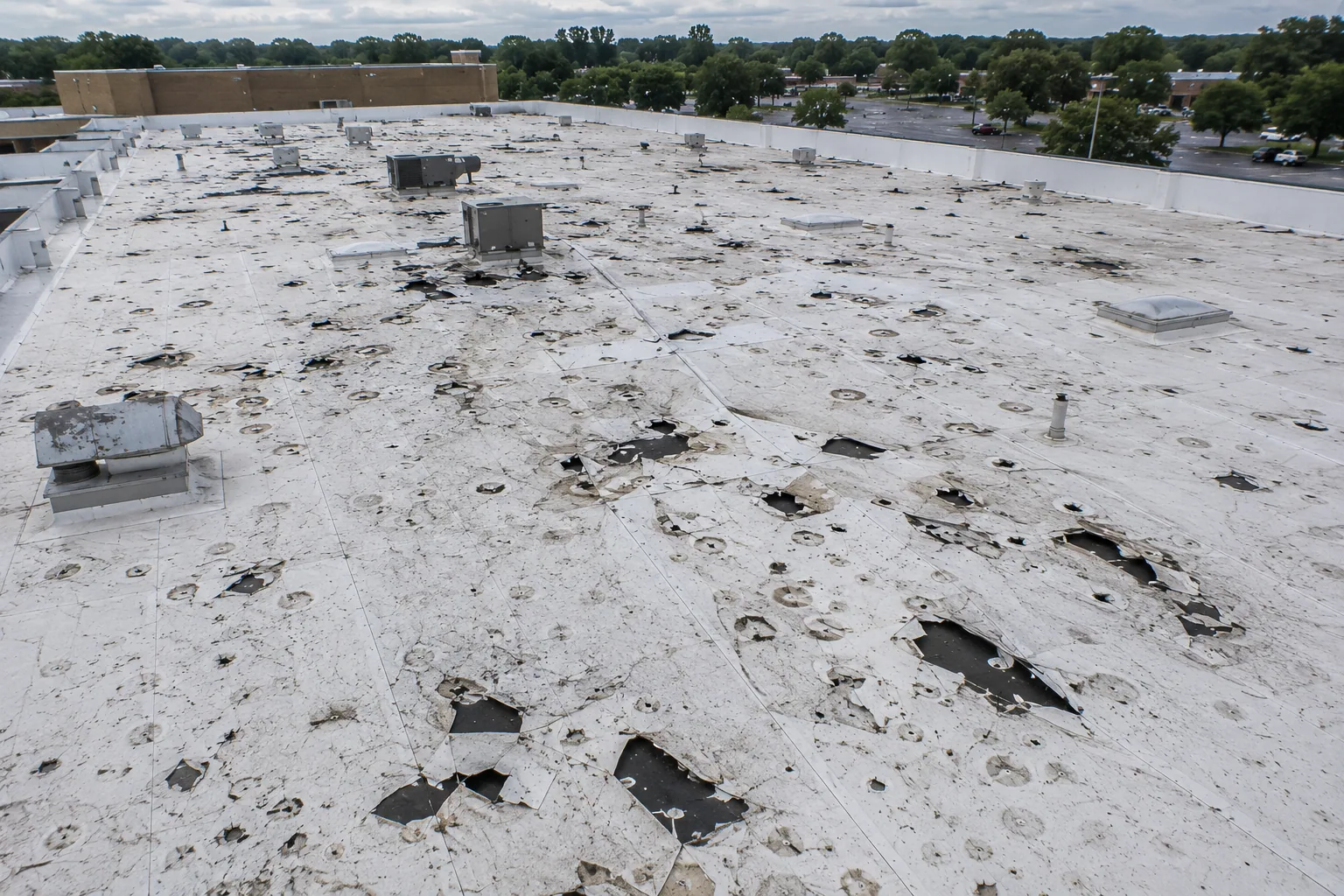
Meanwhile the insulation above the damaged area keeps absorbing water, so the patch holds only until the next hard freeze opens it again. Owners who wait for a larger event usually wait for the worst weather to find out what the roof has been hiding. A moisture survey costs a small fraction of a forced replacement, and it gives the dealer principal a cost the operating budget can plan around instead of a number that arrives during a busy month.
Should the showroom, service wing and parts room share one roof system?
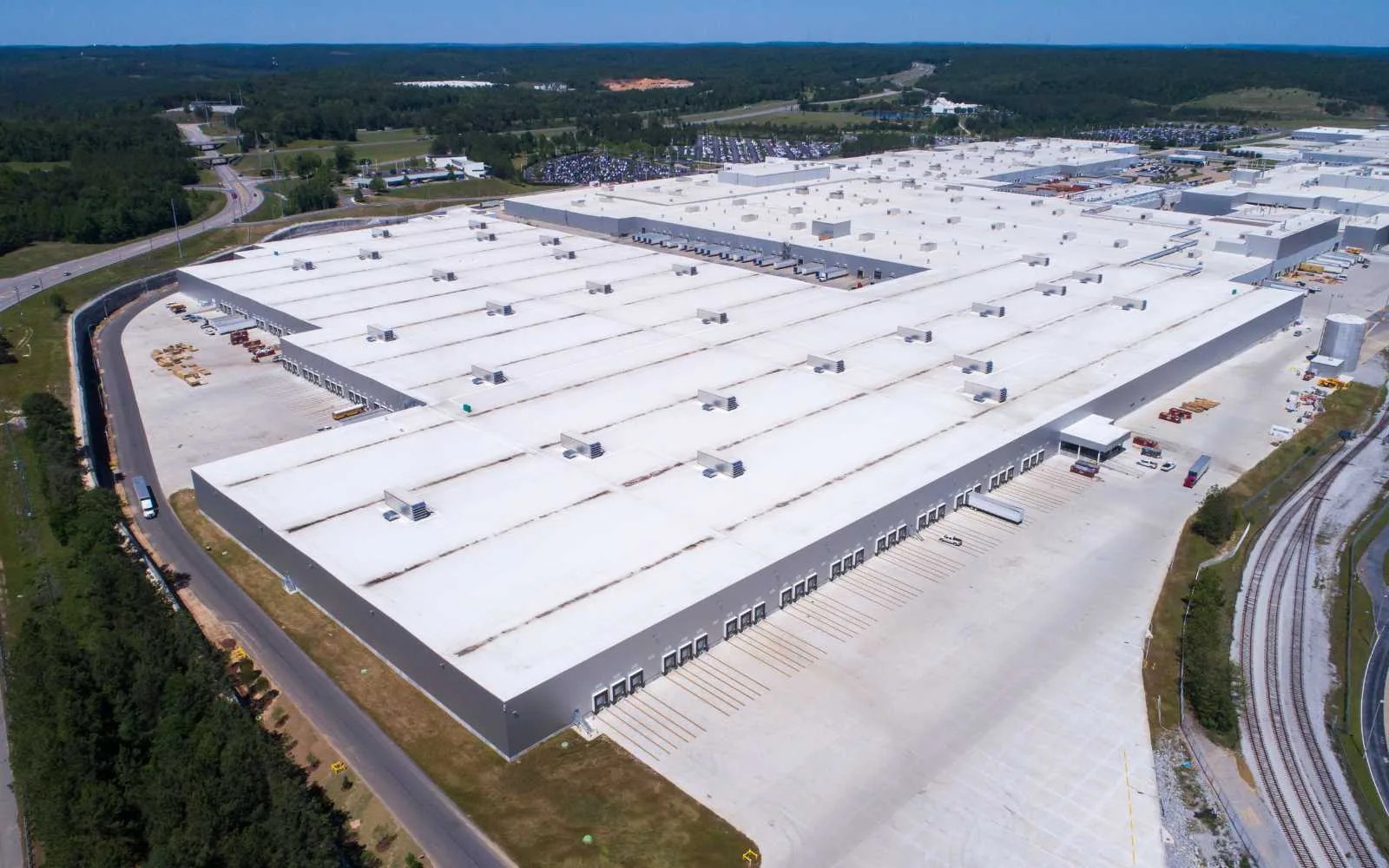
Usually they should not, and a sensible plan treats each as its own roof. The showroom sits behind a flashing detail that must move with the glass, so it favors a sheet that welds cleanly at the wall and a detailed termination bar. The service wing wants an exhaust-tolerant sheet. The parts room, with its long clear spans and few penetrations, resembles a warehouse roof and is often the cheapest section to recover or coat, provided the insulation is dry. A coating can carry a sound membrane several more seasons, though it is the wrong move over wet board or near an exhaust discharge that will attack the film.
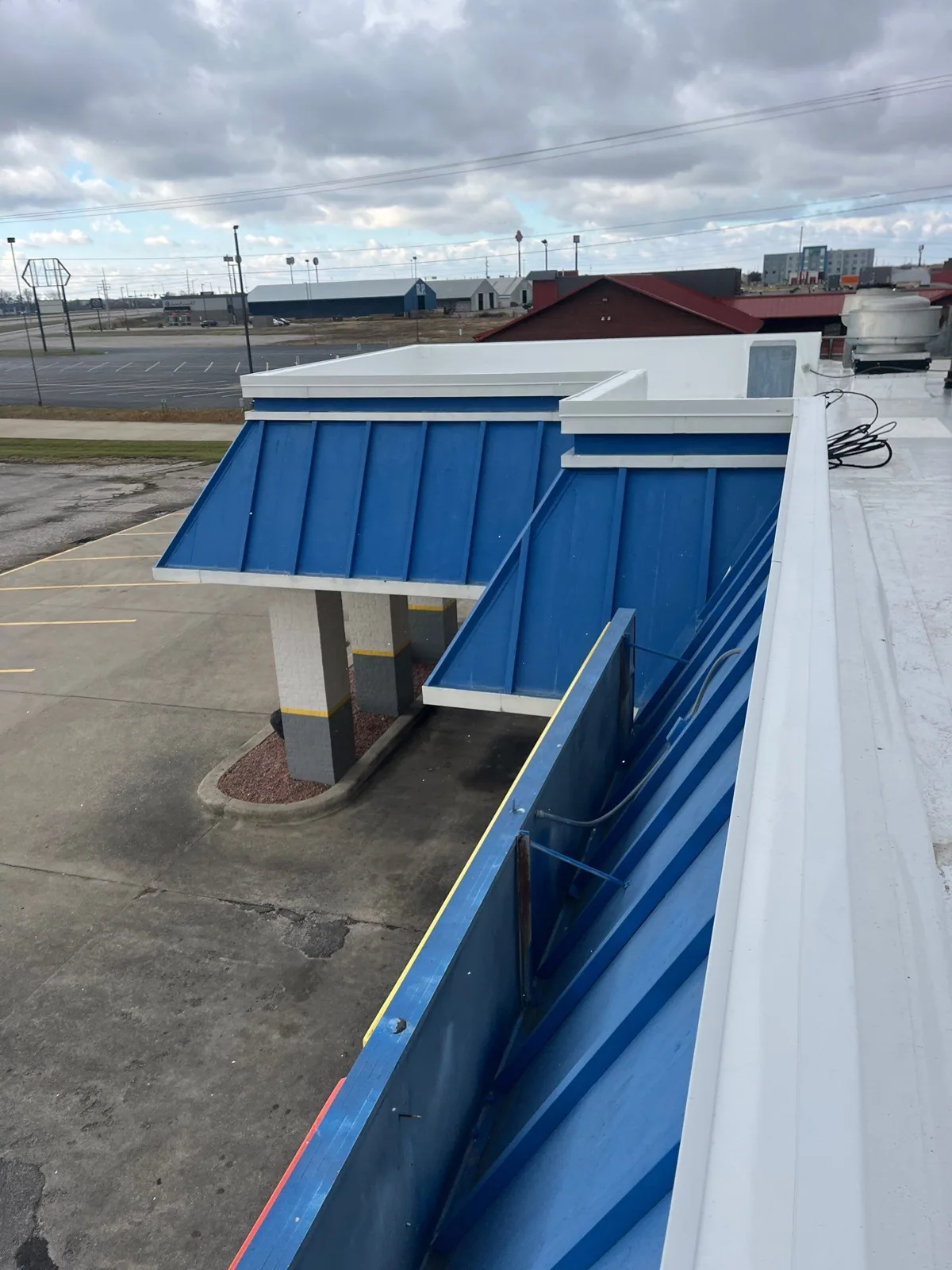
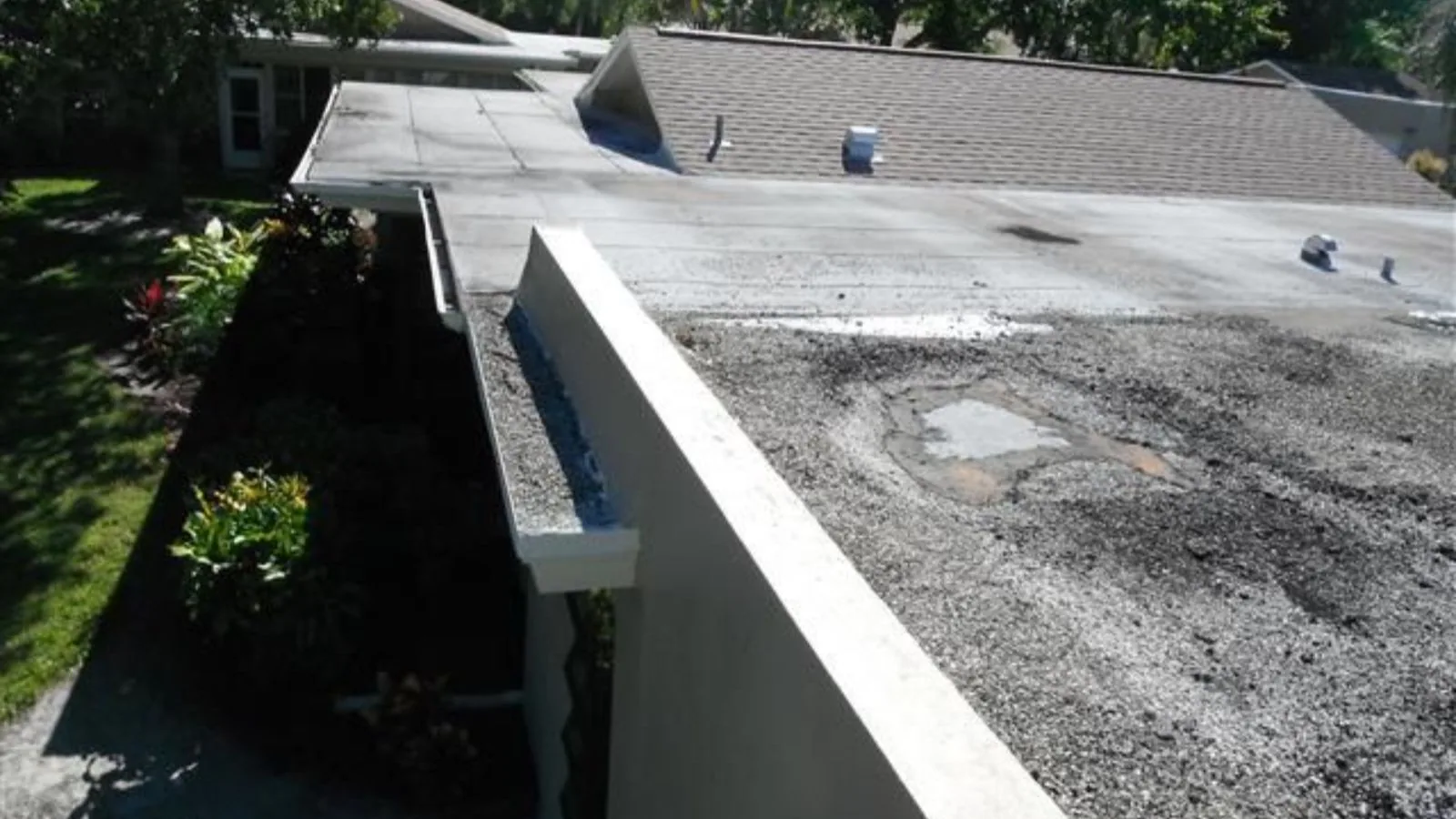
The canopy over the delivery lane and service drive deserves a separate look. Its edge metal and gutters catch wind from every direction, and an edge that peels back in a gust takes the canopy's membrane with it. Washington County has recorded ten tornadoes, three of them on April 27, 2011, so edge metal on a wide canopy should be rated and fastened for real wind, not just for looks.
How is a reroof scheduled around showroom hours and service appointments?
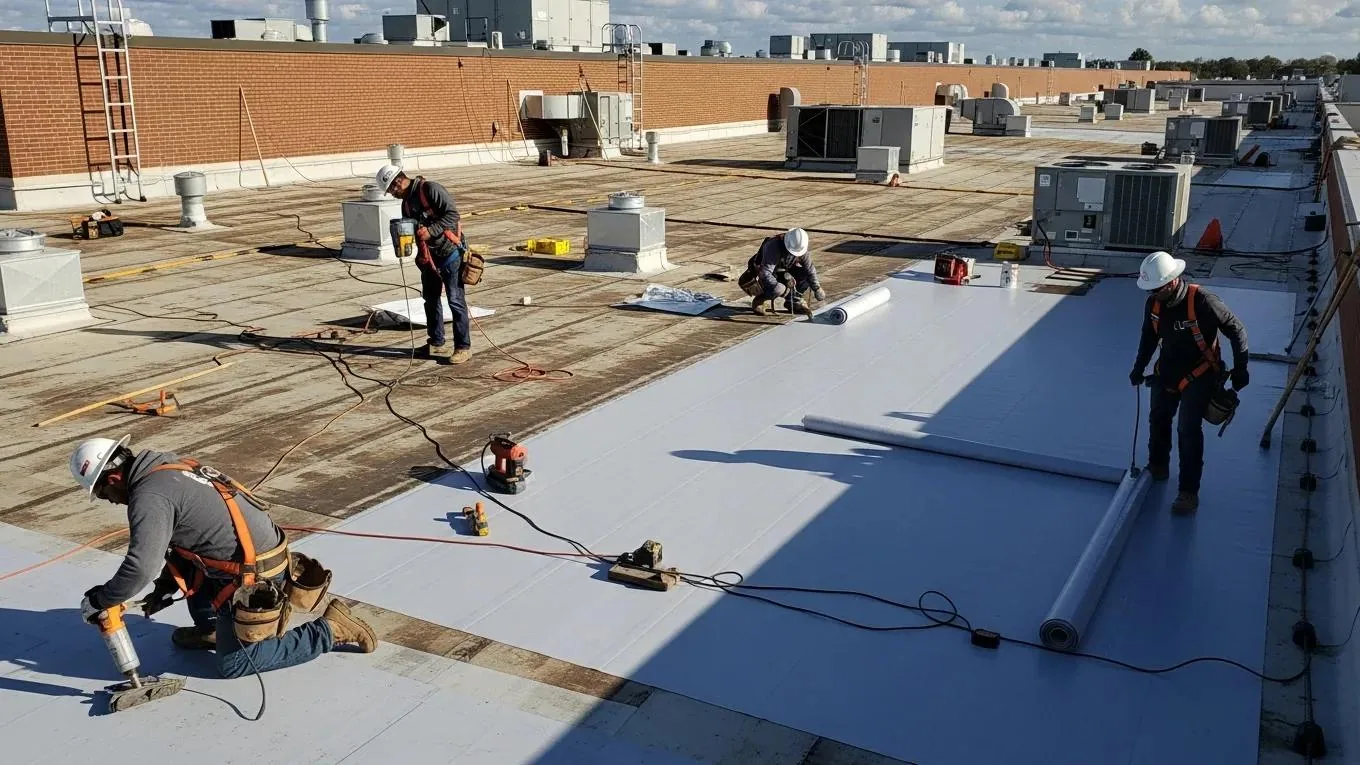
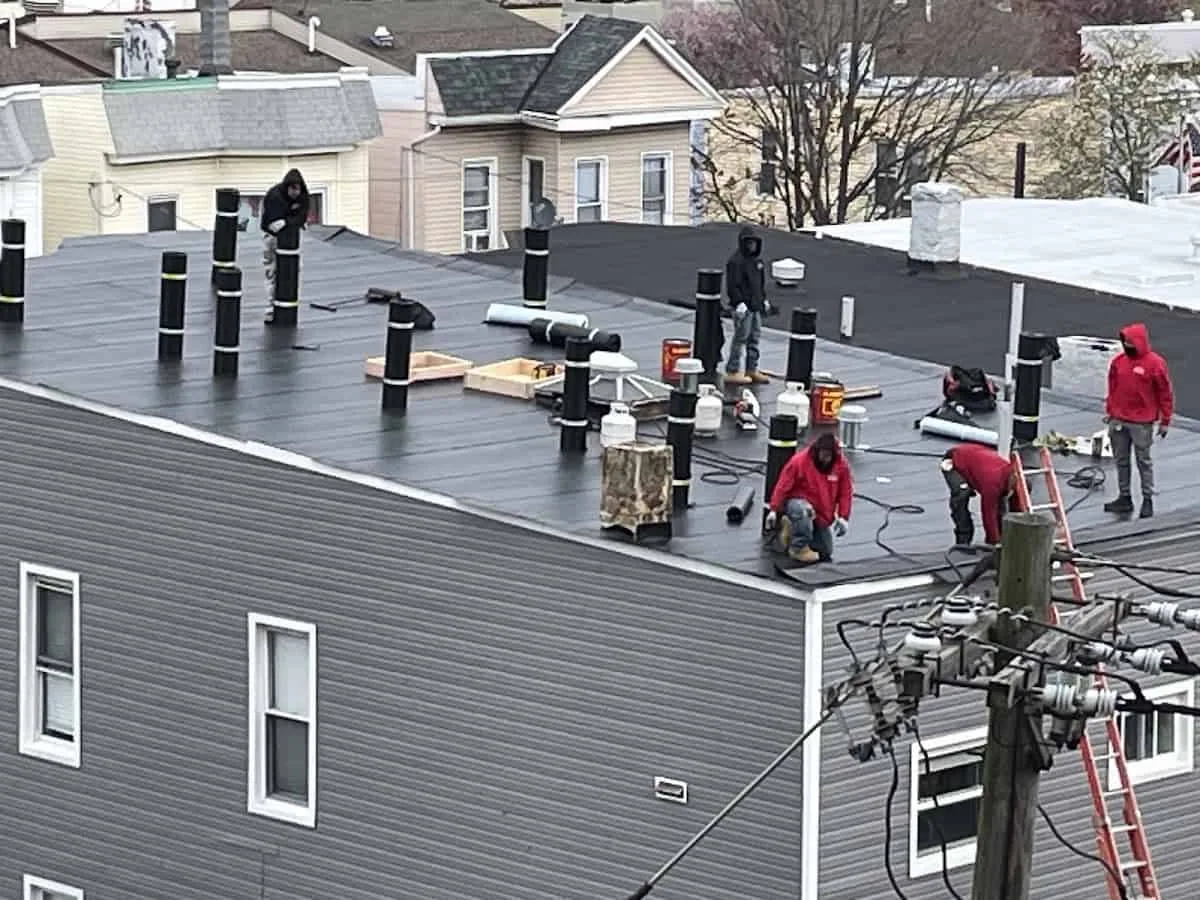
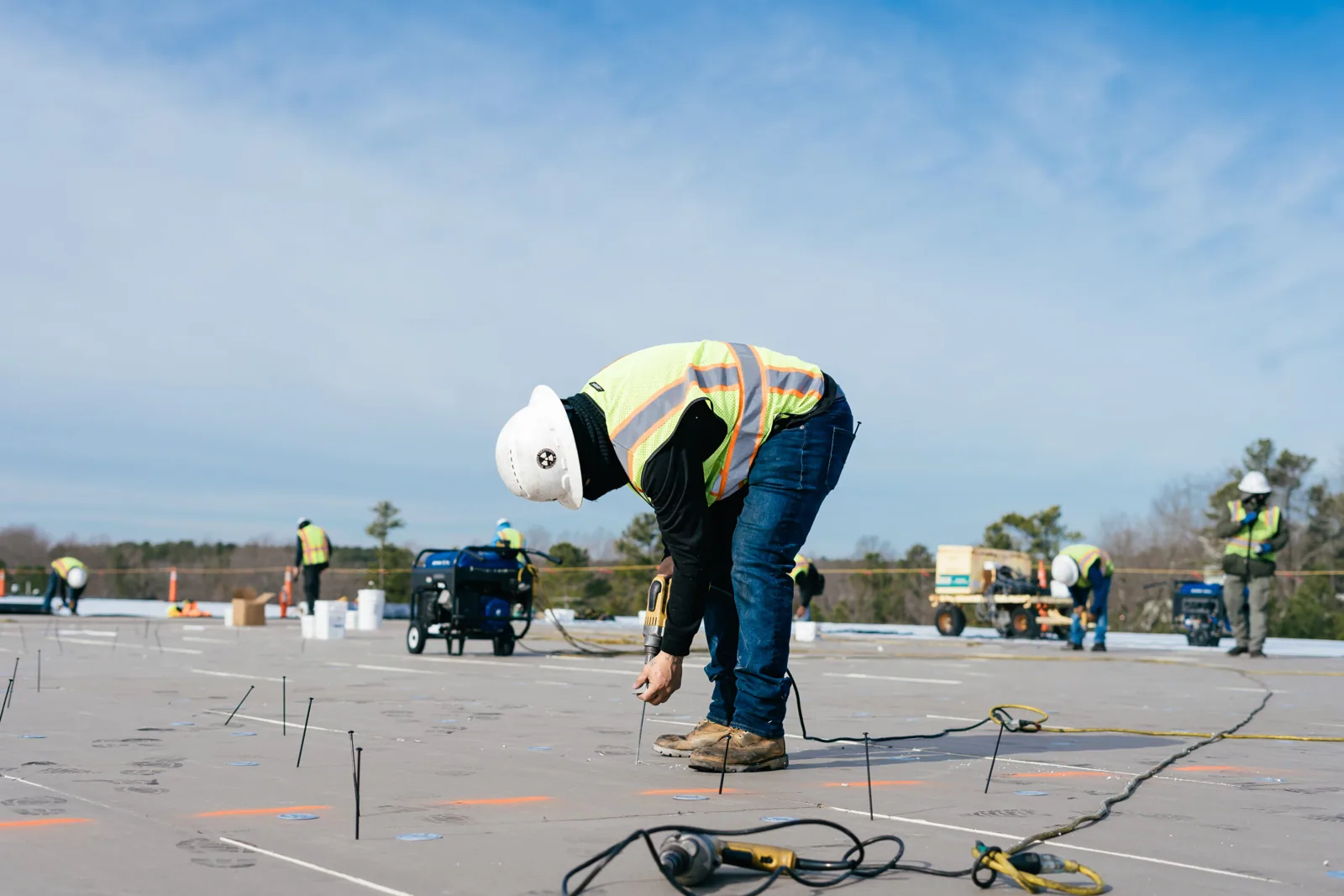
The first constraint is the lot. Adhesives, asphalt fumes and loose debris travel, and a vehicle parked under a work zone can end up with overspray or grit in its finish, so inventory is moved before roofing begins and the staging area is kept clear of the sales lot. The second is air: intakes serving the showroom and the service wing are covered while primers and adhesives are open, so the fumes do not reach customers or technicians.
The work itself is sequenced to the rhythm of the store. Service wings tend to be worked during the hours when appointments are slowest, and the showroom is done in sections that are closed in each day. Weekend work can protect sales hours, though it adds cost that the dealer should weigh against the revenue it protects. Late summer and early fall give adhesives and welds the temperatures they want, and a project approved in summer can finish before the first hard freeze.
What do Johnson City's retail corridors ask of a dealership roof?
US 11E, US 19W, US 23 and US 321 run through Johnson City beside I-26 as its main surface routes, and a dealership on any of them lives on the customers who drive past and walk in, which makes a bucket in the showroom hard to explain. The retail hub of North Johnson City and the Mall at Johnson City includes a mall lot of 2,885 spaces, the kind of paved surroundings that retail buildings and dealer lots share. Whatever surrounds it, the roof has to move its own water cleanly, because a clogged scupper has nowhere to send an overflow.
Gray, near the I-26 and I-81 junction, has added new commercial establishments and retail chains since 2000. A newer neighborhood does not make a newer roof, so a dealer there still has the roof read on its own record, flashing and curbs first. Like a big box retail roof, a dealership roof typically carries rooftop equipment on low-slope membrane, and it adds the service department's exhaust to the mix.
Commercial Roofing Questions
Why does the stain always show up above the new-vehicle floor and not at the roof edge?
Water follows the glazing frame. It slips behind the flashing at the glass line, runs along the aluminum head and drips where the frame ends, so the stain sits well away from the break. We trace it from the roof side with a water test before anyone cuts into the ceiling.
Do vehicles parked outside need protection during roof work?
Yes, and the best protection is distance. Inventory is moved from the work zone and the hoisting area, and we agree on the staging route with the sales manager so vehicles are not parked under a lift. Grit and adhesive overspray are the risks, and both are avoided by moving cars.
What happens to the roof when the manufacturer's image program remodels the showroom?
The roof should be in the scope before the first wall comes off. New glazing, a taller facade or relocated equipment all change the flashing, and a reroof timed with the remodel avoids tearing into a new facade to fix a roof that was left out.
Is a coating worthwhile on a dealership roof?
On a dry, sound membrane away from the exhaust discharge, a coating can add useful service life for a modest cost. Where oil mist lands, a coating can be attacked, so the area around service fans is usually replaced or flashed separately.
How quickly can water over a service bay be stopped?
Our emergency response runs around the clock, and a temporary membrane or sealant repair can close the opening quickly so the bay returns to use. Permanent correction follows once the cause is found and the weather allows.
Related Roofing Pages
PVC Roofing
How the work is scoped, phased and documented on Tri-Cities roofs.
KEE Roofing
What we check, what we recommend and how the crew keeps the building running.
Rooftop Equipment Curbs and Supports
Conditions, options and next steps for commercial buildings in East Tennessee.